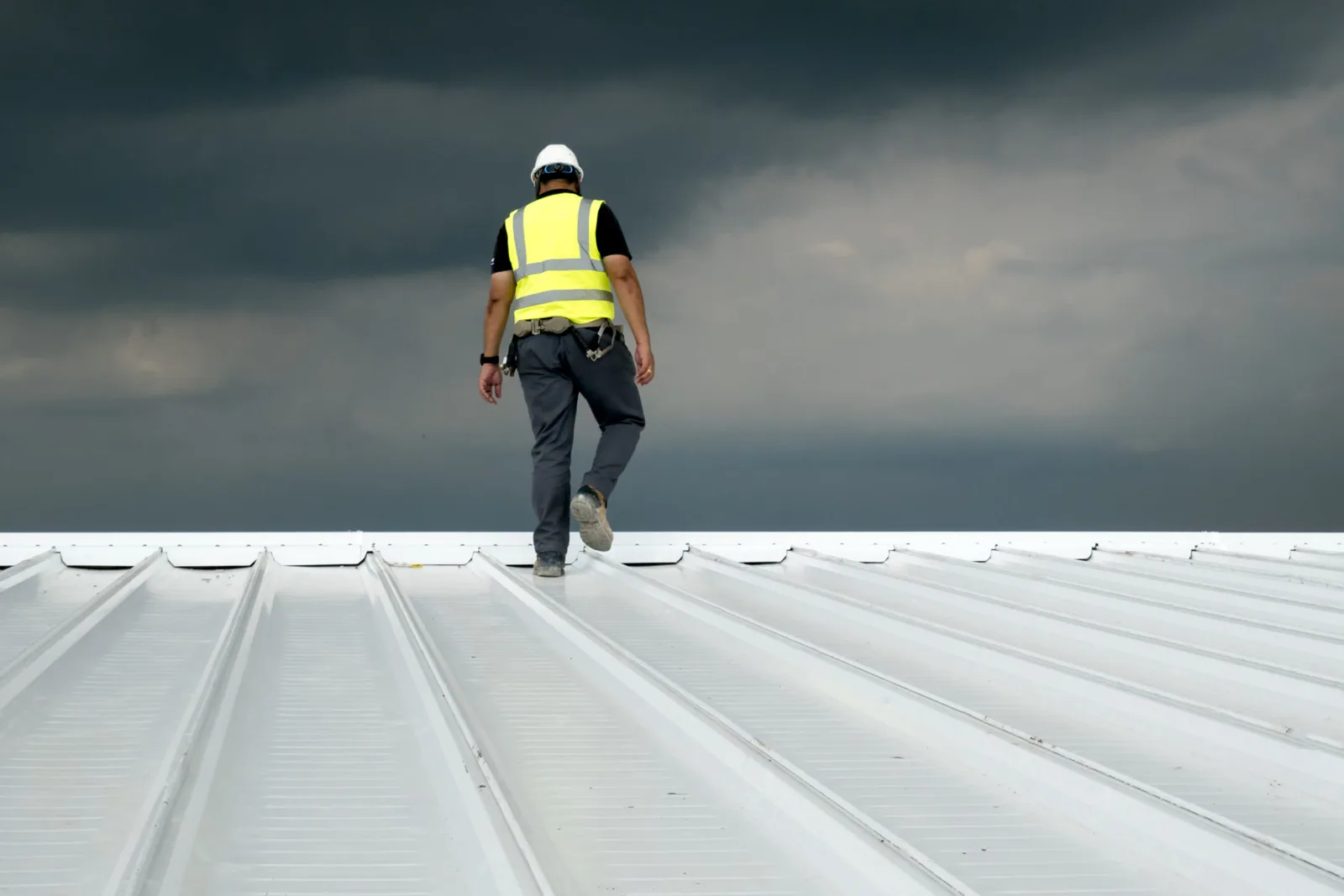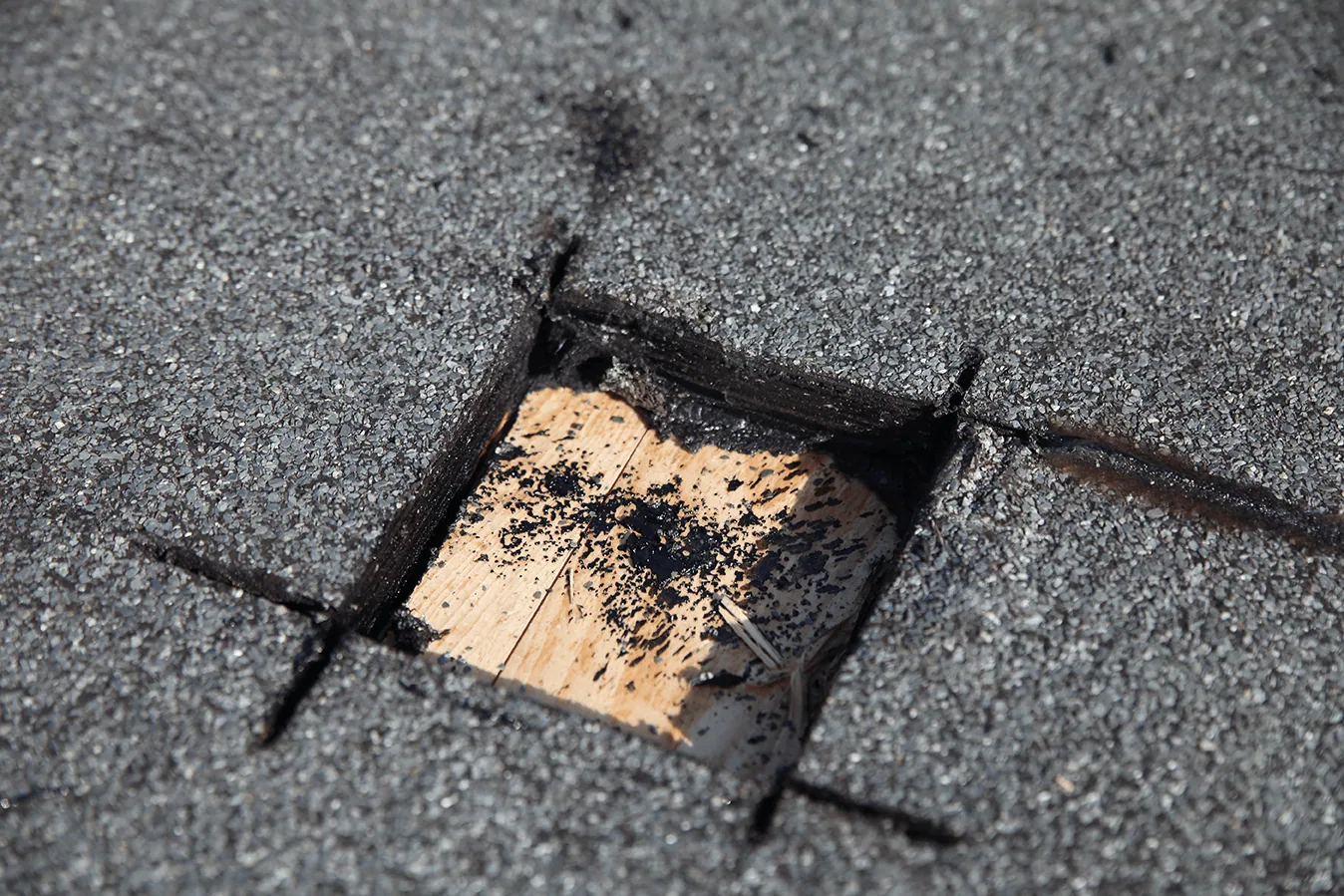
Sun exposure can age a roof gradually. A membrane may become brittle, shrink at a termination, lose surface material, or open at a seam after repeated heating and cooling. Commercial heat and UV roof repair in Stamford, CT begins by comparing the affected area with the surrounding membrane and identifying the installed system. Surface color alone does not show how much life remains or whether the layers below are sound.
We inspect exposed seams, flashings, penetrations, rooftop equipment zones, and any interior leak reports. The scope can range from localized repair to selective replacement when deterioration reaches underlying layers. A commercial roof inspection can document the affected zones and support a clear repair boundary. Coating or patch material should not cover a condition that needs a closer look first.
Distinguish surface aging from assembly damage
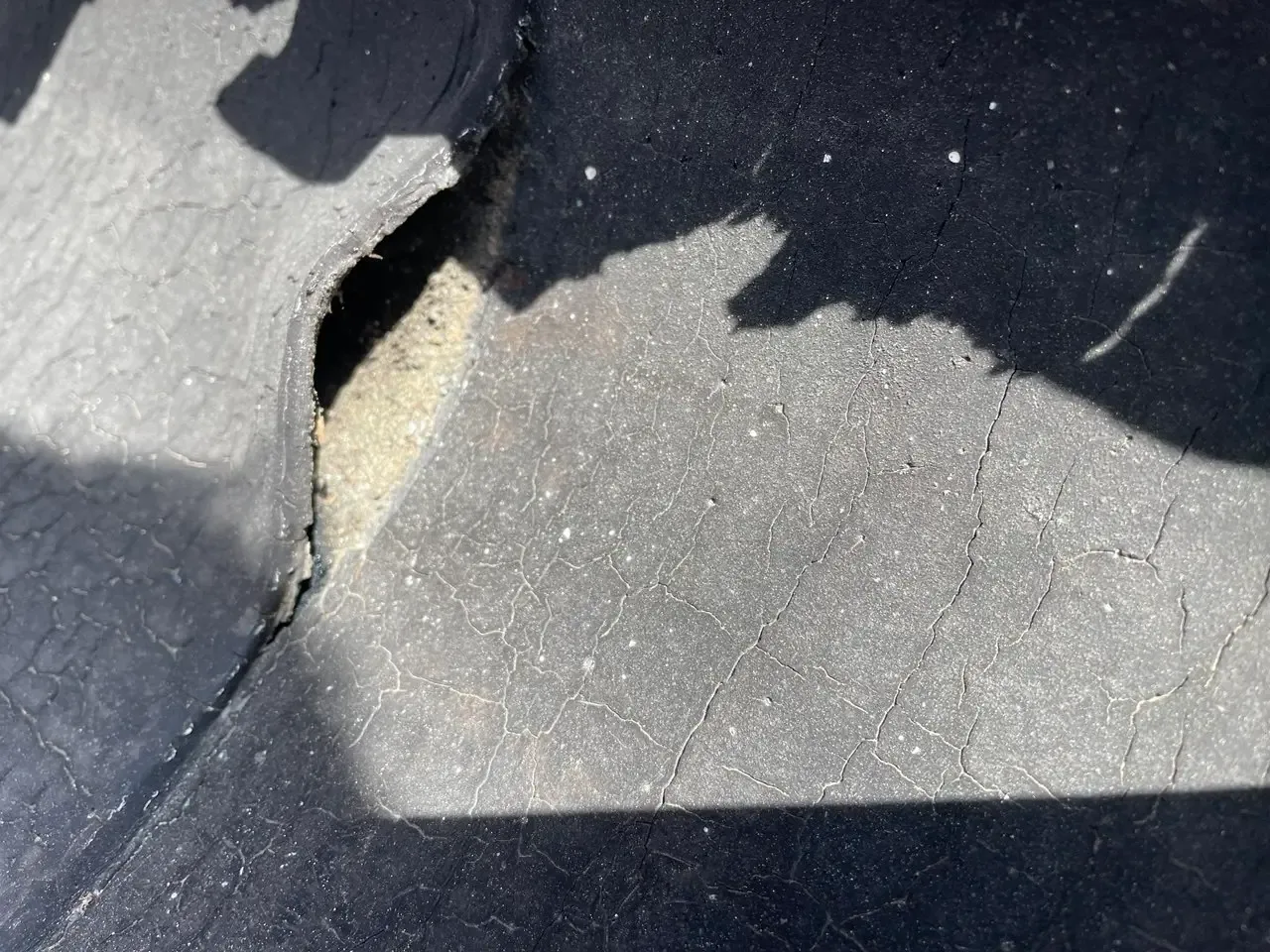
Look for exposed reinforcement, cracked or chalking surfaces, shrinking at edges, open laps, blisters, or patches that no longer remain bonded. Heat may affect the membrane unevenly around equipment, drains, and parapets. We check whether the surface remains flexible enough for the selected repair and whether the substrate supports a new bond. If insulation is wet or degraded, a top-side patch alone may not address the problem.
Stamford's warm season brings sustained exposure to roof fields and equipment transitions. We check those details during summer visits, then set repairs from the membrane condition found on site.
Inspect seams, coatings, and exposed surfaces
Ultraviolet exposure can contribute to surface weathering, but visible discoloration can have several causes. We compare the weathered area with protected sections, inspect seams and termination points, and review prior coating or patch work. A roof coating may renew a suitable surface, but it cannot restore wet insulation or secure a loose perimeter by itself. Before adding a coating, confirm the substrate, existing layers, adhesion, and manufacturer requirements.
On thermoplastic roofs, heat-welded seams may remain repairable when the material and surface are suitable. EPDM and bituminous systems use different approaches. Preparation follows the installed system, and we define limits before recommending a surface treatment. If a seam has opened, a seam repair may be more direct than coating the entire field.
Review equipment loads and water paths
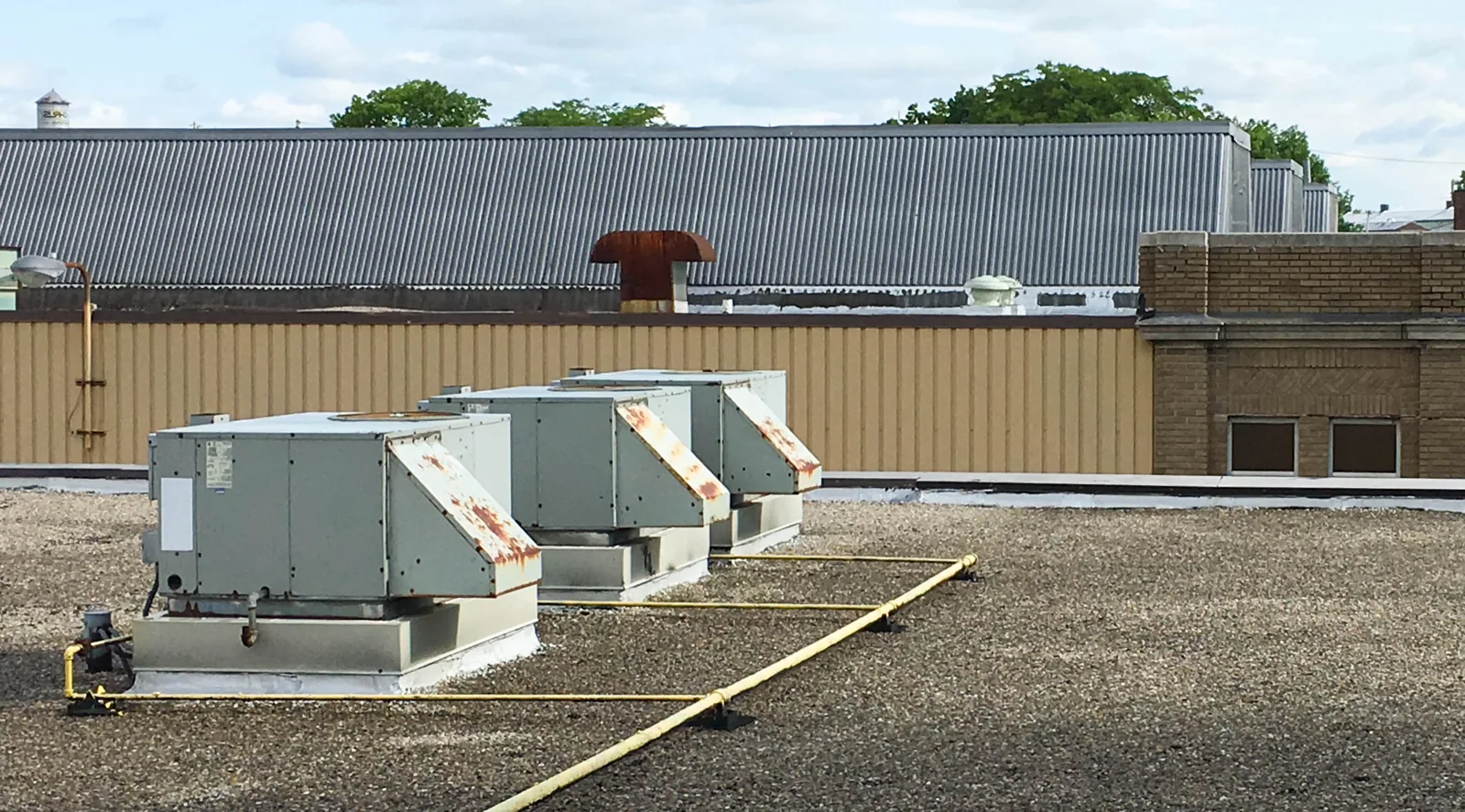
Rooftop equipment can cast shade, hold heat, vibrate, or require repeated service access. Connections around curbs, supports, and conduits may experience different movement from the open field. Inspect those details for loose flashing, damaged membrane, and water entry. Service access should use a designated path where the roof design provides one. If a mechanical contractor works above the building, coordinate responsibilities for protecting the membrane.
Harbor Point is a phased, multi-use redevelopment district by Stamford Harbor, with homes, offices, shops, hotel, and public spaces across more than six million square feet. That broad mix illustrates why rooftop systems and access needs differ across the city, without describing any one roof. Commercial buildings have varied equipment and maintenance requirements. We plan around the actual installation. A curb and rooftop support review can address details around equipment, while a drain and scupper inspection checks the water path.
Check whether moisture is part of the problem
Heat-related aging and water intrusion can occur in the same roof zone. A leak near a brittle seam may have reached insulation before the surface visibly deteriorated. Compare roof observations with ceiling stains, equipment reports, and any prior repair history. An infrared moisture survey can help map suspected wet areas when the assembly and weather conditions support that method. Direct openings may still be needed to confirm concealed layers.
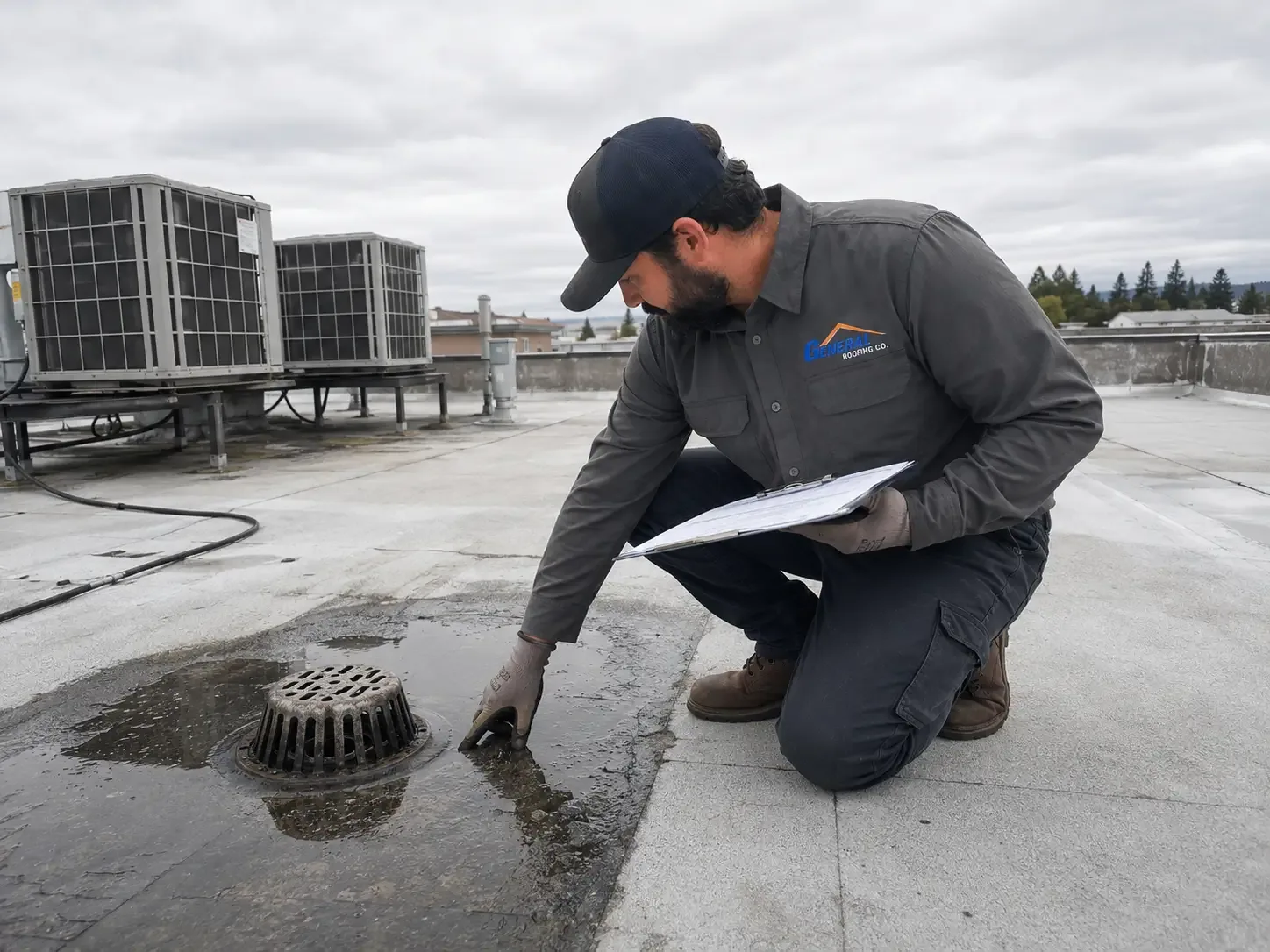
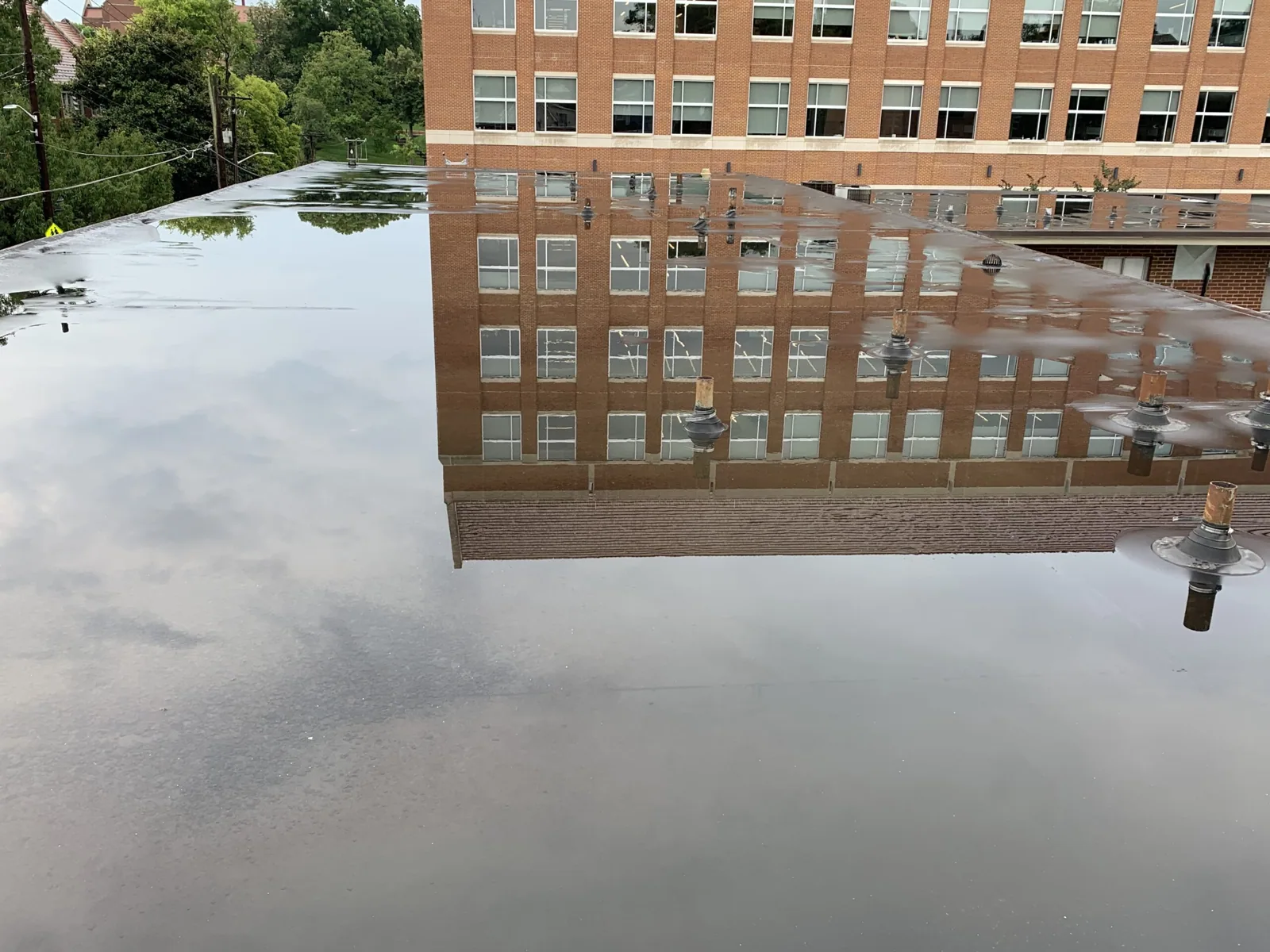
Water that travels across a deck can appear far from the entry point. Check roof slope, low areas, drains, and transitions rather than assuming the closest crack caused the interior stain. A ponding-water repair assessment may be useful where standing water remains after rain. If membrane loss has left the substrate exposed, document the area and protect it when safe and authorized until permanent repair can proceed.
Plan repair access for Stamford and the Route 1 corridor
Route 1 runs 22.77 miles along the coast from the New York line to the Westport-Fairfield border, passing Greenwich, Stamford, Darien, Norwalk, and Westport. At any property along that route, we confirm material staging, building entrances, and authorized roof access with the site contact before setting the work sequence.
Different roof sections may require separate preparation if shade, equipment placement, or age has varied across the assembly. The scope should identify each repair zone and explain whether coating, patching, or replacement is planned there. In portfolios that include nearby municipalities, our Norwalk service area can support regional coordination. We keep the work description tied to the roof areas inspected and avoid extending a recommendation beyond the observed condition.
Choose repair, coating, or replacement based on condition
A localized seam or flashing repair can be appropriate when the surrounding material remains sound. A coating may be considered when the existing surface is compatible, dry, and able to accept the specified preparation. Selective replacement may be necessary where the membrane or insulation has degraded across a broader section. These options have different preparation, drainage, edge, and warranty implications. The proposal should explain which conditions support each option.
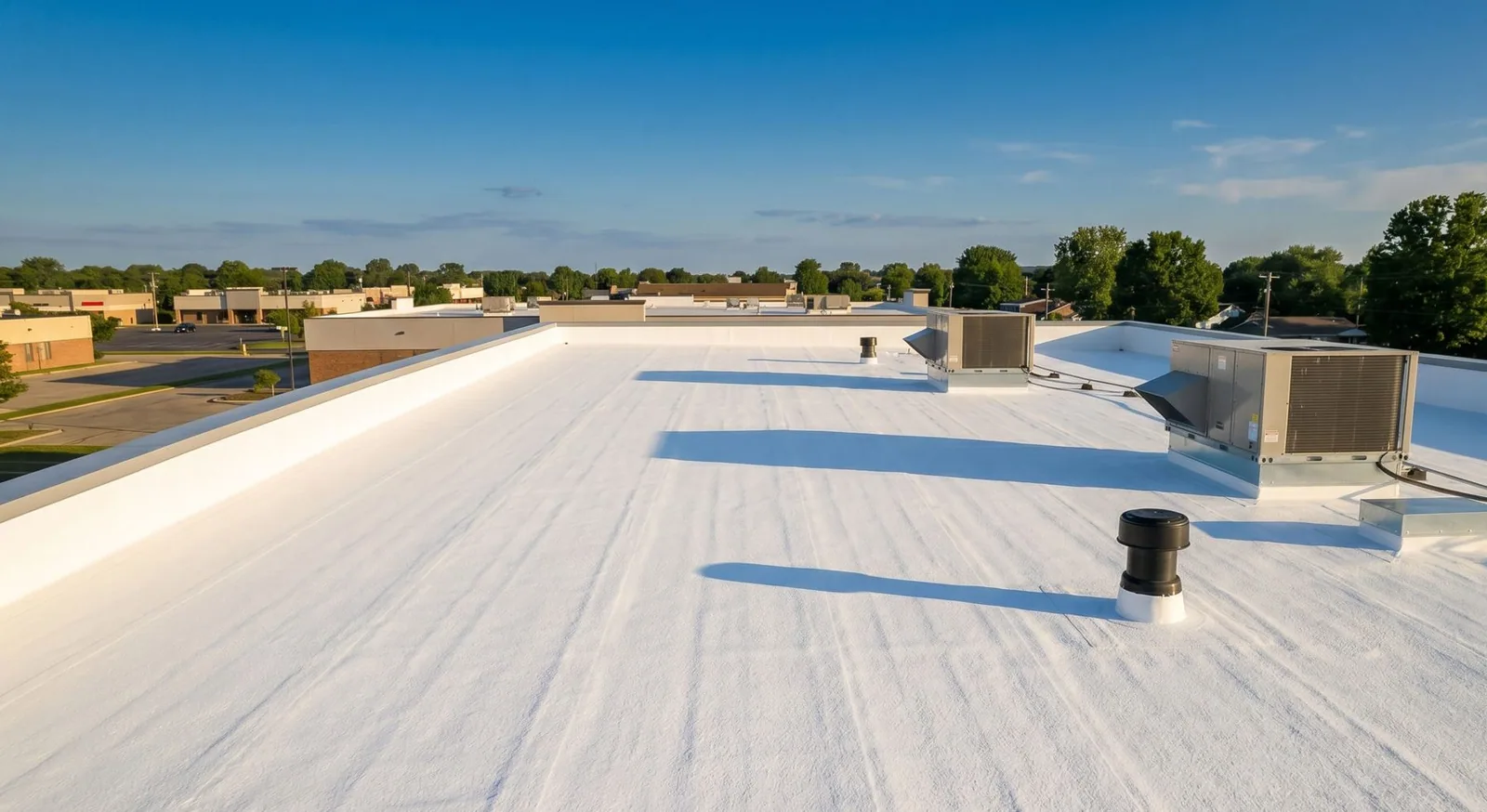
Where a coating is proposed, define the target thickness, reinforcement details, surface preparation, and terminations according to product requirements. Restore drains and scuppers so the finished surface does not obstruct flow. A roof coating restoration scope can address a suitable coating project; a replacement evaluation can compare a larger system renewal when repairs are no longer practical.
Record the repair and monitor exposed areas
After repair, inspect the finished seam, patch edge, and nearby transitions for secure bonding and clean drainage. Photographs can show surface preparation, hidden layers opened, and final details. Keep a record of the membrane identified, materials used, repair area, and any sections that were not opened. If the roof is coated, note the product and installation conditions for later maintenance.
Future reviews should revisit exposed perimeters, equipment zones, and areas where previous repairs meet older membrane. Record changes rather than assuming a weathered surface has worsened uniformly. Preserve these observations with the property's maintenance records. If a broader issue appears, compare repair and replacement scopes using the affected assembly, access requirements, and project timing.
Commercial Roofing Questions
How can heat and sunlight affect a commercial roof?
Exposure can contribute to weathering, shrinkage, brittle surfaces, or stress at seams and terminations. The pattern depends on the membrane, age, roof layout, and maintenance history. Inspection determines whether the condition is cosmetic or affects the assembly.
Which weathered roof surfaces are candidates for a restorative coating?
A coating may be appropriate when the existing roof is compatible, dry, and properly prepared. It will not correct wet insulation, a loose edge, or an unstable substrate. Check the condition and product requirements before treating the field.
Does a darker membrane mean it is overheating?
Color alone does not establish roof temperature or damage. Surface condition, insulation, equipment placement, ventilation, and system design all matter. Compare observed performance with the intended assembly and project requirements.
What if heat-related aging appears near an HVAC curb?
Inspect the curb flashing, membrane, supports, and service access together. Coordinate with the mechanical contractor if equipment needs work, and keep responsibility for roof protection clear. Repair materials must match the installed roof system.
When is replacement more suitable than another patch?
Replacement may be considered when deterioration is widespread, repeated repairs no longer tie into sound material, or concealed layers are compromised. A condition review should define affected areas and compare the project requirements before selecting a scope.