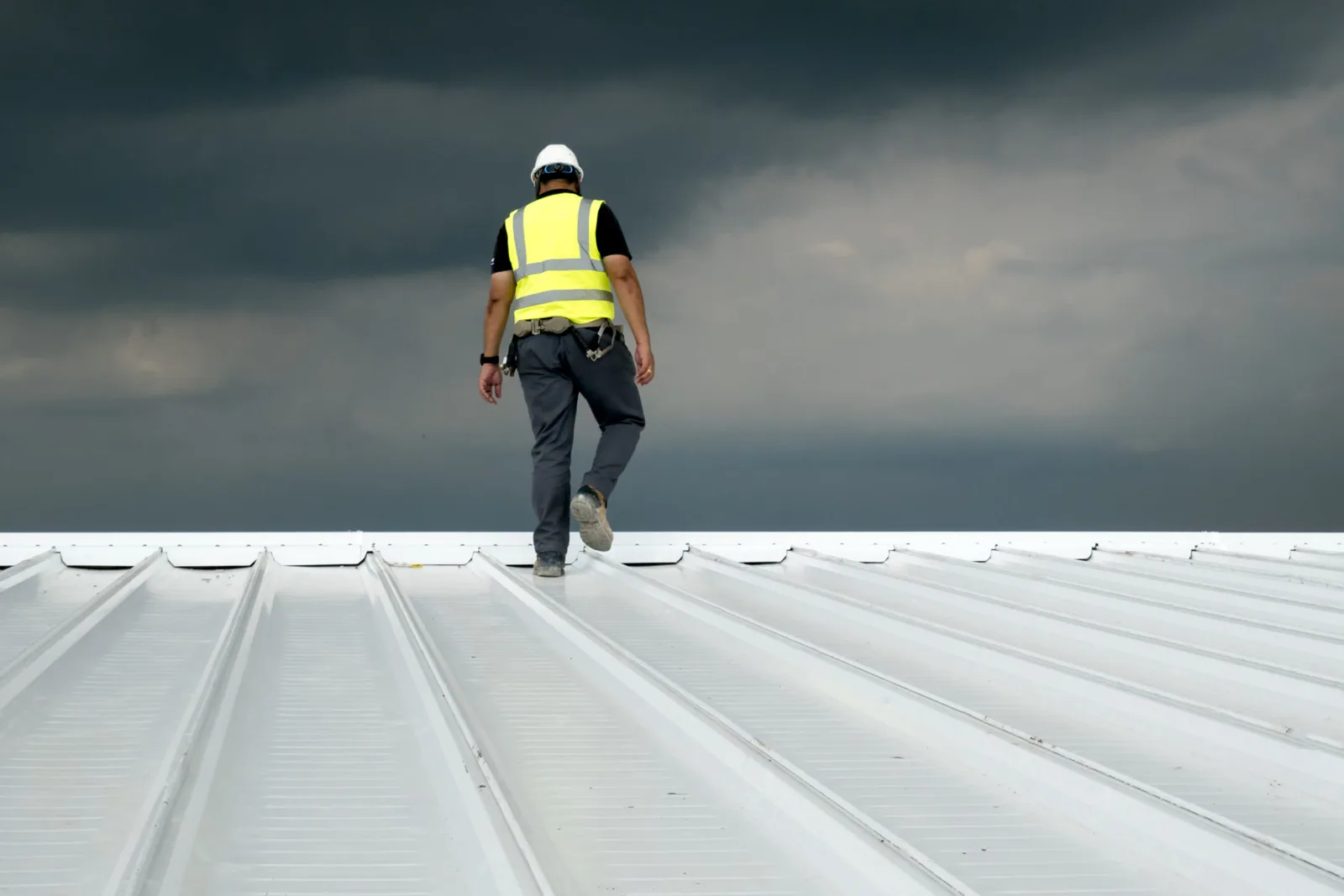
A drip near a loading lane can begin at a curb, seam, or edge several bays away. We trace the water path before deciding whether the repair can stay local. Stamford's flexible-industrial category includes light manufacturing, distribution, and adaptable production with possible office or showroom space. That mix makes roof access and daily deliveries part of the work boundary. We inspect the membrane, insulation, deck, drains, wall turns, and equipment curbs, then separate active defects from conditions that belong in a maintenance plan. A roof inspection gives the property manager a roof-zone record to compare with interior leak reports. In Downtown Stamford, the commercial core sits beside a wider range of neighborhood building types; no single warehouse assembly should be assumed from the address alone. We identify the roof in front of us and match the scope to its actual layers and operating limits. A distribution-center roof may need a different delivery sequence and more attention to rooftop service paths, even when its membrane details resemble a warehouse. The use below helps set the safe work boundary, but the assembly above still has to be inspected on its own.
Drainage: keep the field connected to the outlet
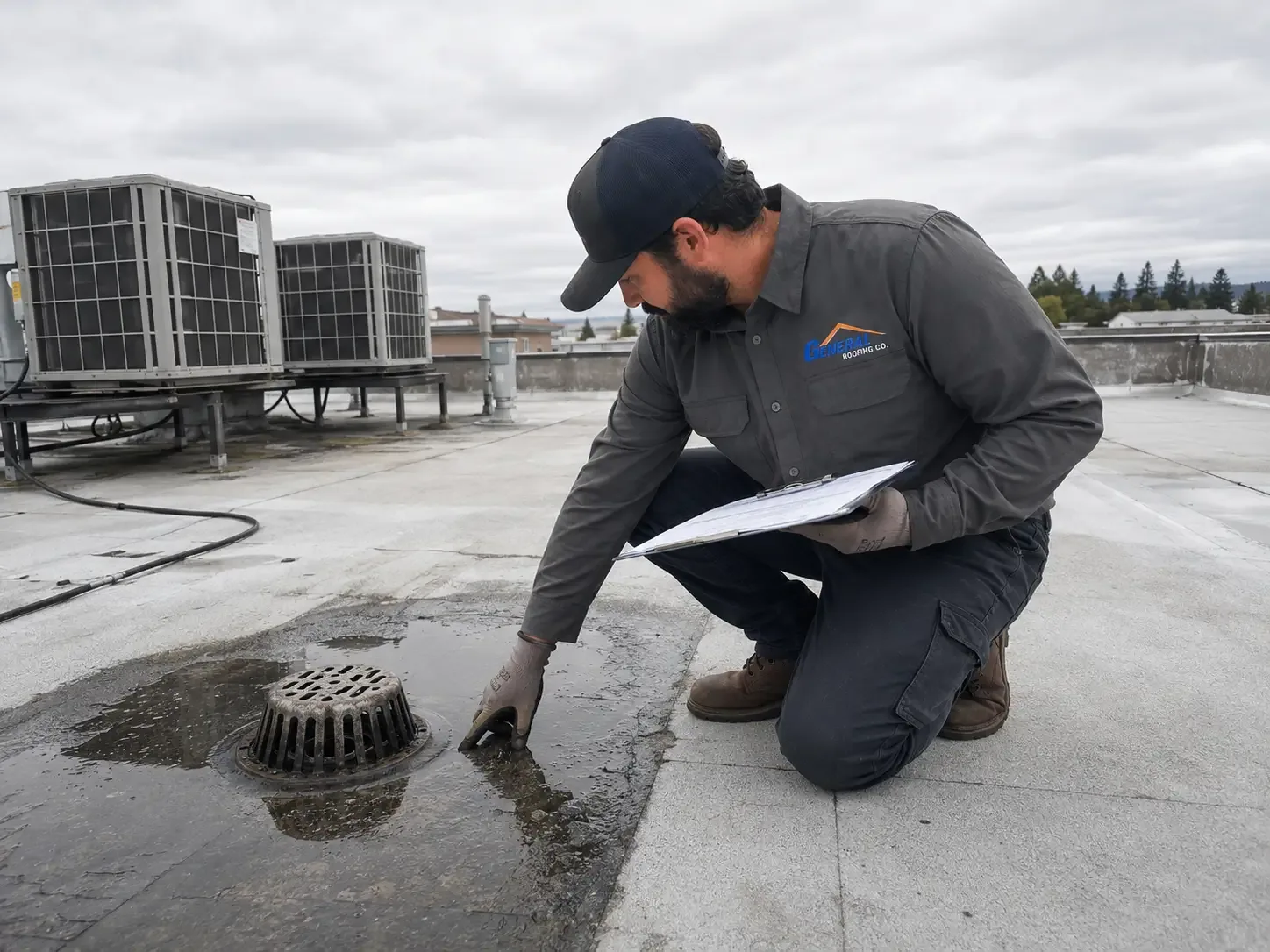
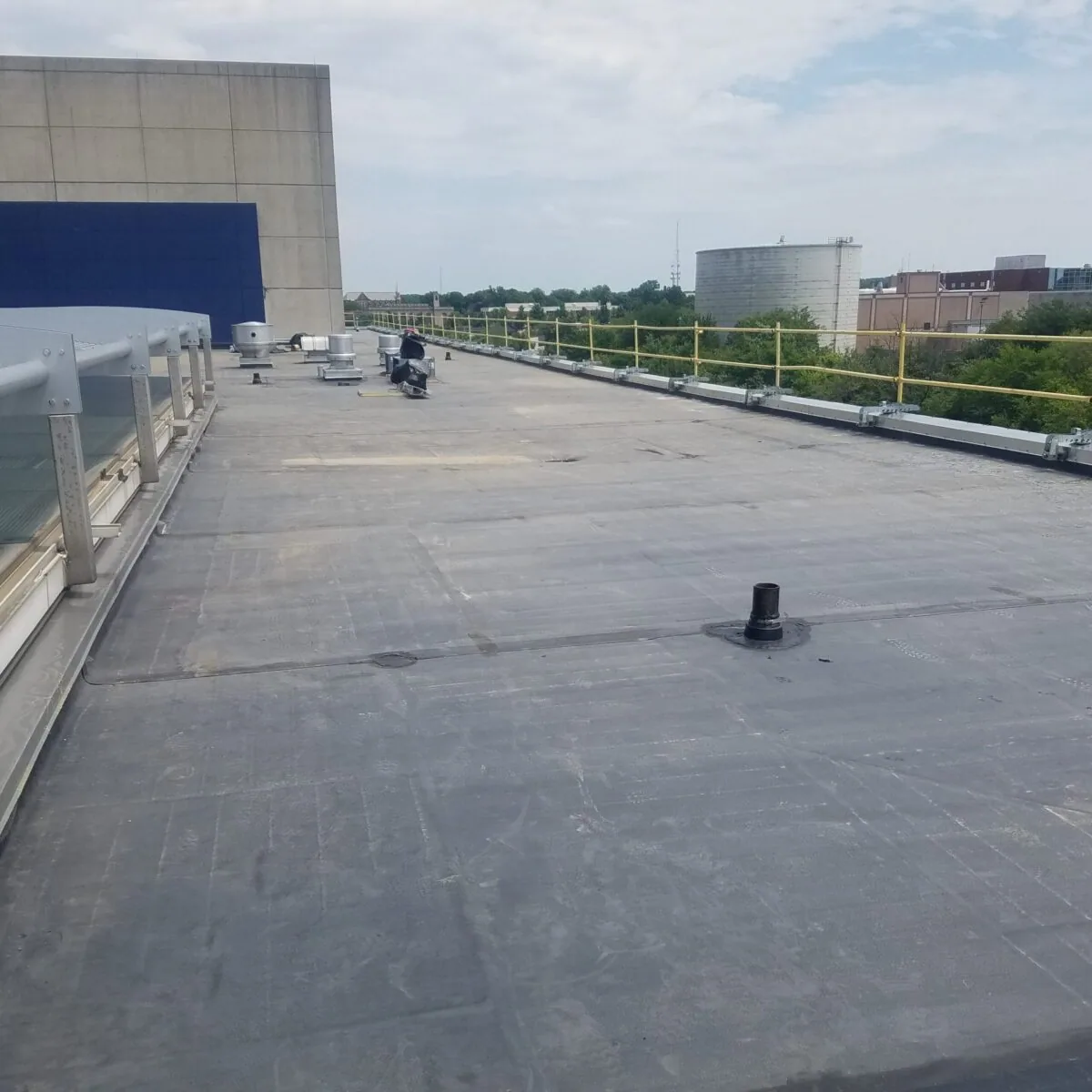
A broad roof field can hide a low spot where runoff slows before reaching a drain. We check bowls, strainers, scuppers, overflow paths, and the seams that cross the water route. Debris, old repair material, or a shifted outlet can change how a section sheds water. Stamford's winter snowfall and subfreezing nights put added attention on trapped water and transitions that move through freeze-thaw cycles. The detail still needs a field check; climate does not diagnose a particular roof. We record ponding marks and confirm whether the outlet is clear before proposing membrane work. If the bowl or scupper needs correction, drain and scupper service can address that component with the surrounding membrane in view. A drain repair should leave its flange, adjacent lap, and overflow route working together. We mark where water enters the drain and where it crosses the field so the repair does not stop short of the contributing defect.
Loading operations: plan the roof and ground routes
Roofing material, removed insulation, and tools need a path that does not block vehicle movement or a staff entrance. We identify staging space, roof access, delivery windows, and the area below each repair zone before the crew mobilizes. CTDOT's Route 1 report describes commercial driveways and access concerns along an arterial used when I-95 is congested or disrupted. That corridor context can inform a delivery conversation near Route 1, but a property still needs its own route check. We keep the lift area, sidewalk protection, and loading pattern tied to the site's actual operations. At Norwalk Center, business blocks sit among commercial and industrial corridors; mixed uses make pedestrian protection important when roofing work reaches the edge. We document where material goes and how debris leaves instead of leaving those decisions to the morning of delivery. The staging map should show where a lift can set up, where trucks can turn, and which doors cannot be narrowed. If roofing crosses an occupied office or live shipping lane, the daily closeout needs to record what remains open and what has been sealed before crews leave.
Membrane and deck: check what supports the repair
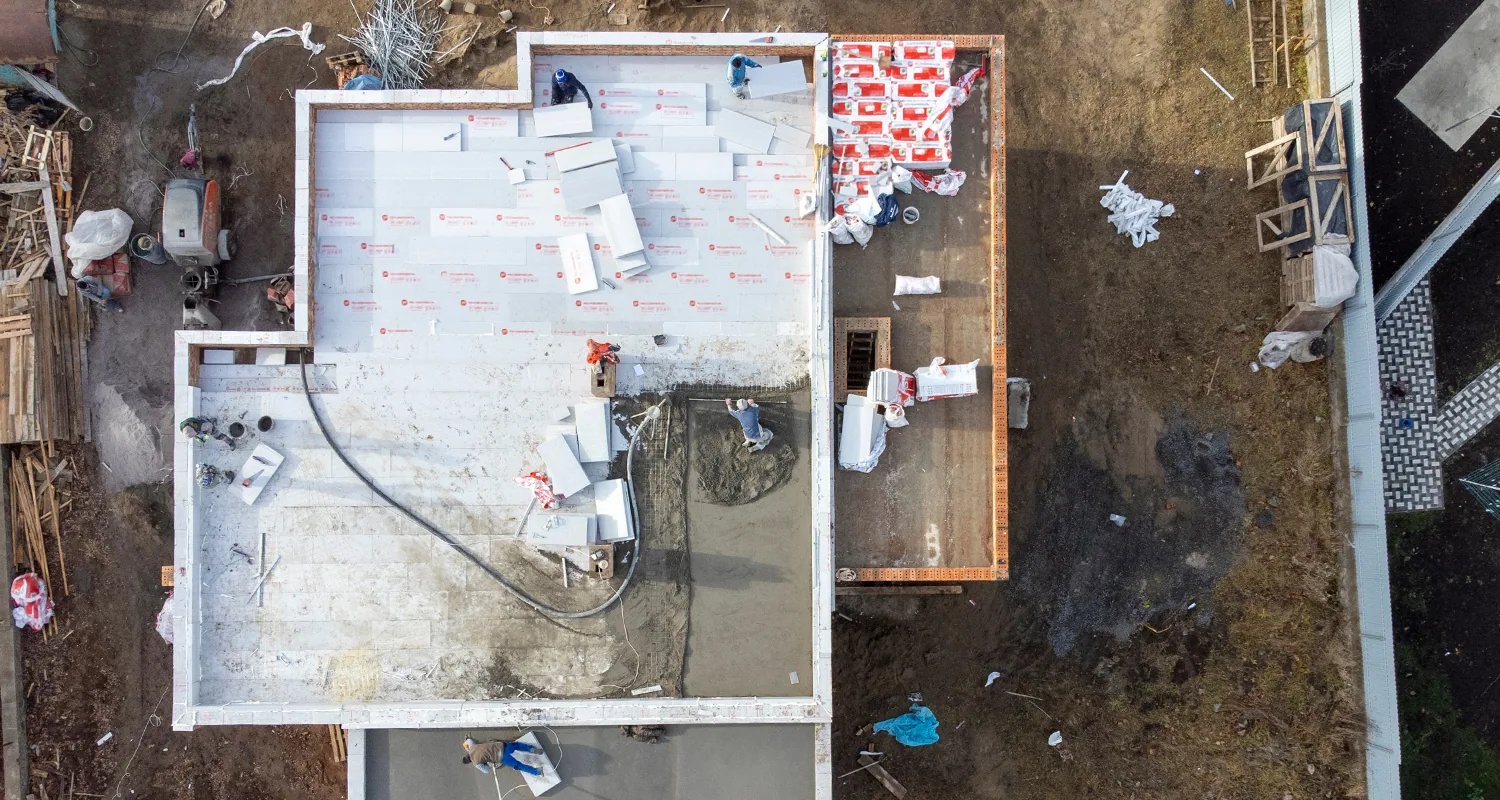
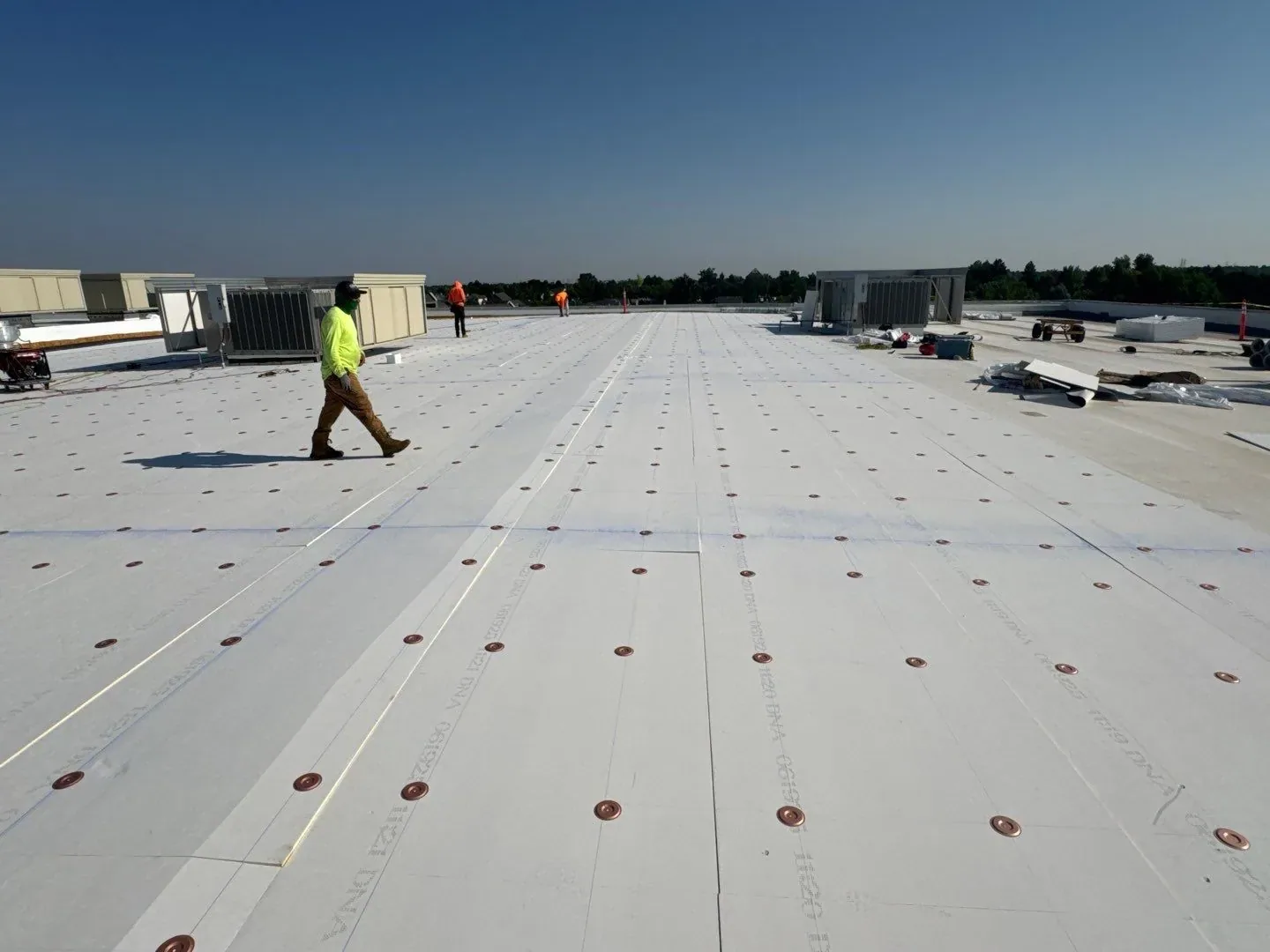
Warehouse roofs may carry old patches, multiple layers, penetrations, and changes made as operations shift. A surface mark cannot establish what is below it. We inspect accessible seams, edge metal, curbs, insulation conditions, and the deck where visible, then identify where moisture testing or a core opening would change the scope. A small split on a stable, dry substrate may accept a focused repair. Soft decking, widespread wet insulation, or repeated lap failure can require a wider boundary. We compare a system such as TPO roofing against the existing assembly, attachment, slope, and details. Product type alone does not set the recommendation. If moisture or attachment remains uncertain, the scope should state the test, the area it covers, and how its result changes the next step. That gives an owner a decision instead of a surface patch with no explanation of the material underneath. The deck changes the repair call. Loose fasteners, corroded metal, or soft areas beneath an intact membrane can make a spot patch short-lived. We identify that limit before opening a larger area, then write down whether the proposed fix reaches sound material or only covers the symptom. A manufacturing-plant roof may require more trade coordination, but the close reading of layers comes first.
Equipment curbs: preserve service and flashing access
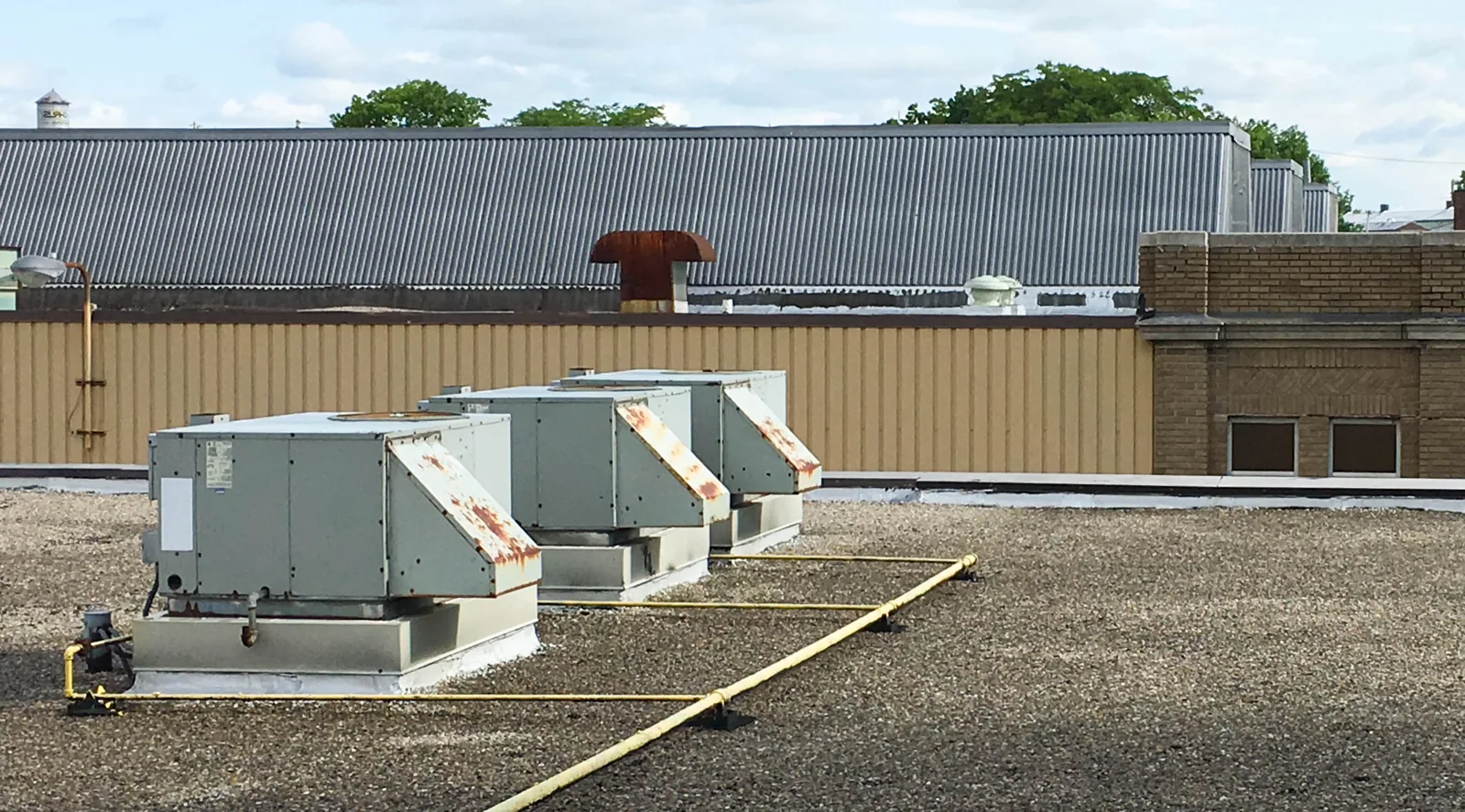
Heating and ventilation equipment, pipe supports, and conduit interrupt the membrane at every curb or base. We inspect corners, counterflashing, fasteners, metal returns, and the laps around each penetration. A vibration line can split sealant or loosen a transition; service foot traffic can abrade a walkway or push water toward a seam. We note mechanical components that must remain active and distinguish roofing work from equipment repairs assigned to another trade. The plan should leave a clear service path after the repair, not bury a curb beneath an unmarked patch. A curb and support review can set that flashing boundary and record any base that needs coordination. Warehouse operations may use roof units without a convenient shutdown window, so access, protection, and daily closure need to be agreed before the membrane is opened. We photograph the transition and describe what remains for a later maintenance visit.
Repair, recover, or replace: set the work limit
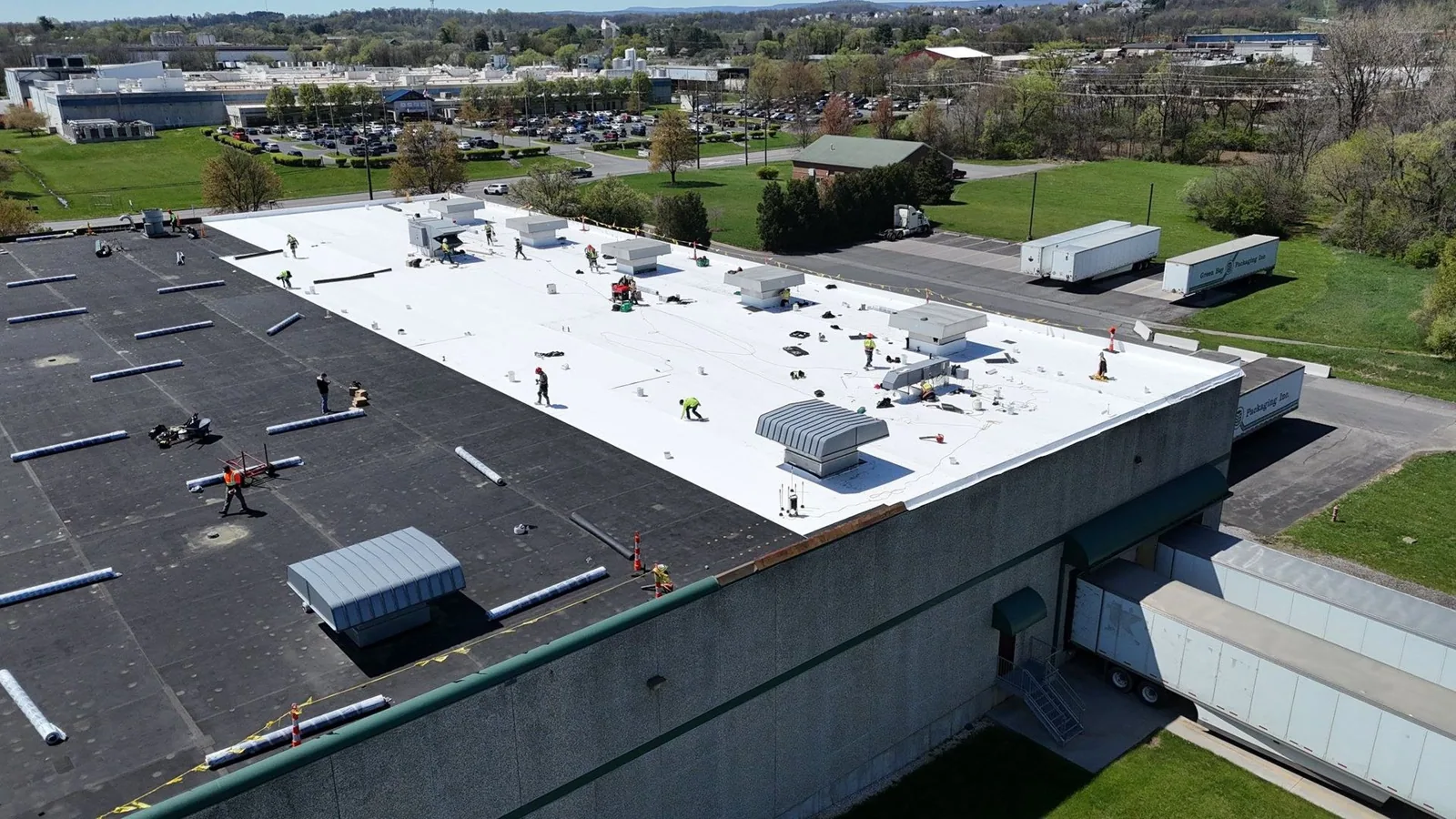
A contained defect with stable adjoining material may support repair. A recover adds a system over an existing roof only when moisture, attachment, deck, and code conditions allow it. Widespread wet insulation, failed edges, or unstable layers can move the discussion toward replacement. We mark the included roof area and identify the condition that would expand the scope after removal. A recover evaluation is not the same decision as a tear-off and replacement; each has different preparation and dry-in requirements. On a warehouse, the scope also states where deliveries, staging, and access stay clear. The Route 1 corridor's commercial activity can add ground-level coordination, but it does not determine roof condition or permit requirements. Closeout photos should connect repaired details to roof zones and note any inaccessible area. That record gives the property team a usable comparison point when the next leak appears or another trade needs roof access.
Commercial Roofing Questions
Can a leak above a loading area be repaired without shutting down the building?
Often the roofing work can be sequenced around deliveries, but the access path, interior protection, and equipment needs decide the work window. We locate the roof defect first, then define a boundary that can be opened and closed while the property keeps agreed routes available.
How do you find wet insulation under a warehouse roof?
A walk can identify soft areas, staining, and seams that deserve closer testing, but hidden moisture may require infrared review or a core cut. We mark the test zone and explain what its result would change. The removal boundary follows the findings rather than the size of the ceiling stain.
What roof conditions make replacement more suitable than a patch?
Repeated seam failure, broad wet insulation, deteriorated edges, or an unstable deck can make a small repair boundary unreliable. We compare the affected areas with the sound assembly around them. If a focused correction remains practical, the scope says where it ends and what condition would call for a wider project.
How are rooftop units handled during warehouse roofing work?
We inspect curbs and service paths, then identify equipment that must stay active or needs coordination. Roofing closes the membrane and flashing transition; the mechanical trade handles the unit and connections. The work sequence records any shutdown window and preserves access needed for service.
What should the Stamford property manager share before a roof walk?
Mark the interior leak location and provide recent service notes, access rules, delivery hours, and known equipment limits. A roof plan or prior repair record can help locate drains and curbs. We compare those details with the assembly and return a written repair scope or broader system recommendation.