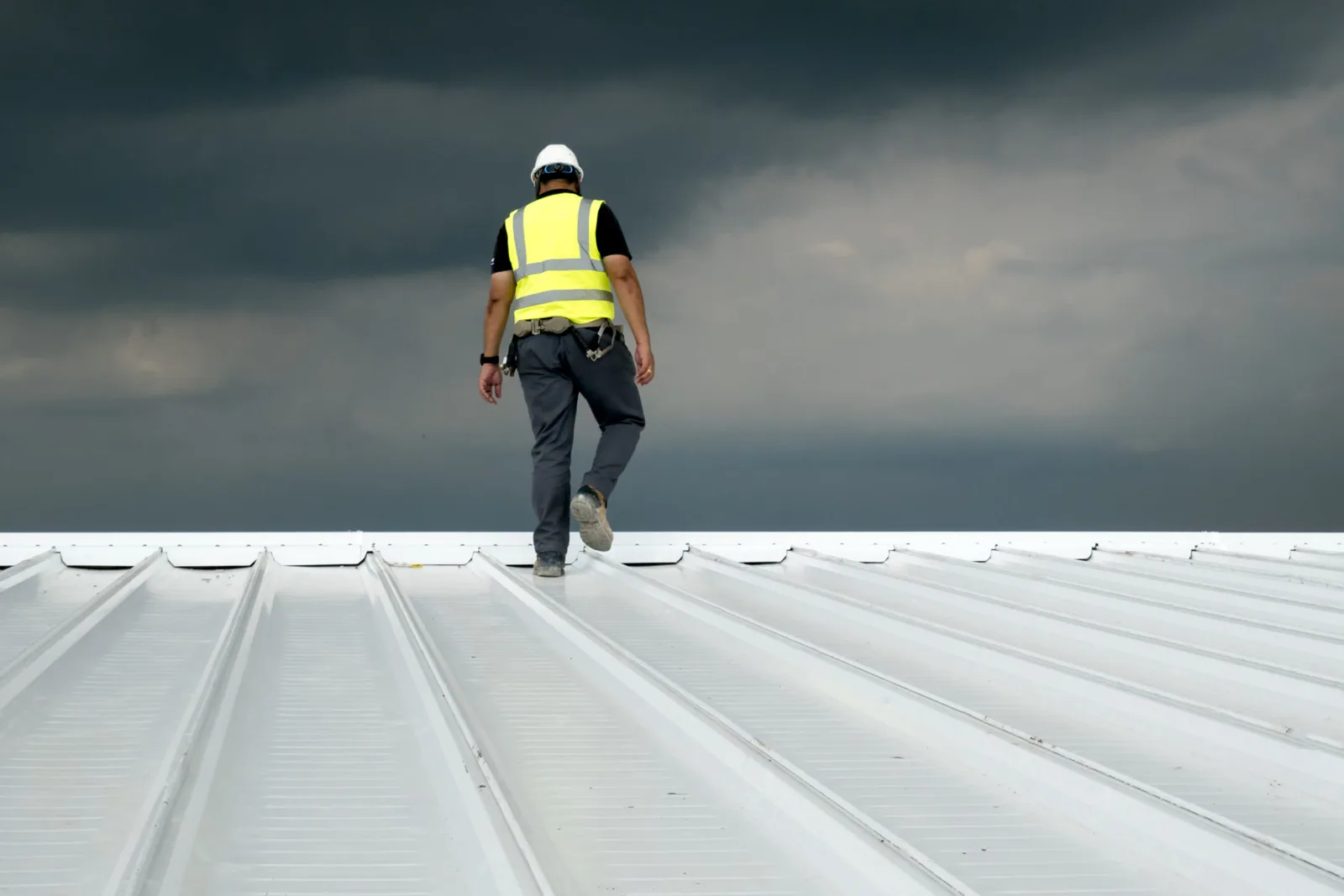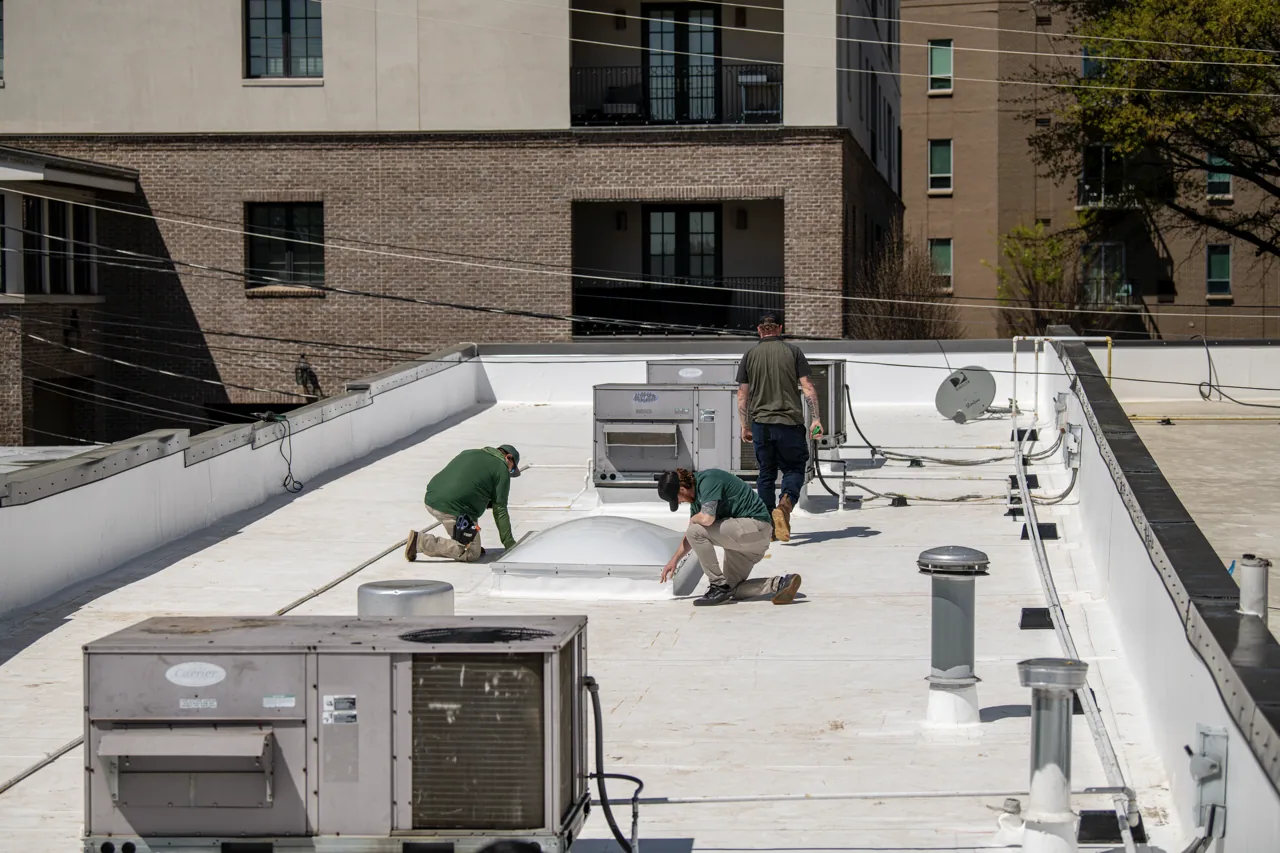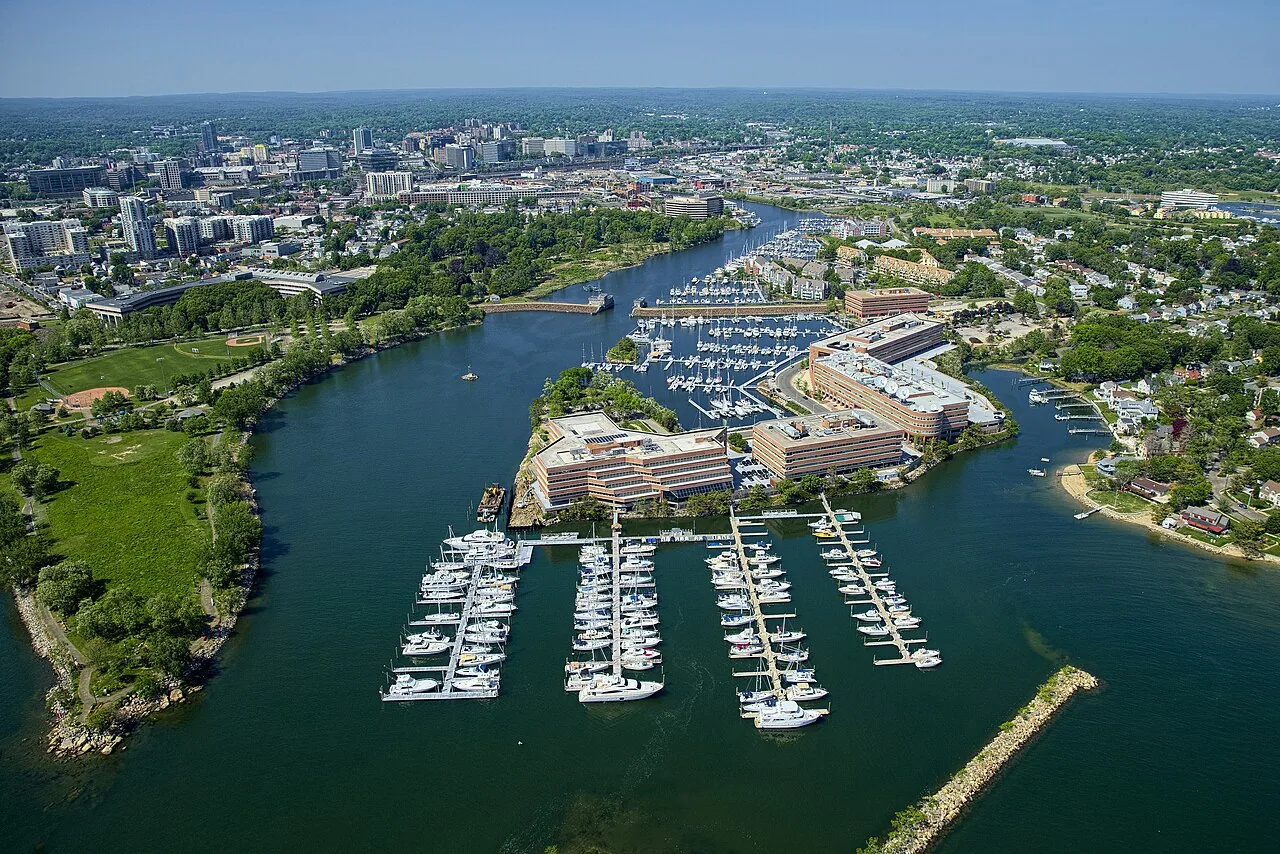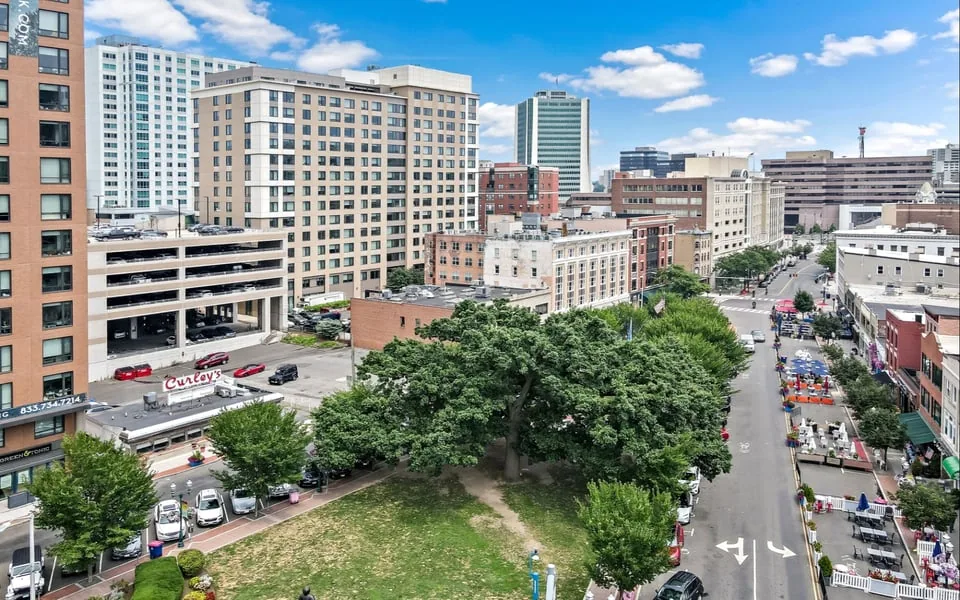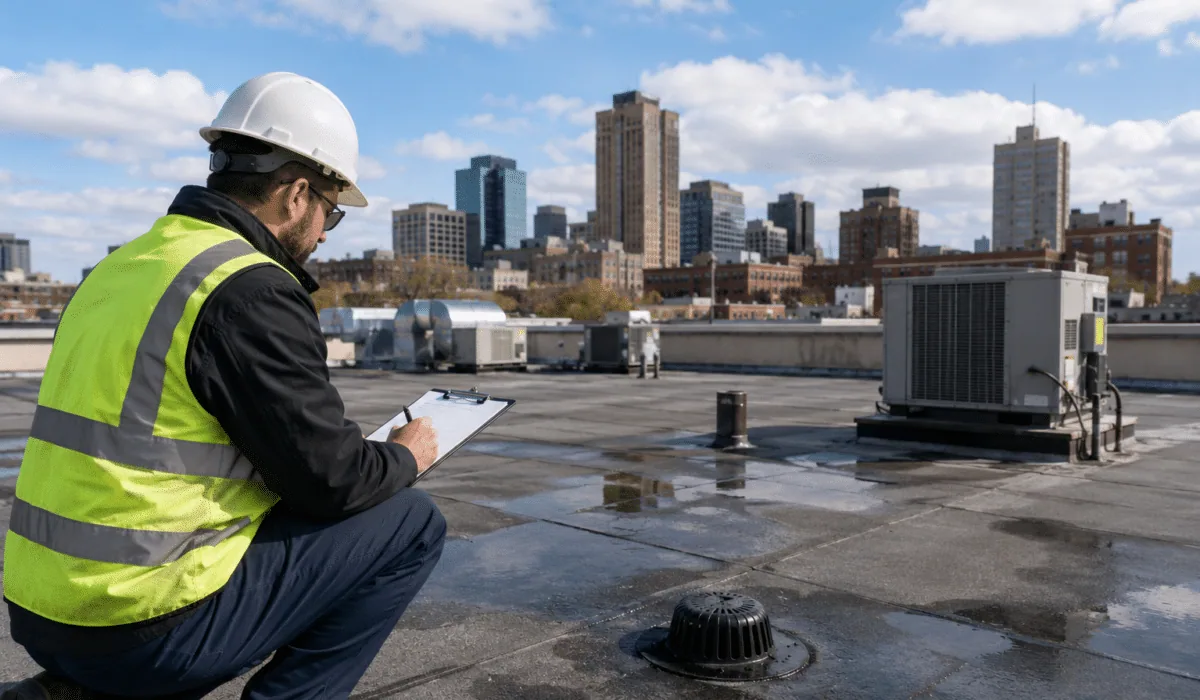
A leak near a rooftop unit can travel under the membrane before it appears inside. In Harbor Point, Stamford, CT, that makes the curb, nearby seam, and drainage path a single inspection area. Harbor Point is a phased mixed-use district on former brownfield land by Stamford Harbor, with homes, offices, shops, a hotel, and public spaces in its broader mix. That description does not tell us any individual roof's assembly or condition. We inspect the roof in front of us: membrane laps, curb flashing, edge metal, drain bowl, and the substrate where moisture may have moved. A commercial roof inspection starts with reported leak locations and roof access, then records what the visible details can support.
Leak path: trace the curb and the field
Water at a ceiling can be several steps away from the opening. A curb corner may admit it, insulation can carry it laterally, and a seam can release it over a different room. We compare each reported interior mark with the roof area above and around it. The walk checks for open laps, punctures, displaced counterflashing, failed sealant joints, and drainage that leaves water at a transition. We note whether the membrane is loose, split, blistered, or still bonded. Those observations matter more than the nearest piece of rooftop equipment when setting the patch limits.
In a district where different uses sit close together, access and work sequencing also matter. We identify which roof zones can be reached, where work can be staged, and whether a test or repair could affect an occupied area below. The inspection record separates a confirmed opening from a possible path. If a concealed layer cannot be evaluated from the surface, we say what additional access or testing would resolve the question. A repair that closes one corner but leaves water trapped beneath the field does not solve the whole condition.
Curb flashing: keep the transition continuous
A roof curb breaks the membrane plane. Its corners, vertical faces, and upper termination have to work together so water cannot get behind the flashing. We check for a lifted edge, open lap, fishmouth, cracked sealant, or metal return that has pulled away. Around equipment, we also look for service clearance and the route a technician uses. A later trade visit can disturb a repair if the work area and protection are not clear. We document those constraints before specifying material or scheduling a return.
Harbor Point roof work starts by matching the repair detail to the installed membrane. A thermoplastic sheet may need a weld test and fresh membrane; EPDM can call for a compatible tape detail; a coated roof may require removal of unsound coating and a prepared substrate. We do not assume a surface that looks dry is sound underneath. If the insulation is wet, it may need to be opened and replaced before the detail is closed. Commercial roof repair should state what is being removed, what remains, and where the new work ties to an intact surface.
Drainage: inspect bowls, scuppers and edges
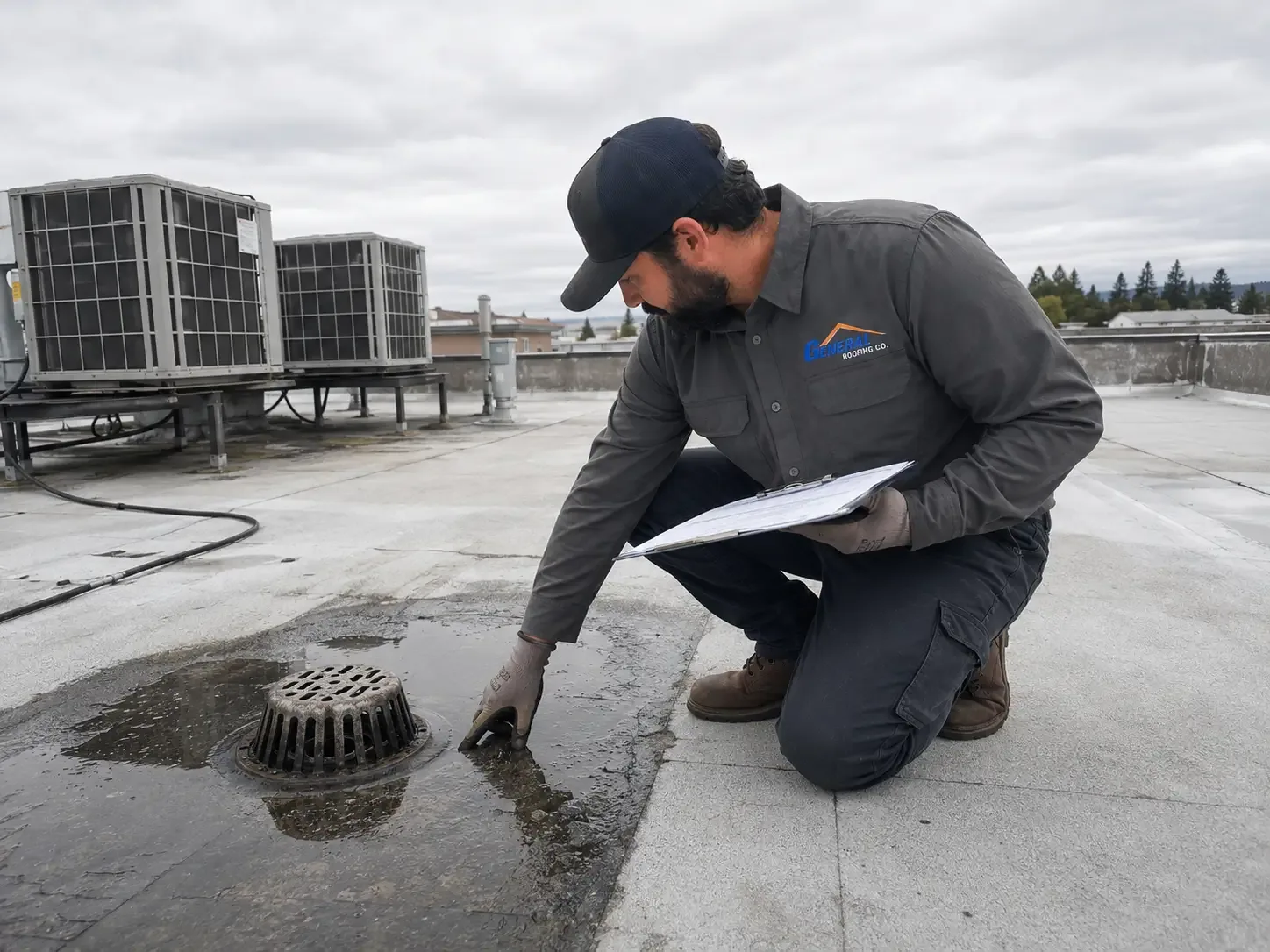
A low point can collect debris and keep water against a seam. We clear enough to inspect the drain bowl, clamping ring, strainer, flashing, and visible discharge route. We also check nearby scuppers and overflow openings for blockage or loose metal. A slow drain may be a maintenance issue; a leak at the flange may require membrane repair or a new connection. If the deck has deflected or a drain sits above the surrounding field, cleaning will not correct the geometry. We record what the walk shows before recommending a change.
At the perimeter, coping and edge metal must keep water outside the wall assembly. A loose cleat, open splice, or failed seal can let runoff pass behind the fascia. We follow the edge through corners and changes in height rather than treating each loose piece as unrelated. Drain and scupper service addresses the membrane connection as well as the path away from the roof. If water has reached the wall or interior, the affected area should be documented before the finish is closed.
Harbor Point and South End: separate each roof record
Harbor Point sits within Stamford's South End, where the mixed-use redevelopment includes several kinds of occupied space. We keep inspection notes tied to the specific property and roof section: system type, observed defects, moisture readings where taken, photos, and access limits. A manager responsible for more than one property can then compare condition records without treating the area as one campus or assuming a shared construction history. South End roof service follows the same property-by-property approach.
Downtown Stamford and Harbor Point are distinct Stamford areas, and the access plan and roof condition belong to each building. Stamford's winter snow and subfreezing nights put attention on drainage, terminations, and seams that may move through freeze-thaw cycles. Summer daily highs in the low-to-mid 80s also make heat exposure and rooftop equipment conditions relevant during a walk. We inspect those details directly and avoid assigning a problem from weather alone. Downtown Stamford roofing also begins with the actual assembly and a defined work area.
Repair boundary: decide what can stay
A local repair makes sense when the membrane is attached around the defect, the substrate is dry enough to accept new material, and the surrounding details remain reliable. We mark the repair limits, prepare the surface, and connect the new material to a sound field or flashing. If moisture extends beyond the visible opening, the boundary must follow what testing finds. Covering wet insulation can hide the source while leaving a weak layer under the new work. We identify any area that needs further access before writing a final price.
Repeated failures change the question. Several open seams, soft insulation, or detached edge metal can mean the roof needs a maintenance plan, coating evaluation, recover, or replacement study instead of another isolated patch. Preventive roof maintenance can address debris and developing wear when the assembly remains serviceable. A recover review checks attachment, moisture, deck capacity, and applicable project requirements before another layer is considered. The recommendation stays tied to the roof condition and its use.
Timing and cost: make access part of the scope
Cost changes with the repair area, membrane type, number of penetrations, material removal, moisture below the surface, and access needed for labor and equipment. Work near a curb may require coordination with the equipment service route. A repair involving wet insulation can add removal, replacement, and dry-in steps. We set those assumptions out in the written scope so a manager can see what is included and what condition could expand the work.
Timing depends on weather, substrate preparation, material compatibility, and keeping the roof watertight as work advances. A patch cannot be installed over a surface that is wet or contaminated. A larger project may need a phased sequence around occupied areas and equipment operation. A condition report can preserve findings and photos for future budgeting, while replacement planning addresses broad failure. The next decision should name the defect, the proposed repair, and the condition that would change the boundary.
Commercial Roofing Questions
Does a Harbor Point roof need a different repair because it is near the harbor?
The location alone does not identify a defect. We inspect the membrane, edge metal, flashing, and drainage in place, then choose a repair material that matches the existing system and conditions found.
Can a leak around a rooftop unit be repaired without replacing the roof?
A curb repair can remain local when adjacent membrane and substrate are sound. We inspect the corners, field seam, and nearby insulation first; moisture or repeated failures can widen the work.
What does a roof walk need from our property team?
Provide leak locations, recent service notes, roof access limits, and any equipment areas that require coordination. We record the accessible conditions and identify any test that needs a separate access step.
How do you decide between a patch and recover?
The choice follows attachment, moisture, deck condition, and project requirements. A patch fits a contained defect. A recover is considered only when the existing assembly can support another layer and wet materials are addressed.