A slow drain can leave water against a seam long after rain stops. On a commercial roof in Stamford, CT, that detail deserves a place on the maintenance record before a ceiling stain appears. We check the drain bowl, laps, curb flashing, edge metal, and previous repairs, then mark what needs attention. Winter snowfall and subfreezing nights make drainage and terminations worth checking as temperatures change. A roof condition record connects each observation to a location and next step. Maintenance is not a promise that a roof will stay trouble-free. It is a way to see membrane movement, debris, and small openings while the repair boundary is still clear.
Visit sequence: set the checks to the roof
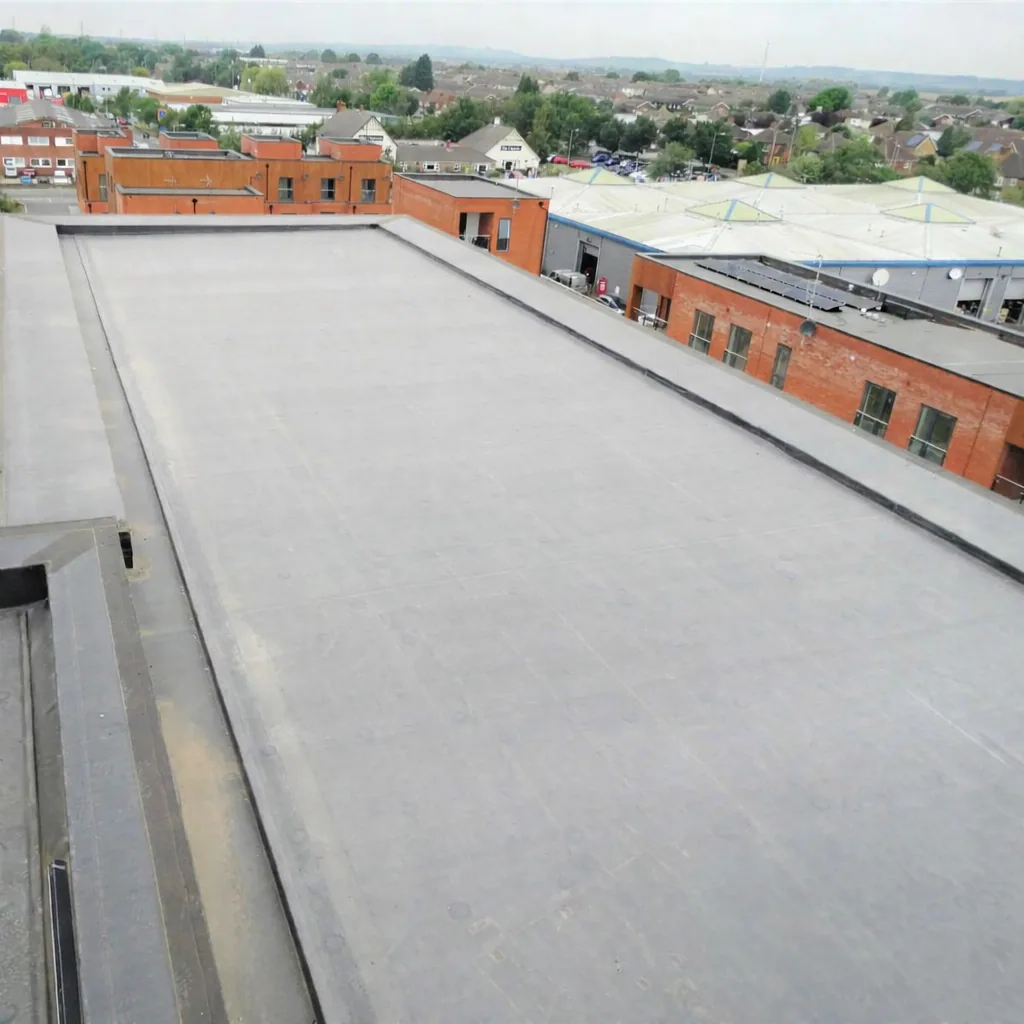
A useful program follows the assembly rather than a generic calendar. We identify the membrane, roof age when records support it, prior repairs, drainage layout, rooftop equipment, and access limits. Those details set the inspection route and the points that deserve comparison on the next visit. A commercial roof inspection can establish the initial condition, while later maintenance checks focus on changes. We photograph details from a consistent angle where access allows. The record can then show whether a seam has opened, a patch has shifted, or water is gathering in the same area.
Stamford roofs face snow and freeze-thaw cycling, so an annual review should not end with a spring walk alone. We consider the roof after the season that stressed its drains, edges, and exposed transitions. If a storm or equipment project changes the surface, that event may call for a focused check. The interval is tied to what the roof shows, its drainage, and its use. We explain why a visit is due and what decision it can support rather than selling the same checklist to every property.
Drain path: clear the point and follow the field
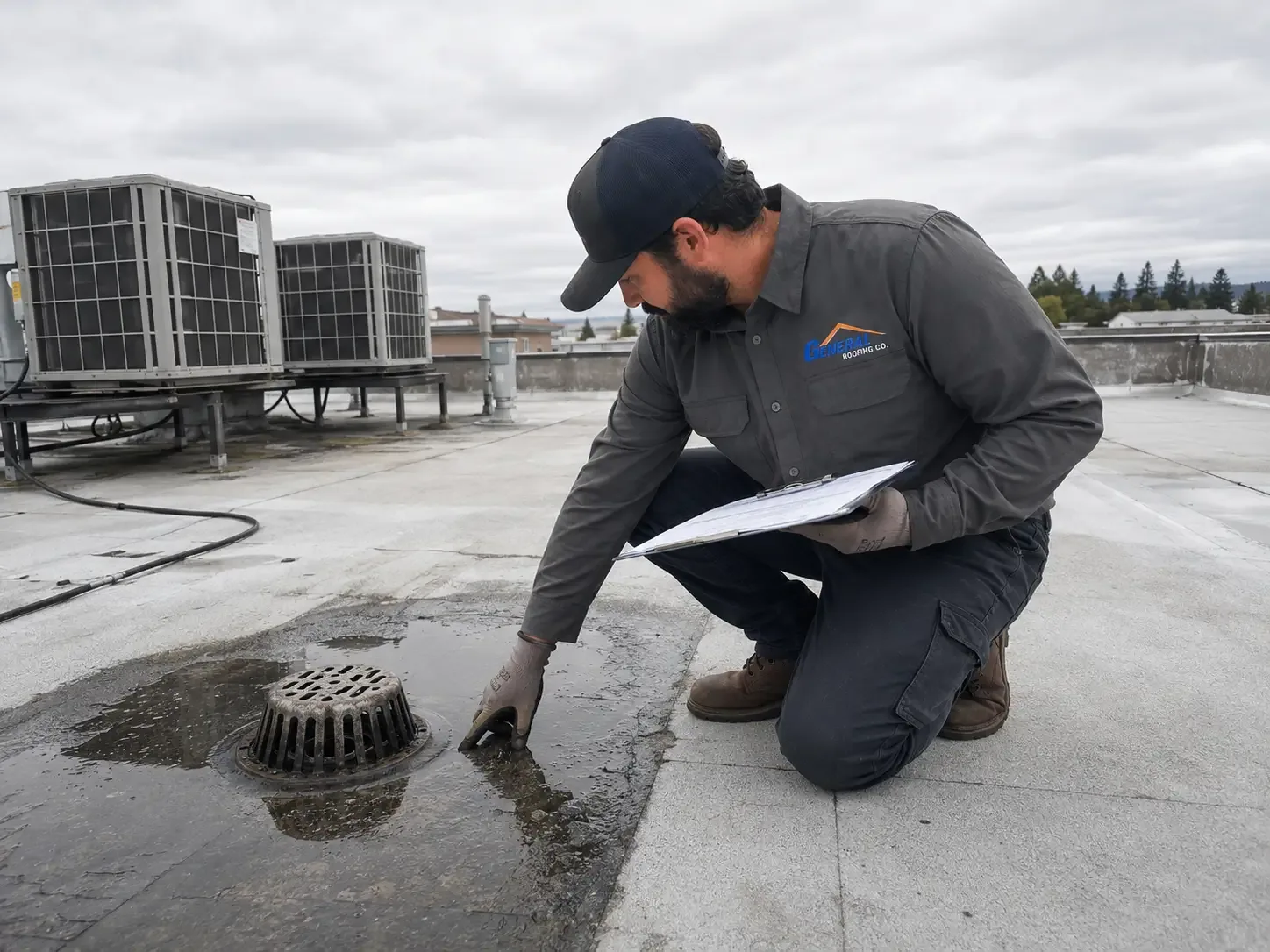
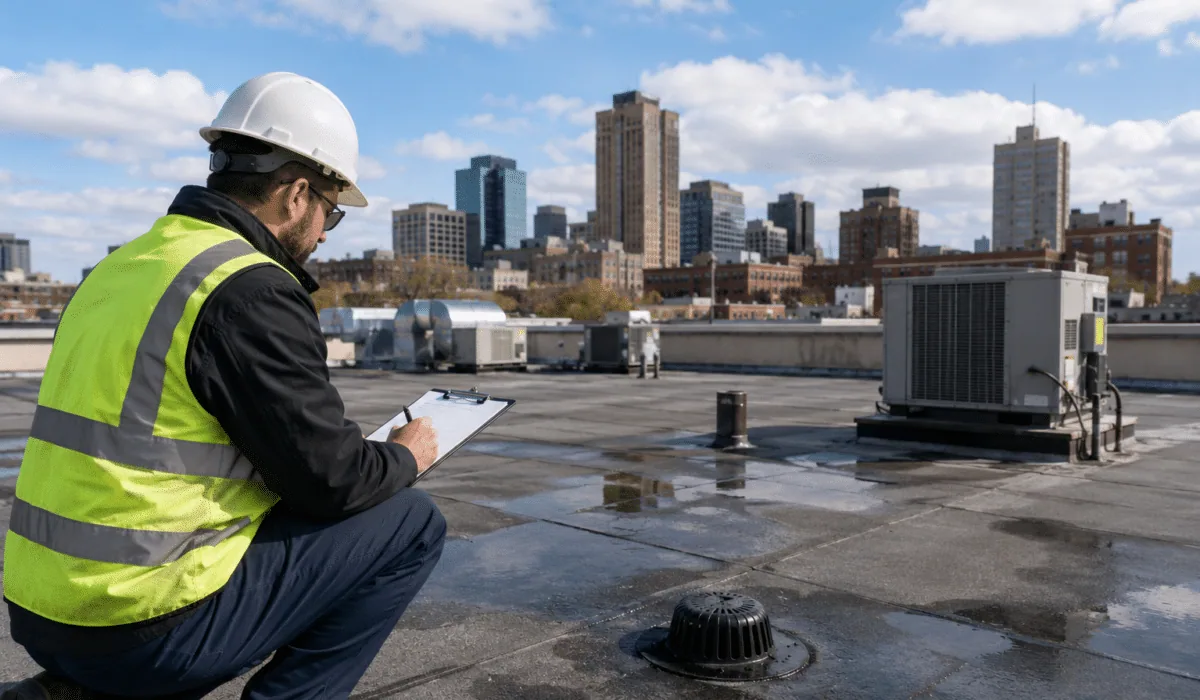
Leaves, sediment, loose fasteners, and abandoned material can slow a drain or narrow a scupper. We clear only what can be handled safely and inspect the bowl, strainer, flange, nearby seams, and visible water path. A clear opening does not correct a low area that holds water or a flange that has separated from the membrane. Our drain and scupper work addresses those distinctions, including crickets or tapered corrections when the roof layout supports them. The maintenance note identifies the condition rather than labeling every wet area a drainage failure.
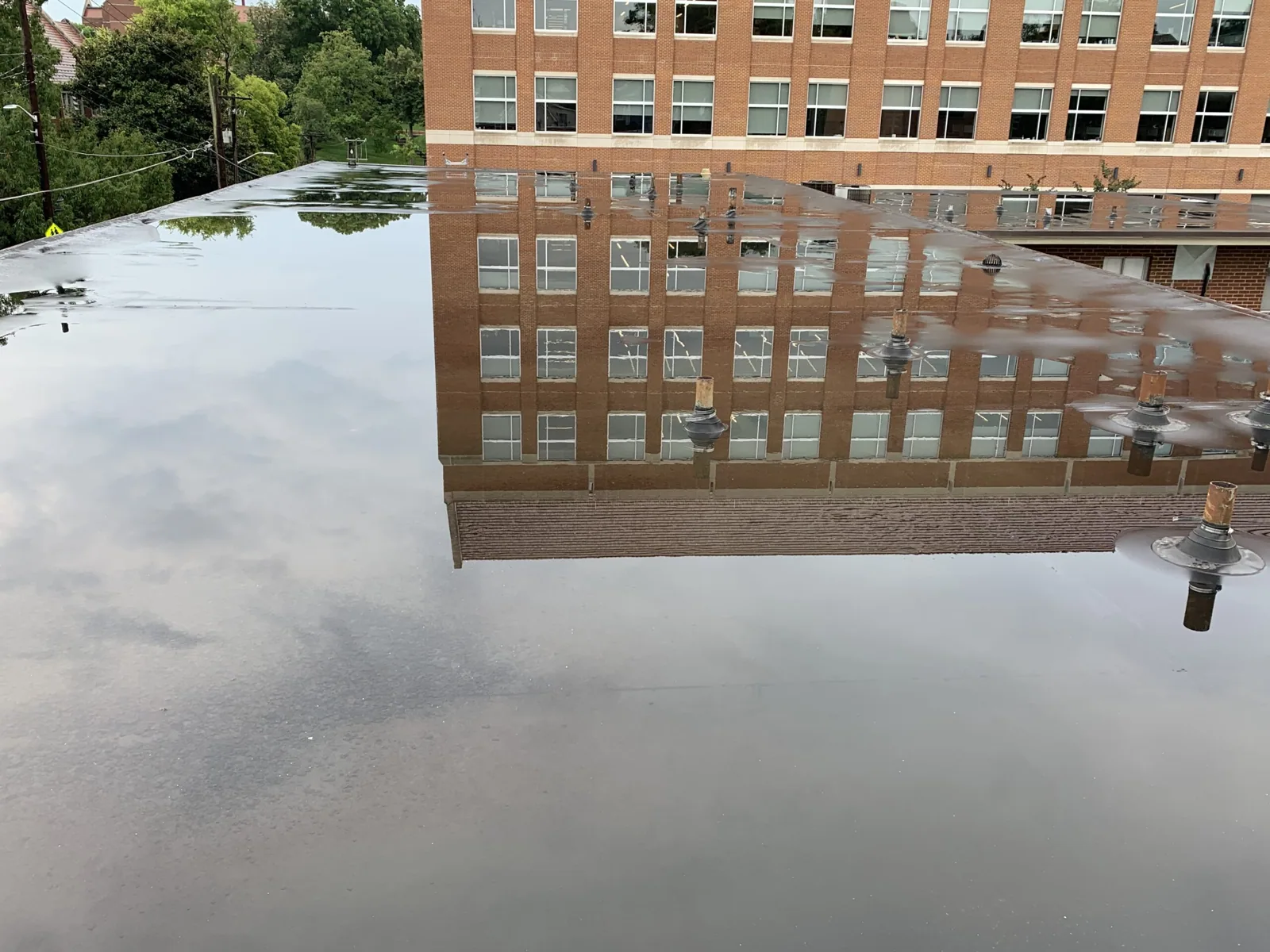
We also look for water staining, displaced strainers, and debris that returns after a nearby tree or construction activity. On a low-slope assembly, ponding may concentrate stress at a seam or around a curb. We compare those details before deciding whether clearing, a repair, or a drainage change belongs in the next scope. The ponding-water assessment can help define that work. Any area hidden by stored materials or unsafe access is marked for a separate visit, not counted as inspected.
Seams and curbs: catch movement early
Membrane edges, termination bars, curb corners, and metal returns move differently as temperatures shift. We look for a lap that has begun to separate, sealant that has pulled away, a flashing turn-up that no longer sits flat, or fasteners that have backed out. The inspection stays specific to each material. A TPO assembly needs its welds and transitions reviewed, while an EPDM roof has seams and accessories suited to its own repair method. We do not treat a familiar roof appearance as proof that every detail is sound.
At equipment curbs, we check whether service traffic has disturbed flashing or left tools and packaging near drains. Around skylights and pipes, the penetration detail matters more than a broad view of the field. If movement or an open edge is found, we note the repair boundary and whether the surrounding substrate is dry enough to receive work. A focused repair scope can address a contained defect. Wider membrane movement or wet insulation may call for testing before a patch is selected.
Building use: keep the route practical
In Downtown Stamford and South End, offices, housing, and retail share a mixed-use core. Glenbrook is a named Stamford satellite neighborhood, and its service notes stay tied to the building inspected. That pattern can put occupied space under a roof route shared by service equipment and maintenance access. We coordinate entry with the responsible contact, keep notes tied to roof zones, and flag a condition above sensitive operations. We confirm each building's access and operating needs, then keep service records tied to the roof zone inspected. That lets the next visit follow the actual equipment path, drain, or seam requiring attention. At the return visit, we compare a flagged detail with its prior photo.
A report can separate roof findings from HVAC work, facade maintenance, and interior response. It can also record a shut-down window requested for equipment access, without turning that preference into a roofing diagnosis. The office roof review and property-management coordination connect the roof condition to the people who schedule work. We identify the safe route, areas with restricted access, and the person who can approve a repair. That keeps a later visit focused and avoids repeating checks that were already documented.
Repair record: separate upkeep from capital work
Some findings fit routine maintenance: remove loose debris, reset a displaced strainer, or seal a small detail after confirming the substrate. Other conditions point to a repair scope, moisture testing, or a larger system decision. We note the evidence that changes the recommendation, including repeated leakage, wet insulation, open seams, deck movement, or a detail that cannot accept a durable repair. A capital plan can group those items by urgency and budget cycle. It should not hide an active opening among long-range projects.
After work, we record the repair location and any condition that remains for monitoring. That record gives the next inspector a point of comparison and helps the property team decide when another roof walk is useful. If the same area changes, we revisit the assembly rather than repeat an old patch by habit. Where the field is sound but a coating or recover option is being considered, we document the limits and testing needed first. The decision belongs to the observed roof, not a preset maintenance package.
Commercial Roofing Questions
What roof areas and records belong in a scheduled maintenance review?
The route covers drains, seams, edges, curbs, penetrations, and prior repairs that can be reached safely. We record photos, locations, access limits, and items that need a separate scope. The assembly and its current condition determine which checks matter most.
Can a maintenance program prevent every leak?
No inspection can remove all roof risk. Regular checks can find visible changes, clear accessible drainage, and identify a repair before water reaches finishes. Concealed conditions or severe weather can still change the roof after a visit.
When should a Stamford roof be checked after winter?
A spring review can document snow-related movement, debris, and drainage conditions, especially at terminations and low areas. If a leak appears during the season, we assess that path when it is reported rather than waiting for a calendar visit.
How are defects outside the scheduled maintenance task handled?
A visit may include a small corrective task when the scope and conditions support it. We record that work separately from recommendations requiring moisture testing, material removal, or a larger repair boundary.
How does the report help with budgeting?
It distinguishes active defects from conditions that can be monitored. Photos, repair locations, and remaining questions give the owner a basis for scheduling focused work or comparing it with a broader roof project.