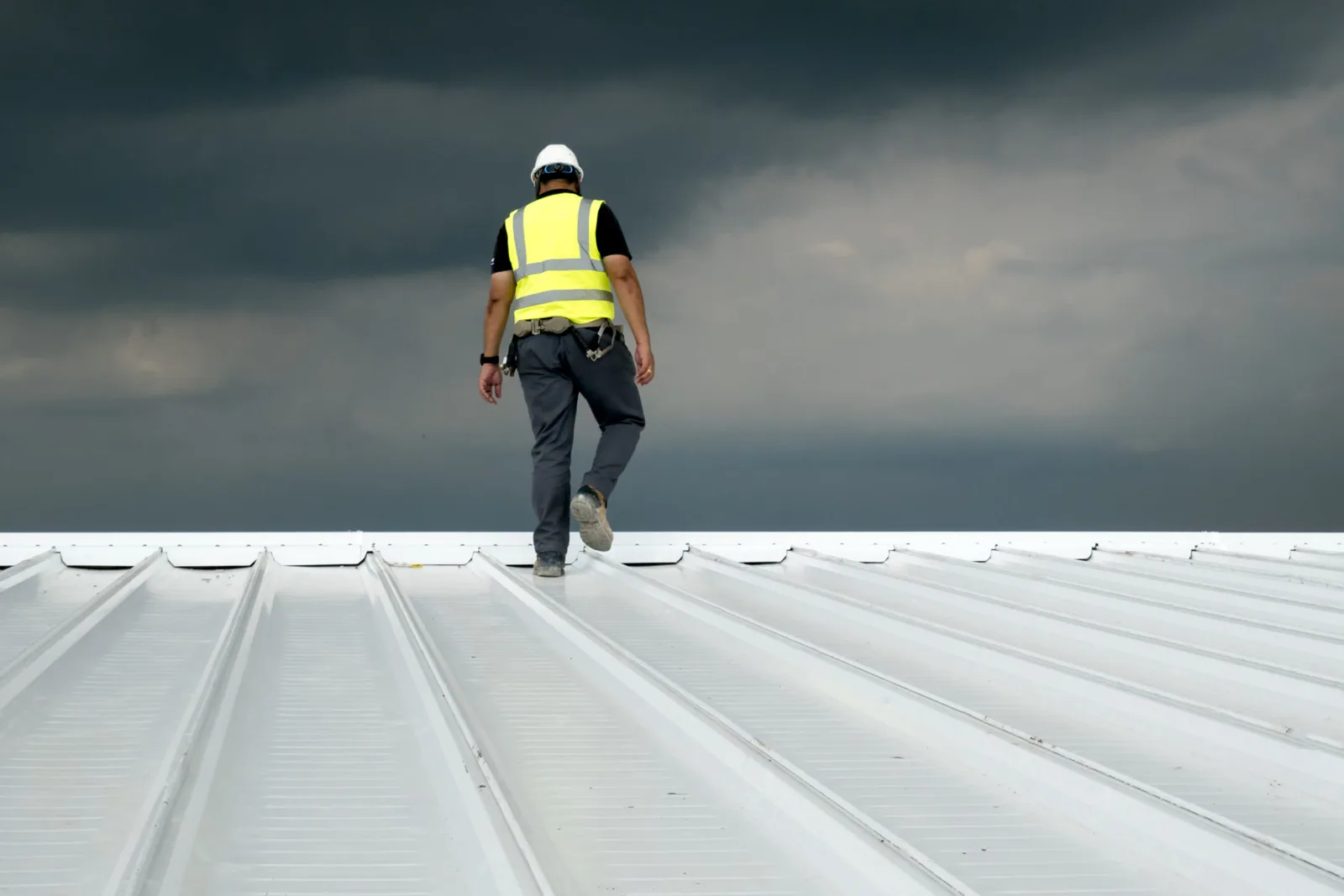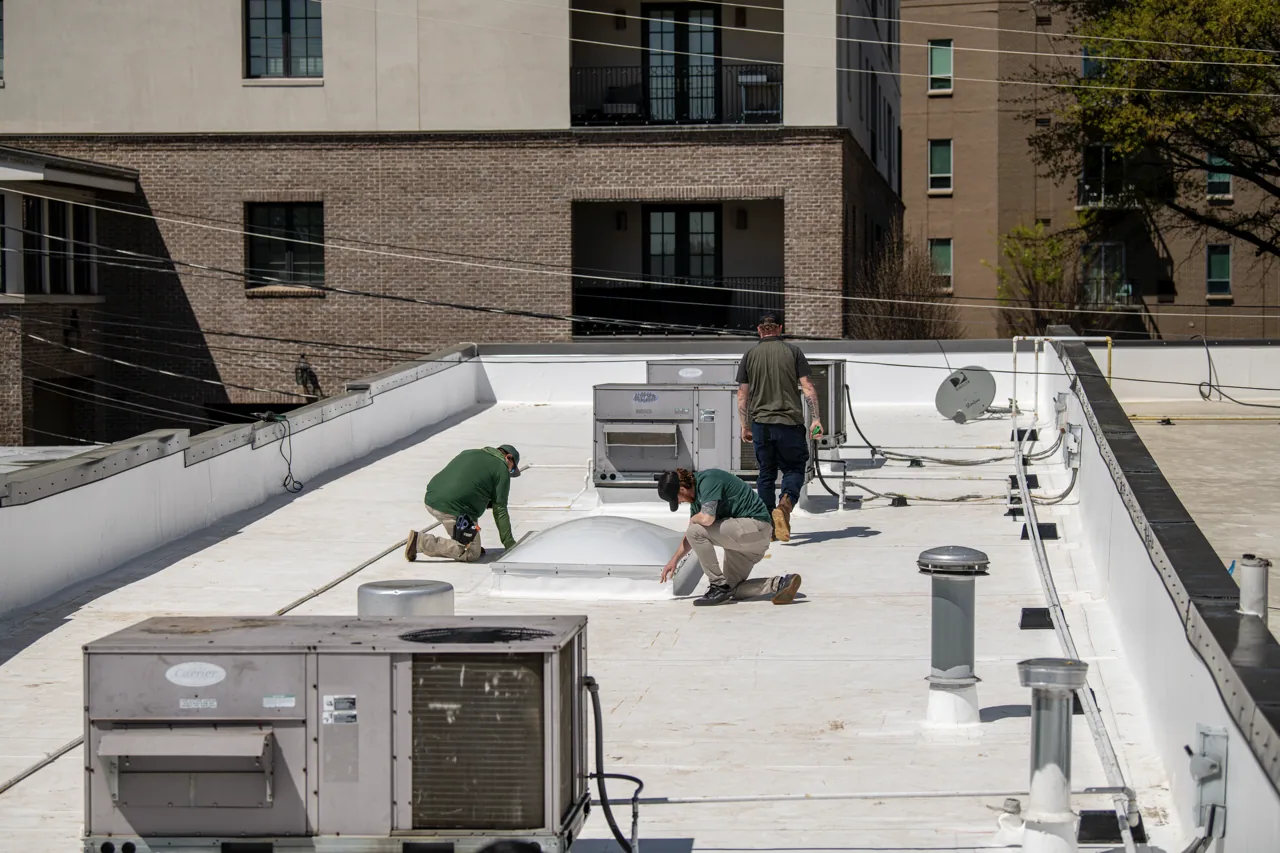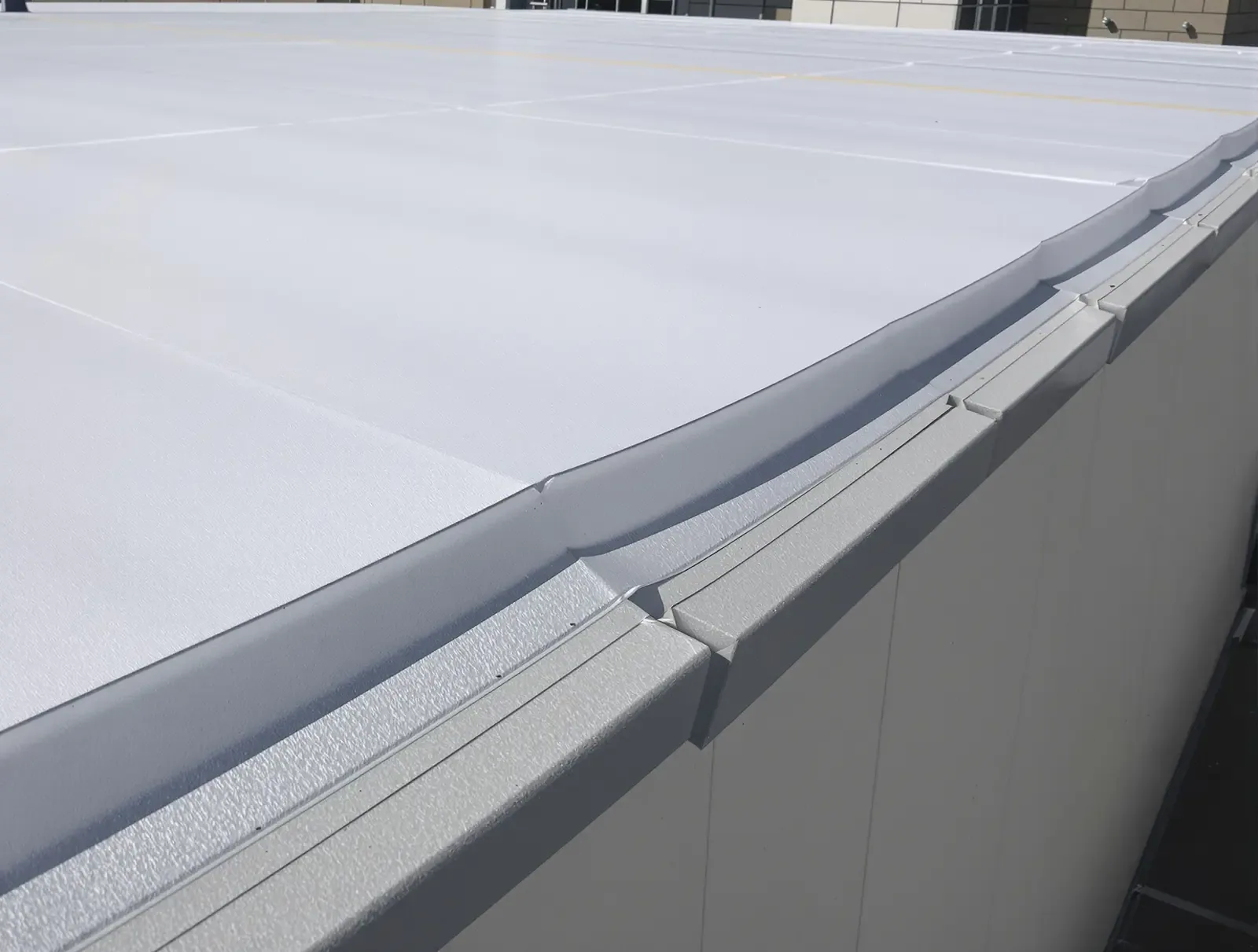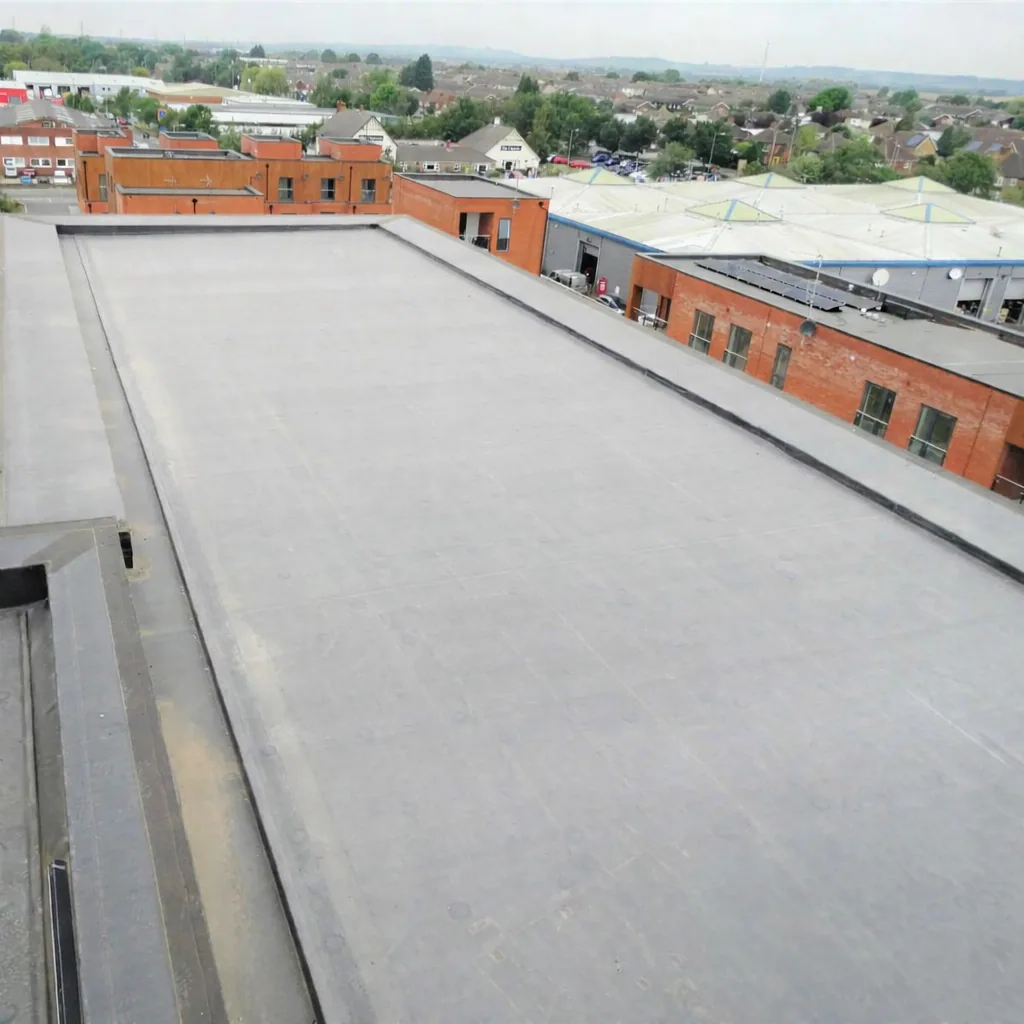
A split TPO weld can send water beneath an otherwise clean membrane. In Stamford, CT, we check the seam, nearby curb, edge termination, and drain path before choosing a repair. The white surface does not show whether the substrate below is dry. Snow and freezing nights make laps and terminations important inspection points, while summer heat works the membrane at rooftop details. A roof inspection records the field condition and how the seam meets adjacent work.
Seams: test the weld, not the color
Hot-air equipment fuses compatible tpo sheet edges into a continuous lap. We check the seam edge for skips, fishmouths, contamination, and areas where a probe can enter. A narrow open section may call for a localized weld repair. A run with repeated failures can point to installation conditions, movement, or surface preparation that needs a broader look. The repair follows the membrane in place, not an assumption based on its appearance from the roof hatch.
Before welding, we clean and prepare the surface, then verify that the material can accept heat without scorching or thinning. Patches need rounded corners and sound overlap. At a repair, the weld must fuse continuously across its width, including the ends. We check adjacent seams because water may travel along a sheet lap before it reaches a ceiling. When the membrane has shrunk or pulled from a detail, adding a patch over the tension does not restore the attachment.
Attachment: match the deck and wind detail
A TPO roof may be mechanically attached, adhered, or installed over an existing assembly. The attachment method affects how the sheet moves and where fasteners are concealed. We inspect the perimeter, corners, field, and transitions separately. Loose plates, exposed fasteners, or fluttering sheet edges deserve attention before a small seam repair is approved. If uplift damage reaches the edge, a membrane repair scope needs to include the attachment line that holds the sheet.Fasteners also need a secure deck connection and a pattern suited to the design. We inspect visible plates where possible and note any loose attachment before closing the assembly.
Recovering over an older roof is a separate decision. Existing layers must be dry, secure, and compatible with the added assembly. Wet insulation or unstable cover board can leave the new membrane unsupported. We identify what can remain and what needs removal, then state how the edge height and drain details change. Tie-ins to PVC membrane details also need a transition designed for the materials involved; the sheets are not joined by treating them as identical plastics.
Curb and drain: keep water moving off the field
The membrane field can be sound while a curb corner leaks. We follow TPO up the curb, check the inside and outside corners, and inspect the cap flashing where it meets the vertical surface. Equipment vibration and service traffic can disturb the detail. A boot around conduit or pipe has to remain tight without restricting the movement of the roof. We mark the detail that failed and preserve a clean termination at the repair boundary.
At a drain, the membrane must seal into the bowl and remain clear of the clamping ring. We look for wrinkles, trapped debris, loose hardware, and ponding that keeps the detail wet. A cricket or tapered section may redirect runoff, but only when the surrounding elevations support that path. The EPDM roof transitions nearby may use a different flashing approach, so a repair at a shared curb must respect each assembly rather than bridge them with one generic patch.
Stamford roofs: plan details around mixed use
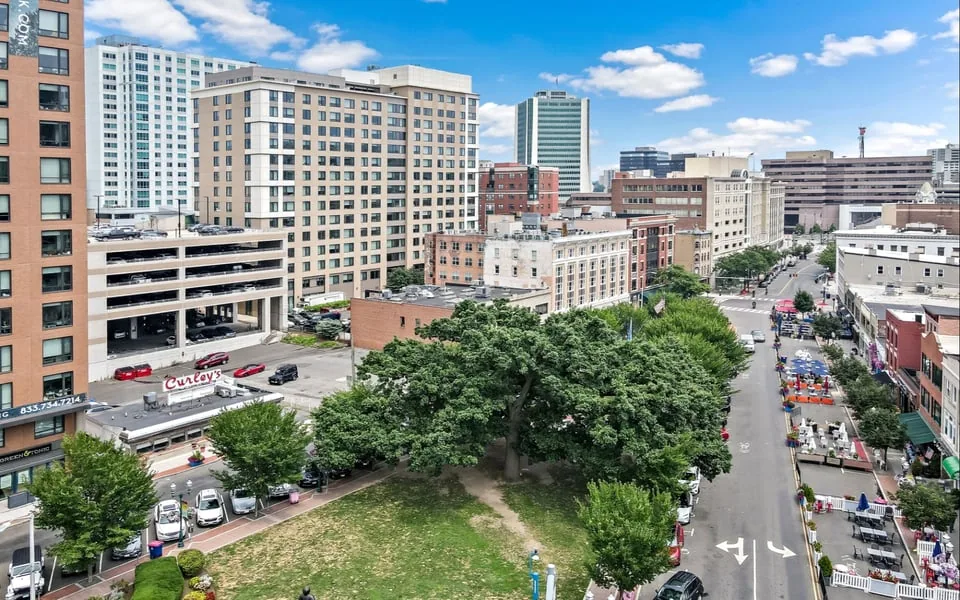
Downtown and South End Stamford contain higher-intensity mixed-use areas, with residential, office, and retail functions in the city core. A roof crew may need to keep a service corridor open below a repair and protect equipment or interior finishes from debris. We coordinate access, material staging, and temporary dry-in with the property manager. In Norwalk, Route 1 and Route 7 run through commercial and industrial corridors, where delivery routes and active operations can shape the work sequence.
Together, those corridors show the commercial and industrial mix around Stamford; the work sequence follows the access and operating limits confirmed at the property. For Downtown Stamford roof access, we agree on a loading point and a path to the roof that fits the building. When a project includes a general contractor, a general contractor sequence can coordinate roofing with mechanical and wall work without leaving the TPO edge exposed between trades.
Repair or replacement: set the membrane boundary
A repair is appropriate when the membrane remains attached, surrounding seams are sound, and the wet area is contained. Repeated split welds, widespread shrinkage, or saturated insulation can change that recommendation. We record the affected zone and separate observed defects from areas that were not opened. A roof condition report can show the membrane, seam, curb, and drain findings that support the proposed work.The seam layout, sheet width, and fastening pattern also influence how the membrane behaves at corners and changes in direction. We inspect those areas for wrinkles that cross a weld, patches that have lifted at the edge, and stress where the sheet meets a metal transition. A repair needs a firm, clean surface and enough sound material for the new weld to hold. If the defect runs under a curb or into a wall termination, we open the scope only as far as needed to reach a sound connection, then document the remaining boundary.TPO color and surface condition can make a roof look uniform from a distance while details tell a different story. We check whether dirt, adhesive, or a prior repair affects weld preparation. Test patches help confirm that the selected technique bonds to the existing sheet before the crew proceeds across the work area. At the close of the repair, we review the weld edge and any tie-in that was disturbed. The record states the area addressed and any nearby seam that still merits separate attention.
For replacement, the assembly is selected around deck type, insulation, slope, attachment, and roof access. At termination points, the new membrane must tie into metal, walls, drains, and adjoining systems without blocking movement. We set out the removal area, protection plan, and closeout checks in a written scope. It identifies what the work includes and where a separate trade or an additional approval is needed. The owner can compare a localized repair with a larger project using the actual roof conditions.
Commercial Roofing Questions
What signs at a tpo weld call for probe testing or further investigation?
A probe entering the weld, a visible split, or water staining near a lap warrants inspection. We test the seam and check where water could travel before defining a patch.
Can a TPO roof be repaired after another coating was applied?
The existing surface and product must be identified before selecting a repair. We check adhesion and compatibility at the affected area instead of welding blindly through a coating.
What makes a TPO replacement different from a recover?
A recover leaves suitable existing layers in place; replacement removes the assembly to the agreed boundary. Moisture, attachment, and deck condition guide that choice.
Do drains need replacement when a TPO roof is renewed?
Drain condition is checked with the membrane tie-in. A sound bowl may remain, while damaged metal or a poor flange connection can require corrective work.
Can equipment stay on during TPO work?
Operating needs and roof access determine the sequence. We coordinate affected equipment with the manager and identify any shutdown or separate trade requirement before the area is opened.