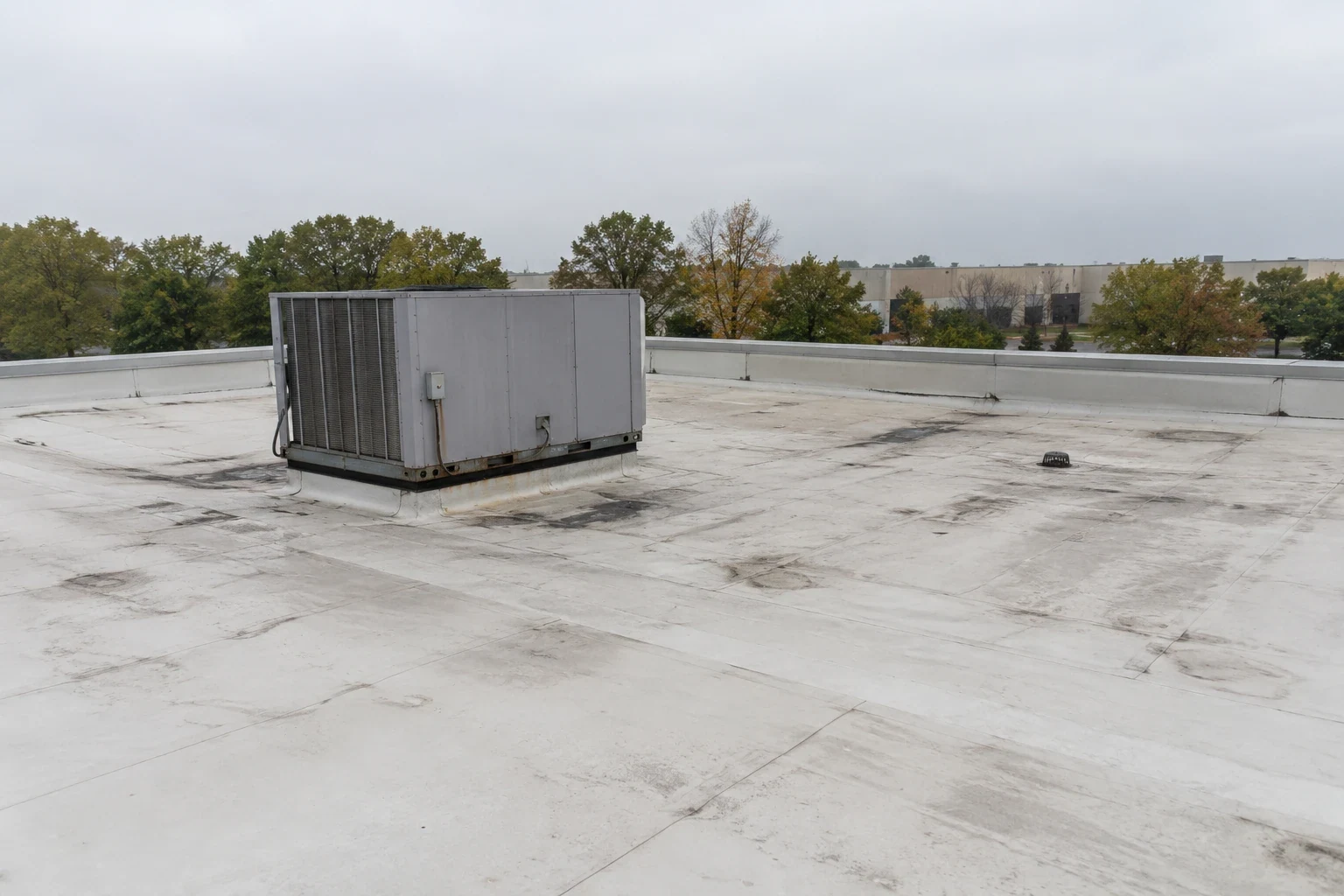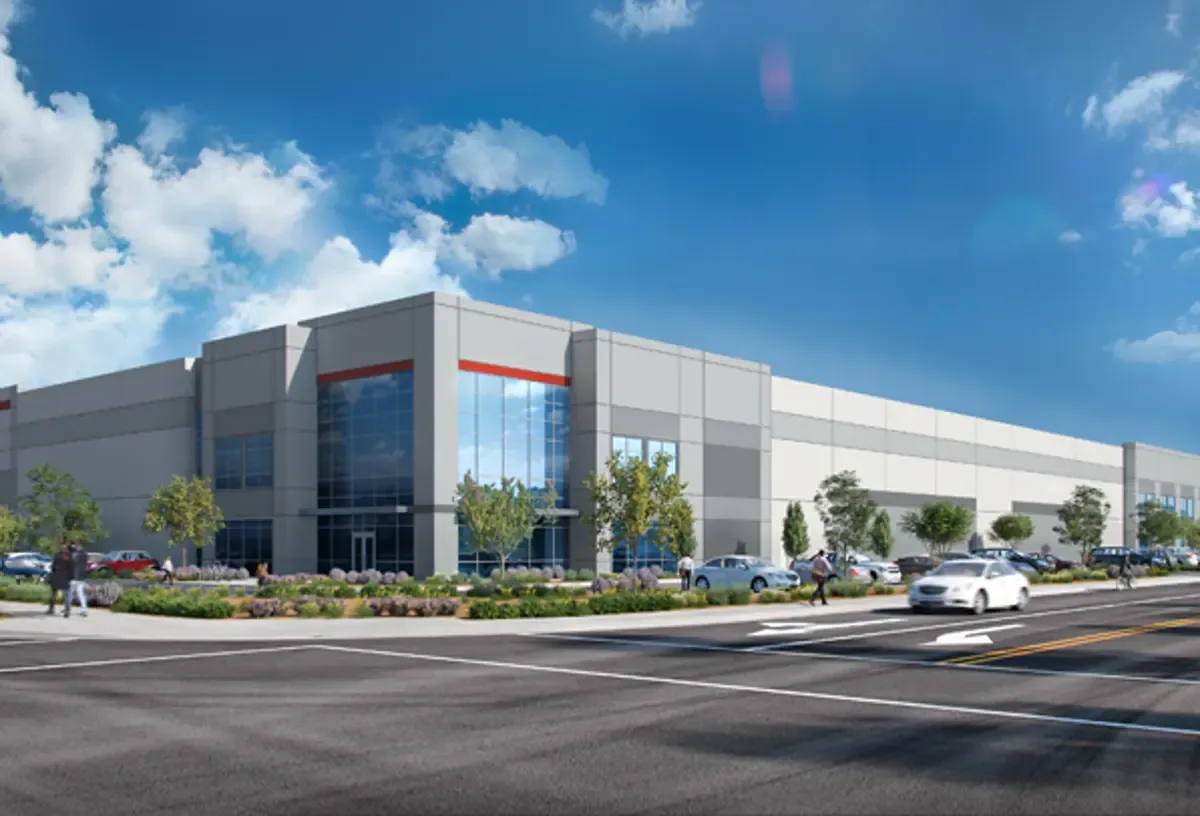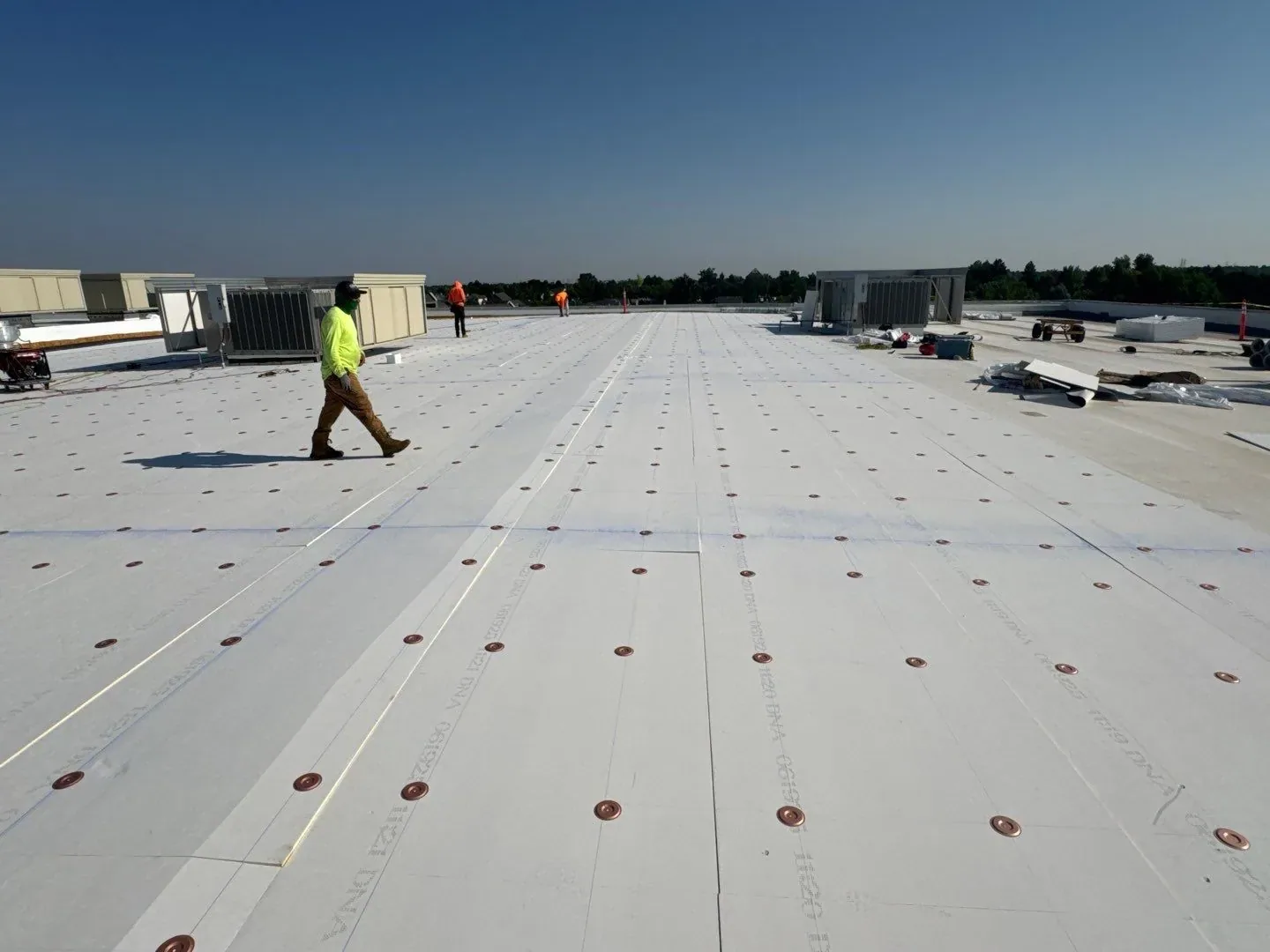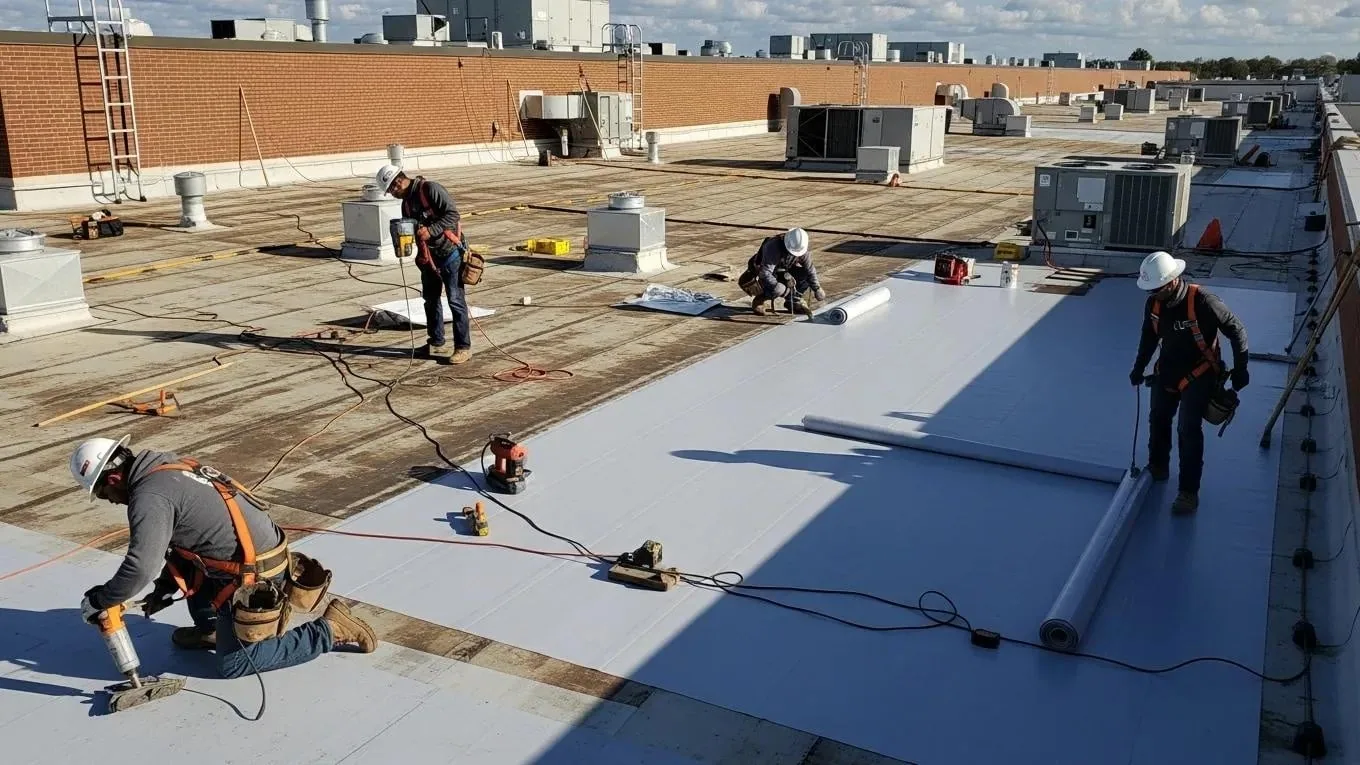
A leak above a pick lane can begin at a curb on the other side of the roof. We trace the water path before placing a patch or moving inventory. Distribution space may have broad membrane runs, frequent rooftop equipment, drains, and loading activity below. Stamford's flexible-industrial category includes distribution alongside light manufacturing and adaptable production. We map the drains, equipment curbs, and loading-side access at the building before setting a repair boundary. We inspect each assembly and coordinate access with the operations contact. A distribution-center roof review can connect the leak report to the roof zone that needs repair or testing.
Loading routes: keep the ground plan clear
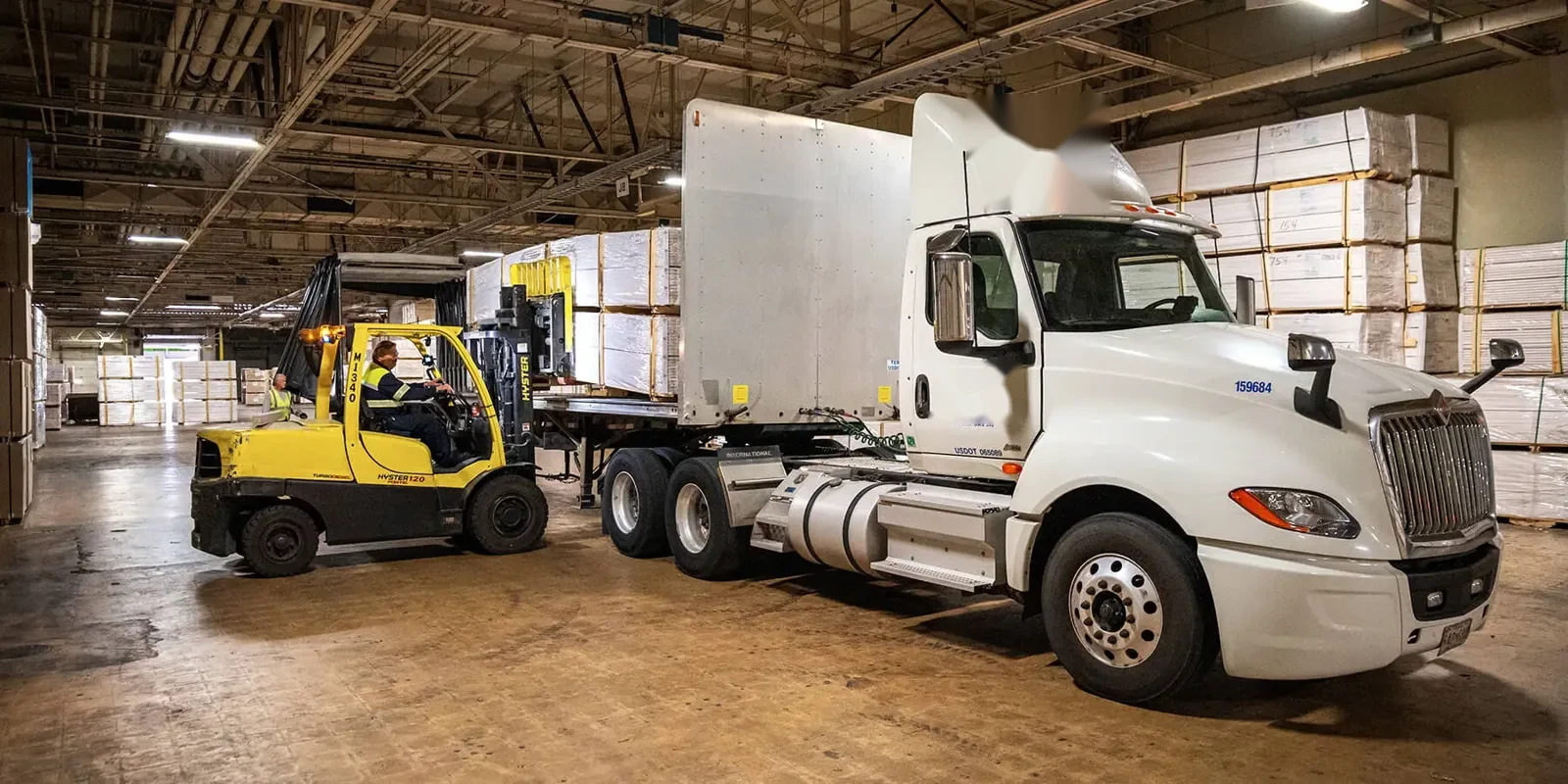
Material delivery, lift placement, debris removal, and employee access all compete for space during a roof project. We identify where trucks can stage, which doors stay available, and how workers reach the roof without cutting across active lanes. The site contact sets those rules. A schedule should also say when the membrane opens and how it will be dried in before operations resume below that area. The written sequence names the roof zone, dry-in point, and ground area that must remain open.
Norwalk's Route 1 and Route 7 corridors include dense commercial and industrial land uses. Route 1 and Route 7 both carry dense commercial and industrial land uses through Norwalk. Route 7 follows the Danbury Branch north from Norwalk toward New Milford. For deliveries near Route 1 or Route 7, we confirm the building's truck court and access gate with the operations contact. We keep the lift and material path on the site plan. manufacturing facilities may use adjoining loading areas differently, so the roof scope identifies the specific lane, roof opening, and daily closeout expected.
Drainage: keep water moving off the field
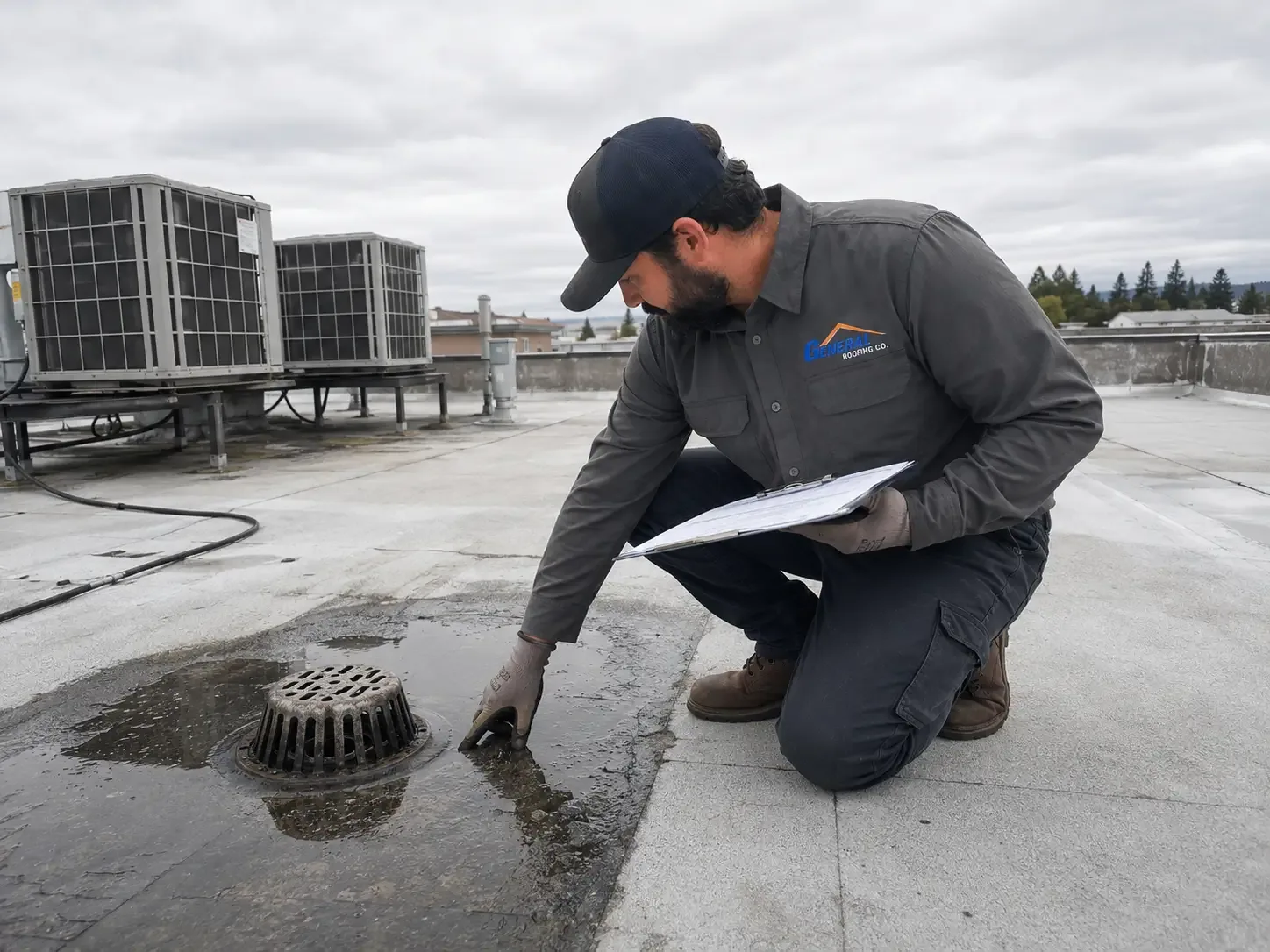
Long roof runs can hide a low area where water remains after the rest of the membrane clears. We check drain bowls, strainers, scuppers, overflow routes, and the laps that cross the flow path. A damaged flange or loose seam at the outlet can let water enter even when the bowl itself is clear. Debris may signal a maintenance issue, but it does not tell us whether insulation is wet. We record ponding marks and verify the outlet before recommending membrane work. Where the drain detail is defective, drain and scupper repair addresses the bowl, flange, and surrounding sheet together.
Stamford's winter snow and subfreezing overnight temperatures put seasonal attention on drainage and roof transitions. After snow and thaw, we inspect drains, scuppers, and perimeter transitions for blocked runoff or separation. We look for separated laps, metal movement, blocked outlets, and signs that water has followed a seam. A log of inspections can help a logistics operator compare recurring trouble after snow, thaw, or rain. If the same location returns, we map it to the structure and evaluate whether a wider assembly problem is present.
Membrane condition: find a repairable limit
A puncture, split weld, or loose edge may be a focused repair when surrounding material is dry and attached. Repeated failures, wet insulation, or deck deterioration can make a spot fix unreliable. We inspect accessible seams, wall terminations, equipment curbs, and previous patches, then describe what needs a test or opening. An infrared survey can help identify a moisture pattern; a core can verify the layers at a selected point. The report should connect results to a removal boundary rather than treating one reading as the condition of the whole roof.
The existing system determines repair materials and tie-in details. TPO welds, EPDM seams, and metal transitions each have different preparation requirements. We identify the roof before selecting a method. A commercial roof repair should reach sound material and leave the drain or edge detail functioning. When repairs recur across adjoining zones, we compare the patch plan with a recover or replacement. a recover evaluation must account for moisture, attachment, deck, drainage, and code conditions before another layer is added.
Operating windows: coordinate equipment and protection
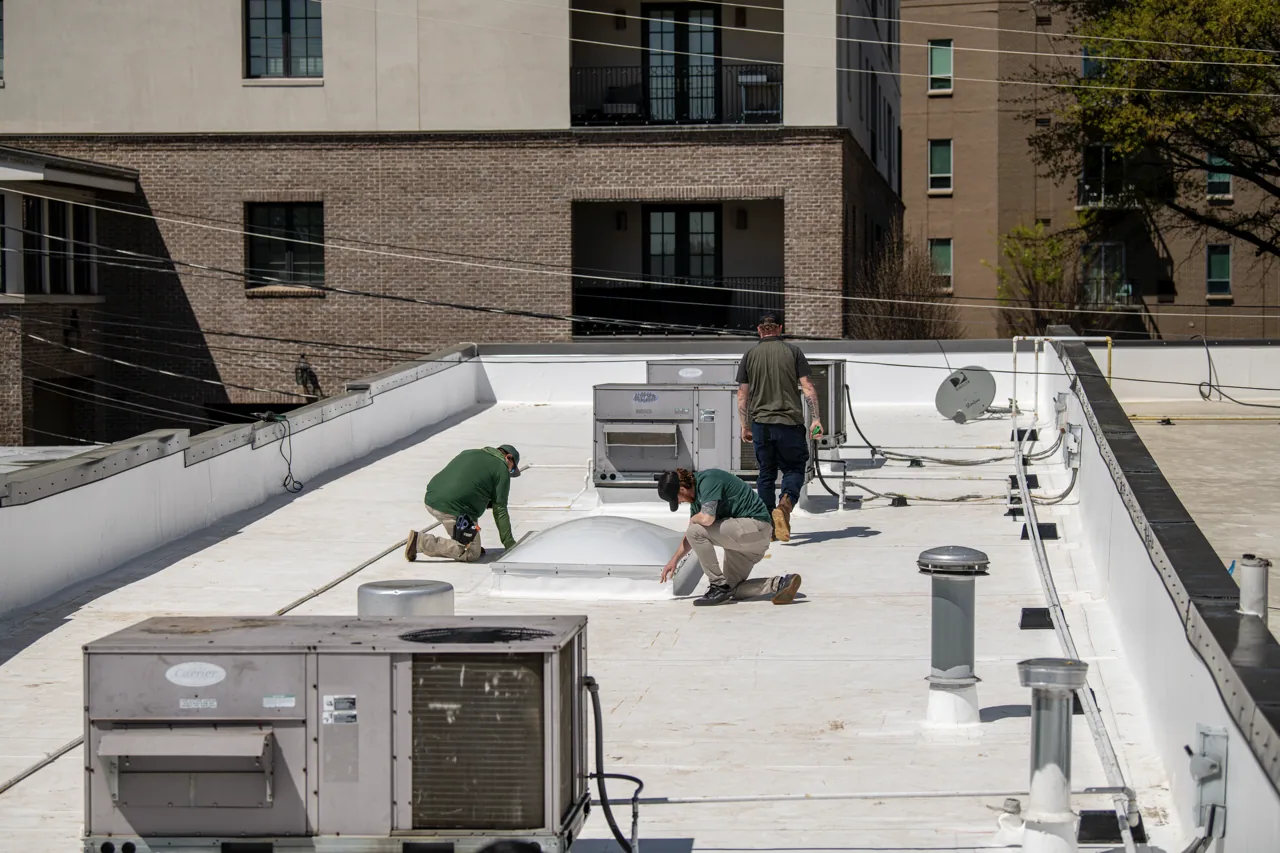
Fans, rooftop units, exhausts, and service paths can constrain where a crew works. We mark equipment that must remain active and identify any curb or penetration that needs a different trade. Roofing repairs restore the membrane and flashing around the base; they do not repair the machinery itself. If an area needs temporary disconnection, the operating team and mechanical contractor establish that window. We state the work sequence and daily protection plan so the repair can be opened and closed deliberately. The plan also records who can authorize access to a locked roof hatch and how tools reach a secured area. Those details prevent a crew from arriving at a membrane boundary without the route or protection already agreed.
For a 3PL operator, a few blocked doors can affect receiving and dispatch. The roof plan should identify the ground route, overhead protection, and any lane that must remain free. We can phase work by roof zone, but each phase needs a durable tie-in and a clear end-of-shift condition. occupied-building reroofing can preserve access when the roof boundary and interior use are coordinated. The manager should review the map against actual yard movements before materials are staged.
Closeout: make roof history portable
After the repair, we record the roof zone, material, flashing or seam detail, and adjoining condition outside the work boundary. Photos should identify the detail and its position on a plan. The record can distinguish a completed repair from a location that still needs moisture testing or deck review. condition reports give the operations and property teams a usable handoff when a building, tenant, or service vendor changes. A later inspection can compare the same outlet, curb, or seam rather than start again from a vague work-order note. If a drain was cleared but not rebuilt, that difference should remain visible in the record.
Bring leak locations, prior maintenance tickets, roof plans, delivery restrictions, and equipment schedules to the walk. We trace the likely path, inspect the assembly, and prepare a written record of the confirmed repair boundary, materials needed, and any test or system decision that remains open. For a multi-site operator, retail distribution programs also need asset-specific findings, even when the operational model is similar. In nearby Norwalk, Norwalk Center is a pedestrian-scale retail and business concentration. We confirm the service entrance and material route with the property contact.
Commercial Roofing Questions
Can roofing work be phased around receiving hours?
We can map roof zones and delivery constraints with the operations contact. Each phase needs a defined opening, interior protection, dry-in, and closeout condition so the loading plan can be reviewed before work begins.
How do you locate a leak above active storage?
We use the reported area to choose roof zones, then follow seams, curbs, drains, and deck transitions that could carry water. If insulation is concealed, testing may be needed to set the removal limit.
What roof records are useful across several distribution properties?
Keep a roof plan, assembly notes, dated repair photos, service tickets, and access restrictions for each building. We return findings by roof and location so one property's history is not assigned to another.
Will rooftop equipment stop the repair?
Usually the unit does not prevent roofing, but access and operating limits shape the sequence. We identify the curb and flashing work, then coordinate any mechanical shutdown or connection repair with its trade.
When should an operator consider a broader roof project?
Repeated seam or edge failures, wet insulation across multiple zones, or unstable deck can move the decision beyond isolated patches. We map those findings and compare repair, recover, and replacement boundaries.