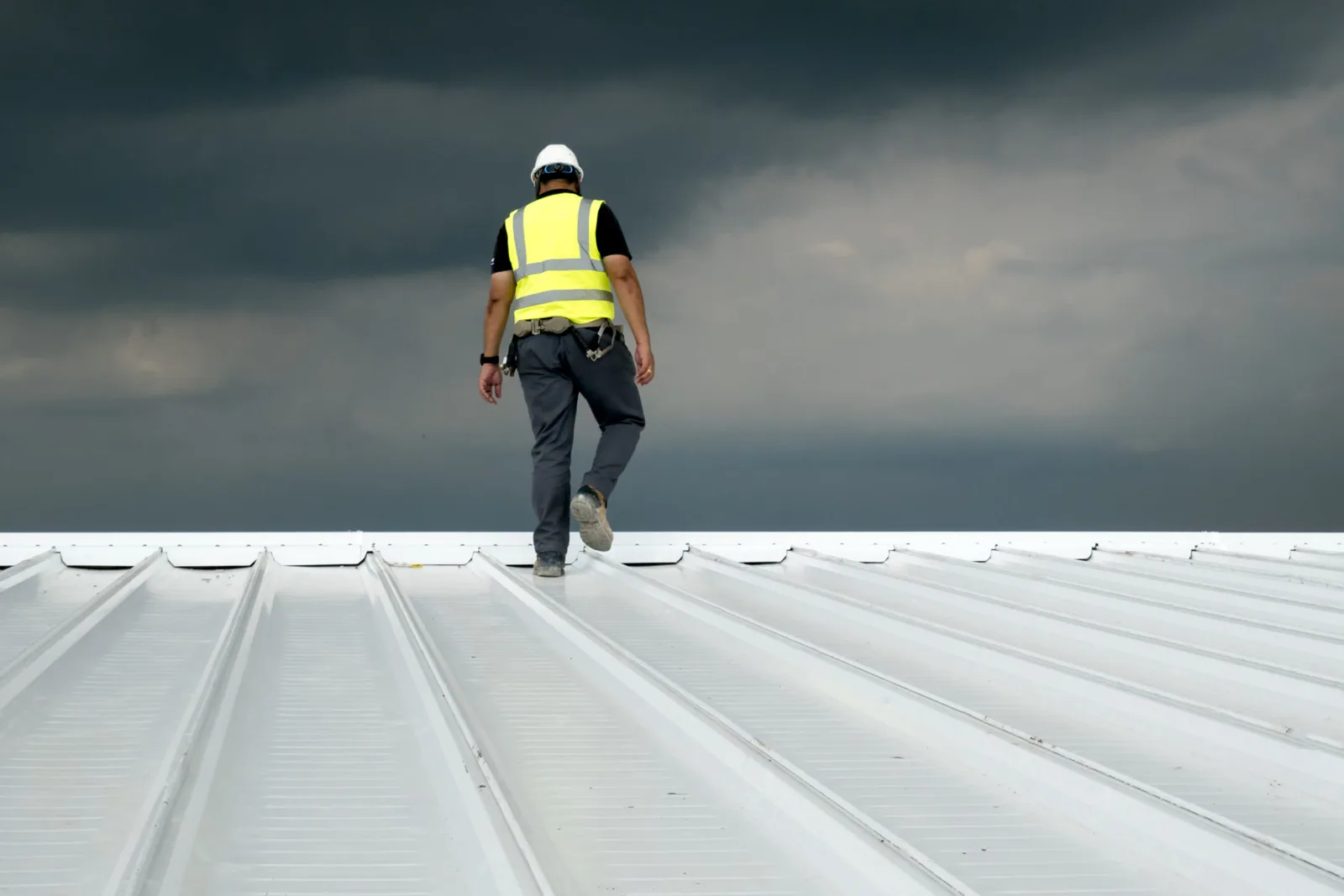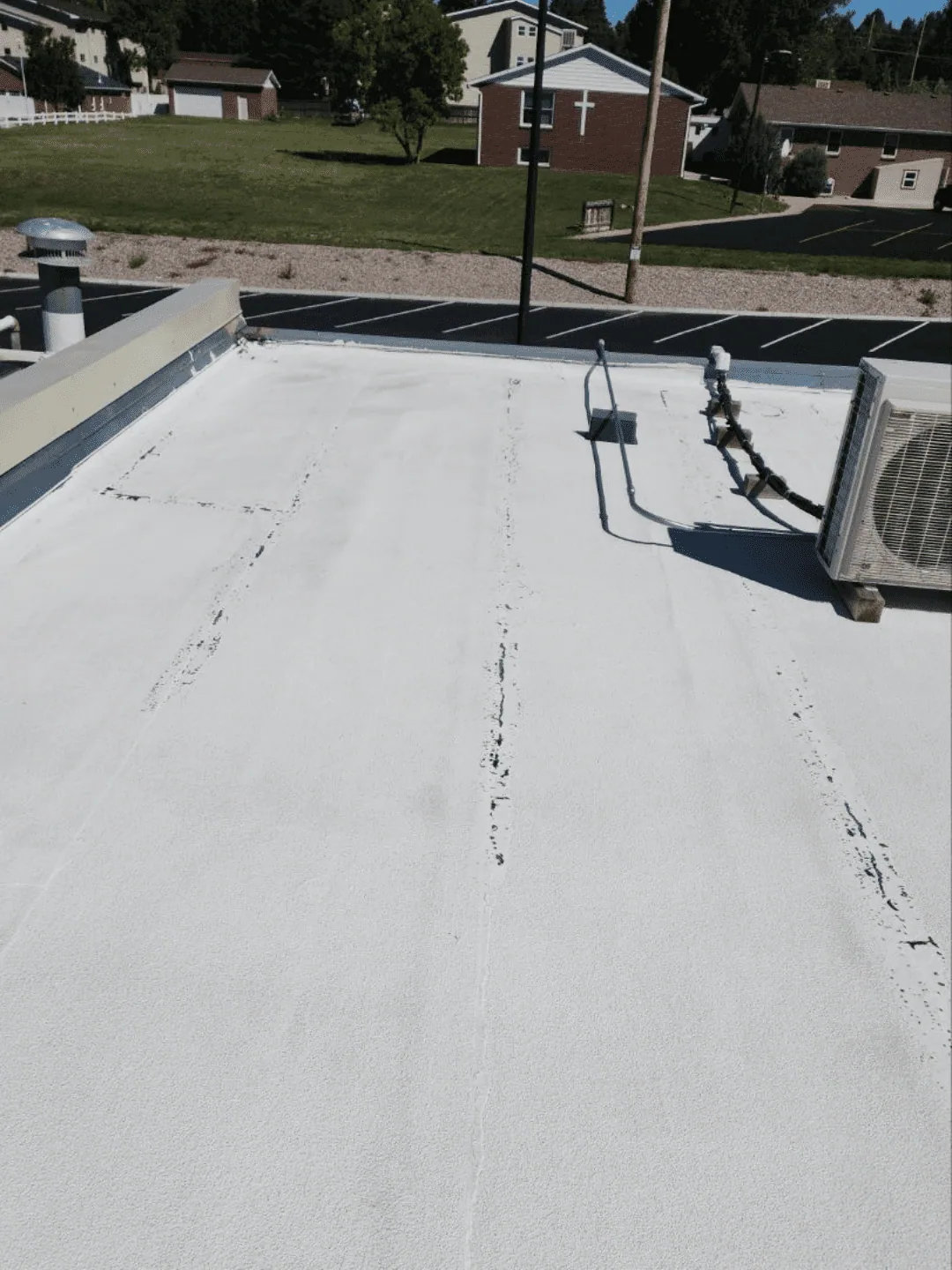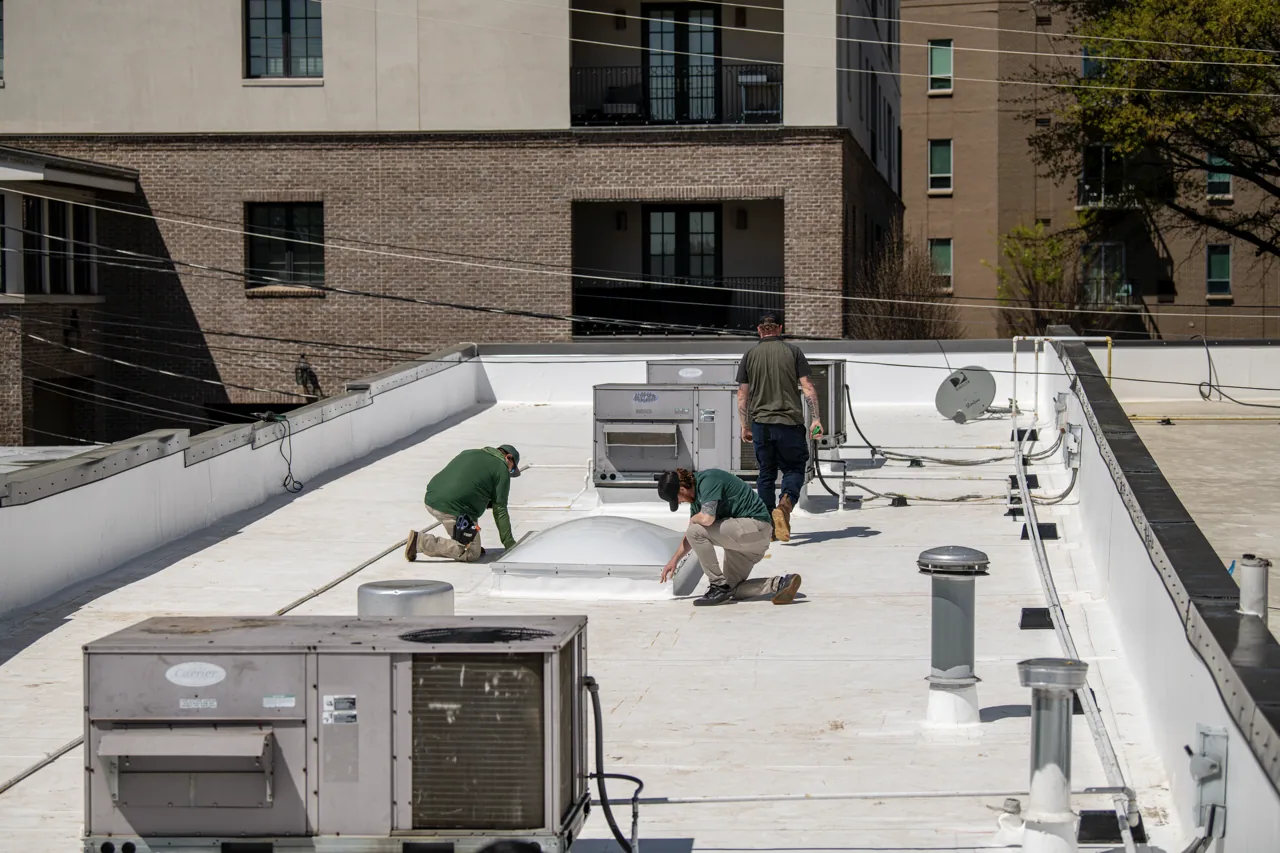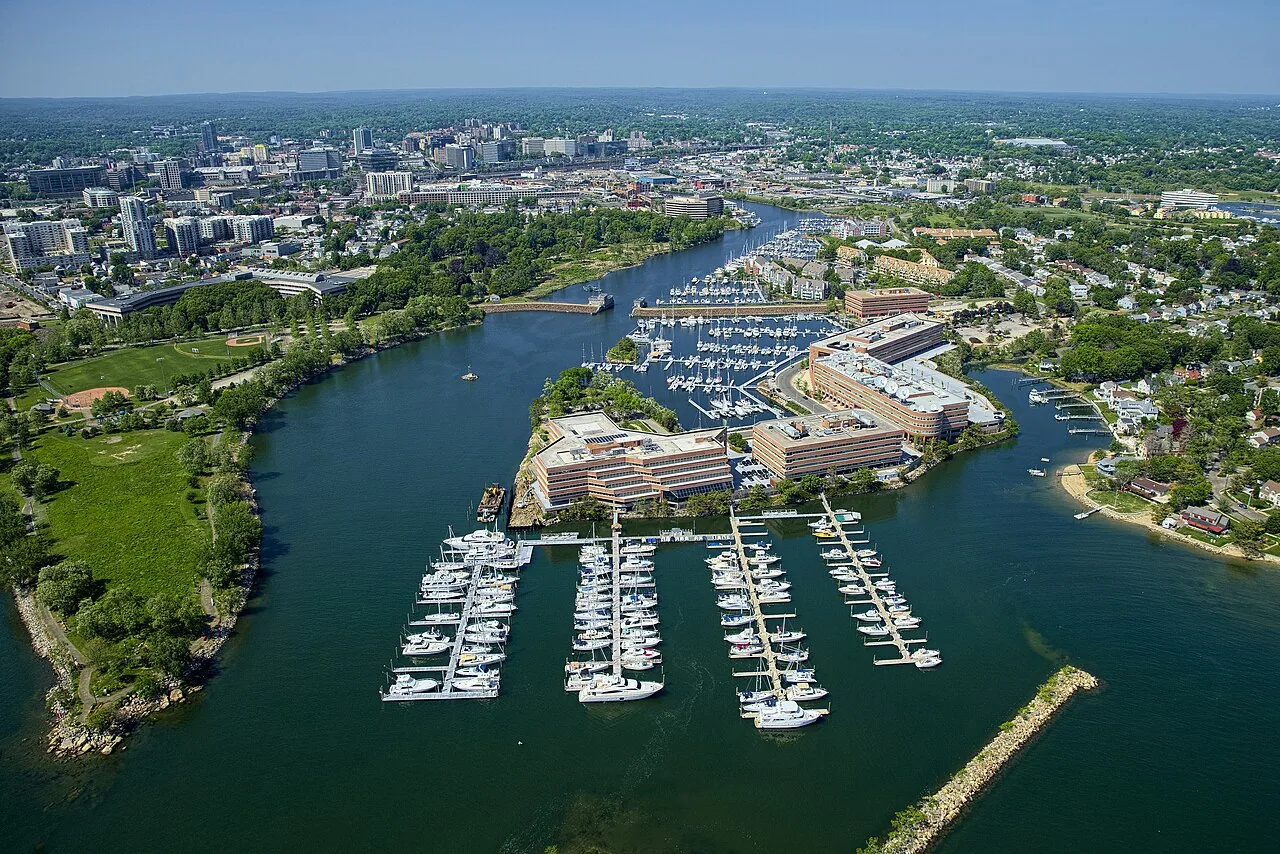
Loose metal at a parapet can send water behind the wall before an interior mark appears. In South End, Stamford, CT, we start with that transition and follow the seam or curb detail carrying water toward the building. The city plan places South End beside Downtown within Stamford's urban mixed-use growth area. A roof there may have to support several uses below, but the assembly and condition must be established on site. We inspect membrane attachment, coping joints, penetrations, low points, and any wet insulation that changes the repair boundary. A roof inspection connects what the manager sees inside with the field detail that can be repaired.
Parapet edge: follow the metal return
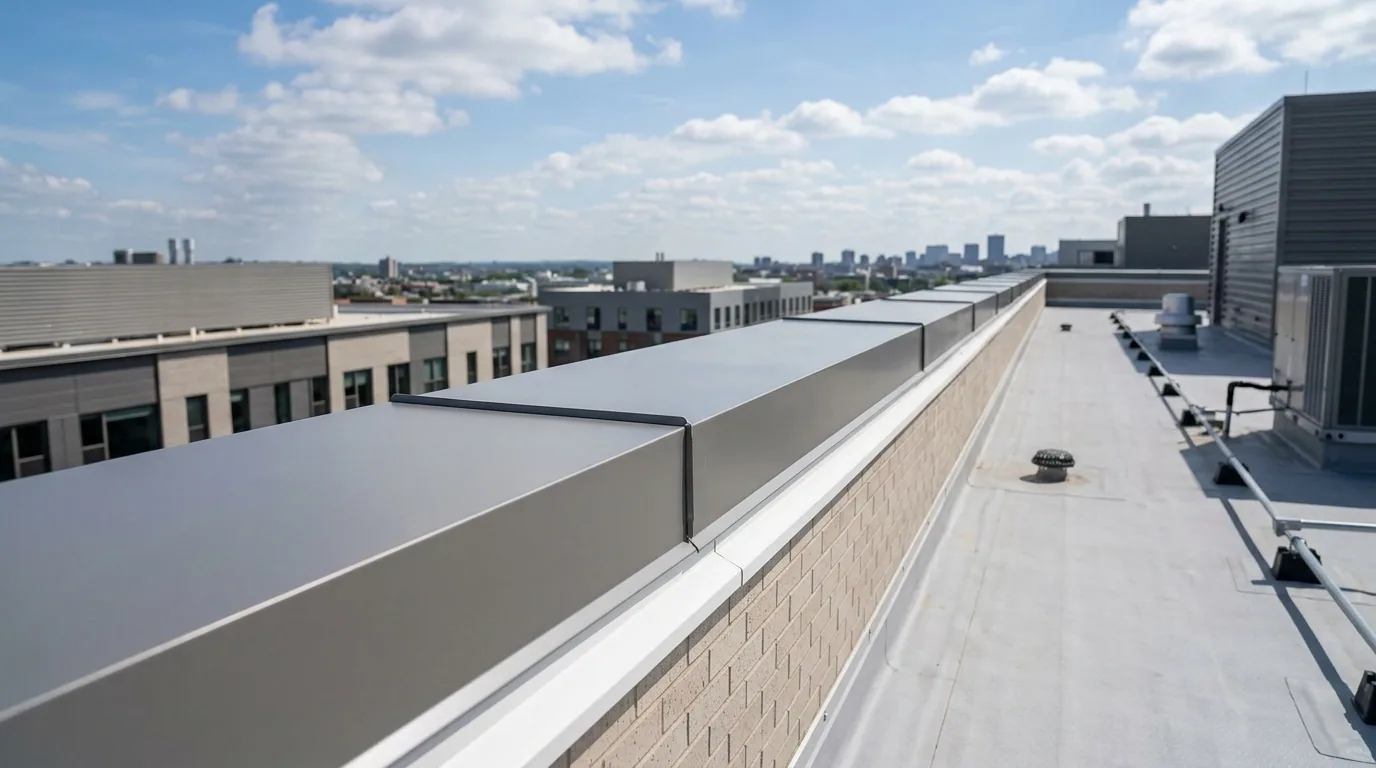
Water can enter at a coping splice, travel behind a fascia, and show up along an interior wall. We check the metal return, cleats, joints, corners, and termination where the membrane turns up. A loose cover or open seam is not automatically the only defect. We inspect the membrane beneath it and look for water marks, soft substrate, or movement that has separated a bond. When the detail is layered, we record which part can be opened safely and what needs to remain protected during the repair.
For a local metal repair, the return must shed water and hold its position through temperature movement. We identify attachment and splice conditions, then specify whether the work is limited to one section or continues along the parapet. If the wall assembly is already wet, closing the cap before checking the substrate can trap moisture. Coping and edge-metal service should connect the roof membrane to the perimeter without leaving an open path behind the trim. The scope records the transition, not just the visible panel.
Water path: compare reports with roof details
Interior reports help narrow the search, but they do not always mark the entry point. We compare room locations, recent rain, and the roof area above with seams, penetrations, drains, and wall transitions. A ceiling mark that appears after wind-driven rain may point toward a different detail than a stain that follows a clogged drain. We inspect for split laps, punctures, loose flashing, blistered coating, and debris that keeps water against a seam. Photos identify the observed condition and its position for follow-up.
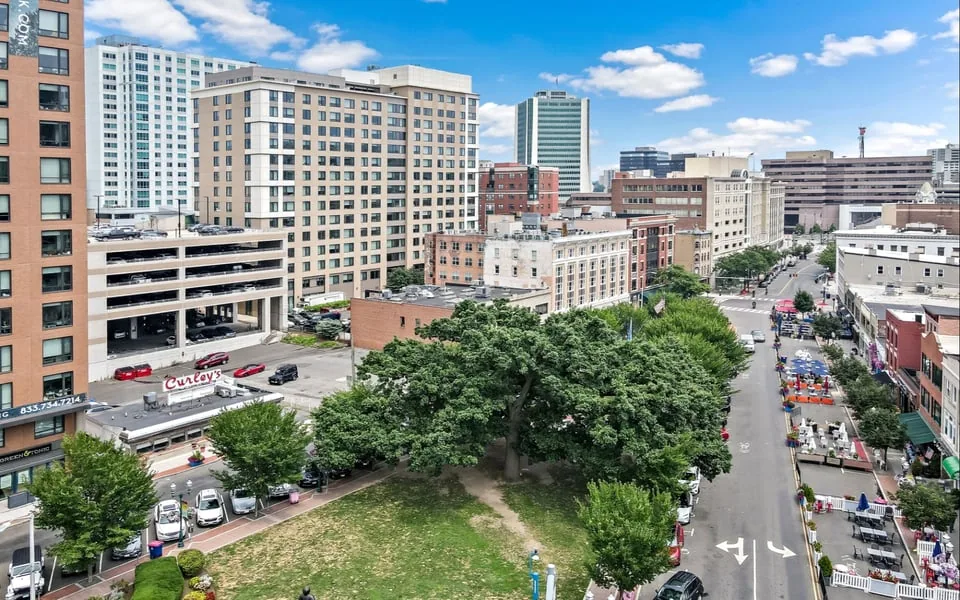
South End and Downtown are linked in the city's growth area, and Stamford reports recent population growth concentrated in those neighborhoods along with West Side and Waterside. Harbor Point sits within the broader South End area, but its roof conditions must be recorded separately. That fact does not define any particular property's design. It does make reliable, property-specific roof records useful when managers coordinate work across the area. We keep each leak location, access limit, and repair decision attached to the roof where it was observed. Downtown Stamford roofing applies the same inspection discipline without assuming one block's condition matches another.
Drainage: test the low point before patching
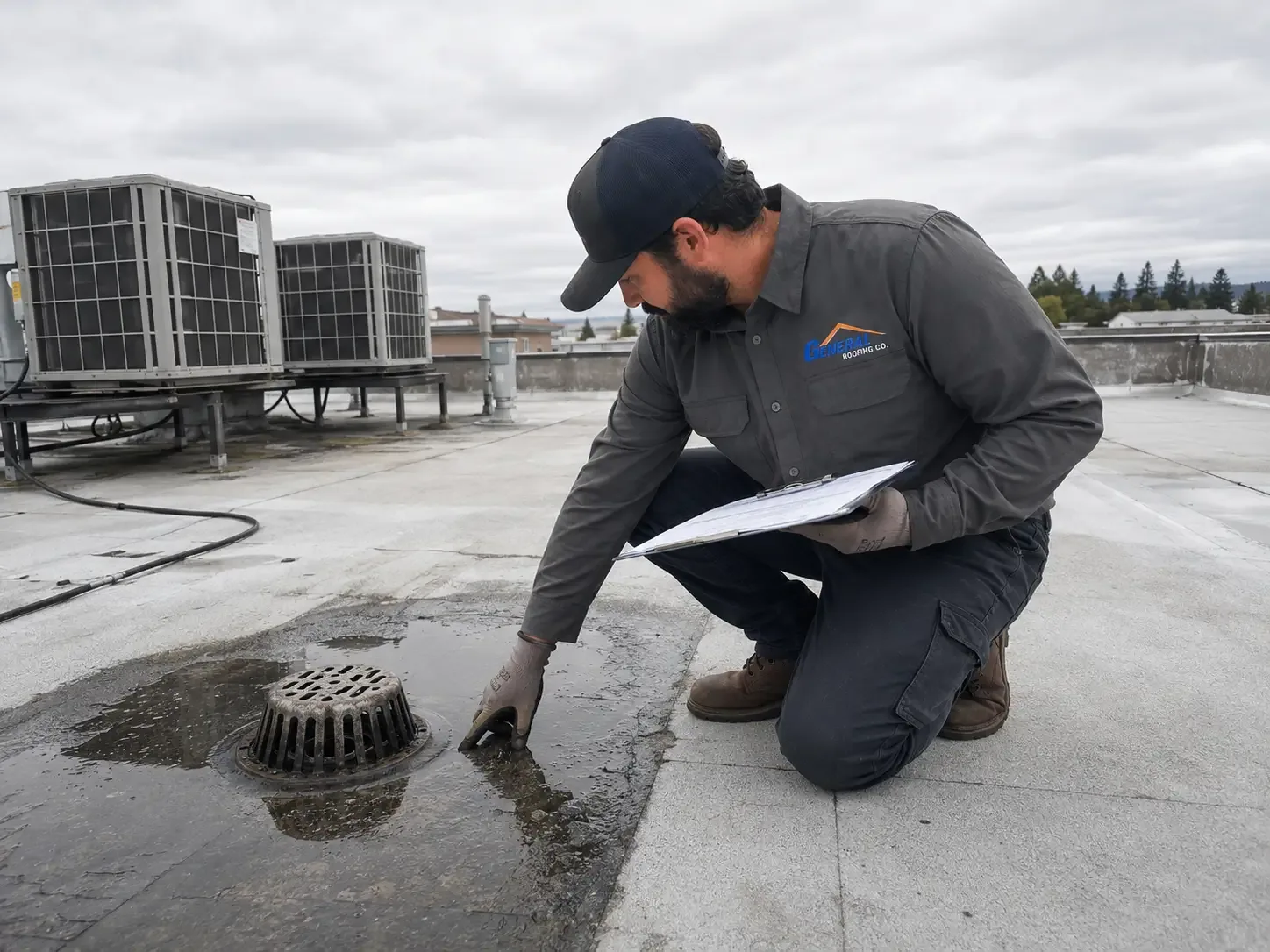
A ponded area can point to a blocked drain, a depressed deck, or a change in roof slope. We inspect the drain bowl, clamping ring, strainer, flashing, and visible outlet, then check whether the surrounding membrane remains attached. If a scupper serves as overflow, it needs a clear opening and a sound membrane connection. A seal at the wrong edge can redirect water into the roof assembly. We note whether the surface is dry, damp, or holding water when inspected and compare it with the manager's leak history.
Cleaning and repair are separate decisions. Removing debris may restore flow, but it will not fix a shifted drain, deteriorated flange, or soft area under the membrane. If the deck has moved or insulation has absorbed water, opening the roof may be necessary to define the condition. Drain and scupper repair addresses both the outlet and adjacent flashing. We also check nearby seams and transitions because water that starts at a drain can spread along a lap before reaching the interior.
Snow and heat: inspect what the roof shows
NOAA's Stamford normals record winter snowfall and below-freezing overnight lows, so we check drain bowls and terminations after cold weather. We pay attention to drain paths, terminations, and laps where water can remain as the surface freezes and thaws. Snow load is a design and condition question, not a reason to assume a roof has failed. We document sagging, unusual movement, blocked drainage, or a leak reported after a storm, then identify what further review is needed. A local area of wet insulation can be distinct from a structural concern, and the scope should not combine them without evidence.
Summer daily highs in the low-to-mid 80s and cooling demand add heat exposure to equipment and membrane transitions. A rooftop unit, curb, or metal edge can move differently from the field sheet. We inspect welds, adhered laps, fasteners, and flashing around those changes, checking that each material remains compatible. Storm-related roof repair begins with the damaged details and the water path, not with an assumption that every roof section needs the same treatment.
Repair boundary: use the condition, not the stain
A focused patch fits when the defect is isolated, surrounding material remains secure, and the substrate can accept new roofing. We mark the cut or preparation line, remove unsound material, and connect the repair to a sound seam or field. Where wet insulation extends beyond the opening, the boundary has to follow the moisture found. A superficial patch over a soft layer may stop water briefly while leaving the assembly compromised. We state what was inspected and what remains concealed in the written scope.
Several separated defects can signal a maintenance need or broader system decline. We compare the remaining roof surface, attachment, insulation, deck, and drainage before recommending coating, recover, or replacement. Commercial roof repair stays local when the surrounding assembly supports it. A recover evaluation checks deck capacity, moisture, attachment, and project requirements before another layer is considered. The options should follow observed conditions and building use, not a preference for one method.
Timing and cost: protect the occupied area
The repair price depends on membrane type, the size of the affected area, how many details connect to it, whether material must be removed, and access for tools and equipment. Wet insulation, corroded edge metal, or a curb that needs rebuilding can expand a small leak repair. Interior protection and coordination with building staff also affect the sequence. We describe the included work, exclusions, and conditions that could change the repair boundary before the owner approves the scope.
Work timing follows weather, substrate dryness, material preparation, and safe access. A repair surface needs to be ready for the selected membrane or flashing system. For larger work, dry-in and final installation may occur in separate steps so the building remains protected between shifts. A condition report with photos can keep findings available for budgeting and future maintenance. A roof walk gives the manager a written next step, whether the answer is a localized repair or a broader system recommendation.
Commercial Roofing Questions
Can a parapet leak travel away from the roof edge?
Yes. Water can pass behind coping or the membrane turn-up and move along the wall before reaching an interior finish. We inspect the return, joints, attachment, and substrate to set the repair limit.
Does South End growth indicate a particular roof type?
No. The city plan describes an urban mixed-use growth area, not the construction of any one roof. We identify the membrane, deck, and details during the roof walk before choosing a repair method.
What if water is still ponded when you inspect?
We record where water remains and check the drain, overflow, slope, and surrounding membrane. If the deck or insulation condition is unclear, the scope identifies the access or testing needed before closing the area.
What findings in the south end justify comparing a contained repair with replacement?
Repeated failures, widespread wet material, or poor attachment can move the decision beyond a patch. We compare the roof's remaining assembly and explain what evidence supports the broader scope.