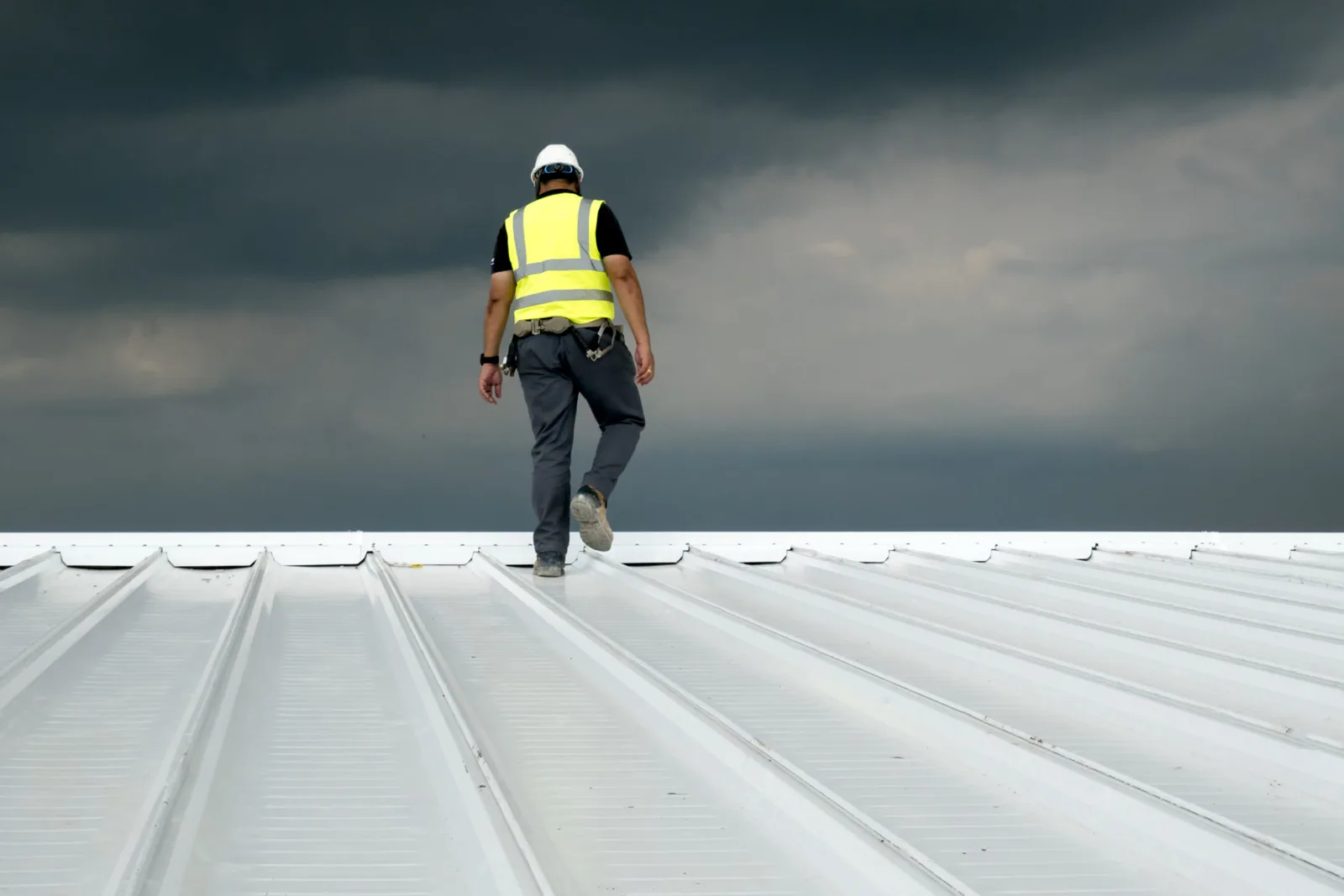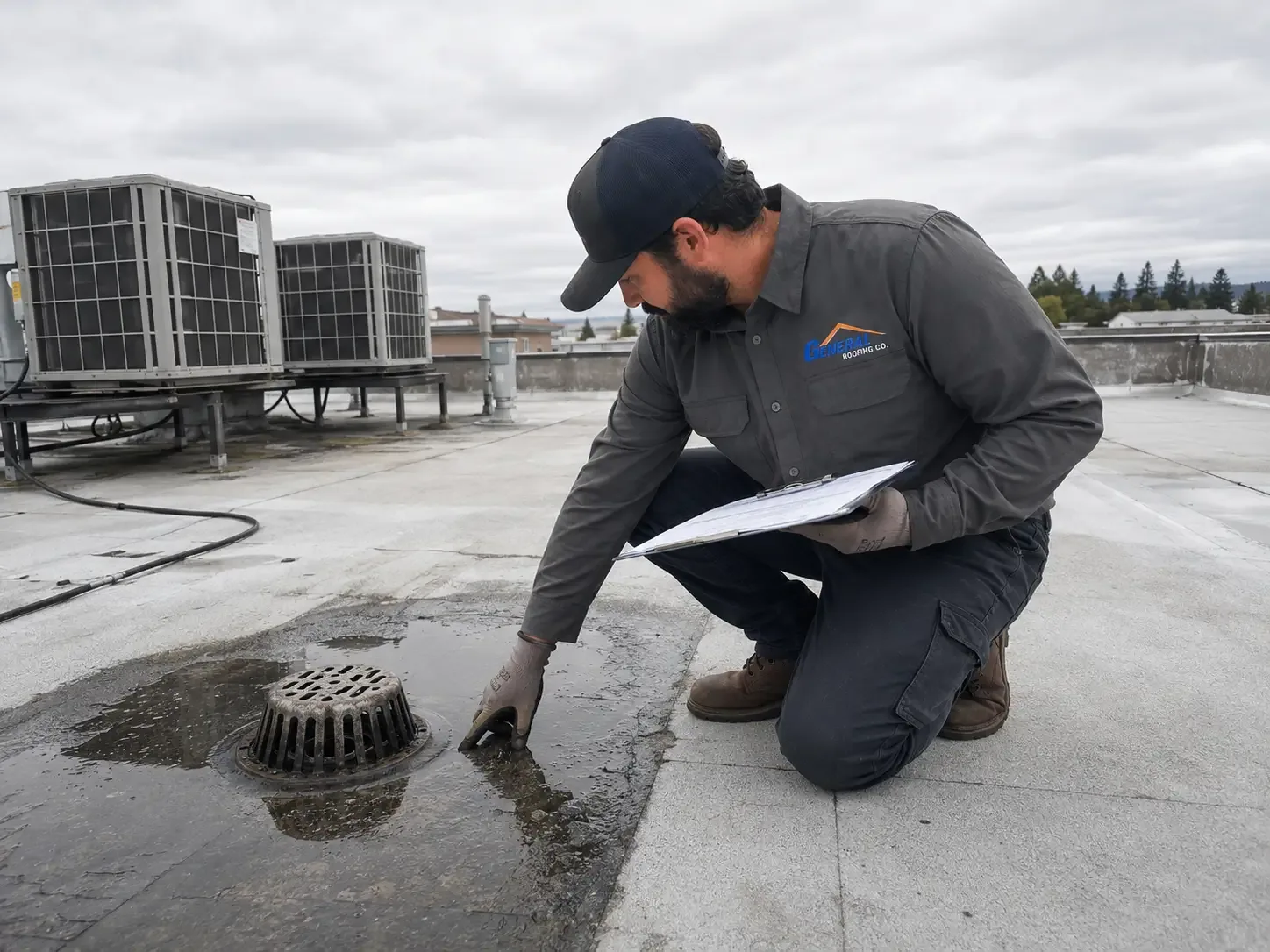
A drain bowl can look open while water remains against its flange. On a Stamford, CT commercial roof, we follow the water path from the field into the opening, then inspect the seam and membrane detail around it. A roof inspection records debris, staining, loose strainers, and the condition of nearby laps. Stamford winters bring recurring snowfall and subfreezing nights, which makes drainage and freeze-thaw stress worth checking as conditions change. The repair depends on what holds water: a blocked bowl, a low area, a failed flange, or a restricted scupper. Each has a different boundary.
Drain bowl: check the opening and its flange
We clear loose debris where it can be removed safely, then look at the strainer, bowl, flange, and membrane turn-in. A loose ring or cracked seal can admit water even when runoff reaches the opening. We inspect nearby seams and previous patches because the leak can begin outside the bowl. A ponding-water evaluation separates slow drainage from a membrane or attachment failure. Photos show the bowl and the roof area that feeds it, so the report connects the opening to the surrounding field rather than treating it as a stand-alone part.
Multiple roof layers, coatings, or repairs can change the drain height and create a lip around the bowl. That condition can hold water or send it sideways. We note the layer transitions and whether an adjustment would require a larger roofing scope. A tapered insulation review can address slope where the structure and existing assembly support a correction. The drain must remain serviceable after the work. We keep the opening clear and confirm how the finished membrane meets its flange.
Scupper route: preserve a clear overflow path
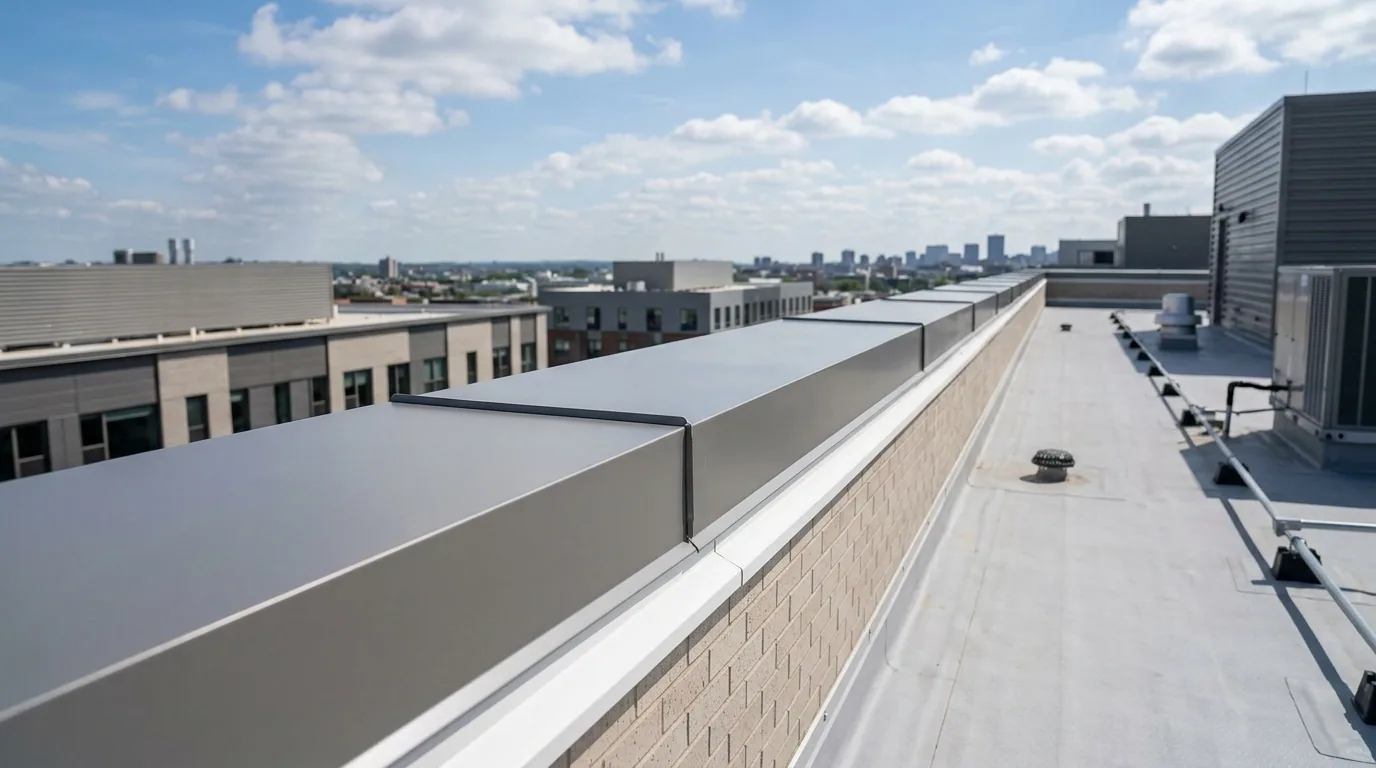
A scupper needs a clear throat, a sound sleeve, and a termination that sheds water beyond the wall. We check the opening for debris, corrosion, loose metal, failed sealant, and membrane separation at the edge. A blocked primary drain should not leave the roof without a usable overflow route. We compare the parapet detail with the water marks below it and inspect the metal return where the scupper meets the wall. If edge metal or coping has shifted, a perimeter repair may be needed before the outlet can work as intended.
Gutters and downspouts carry water after it leaves the roof. A disconnected elbow, undersized connection, or debris-filled trough can send runoff back toward the wall or entrance. We check the path that can be reached and separate roof openings from ground-level drainage beyond the scope. In Norwalk Center and SoNo, dense business blocks and commercial corridors are part of the local building pattern. A Norwalk Center roof visit still begins with the actual bowl, scupper, and membrane, not a guess from a street address or district name.
Low area: decide whether taper or repair fits
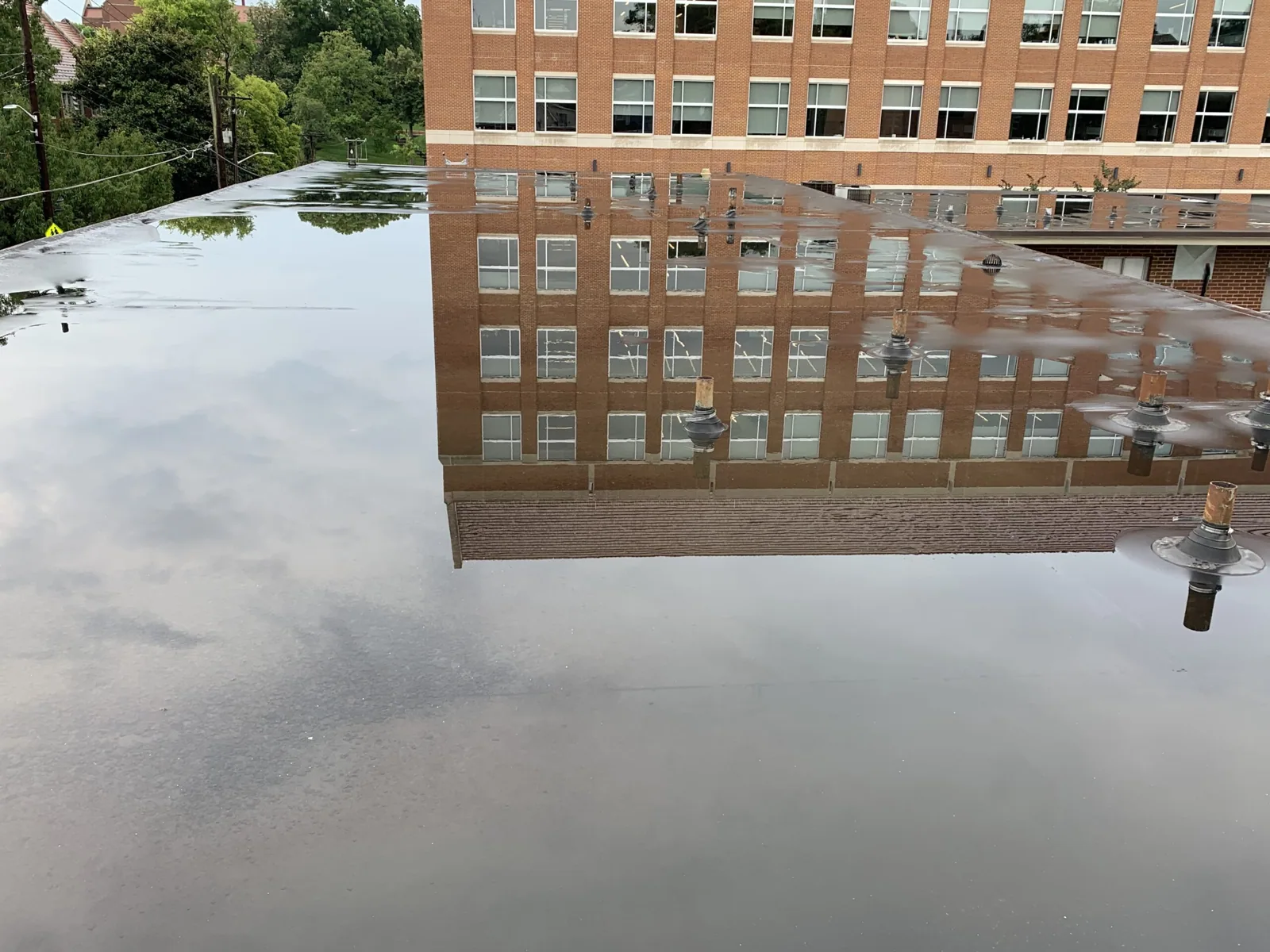
Water that remains after surrounding areas drain may indicate a low field, a deflected deck, or an outlet that cannot take the flow. We map the ponded area and compare it with slope, seams, curbs, and structural transitions. A cricket can direct water around an obstruction; tapered insulation can build a path to a drain. Neither should be specified before checking roof height, existing layers, and attachment. A TPO assembly needs a compatible transition at the new slope, while roof edges and drains still require their own details.
Repeated ponding can accelerate wear at seams and expose old repairs to longer wet periods. Stamford's subfreezing nights and winter snow make a standing-water area worth tracking, but a visit should describe what is observed rather than predict a failure. We record where water remains, whether it reaches an opening, and which roof detail needs attention. If drainage correction would alter several parts of the assembly, the owner may need to compare a repair with an overlay. A recover review checks those system-level conditions.
Roof route: fit drainage work to operations
Downtown and South End Stamford include offices, housing, and retail in a mixed-use core. Drain work above occupied space calls for a clear roof route, protection below, and coordination around equipment access. We identify the area feeding the outlet, the drain that carries it, and any interior space that could be affected if the opening is disturbed. In a broader commercial setting, maintenance may need to preserve deliveries or rooftop service paths. The work plan identifies the route and points where access must stay open.
We keep the scope specific: clear an accessible blockage, repair a flange, rebuild a scupper, or correct a low area after confirming the assembly. A retail roof layout may connect several drainage zones, while a property-management work plan can help coordinate access across a mixed-use property. Those are planning considerations, not claims about one named facility. If a drain is concealed, unsafe, or beyond the accessible roof area, we note it for follow-up rather than reporting it as repaired.
Repair boundary: show the path that changes
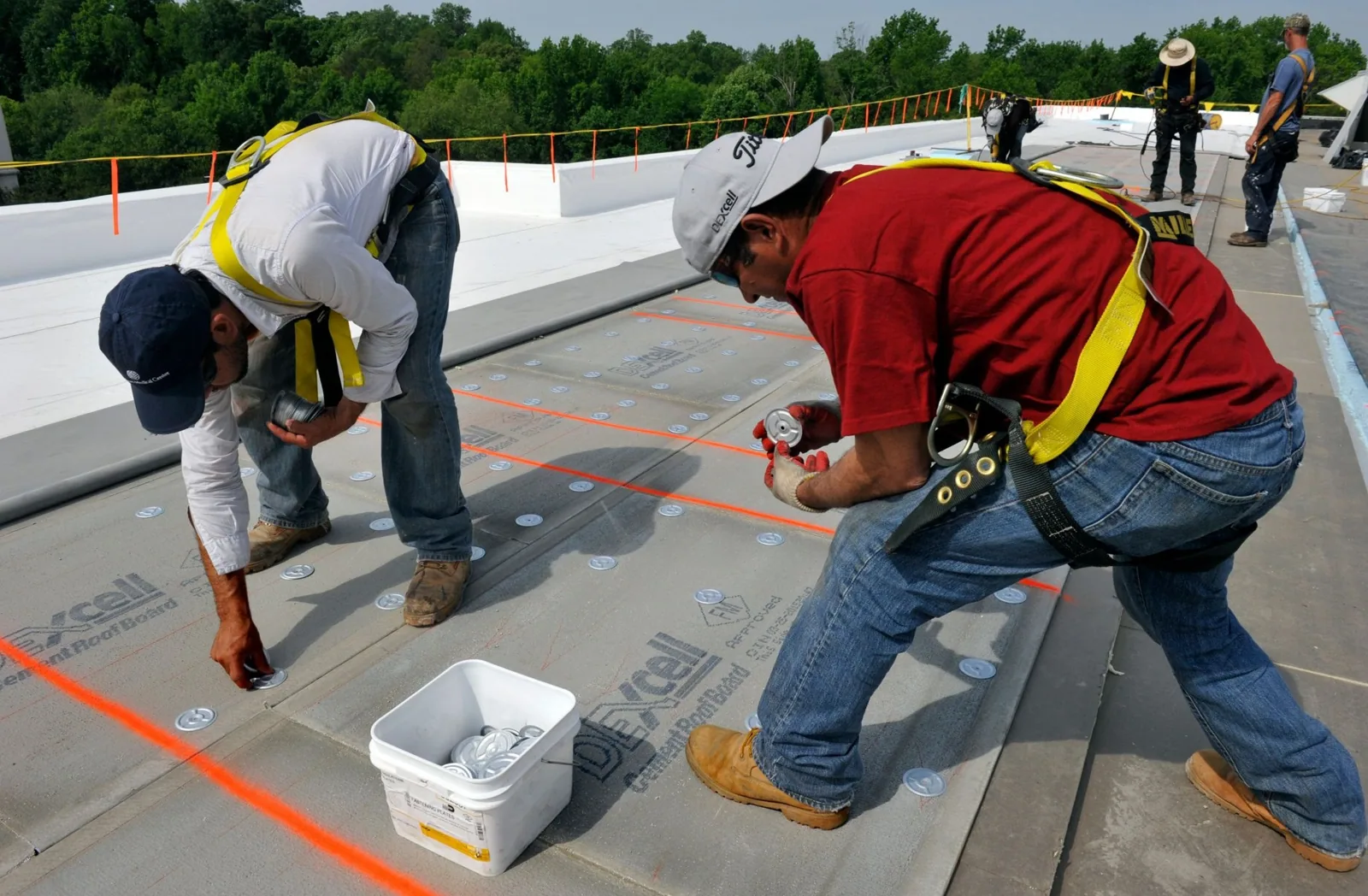
A drainage scope names the opening, membrane transition, and area affected by the correction. It also states whether debris removal, new metal, membrane repair, tapered material, or interior protection is included. A photo condition record gives the owner a before-and-after view of the bowl, scupper, and nearby field. If wet insulation surrounds the opening, testing or removal may be needed before a repair can close the assembly. We identify that condition instead of covering it with a surface patch.
Cost and timing depend on access, the number of outlets, metal fabrication, roof layers, and whether the work can stay above the existing deck. We explain which findings add scope and which are routine clearing. After repair, the report should describe the flow path and what maintenance can inspect next. A coating option is considered only when the roof surface is sound and compatible; it does not correct a failed drain or bad slope. The next decision follows the water path and the condition of the assembly. We identify whether the existing outlet can remain, whether metal work needs fabrication, and which tie-in must be opened before pricing. A field sketch can note the slope direction and the roof areas that drain to the same opening. That makes later maintenance checks more useful because staff can compare the same path and notice a changed condition.
Commercial Roofing Questions
Which slope or membrane conditions can leave water after an outlet is open?
A low area, raised drain flange, deck deflection, or restricted outlet may hold water after loose debris is removed. We map the wet area and check the path into the drain before proposing correction.
Can a scupper replace a primary drain?
The roof design and existing drainage layout determine the role of each opening. We inspect the scupper and primary drain as separate paths and identify any blockage or failed transition.
Will tapered insulation fix ponding?
It can redirect water where the assembly and structure support a slope change. We check deck condition, roof height, outlets, and membrane transitions before selecting tapered material.
What causes a leak around a drain bowl?
A failed flange, loose strainer, open seam, or old patch nearby can be the entry point. We follow the reported path and inspect the bowl and surrounding membrane before setting the repair boundary.
How should drains be checked after a Stamford winter?
Look for debris, displaced strainers, movement at the flange, and areas that held water. A roof walk can compare those conditions with prior records and identify work that needs a separate repair scope.