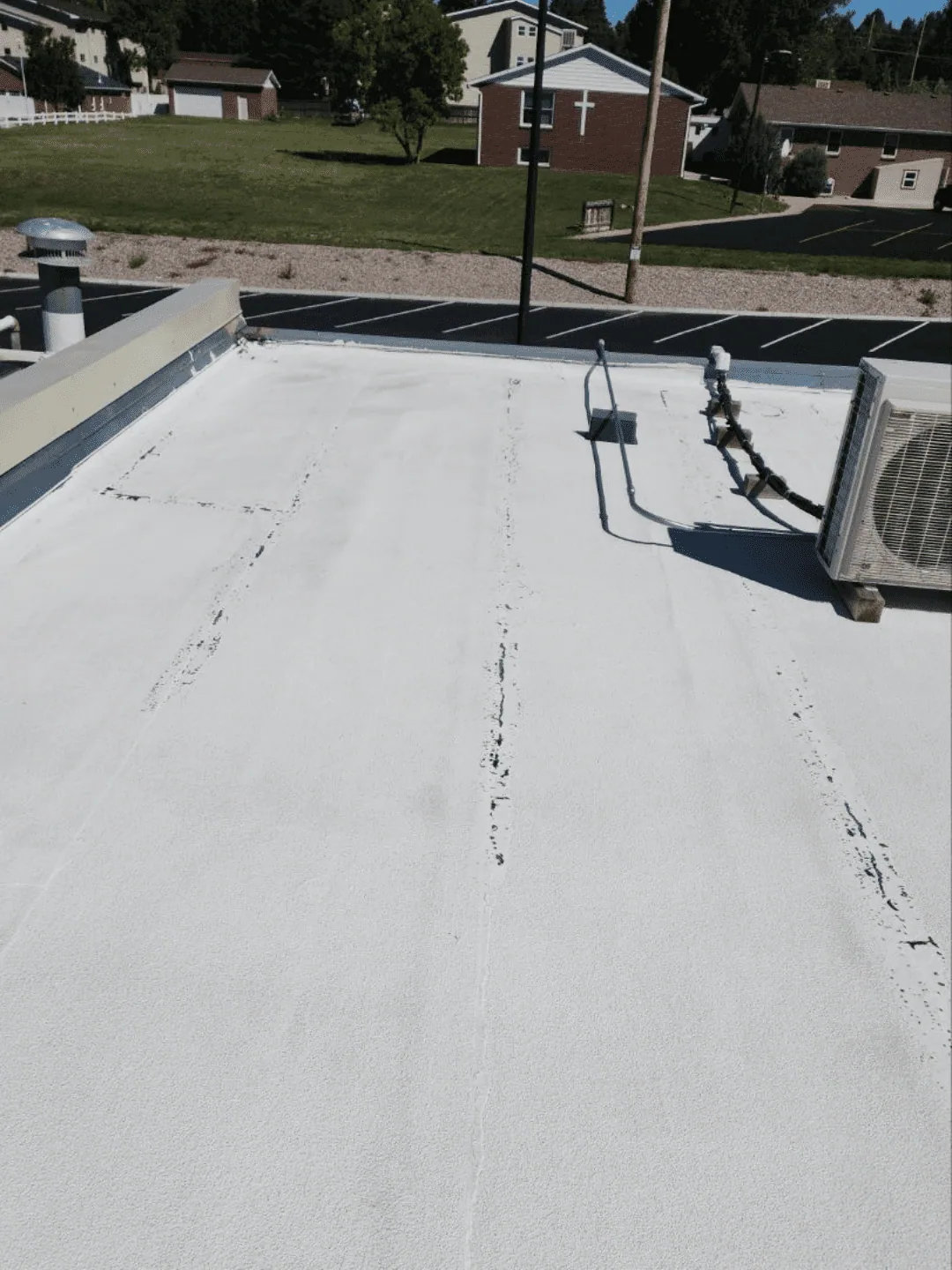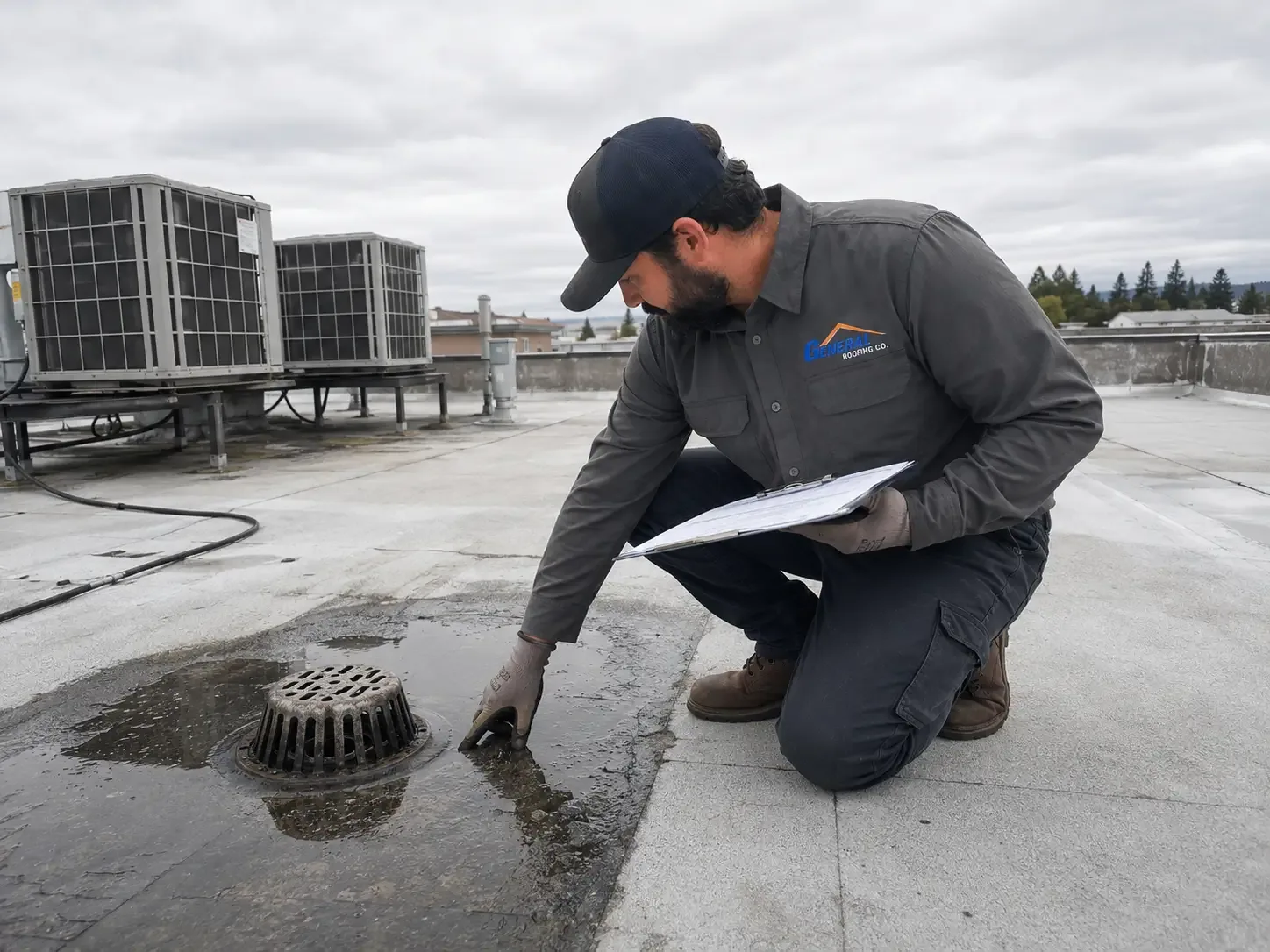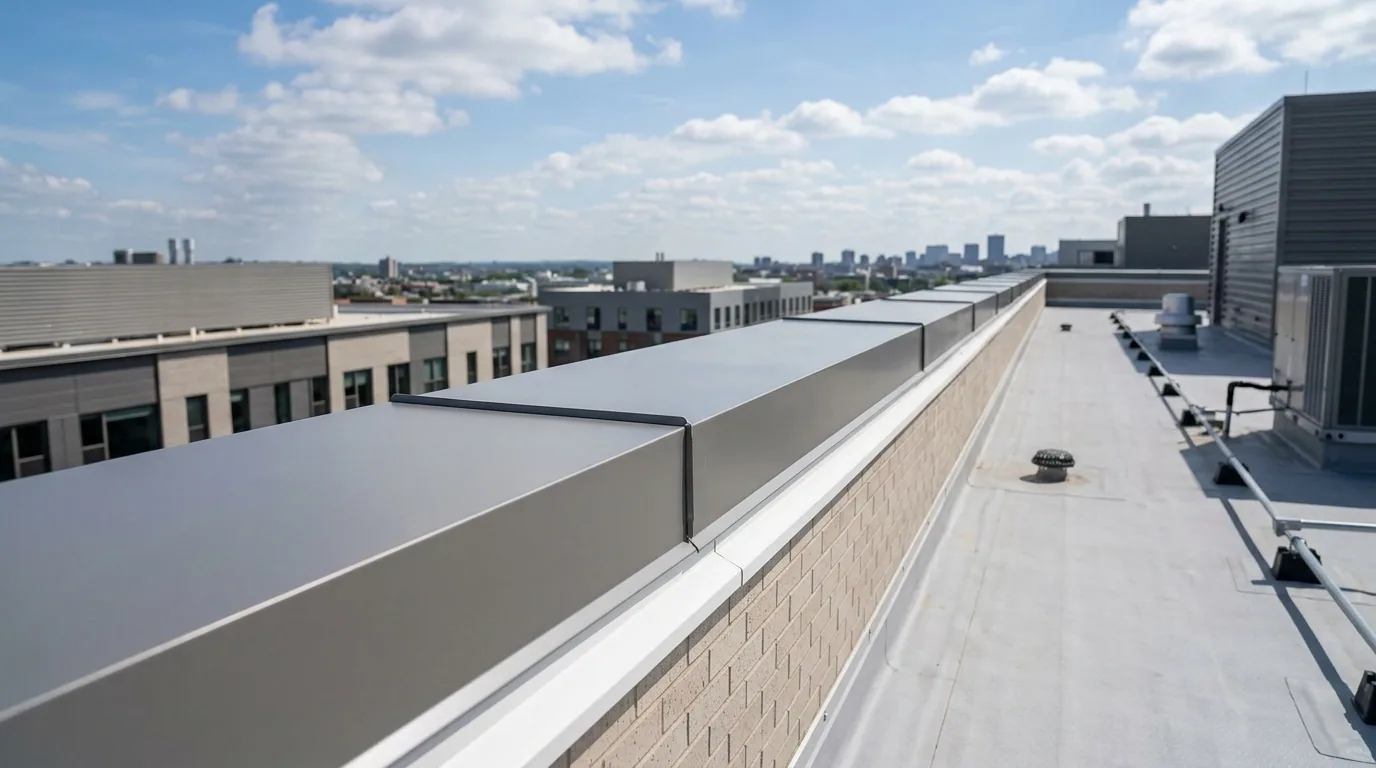
A loose coping joint can admit wind-driven rain at the parapet while the roof field still looks intact. In Stamford, CT, we inspect the cleats, fasteners, metal return, and membrane termination before choosing an edge repair. Snow and subfreezing nights add movement at exposed transitions, so attachment and drainage both matter. A roof condition check records the joint, adjacent membrane, and any water path below it. Coping, gutters, and edge metal are not decorative trim. They complete the roof boundary and direct water away from the wall.
Coping joint: check the cap and its attachment
We follow coping from corner to corner, looking at joints, cleats, fasteners, end dams, sealant, and metal movement. A cap can lift at one connection and remain tight along the next run. We check the parapet surface and the roof-side termination before calling it an isolated metal repair. If water has moved behind the cap, the wall and membrane transition may need work too. A wind-damage assessment can trace a displaced edge back to its fastening and tie-in.
New metal should fit the parapet and roof assembly rather than cover an unresolved condition. We verify the profile, width, return, and attachment support before fabrication. A poor splice can open as metal expands and contracts. Different roof systems also meet the wall differently; the termination bar and flashing beneath the cap must remain continuous. We identify the section that can be reset, the section that needs replacement, and any substrate issue that changes the boundary. Photos show both the top and roof-side connection when access permits.
Roof edge: keep membrane and metal connected
At the perimeter, we inspect the membrane edge, metal cleat, fasteners, laps, and drip extension. A missing fastener or open lap can let wind move the metal and work on the membrane beneath it. Repair requires checking attachment and the condition of the substrate, not simply adding sealant over a loose joint. A perimeter repair scope can address the roof and metal together. On a standing-seam roof, panel movement and edge terminations call for a different detail than a single-ply membrane.
We also look for water staining under the eave, rust at a cut edge, and a gutter connection that pulls away from the fascia. Those marks can point to separate defects. A metal return that has corroded may need replacement, while a loose gutter hanger may be a focused correction. We note which component carries roof water and which protects the wall edge. A storm inspection can help distinguish impact or uplift from older corrosion when dated records are available.
Gutter path: follow runoff past the wall
A gutter is only useful when its slope, joints, outlets, and downspouts move water away from the roof and wall. We inspect hangers, seams, end caps, elbows, and transitions to grade where they are accessible. A sagging run can hold water; a separated seam can wet masonry or expose the roof edge. We distinguish a roof opening from a ground drainage issue beyond the roofing scope. When the path begins at a drain or scupper, a drainage evaluation can check the roof-side outlet and flange.
Snow, thaw, and summer storms change how water reaches a perimeter. We look for debris, ice damage, and signs of overflow, then compare them with the visible condition of the roof edge. Gutter size or downspout changes should follow the actual roof area and outlet layout; we do not guess capacity from appearance. A clear repair scope states whether the work includes metal fabrication, hanger replacement, joint sealing, or outlet correction. It also identifies any area that needs a separate sheet-metal or masonry contractor.
Building edges: plan around varied uses
Downtown and South End Stamford are mapped as higher-intensity mixed-use areas, with office, housing, and retail roofs in the same core. The roof edge may sit above occupied space, so we coordinate access and protection below before opening a coping or gutter detail. West Side Stamford is a named Village Commercial district; roof work there still starts with the actual metal profile, membrane turn-up, and wall condition. Those broad districts help frame the local building mix without pointing to a particular tenant or property.
Norwalk's Route 1 and Route 7 corridors include commercial and industrial uses, where delivery paths and service access can affect staging. We identify the roof zone, the ladder or hatch route, and any equipment or entry affected by debris or water. For larger coordination, a general contractor work plan can keep roofing, wall repair, and mechanical work on a defined sequence. At distribution buildings, maintain a clear loading path while edge work is underway. The roof boundary remains the focus of our scope.
Metal scope: define what must be removed
Repair cost depends on access, metal length, corners, profile, substrate condition, and how the new flashing ties into the existing roof. Replacing a short coping section differs from rebuilding a full parapet run with membrane termination work. We document the fasteners, cleats, splices, and adjacent field so the owner can see why a repair extends beyond one joint. A photo condition record can support a later comparison after the metal is reset or replaced. After removal, we check the exposed substrate for deterioration, confirm that the attachment line is sound, and record any condition that needs separate approval before closing the edge. This step prevents a new cap from hiding a weak backing or an interrupted membrane tie-in. At corners and changes in wall height, the metal layout must account for the actual geometry rather than forcing a straight run through a transition. We identify those details before fabrication so field cuts, seams, and returns have a defined place in the work plan. Work sequencing also matters when a gutter and coping meet. We set out which component is removed first, how the roof opening will be protected during the shift, and how runoff will be managed until the outlet is restored. Where the repair touches masonry, insulation, or a wall flashing, the scope names that interface and the trade responsible for it. Closeout notes can show the repaired length, replaced fasteners, sealed joints, and any remaining condition outside the authorized area. That gives the owner a practical record for future maintenance without implying that unrelated roof areas were renewed.
Before fabrication, we confirm dimensions and the roof-side termination detail. The finished edge needs to shed water and remain attached without pinching membrane movement. We also record which gutter and downspout sections were included and where another trade is needed. If open seams or wet insulation continue beyond the perimeter, trace the condition before expanding the work into the roof field. A West Side roof visit follows the same rule: describe the edge that is present and the repair the observed condition supports.
Commercial Roofing Questions
Why does coping lift at a joint?
A splice, cleat, fastener, or support can loosen as metal moves or water reaches the connection. We inspect the full cap and roof-side termination before deciding whether to reset one joint or replace a longer run.
Can sealant repair a loose gutter seam?
Sealant will not correct a joint that has lost support or a gutter that holds water. We check slope, hangers, end caps, and metal condition, then select repair or replacement for the affected section.
Which perimeter details merit review after freezing weather?
Look for shifted coping, open laps, loose hangers, corrosion, and overflow marks. We compare those details with roof records and note any membrane edge or wall transition that needs work.
Does edge-metal replacement include the roof membrane?
It depends on how the metal attaches and how the membrane terminates. We inspect the connection and state whether the scope includes membrane repair, substrate correction, or metal work only.
How does a downspout problem affect the roof?
A blocked or disconnected outlet can back water into a gutter or leave it against the wall. We trace the visible path and separate roof-edge repair from piping or site drainage outside the roofing scope.