A separated PVC seam near an exhaust outlet can expose the roof to heat, grease, and runoff at once. In Stamford, CT, we inspect the weld, flashing, and surrounding sheet before choosing a repair. Summer highs in the low-to-mid 80s and rooftop equipment demand make curb and exhaust details worth careful review. A membrane condition check records the seam and the service conditions around it, not just the visible split.
Welds: restore the sheet-to-sheet connection
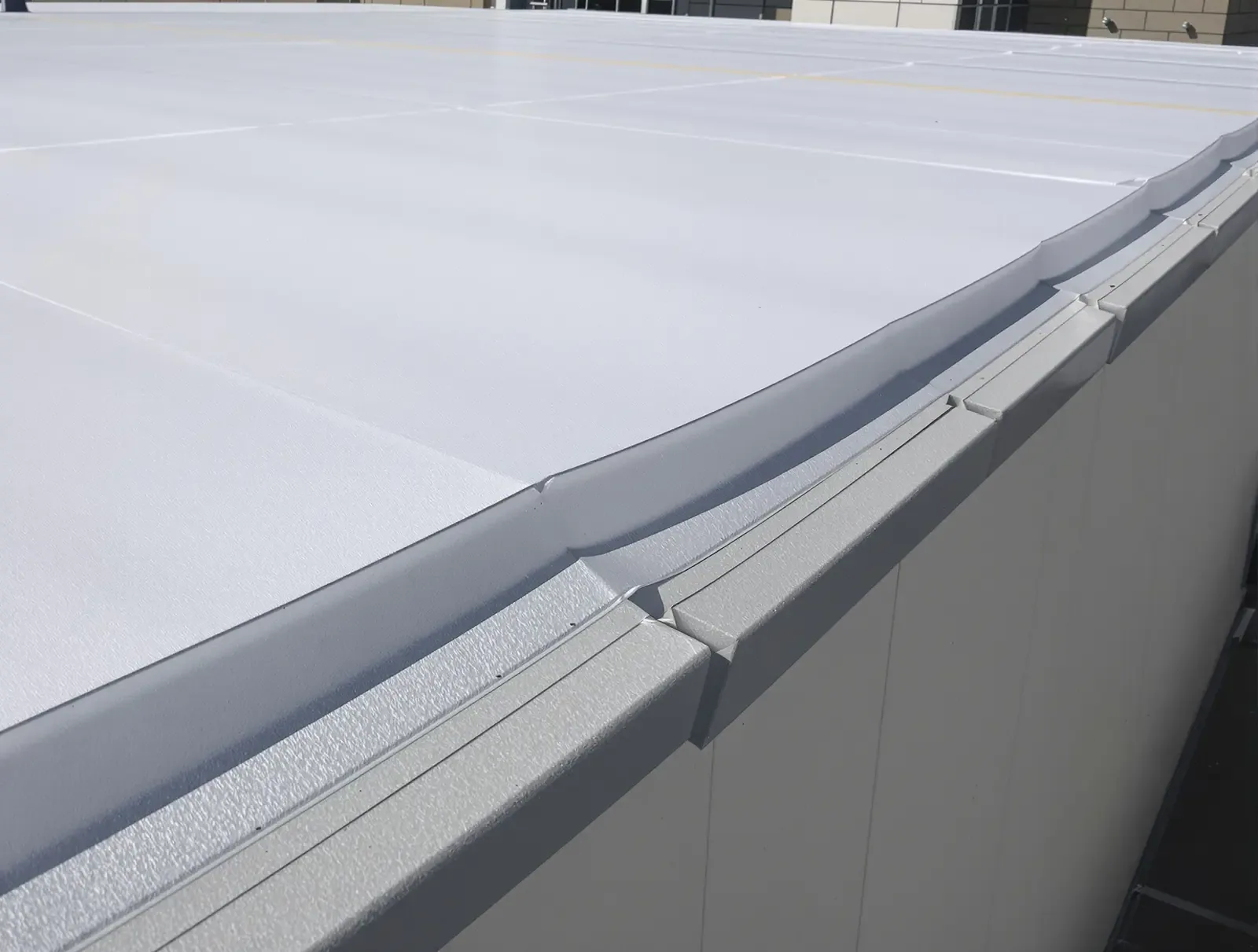
PVC seams are fused with hot air. We check for incomplete welds, wrinkles, dirt, edge splits, and patches that have lifted. A test probe helps identify an open seam, but it does not show whether water has traveled beneath the sheet. We compare the defect with the slope and insulation condition, then mark the area that must be opened. A repair needs clean, compatible membrane and a continuous weld at the patch perimeter.We also keep new and old seam directions in view where a repair crosses a sheet edge. A lap that faces incoming runoff needs a different layout than one protected by the curb. The finished joint should drain cleanly and remain accessible for later inspection.
Older sheets can become brittle or lose flexibility. Heat settings that work on one membrane may damage another, so we test the surface and adjust the method to the material in place. At corners and T-joints, seam width and patch shape matter. A patch that ends at another seam can create a crowded intersection. We lay out the repair to keep the welds accessible and avoid trapping a wrinkle that could pull as the roof moves. The completed seam is checked before the area is closed. A TPO sheet weld uses a similar heat-fusion concept, but the membrane formulation and preparation still control the repair.
Exhaust areas: account for grease and discharge
Kitchen exhaust can carry oils and grease onto a roof, while process equipment may release heat or condensate. PVC is often selected for commercial roofs where such exposures matter, but the discharge path and material condition still need review. We look for residue, discoloration, surface softening, and deterioration around the curb. Cleaning the sheet is not enough if the underlying membrane has changed. Where exposure continues, the scope should address the source or protection detail as well as the damaged surface. We review whether a curb extension, grease-rated accessory, or separation detail belongs in the work and coordinate that decision with the equipment contractor.
We mark the affected zone and inspect the path from the outlet to the nearest seam, drain, and wall transition. A coating or patch must be compatible with the existing membrane and the condition of the sheet. If equipment discharge has changed since the roof was installed, the flashing design may need an adjustment. We coordinate that work with the mechanical contractor so a repaired membrane is not exposed to the same unresolved condition.
Curbs and drains: close every transition
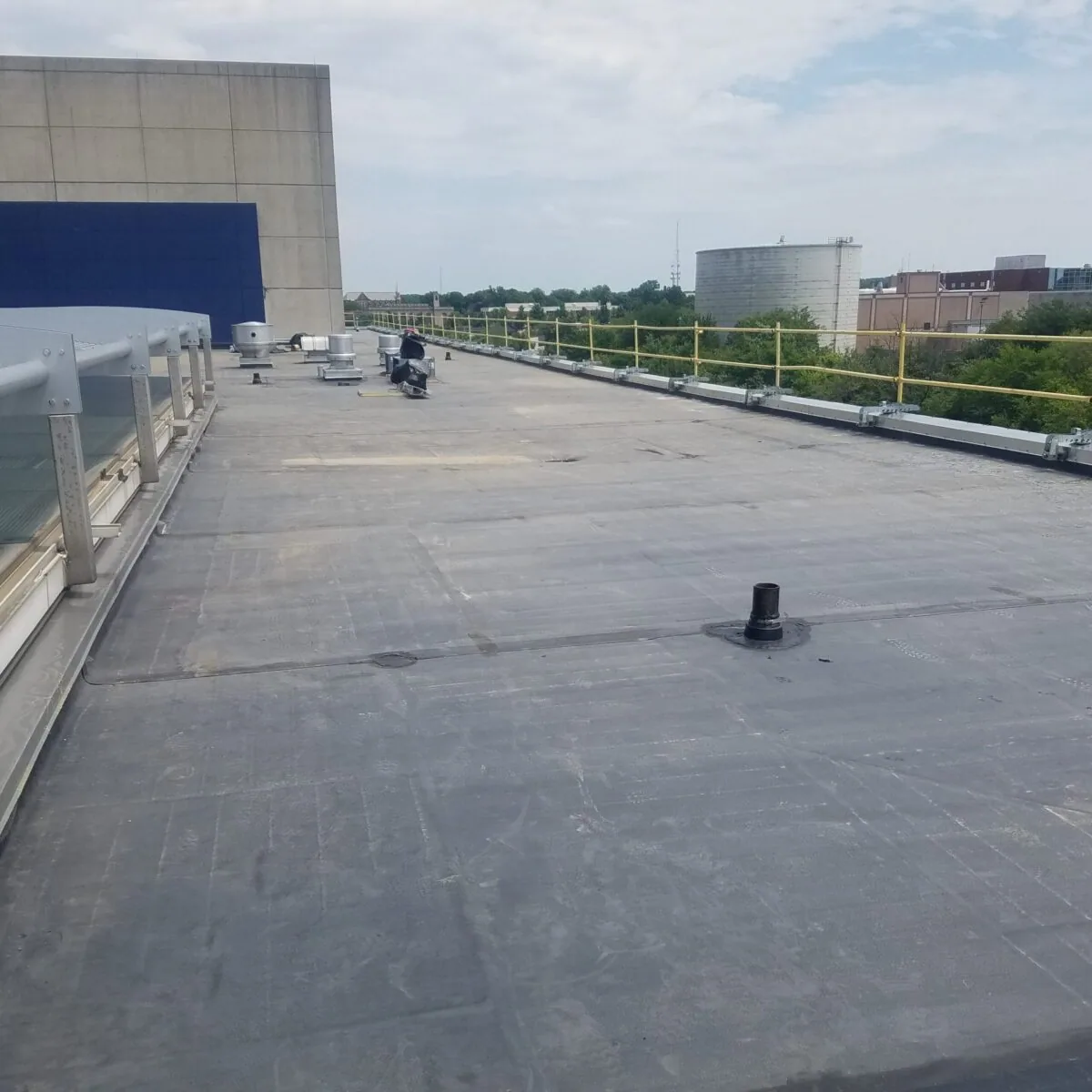
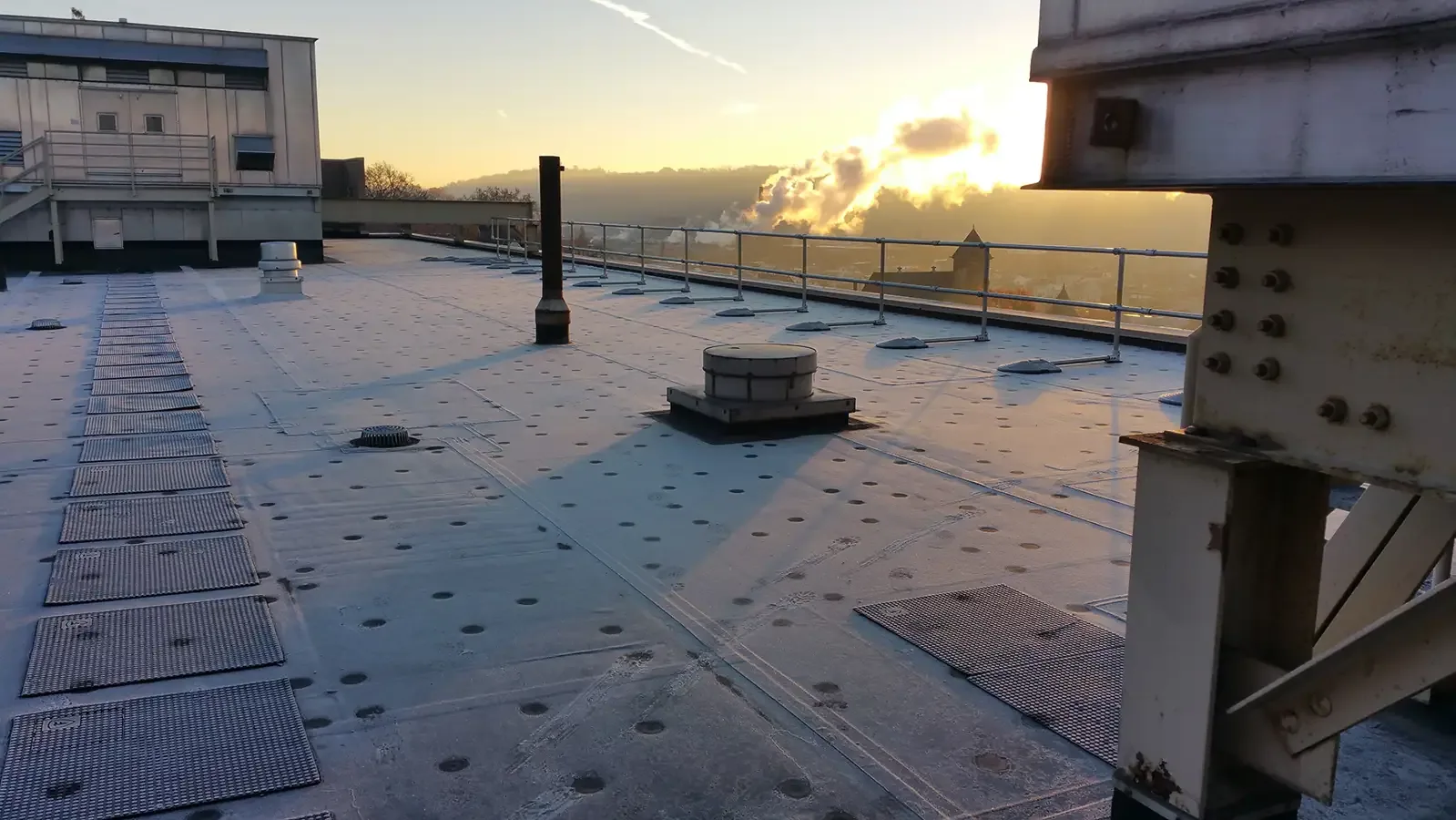
At a curb, PVC must rise cleanly and terminate beneath a cap or counterflashing. We inspect the corners, welds, fasteners, and the transition back to the field sheet. A curb that moves can stress the membrane, while ponding at its uphill side can keep a weak lap wet. We also check conduit boots and pipe flashings nearby. The details are logged separately so a repair at the exhaust curb does not conceal an unrelated opening.
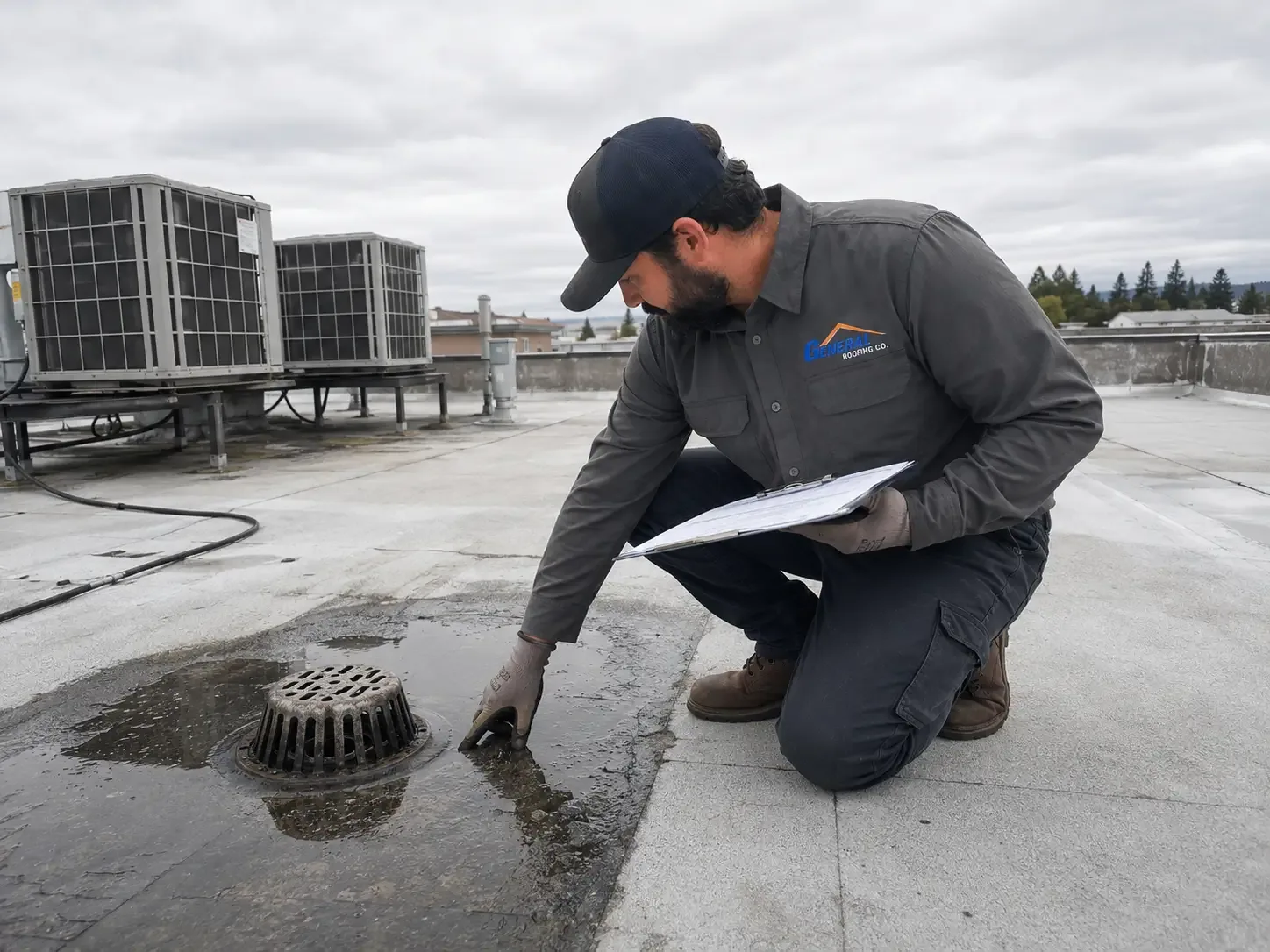
Drain bowls, scuppers, and overflow paths need an uninterrupted connection to the sheet. We check clamping rings, flange edges, wrinkles, and debris. If water is slow to leave, we trace the roof plane before proposing a change to the outlet. A roof drain connection may require correction alongside a membrane repair, but the work boundary should identify which component is included. A TPO transition or KEE formulation detail also needs a compatible tie-in rather than an assumed identical weld.
Work access: coordinate material and roof operations
Stamford's planning map places higher-intensity mixed uses in Downtown and South End. A membrane repair above offices, homes, and storefronts needs a defined work zone and protection below. We coordinate delivery and lift access with the manager before moving rolls or welding tools. Summer equipment loads can also shape which roof routes stay open during the repair.
SoNo's pedestrian-scale commercial blocks make the material route part of a PVC repair plan; we keep rolls and removed membrane clear of business access. We stage rolls and remove old membrane without blocking roof hatches or drains. A Norwalk Route 1 roof access plan begins with the actual loading point and roof entrance. The written sequence names the equipment or interior areas that require coordination.
System choice: compare repair with replacement
A local repair can hold when the sheet remains flexible, the welds around it are sound, and the source of exposure is controlled. Widespread embrittlement, repeated open seams, or wet insulation may point to a larger assembly decision. We separate those observations and describe the area that was not opened. A replacement assembly is selected around deck, insulation, slope, and flashing, not color alone.A PVC sheet can also meet older asphaltic material at a repair or phased replacement. We inspect the interface and use a transition detail suited to the two assemblies rather than carrying a weld across incompatible surfaces. If a seam runs beneath a metal edge, the metal must be opened far enough to make the new termination secure. We record the tie-in and confirm that water sheds across the change without leaving an exposed cut edge.The same care applies where a patch meets an existing coating or an earlier membrane repair. We identify the products when records are available, test adhesion or weldability on the roof, and avoid burying a weak bond under new sheet. A limited repair can remain the right choice when the surrounding assembly is stable. Where the sheet is brittle across several areas, the owner receives a separate assembly recommendation with the affected zones and removal limits spelled out.
Material compatibility is important where PVC meets another membrane, metal, or an older coating. We identify the transition and specify the detail before installation. The work record states what was removed, how the new sheet was welded, and where a separate equipment or substrate repair remains. Roof capital planning can compare a focused repair with replacement using the observed condition and the owner's project priorities, without promising a fixed service life or energy result.
Commercial Roofing Questions
Does PVC resist grease from rooftop exhaust?
PVC is commonly used where grease exposure is a concern, but the discharge and membrane condition still need inspection. We look for residue, heat effects, and damage at the curb.
When is an aged pvc sheet suitable for a heat-welded patch?
The existing membrane must be clean and able to accept heat. We test a small area, then confirm weld quality before extending the repair.
Which stress points can separate a heat-welded pvc lap over time?
Poor fusion, contamination, movement, or aging can weaken a seam. We inspect nearby details and attachment to identify whether the split is isolated.
Will you replace the whole roof if one seam is open?
A single open seam can often be repaired when the surrounding sheet and insulation are sound. Broader deterioration changes the recommendation.
Do you check the drain during a PVC repair?
We inspect the drain and runoff path when they affect the wet area. The written scope identifies whether outlet or slope correction is included.