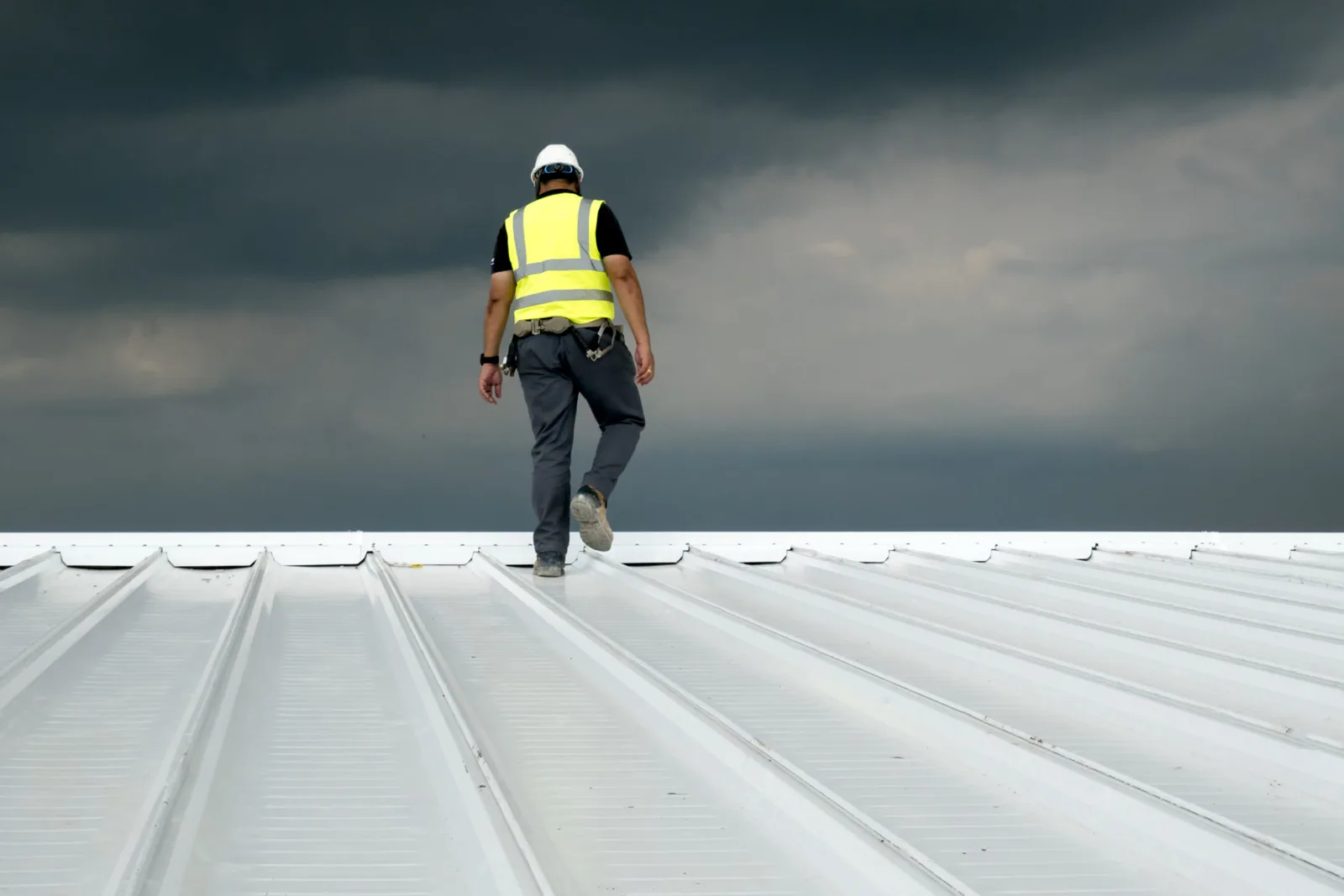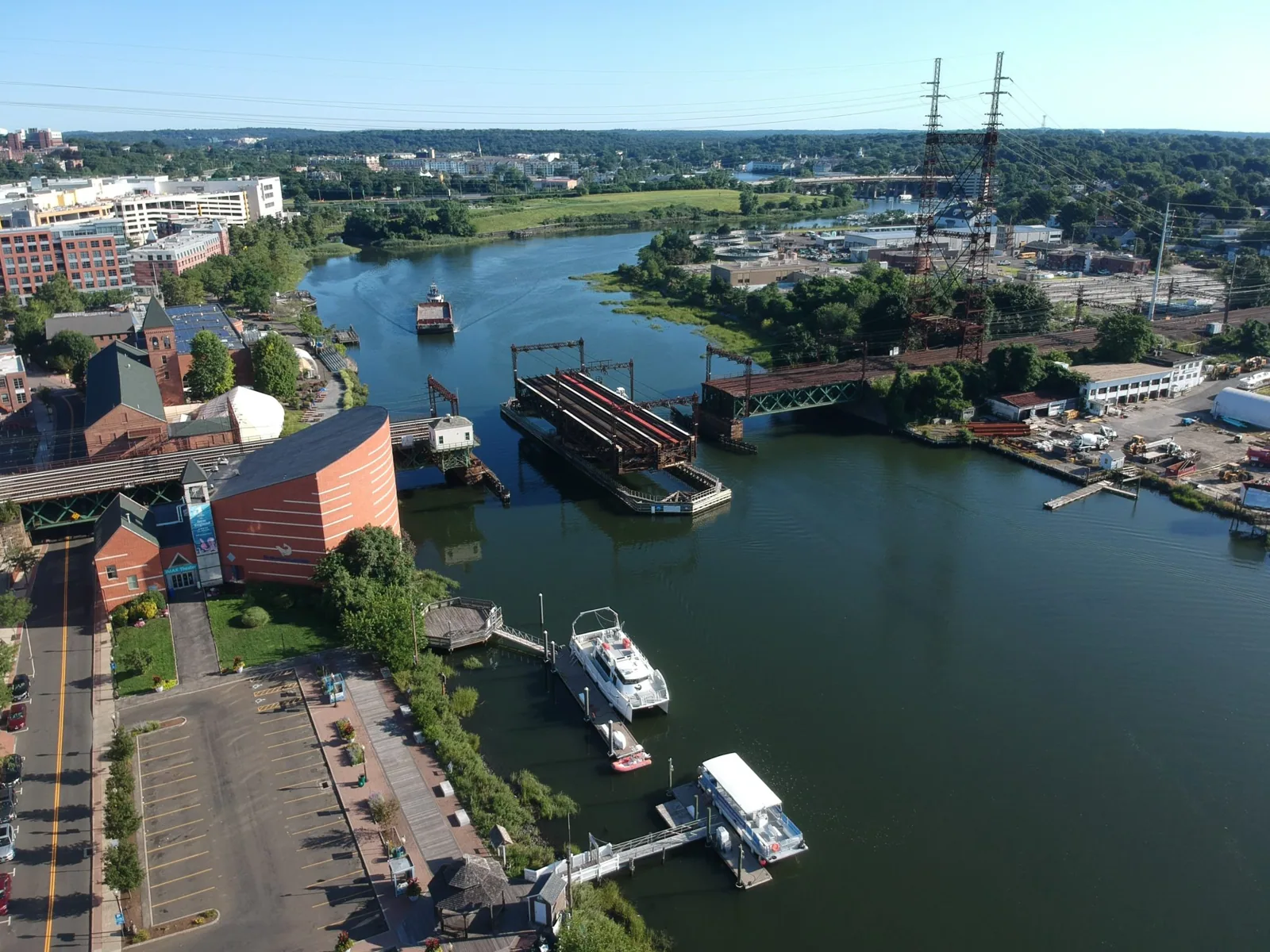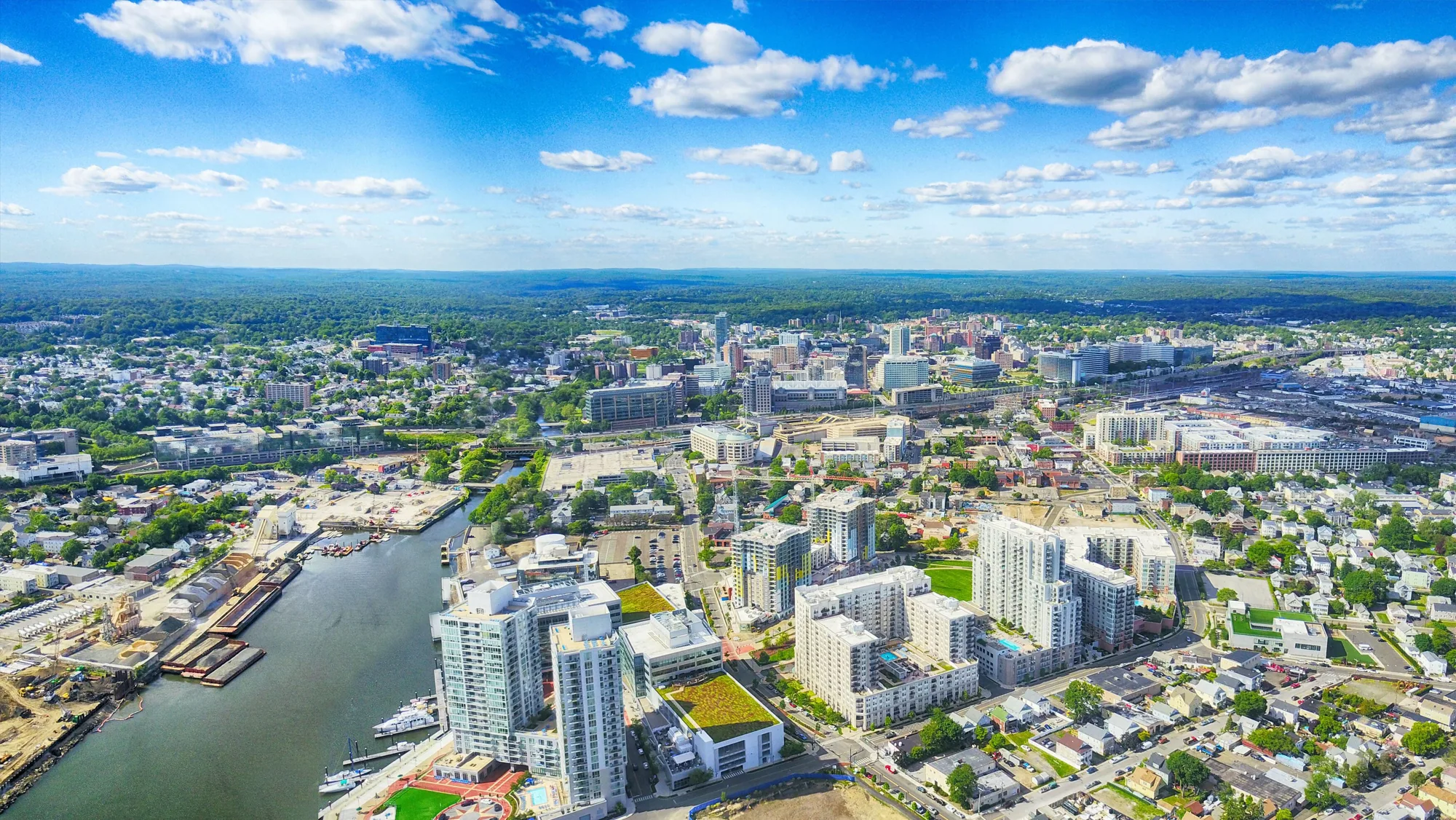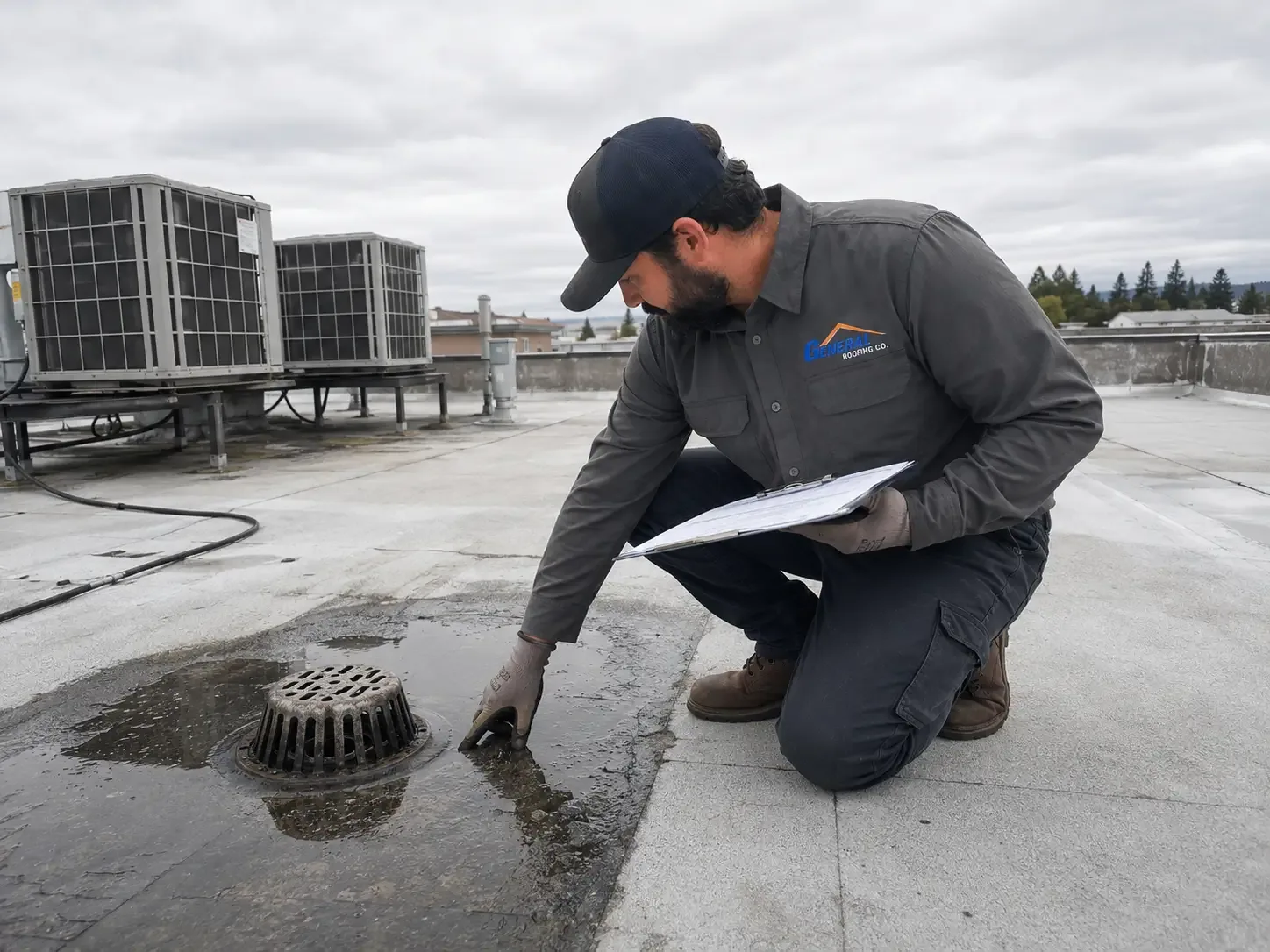
A seam that splits at the roof edge can feed water behind metal before the interior shows a mark. Along Route 1, Norwalk, CT, we inspect the membrane lap, coping, curb flashing, and drainage connected to the reported leak. The corridor includes dense retail, business, commercial, and industrial activity. Connecticut Avenue and Van Buren Avenue are part of a mobility and safety focus, while the US 1 segment runs 5.11 miles from Darien to Westport and carries 12,600 to 29,400 vehicles daily. The building contact confirms the entrance, delivery window, and lift position before we move material toward the roof. A commercial roof inspection connects the reported room to the roof detail above it.
Access point: confirm the work route first
Before moving tools or removing roofing, we confirm how the crew and materials reach the work area. The property's driveway and loading area set the delivery path, so we confirm both with the building contact before moving roofing material. The building contact identifies that route, any delivery limits, and the areas below that need protection. If an open roof would expose stock, equipment, or occupied rooms, temporary cover and a clear close-in point belong in the scope.
Connecticut Avenue and Van Buren Avenue are included in Norwalk's corridor mobility and safety focus. For roof work, a manager needs to know whether access can be staged safely and whether the work can be divided into smaller openings. We record what the site allows, not an assumed traffic-control plan. At Norwalk Center or East Norwalk, we confirm the access plan at the property before moving material toward the roof.
Water path: do not stop at the room mark
A leak near a storefront can travel along a seam, insulation joint, or deck before reaching the ceiling. We compare the reported location and timing with the roof slope, wall transitions, drains, curbs, and penetrations. If several rooms are affected, each mark gets its own roof-side check. A shared interior stain does not prove one entry point. We note the observed path and keep any concealed section open for follow-up access or testing.
Roadside commercial properties can have varied roof layouts even along one corridor. We do not infer a deck, membrane, or equipment arrangement from the land-use pattern. The roof walk establishes material, attachment, and drainage conditions. If an edge or flashing failure is found, flashing repair should address the full transition and the membrane beneath it. A surface bead is not enough where the metal return has loosened or water has reached wet insulation. The repair note should show how new material connects to the existing field.
Commercial frontage: account for the roof below
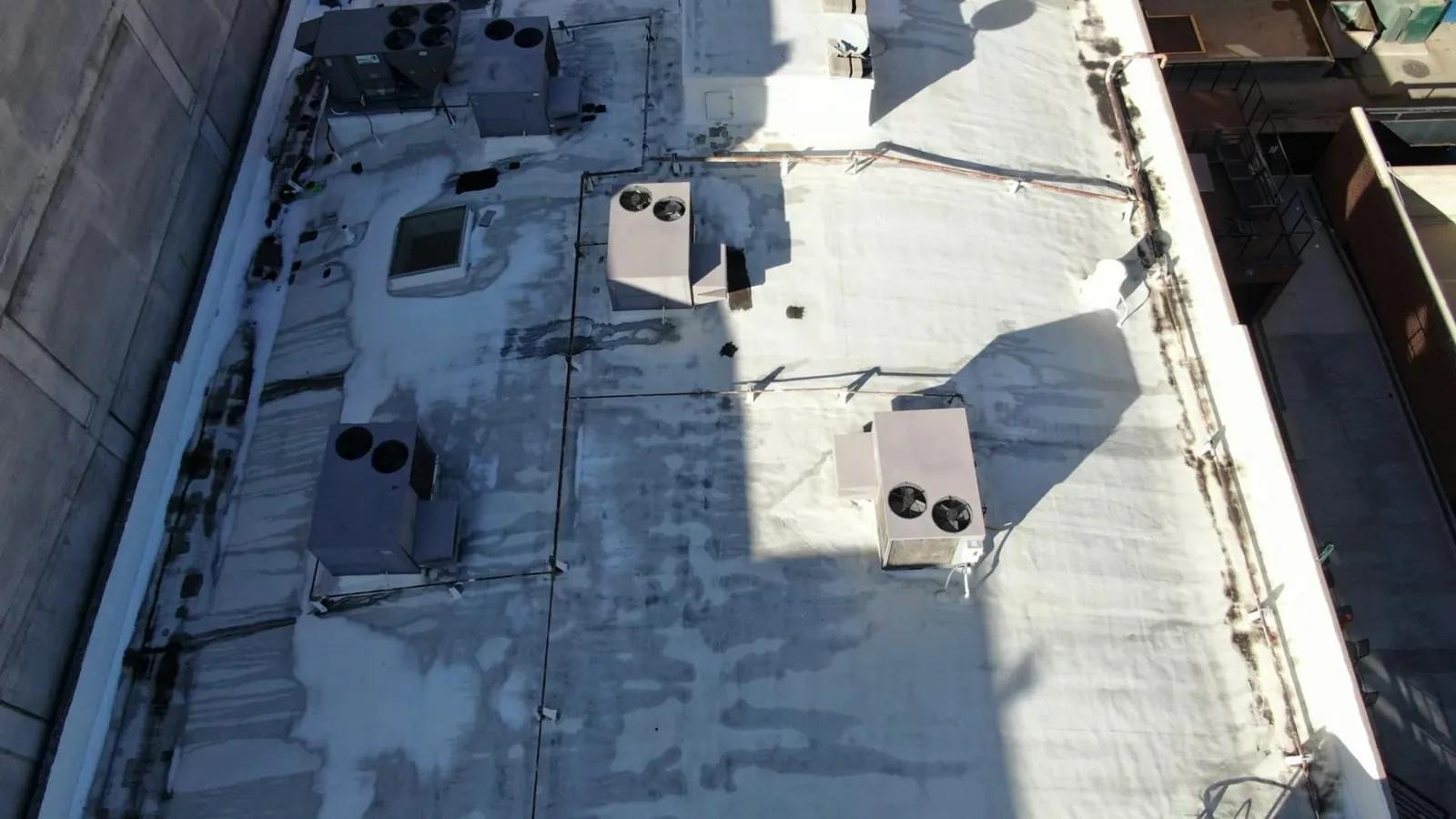
Retail and industrial uses share the Route 1 corridor, but they do not share a roofing system. We identify the roof in front of us: membrane type, seam direction, deck where visible, penetrations, and previous repair layers. A business may need a clear entrance or protected interior while the work proceeds. A production or storage area may need a different debris plan. The property contact confirms which applies before the work sequence is set.
We confirm delivery timing and access instructions at the property before setting the work sequence. We list the confirmed material path and any blocked area that limits inspection. South Norwalk connects to a different set of business streets; work there does not establish the route at a Route 1 property. A clear handoff between access, dry-in, and final tie-in keeps the roof protected while the manager maintains building operations.
Drain and edge: check every water exit
Water needs a continuous route from the roof field to a drain, scupper, or gutter. We inspect the drain bowl, clamping ring, overflow, and surrounding membrane. At the edge, we check coping joints, cleats, terminations, and the sheet that turns up the wall. A blockage can leave water against a seam; a loose flange can leak even when the bowl is clear. We identify which condition is present before pricing a correction.
If ponding appears after rain, note where it remains and how long it persists, then compare it with low seams and drainage points. Drain and scupper work may be cleaning, membrane repair, or a broader drainage adjustment. The method depends on roof slope, outlet placement, and the substrate. A maintenance item should not be presented as a structural repair, and a flashing failure should not be priced as debris removal. The scope names the component and material involved.
Repair or replacement: set the limit by condition
A focused repair is useful when the defect is confined and sound roofing remains for a compatible tie-in. We remove failed material, inspect the substrate, and extend the opening where wet insulation or loose attachment continues. If several areas have failed, or repeated patches no longer reach stable membrane, the owner needs a broader comparison. We explain what changed the recommendation and which part of the roof remains outside the current scope.
A maintenance plan can track drains, laps, and perimeter metal while the assembly remains serviceable. Commercial roof repair addresses a localized opening when the surrounding field can hold. If that field has reached its limit, replacement planning weighs removal, new insulation, and dry-in around building use. The recommendation should not follow a stain count alone. It follows the extent of moisture, attachment, and the ability to restore a sound connection.
Cost and timing: show the conditions that matter
Cost depends on membrane system, repair area, connected flashing, removal, moisture below the field, and access for equipment and labor. A curb or parapet may require both metal and membrane work. A wider cut may be needed to reach dry insulation. Protection below, temporary dry-in, material handling, and disposal add labor. We identify the base scope and the condition that could change it after roofing is opened.
Timing follows weather, surface preparation, material compatibility, and the confirmed work route. If an opening has to remain between removal and final installation, the scope includes a protected edge. A manager should know when access is needed and which interior area may be affected. A roof condition report with photos records the seam, water route, repair boundary, and remaining question for budgeting. Keep the record tied to this property even when coordinating other corridor work.
Commercial Roofing Questions
Does traffic volume determine how the roof repair is scheduled?
No. The corridor context makes delivery and access worth confirming, but the property determines its own work route. We coordinate with the building contact and state the staging assumptions in the scope.
Why can a leak show up away from a road-facing roof edge?
Water may follow the membrane, a board joint, or the deck before it reaches an interior finish. We inspect the reported area and the connected roof details rather than assigning the source from the room location.
What is checked at a drain after standing water appears?
We inspect the bowl, clamp, flashing, low point, and overflow path. A clear strainer can still have a failed membrane connection, while ponding can also point to slope or outlet issues.
When does an edge repair need to include metal?
A loose coping splice, cleat, or return can leave an opening behind the visible membrane. We check attachment and the sheet below the metal, then include the components needed to restore the connected transition.
What information helps define a commercial roofing estimate?
The roof system, affected area, access route, interior protection, and condition beneath the opening all matter. We document those items and identify which concealed condition could add removal or dry-in work.