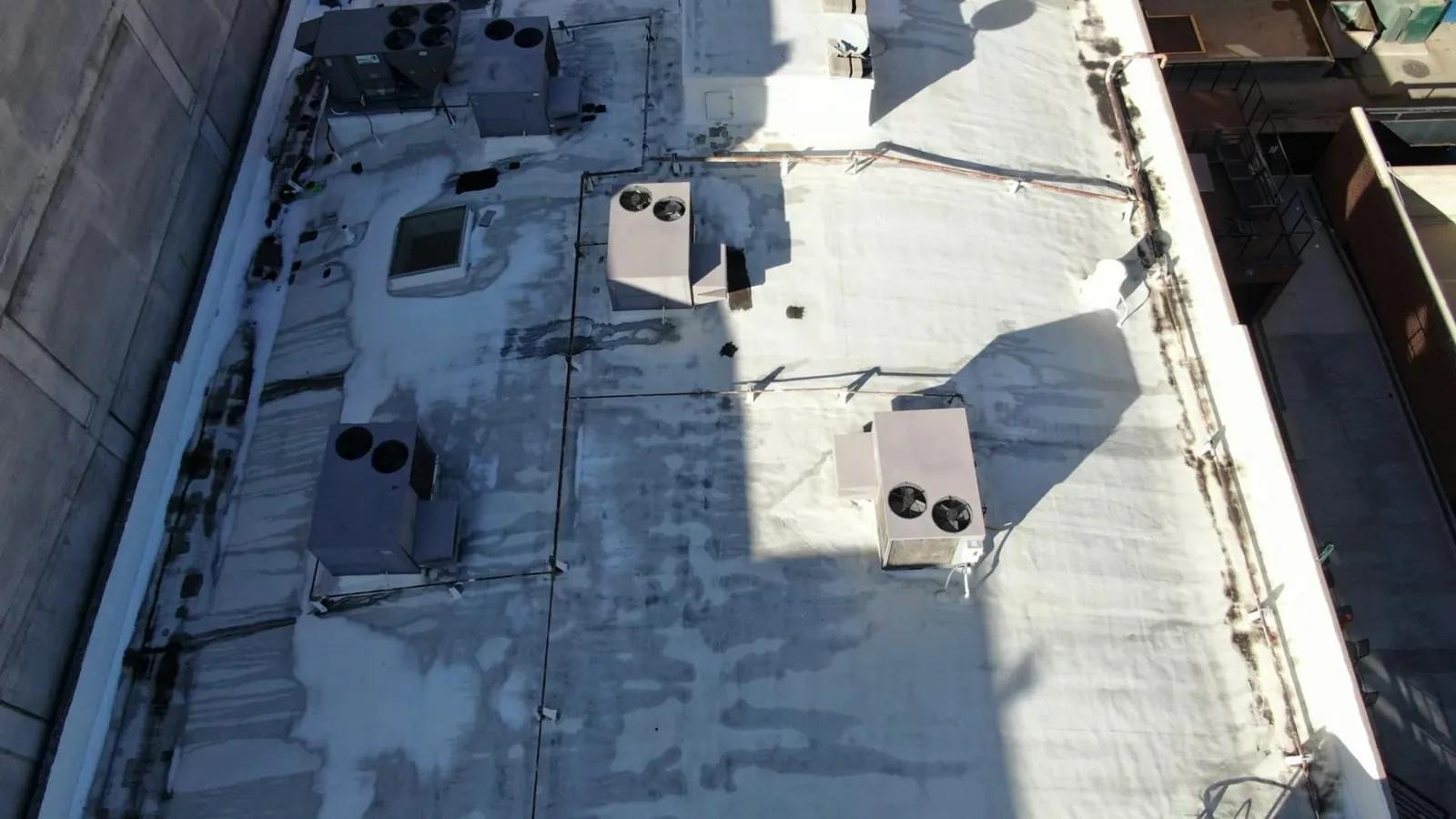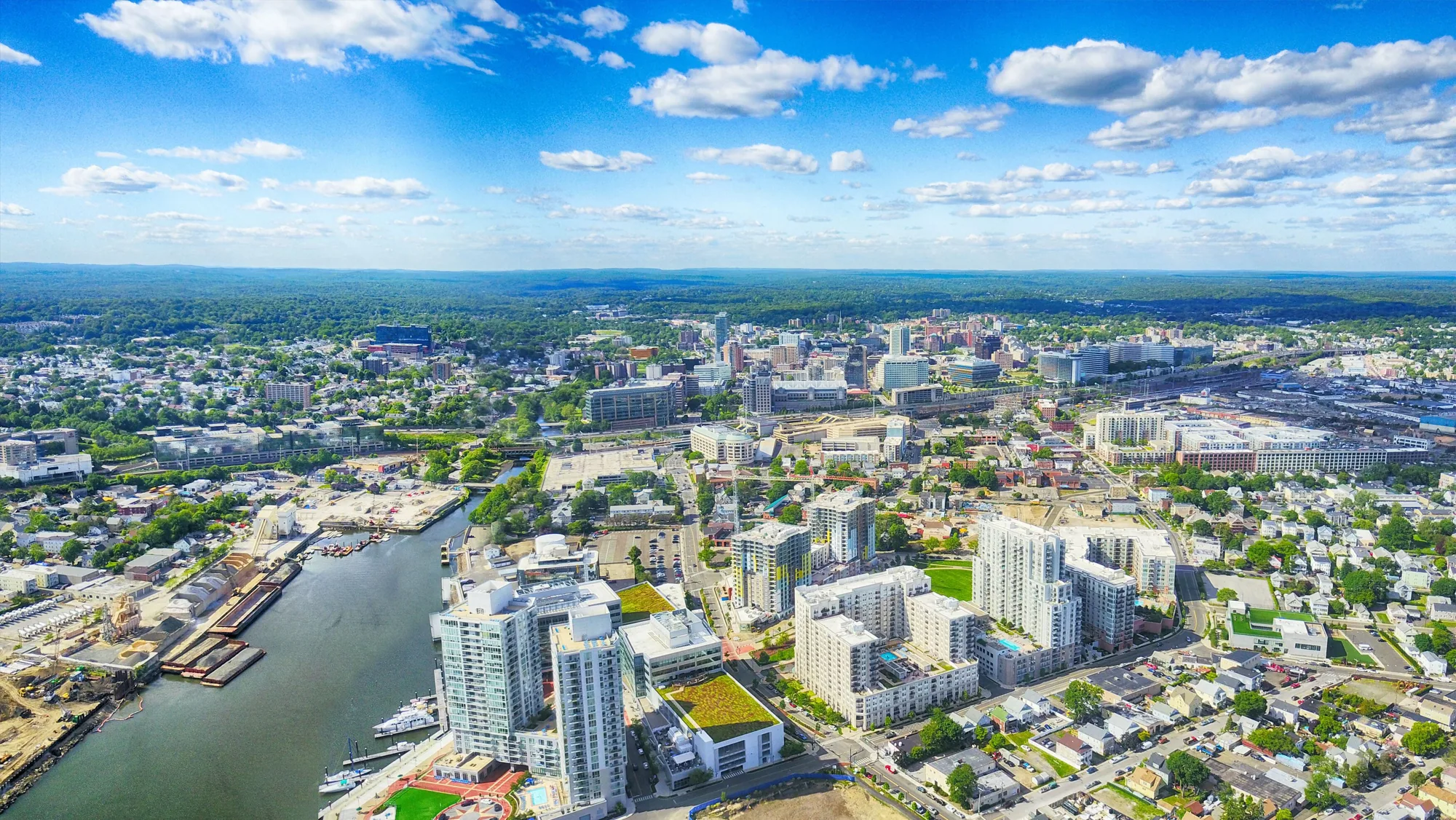
Water over an entrance can start at a roof seam, then follow the deck until it reaches a ceiling. In East Norwalk, Norwalk, CT, we inspect the reported area from above and compare it with curb flashing, wall returns, laps, and drainage. East Avenue functions as a village corridor, and US 1 connects business areas west toward Darien and east toward Westport. That movement gives access and work sequencing real weight. Inspection must identify the installed assembly before the repair method is selected. We check the material and set the repair limit from the condition found. A roof inspection records the leak path before the crew opens the field.
Village corridor: confirm the access route
A roof visit depends on where tools can reach the work zone and what sits below it. We confirm entry, material handling, equipment clearances, and the areas that need interior protection. East Norwalk has a station on Metro-North's New Haven Line as part of the town's regional transit network. The building contact confirms operating hours and loading access before we set the roof route and work sequence.
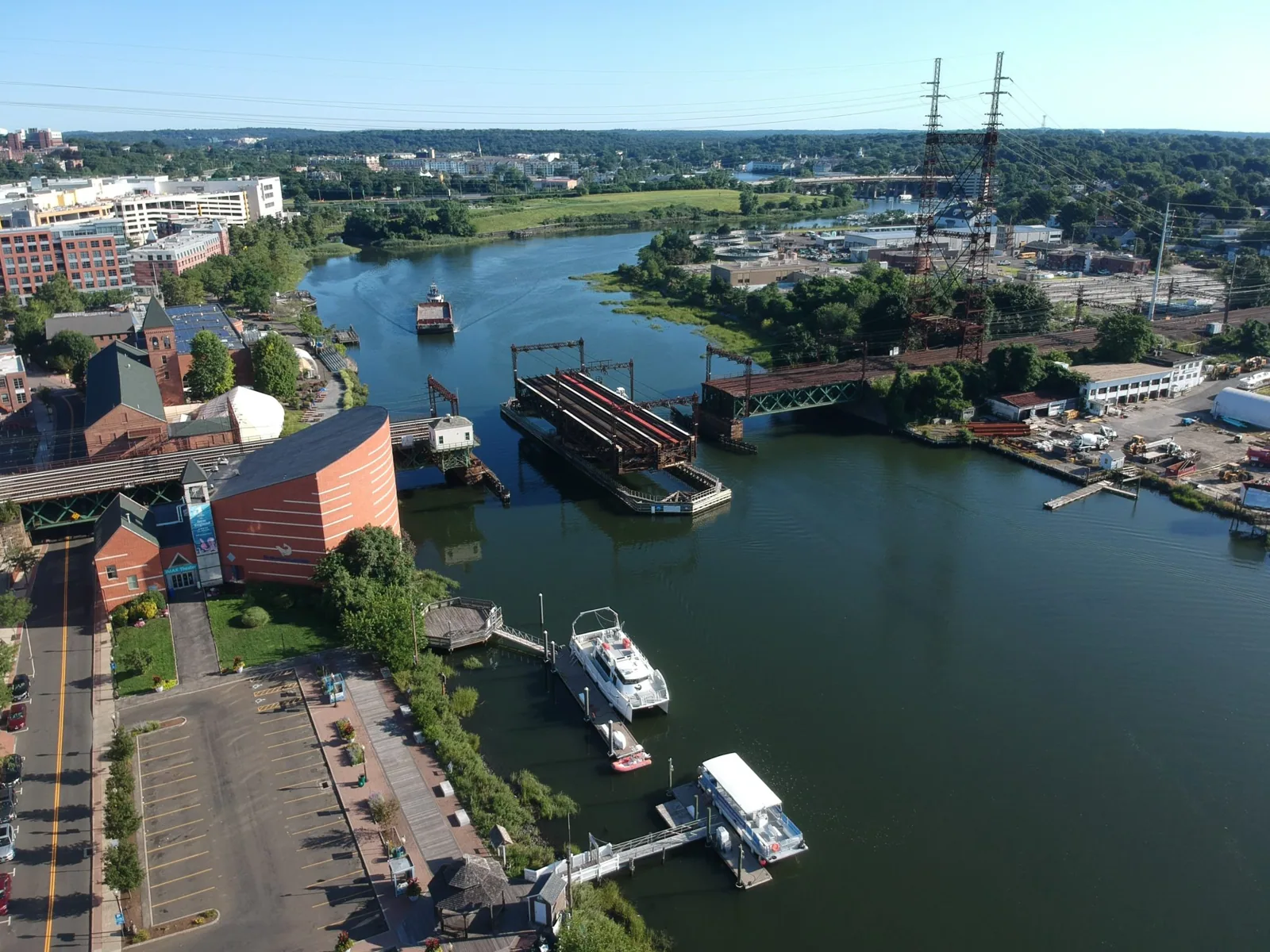
US 1 links business areas toward Darien and Westport, while East Avenue serves as a village corridor. For the manager, the roofing question is whether access can be arranged without leaving an open membrane overnight or exposing an occupied area. We set a dry-in point before cutting and state how the roof will be protected if the final tie-in must wait for a dry surface. Along the Route 1 corridor, we confirm each property's delivery route, roof entry, and pedestrian protection before opening the assembly.
Entry and sidewalk: protect the occupied area
Pedestrian connections are comparatively complete in East Norwalk, SoNo, and Norwalk Center. For a roof opening above a door, walkway, or customer-facing area, we check where debris could fall, how to mark the work zone, and whether interior cover is needed. That pedestrian network makes debris control and a marked ground boundary useful when roofing work sits above an active entrance or sidewalk. The building contact confirms the access route, and the scope records the limits that shape the work.
When more than one roof area is affected, we map each opening and protection zone. A repair above a back room may use a different route than one over an occupied entrance. In South Norwalk and Norwalk Center, we plan ground protection around each property's actual entrances and walkways while checking its own roof details. Clear notes help the manager sequence access and make sure temporary cover remains in place until the permanent repair closes.
Drain path: find where the water leaves
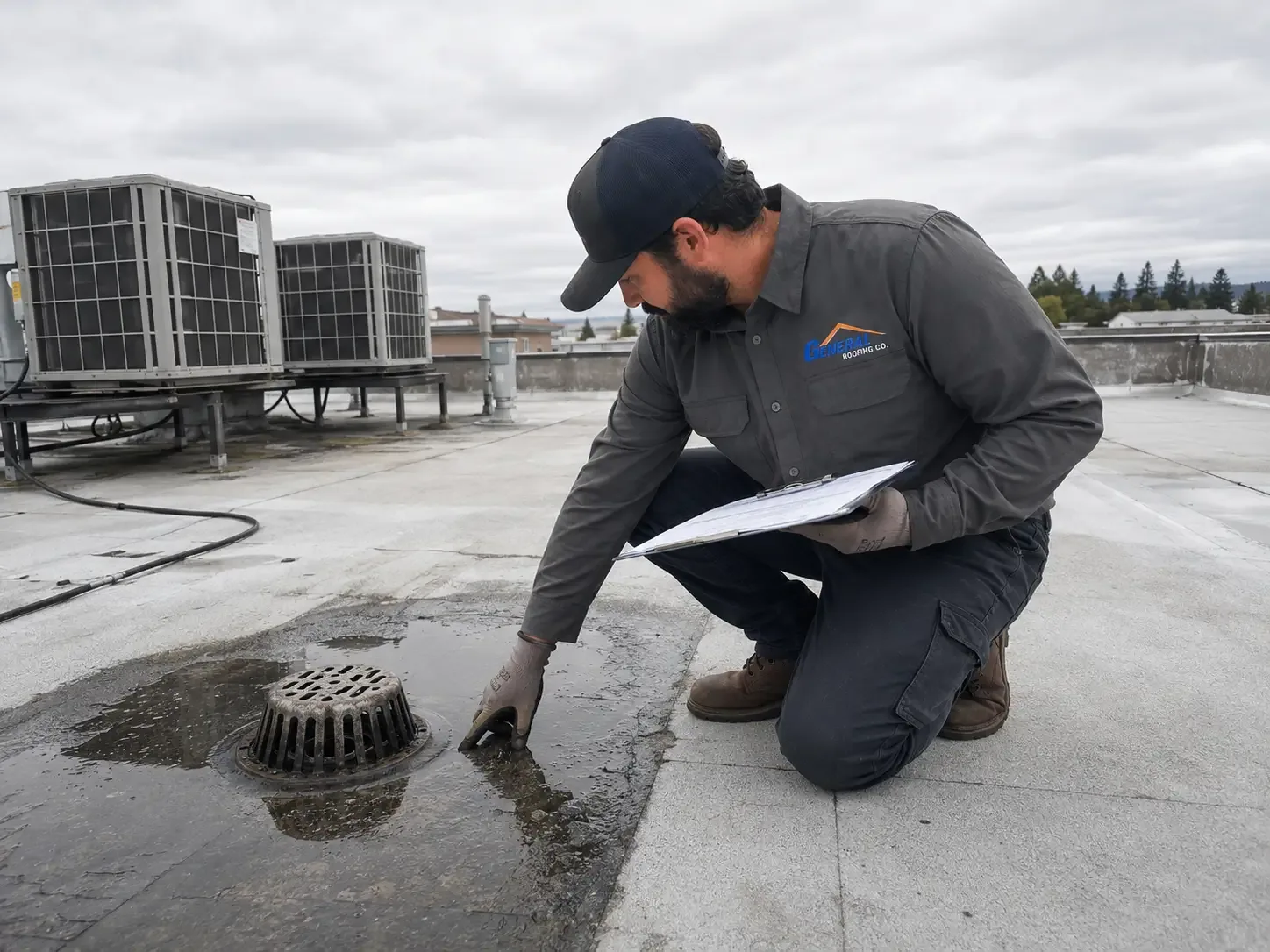
A roof can hold water when a drain bowl is blocked, its flashing has separated, or the deck sends runoff to the wrong low point. We inspect the strainer, clamping ring, membrane connection, overflow, and the field that directs water to the outlet. A ponded area can expose stress at a seam, but it does not show the source by itself. We compare the location of standing water with the reported interior mark and note any concealed area that needs a test.
Scuppers and downspout connections have to carry water out without opening a path behind the wall. Debris may be a maintenance item; a split flange or wet insulation is repair work. Drain and scupper service should name the failed component and the membrane needed for a sound connection. If the slope or outlet layout keeps water at the same transition, the scope may need to address more than the bowl. We record that distinction before pricing a wider correction.
Membrane detail: match the patch to the roof
We identify the roof system before preparing a repair. A TPO or PVC weld, EPDM splice, modified-bitumen lap, built-up field, and metal panel each require different tools and materials. We test a seam where needed, examine attachment around a lifted edge, and check the substrate at the opening. If insulation is wet, covering it with another sheet will not restore the assembly. The report shows what was exposed and whether the repair needs to follow the affected layer.
A curb, pipe, or wall transition interrupts the field and can carry water beneath a membrane. We inspect the vertical flashing, corner joints, sealant, fasteners, and adjacent lap. If the problem begins where two planes meet, flashing-failure repair must rebuild the connection, not only the visible surface. EPDM work uses system-compatible preparation; a different roof type calls for a different tie-in. Photos and a written scope keep those choices clear to the owner.
Repair option: stop at the sound boundary
A repair stays local when the defect is contained and nearby material can hold the new tie-in. We remove the failed section, inspect insulation and deck, and mark how far the opening needs to extend. If a second board is damp or attachment is loose beyond the first seam, that becomes part of the repair limit. The scope states what is included and what additional condition must be confirmed before the roof can be closed.
Several openings, recurring leaks, or broad moisture can turn a spot repair into a maintenance or replacement decision. A focused repair can restore an isolated detail when the field around it remains usable. Planned maintenance can track smaller changes across the roof. If the assembly no longer provides stable tie-ins, replacement planning considers removal, insulation, dry-in, and protection inside. The recommendation follows the remaining roof rather than the number of stains alone.
Cost and timing: identify what changes the scope
Cost depends on membrane type, opening size, the number of connected transitions, removal, wet insulation, and access for labor and materials. A drain detail may need more field sheet removed than a single seam. Equipment clearance, interior protection, disposal, and temporary dry-in also affect the work. We list those assumptions in the estimate and identify which concealed condition could increase removal after the first cut.
Weather, a dry substrate, material compatibility, and the confirmed work route determine timing. The open roof needs a protected edge while the repair is prepared. If the inspection cannot reach a section, we record the next access needed instead of treating it as checked. A photo condition report preserves the finding and the boundary for budgeting.
Commercial Roofing Questions
Does the train station tell you how the roof can be accessed?
No. We confirm the building's entry, material route, and roof access with its contact. The station is local context; the property-specific route determines staging and the work sequence.
What causes a leak to appear far from the opening?
Water can move along a lap, deck joint, or insulation before it reaches an interior finish. We compare the reported location with roof slope, curbs, and drains, then document the path supported by inspection.
How do you protect a public entrance under roof work?
We mark the work area, confirm whether the doorway remains in use, and include overhead or interior protection in the sequence. If removal exposes a larger opening, temporary cover stays in place while the final repair is prepared.
Which conditions make east norwalk ponding a slope or membrane issue rather than a blocked outlet?
A restricted strainer may clear with maintenance. Loose flashing, a failed bowl connection, wet insulation, or an unfavorable low point needs a repair scope that addresses the cause rather than just the debris.
What makes the repair boundary extend beyond one seam?
Moisture under the next board, loose attachment, or a second opening can move the cut line. We record the condition at each edge and price added material only after the wider area is confirmed.