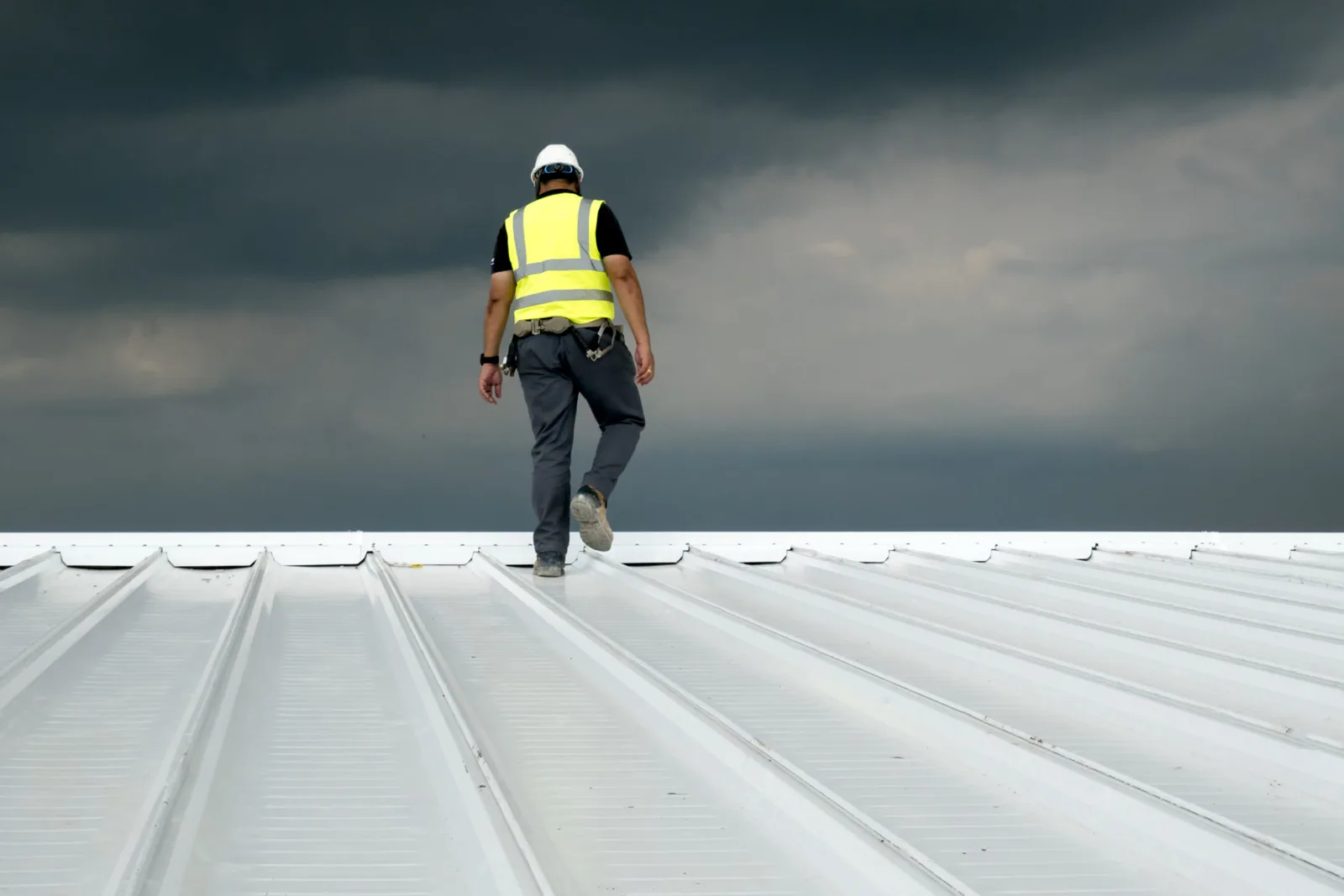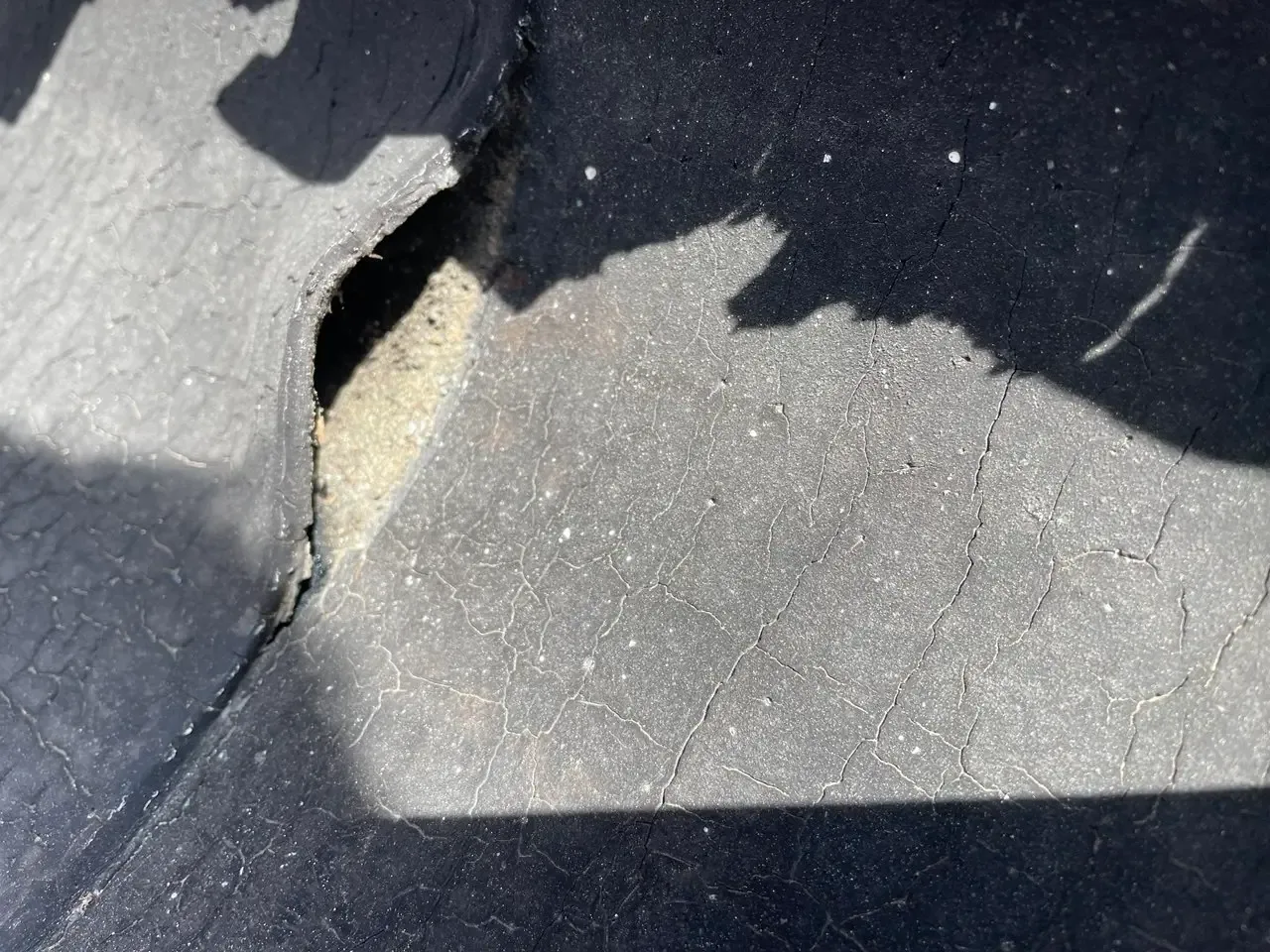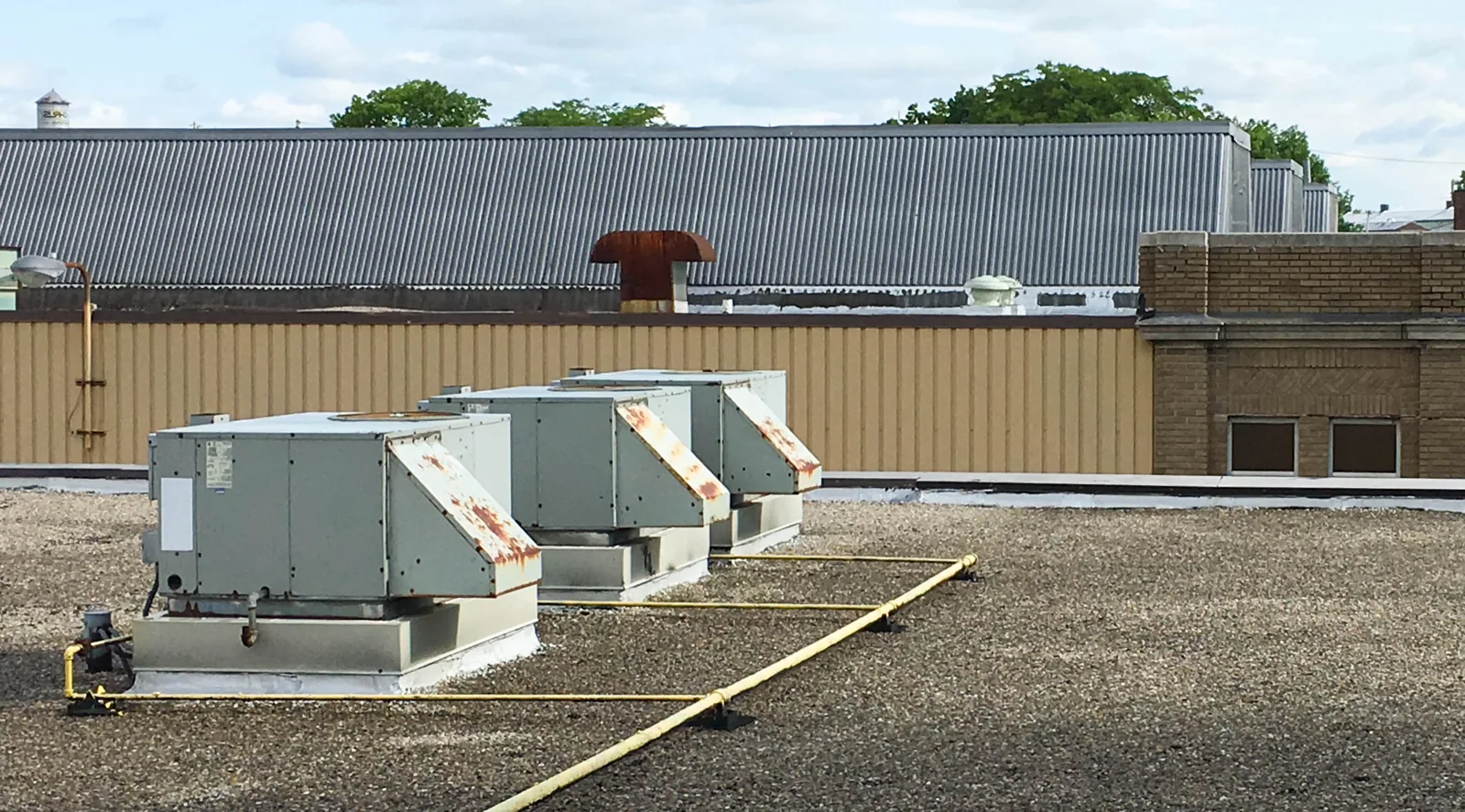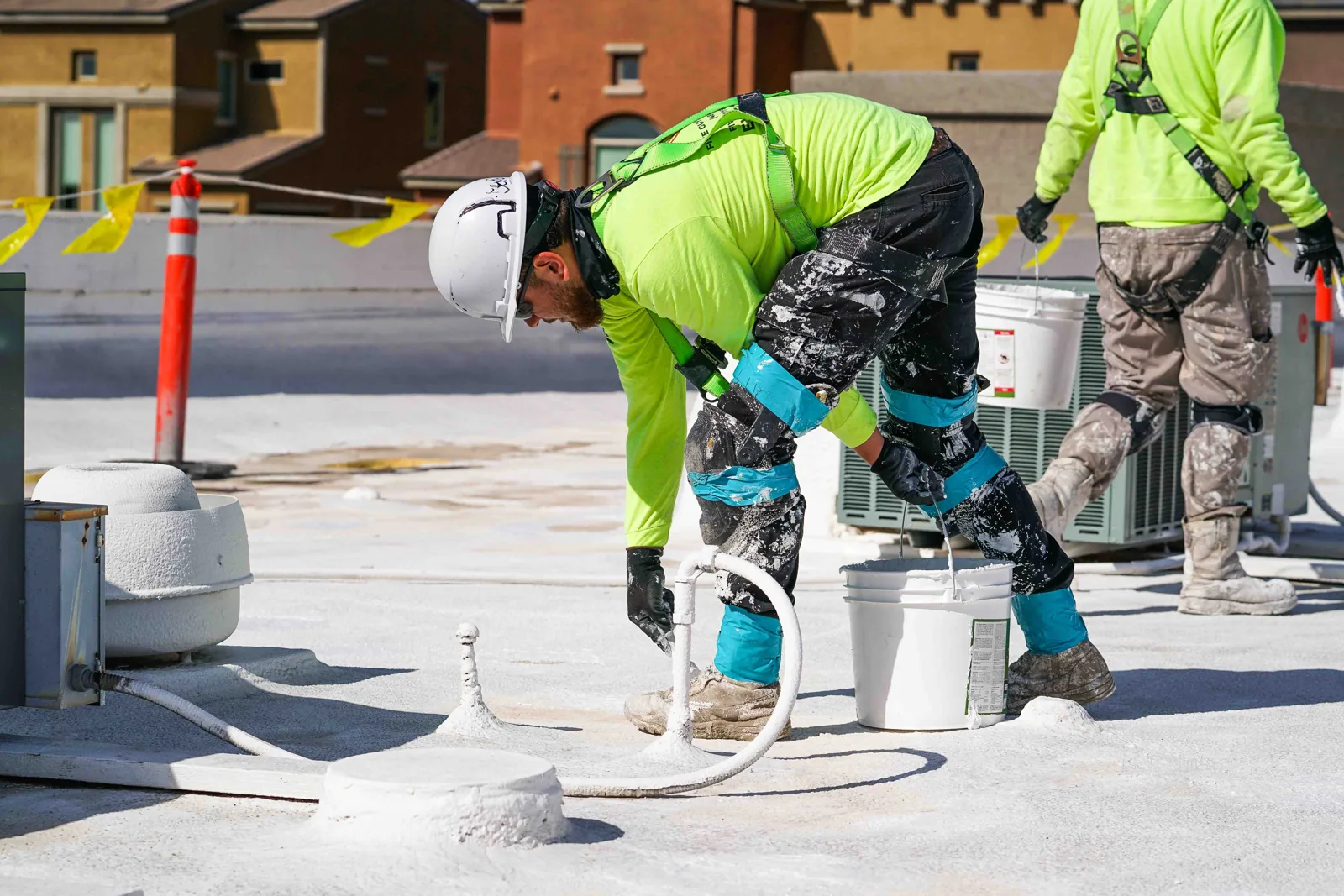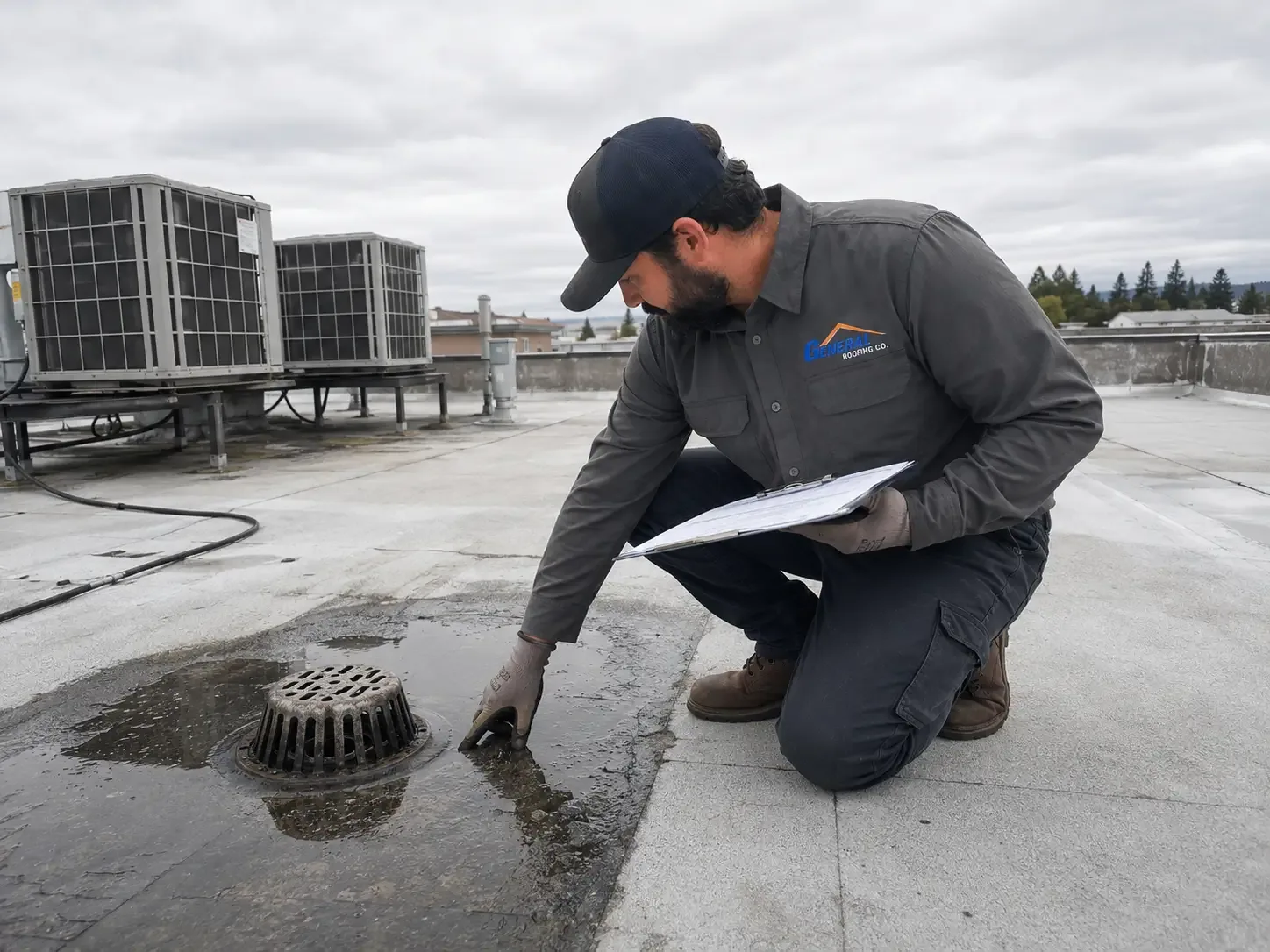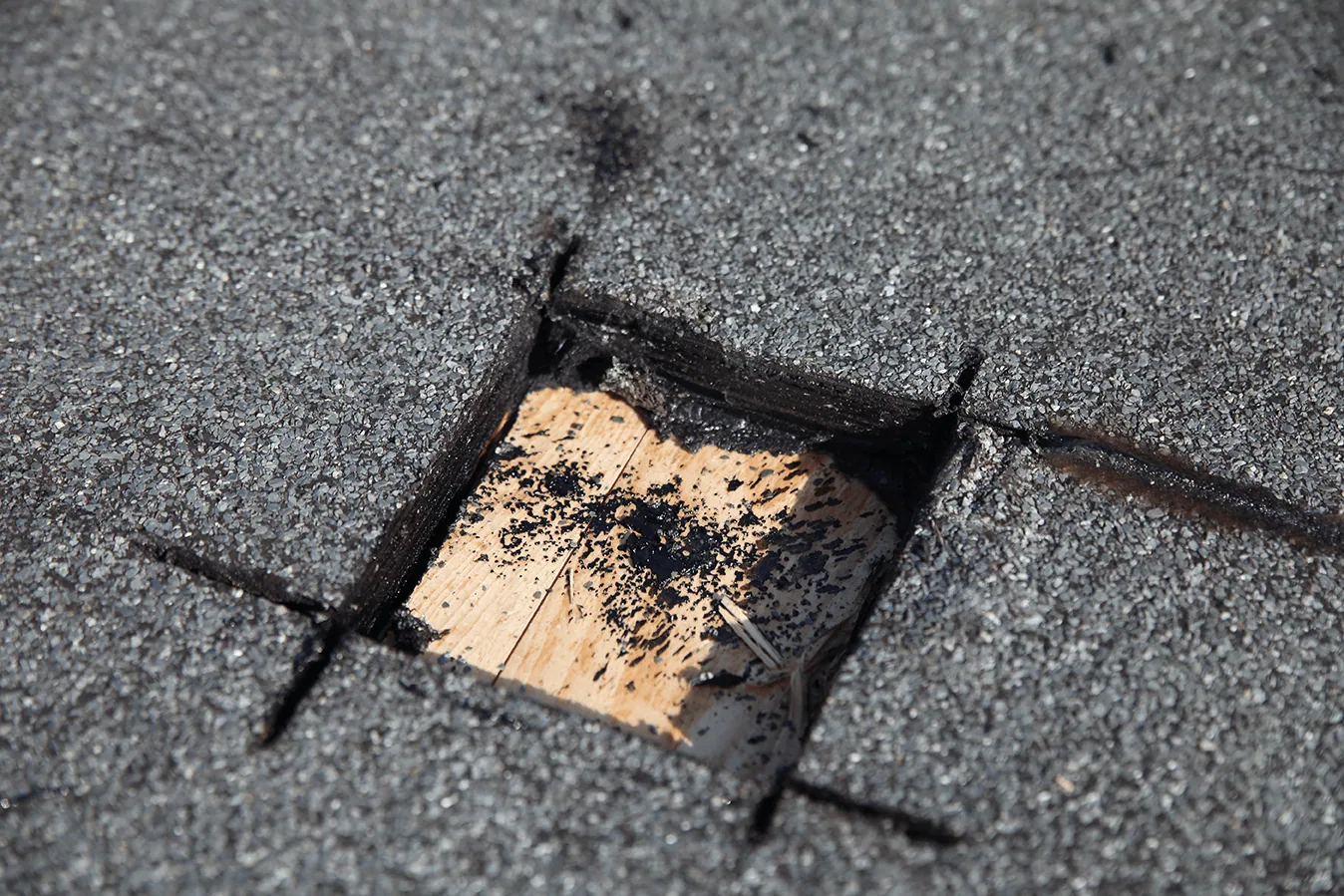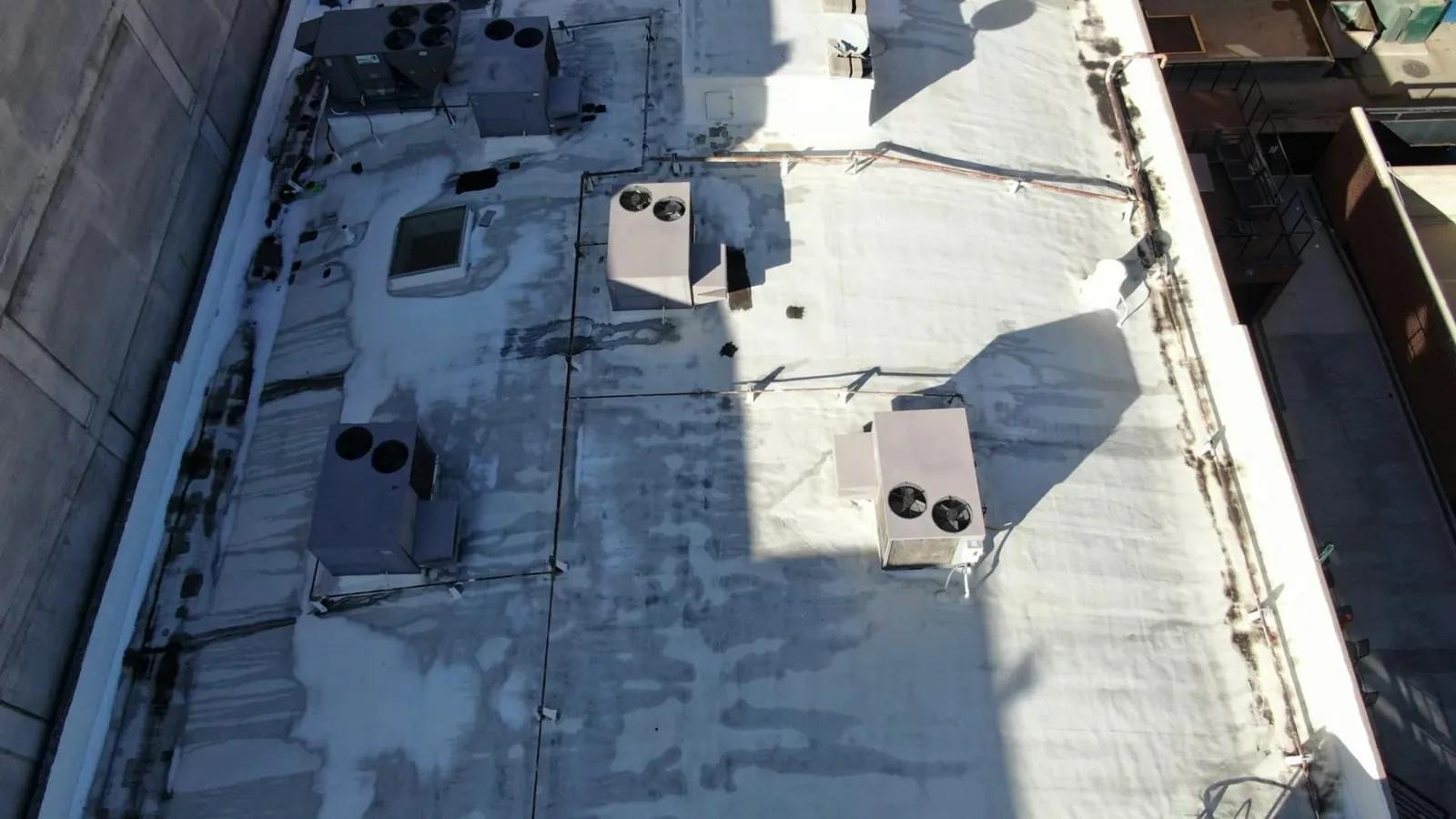
A roof transition can look sealed from the ground while water finds a gap behind the metal. At a Stamford, CT commercial property, failed flashing may appear where a roof meets a wall, curb, drain, expansion joint, or parapet. The repair starts by identifying the transition and following its layers, not by covering the edge with sealant. We inspect the termination, membrane, fasteners, and adjoining field to define the opening and repair boundary.
Flashing has to move water while accommodating different materials. A narrow crack, lifted edge, loose counterflashing, or deteriorated seal can expose a path that is difficult to see without close access. We document what has separated and whether moisture has reached insulation or decking. A commercial roof inspection can record related areas and distinguish one failed transition from a wider assembly concern.
Wall and parapet transitions
At a wall, the membrane should turn up and end beneath a secure termination or counterflashing detail. We check for an exposed bar, open laps, loose metal, cracked sealant, and points where water can pass behind the face. A parapet cap also matters: open joints or movement at a corner can direct water into the wall even when the field remains intact. Repair may involve resetting metal, replacing a section, renewing a compatible seal, or rebuilding the membrane tie-in.
The choice depends on how the layers meet and whether the wall can support the attachment. We avoid burying a loose edge under a bead that hides movement. If the metal has pulled away, fastening and substrate matter as much as sealant. Where the opening continues into a split lap, a commercial seam-failure repair can address the adjoining membrane.
Curbs, equipment, and penetrations
Equipment curbs bring several materials together: membrane, curb flashing, counterflashing, fasteners, and seals around piping or conduit. We inspect each side because one corner can fail while the opposite edge remains tight. Ponded water, vibration, thermal movement, and service work can affect these connections. A repair should follow the curb geometry, use compatible materials, and leave the termination accessible for later inspection.
The equipment owner or service contractor may need to isolate utilities or coordinate access. We do not move active equipment without authorization. The repair boundary should include any split, puncture, or loosened lap that connects the curb opening to the field. At a curb, flashing must close the corners while preserving service clearance around the unit; rooftop equipment curb work follows that transition. A puncture extending into the field may require a membrane puncture repair.
Drain, scupper, and edge details
Flashing around drains and scuppers must keep the membrane tied to the outlet while leaving the water path open. We look for a loose ring, cracked collar, separated flange, raised patch, or metal directing runoff behind a wall. At a scupper, the throat and outside face both matter; at a drain, the bowl and surrounding membrane need a continuous connection. At the outlet, drain and scupper work checks where hardware and flashing meet.
Perimeter metal can loosen at joints, corners, and terminations. We check whether its profile is salvageable, whether adjacent membrane needs a new tie-in, and whether water can travel behind the fascia. Replacing one short section may not resolve a neighboring joint that has also pulled apart. The scope should map each affected transition and define where the repair stops.
Trace the water path before closing the opening
An interior stain may not sit directly below failed flashing. Water can travel along a deck flute, beam, wall cavity, or insulation joint before it appears indoors. We compare the reported area with roof elevations, nearby transitions, and signs of retained moisture. If the source remains uncertain, testing can be limited to a defined section when the assembly permits it. An infrared moisture survey may map suspected wet areas, with readings interpreted alongside visual inspection and knowledge of the roof layers.
Downtown and the adjoining South End form Stamford's urban mixed-use growth area. The actual parapet, curb, and membrane connection set the repair boundary. We mark adjacent seams and any wet insulation that could extend the opening.
Repair planning for Stamford buildings
Route 1's 22.77-mile coastal corridor runs from the New York line toward the Westport-Fairfield border through Greenwich, Stamford, Darien, Norwalk, and Westport. Along that corridor, entrances, loading areas, and safe staging locations vary by site. We plan roof access around the actual work area and building operations rather than assuming every property has the same setup.
Snow recurs in Stamford's climate record alongside overnight temperatures below freezing. A cold-weather review should wait until frost or snow no longer hides the detail and the roof surface meets the chosen material's preparation limits. We check the actual transition before deciding whether it can be opened or resealed.
A repair that fits the existing roof assembly
Some flashing can be reset after checking the substrate and surrounding membrane. Other conditions call for removing a deteriorated section, preparing the surfaces, installing compatible material, and fastening or welding a tie-in suited to the roof system. Old patching or incompatible sealant may need careful removal so it does not interfere with the replacement bond. Before work proceeds, we define the opening and materials planned.
Thermoplastic seams and details may be hot-air welded when the membrane and conditions allow. EPDM assemblies use compatible adhesives, primers, tapes, and terminations. We identify the installed system and manufacturer requirements before selecting a method. Material compatibility guides the connection.
Verify the completed transition
After repair, we check that terminations are secure, laps are continuous, sealant is limited to its intended detail, and the drainage path remains open. Photographs can show the prepared area, layers opened, and finished connection. If testing suits the assembly, use a controlled method agreed for the roof. A water test is not appropriate in every condition.
The closeout record can list the location, materials, repair limits, observations, and adjacent conditions outside scope. If water entry continues, that record helps focus the next inspection. A roof condition report can keep the finding with maintenance history. When another confirmed detail needs work, commercial roof repair can include it in the same written scope.
Commercial Roofing Questions
What are signs of failed commercial roof flashing?
Common signs include lifted metal, an open lap, cracked or separated sealant, loose termination fasteners, and water entry near a wall, curb, drain, or roof edge. The visible symptom helps identify where to inspect, but the repair depends on how the flashing ties into the membrane and substrate.
When can a flashing repair remain limited to the failed roof transition?
Often, a localized transition can be repaired when the surrounding membrane and attachment surface remain suitable. We inspect the adjacent layers and define the repair boundary first. If deterioration extends across a larger field area, the scope may need to address more than the flashing detail.
How do you choose flashing materials for an existing roof?
We identify the roof system, existing materials, attachment method, and manufacturer requirements. The chosen membrane, metal, primer, adhesive, or sealant must be compatible with that assembly. Applying a generic product over an unknown layer can conceal the defect without creating a reliable connection.
Will you inspect the wall or equipment curb as well?
Yes, when it is part of the reported water path or the defined repair area. A flashing failure may connect to a loose curb detail, parapet joint, or adjacent membrane seam. We note what is included and identify related conditions that require separate authorization.
What should a commercial roof flashing repair record include?
A useful record identifies the roof area, observed failure, materials and repair limits, photographs, and any conditions left outside the work. If a section was opened, note the layers found and whether moisture was present. That detail supports maintenance planning and future troubleshooting.
Related Roofing Work