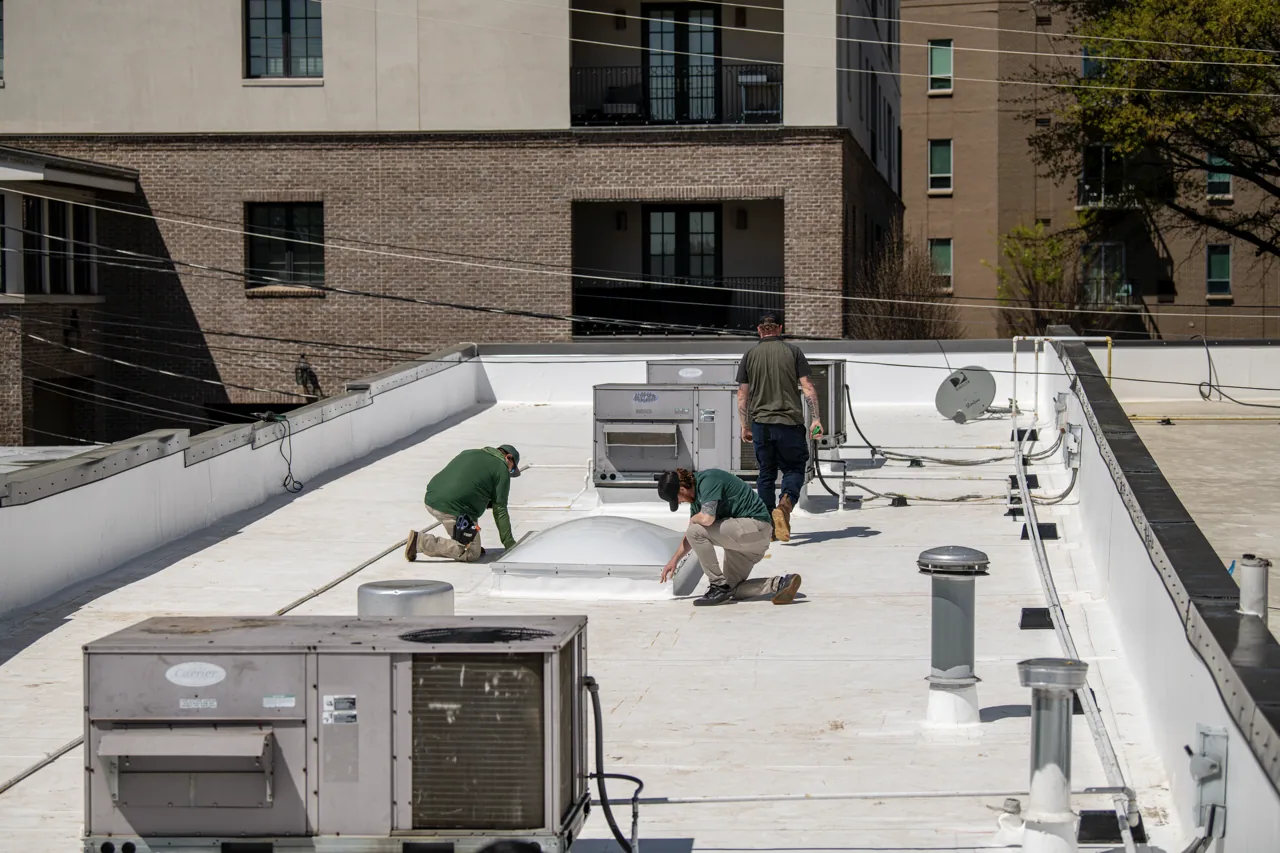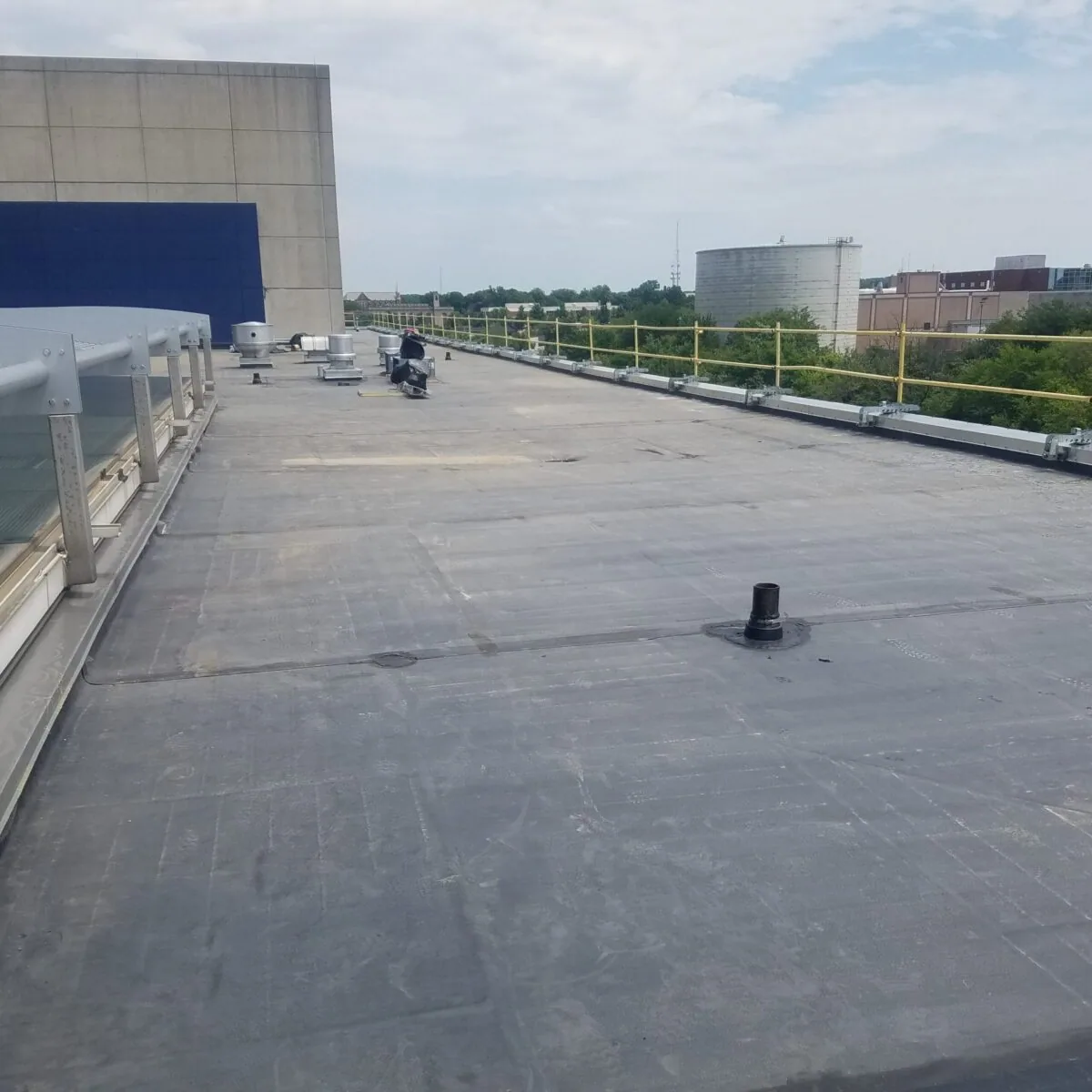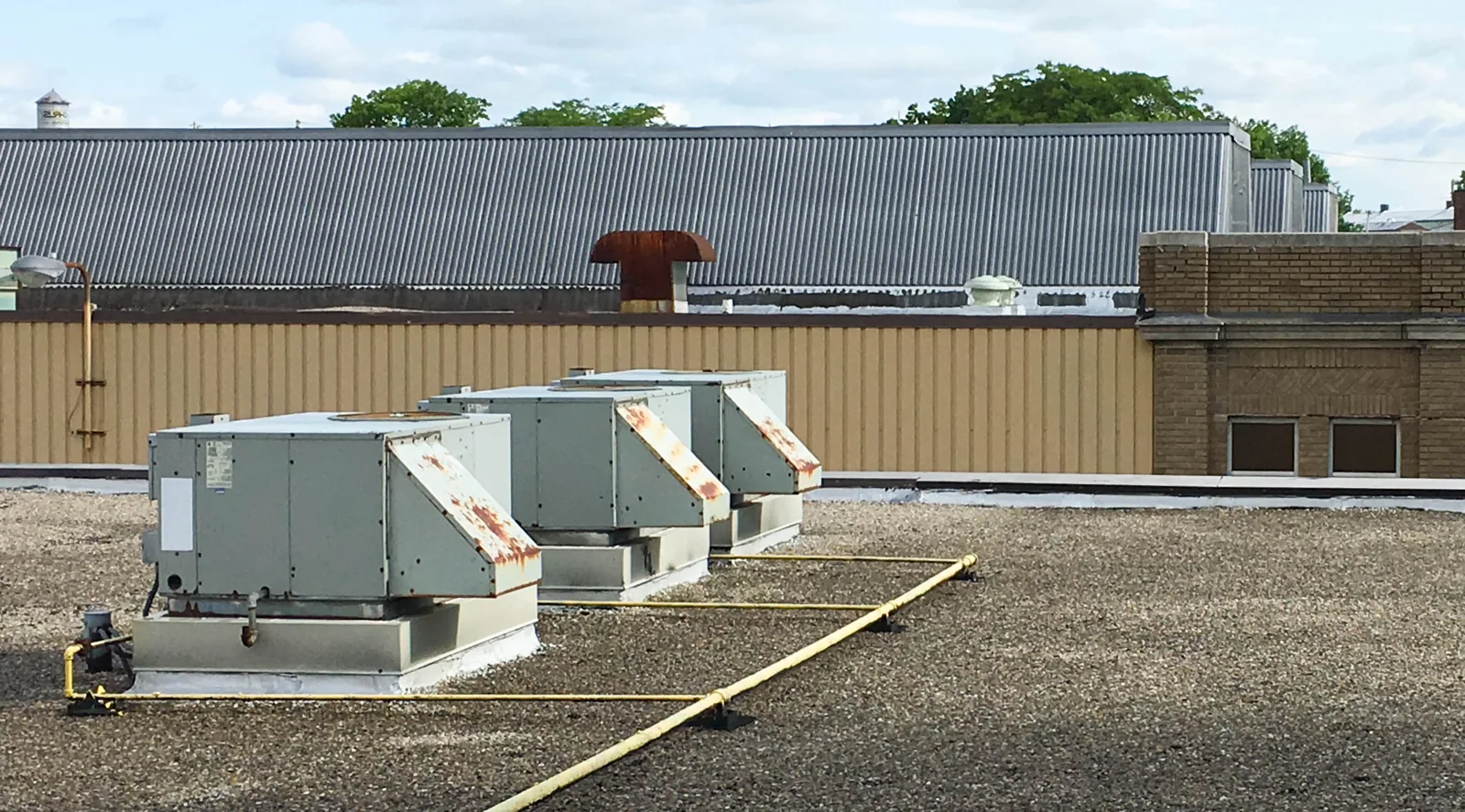
A wet ceiling below an air handler can point to the curb, the membrane turn-up, or a seam carrying water past the unit. We inspect the roof detail before assigning the leak to the equipment itself. Downtown and South End are Stamford's higher-intensity mixed-use areas. The city's flexible-industrial category can include production with office or showroom uses. Each roof unit interrupts the field, changes drainage, and creates a service path that can wear the surrounding membrane. We check the curb flashing, metal return, fasteners, and nearby laps, then write down where the repair should begin and end. If the defect extends beyond that boundary, the scope changes. A commercial roof inspection can connect the interior report to the roof area and expose conditions that a unit-side patch would miss. The recommendation stays tied to observed materials, not the noise or age of the equipment.
Curb flashing: find the open transition
A curb concentrates seams, corners, and movement in a small footprint. We check whether the membrane rises far enough, whether corners remain sealed, and whether counterflashing sheds water over the curb face. Sealant can split where the unit vibrates or where hot and cold cycles move the metal. A patch placed across dirt or damp insulation will not create a sound bond. We clean and prepare the substrate, then choose a compatible detail for the membrane in place. At a pipe opening, we check the boot, collar, and seal line; a mechanical curb adds penetration flashing with service clearances and vibration to account for. Harbor Point includes office, retail, residential, hotel, and public uses across a broad redevelopment district. For roof work above occupied space, we coordinate equipment access and protect the area below. We record the exact transition that needs repair and any adjacent seam that may keep feeding the water path.
Equipment supports: protect the roof below the load
Pipe stands, line sets, conduit, and service platforms can press into a membrane or move across it when equipment is serviced. We look for cut marks, crushed insulation, displaced pavers, loose bases, and abrasion at support feet. The support has to carry its intended load without making a sharp bearing point or blocking drainage. A roof detail should allow the membrane to move without being pinched against a metal leg. If a support sits over a leak, we plan how the unit or line can be moved safely before lifting or rebuilding the flashing. Our roof repair scope separates the roofing work from mechanical changes so responsibilities remain clear. At a property with storefront, office, or light-industrial uses, the access route and active work below need to be identified before a support is disturbed. We note which components stay in place, which need trade coordination, and whether the deck or insulation shows damage beyond the visible footprint.
Drainage and service routes: trace what the unit changes
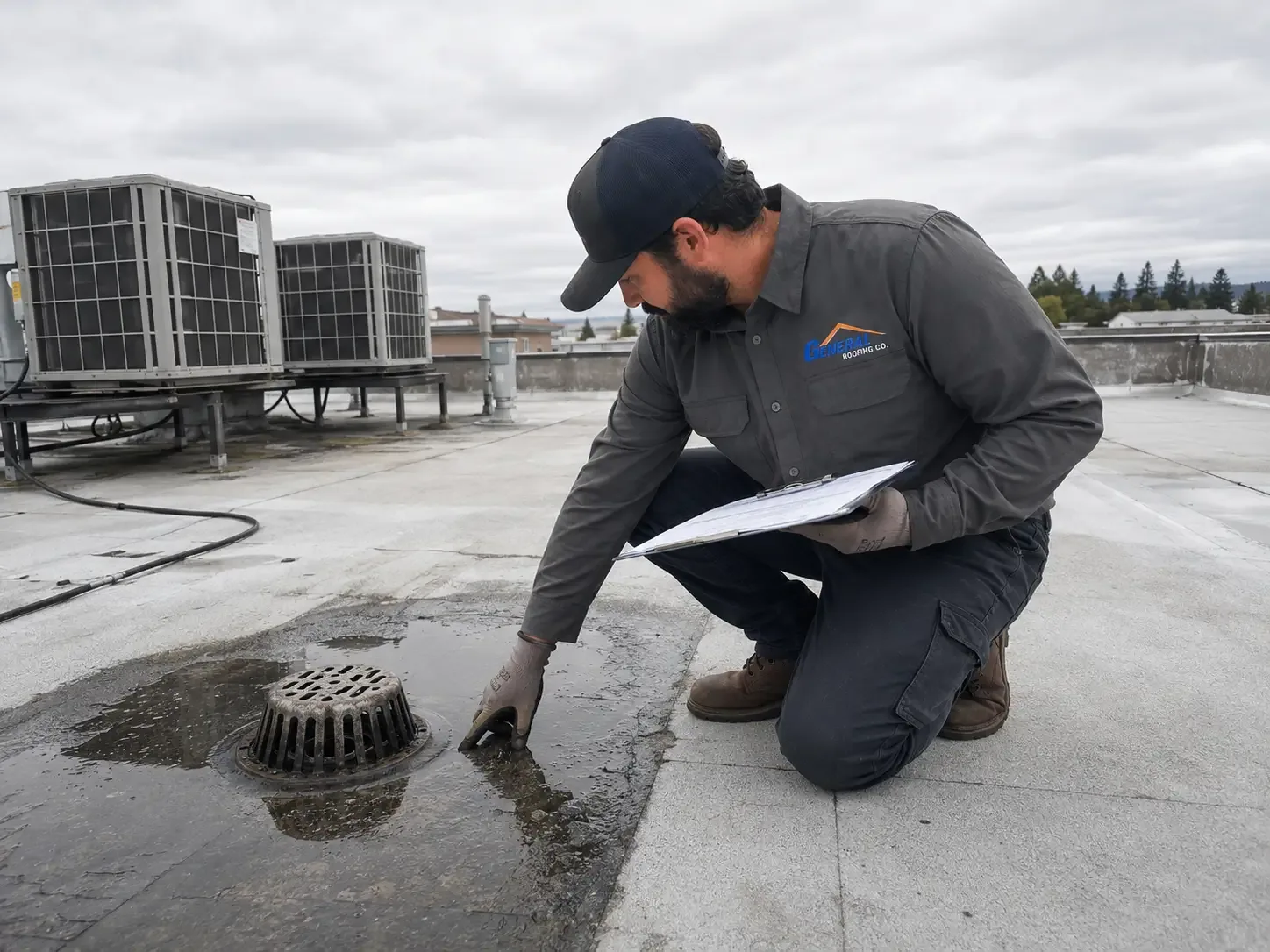
Water does not stop at the curb edge. A unit can split a drainage path, create a low pocket, or force runoff toward a seam that was not part of the original leak report. We follow the field slope toward the nearest drain or scupper and check for debris, ponding marks, and repair layers that have narrowed the path. Stamford winters bring snowfall and subfreezing nights, so we pay attention to water that can remain at a transition before a freeze-thaw cycle. The condition of the drain bowl and nearby laps belongs in the same record as the curb. A drain and scupper review helps distinguish an opening problem from membrane failure. When the route is clear, the repair can stay focused. When water is trapped or insulation is wet, a broader area may need testing. We document which direction runoff travels and whether equipment service paths cross the repaired section.
Repair boundary: separate roofing from equipment work
The written scope should identify the curb or support, the membrane system, the preparation required, and the condition that changes the repair. We photograph the corners and adjacent laps, note any loose metal, and mark the area where wet insulation or a damaged deck may extend past the visible defect. A focused repair is appropriate when the surrounding field remains stable and dry. Repeated movement, failed attachment, or broad moisture can make a local patch unreliable. Stamford's flexible-industrial areas can combine production with ancillary office or showroom use. At those properties, staging and roof access must respect equipment routes and interior operations while keeping the repair boundary specific. A condition report with photos gives the manager a record to compare with later service. It should state what was inspected, what remained inaccessible, and what action is needed before another trade moves equipment across the work.
Replace, reinforce, or reset the detail
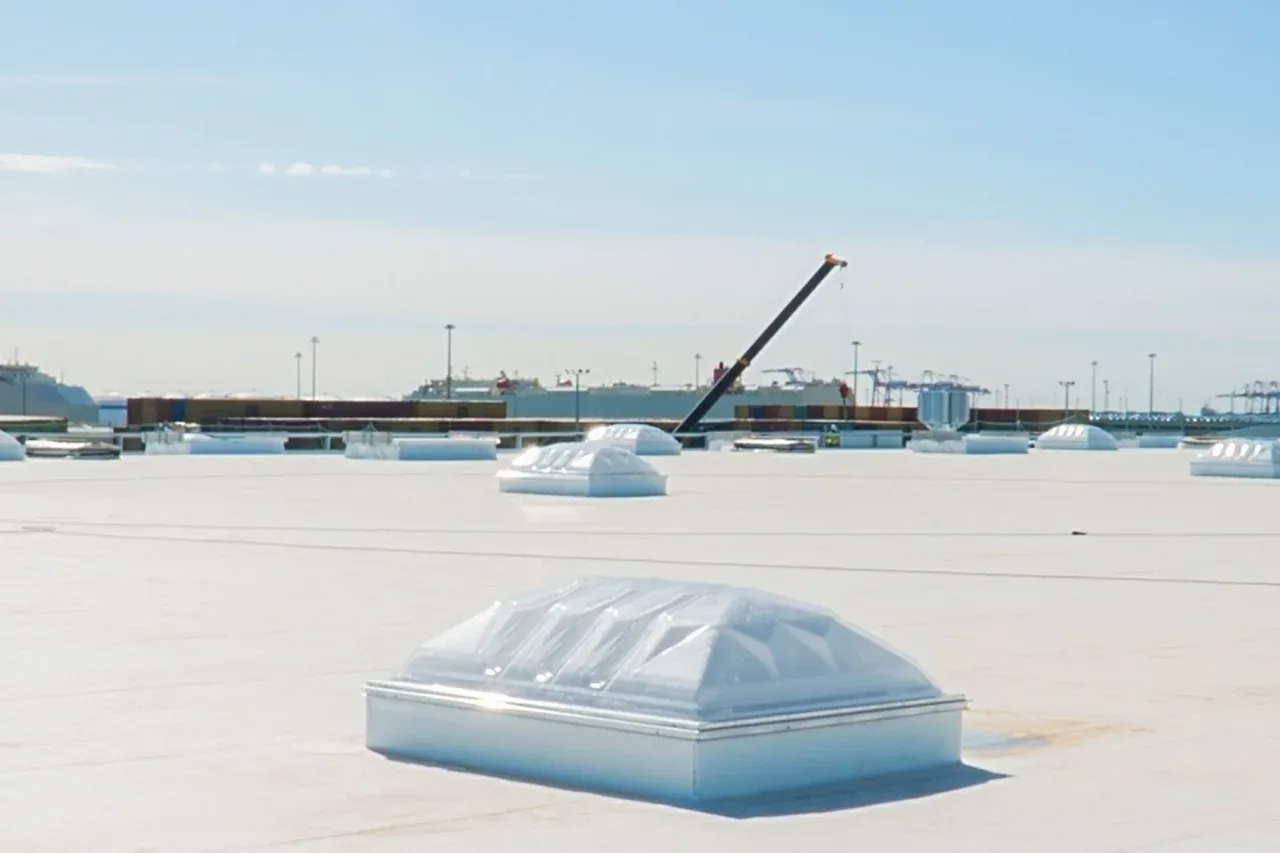
A sound curb with a failed flashing turn-up may need a contained rebuild. A loose or corroded metal frame can require work beyond the membrane. If wet insulation reaches the unit, the repair may need a cut line and replacement of the affected layers before the curb is flashed again. We compare those options after identifying the existing assembly and confirming that the substrate is dry and stable. A TPO membrane is one possible field material, but compatibility at the curb, attachment, and service clearances still govern the detail. A replacement scope may be warranted where repeated curb failures coincide with widespread deterioration, but one defect alone does not decide the whole roof. The Downtown Stamford mixed-use core contains office, housing, and retail roofs, so the sequence may need to account for more than one occupied floor or use. We set a daily closure boundary and identify the protection required if work pauses. The owner receives a repair description that names the detail, materials, limitations, and any mechanical coordination still open. That makes a later change easier to compare against what the roof showed at the time of the walk.
Commercial Roofing Questions
Which curb transitions and fastener points should be checked around a rooftop unit?
A split corner, low membrane turn-up, failed counterflashing, open fastener, or nearby seam can admit water. Vibration and service work can also disturb the curb detail. We trace the path from the interior mark to the roof transition, then distinguish the flashing defect from damage to the unit or its piping.
Does a support stand need to be moved for a repair?
That depends on the support footprint and the repair boundary. We inspect the membrane beneath and around the base, then coordinate any lift or reset with the mechanical trade responsible for the load. A stand should not be shifted until its purpose, connections, and safe handling are clear.
How do you know if the insulation below a curb is wet?
Softness, staining, or repeated water entry can raise the question, but surface observations do not map every concealed layer. We identify the area that needs moisture testing or a core cut when that result will change the repair line. The opening is then closed with a detail compatible with the roof assembly.
Can equipment remain in service during curb flashing work?
The unit and the roofing detail have separate operating needs. We identify access, vibration, and any required shutdown window with the property team before opening the curb. The scope can then show what remains active, what needs trade coordination, and how the roof is protected while the flashing is rebuilt.
What should I have ready for a Stamford roof walk?
Mark the room or roof area where water appeared, gather recent service notes, and identify equipment access limits. A unit schedule or prior curb repair record can help us match a roof detail with the right mechanical system. We will inspect the flashing and provide a written repair boundary or a broader recommendation.