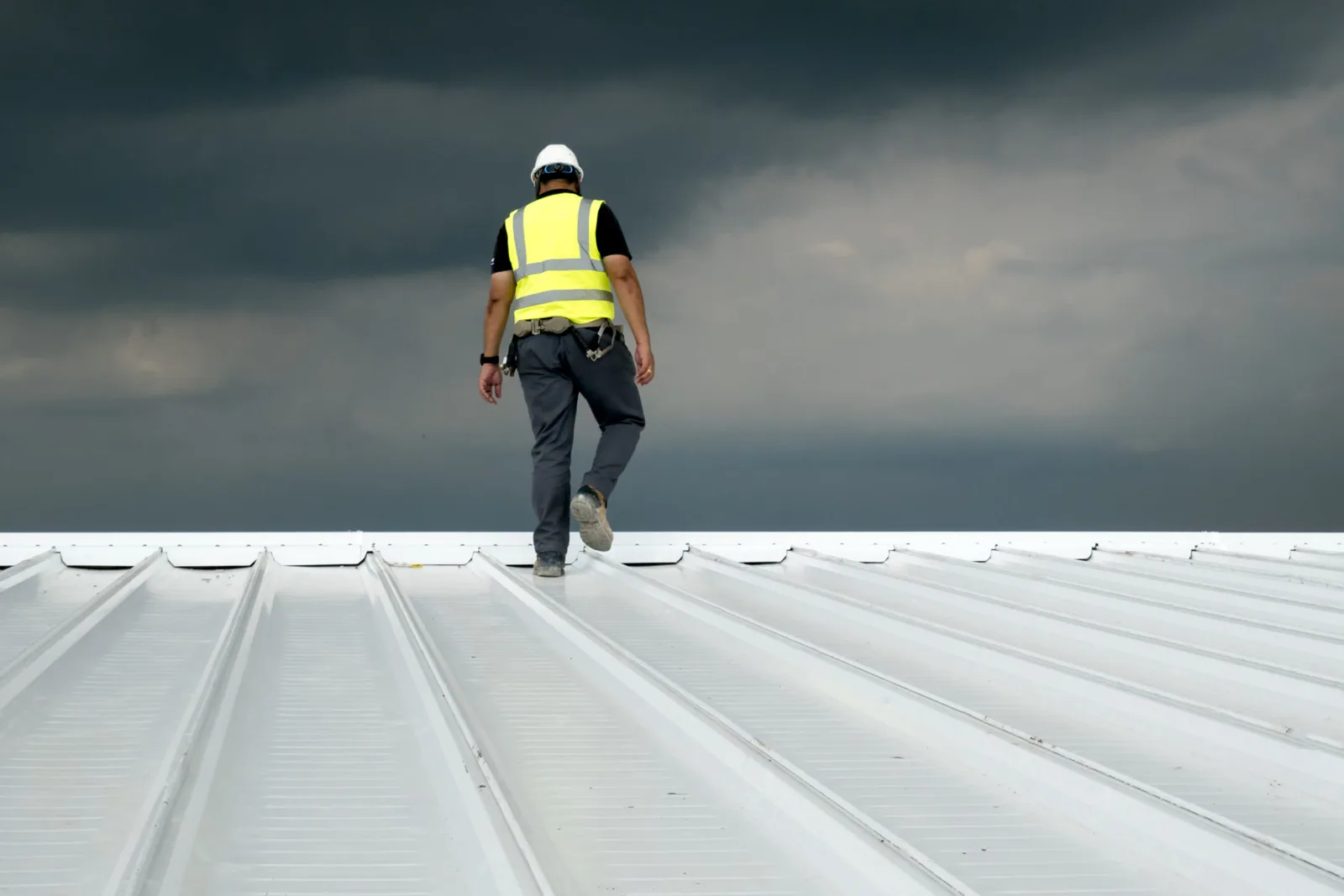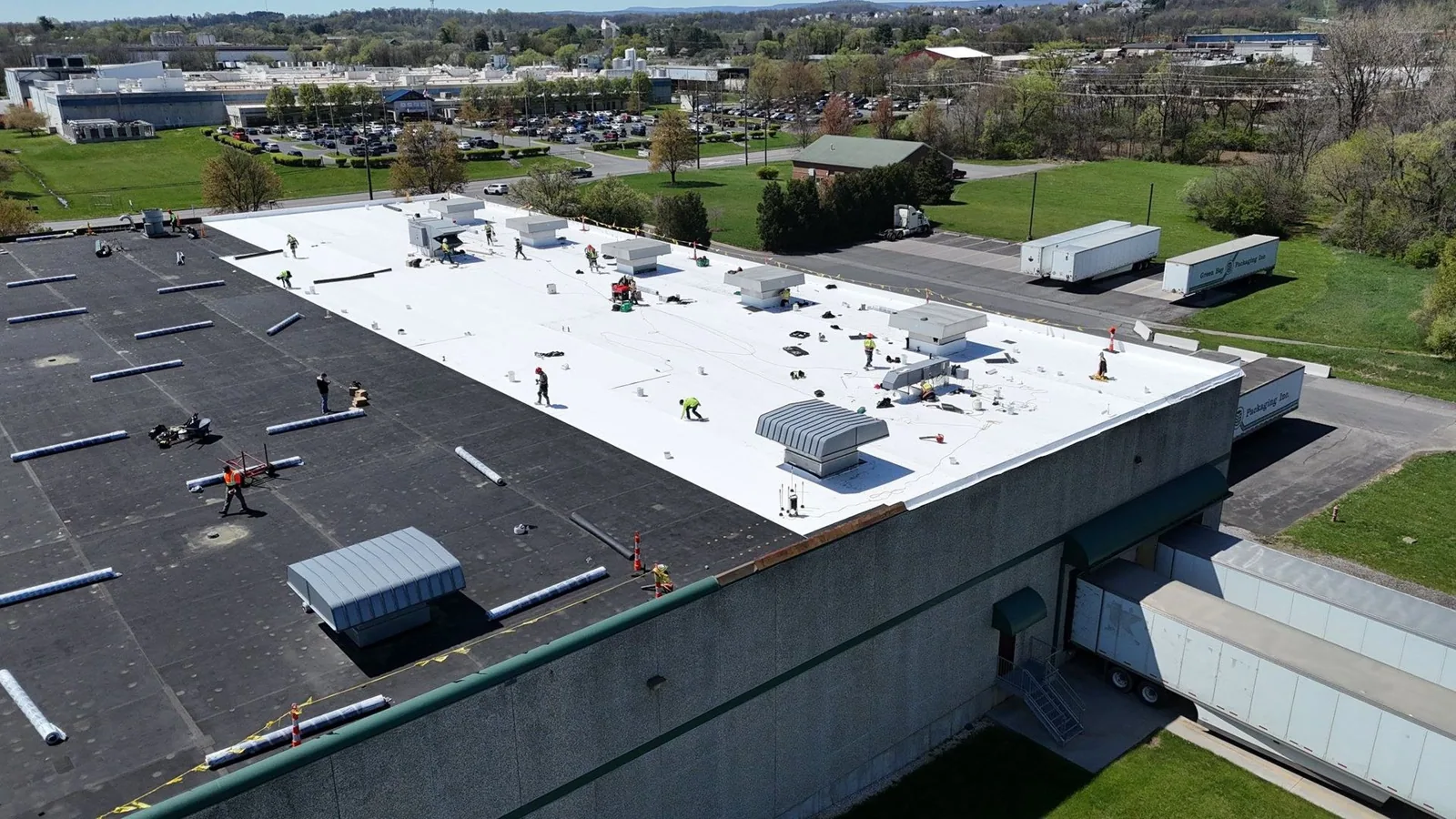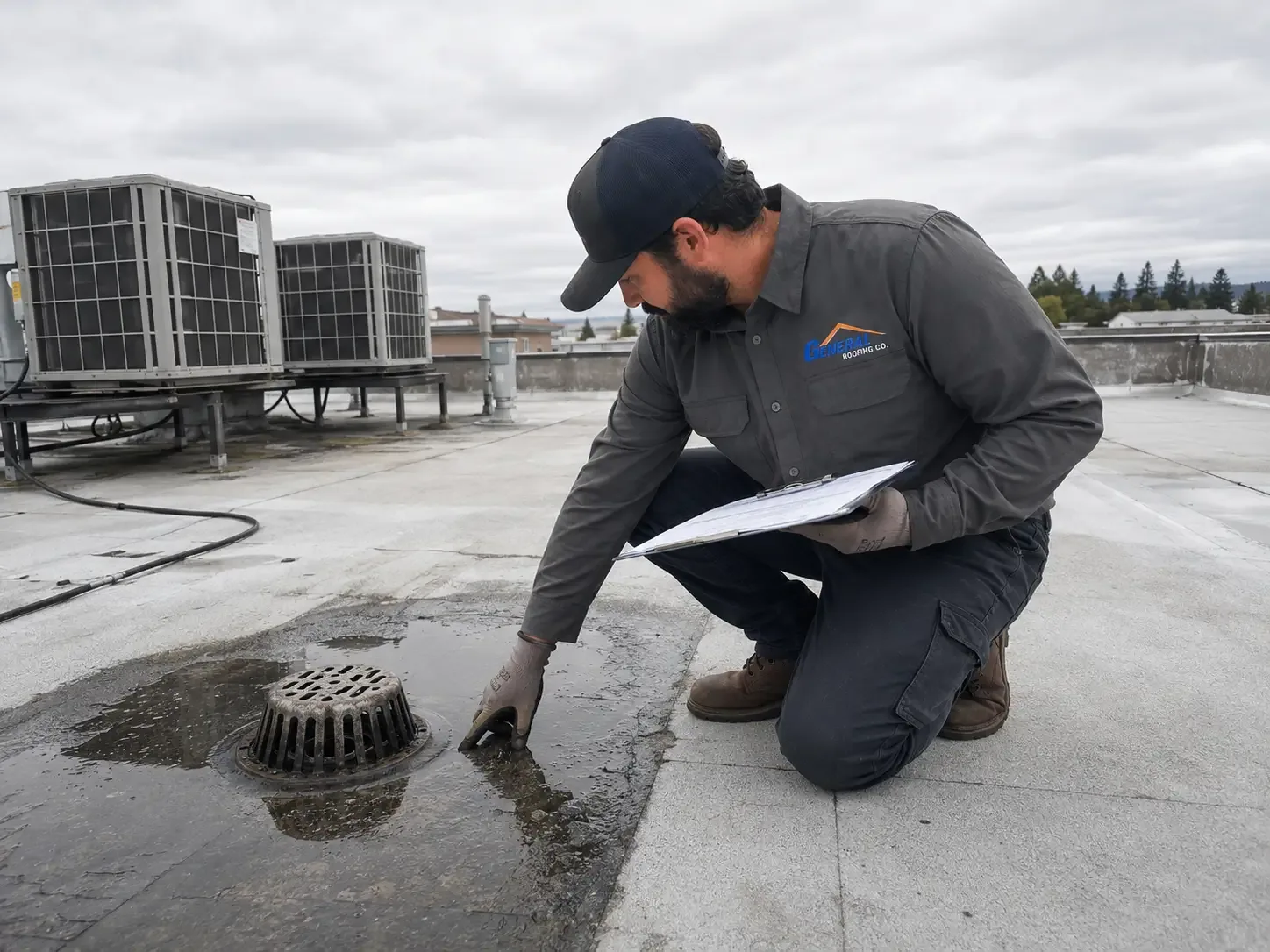
A drip over a sort lane can begin at a roof curb several bays away. Before the next patch, we trace the water path across the membrane, past seams and penetrations, toward the entry point. Stamford's flexible-industrial category includes distribution and adaptable production, sometimes with office or showroom uses. That mix changes where equipment, staff, and deliveries need protection while a roof is open. We compare leak notes with the field condition, check the drain bowl and edge transitions, and mark the repair boundary. A commercial roof inspection ties those observations to roof zones so the property manager can compare repeat calls without treating every stain as a separate defect.
Long roof runs can carry multiple curbs and drains. We confirm the assembly in place, identify what needs testing, and note which work affects operations. A warehouse roof may share details, but this sequence follows its own dock and access plan.
Water path: follow the low point
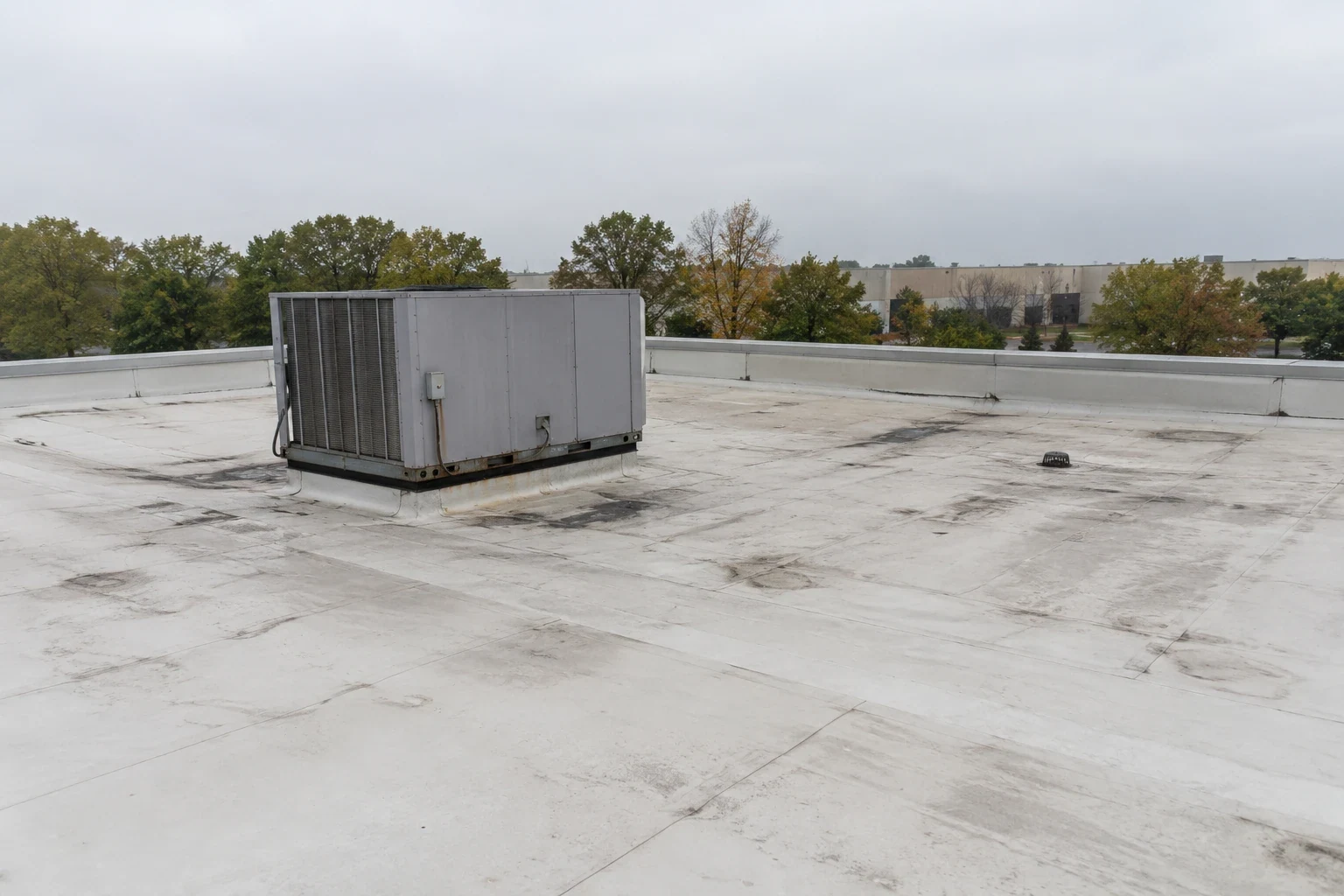
Water across a broad field can collect at a low seam, clogged bowl, or transition that no longer drains cleanly. We check strainers, overflow routes, scupper throats, and membrane laps around the outlet. A dock-side stain may track from a higher curb rather than the nearest drain. We compare its location with the roof plan before opening the assembly. If the outlet is part of the failure, drain and scupper service can address the bowl, flange, and adjacent membrane as one detail.
Stamford's winter normals include recurring snow and subfreezing nights. Trapped water and freeze-thaw movement deserve attention at drains and metal returns. A ponding-water repair should correct the drainage detail where practical, not just cover a low area. We record any limit imposed by slope, deck, or adjacent layers.
Dock edge: keep the ground route workable
Staging can interrupt receiving even when a repair is small. We identify where a lift can stand, where removed material can be lowered, and which doors or pedestrian routes must stay open. The daily plan names the closure area and protection below it. Several leak zones can be sequenced so each opened area is closed before the next begins. The property manager can compare the route with the shipping calendar before equipment arrives.
CTDOT describes Route 1 as a principal arterial with commercial driveways through Stamford, and a diversion when I-95 is disrupted. That context makes delivery timing worth discussing, but it does not establish access at a property. Norwalk's Route 1 corridor has its own commercial pattern. We confirm turning space and material handling at the site before setting the lift date.
Curbs and lines: protect the service path
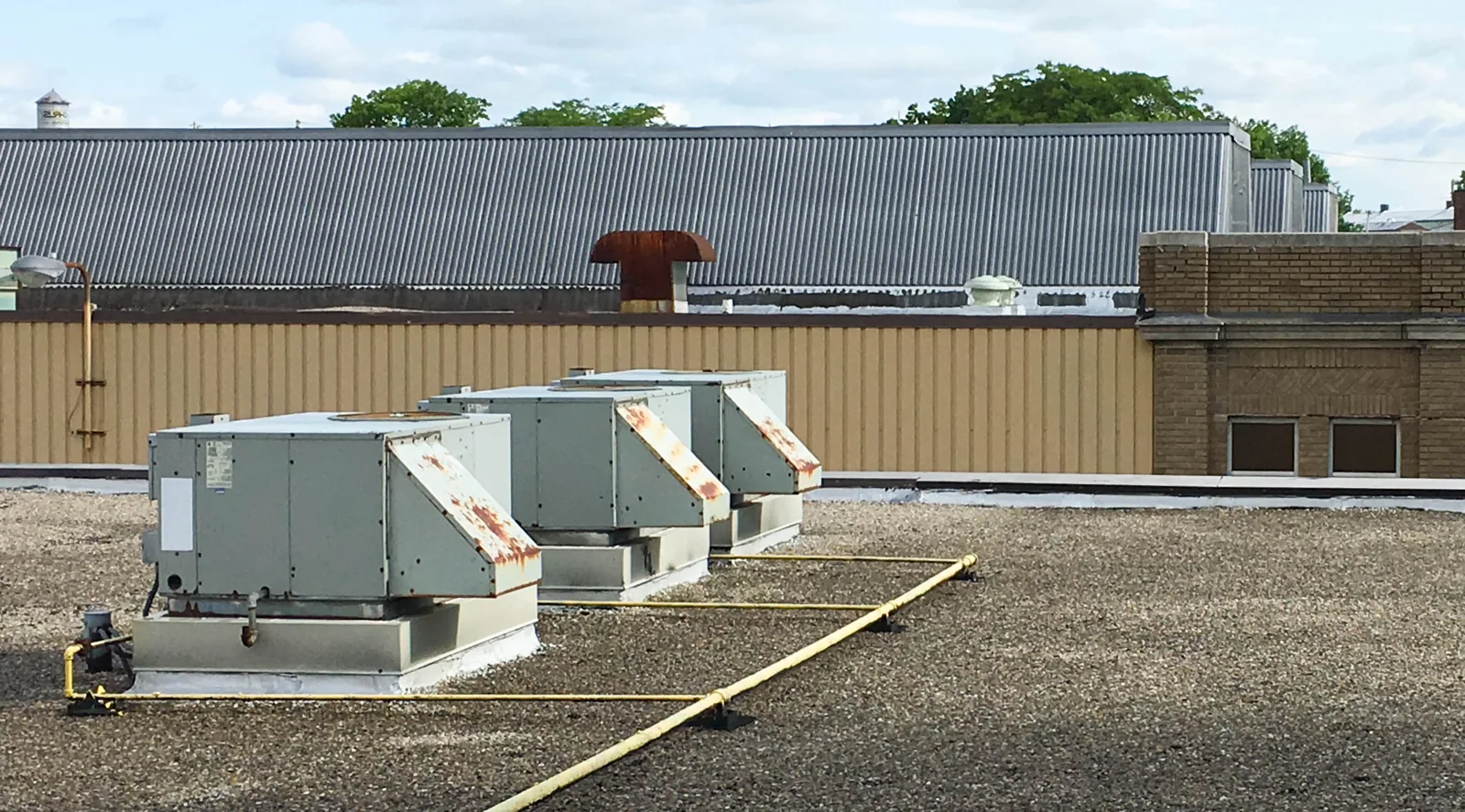
Conveyors, ventilation equipment, pipes, and electrical runs interrupt the membrane. Corners, laps, and metal returns can open under movement or service traffic. We inspect flashing and note equipment that must remain reachable. The roofing scope stops at a defined curb boundary; mechanical connections stay with the responsible trade. A curb and support review can set that division. Closeout records should leave the service route clear.
On a phased repair, lap direction matters. A patch ending against an old repair can leave an edge pointed into runoff. We check bond, fastening, and material compatibility, then distinguish an isolated split from repeated failure. A TPO assembly fits only when its attachment and details suit the existing roof. We note where a core or moisture test would change the choice.
Layers and moisture: define what is known
Surface wear does not show how far moisture has moved under the membrane. We inspect seams, terminations, insulation, and exposed deck, then mark where infrared review or a core opening would help. The scope names the test area and its limit. Wet insulation beyond one bay may require removal to dry material; sound layers beside a contained split may allow a focused repair. A cold-storage roof brings another interior condition, but concealed layers still need evaluation.
Stamford's plan puts higher-intensity mixed use in Downtown and South End while most city land remains low-density residential. A distribution building has its own roof assembly and operating layout, so we inspect its membrane, insulation, deck, attachment, and drains directly.
Sequence: keep one roof zone under control
A distribution operation needs a daily picture of what is open, protected, and usable. We align roof access with the property contact, mark lift and material locations, and agree on the ground-level exclusion area. Crews open only what they can close safely under the day's conditions. If wet layers extend past the agreed boundary, the manager gets the finding and choice before the assembly is covered again.
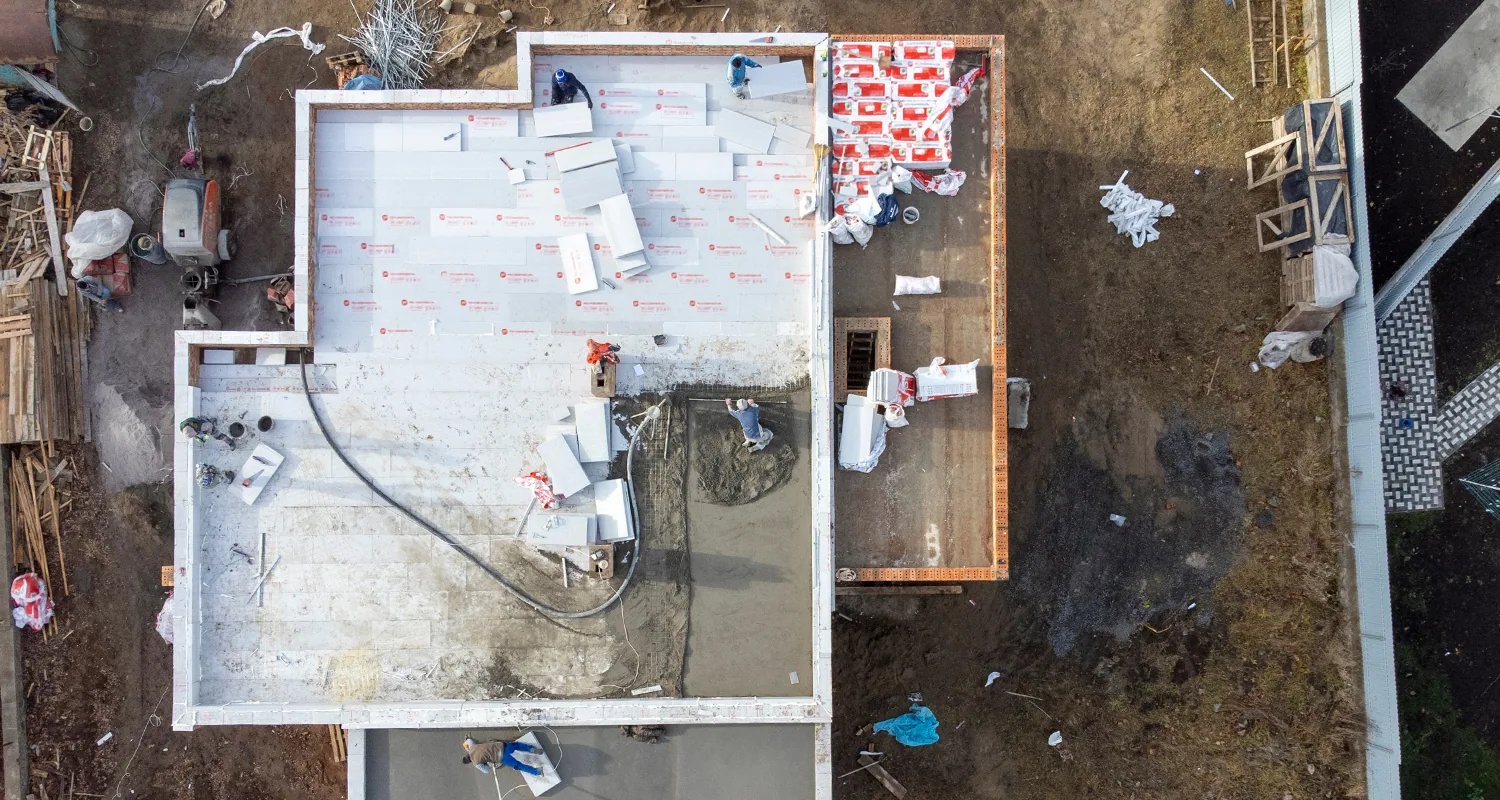
An overlay can avoid removal only when retained layers are dry and firm, the deck is sound, and code permits the added system. We verify those conditions before treating recovery as an option. A multi-property roof program lets a portfolio team compare buildings without assuming one assembly. Here, the written plan records tested areas, repair limits, staging, and closeout photos.
Repair boundary: say what would change it
A stable seam with dry insulation may support a localized repair. Broad moisture, soft decking, loose attachment, or repeated edge failure can make that limit unreliable. We mark affected zones and identify the condition that would move the recommendation from repair to recovery or replacement. Timing depends on area, material compatibility, weather, and access. If production areas must stay protected, the sequence names each daily work limit and how the exposed assembly will be closed.
Cost changes with tear-off, deck correction, insulation, perimeter metal, drains, equipment protection, and work phases. We separate confirmed conditions from those needing an opening. Marked roof zones and photos help compare the next decision with service history. The scope notes any area that could not be reached so an unseen condition is not treated as repaired.
Commercial Roofing Questions
Can roof work avoid the busiest receiving window?
Yes, the sequence can be planned around agreed delivery hours if access, weather, and the condition of the roof allow it. We map the lift position, the opened zone, and the ground area needing protection, then confirm the daily route with the property contact. If concealed moisture expands the repair, we pause at the boundary and document the change before continuing.
What makes a leak over a sort line difficult to trace?
A roof seam, curb, or drain can carry water away from the point where it enters. We compare interior reports with roof elevations and inspect the transitions above the affected area. When the membrane does not show the full condition, a defined moisture test or core opening can clarify how much insulation needs removal.
Can an overlay stay in place under a new roof?
Only when the existing layers are suitable for another assembly. Attachment, trapped moisture, deck condition, and applicable requirements affect that choice. We identify the testing needed, state the area it covers, and explain when removal becomes the better path. A recover scope should not hide an uncertain deck or wet insulation.
How do rooftop units affect the work plan?
Curbs and service paths break the membrane field and need separate flashing checks. We identify which units must remain reachable, mark the roofing boundary, and coordinate any mechanical work with the responsible trade. The finished route should keep future access clear and should not leave a service path crossing a new seam without protection.
What records help set a repair boundary?
A marked leak location, recent repair notes, roof plans, delivery windows, and access limits give us a better starting point. We compare those records with the actual seams, drains, and insulation condition. The resulting scope separates a contained defect from any broader condition that needs testing or a different system recommendation.