A lifted EPDM seam can admit water along the sheet before it reaches a ceiling. In Stamford, CT, we inspect the lap, adhesive bond, curb flashing, and nearby drain before selecting a repair. After wind, we inspect edge attachment, metal transitions, and seams before choosing a repair boundary. A seam and flashing inspection tracks the visible defect to the detail that needs work.
Lap joints: check the bond and edge
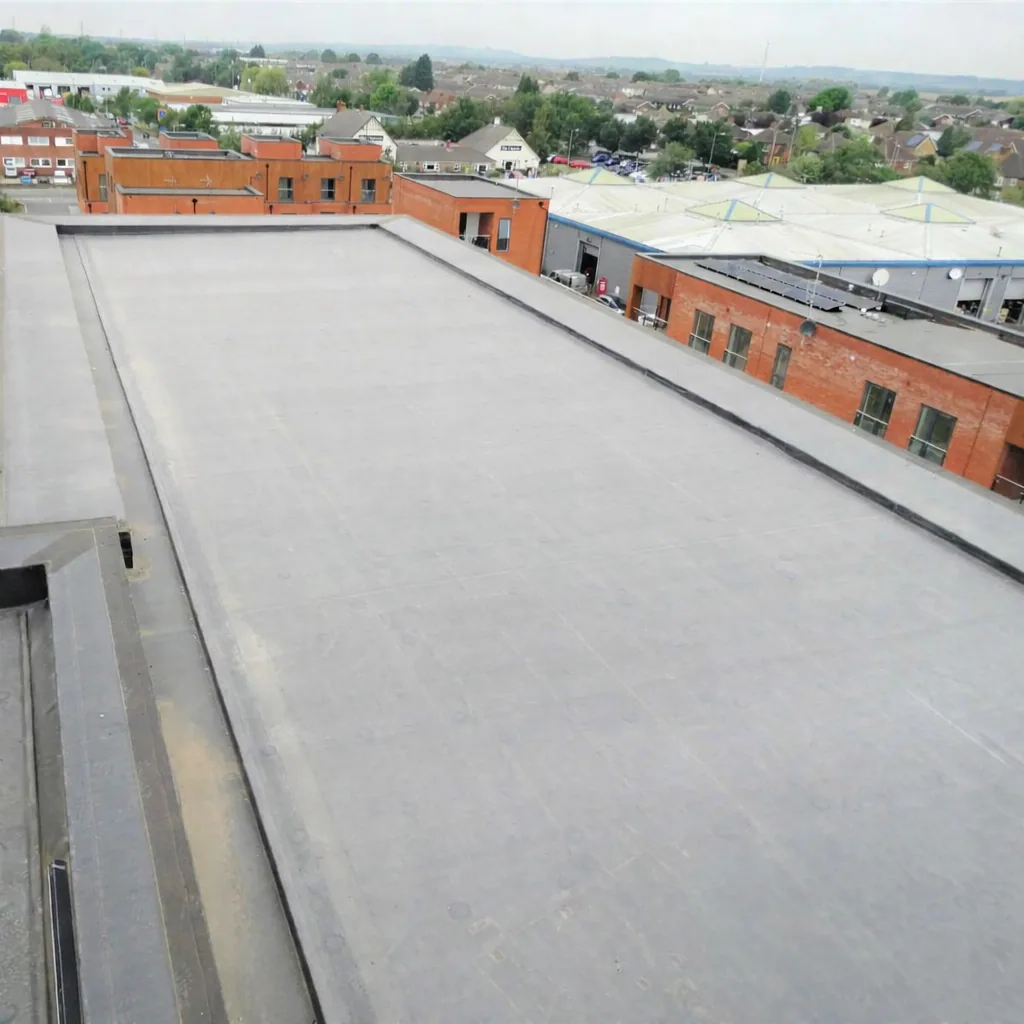
EPDM seams may be formed with tape or adhesive. We inspect the lap for fishmouths, contamination, wrinkles, and edges that peel when lifted gently. A seam can look dark and intact while the bond has separated beneath it. We mark the length that is open, then check where it meets another sheet or a flashing. Water can follow a lap for distance before it appears inside, so the stain alone does not set the repair limit.
Repair begins with a clean, dry surface and materials compatible with the membrane. We prepare the seam, place the repair strip with enough overlap, and roll it to contact the sheet. An existing patch may need removal if its edges have curled or trapped dirt. At an intersection, the repair should keep the lap direction consistent with runoff. We inspect the finished edge for a continuous bond, then record the section addressed and any adjacent condition left for separate work.
Curb flashings: renew the vertical transition
EPDM must rise at curbs and terminate beneath a counterflashing or cap. We inspect inside and outside corners, uncured flashing, metal edges, and the transition to the field sheet. A loose cap can pull the membrane; a split corner can admit water even when the horizontal lap is sound. We check the substrate and attachment before patching. If the curb itself moves or has deteriorated, a surface patch will not provide a stable repair boundary.
Pipe boots, vents, and conduit create smaller transitions with separate clamps and seal lines. We note each opening near the leak and trace whether water follows a membrane seam or comes from another detail. Equipment service traffic can scuff or pull a boot. Repair may call for a new flashing piece, a reset clamp, or correction of the support. A defined EPDM repair identifies the component being changed and what remains outside its scope.
Attachment: distinguish a bonded sheet from a loose one
Some EPDM assemblies are fully adhered; others are mechanically attached or ballasted. The sheet response underfoot and the edge condition help identify how it is held, but we confirm the assembly before proposing work. A loose area may reflect loss of adhesive, wet insulation, or a fastening issue. We inspect the perimeter, corners, and field separately because the attachment pattern can change across a roof. Wind damage at the edge calls for checking the securement and transition, not merely gluing the visible flap.
Where a repair meets another membrane, the transition must suit both materials. A TPO weld detail is not interchangeable with EPDM tape or adhesive. A KEE membrane transition needs its own compatible preparation and tie-in. KEE or PVC-compatible products have their own preparation needs; we inspect the existing surface before selecting a tie-in. We note whether the work can remain localized or requires a wider strip to reach sound, bonded material. That decision follows actual sheet condition and is stated before removal expands.
Drain bowls: keep the membrane secure at the outlet
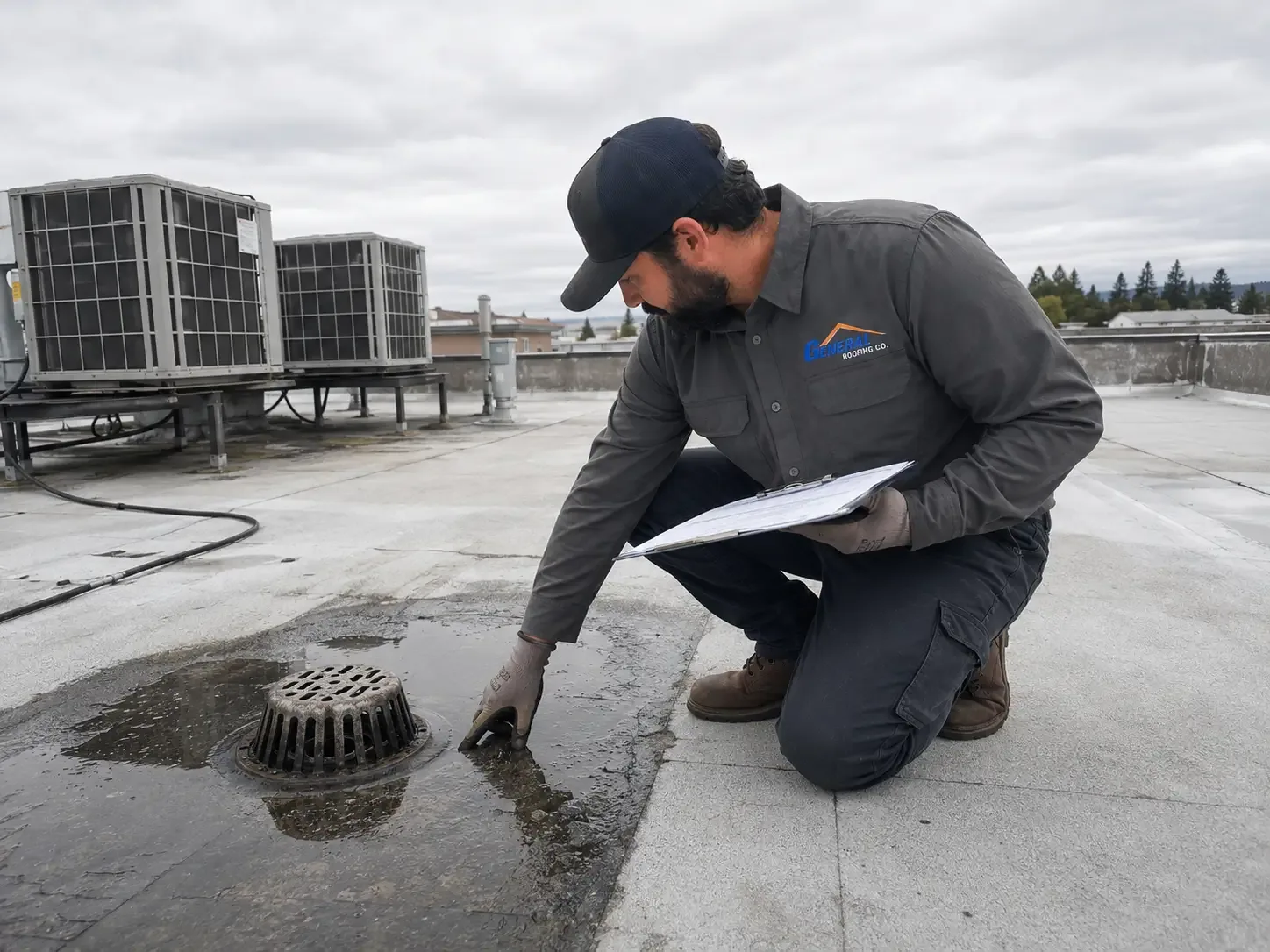
At a drain, EPDM should seal into the bowl without wrinkles that cross the clamping ring. We inspect the flange, ring hardware, nearby seam, and low point for debris or ponding. A blocked outlet can leave water against the membrane, while a failed flange can leak directly into the assembly. We separate those causes before repair. A cricket or taper may change the runoff path, but the existing elevation and outlet height have to support it.
We also look at scuppers, overflow openings, and the path beyond the roof edge. A drain flange repair should include a sound membrane connection and an open outlet. If the field is holding water because insulation has compressed, changing the drain alone will not correct the plane. The scope notes whether drainage cleaning, flange work, slope correction, or a membrane repair is included.
Stamford roofs: inspect edges after coastal wind
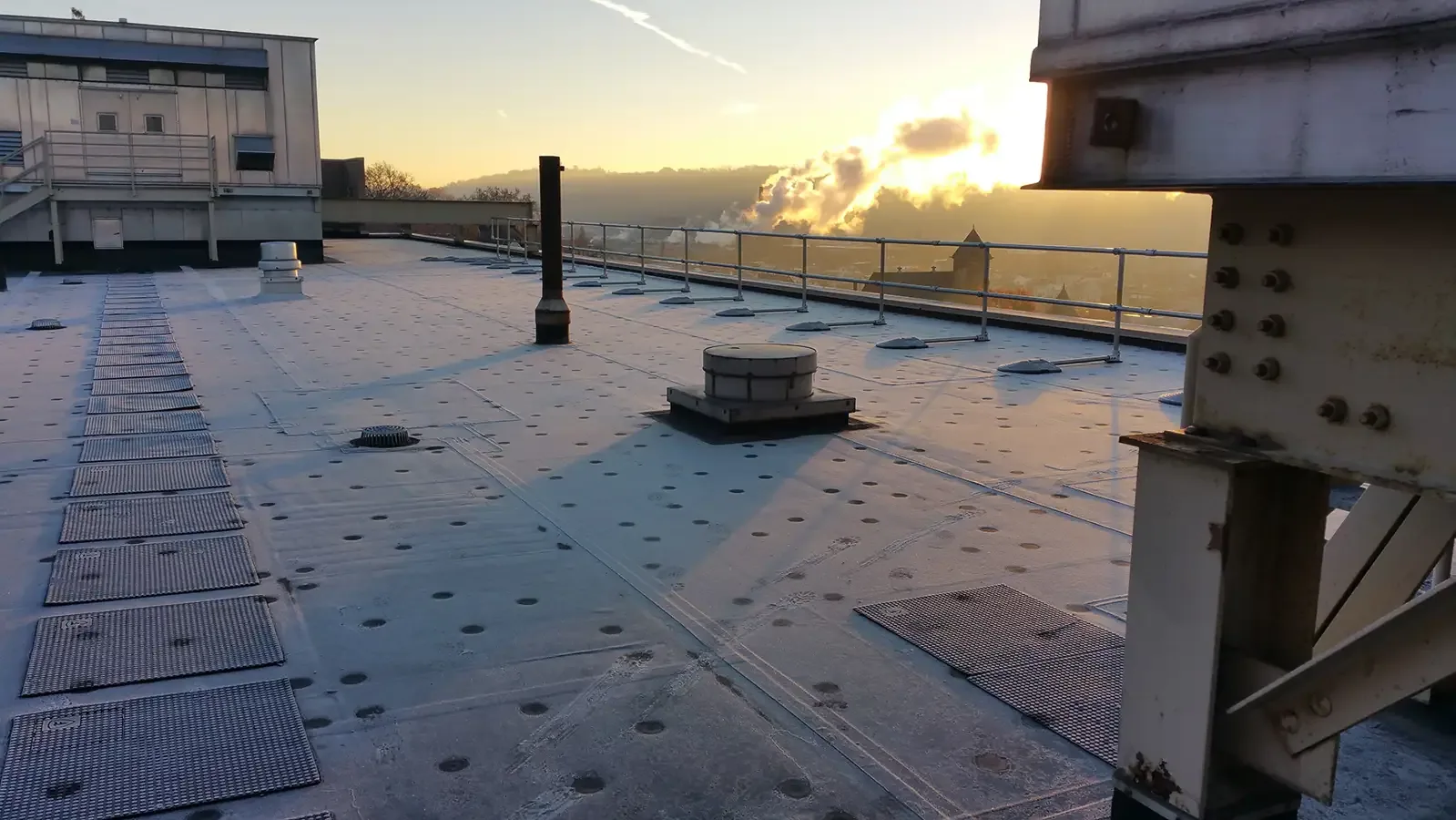
Exposed edges need a measured check after high winds. We inspect coping, edge metal, corner securement, and seams at the parapet, then tie any repair to attachment conditions observed on the roof. We inspect coping, edge metal, corner securement, and seams that meet a parapet. The event does not establish the condition of any current roof. It does make a measured check of exposed edges useful after wind. Downtown and South End Stamford include mixed-use building areas, so roof access and protection below may need coordination with several operations.
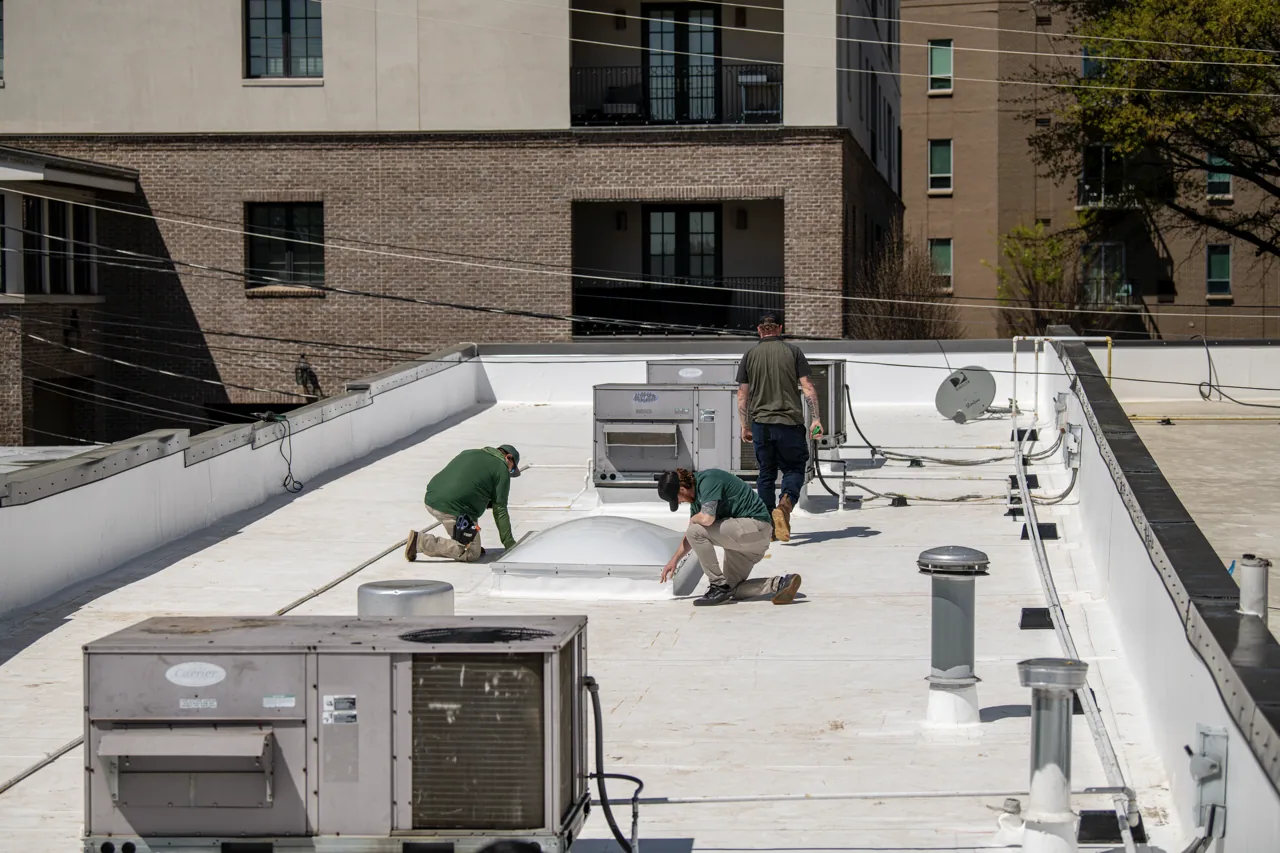
At a West Side roof access request, we still begin with the membrane and wall connection at the property. We establish a safe route to the work zone, protect the space below, and stage rolls or repair materials away from drains. The manager identifies active equipment and areas that must remain open. Those steps keep the work boundary clear without assuming a particular roof type from the neighborhood or its use.
Repair limits: confirm what can remain
An EPDM repair is a candidate when the sheet remains flexible, the surrounding bond is secure, and the wet area is contained. Repeated open laps, brittle membrane, or saturated insulation may warrant a broader assembly review. We identify what was tested or opened and what could not be seen. A roof condition report can record the seam, flashing, edge, and outlet findings that support the scope.
When opening the roof, we protect the exposed deck and keep the repair area covered until the new membrane is ready. The sequence identifies who can access the area, how old material will be removed, and where debris will be staged. If the work reveals a different moisture boundary, the added area is recorded and reviewed before it is included. That gives the property manager a clear way to approve a change without blurring the original scope.
Closeout includes a visual review of repaired laps and flashings, plus notes on drainage and edge conditions outside the repair. A local patch does not replace untouched roof sections. If maintenance is appropriate, the manager can compare the repaired location at the next walk. A consistent record helps distinguish recurring movement from a new event or a separate leak path.
Replacement selection depends on deck, insulation, slope, attachment, and how the new membrane meets metal and penetrations. During removal, we protect the building and define where temporary dry-in begins and ends. Closeout notes list repaired seams, renewed flashings, and any remaining issue outside the approved area. The owner receives a practical boundary for future maintenance and a clear basis for comparing a local correction with a roof-system project.
Commercial Roofing Questions
How do you repair an EPDM lap that has opened?
We clean and prepare the sheet, confirm the material can accept repair tape or adhesive, and extend the correction to sound bond. Nearby intersections are checked before closing the edge.
Can EPDM be welded like TPO?
An EPDM splice relies on its adhesive or seam tape, unlike a hot-air-welded TPO lap. We match the repair material and preparation to the membrane already installed.
Why can a roof leak far from an open seam?
Water can travel beneath a sheet or along insulation before appearing inside. We trace the path from the stain through nearby laps, curbs, and drains.
Does a loose EPDM sheet mean the entire roof failed?
A loose EPDM sheet does not prove that every field area has failed. We determine whether the issue is local or repeated and check how the sheet is attached before recommending a repair or broader work.
What should be inspected after wind damage?
We review perimeter attachment, corners, metal transitions, seams, and penetrations. The assessment records visible movement and any area that needs further opening.