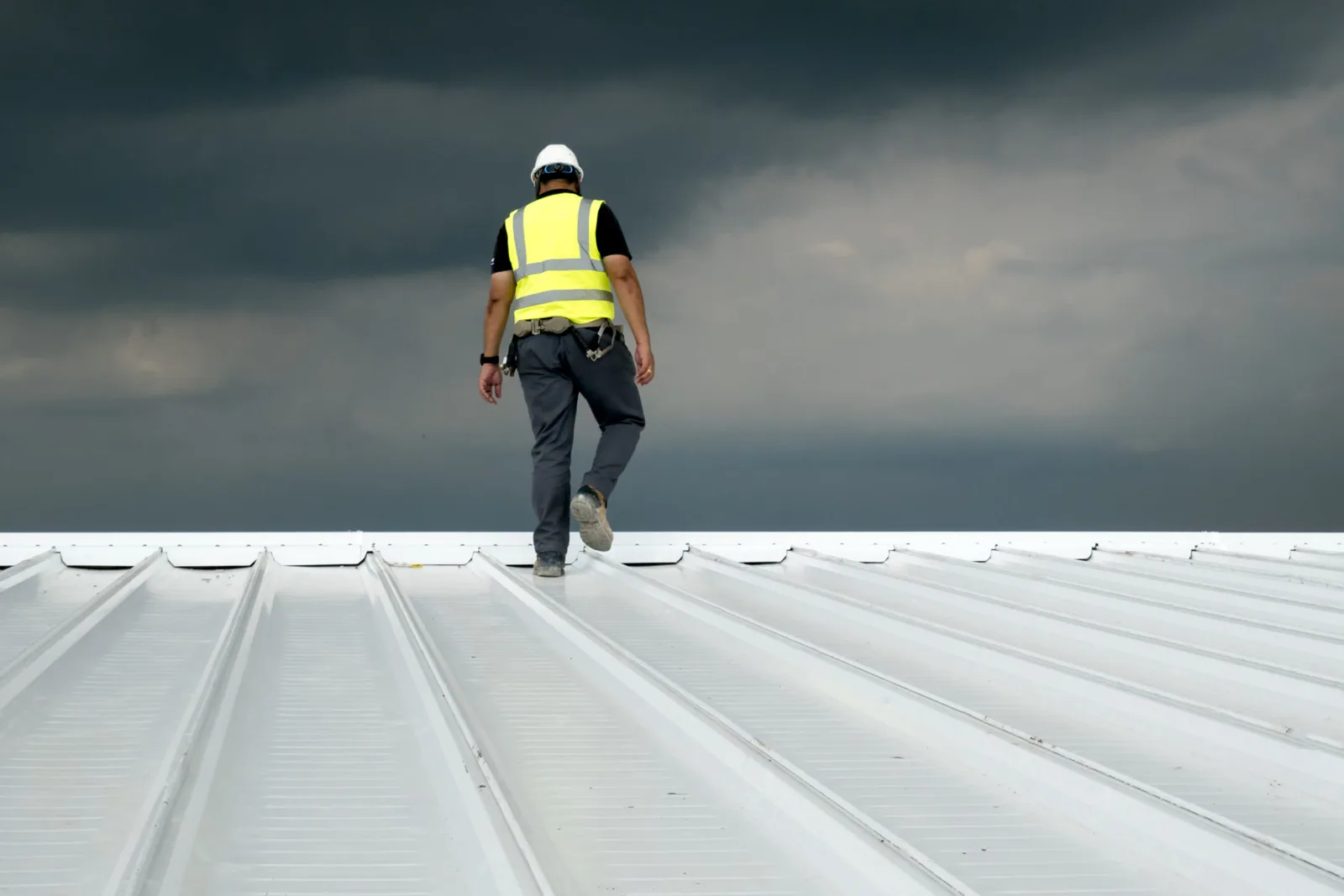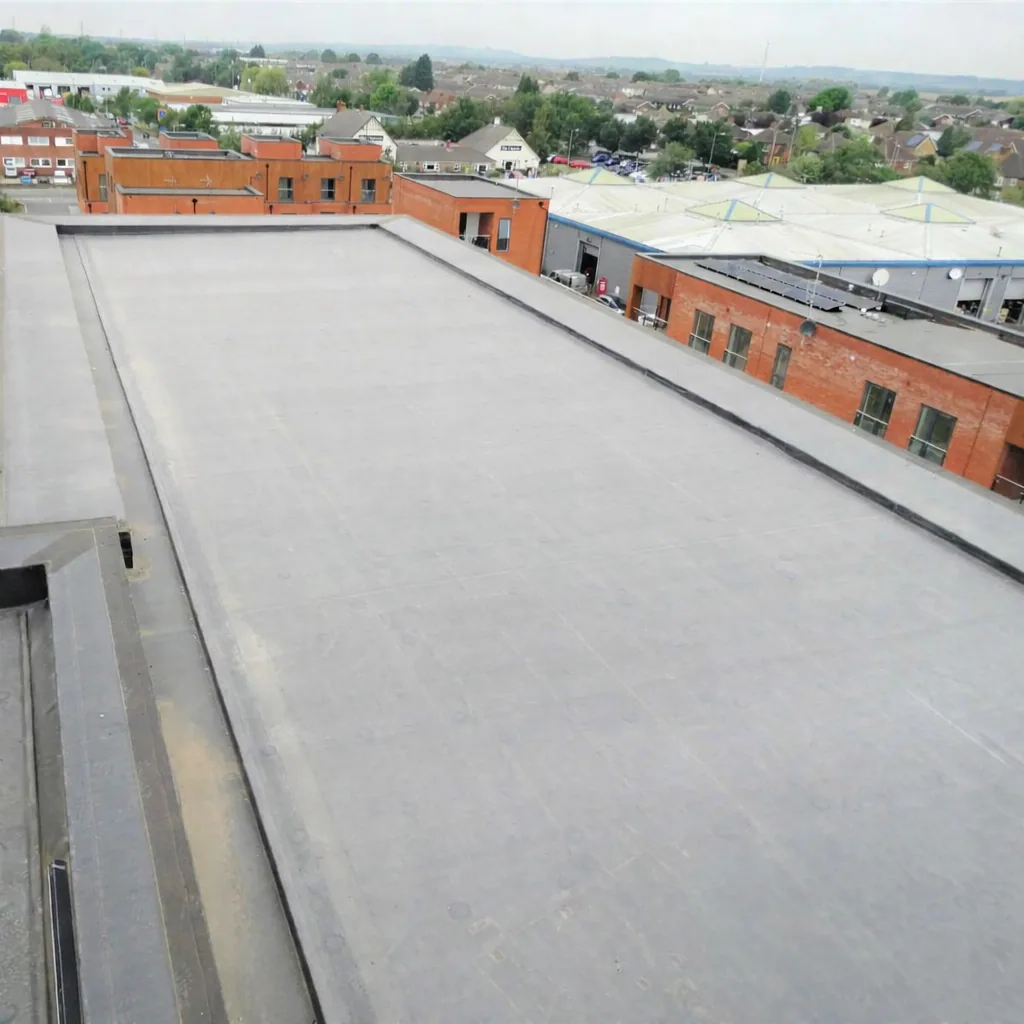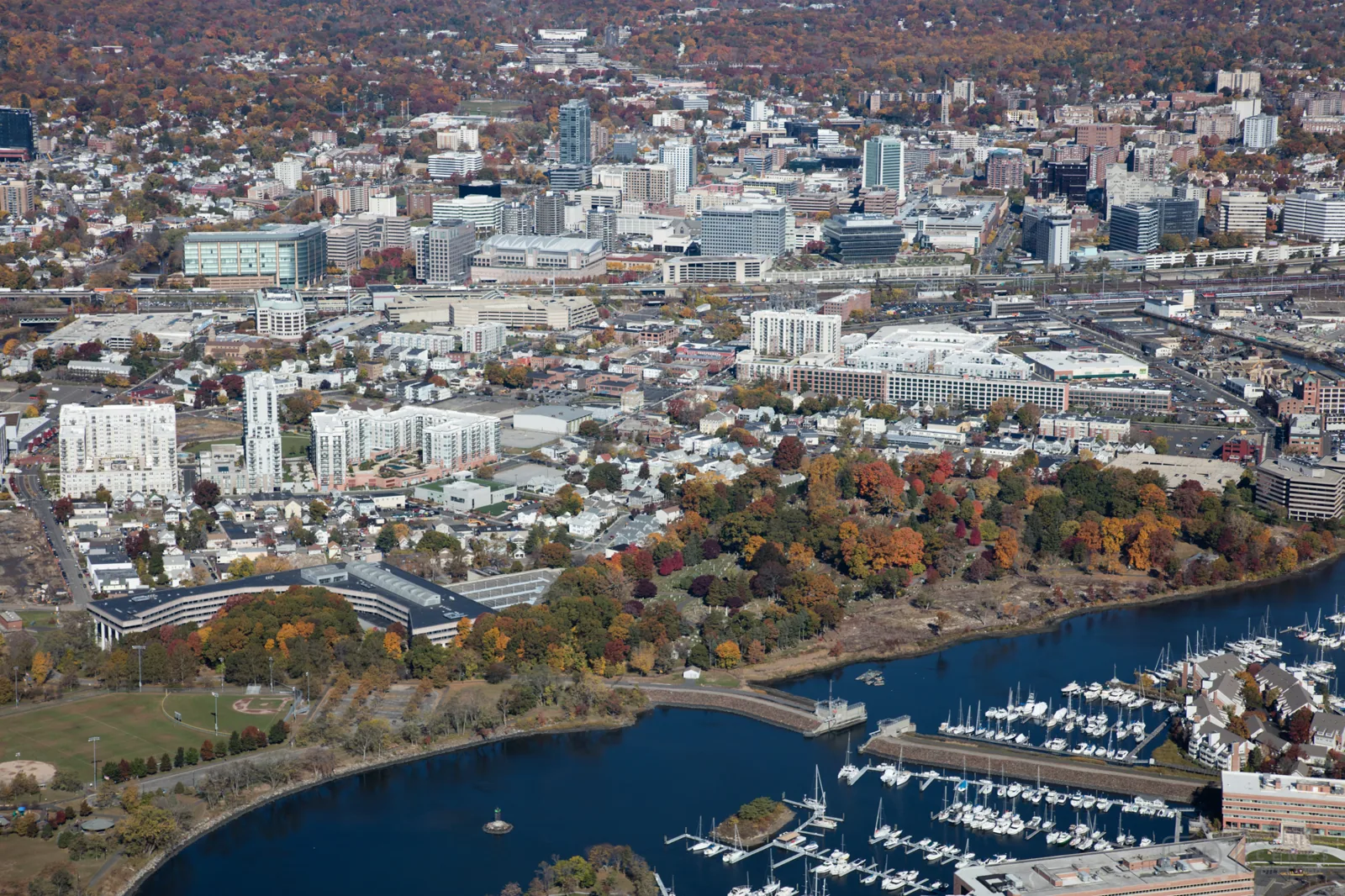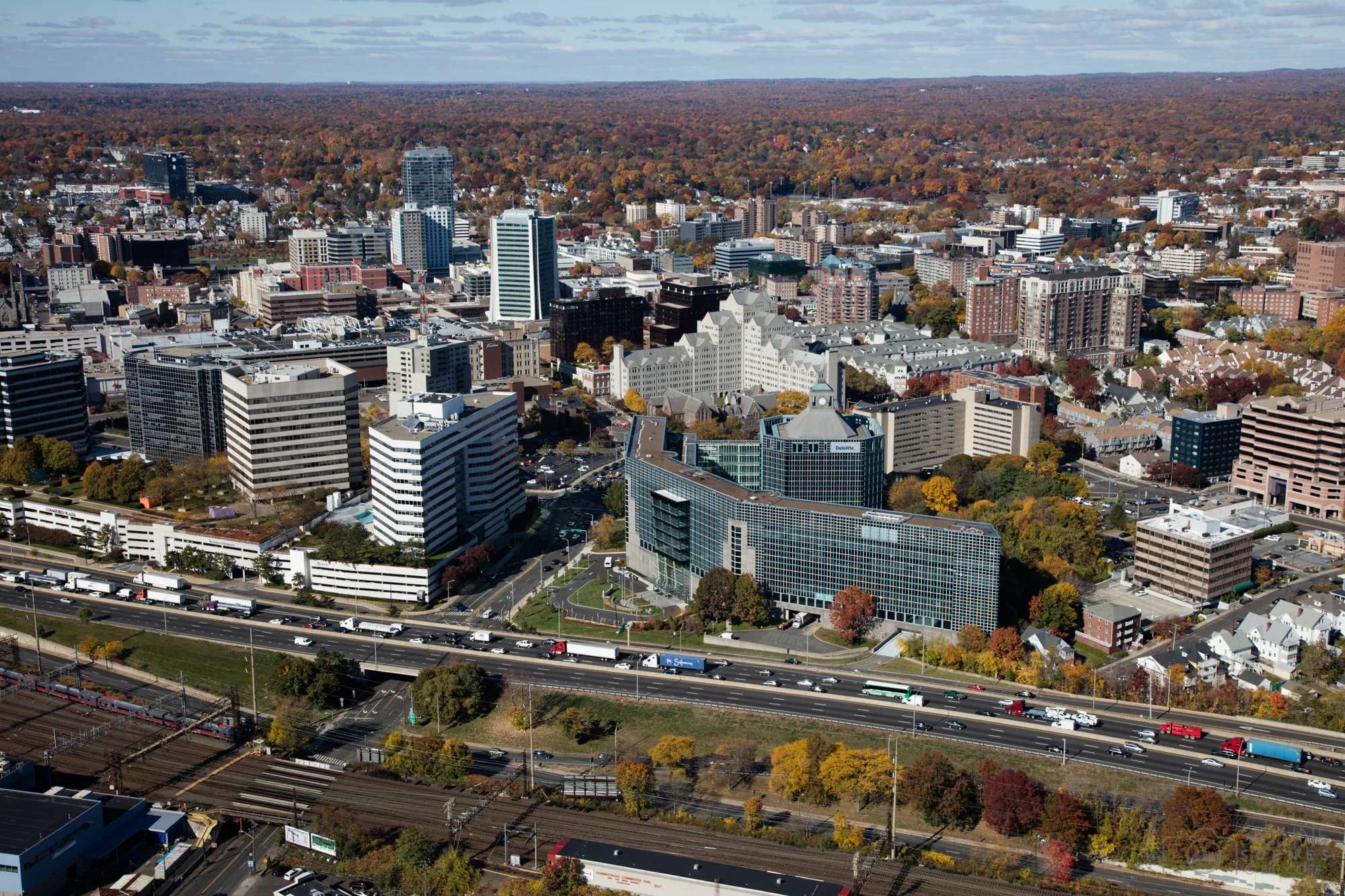
A wrinkle beside a curb can open as the membrane moves. Water then follows the lap or insulation until a stain appears somewhere below. In Springdale, Stamford, CT, we check the curb flashing, seam, and drainage details that connect to the reported leak. Springdale is a named Stamford neighborhood and Village Commercial district, and village areas have seen mixed-use redevelopment after zoning changes. We inspect each property's assembly, note the repair limit, and state what needs more access before the area is closed. Photos show the seam direction and dry edge receiving the tie-in. We also record the nearest drain and curb corner for the next roof walk. A commercial roof walk follows the reported water path to the seam, curb, or drain that needs work.
Membrane movement: inspect the lap
A raised wrinkle, open seam, or split weld can be an entry point, but the surrounding sheet must be checked before a patch is designed. We identify whether the roof is thermoplastic, EPDM, modified bitumen, built-up, metal, or coated. Each system uses different preparation and repair materials. At a thermoplastic seam, we check the weld and test a nearby area when needed. An adhered sheet may have a bond issue beneath the lap. A coated surface can fail where water remains or where the underlying substrate has moved.
We follow the seam past the visible damage and inspect terminations, penetrations, and nearby low points. Wet insulation changes the scope because a surface repair cannot dry or restore the layer underneath. We mark the opening, identify how far moisture extends where tested, and describe the condition that would widen the work. EPDM lap repairs are chosen only after we know which membrane is present and what surface remains sound.
Curb flashing: close the transition cleanly
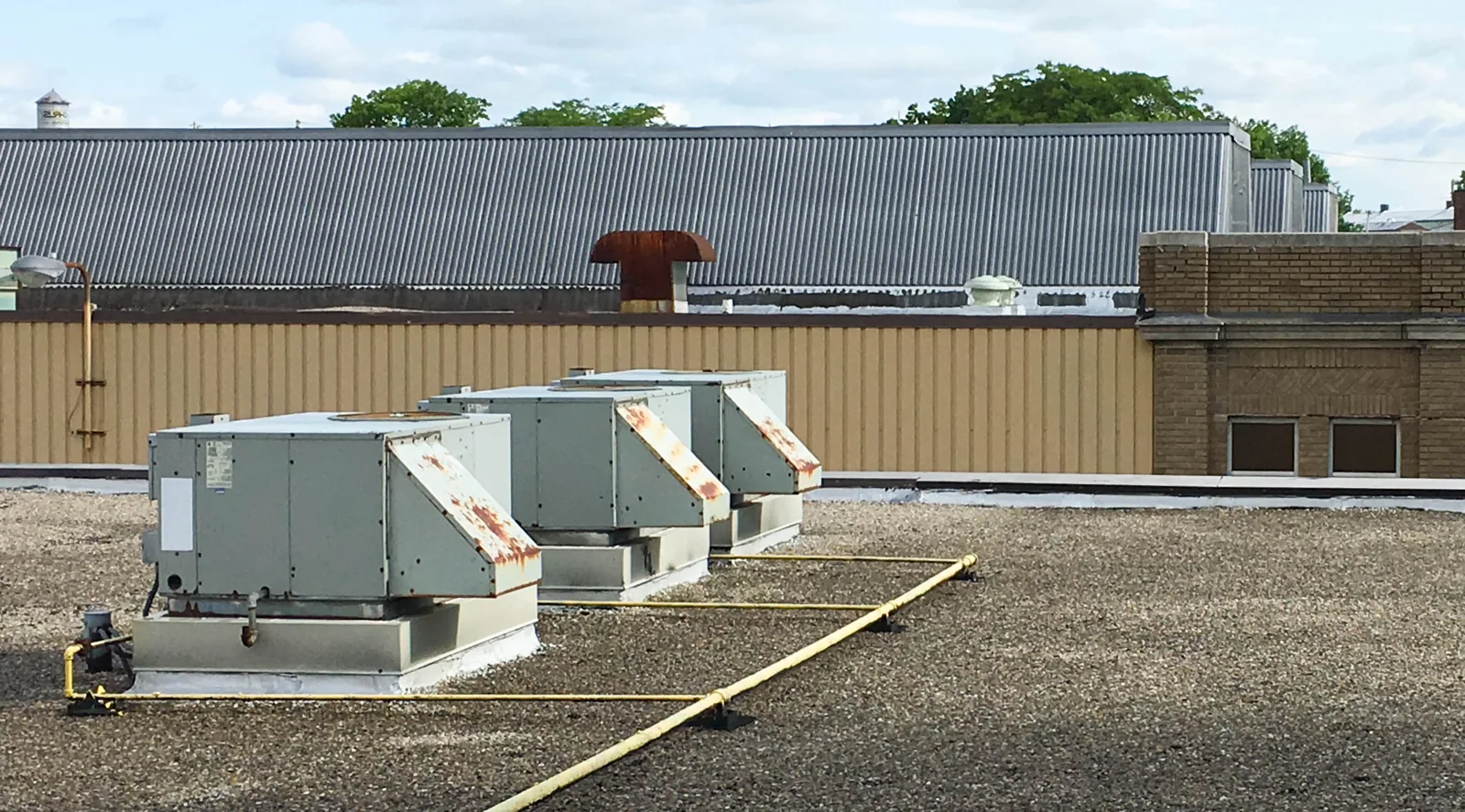
Roof equipment creates a break in the membrane plane. The curb corners and vertical flashing need to join the field without an open lap, fishmouth, or loose counterflashing. We inspect the full perimeter, not only the side nearest the leak. A split at one corner may connect to a seam that has pulled from the field. Metal counterflashing can conceal a loose membrane turn-up, so the repair plan must include the layers that need to be opened and restored.
Equipment service access belongs in the plan. We note the clear area needed around the unit, how materials can reach the roof, and whether another trade could cross the repair. Where storefronts remain occupied, we set interior protection and the material route before opening the seam. A roof detail may need protection after our work if later service can disturb it. Curb flashing and support details need a written boundary that shows what is being repaired and what remains intact. If the membrane has been displaced by equipment work, the scope should account for the affected sheet and insulation rather than sealing only the visible cut.
Low points: check the outlet and overflow
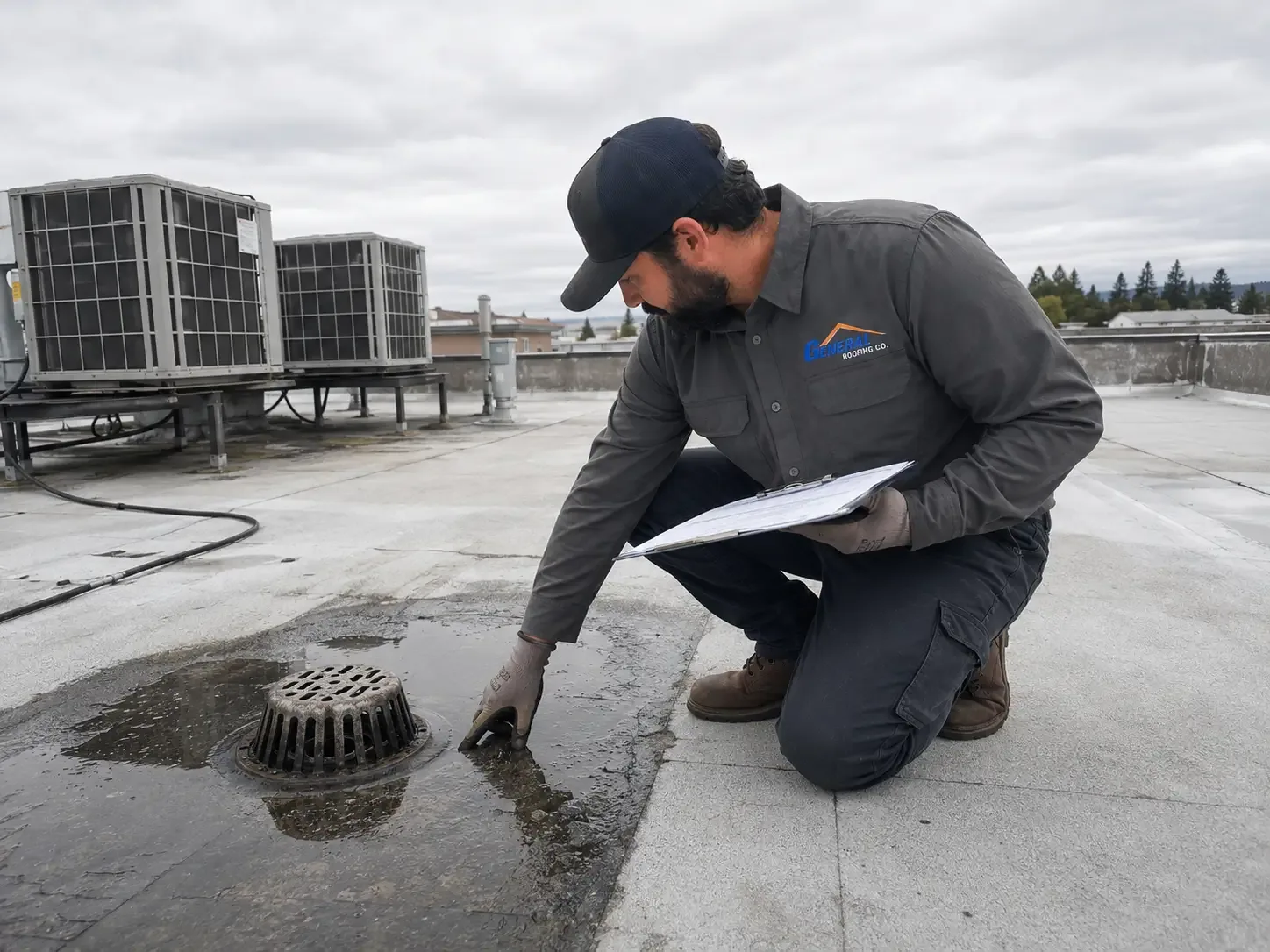
A slow-draining roof can keep water at seams that were not designed to remain submerged. We inspect the drain bowl, strainer, clamping ring, membrane connection, and visible outlet route. Scuppers and overflow openings need to remain clear and tied into sound flashing. If debris blocks the drain, cleaning can restore flow. If the flange is loose or the deck has depressed, clearing the strainer will not resolve the leak or ponding. We record the condition during the walk and compare it with the building team's timeline.
Water can travel beneath the membrane from a drain edge toward a curb or wall. We follow that path and note where insulation may need testing or removal. Drain and scupper repair should address the outlet and adjacent roof membrane together. When slope is part of the problem, we state whether correction requires a localized adjustment or a broader drainage design. That distinction affects both cost and the sequence needed to protect the interior.
Springdale and Downtown: keep records property-specific
Springdale has seen mixed-use redevelopment following zoning changes. We confirm working hours, staging, and any rooms below that need protection before opening the membrane. Managers comparing Downtown Stamford and Springdale should keep roof records separate by property. The record identifies each assembly and the detail that changed its repair scope.
Snowfall and subfreezing overnight temperatures recur in Stamford. We pay attention to water retention, drain capacity, lap condition, and terminations that can move through freeze-thaw cycles. The roof walk records visible conditions rather than inferring damage from the season. Typical Stamford summer highs reach the low-to-mid 80s; that heat makes exposed curb transitions and equipment details worth checking for movement and split sealant. Glenbrook is another named Stamford neighborhood; its roof record stays separate from the Springdale assembly inspected here.
Patch or larger scope: follow the defect
A patch earns a place in the scope only after we test the roof beside the cut. We probe the insulation, check whether the membrane remains bonded, and see if the seam can accept a compatible tie-in. Where moisture extends into another board or the deck, the work has to reach that layer rather than stop at the visible split. The report marks the inspected boundary and lists any hidden area that still needs access.
Several failing seams, soft areas, or recurring leaks may justify a broader look at maintenance, coating, recover, or replacement. Preventive maintenance helps address debris and smaller defects when the roof remains serviceable. A coating requires a suitable, dry surface and sound details. Recover planning checks attachment, moisture, deck capacity, and project requirements before another layer is considered. Replacement becomes an option when the existing system no longer supports reliable local repairs.
Cost and timing: define the assumptions
Repair cost depends on the roof system, affected area, number of connected details, material removal, access, and the condition below the membrane. A curb repair may include flashing, membrane, insulation, and equipment coordination. A drain repair may require opening a larger area to reach a sound connection. We list those elements and the conditions that could change them. The manager can then compare a contained repair with the cost and disruption of broader work using the same inspection findings.
Timing follows weather, dry substrate, safe access, material preparation, and a sequence that keeps the roof watertight. Some repairs can be closed after one visit; others need an opening, dry-in, and return installation. Occupied areas may require notice and interior protection. A condition report with photos preserves the details and gives ownership a record for later budgeting. The decision is clearer when the leak path, repair boundary, and next review point are written down.
Commercial Roofing Questions
Does the Village Commercial designation tell you what roofing Springdale buildings have?
No. It identifies a planning district, not a property's roof system. We inspect the surface, attachment, curb details, and drainage before choosing compatible repair materials.
Why inspect beyond a visible wrinkle?
A wrinkle may connect to an open lap or hold water against a curb. We check the surrounding sheet and test the substrate where needed so the patch reaches sound material.
Can roof work be planned around equipment service?
Yes, the scope can record access limits and work areas that need coordination. We identify the curb details to repair and note where later service could affect the new flashing.
When does a drain issue require more than cleaning?
A loose flange, damaged membrane connection, or depressed deck may continue to hold water after debris is removed. We inspect the outlet and adjacent field before defining the repair.