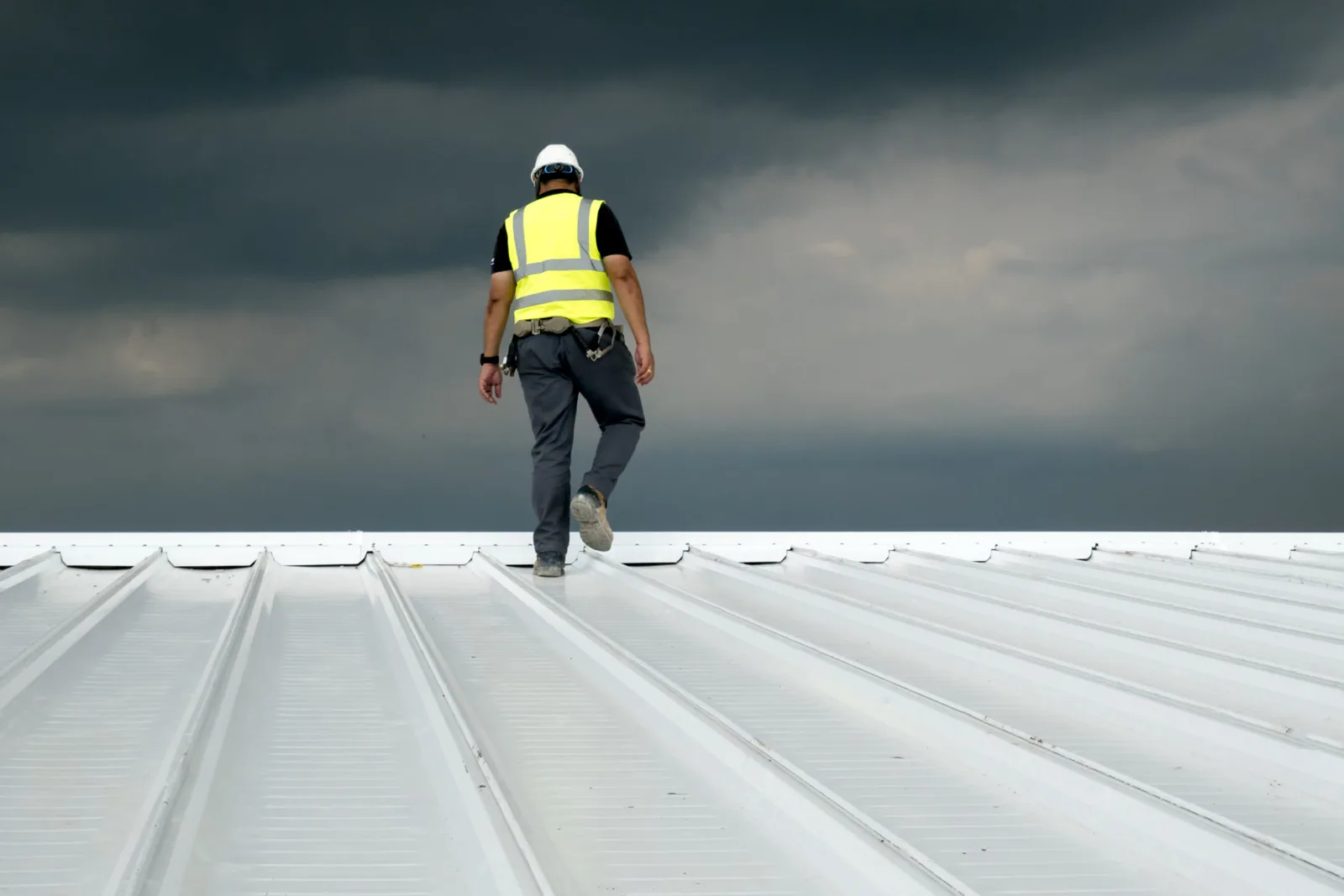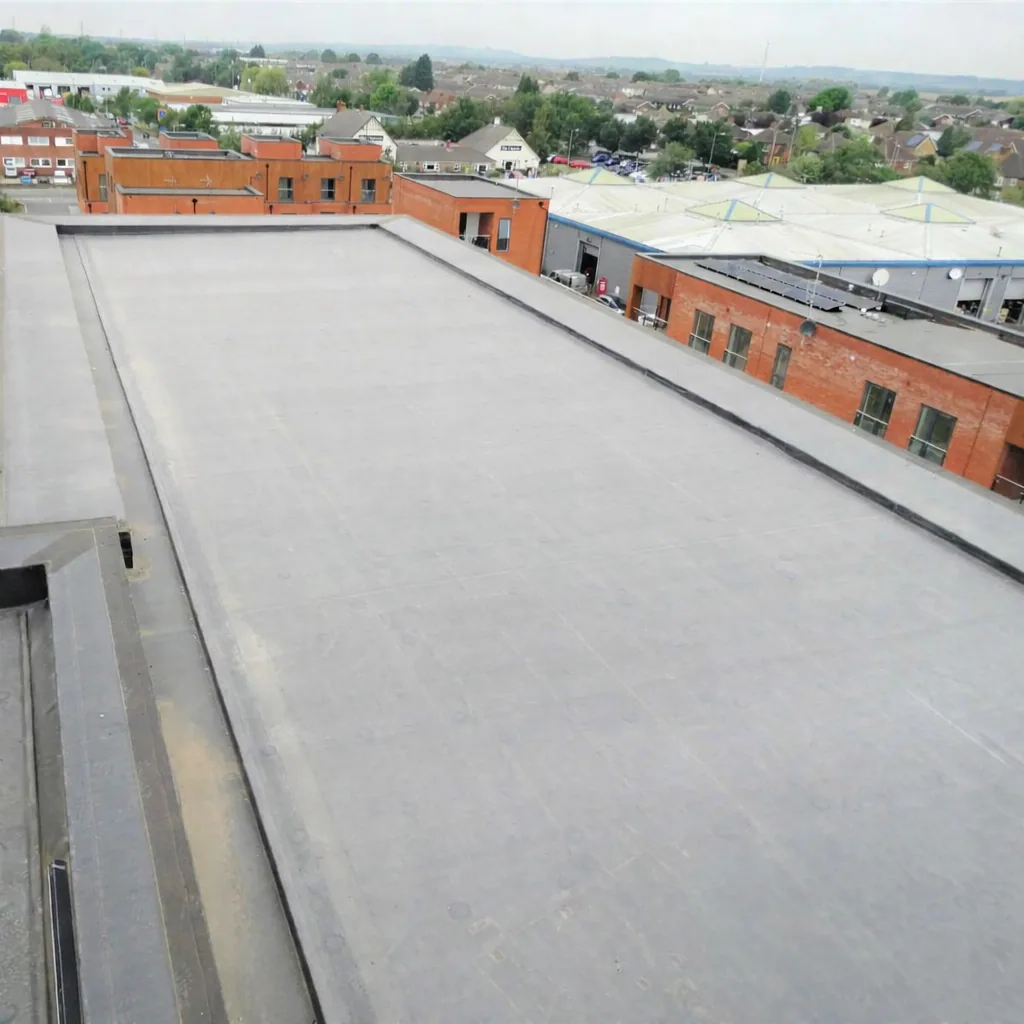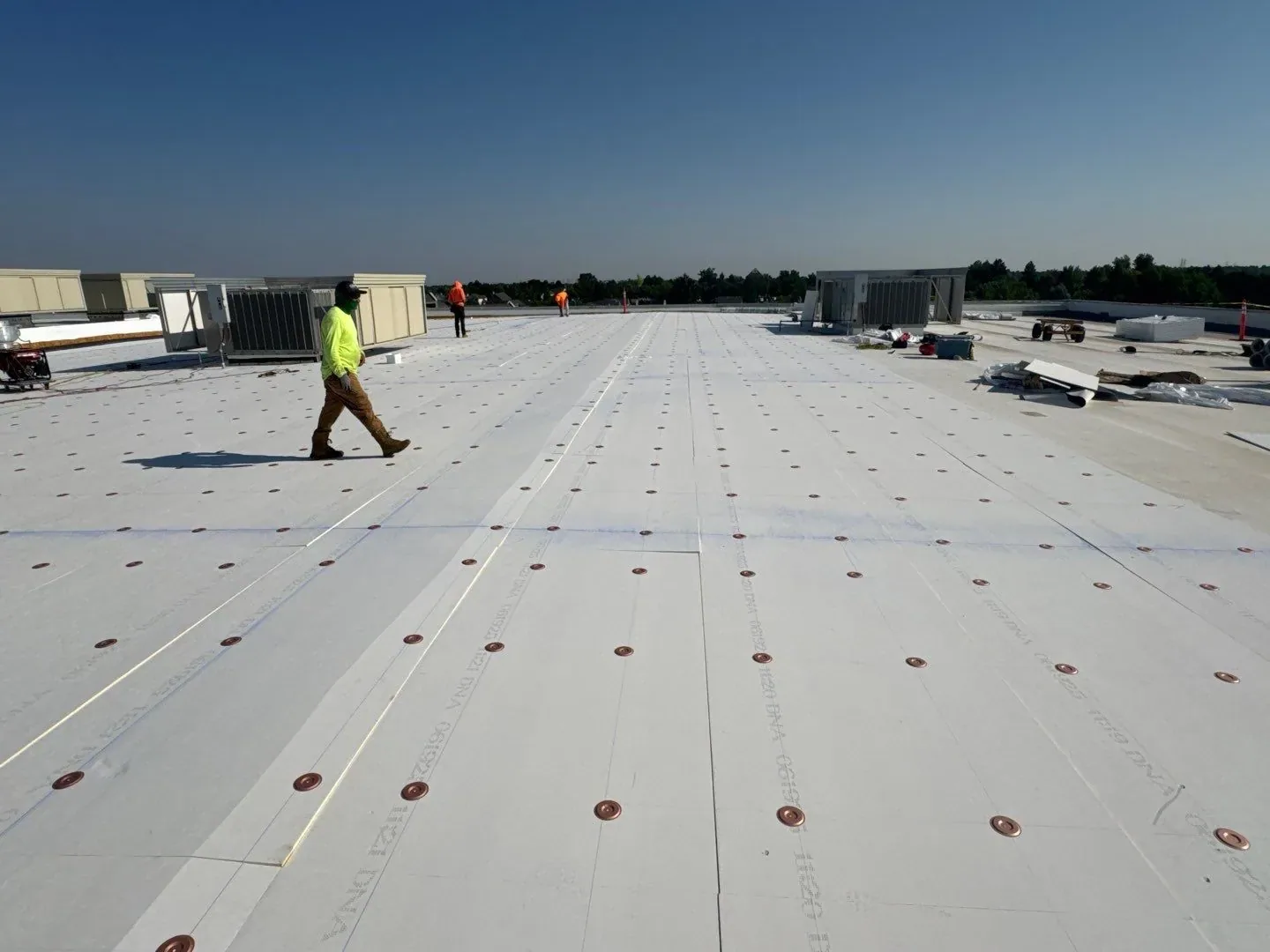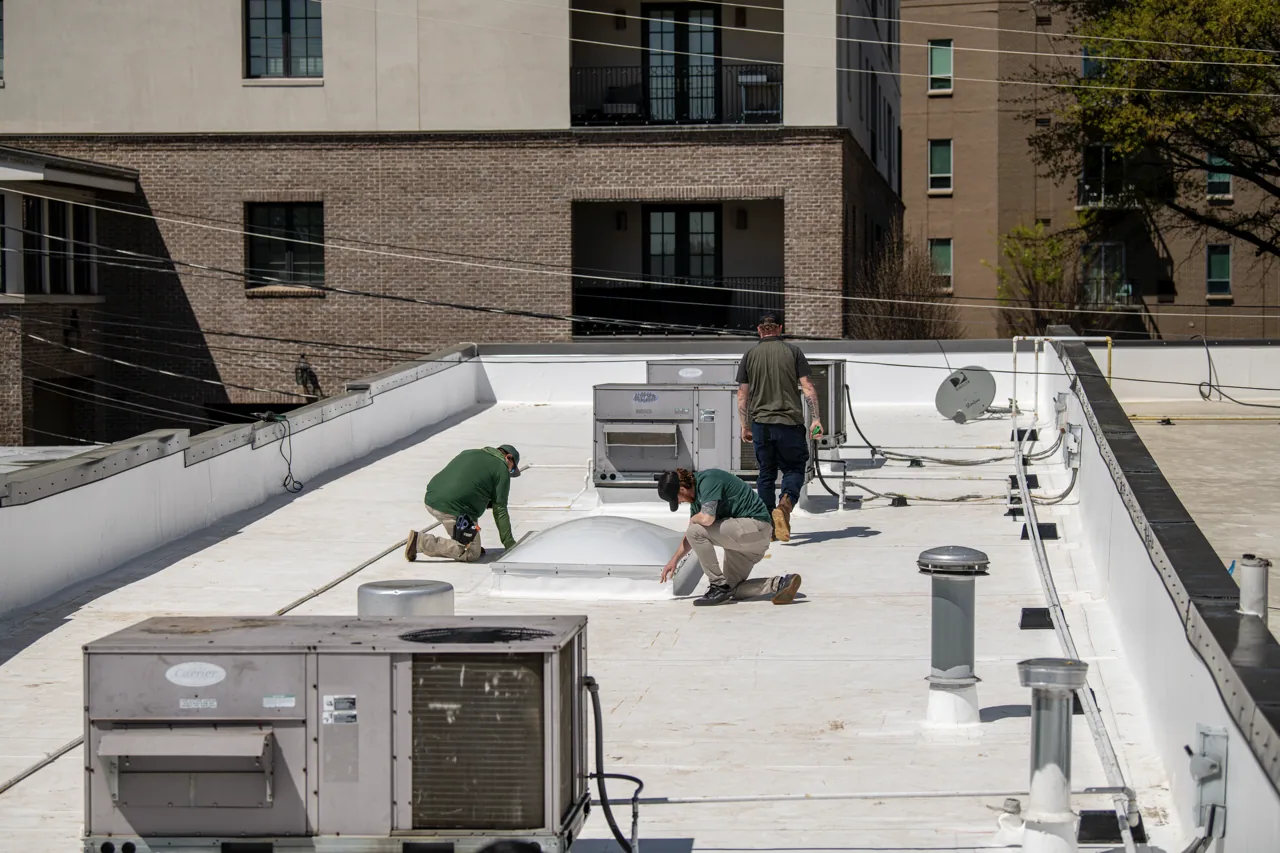
A loose metal return can send water behind the wall before the ceiling shows a mark. In Stamford, we start at the visible failure and follow the path through the seam, curb, drain, or edge detail that may be carrying it. Downtown and South End buildings can mix several uses under one roof; a leak above offices or retail needs a repair sequence that respects access below. We inspect the roof, identify what can be repaired, and write the boundary of the work. A hands-on roof inspection can establish whether the defect is isolated or part of a wider condition. A repair is useful when it addresses the detail that failed and leaves sound adjoining material in place. The scope should name the location and the system involved, not simply say that a leak was patched. That gives property staff a way to compare the roof after the next rain and report whether water followed the same path.
Water path: locate the detail, not just the stain
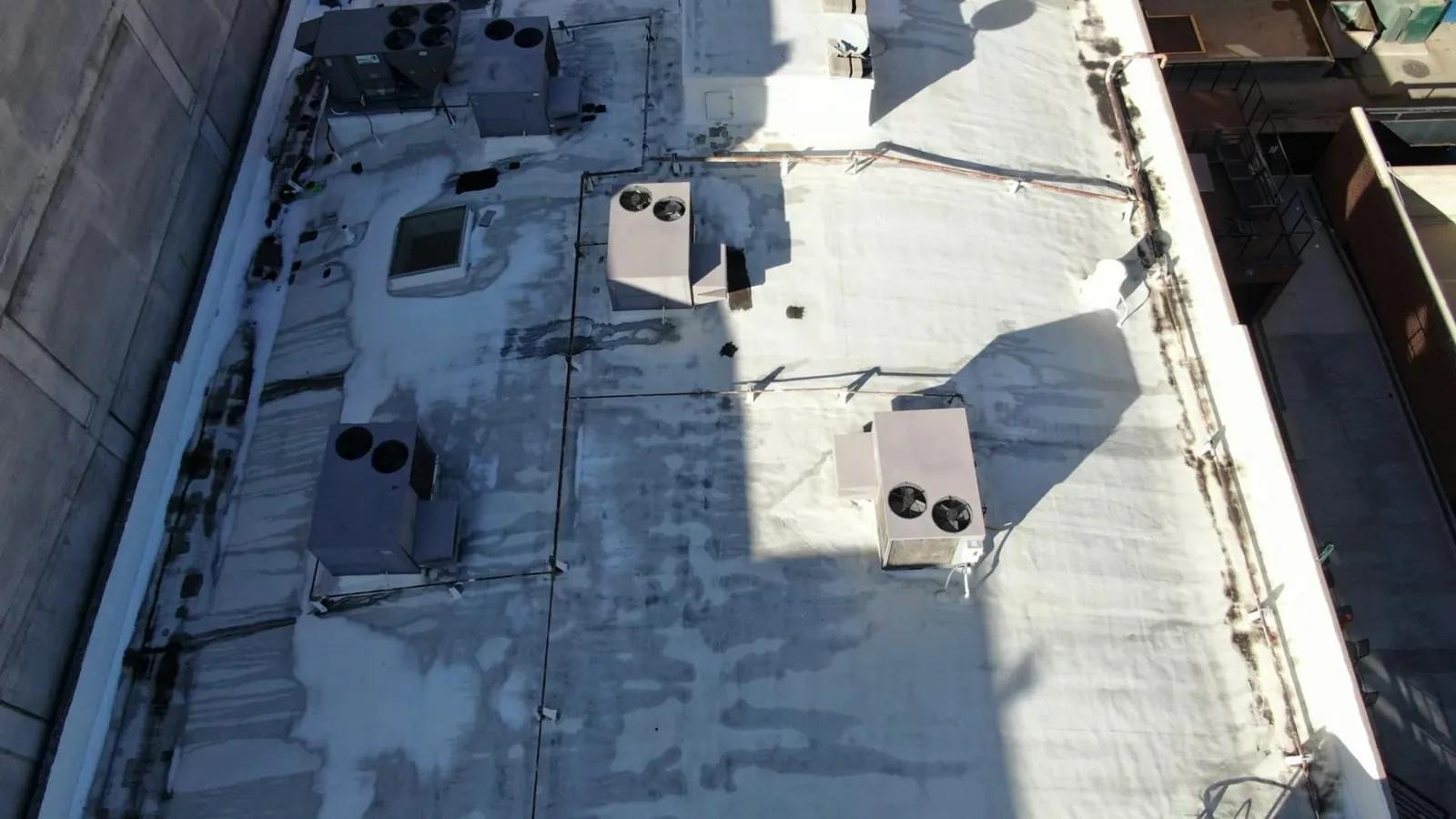
Water can travel along insulation, a deck flute, or a curb before it appears indoors. We compare the reported location with seams, penetrations, wall transitions, and drainage points above it. Summer heat and cooling demand make rooftop equipment and surrounding flashing worth including in a Stamford roof inspection. We check each curb, seam, and termination against the reported water path before setting a repair boundary. We use seam failure repair where a lap has opened and flashing repair where the transition is carrying water. The repair follows the verified detail. A drain can be clear at the bowl and still have a leak at its flange or connected membrane. A curb may shed water at its top while failing at a lower corner or termination. We inspect each transition that fits the reported path, then separate confirmed damage from an area that only needs observation. This keeps the repair focused without overlooking the detail beside it.
Seam and curb detail: define what will be sealed
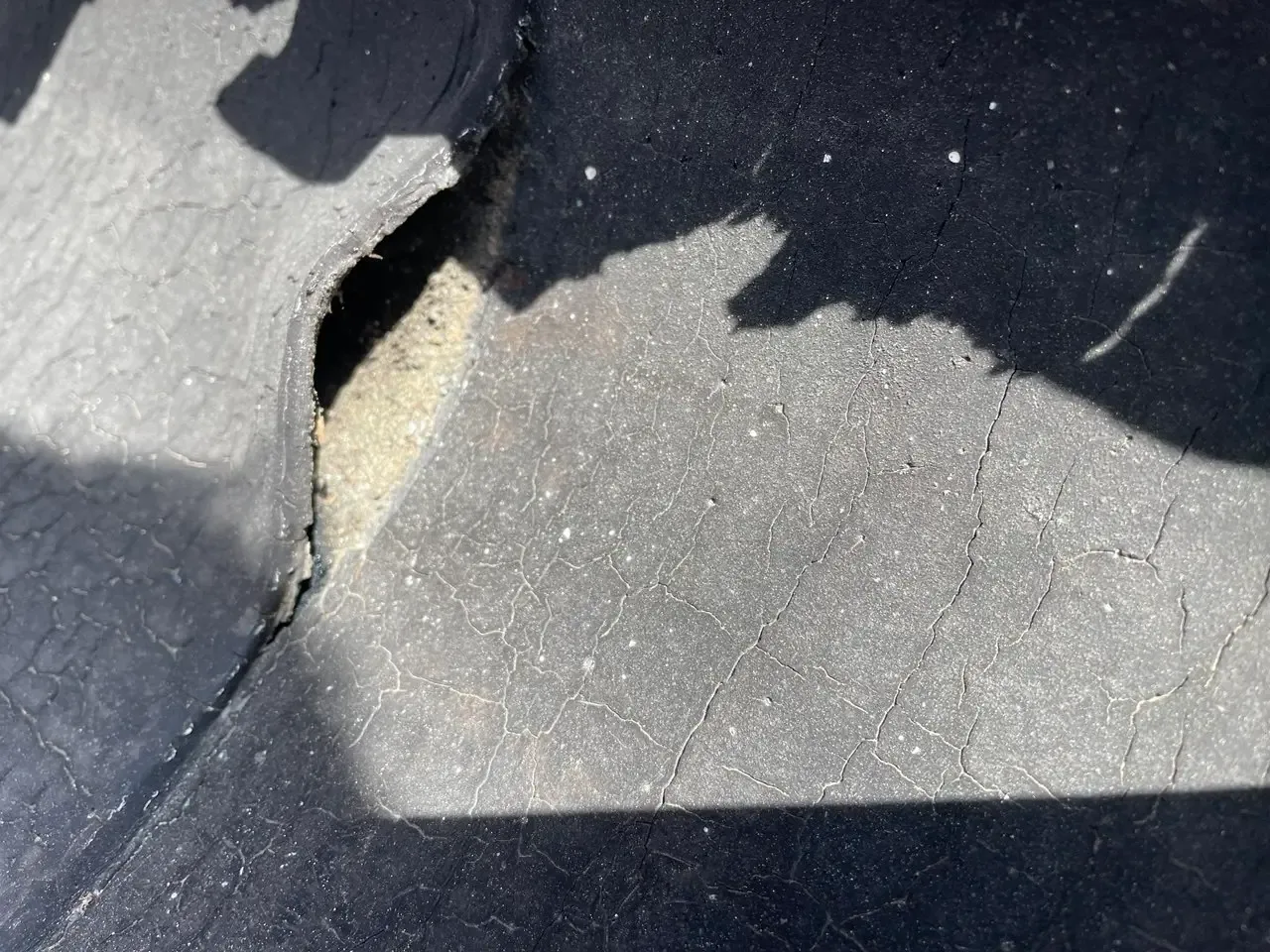
A patch has to bond to a surface that can accept it. We check membrane condition around the defect, remove loose material, and prepare a dry substrate before applying a compatible repair. At a curb, the wall height, corners, counterflashing, and termination matter as much as the open membrane. A drain bowl needs a different repair boundary than a puncture in the field. We document what is removed and what remains, then connect the repair to the correct TPO assembly or EPDM assembly where the existing system can be identified. We identify the existing membrane and coating at the roof before selecting materials, then confirm that the repair will bond to the prepared surface. If the field has a coating or a previous patch, we check whether the new material can bond to that surface before applying it. A seam repair needs compatible lap treatment and a sound transition at each end. We also check the metal return and fastener line, since movement at the edge can undo a repair that only addresses the membrane. These details set the patch boundary and show whether adjoining material can support a stable repair.
Repair boundary: patch the defect or widen the scope
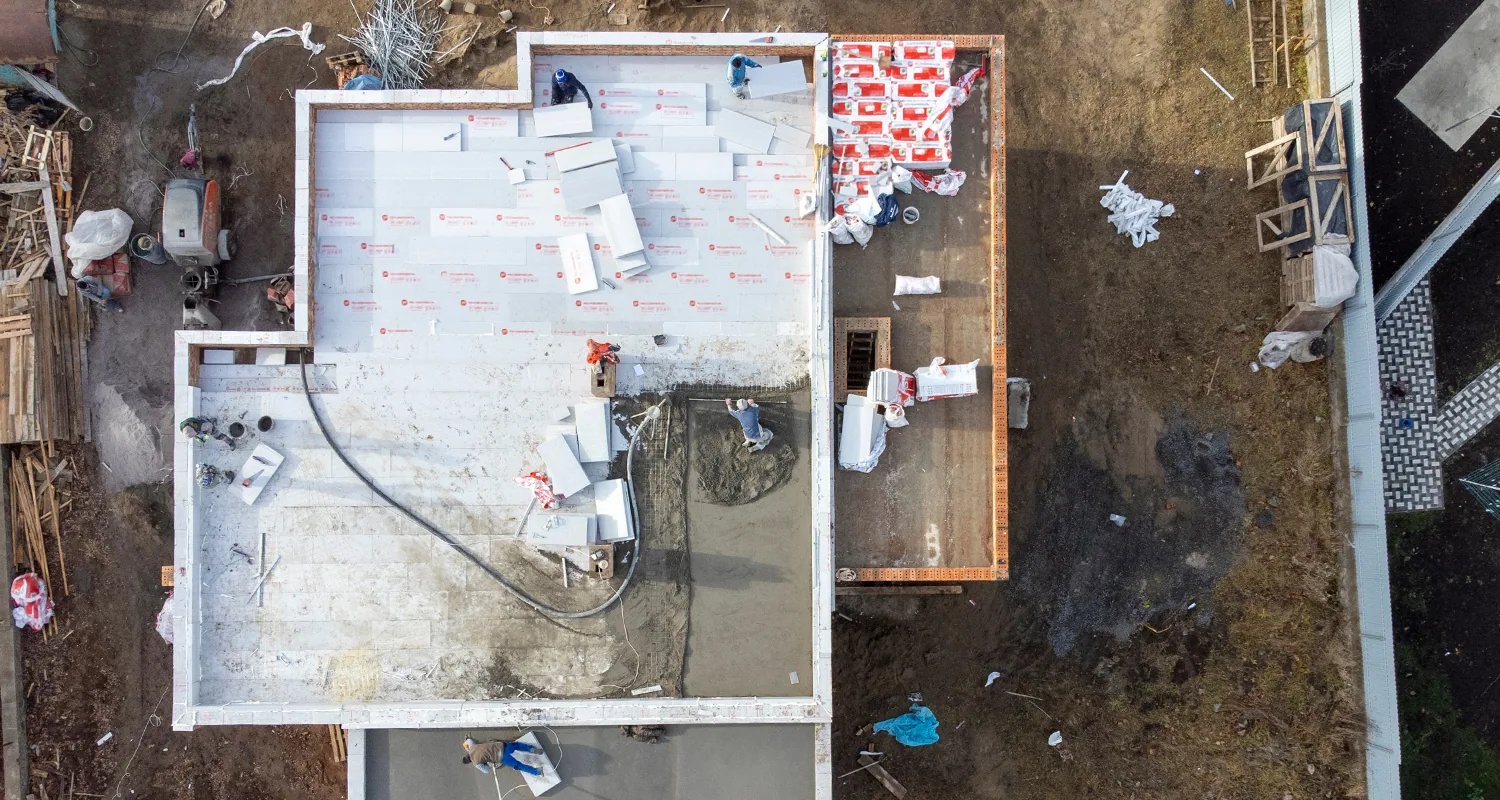
A contained split with sound material around it may support a focused fix. Wet insulation, repeated openings, or movement along a long seam can make that boundary too narrow. We test and record what the roof allows, then explain the point at which a broader repair or replacement deserves consideration. Staging, entry, and work windows need to fit the building's actual access and operating hours. When findings point beyond a local fix, we compare an overlay through the recover evaluation or a tear-off through the replacement scope, using the same moisture and deck evidence. We do not extend a patch only because one area looks weathered. The repair boundary follows material condition, moisture, attachment, and whether the detail can be returned to a stable condition. If those findings point beyond one defect, we show the owner which additional area drives the change. That distinction supports a practical decision: complete a limited repair now, investigate adjacent conditions, or price a broader scope for review.
Occupied properties: keep the repair workable
Access, tenant hours, equipment shutdowns, and the path to the roof affect the sequence. We identify where materials can be staged, how the repair area will be protected, and whether a temporary dry-in is needed before permanent work. Production or loading schedules can limit where the crew enters and when noisy work can happen. The work plan should also keep drains and roof access clear for building staff. In Glenbrook, production or loading schedules can affect staging, so we confirm those hours before setting the repair window. We plan occupied-building roofing work around those constraints. Before work starts, we agree on the repair boundary and confirm which adjoining details remain in service. The property manager can help by identifying spaces that cannot lose power, sensitive areas below the work, and the person who can provide roof access. We set the repair window around those limits and confirm what the crew can reach. If temporary protection is needed, its location and removal point belong in the daily scope. That sequence follows the roof layout and the work schedule for the specific repair.
Follow-up: know whether the repair held
A completed repair needs a useful record. We note its location, the detail repaired, adjacent conditions, and any area that could not be confirmed during the visit. A later roof walk can check whether the seam remains closed and whether the same path is active after rain. At follow-up, we compare the repaired detail with the earlier record and note whether the reported water path has changed. A repair in Downtown Stamford begins with the documented roof detail, water path, and access limits. Where the leak has returned, we trace again instead of layering another patch over a repair whose substrate or boundary is no longer sound. The follow-up can also identify a detail that needs watching but did not require immediate work. That is different from an unresolved repair: the report states what was completed, what could not be confirmed, and what condition would trigger another visit. Staff can then compare a new ceiling mark with the earlier path and avoid reopening a section without reason.
Commercial Roofing Questions
When can the repair boundary remain limited to one confirmed leak area?
Yes, when the defect is contained and the surrounding membrane, insulation, and deck remain serviceable. We mark that repair boundary and explain what would change it. Multiple leaks along a seam or recurring wet insulation call for a broader look before another patch is placed.
What path can move water from a roof defect to a distant ceiling mark?
Water can move sideways through insulation or along deck and framing before reaching an interior finish. We compare the stain with seams, curbs, walls, and drains above it, then use the water path to narrow the repair area. The visible mark is a starting point, not the repair location by itself.
How do you choose a repair material?
The existing membrane and its condition control compatibility. We identify the assembly, prepare a dry and sound substrate, and select a repair detail that bonds to it. If the field is deteriorated beyond that boundary, we explain why a small patch may not be durable.
What can the repair record show the property team?
It should identify the location, detail repaired, observed adjacent conditions, and any limits to the inspection. We can include photos and a follow-up recommendation so staff know what to check after weather or during routine maintenance. That record also helps distinguish a new leak from a repeat path.
What should I provide before a Stamford roof repair visit?
Share the time and location of the leak, recent service notes, roof access rules, and any limits on equipment or tenant disruption. We will compare those details with the roof condition and prepare a written repair scope or a larger-system recommendation.