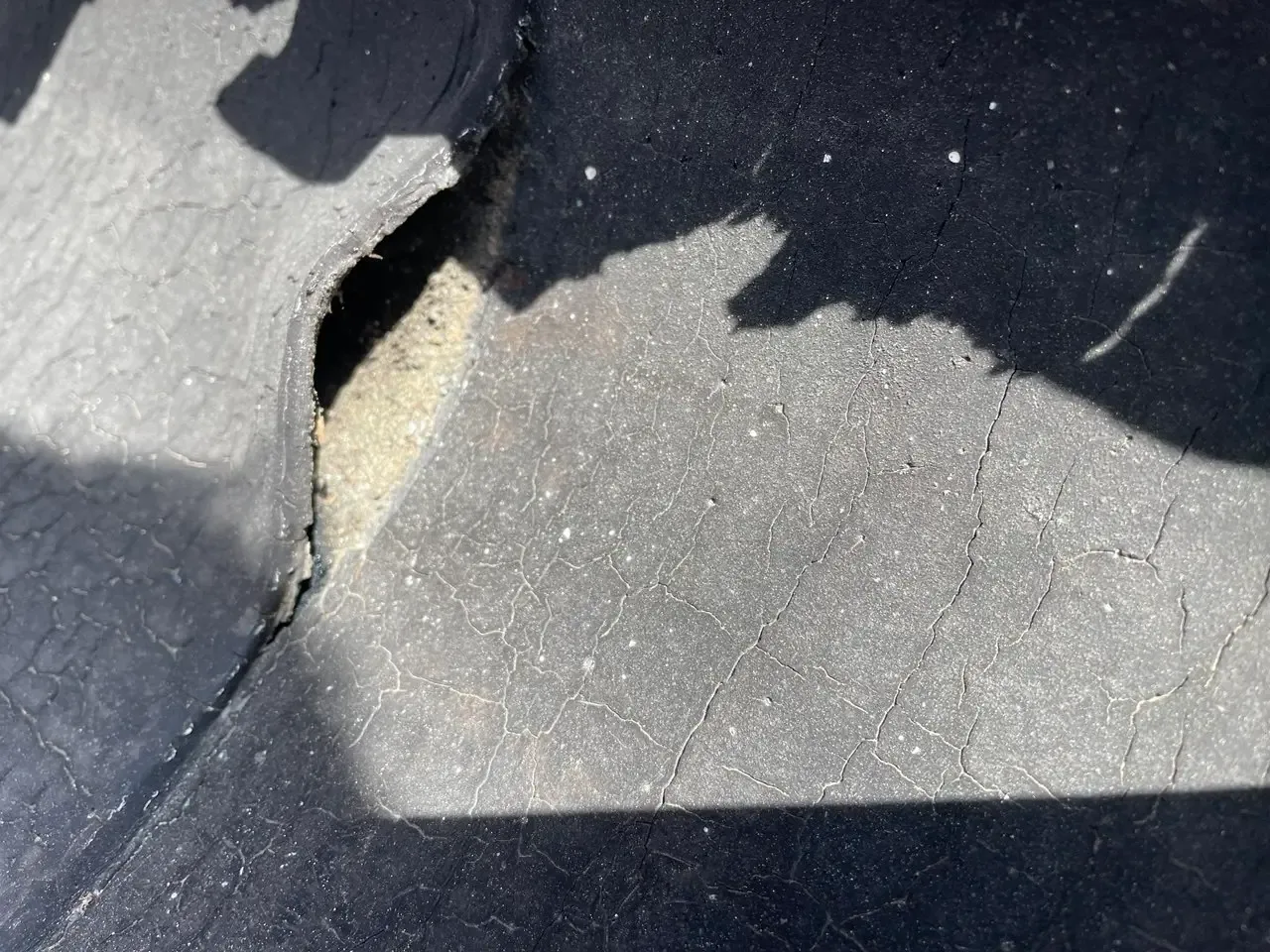
A seam that has opened by even a small amount can admit water beneath a roof membrane. The repair begins with identifying the roof system and finding how far the separation extends. On a Stamford, CT commercial roof, a split lap may occur in the field, at a perimeter, or where the membrane meets a curb, drain, or wall. We check the open edge, nearby welds or adhesive bonds, and the surface below before choosing a repair.
Seams are not interchangeable details. Thermoplastic membranes may use heat-welded laps, while EPDM and other materials rely on different bonding and fastening methods. A repair that looks closed can still fail if contamination, incompatible material, or an unsupported edge remains below it. We document the condition and define the repair limits, then select a method that fits the installed assembly. A commercial roof inspection can also place the seam finding in the context of the roof's overall condition.
Locate the separation and its cause
We trace a seam opening in both directions to see whether it is short or part of a longer bond failure. The surface may show a lifted edge, wrinkle, exposed backing, or a patch whose perimeter has released. Nearby clues include curb movement, loose metal, debris, or an older repair crossing the lap. These details help set the repair boundary.
Aging, movement, installation conditions, and service traffic can contribute. We also inspect surrounding membrane for punctures, abrasion, or moisture. A broad overlay is not automatically appropriate. If the split reaches a wall or curb, a flashing failure repair may be needed. The scope should show where the seam opens and where its bond remains intact.
Confirm the membrane before selecting a method
Look for markings, edge details, repair history, and exposed layers to identify the membrane. System recognition matters because temperature, preparation, primer, adhesive, and seam technique differ. A TPO roof system may permit a test weld to check whether new material can bond to the existing surface. For an EPDM assembly, a technician may need to clean, prime, and use compatible seam materials. If identification remains uncertain, a small test area or manufacturer guidance can resolve the method before the repair expands.
Previous coatings or incompatible sealants can mask the original seam and interfere with bonding. We remove material only as needed to expose sound surfaces and protect the surrounding membrane. A cut-and-patch detail should use rounded corners and adequate overlap where the assembly calls for it, with edges sealed or welded using the system's specified technique. The repair plan should note the compatible materials and any weather conditions required for installation.
Prepare a clean, supported repair area
Debris and loose material are cleared before bonding or welding. The surrounding roof must be dry enough for the selected products, and the substrate should support the lap. If the seam sits over wet insulation or a soft deck, closing the top may conceal a deeper condition. We check whether a limited opening is needed to understand the layers below.
Protect the work zone from foot traffic and keep tools off exposed membrane. When roof access is shared with maintenance or mechanical work, coordinate a safe path with the property contact. Active equipment is not moved without authorization. Keep drains clear and stage materials so scraps cannot enter the water path. A preventive roof maintenance plan can record the seam and guide later checks.
Repair heat-welded and bonded seams correctly
On a weldable membrane, we prepare the area before applying heat and pressure. A test weld checks whether the selected temperature and travel speed bond to the existing surface. The technician follows assembly requirements, probes the cooled weld where appropriate, and corrects skips or fishmouths. A patch should extend beyond the failed section onto sound material.
Adhered seams require cleaning and primer, then compatible tape or adhesive and firm pressure. Fastened systems also need secure plates, bars, or terminations. The method follows the installed system and conditions. For a longer seam run or connected flashing failure, commercial roof repair sets the removal, tie-in, and closeout boundary.
Plan repair access in Stamford
Stamford's planning framework places Downtown and South End in a mixed-use growth category; outside those centers, lower-density residential land is more common. That broad distinction does not describe an individual address. For a seam repair, the actual roof route, equipment paths, and loading activity determine where material can be staged and how a section can be isolated.
Access is confirmed with the property contact before tools or material reach the roof. We identify any restricted edge, hatch, or mechanical zone and keep work inside the authorized area. CTDOT's study of the Route 1 coast corridor includes Stamford and Darien between its New York and Westport-Fairfield endpoints. At a Downtown Stamford commercial roof, we confirm the access route, work zone, and staging limits with the property contact.
Account for seasonal conditions
For cold-season planning, Stamford 5 N climate normals point to regular snowfall and overnight freezes. Before bonding a lap, we confirm the membrane is dry and the surface meets the selected material's installation requirements.
Wind or strong sun can affect a loose lap, but close inspection is still needed to identify the cause. If water is entering, temporary protection may be considered when conditions permit; permanent repair follows once the assembly can be prepared. An assessment of wind-related roof damage may help when the split followed a documented storm.
Check the repaired lap and retain a clear record
After work, check for continuous bonding, secure terminations, and sound transitions to existing membrane. Look for lifted corners, skips, wrinkles, or gaps at the patch edge. Photos can record the seam before preparation and the finished detail. Testing should fit the membrane type and avoid sending water toward vulnerable openings.
The closeout can identify the roof zone, failure length or landmarks, materials, method, and work limits. If the seam was opened, note the layers found and any recommended follow-up. A roof condition report can retain seam observations with maintenance history and support later budgeting. Keep the record with roof plans and prior repairs so the next inspection can compare the same section and distinguish a new opening from an older repaired lap.
Commercial Roofing Questions
Which movement or attachment conditions can pull a roof seam apart?
Separation can follow aging, movement, poor bonding, contamination, incompatible repairs, or stress at a transition. Foot traffic and service work may also affect an exposed lap. Inspection of the seam and adjoining membrane helps identify which conditions are present.
Can a split roof seam be patched?
A compatible patch may be suitable when the surrounding membrane is sound and the failed area is defined. The patch must bond to prepared material and extend onto an intact surface. If the separation continues under wet insulation or across a broader area, the scope may need to include more than a surface patch.
How does a membrane joining method change the seam repair detail?
No. Heat-welded thermoplastic, adhered EPDM, and other assemblies use different preparation and joining methods. We identify the system before choosing temperature, primer, tape, adhesive, patch material, or fastening details.
How can a property team reduce repeat seam problems?
Keep service paths clear, report loose edges promptly, and record repairs with locations and photos. During maintenance, pay attention to seams near curbs, drains, and access routes where movement or traffic can concentrate. A roof plan helps direct inspectors to known repairs.
Will the repair include moisture below the membrane?
Only when the defined scope includes investigation and correction of affected layers. We inspect the seam and nearby conditions, then discuss any need to open the assembly. Replacing wet insulation or addressing the deck should be documented separately from a surface seam repair.