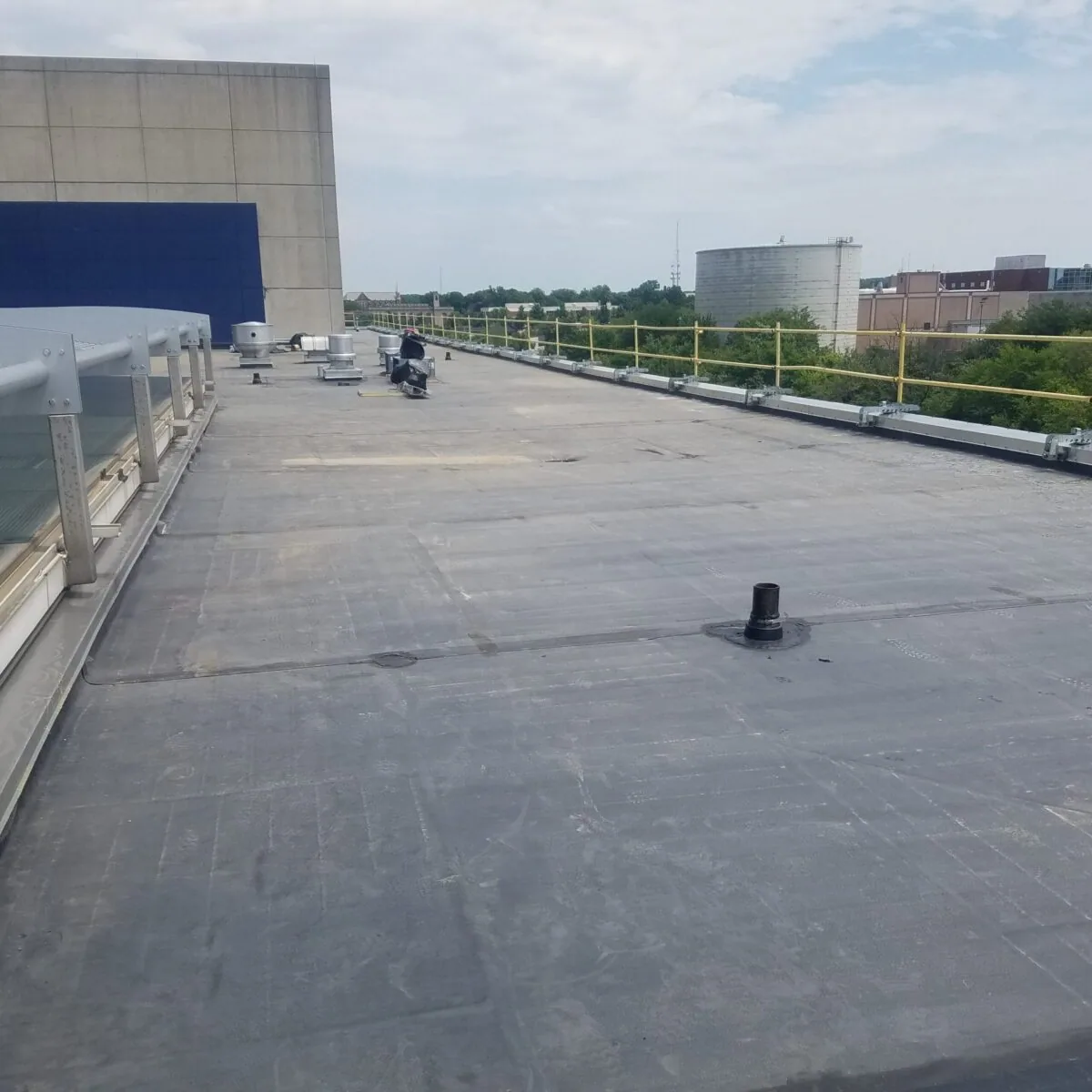
A ceiling mark below an office or retail floor gives one clue. Water may have crossed a seam, curb, or drain before reaching the room. In Downtown Stamford, CT, we walk from the wet area back through details that can carry water sideways. Downtown Stamford brings office, housing, and retail together, with South End next to it. We inspect the membrane, termination bar, curb flashing, drain bowl, and metal return, then separate a contained repair from a wider assembly problem. A commercial roof inspection begins with the leak location, recent service notes, and access limits.
Water path: follow the roof above the mark
Start with where the interior sign appeared and what changed around it. A wet tile after rain may point toward a drain path; a mark near a wall can trace back to coping or a rising curb. We look for open laps, punctures, loose counterflashing, displaced sealant, and places where debris holds water. A seam away from the stain may be the entry point, while insulation carries moisture toward the ceiling. Our notes distinguish observed conditions from likely paths so the repair does not stop at the easiest visible point.
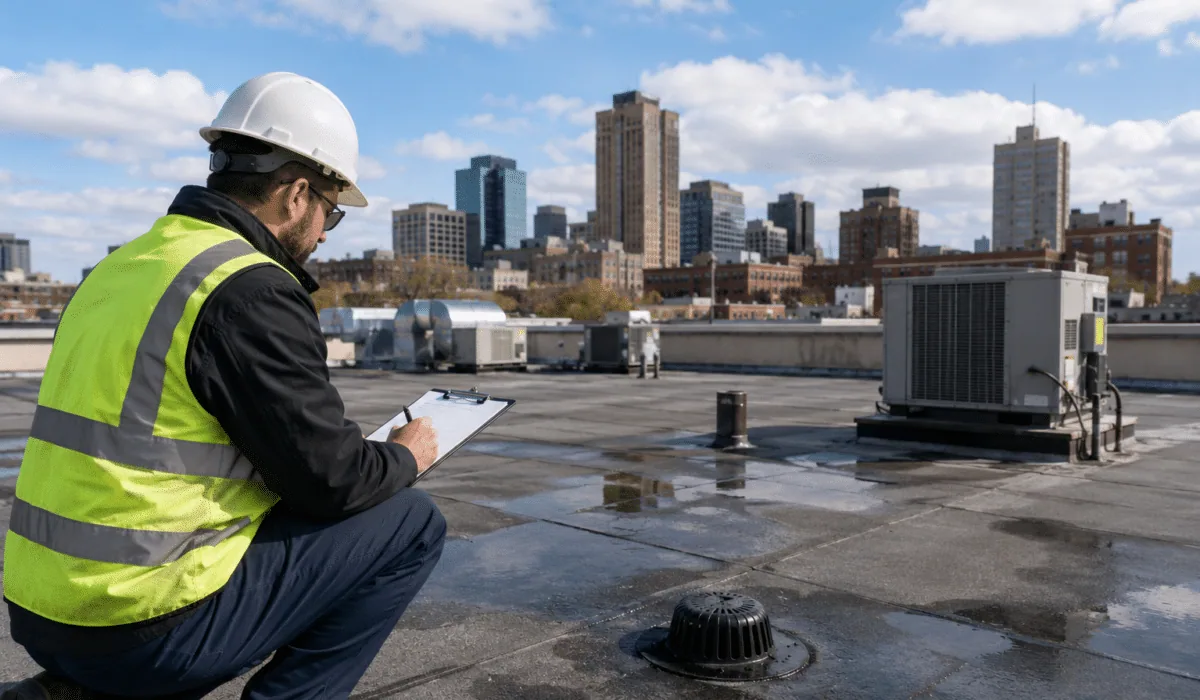
On an occupied Downtown property, a roof walk has to respect access and interior activity. We identify reachable roof zones, note equipment clearances, and plan tests around the building's use. When a condition is uncertain, we isolate the area for further inspection instead of describing a concealed layer as sound. The result is a practical map of the failure and the next check that can confirm whether the patch boundary holds.
Seam and curb detail: locate the break
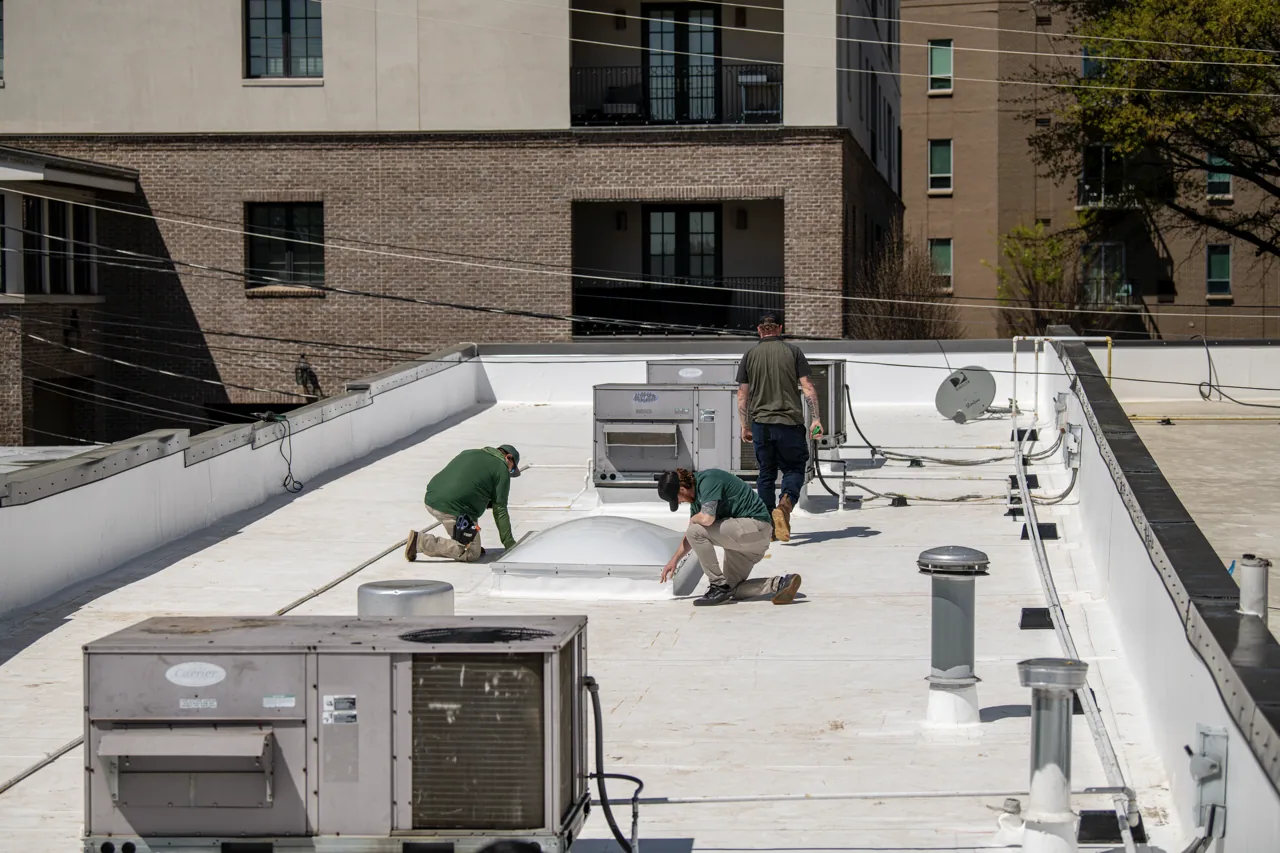
A membrane split beside a rooftop unit can be small and still admit water. The unit curb interrupts the field, so its flashing has to meet the membrane without a gap, trapped wrinkle, or open corner. We inspect curb faces, welds or adhered laps, metal counterflashing, and nearby penetrations as one connected detail. If the membrane has pulled back, the substrate beneath it matters. A repair over wet insulation can close the surface while leaving a soft or deteriorating layer below.
At the seam, lap direction and attachment tell us what repair is possible. A thermoplastic weld may need cleaning and a test before new material is joined. An EPDM lap may require compatible primer and tape. Coated surfaces need different preparation. We do not mix methods because two areas look alike. The written scope names the system, material, detail to be repaired, and adjacent conditions that could expand the work. A focused roof repair fits when the surrounding assembly can still support it.
Drain bowl: check the low point and overflow
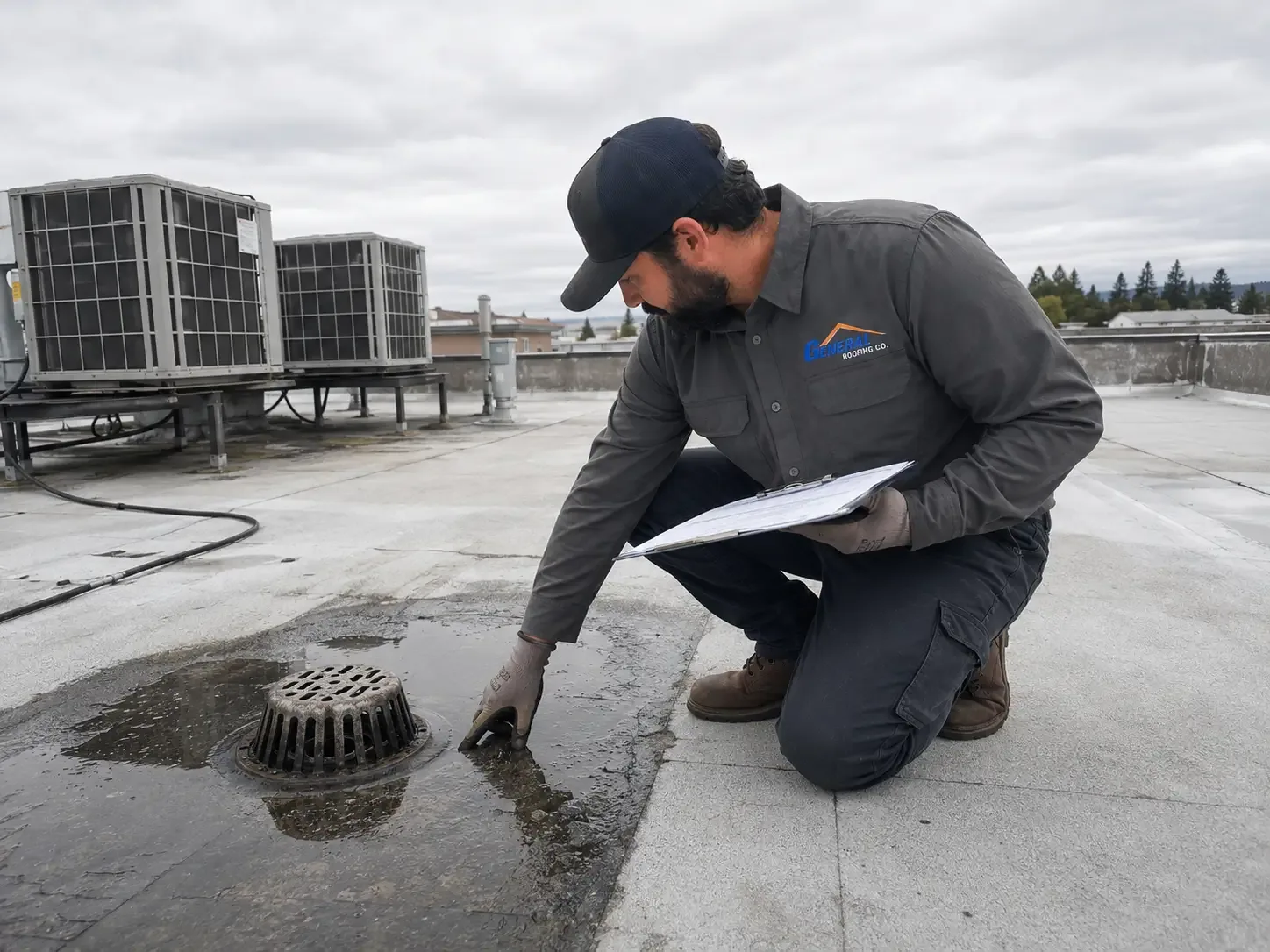
Water that remains after nearby areas clear deserves a closer look. We inspect the drain bowl, clamping ring, seams around the penetration, strainer, and visible discharge path. A clogged strainer can slow drainage, while a leak may come from a loose ring, cracked seal, or membrane pull at the flange. Scuppers and overflow openings need attention too. Debris, loose metal, or an interrupted membrane edge can redirect water toward a wall or back up the field.
We record whether the roof is dry, damp, or holding water during the visit. A walk can show where drainage is restricted and whether nearby details are intact. If the low point is depressed or the deck has moved, cleaning alone will not correct the slope. That may call for drainage adjustment or broader review. Drain and scupper work should preserve the membrane connection and the water path.
Downtown and South End: plan the roof walk
Downtown Stamford's mix of office, housing, and retail makes access planning part of the roof scope. Equipment routes can cross active areas, so we ask which entries are available, where materials can be staged, and which roof zones need notice. Harbor Point sits within the broader South End district; managers overseeing both areas still need a separate condition record for each roof. As building use changes, access and interior protection may need a new sequence. We confirm those details at each property.
Stamford's winter snow and subfreezing nights make drainage, terminations, and water trapped at laps worth documenting before freeze-thaw movement works on the same weak point. Summer heat can increase movement at transitions. We inspect the actual exposure and assembly. When access or weather limits a test, the report states what was observed and what remains to inspect. A roof condition report gives ownership a record for maintenance, repair, and budget decisions.
Repair boundary: identify what can remain
A patch fits when the defect is local, adjacent membrane remains attached, and the substrate can accept the repair. We mark limits around a split or failed flashing, prepare the surface, and tie new work into sound roofing. If moisture extends beyond the opening, the repair area has to follow the condition. Several failing seams or penetrations may show that isolated patches no longer provide a reliable boundary.
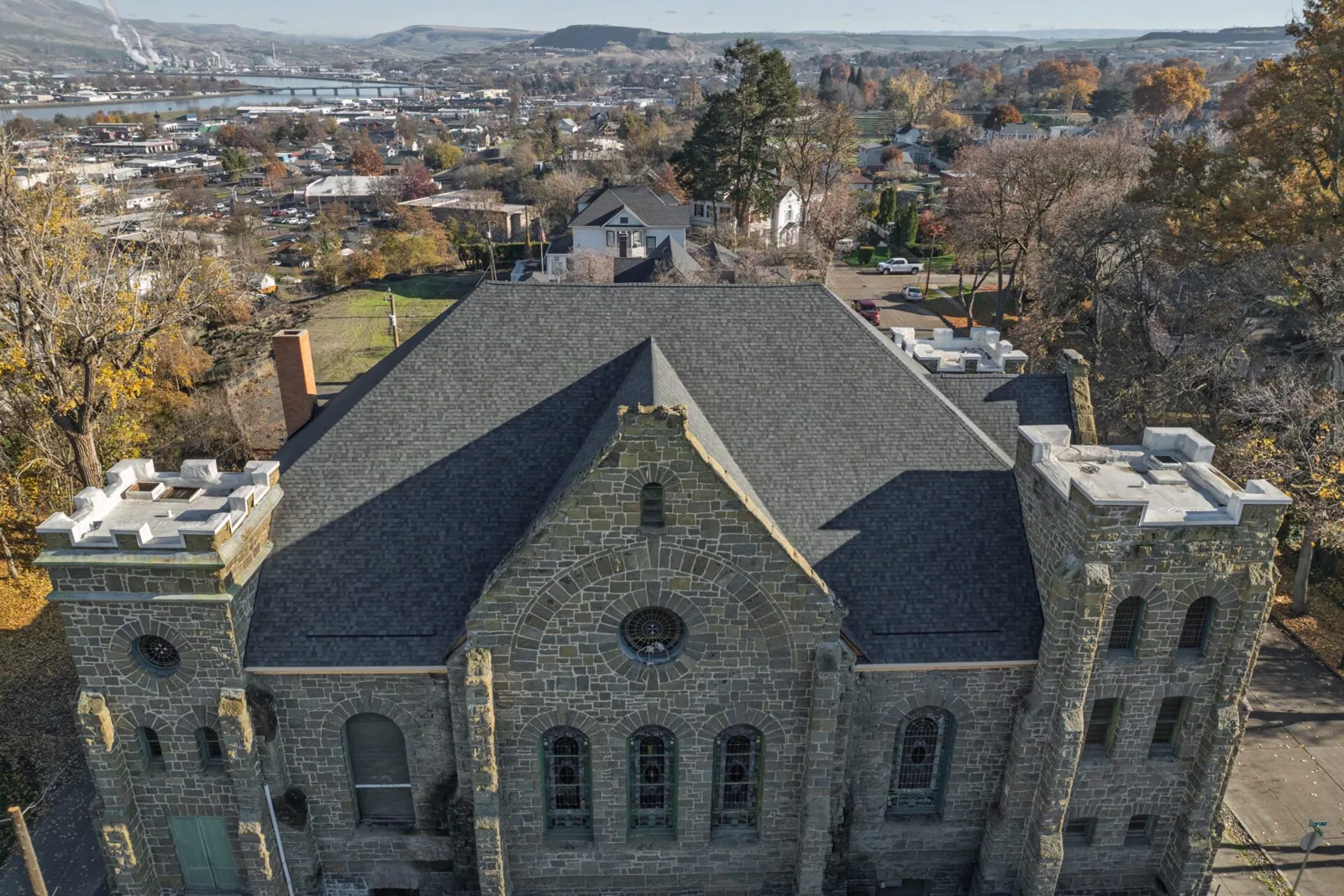
That is where repair gives way to maintenance, coating, recover, or replacement review. We compare the affected area with the remaining field, attachment, insulation, and deck. Preventive roof maintenance can address debris, open details, and developing wear. A coating is considered only when the assembly is suitable and dry enough for preparation. We also check how its drainage details and penetrations can be restored without covering a defect that still needs correction. Replacement enters the discussion when widespread wet material, poor attachment, or repeated failure makes another local repair a poor fit. A manager receives the repair limits, material assumptions, and items requiring further access in writing.
Cost and timing: let the concealed condition decide
Cost depends on removal, the system being repaired, the number and shape of details, roof access, and interior protection. A field seam is different from water entering around a curb with wet insulation below. Testing or temporary dry-in can also change the scope. We identify those drivers before work begins so a focused repair is not mistaken for full renewal.
Timing follows weather, preparation, access coordination, and the need to keep the roof watertight as work progresses. New membrane waits until the substrate is dry and the surface can accept the system. A larger project may separate tear-off, dry-in, and installation to protect occupied space. Replacement planning addresses those boundaries when repair no longer fits. Managers comparing Downtown and South End can keep records separate by property and use consistent condition categories to set priorities.
Commercial Roofing Questions
Why can a Downtown ceiling stain appear far from the roof leak?
Water can travel along a seam, insulation layer, deck joint, or curb before it reaches an interior finish. We trace the route above the mark and inspect nearby drainage and edge details before choosing a repair.
Which roof plan and access limits help prepare a downtown stamford inspection?
Share the affected rooms, dates of visible leaks, recent service notes, and roof access limits. That gives us a starting point for the walk and helps us check the likely water path without assuming the stain marks the entry.
Can one repair address leaks across an office and retail area?
One repair can serve both areas when the roof defect and its boundary are shared. We map each reported leak to the roof above it, then determine whether a common seam or separate details are involved.
When does a patch become a larger roof scope?
A patch has a sound boundary when surrounding membrane, attachment, and substrate can accept it. Widespread moisture, repeated seam failure, or a soft deck can shift the recommendation toward broader work.