A ceiling tile darkened beside a conference room may sit below a curb, drain, or seam that is several roof zones away. In Stamford, CT, we trace the water path before proposing a repair. We inspect the membrane, edge metal, drains, insulation, and rooftop equipment transitions, then compare the condition with the interior report. The scope names what is wet, what remains stable, and what requires testing. A commercial leak repair should leave a clear boundary around the defect, not cover the stain without checking the assembly above it.
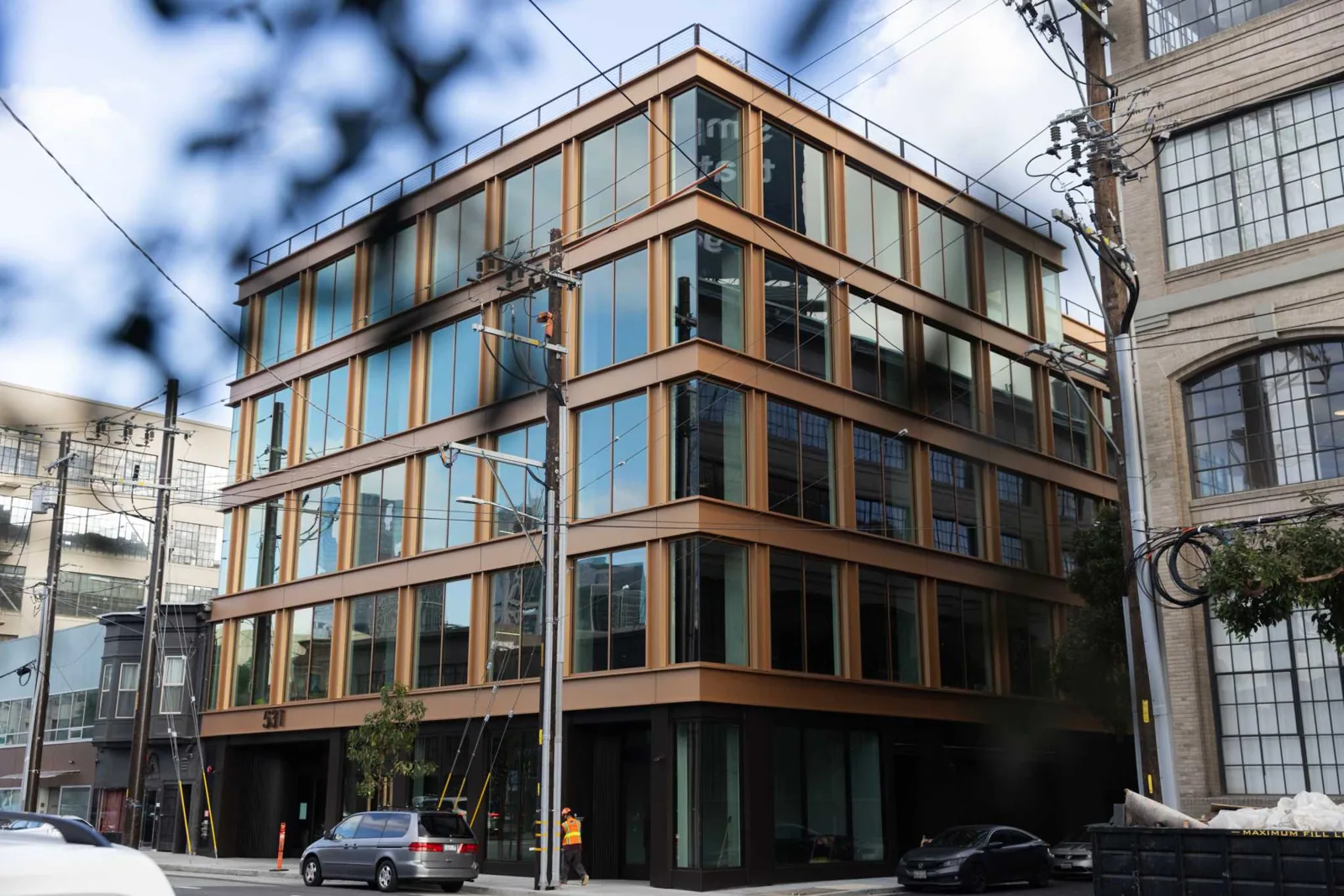
Office buildings may share roof areas with other uses, particularly in a mixed-use core. Stamford's plan puts office, housing, and retail roofs together in Downtown. That variety makes access and daily protection part of the sequence. We check the existing system and the areas below before choosing repair, recovery, or replacement. A technical-space roof has distinct equipment access limits. A hospital roof may share occupied-floor constraints; either way, we review the property's own access paths.
Occupied floors: set the daily work line
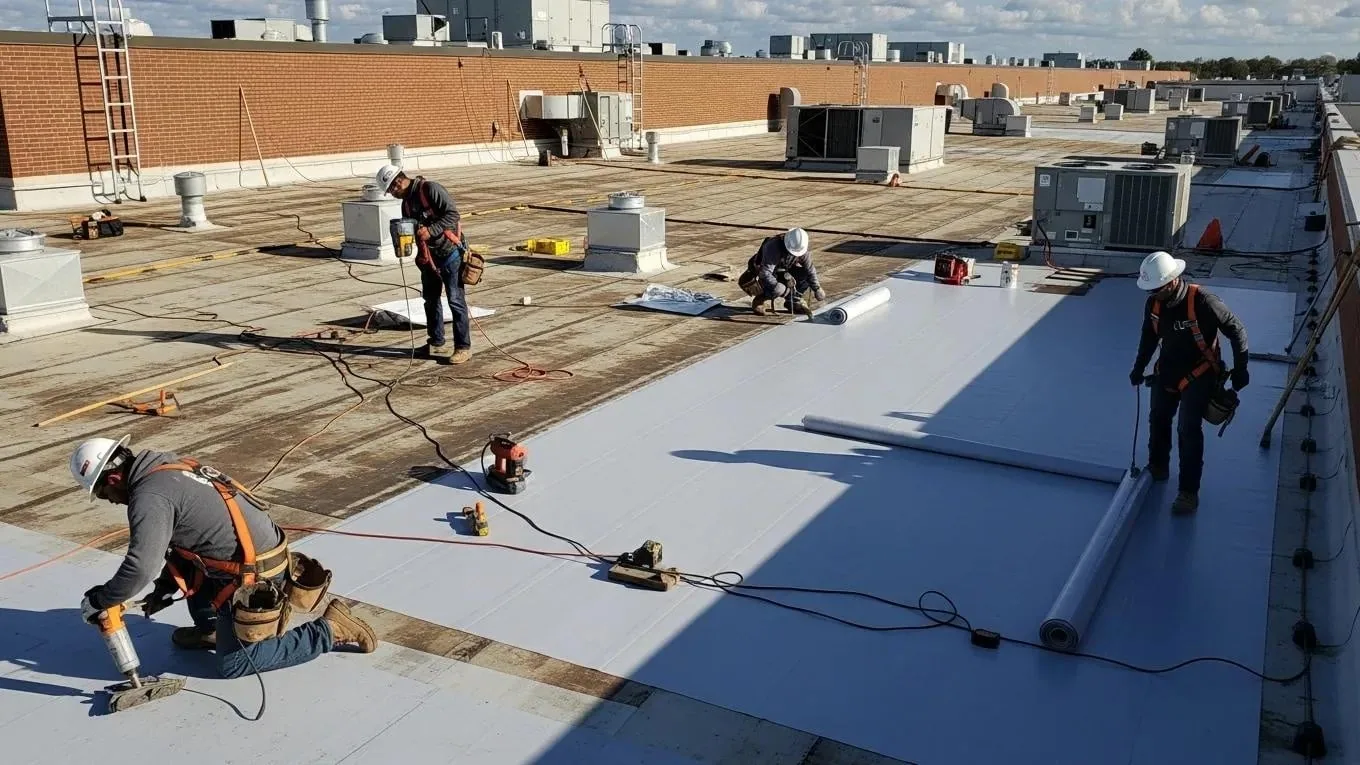
Roof work can affect meeting rooms, reception areas, stair routes, and tenant paths beneath the opening. We map each roof zone to the interior space below and agree on protection before removing membrane or insulation. The daily plan shows what is open, what remains in service, and how the roof will be closed at shift end. A phased occupied-building reroof can stage the project so each section has a stated closure and tie-in.
Stamford's higher-intensity growth is directed toward Downtown and transit-served centers, while most city land remains low-density residential. The change in setting can affect ground-level access, but not the roof detail itself. We confirm loading location, pedestrian protection, and interior notification for the property. The route plan names the hatch, staging area, protected floor, and doors that must remain clear.
Leak trace: check the detail above the stain
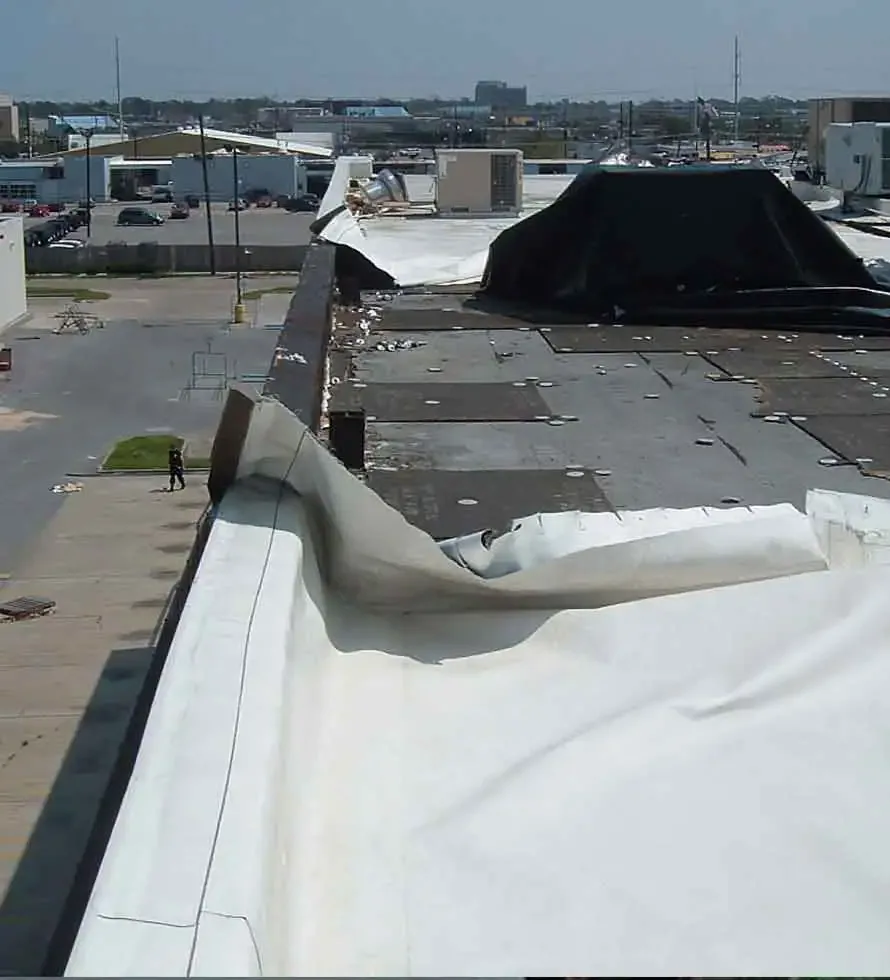
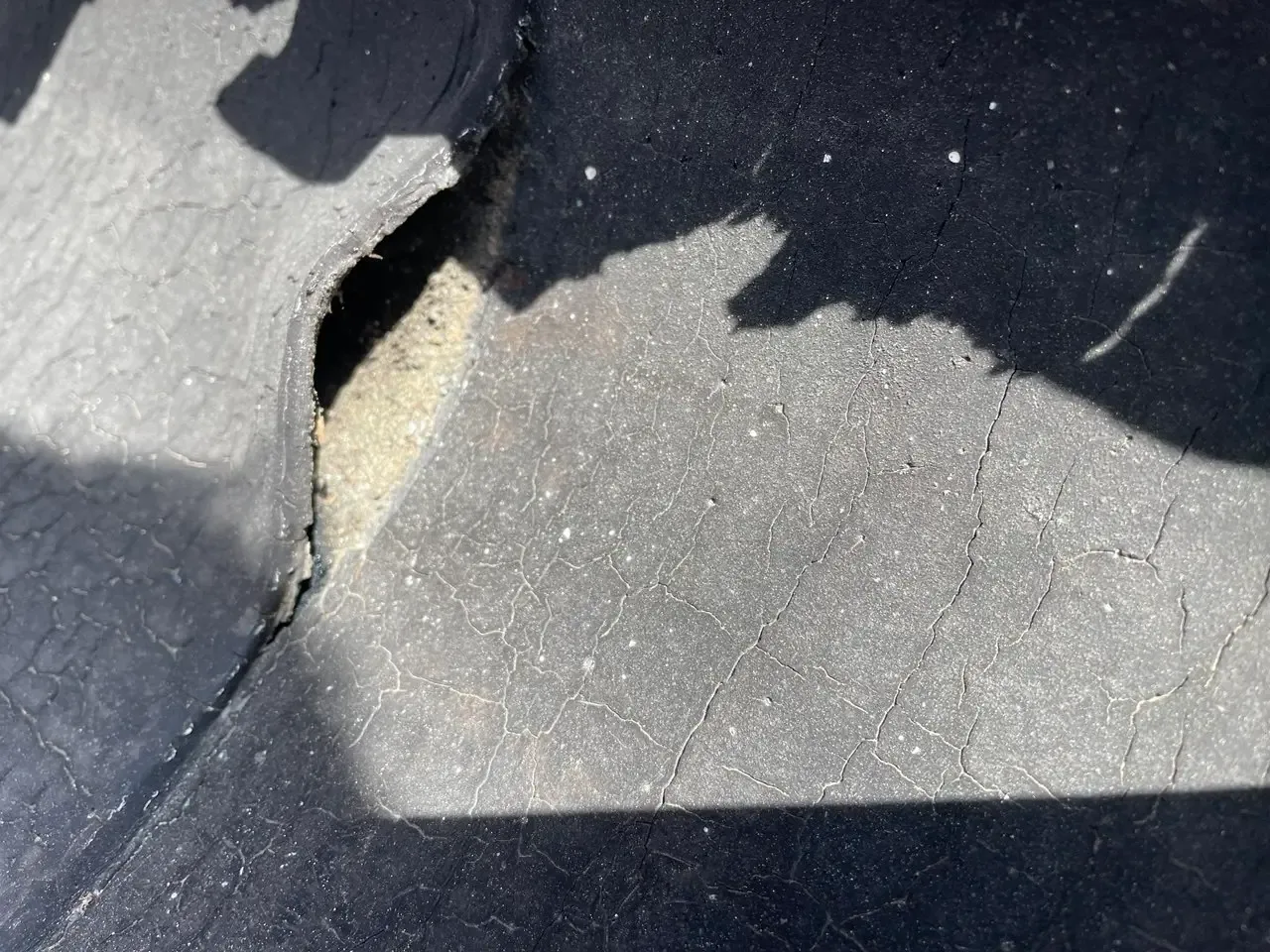
A failed seam can feed water under a membrane and carry it to a wall, light, or ceiling joint. We inspect lap direction, perimeter terminations, curb flashing, and metal returns along that route. If the visible defect is an open seam, seam repair should reach stable material beyond the split. If insulation is wet, the repair line may need to extend until the assembly is dry. We note whether an infrared review or a test opening would change that call, and identify the area each test covers.
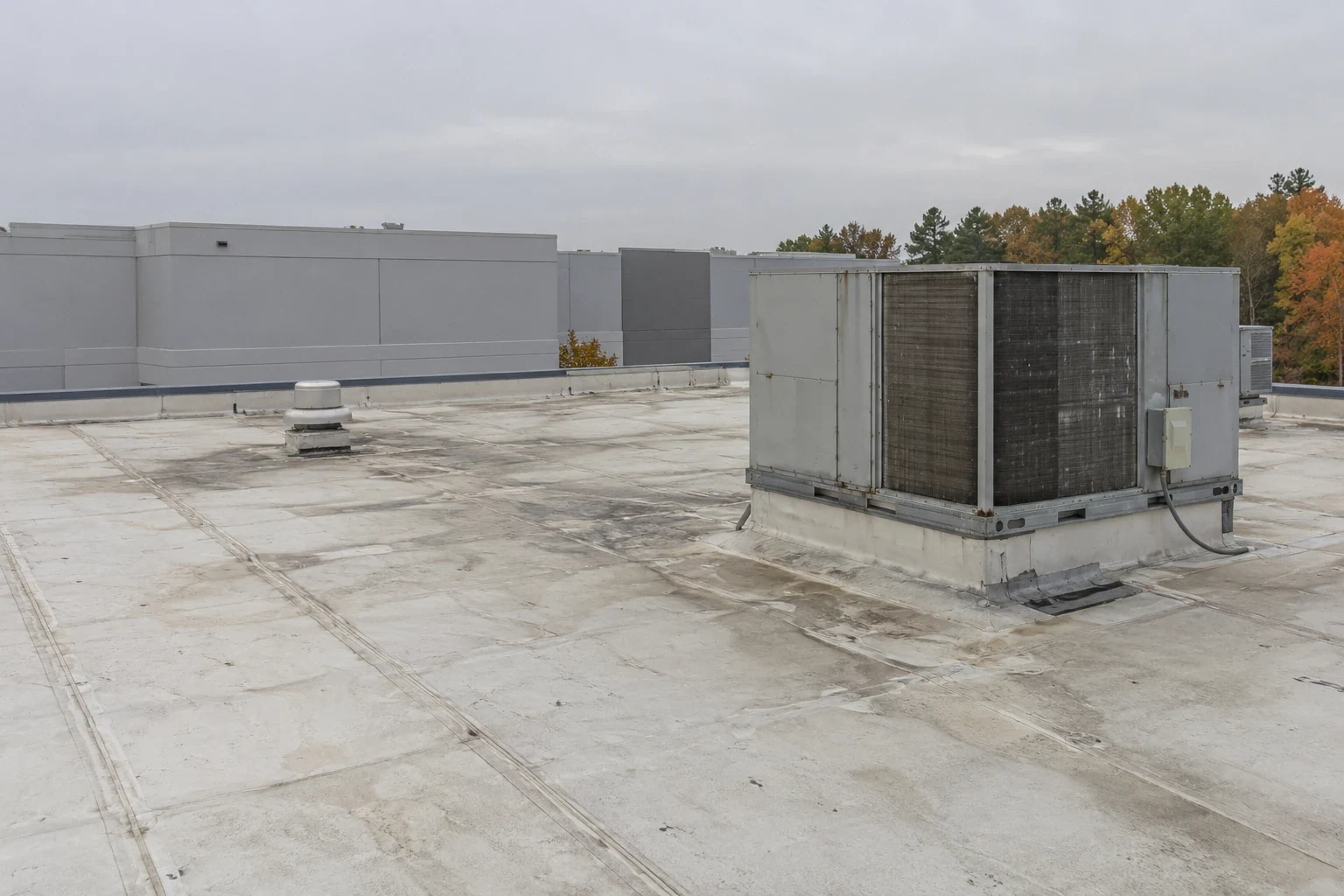
Equipment cycles can work a metal-to-membrane transition over time. We inspect the curb corners and service paths for actual separation, cracked sealant, loose fastening, and worn walk pads. A weather pattern does not diagnose a defect on a given roof. We look for actual separation, cracked sealant, loose fastening, and worn walk pads. A contained correction fits only when surrounding material remains sound.
Drains and edges: keep runoff on its route
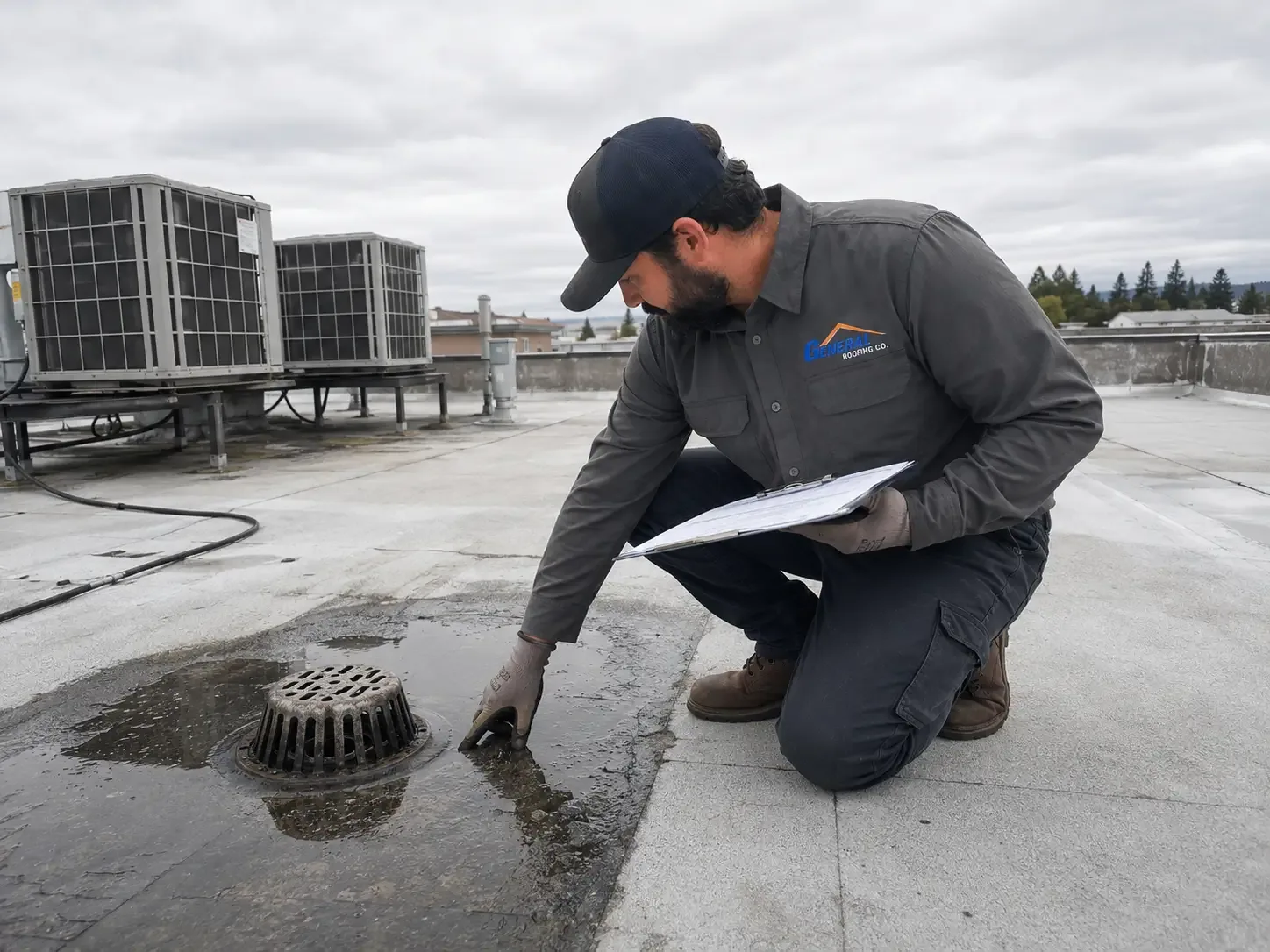
Drain bowls, overflow scuppers, parapet corners, and edge metal all interrupt the water route. We check that the strainer is clear, the flange is sound, and surrounding seams do not hold debris against the outlet. A drain and scupper repair addresses the outlet detail; if slope or deck settlement creates a low field, the scope identifies that separate condition. We also inspect the perimeter where wind can lift a loose termination. The repair should restore a continuous path from field to outlet and from roof edge to wall.
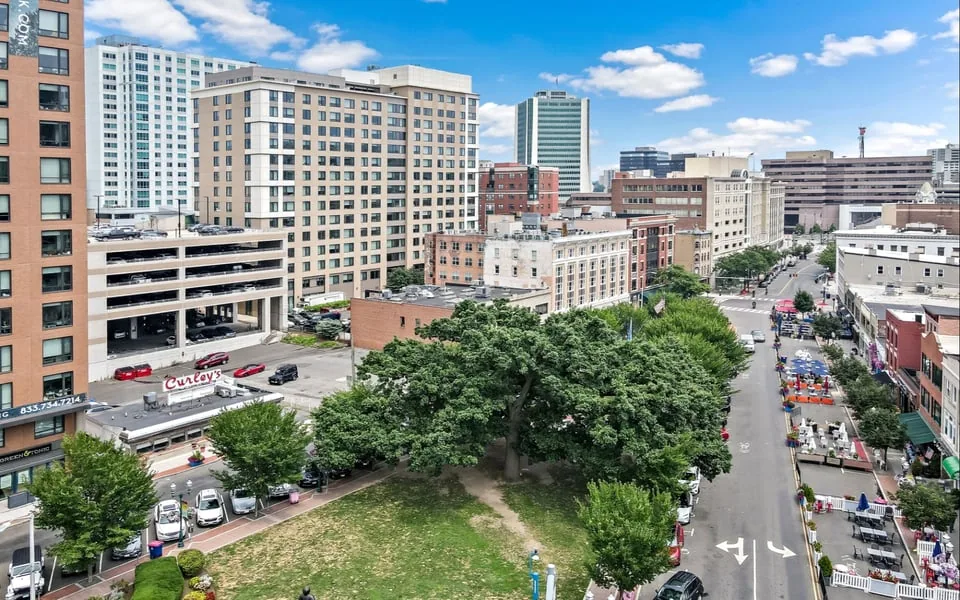
Harbor Point is a phased mixed-use district with offices, homes, shops, hotel, and public space. That broad pattern makes pedestrian and delivery coordination important around active roof work, but it does not identify a specific roof assembly. We plan the lift and drop zone with the property contact, protect entrances below, and leave no loose material at the edge. A Downtown Stamford roof walk still begins at the property's own drains, parapet, and access point.
System fit: compare the existing layers
Replacement is not selected by building label. We confirm the substrate, insulation, attachment, roof slope, and existing membrane, then compare compatible materials and tie-in details. A PVC system may be considered where project conditions support it, but the edges, curbs, and drains have to work with the selected assembly. A recover is appropriate only when moisture, deck, attachment, and code permit another layer. Otherwise removal may be needed to reach dry, stable material before rebuilding the field.
For an office property with repeated leaks, the work history matters. We review repair locations and look for a pattern across one zone or multiple transitions. If each call traces to a separate old patch, the assembly may need a broader condition review. A replacement scope should identify the included areas, protection, staging, and any conditions that would change after tear-off. That gives the asset manager a decision based on what is present, not an assumed roof life.
Access and coordination: separate roofing from other trades
HVAC service, electrical work, signage, and roof repairs can compete for the same hatch and walkway. We identify equipment that must stay reachable and mark where tools, material, and temporary protection may be placed. Roofing closes the membrane and flashing transition; another trade handles equipment connections or testing. If a unit has to be moved, that dependency is settled before its curb is opened. The closeout record notes the route left for maintenance so a future technician does not cut across a new seam without protection.
Along Route 1, CTDOT documents commercial driveway and central-district access concerns and notes that the arterial can serve as a diversion when I-95 is congested or disrupted. That corridor context makes staging and delivery timing worth checking, but each property's loading point must be confirmed directly. We keep the lift away from required entrances, preserve sidewalk clearance, and agree on debris removal. We settle these details before materials arrive.
Written scope: record what changes the recommendation
A focused repair can work where the seam, substrate, and insulation around it remain stable. Broad wet insulation, soft deck, loose attachment, or repeated edge failures can require a wider correction. We mark the affected zones and state the condition that would move the work from repair to recovery or replacement. Cost drivers include tear-off, deck correction, new insulation, perimeter metal, drain work, and protection below. Each item should be tied to an observed condition or a stated allowance, not blended into a generic roof line.
Before the walk, share the ceiling location, recent service notes, roof plan, tenant access rules, and any equipment limits. We return photographs and a written repair scope or a larger-system recommendation. That boundary helps the property team compare future leak reports with known conditions and keeps a small correction from being mistaken for a full-roof resolution.
Commercial Roofing Questions
Can an office roof be repaired without closing the floors below?
Work can be phased around occupied space when the opening, interior protection, access, and daily closeout are agreed. We map the roof area to the floor beneath and state what stays available. If a concealed condition widens the repair, the property contact reviews the change before material is removed beyond the planned line.
Why can a ceiling stain be far from the roof leak?
Water can move along a deck, insulation joint, or membrane lap before dropping indoors. We inspect the transitions above the stain and compare that route with the reported timing. If the entry point is not clear, a defined test opening or moisture survey can identify which layers need attention.
How do you prevent tenants from entering the work zone?
The plan marks the ground-level protection area, notices, lift position, and path around the building. We coordinate those boundaries with the property contact and keep roofing material away from agreed entrances. Each daily closeout records the area returned to use and any restriction that remains.
What roof information helps compare repair and replacement?
Roof plans, prior repair locations, interior leak notes, and photographs help show whether problems cluster in one assembly or cross multiple zones. The scope then separates a viable local repair from work that reaches more of the roof.
What happens when another trade needs roof access?
We reserve clear paths to equipment and coordinate the sequence with the responsible trade. Roofing work covers membrane and flashing; equipment work stays with its service contractor. The closeout notes the route and any detail that needs protection so later service does not damage the repaired area.