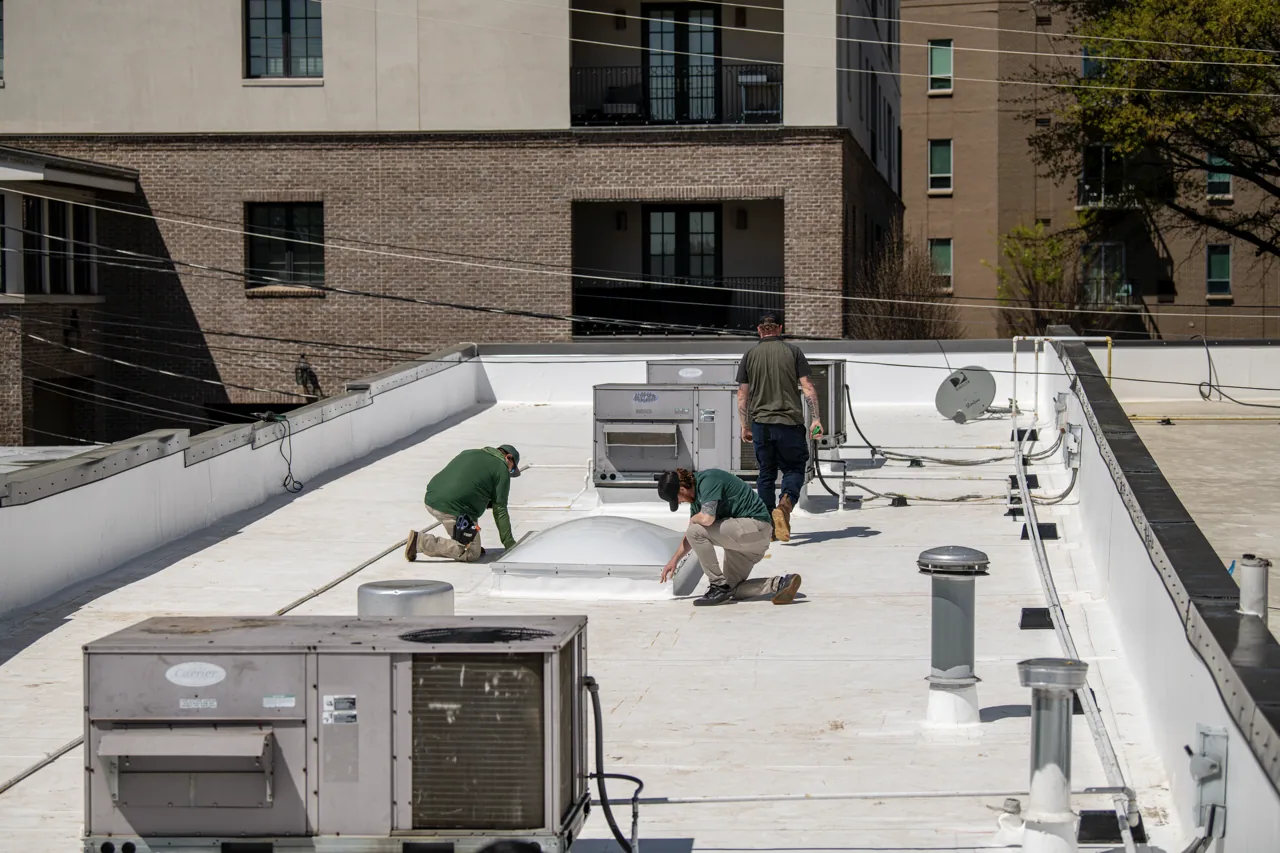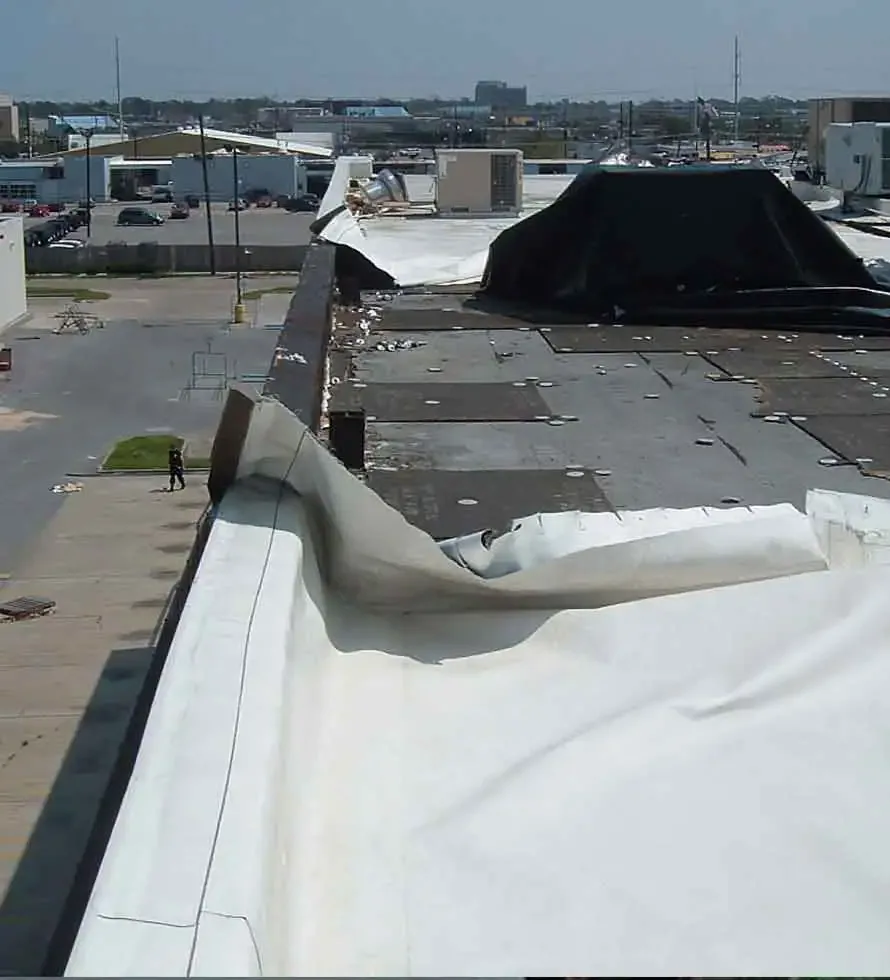
The stain identifies an indoor symptom; the roof opening may be elsewhere. In Stamford, a water path may run from a seam to a curb, track below the membrane, and show up several feet away. We begin above the affected room and check the roof detail that could carry water to it. Note the affected room, recent roof work, and whether water reaches equipment or stored goods. During a roof inspection, we record the visible condition before setting the leak-repair boundary. The first visit should separate an active entry from old staining, condensation, and moisture already held in the assembly. We look at the room, the deck above it, and the membrane detail that connects them. A repair scope is stronger when it says what evidence supports the proposed work and which adjacent areas still need observation.
Trace first: connect the mark to a roof detail
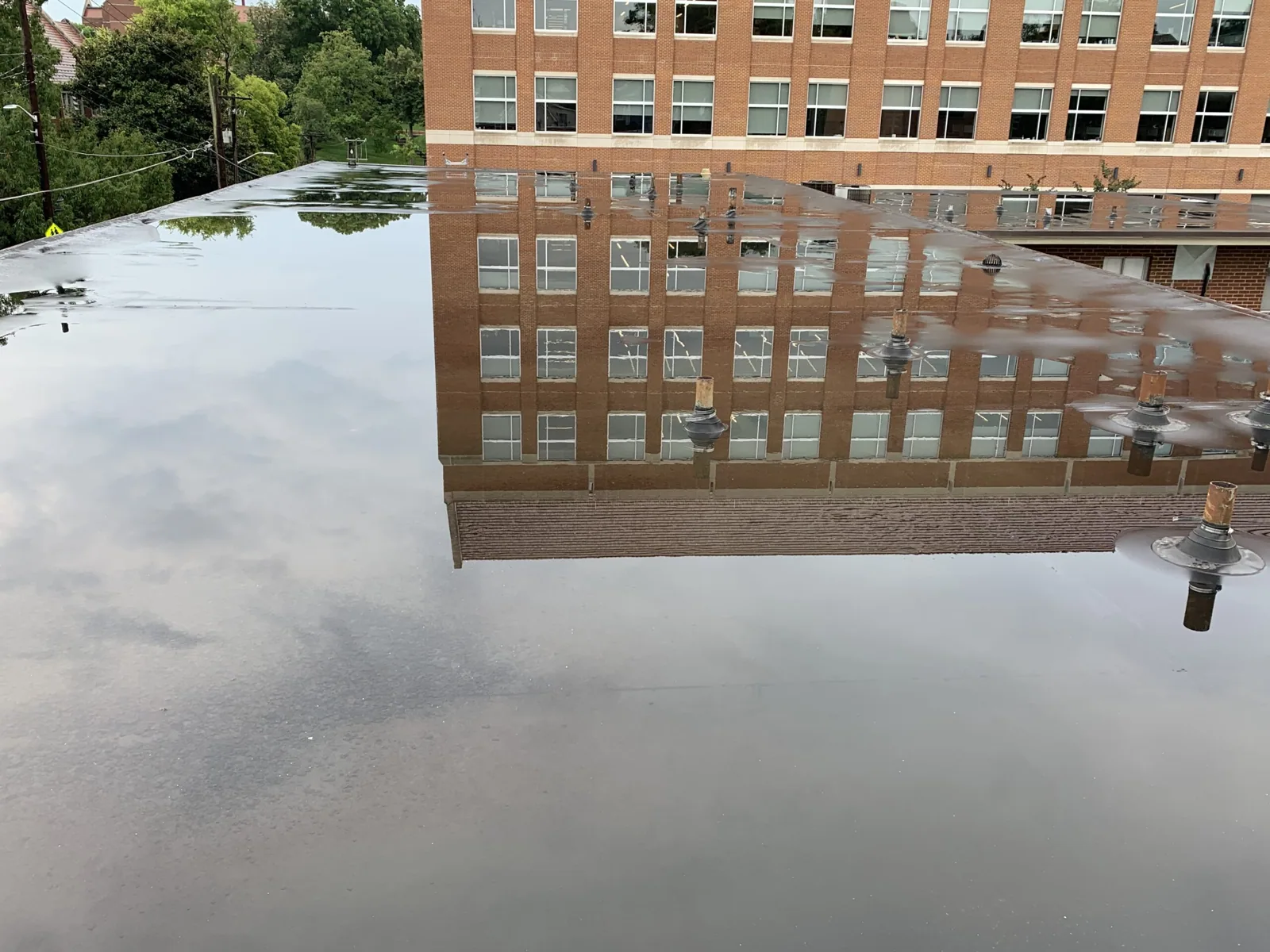
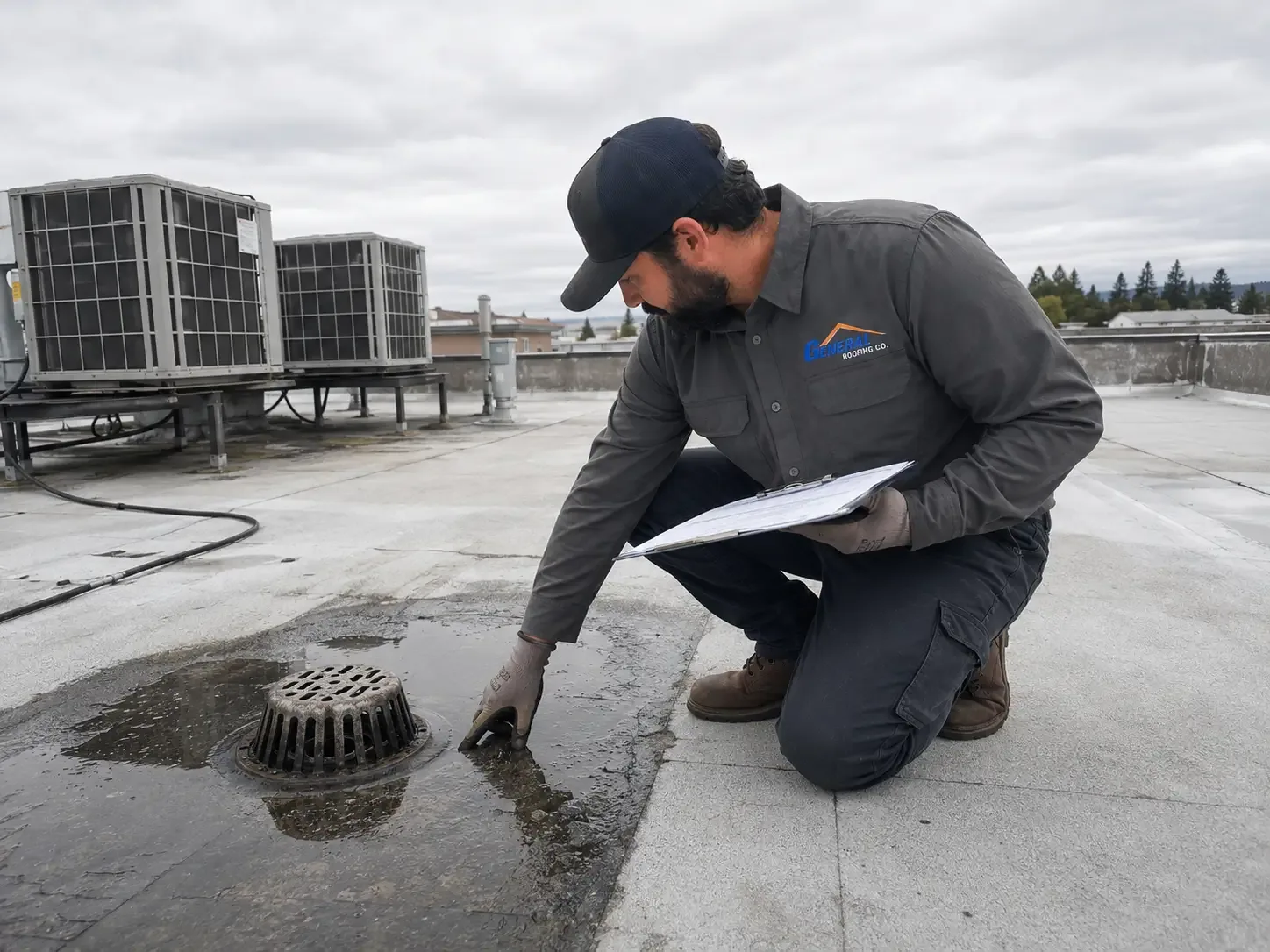
We compare the time of the leak with rain direction, wind, equipment operation, and the area where water appeared. Above it, we inspect laps, fasteners, curb corners, wall terminations, drain bowls, and nearby penetrations. We compare the reported room with roof transitions above it and along the likely water path. A roof leak still needs a traced entry point before repair begins. The ponding-water review helps separate slow drainage from a failed seam or flashing detail. A drain that looks clear from above can still leak where its flange meets the membrane. Runoff can also pass the top of a curb and enter at its lower corner. We check nearby transitions against the reported path, then mark what is confirmed and what needs observation. The repair can stay narrow when the surrounding details remain sound.
Seam, curb, or drain: narrow the entry point
A split lap can admit water where membrane sheets meet. A curb can fail at a corner or termination. A drain leak can sit at the flange even when the bowl appears clear. We check the connected detail and the condition of the surface around it, including whether a previous repair remains bonded. If water reaches a wall or equipment base, we follow the transition instead of stopping at the first wet spot. Our flashing repair and drain and scupper work address different failure points. A repair matches the one we can verify. Membrane type controls preparation and repair material. We inspect lap direction, surface age, prior coatings, and whether moisture has weakened the substrate. Loose material comes away before a new detail is formed. If the roof cannot accept the patch, we state what must be corrected first.
Active leak: protect the room and roof
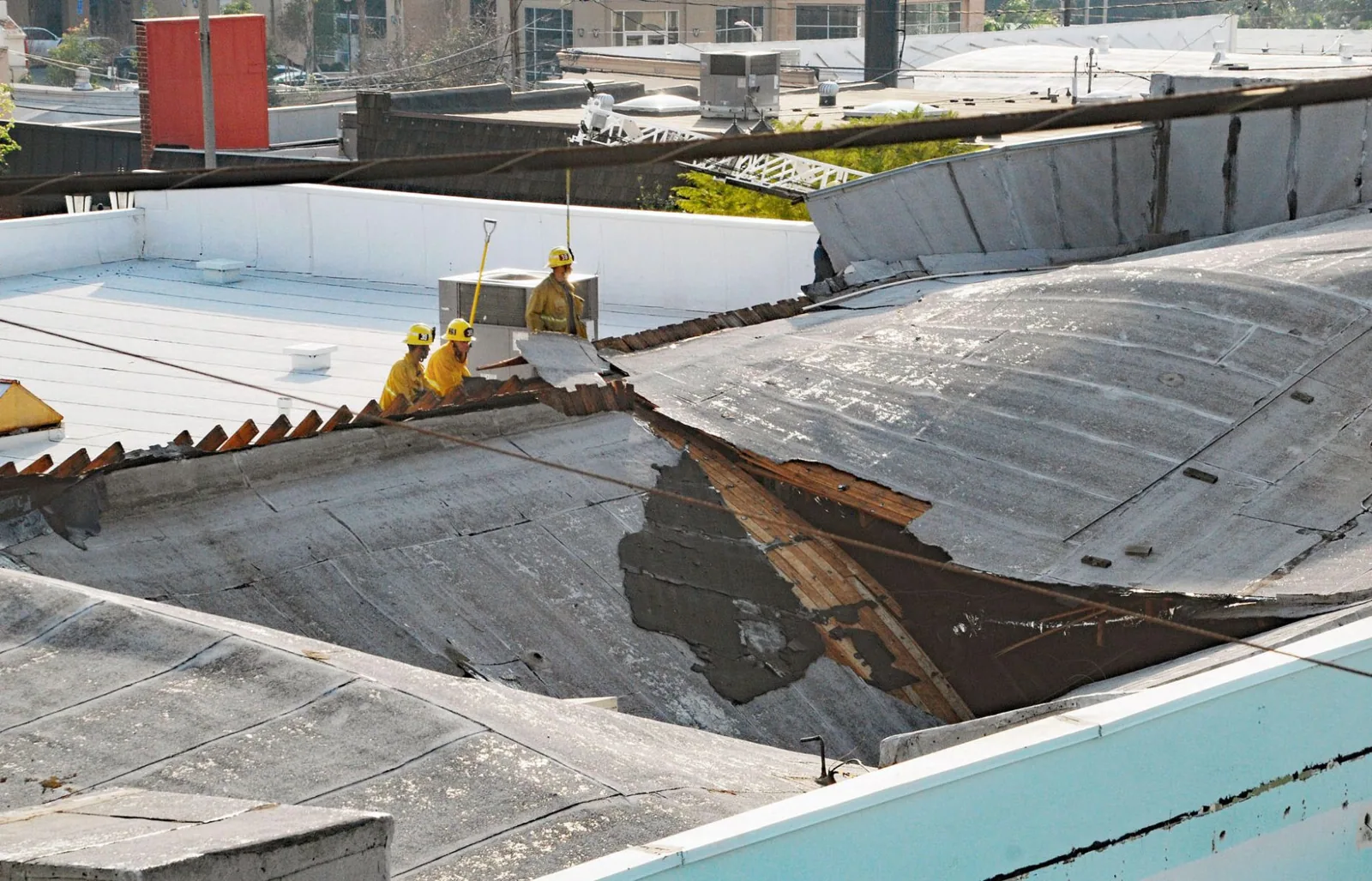
For active entry, protect equipment and occupied areas while the roof is assessed. We locate the opening, place temporary protection where conditions allow, and plan the permanent repair after the substrate and adjacent details are checked. Wet insulation can spread beyond the point of entry; drying or replacing it may be necessary before a patch can hold. When water is entering now, call our emergency roof response team to control the active entry and plan permanent work. We put the findings in a written repair scope that names the confirmed work, remaining conditions, and any follow-up review. Before leaving, we note what the temporary protection covers, whether water is still moving beneath it, and what access is needed for permanent materials. The building team can help by moving sensitive equipment, controlling the affected space, and keeping a clear route for the crew. We explain what the temporary measure can do and when a follow-up inspection is needed.
Stamford buildings: drainage and access are part of the visit
Stamford's plan maps Downtown and South End as higher-intensity mixed-use areas, so we confirm the affected room and protect the use below before opening a repair. Norwalk Center and SoNo retain pedestrian-scale business blocks; at a South Norwalk roof, we trace the reported entry path and inspect the roof detail above it. We record which areas are accessible or obstructed, identify equipment that needs protection, and note what remains for follow-up. Where production or loading continues below, we agree on a safe work window with the responsible contact.
Repair boundary: know when a leak is a system issue
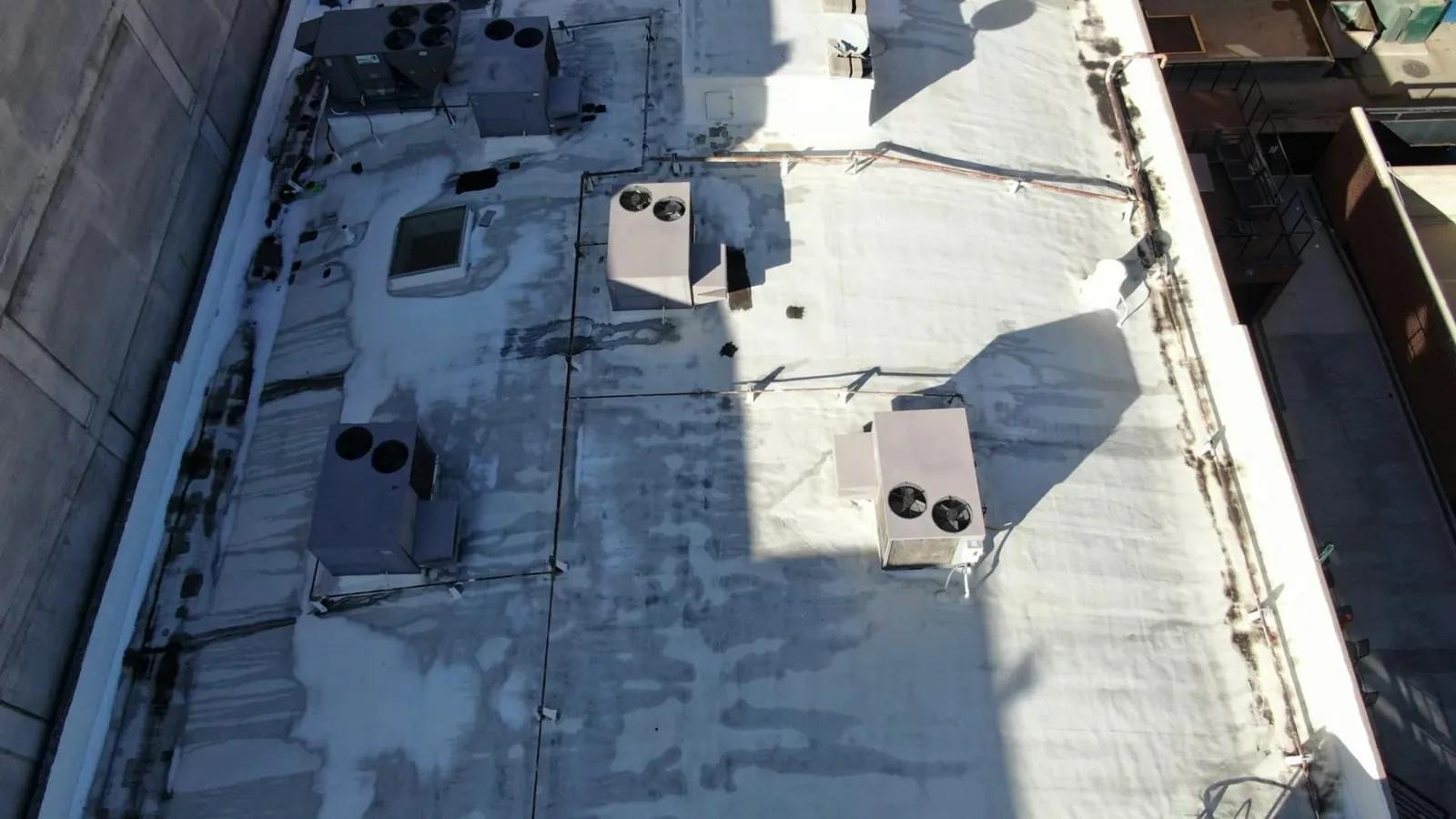
A single entry point can support a focused repair if the field around it is dry and stable. Repeated leaks, several wet areas, or a seam that continues to open can signal a broader condition. We document moisture, membrane movement, drainage, and the details that need follow-up. At follow-up, we compare the repaired detail with the reported path and note whether the original issue has changed. A condition report makes the finding useful for the property file. If leak history points beyond one detail, we compare repair with recover options or replacement. A repair record can note a condition that is stable today but should be checked after the next weather event. It should also identify any area we could not access, so the property team understands the limit of the observation. When the same water path appears again, we revisit the assembly rather than treating the earlier work as proof that the roof field is sound.
Commercial Roofing Questions
What roof details can carry water past the point where it entered?
Water can move along insulation, deck flutes, or a curb before it reaches the ceiling. We use the interior location to guide the inspection, then check the seams and transitions above it. The repair follows the entry detail we can verify, not simply the point where the stain is easiest to reach. A drawing or marked room location helps us compare the path with drains, edges, and equipment.
What can building staff do while an active roof leak is being assessed?
Protect movable contents and keep people clear of wet electrical areas. Note where and when water appears, and limit roof access to qualified personnel under safe conditions. An assessment checks the entry point and adjacent paths; temporary measures may be used when weather, access, and roof conditions allow. Permanent repair follows after the substrate, membrane, and nearby details are confirmed. Wet materials may need drying or removal before that work proceeds.
Does a roof leak mean the insulation must be replaced?
A roof leak alone does not establish that insulation needs removal. We check how far moisture extends and whether the affected material can dry or needs removal. A small wet area at a curb differs from water that has moved across several bays. The findings set the removal boundary and the next repair step. We distinguish visible surface dampness from material that has lost its ability to support the membrane.
Which service notes and ceiling observations help locate a leak that returns?
Note when it appears, how long it lasts, recent weather, the interior location, and any nearby equipment use. Prior repair notes and roof access limits help us inspect the right details. Photos of the ceiling mark can help orient the walk, but the roof condition decides the repair scope. Include whether the water starts during wind-driven rain or after a longer rainfall, since that changes which transitions we inspect first.
How do you tell a patch from a larger roof recommendation?
We look at the material around the entry point, moisture extent, attachment, and whether adjacent details are failing. A stable, isolated defect may stay within a repair boundary. Repeated paths or widespread wet layers can justify comparing a broader scope before another patch is added. We show the condition that changes the recommendation so the owner can weigh repair and system work against the same findings.