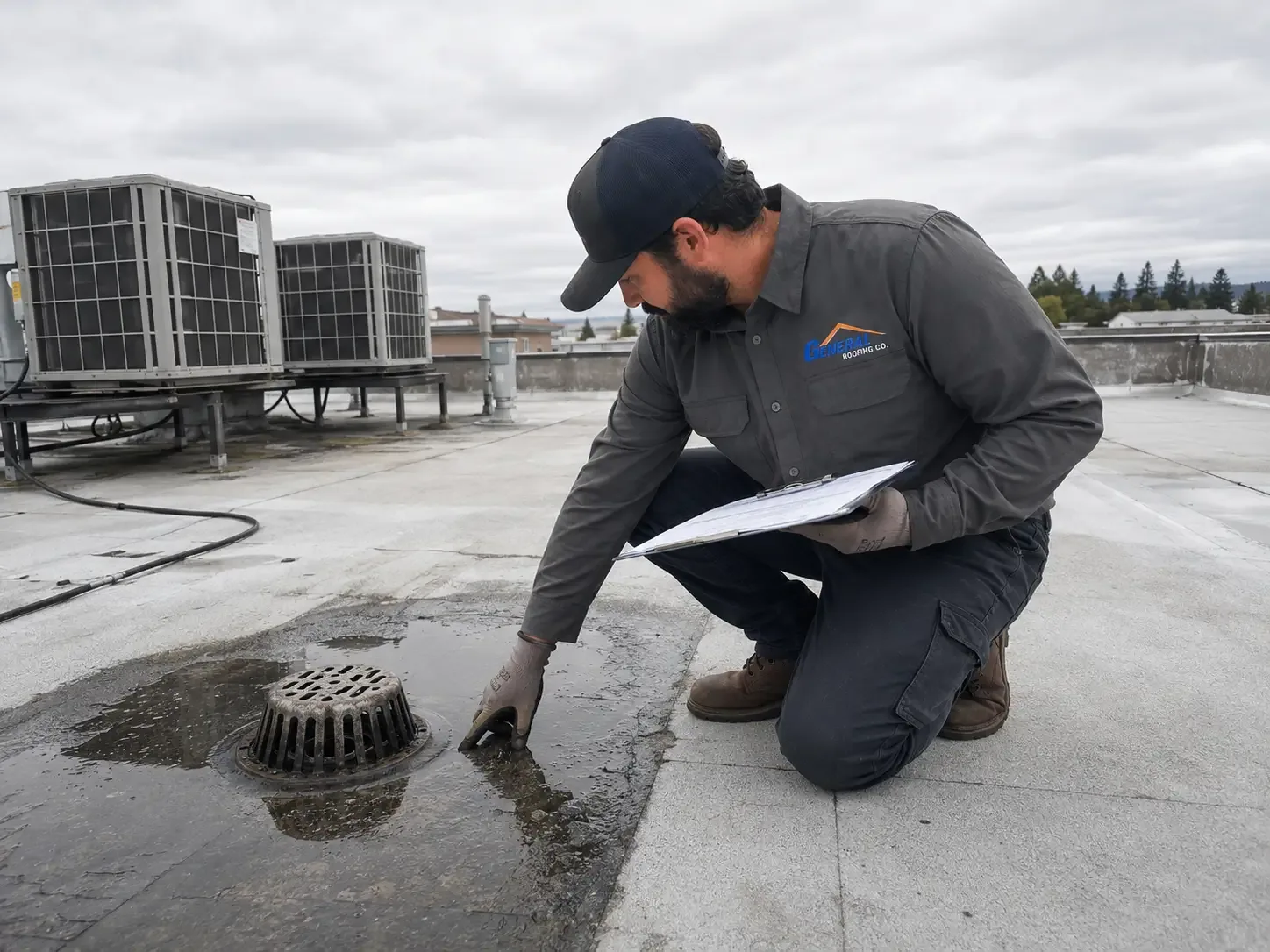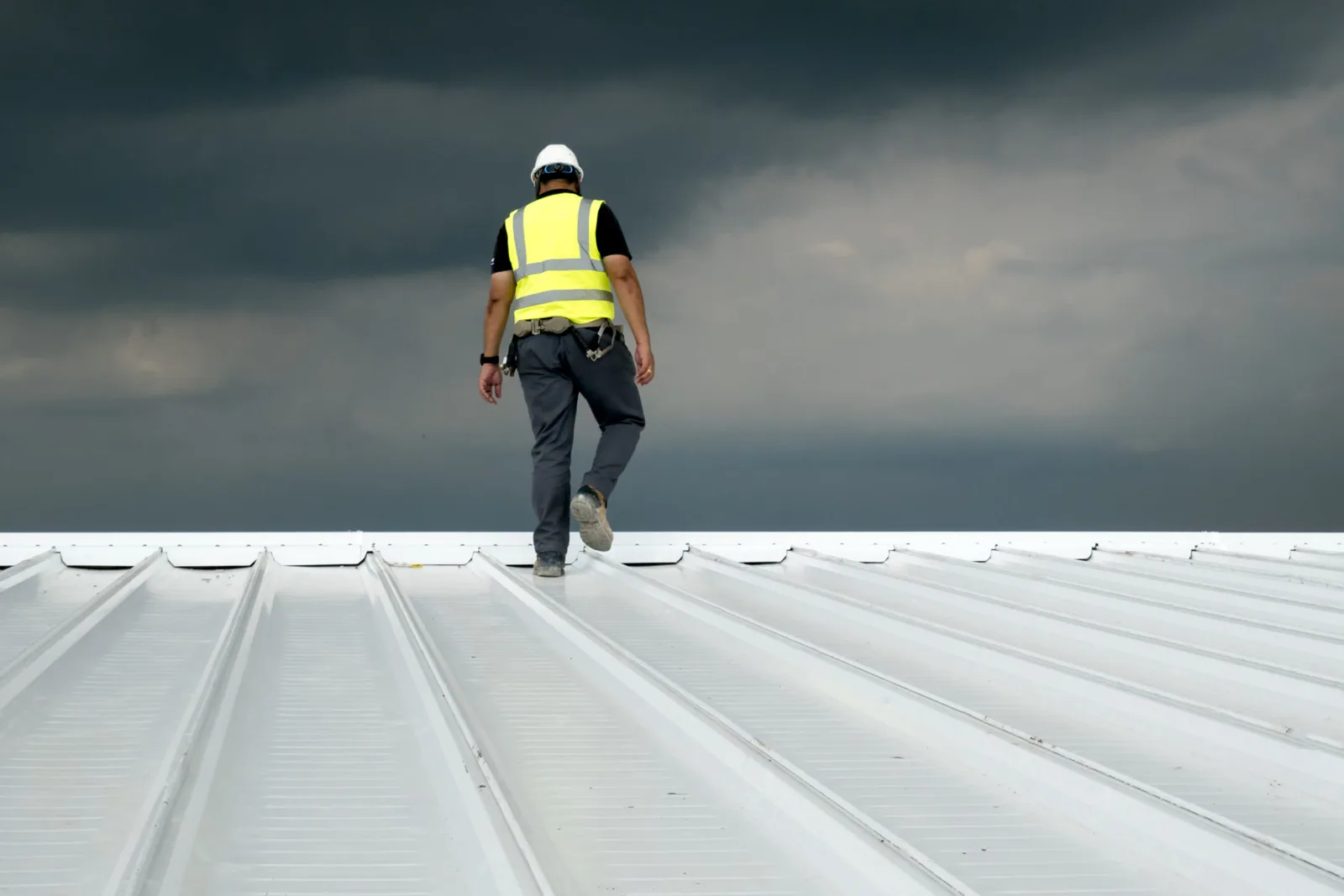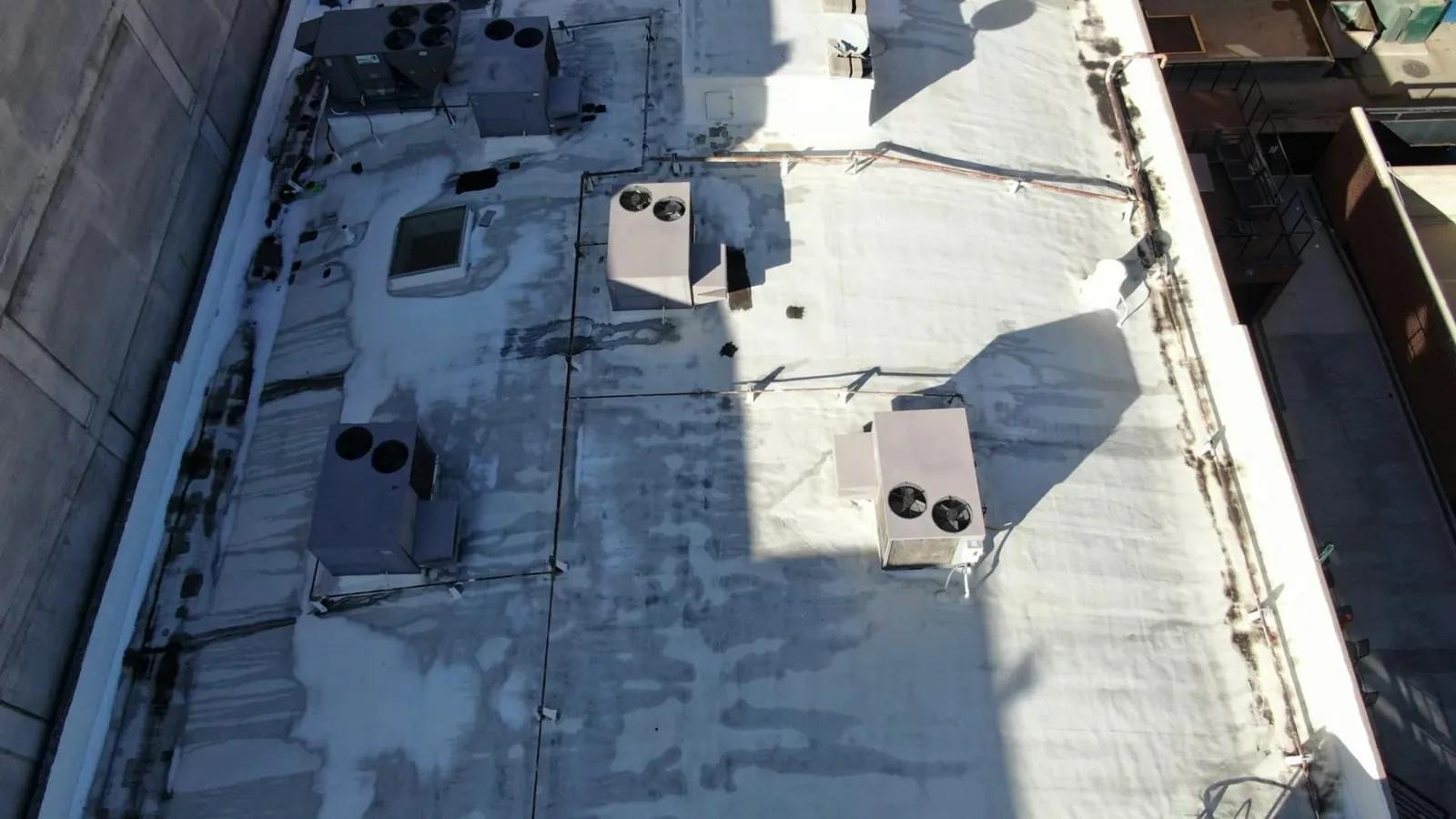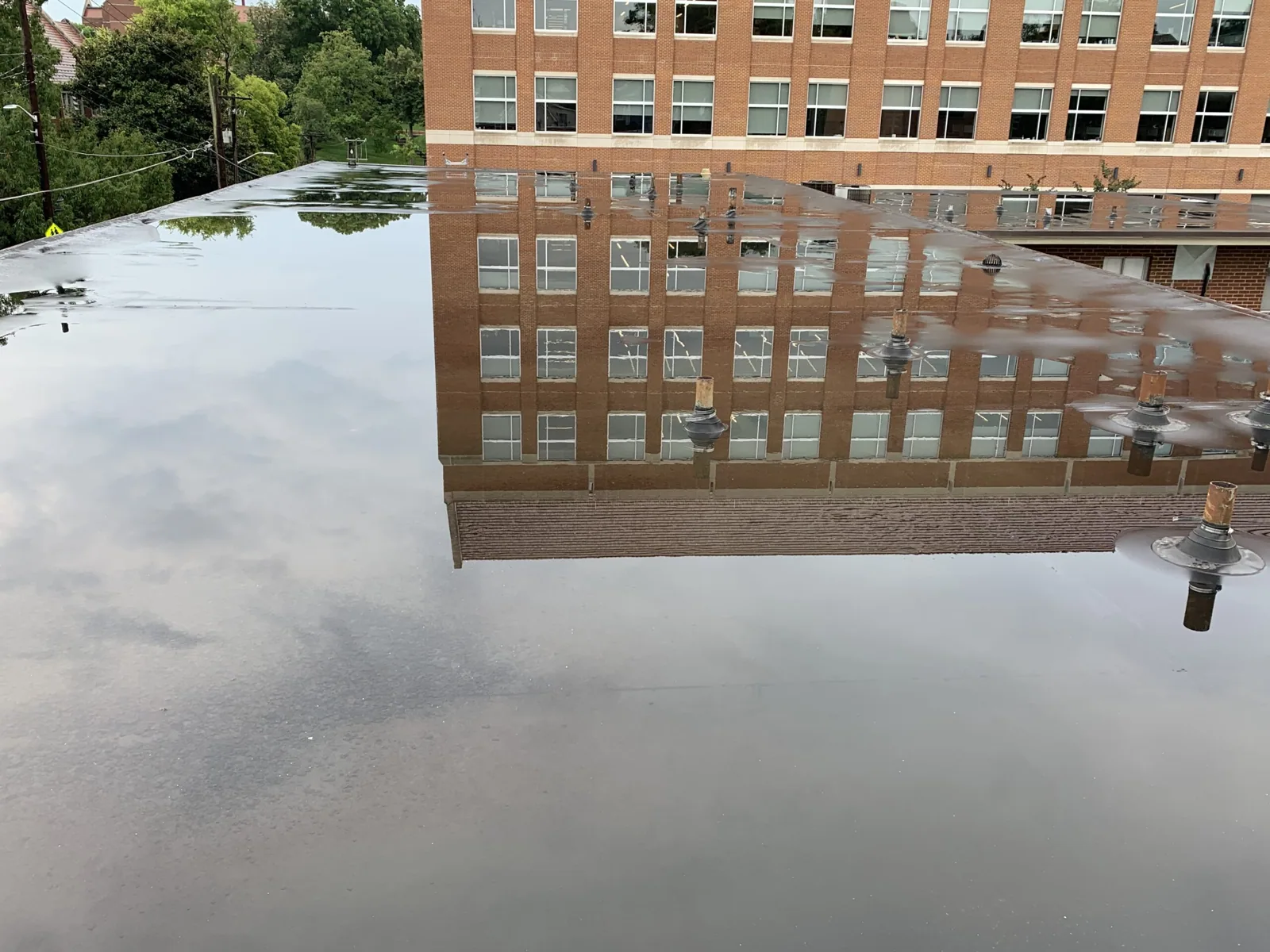
A shallow pool remains after the surrounding roof has dried. We mark its edge, inspect the nearest drain and overflow, then follow the slope back through the membrane. On a Stamford, CT commercial roof, standing water can point to a blocked outlet, a settled section, a raised lap, or insulation that has changed the plane. The repair depends on which detail holds water and whether the layers below remain sound. A drain and scupper inspection begins with the bowl, flange, and adjoining field, not a quick sweep of the visible pool.
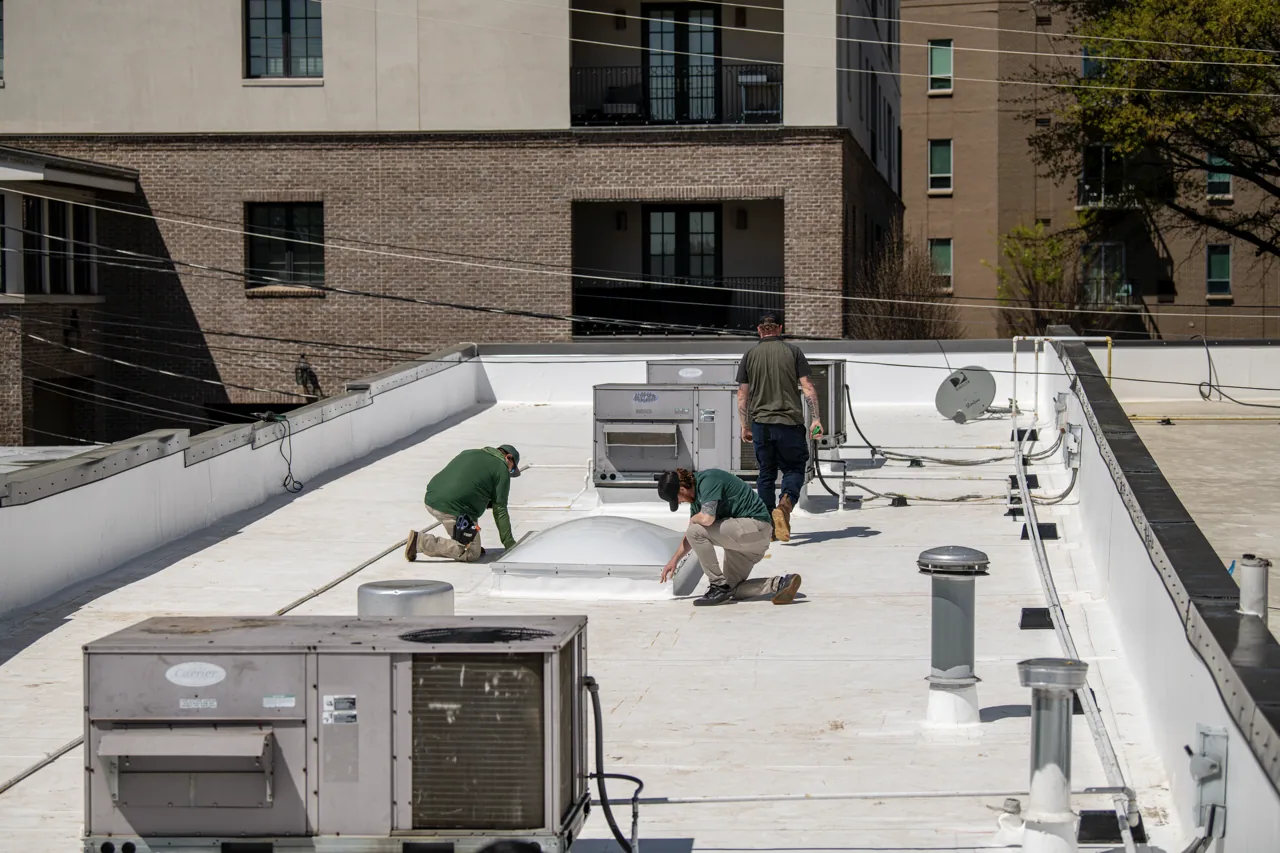
The location of ponding matters. Water near a curb may collect because the curb interrupts the path; a low area near a parapet may lack a working overflow. We record the wet boundary, roof slope, and outlet condition so the next step follows the assembly. A stain inside can help locate the zone, but the membrane and deck determine where water is retained. A commercial roof walk can identify what is visible and what needs a closer moisture check.
Drain path: separate obstruction from low slope
We clear loose debris only after checking where it came from and whether it has concealed a damaged strainer or flange. The bowl should sit firmly, its opening should remain clear, and the membrane tie-in should not curl or split. At a scupper, we look for a sound edge, an open throat, and a path that does not terminate behind trim. A flashing detail check can cover a failed wall transition beside the outlet. If the outlet is intact but water still stands, the roof's slope and base may need investigation.
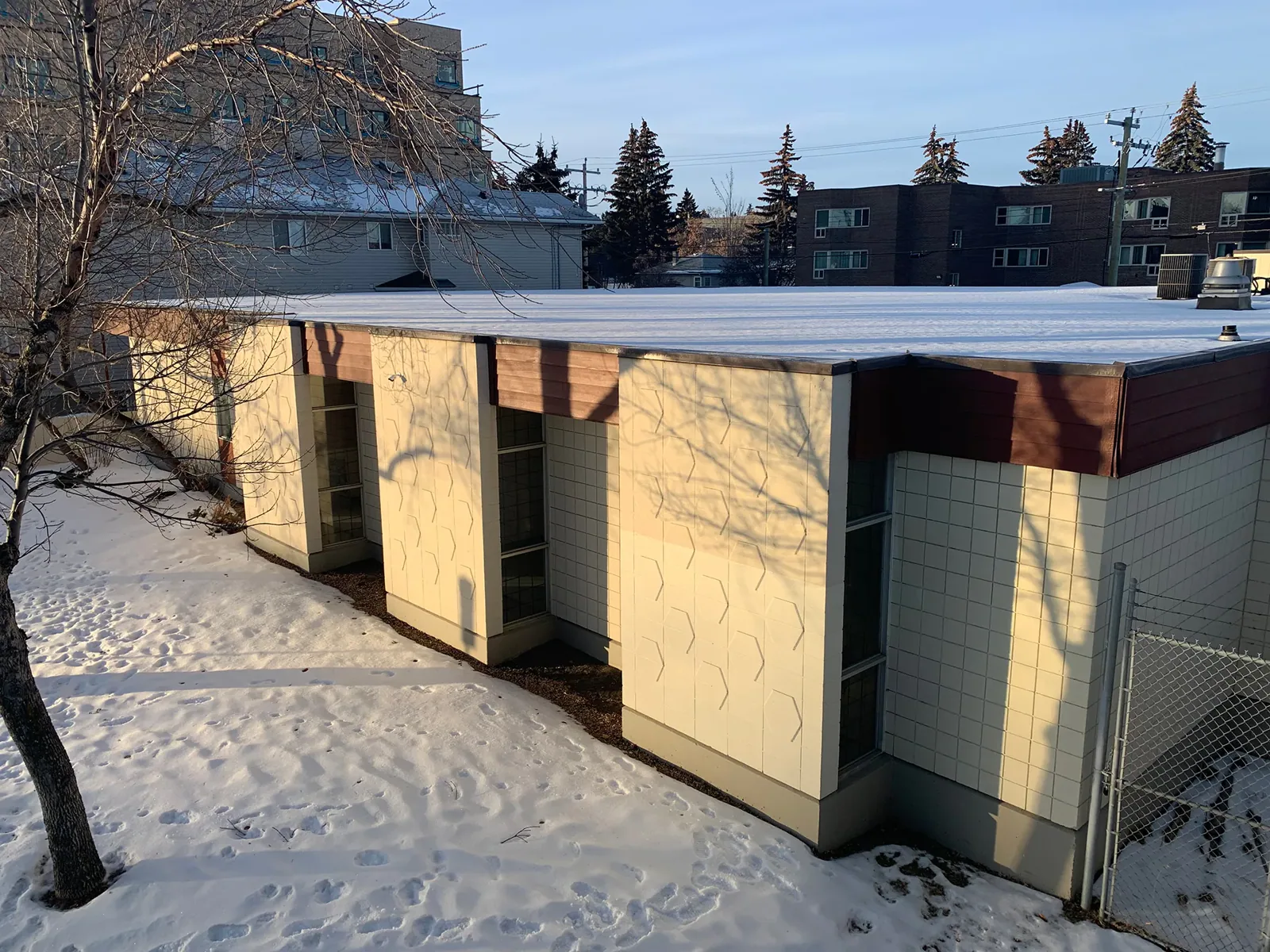
Older repair material can create a dam across a drainage path. A lap set too high, a thick patch, or a seam crossing the low point may slow runoff even when the drain itself works. We inspect the transitions surrounding the pool rather than adding more material at the water line. A snow and ice review can help when seasonal melt has left ice at an outlet or low point. Its findings remain specific to the roof detail, not a general assumption about winter performance.
Wet layers: test before closing the surface
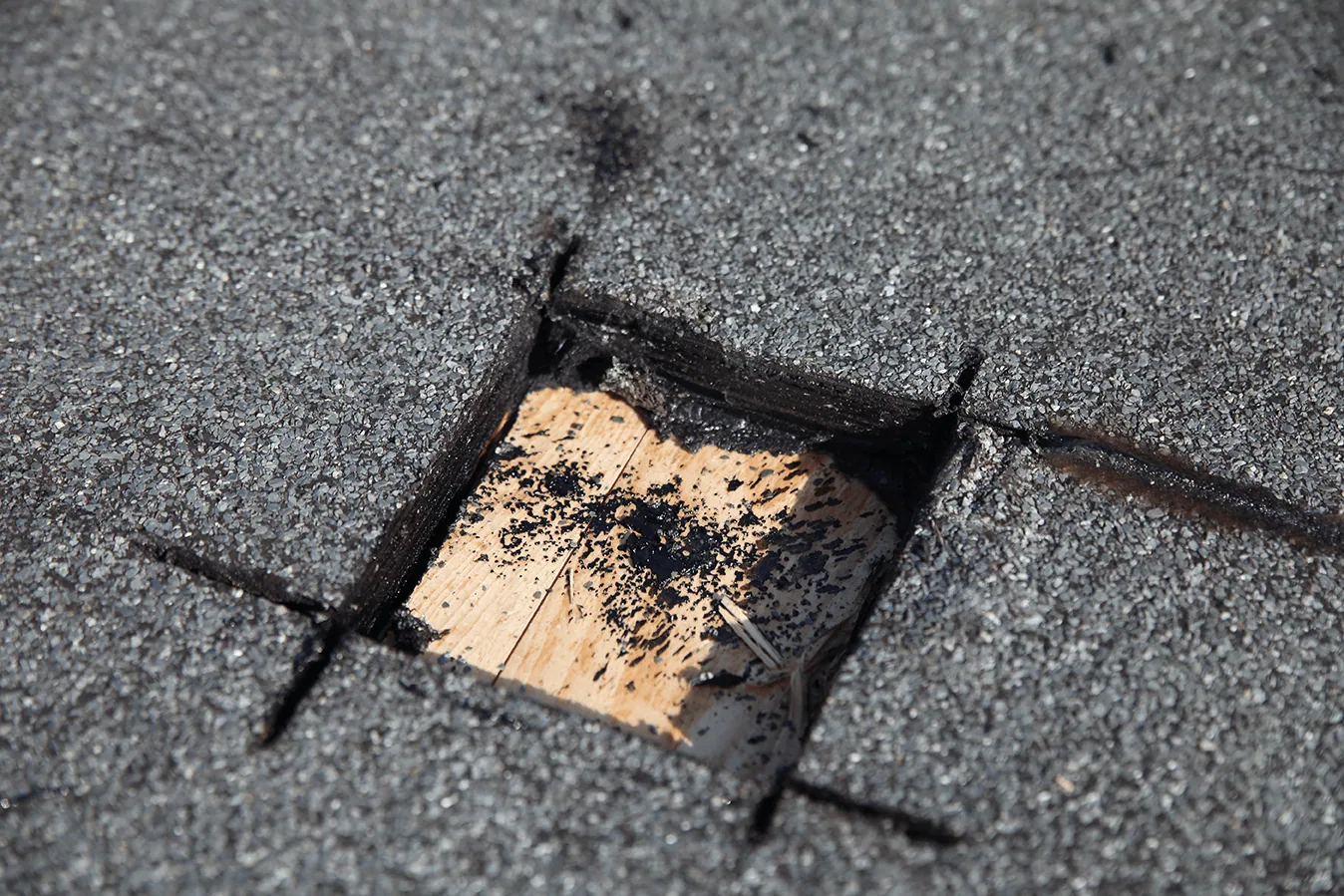
Water on the surface does not show how much insulation is wet. The membrane may have a local opening, or moisture may be entering at a seam farther upslope. We compare the pool location with interior reports, membrane changes, patches, curbs, and drains. When the removal decision depends on hidden moisture, an infrared moisture survey can identify areas for confirmation. A test opening may be needed to set the removal line and verify the deck.
We keep suspected moisture separate from confirmed wet material. The report names the test area, what it showed, and the zone left unexamined. If the insulation is dry and attached, the correction may involve slope correction, outlet work, or a local membrane detail. Wet or compressed layers may require removal before a repair or recover. That distinction affects disposal, new insulation, tie-ins, and how long the roof section remains open. A scope that does not state the test boundary can understate the work or extend it beyond the evidence.
Repair choice: correct the cause, not the water line
A clear drain with stable substrate may need a localized membrane correction or replacement of a damaged flange. If the water remains because the plane has settled, a patch at the pool's edge will not restore the path. We identify the cause first, then compare localized work with a broader slope adjustment. On single-ply roofs, welded seams and compatible flashing must reach clean, sound sheet. On modified bitumen or built-up systems, the repair material and tie-in follow that roof's layers. We do not apply the same detail to every assembly.
Repeated ponding over a soft area can indicate insulation compression or deck movement. We test before assuming that a new membrane will correct it. A commercial roof repair scope can address an outlet, seam, or localized low area once its limits are known. A recover evaluation weighs moisture, deck capacity, attachment, drainage, and project-specific permit requirements. If those conditions do not support another layer, removal may be needed to reach a stable base.
Stamford weather: read the low points carefully
NOAA normals for Stamford record recurring winter snow and subfreezing overnight temperatures. During a cold-weather review, we check whether an outlet, scupper, or seam has been affected by freeze and thaw, then document the actual roof condition. The seasonal pattern does not establish that any one property has a drainage failure. In Downtown Stamford's mixed-use setting, a roof repair may need a staged route for materials and protection below. The building's entrances and roof plan set those details.
CTDOT's Route 1 coastal study follows Greenwich, Stamford, Darien, Norwalk, and Westport. A roof near that corridor still needs its own slope and outlet review; road context does not describe the membrane. We coordinate lift placement or loading only after confirming the property's access rules. In Norwalk, commercial and industrial corridors include Route 1 and Route 7, but each site has different drainage geometry. We record the observed water path rather than applying a district-level assumption to a roof.
Scope and timing: identify what changes the work
The price and sequence depend on the number of outlets, the area needing slope correction, the condition of insulation and deck, and whether another trade must move equipment or piping. A small flange repair may be completed within a defined zone. Rebuilding a low area can require removing wet layers, resetting the substrate, and tying new membrane into sound material. We state those quantities only after the roof is inspected. Access restrictions and weather can change when a section can be opened and returned to a secure condition.
Photographs should show the drain, surrounding field, low point, and any test opening from identifiable positions. The closeout notes what was cleared, rebuilt, or left for follow-up. If ponding returns after a repair, that record helps determine whether the cause was a remaining obstruction, a slope condition, or another layer issue. An organized roof condition record can carry those observations into future maintenance. It does not replace checking the assembly when new conditions appear.
Commercial Roofing Questions
How do you tell whether a drain or slope is causing ponding?
We inspect the outlet, membrane tie-in, surrounding slope, and any raised patch or seam that could slow runoff. If the drain is open, a low-area or insulation check may be needed before selecting a correction.
When does persistent ponding point beyond routine drain maintenance?
No single pool sets that decision. We check the membrane, wet layers, deck, attachment, and drainage geometry, then compare a local repair with any broader correction those conditions support.
Can you repair ponding without adding another roof layer?
A drain or seam correction may be enough when the substrate is dry and stable. If the roof plane has settled or insulation has compressed, the repair boundary must address that condition rather than cover it.
Which field checks can separate wet insulation from a surface stain?
We map likely areas from the surface and interior reports. Infrared review or a test opening can confirm whether material should be removed before the roof is closed.
Which observations help target an assessment of standing water?
Share the location and size of the pool, how long it remains after rain, interior leak reports, roof plans, and access limits. We compare those notes with the drain path and membrane details on the roof.