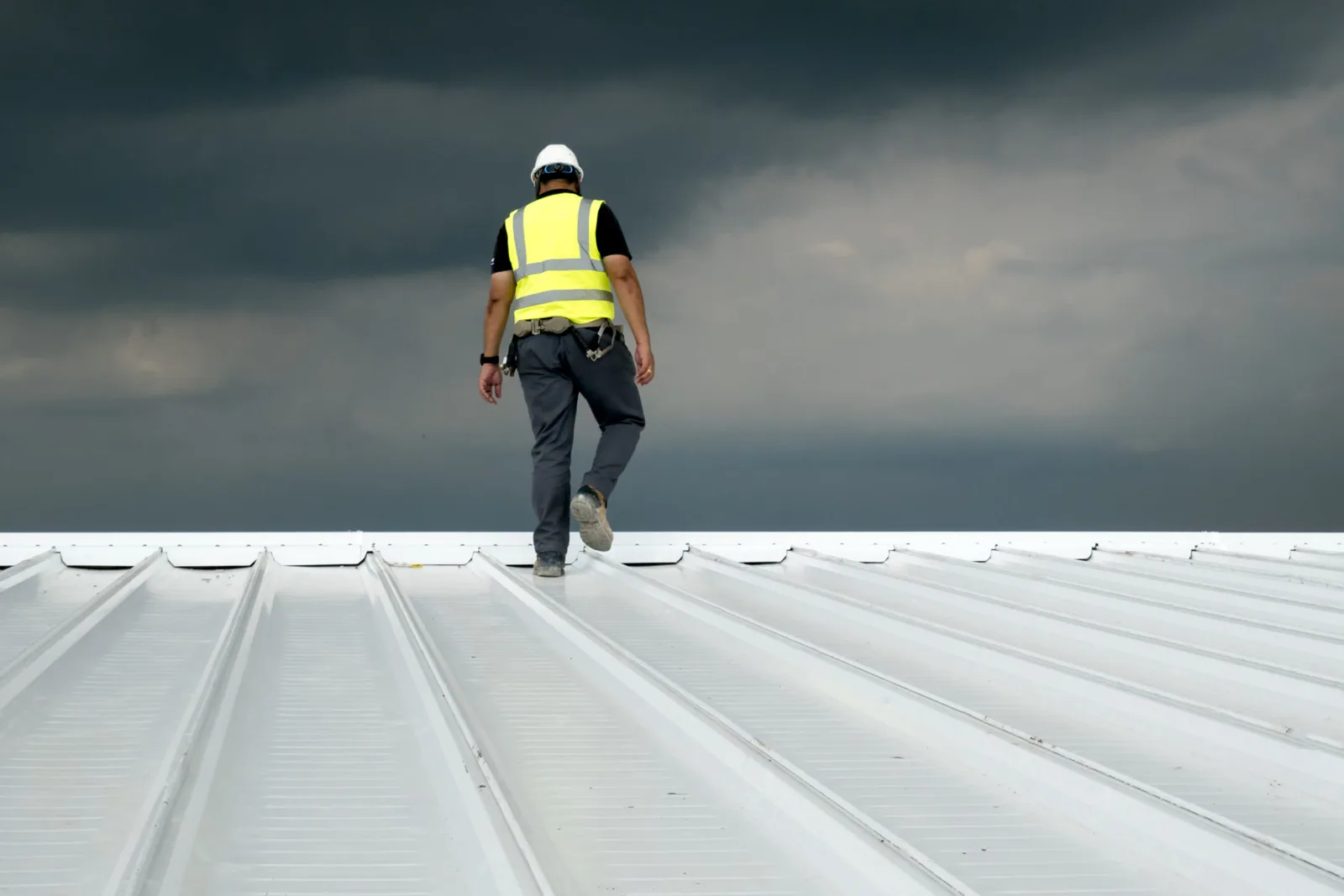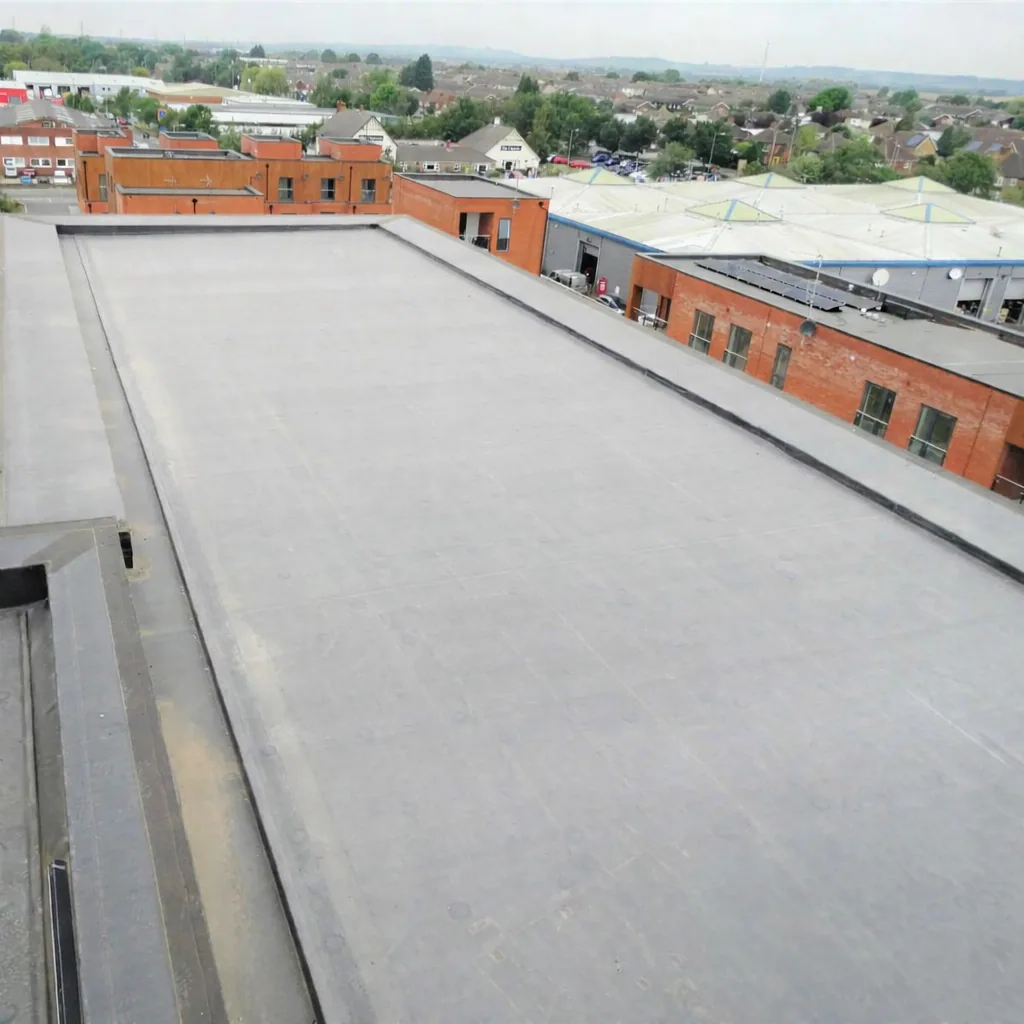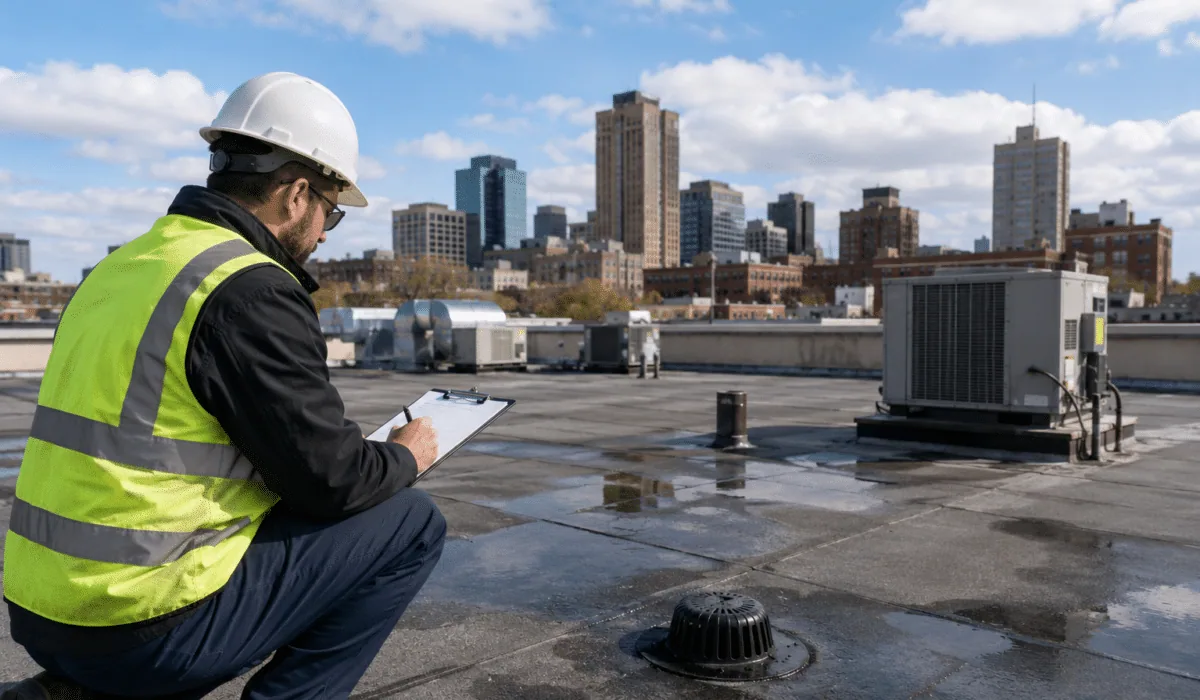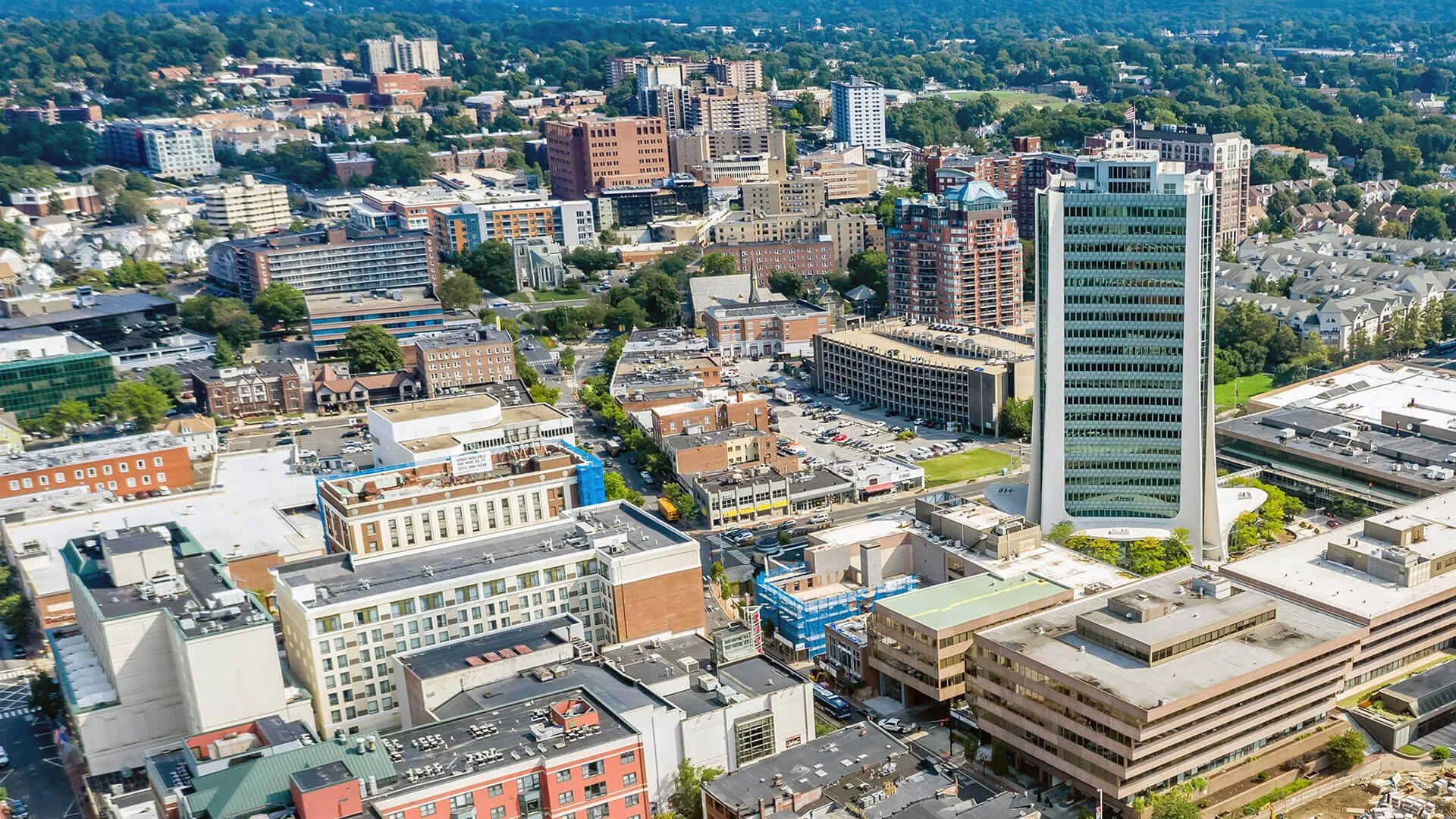
Loose flashing at a wall turn can admit water before a ceiling shows a mark. In West Side, Stamford, CT, we inspect the metal return, membrane termination, and seam that meet at that transition. Stamford treats West Side as one of its three Village Commercial districts, with neighborhood centers functioning as commercial and transit corridors that include housing, retail, and services. Those uses do not reveal any single roof's design. We identify the actual assembly, follow the water path, and check whether the substrate is dry enough to repair. A commercial roof inspection records the failed detail, connected roof conditions, and access limits before a scope is set.
Wall and edge: check every return
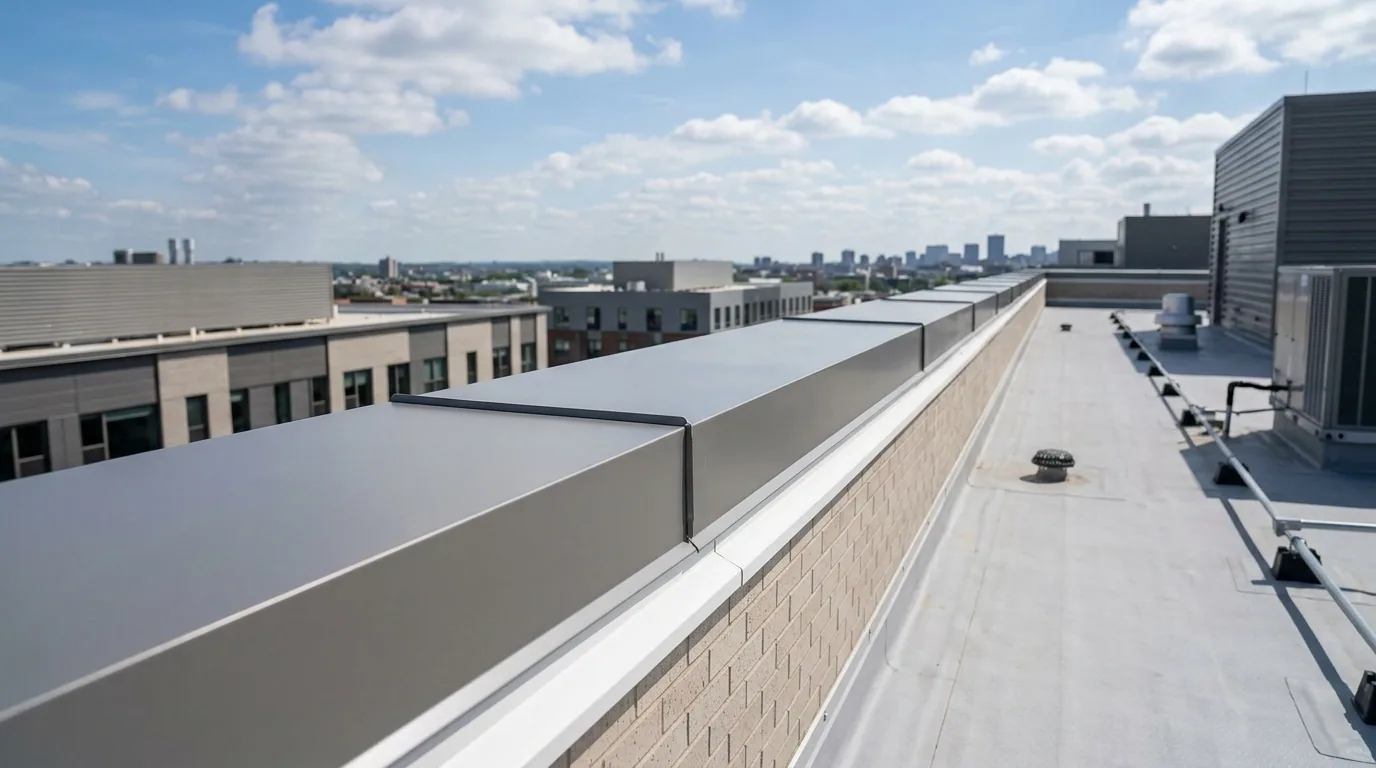
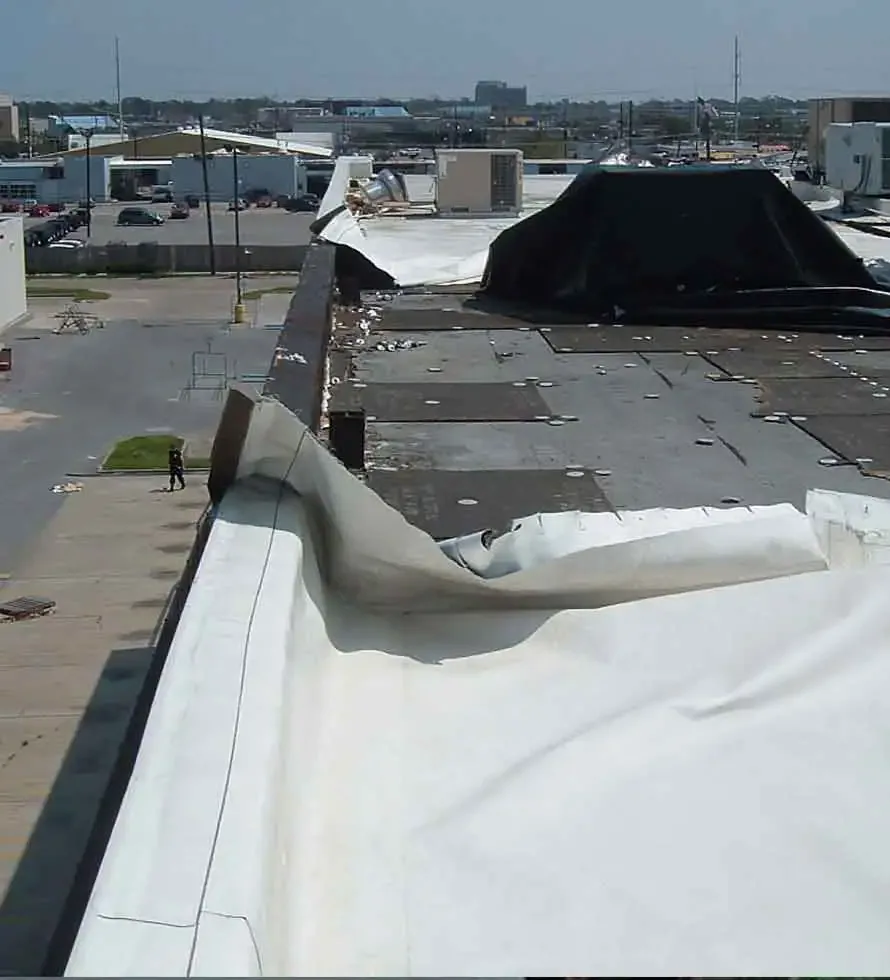
A wall transition can fail at the membrane turn-up, counterflashing, coping splice, or termination bar. We examine each layer that directs water away from the wall and look for a lifted edge, split lap, open corner, or fastener that has backed out. A visible gap may be the entry point, but moisture can extend beyond it. We note soft insulation, staining on the underside where accessible, and any movement that has separated a bonded detail. The repair has to reach a surface that can hold a new tie-in.
Edge metal also needs to remain secure as the roof and metal move at different rates. We trace the condition through corners, joints, and changes in height. Where a short splice is open but adjacent material is sound, a limited metal and membrane repair may work. Corrosion, loose attachment, or a broader membrane failure can widen the area. Edge-metal and coping repairs should name the pieces being reset or replaced and explain how the roof membrane meets them.
Corridor setting: plan around the workday
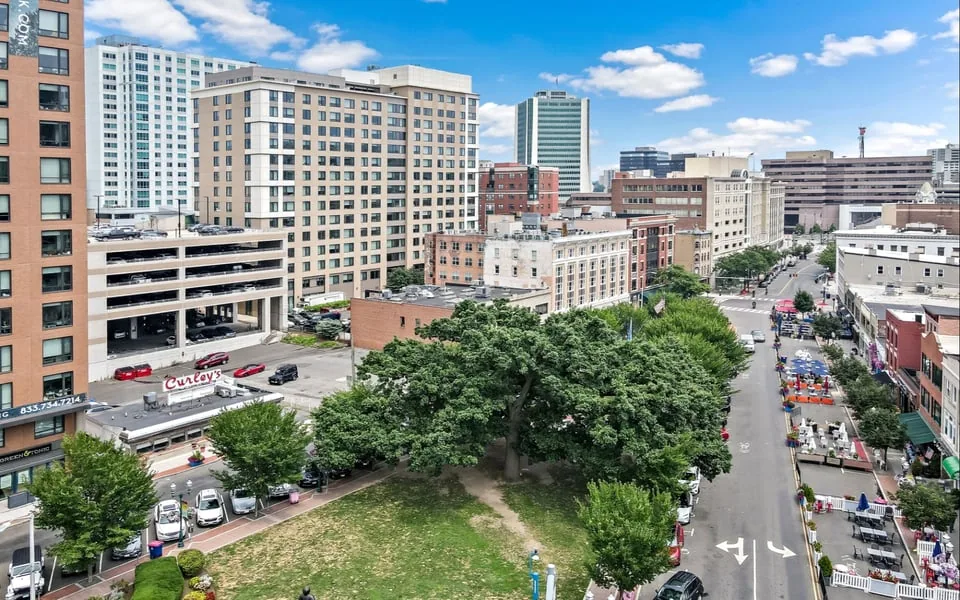
West Side's neighborhood-center designation includes transit corridors and a mix of housing, retail, and services. A property manager may need roof access coordinated with several types of daily activity, but the scope should be based on the specific building. We ask which entrances are available, what hours limit access, whether rooftop equipment requires separate coordination, and where materials can be staged. We mark roof zones that need protection below and identify a safe route to the work area. Those decisions can affect labor and schedule before a repair begins.
South End and Downtown are other mixed-use areas in Stamford, yet their roof records should not be blended with a West Side inspection. The same leak can have different causes depending on the assembly, parapet, deck, and drainage. We keep photos and notes connected to the property and section inspected. Downtown Stamford roof work starts with that same detail-first method. The manager can compare findings later without assuming that a nearby roof shares material, age, or condition.
Interior mark: follow it back to a roof detail
A stain near a wall may begin at a curb or seam farther into the roof field. We compare the location and timing of each report with the slope, penetrations, and water-holding areas above it. An open lap can feed moisture beneath the sheet; a drain restriction can hold water against a repair edge; wind-driven rain may reach a counterflashing joint. The walk includes membrane seams, vent and equipment penetrations, drain bowls, scuppers, and metal transitions. We photograph conditions and distinguish a confirmed opening from a suspected path.
If more than one room has reported water, we map each location before grouping them under a single repair. Separate entry points can share a ceiling area, while one opening can affect multiple rooms. Leak repair should follow the roof-side cause and state where the repair ends. When the route remains uncertain, further testing or access may be needed. We do not treat a dry surface on inspection day as proof that an interior leak was resolved or that concealed layers are sound.
Freeze-thaw and heat: look at movement points
NOAA's Stamford normals show recurring winter snowfall and subfreezing overnight temperatures. Drainage points, low seams, and terminations deserve close attention when water can remain at the roof surface through freezing and thawing. We note blocked outlets, open laps, or lifted metal that could admit water. Snow load concerns depend on the building's design and observed condition; a weather fact is not a structural assessment. If the roof or deck shows unusual movement, we document it and identify the appropriate next evaluation.
Summer highs in Stamford's normals reach the low-to-mid 80s, with cooling demand. Heat can contribute to movement at membrane edges and transitions, and rooftop equipment adds penetrations that need maintained flashing. We check seams and curb corners for separation without assigning a failure based on temperature alone. EPDM lap repairs require system-compatible preparation. The selected method follows the material found on the roof.
Repair limit: match the scope to the assembly
A local repair can hold when the defect is limited, adjacent membrane remains attached, and the substrate is suitable for new material. We remove unsound material, prepare the surface, and tie the repair into a reliable field or flashing. If wet insulation continues beyond the opening, the work must expose enough of the assembly to remove or dry affected material. A patch cannot restore a soft deck. We explain any hidden condition that could change the scope before closing the roof.
Multiple failing transitions, widespread moisture, or recurring leaks can move the decision toward maintenance, coating, recover, or replacement. A maintenance program can address developing wear and keep drain paths clear when the roof remains serviceable. Replacement becomes a stronger option when the existing assembly no longer provides a sound base for repeated repairs. We compare the affected area with the remaining system and leave the owner with a written recommendation tied to actual findings.
Cost and timing: record the constraints
Price depends on the roof system, repair area, number of connected details, material removal, moisture below the membrane, and equipment access. A wall transition may require metal work and membrane work together. If the roof needs an opening to check insulation or deck condition, that test and dry-in affect the scope. Interior protection or work-hour limits can add coordination. We list assumptions and exclusions so the decision-maker can compare the proposed repair with the condition in the report.
Timing depends on weather, surface dryness, material readiness, and a safe work sequence around building operations. New membrane cannot bond reliably to a contaminated or wet surface. Larger repairs may require a temporary close-in before final flashing or edge work. Condition reports with photos help retain the evidence and repair limits for later review. A roof walk should end with a clear next action, not a promise that an unseen layer is problem-free.
Commercial Roofing Questions
Does West Side's Village Commercial designation define its roof types?
No. The designation describes a broad neighborhood center, not a particular roof assembly. We identify the membrane, deck, and details on the property before setting a repair method.
Can a wall leak be repaired from the roof side?
Often, the roof-side transition is where the water path can be inspected and repaired. We check the membrane turn-up, metal, fasteners, and substrate to find where the work can tie into sound material.
How do you handle more than one interior leak report?
We map each report to the roof above it and compare the timing, slope, seams, and drainage. That shows whether one defect connects the locations or whether separate details need attention.
What might expand a small edge repair?
Wet insulation, loose attachment, corroded metal, or a soft deck can extend the work beyond the visible gap. The written scope identifies those conditions and any access needed to confirm them.