A blister beside an open lap can point to trapped moisture beneath the cap sheet. In Stamford, CT, we inspect the surfacing, seams, and underlying plies before choosing a repair. Snow and subfreezing nights make laps and roof transitions worth reviewing after winter exposure. A membrane and surfacing inspection checks what is loose, what is bonded, and where the assembly changes. The repair boundary follows the layers that have failed.
Plies: find where the separation begins
Modified bitumen roofs use asphalt-based sheets with reinforcing and polymer modification. A blister, split, or loose lap may affect one layer or extend through several. We examine the cap sheet, interply bonds, and base layer at the defect. Cutting a blister without finding its cause can leave moisture in the assembly. We check whether the surface is dry, whether the underlying ply is sound, and how the repair can tie back into stable material.
Repairs use compatible sheets and properly prepared laps. A patch needs enough overlap and a clean bond line. At a multi-ply system, we distinguish the cap sheet repair from a correction that reaches the base or deck. If the surface has been repeatedly patched, we map the repairs and look for a pattern of movement, ponding, or moisture. That record helps determine whether another local repair is useful or whether a larger area should be considered.
SBS and APP: choose the detail for the installed sheet
SBS and APP are different modifiers used in bituminous roofing sheets. The product type affects handling and application, so we identify the installed material before specifying a patch or replacement. We review labels or roof records when available and confirm the assembly at an exposed edge. If the material is uncertain, we use a compatible system rather than guessing from surface color. Application method also matters: heat, cold adhesive, or self-adhered sheets each require the right substrate and working conditions.
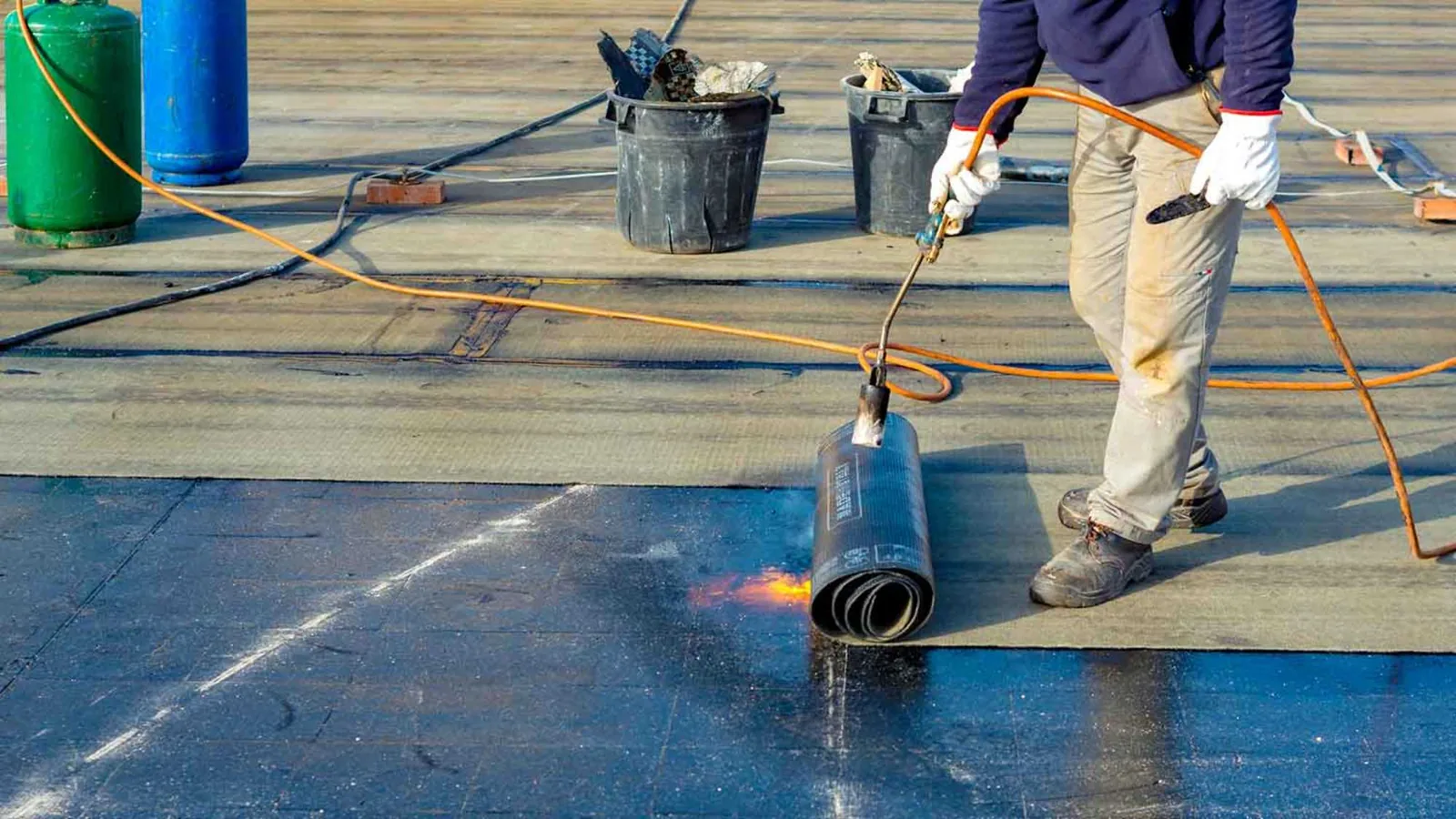
Heat-applied work needs controlled flame exposure and a clear fire-prevention plan. We review combustibles, wall cavities, and penetrations before using a torch method. Cold-applied systems need adhesive suited to the substrate and weather conditions. In either case, laps are checked for full contact and the finished edge must shed water. A built-up roof ply can look similar at a cut edge but uses a different assembly logic; we distinguish the system before extending a repair.
Cap sheet: restore the surface without hiding damage
Granules protect the cap sheet from sun exposure and wear. Missing granules, exposed asphalt, alligatoring, or cracking can indicate deterioration, but the condition beneath still determines the scope. We inspect the field, lap edges, and transitions at walls and curbs. A surface treatment cannot restore wet insulation or a separated ply. If the cap sheet is worn only in a contained area, we plan a repair that ties into sound surfacing and protects the seam.
Aggregate, reflective coatings, or other surfacing may be present, and each affects how the roof can be repaired. We test adhesion and compatibility rather than covering over a weak surface. At a coating edge, the transition must keep water out and avoid a trapped moisture pocket. If the assembly moves into an EPDM transition detail, the materials are joined through a designed flashing, not by carrying bitumen onto the membrane.
Drainage: protect the lap at low points
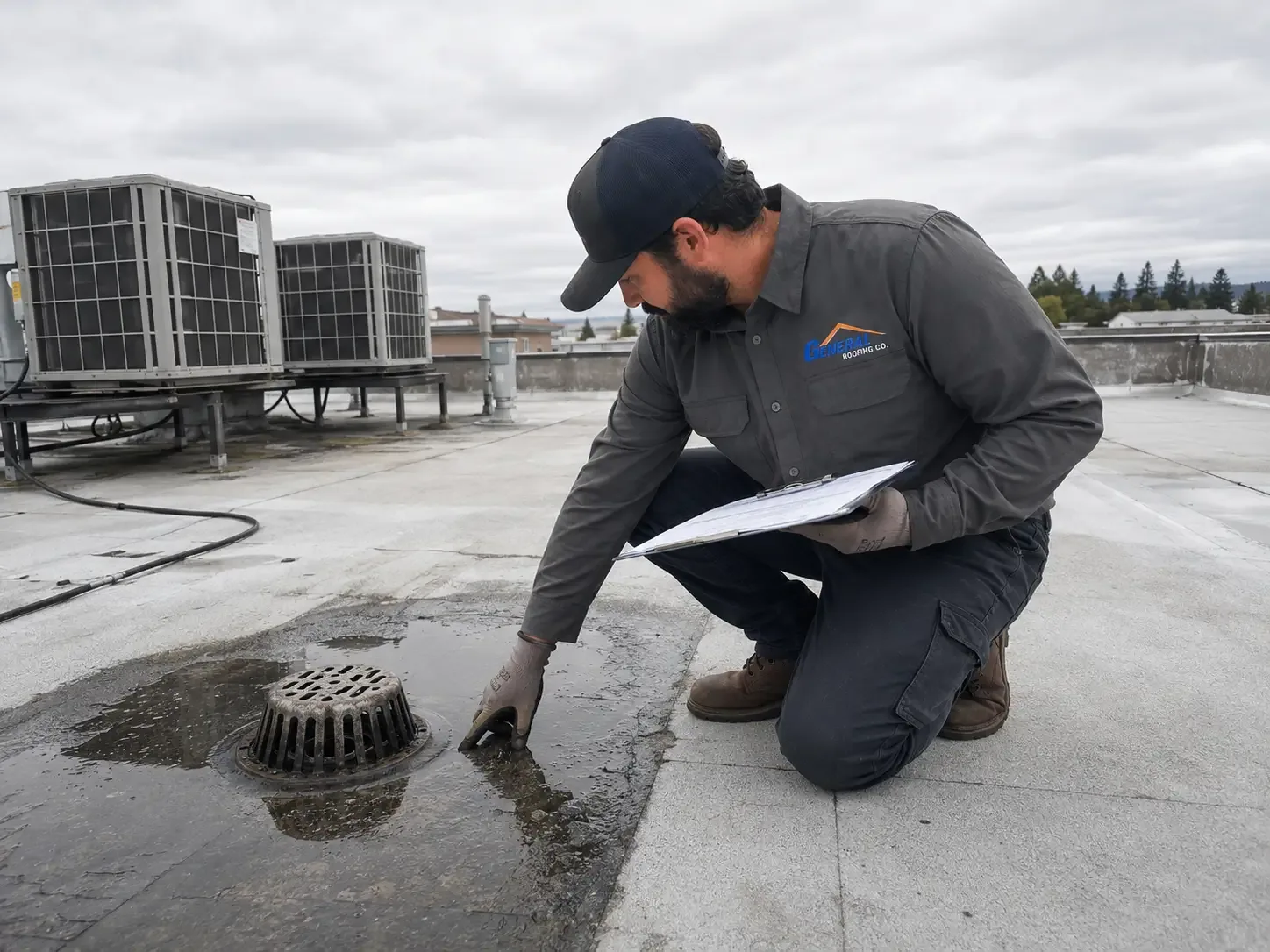
Water that remains at a low point can stress laps and hold debris against the cap sheet. We inspect drains, scuppers, crickets, and the surface plane, then trace the runoff path. A blocked outlet may need cleaning; a depressed roof area may require a slope correction. Drain and scupper work is scoped separately from the bituminous patch unless both conditions are included. We note how the repair meets the drain flange so runoff cannot pass beneath its edge.
At a parapet, the membrane must continue into the wall flashing and remain protected at the top. Loose counterflashing, open corners, and brittle sealant can interrupt that path. We check the wall face and roof side together, then identify any masonry or sheet-metal work outside the roofing scope. If the surface is wet, we do not seal it under a new cap sheet. The affected area must be dried or removed to a stable layer before the repair closes.
Stamford work: stage materials around building operations
Western Connecticut work links Stamford, Norwalk, and Danbury, with activity along I-95 and US 7. A modified bitumen project may require rolls, adhesive, and surfacing materials to arrive in sequence. We coordinate staging with the property manager and keep fire controls, access lanes, and roof hatches clear. In Downtown Stamford, delivery and lift access may require additional planning around the building's operating schedule.
The city plan places higher-intensity mixed-use activity in Downtown and South End, so work below may include offices, homes, or retail. We define which roof area will be open, how it will be protected at the end of a shift, and who can release access below. Downtown Stamford roof staging follows the actual building layout. For a project with several trades, commercial contractor coordination sets a clear handoff for curbs, walls, and mechanical work.
Repair or replacement: compare the working layers
A localized repair may be suitable when the plies remain bonded, insulation is dry, and deterioration is limited. A defined repair scope states which layers will be opened and how the cap sheet will tie back into stable material. Repeated blisters, widespread cracking, or wet layers can shift the recommendation toward replacement. We record the test opening, observed layers, and any area left untested. A roof condition report can show why a patch remains local or why the scope extends beyond the cap sheet.Where the assembly is covered by aggregate or another surface layer, we confirm how it will be removed and restored. Material handling and fire controls are coordinated with the building manager before hot work begins. If a roof has multiple repairs from different periods, we mark each one and assess whether the seams between them remain bonded. That distinction helps avoid replacing sound areas simply because they sit beside older patches.
Replacement plans identify deck, insulation, base and cap sheets, flashing, and surfacing. They also state how the roof will remain protected as work moves across the building. If torch application is selected, fire-watch and interior checks belong in the sequence. The closeout notes completed areas and any separate condition that was not included. The owner can then compare repair with replacement using the actual assembly and the maintenance needs of the property.
Commercial Roofing Questions
How do you tell whether a modified bitumen blister is wet?
We inspect the blister, surrounding laps, and any test opening. The underlying layer must be checked before deciding whether to cut, patch, or remove the affected area.
Is SBS the same as APP modified bitumen?
They use different modifiers and may have different application requirements. We identify the installed sheet before planning the repair method.
Can you use a torch for a small patch?
Torch work is selected only after reviewing combustibles, penetrations, and the building conditions. Cold-applied or self-adhered materials may be more appropriate at some details.
When does missing granule surfacing need replacement?
The cap sheet condition, underlying plies, and moisture determine the boundary. We inspect beyond the exposed spot before recommending a local repair or broader work.
Will a new cap sheet correct ponding?
A cap sheet does not change the roof plane. We map the drain and low-point elevations and include slope or outlet work if it is part of the observed condition.