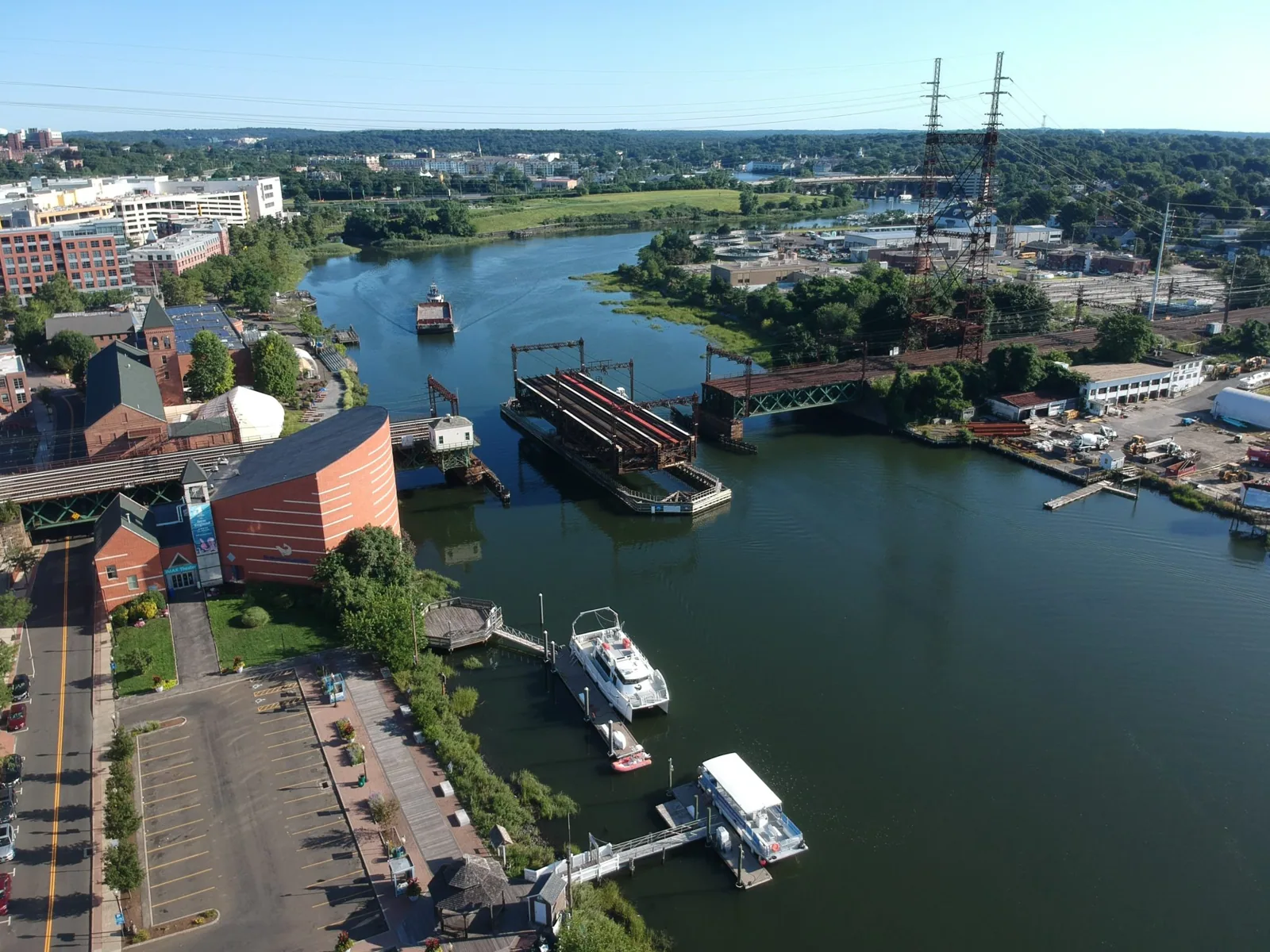
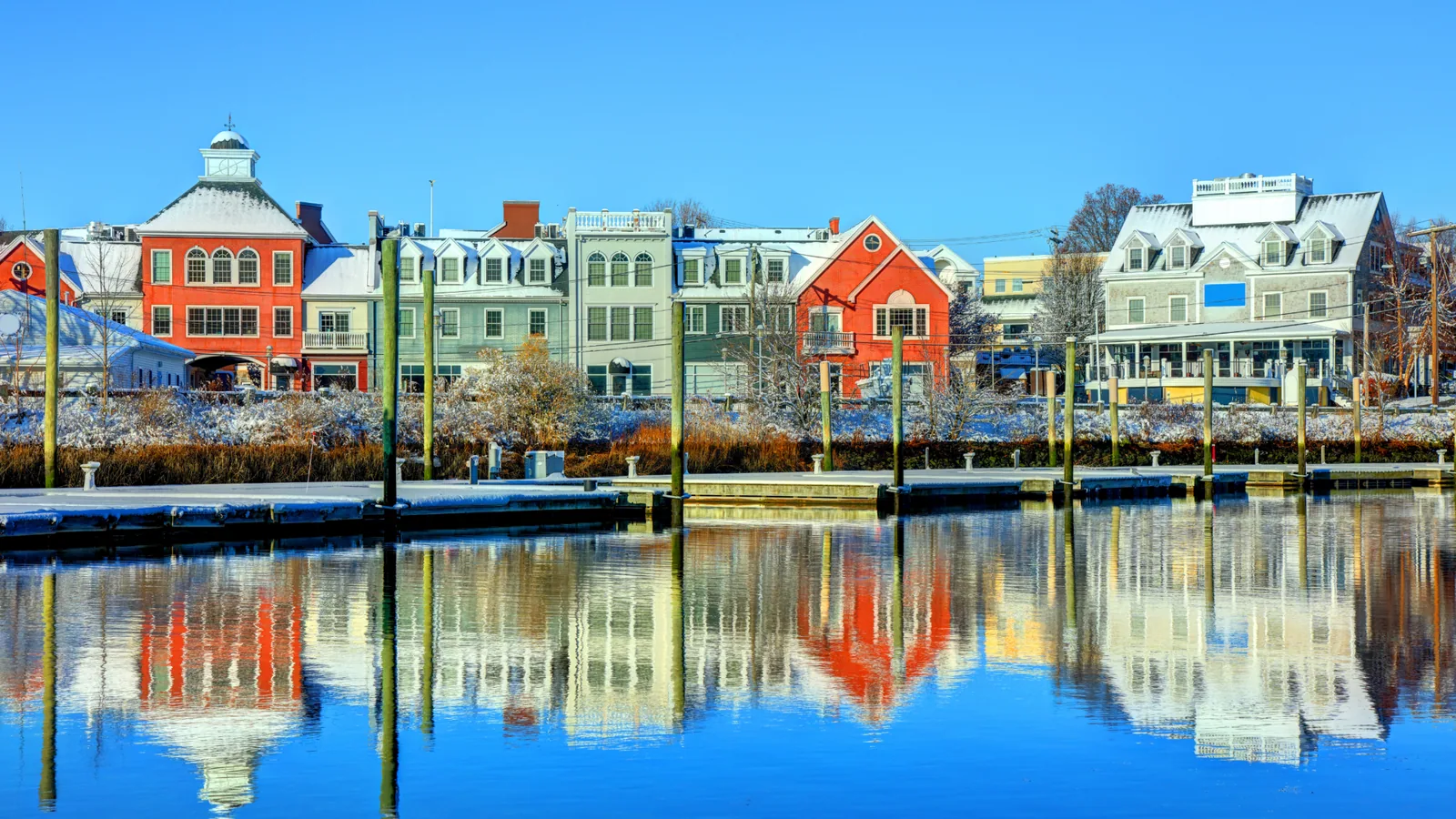
Water behind a parapet can travel down a wall before it reaches an occupied room. In South Norwalk, Norwalk, CT, we start with the reported stain and inspect the roof transition above it, including the membrane return, curb flashing, and nearby drain. SoNo is a dense pedestrian-scale retail and business area near the harbor. That setting makes safe access and protection below part of the work plan, while the roof assembly determines the repair. We follow the water route and keep the scope tied to conditions found. Commercial leak repair closes the opening and includes the sound material needed for a durable tie-in.
Street-facing work: protect the path below
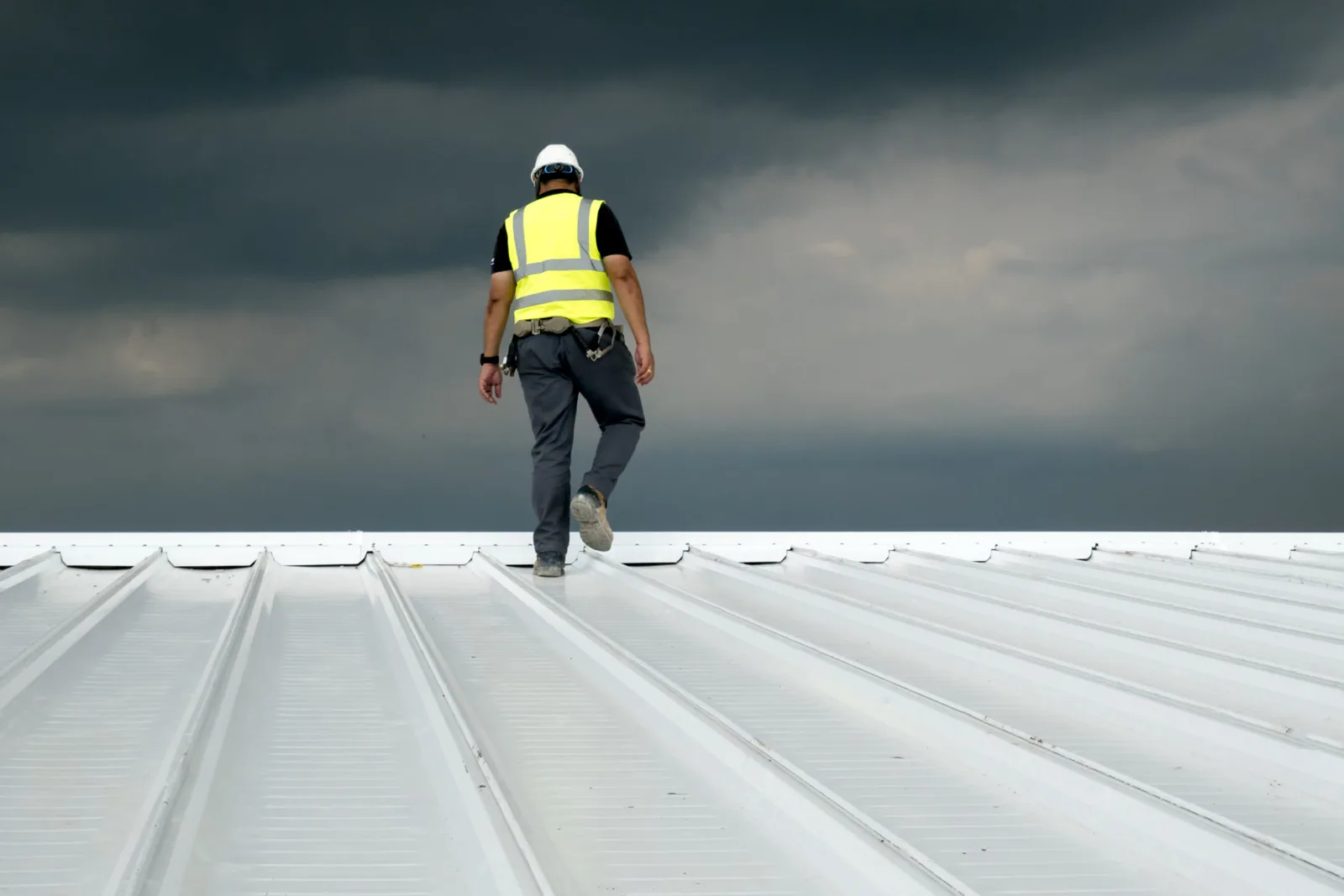
Roofing work above a pedestrian-scale district needs a clear path for people and material. Before opening a roof, we confirm where tools can be staged, which entryways sit below the repair, and whether temporary protection is needed inside or at the frontage. Those arrangements affect sequence and labor. We inspect membrane attachment, insulation, and roof transitions directly before setting the repair boundary.
Metro-North connects South Norwalk with Stamford and the New York employment corridor, a useful point when managers coordinate work across locations. We confirm the roof route and work window with each building contact. Wall Street, West Avenue, and Main Street connect retail, restaurant, and entertainment uses in central Norwalk. For a roof walk near those streets, we confirm the building's delivery window and the protected area below with its contact. The access walk confirms the service entrance, lift route, and protected area below before material is staged. For a related Norwalk Center roof, we plan staging separately with the property contact. If a leak affects an occupied room, the scope should state how the area will be protected while the roof is open.
Harbor-side water route: read the detail, not the stain
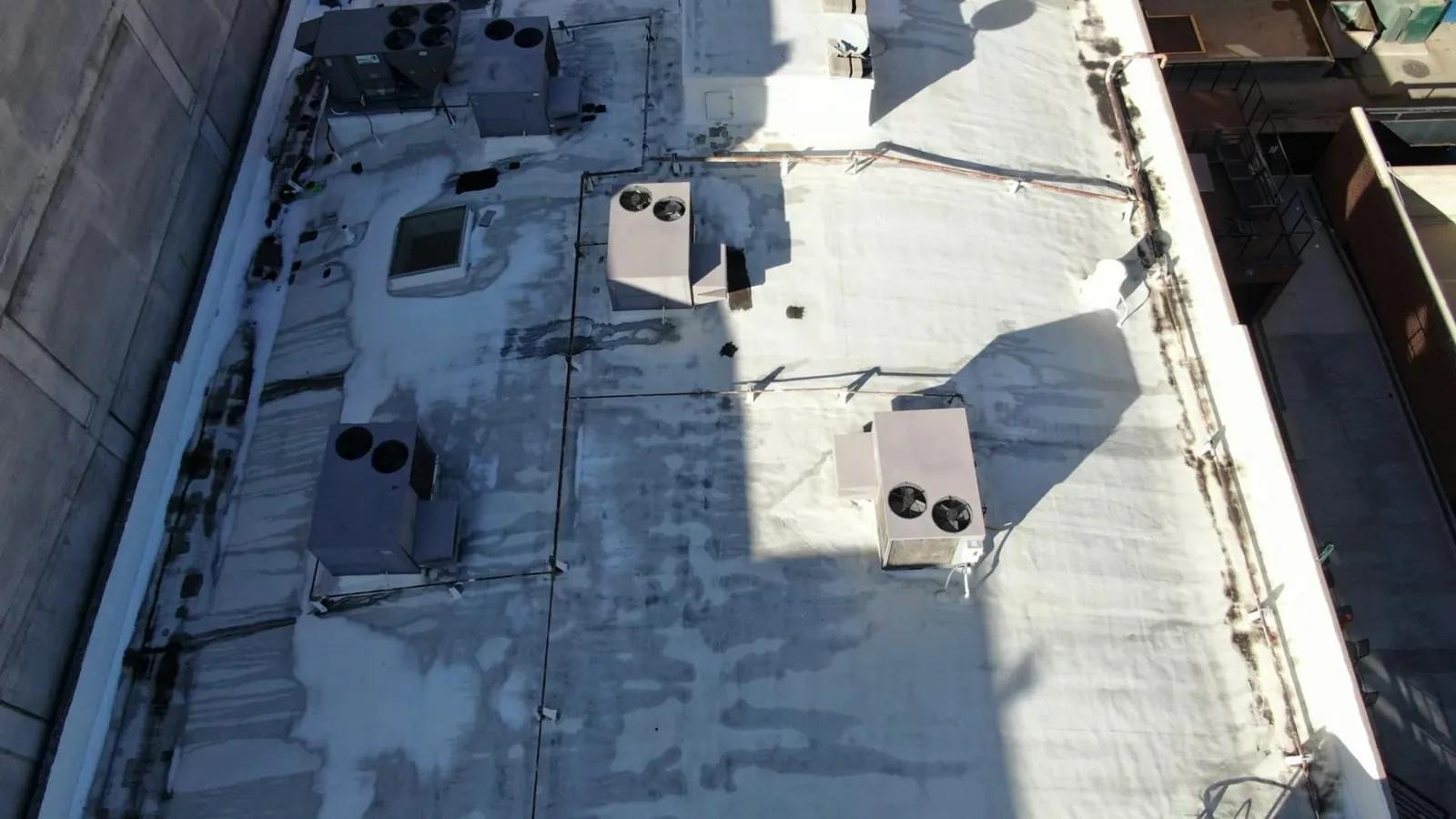
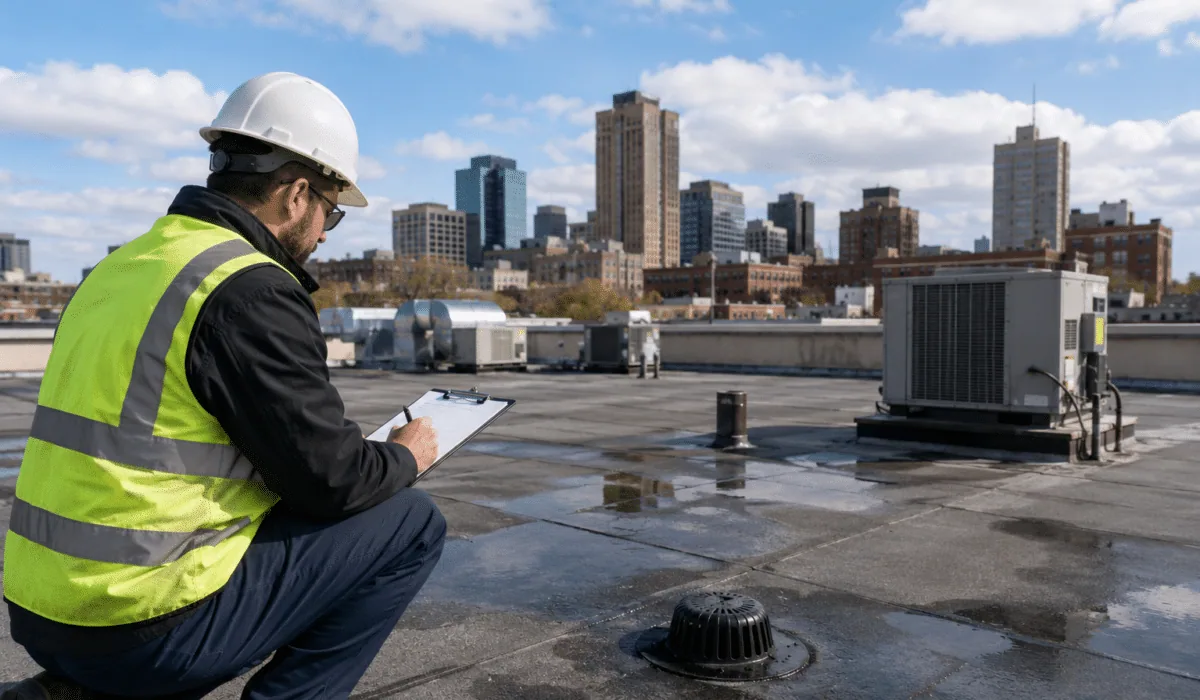
A water mark can appear below a roof edge even when the entry begins several feet away. We compare the interior location and timing with the roof slope, sheet laps, wall transitions, equipment curbs, and outlets. At a low point, we inspect the drain bowl and overflow; at a parapet, we check coping joints and the membrane turn-up. The report keeps observations distinct from likely causes until the roof walk exposes a connected path or testing supports one.
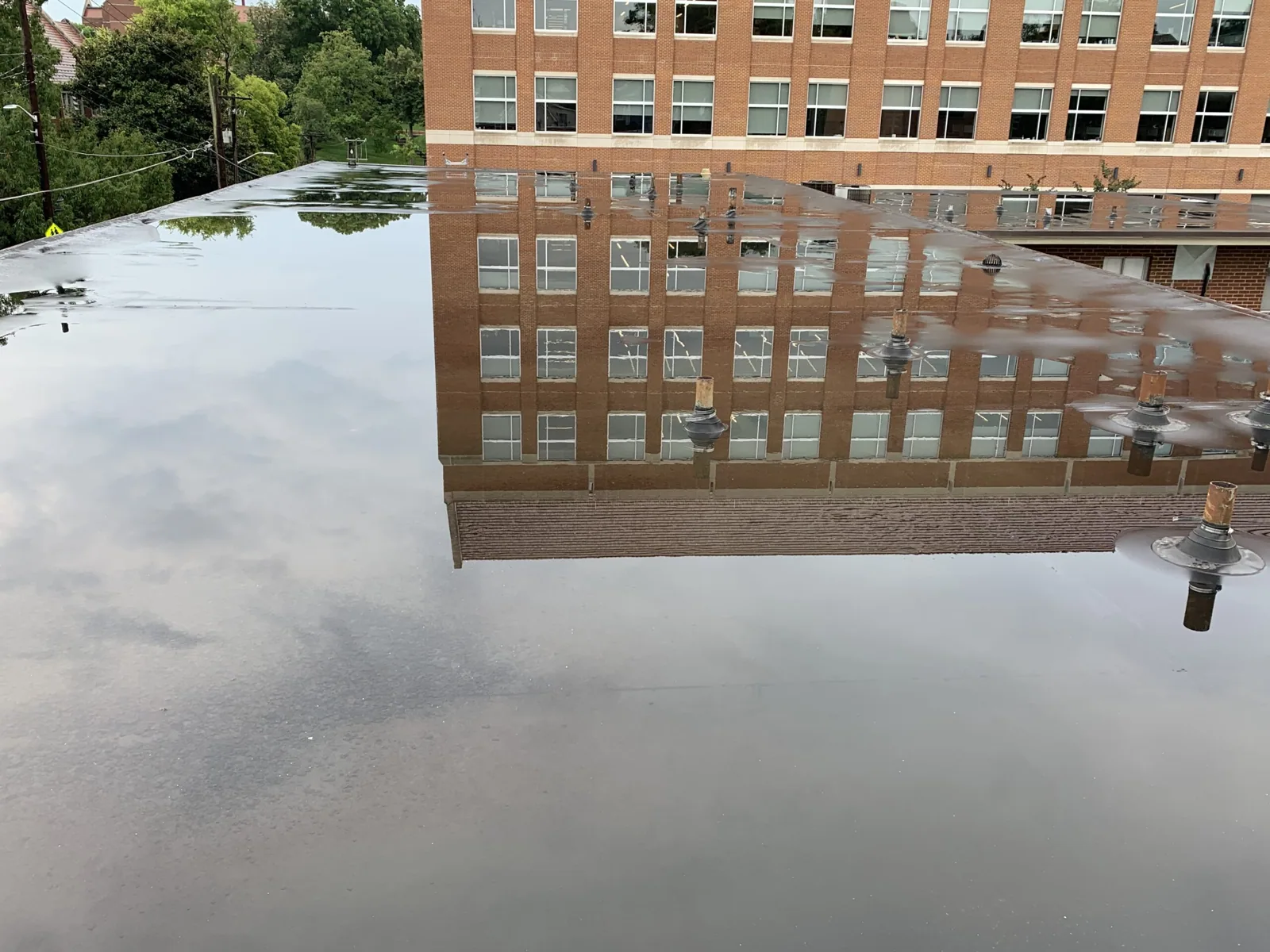
The useful evidence is a split lap, loose termination, puncture, or moisture found below the membrane. We document that evidence and indicate which areas were reached. Ponding-water repair may involve drainage, low-slope correction, or membrane work, depending on what the roof shows. We tie the repair boundary to the tested lap, termination, puncture, or wet insulation that explains the reported water path.
Transit connection: coordinate the building schedule
We confirm operating hours and the access route with the manager before scheduling the lift. We confirm the operating constraints directly and note them with the work area, equipment clearance, and any room that needs protection below.
Occupied work can proceed in stages when each opening has a defined dry-in point. A curb repair may need equipment clearance; a drain repair can require a larger membrane cut than the visible bowl. The schedule should reserve time for surface preparation, compatible materials, and final tie-in after the substrate is ready. For retail or restaurant work, we confirm customer routes, staff access, and protection below with the site contact. The daily work record lists the confirmed protection area, material path, and roof section.
Membrane, curb, and drain: identify each failure point
We identify whether the roof is TPO, PVC, EPDM, modified bitumen, built-up, metal, or coated before choosing a repair. Each system handles laps and flashing differently. A weld that has separated, an adhesive splice that has lifted, and a metal seam that has opened call for different preparation. We check the substrate at the defect, the attachment beyond it, and any earlier repair that could affect a new bond. Work should connect to a compatible, sound surface.
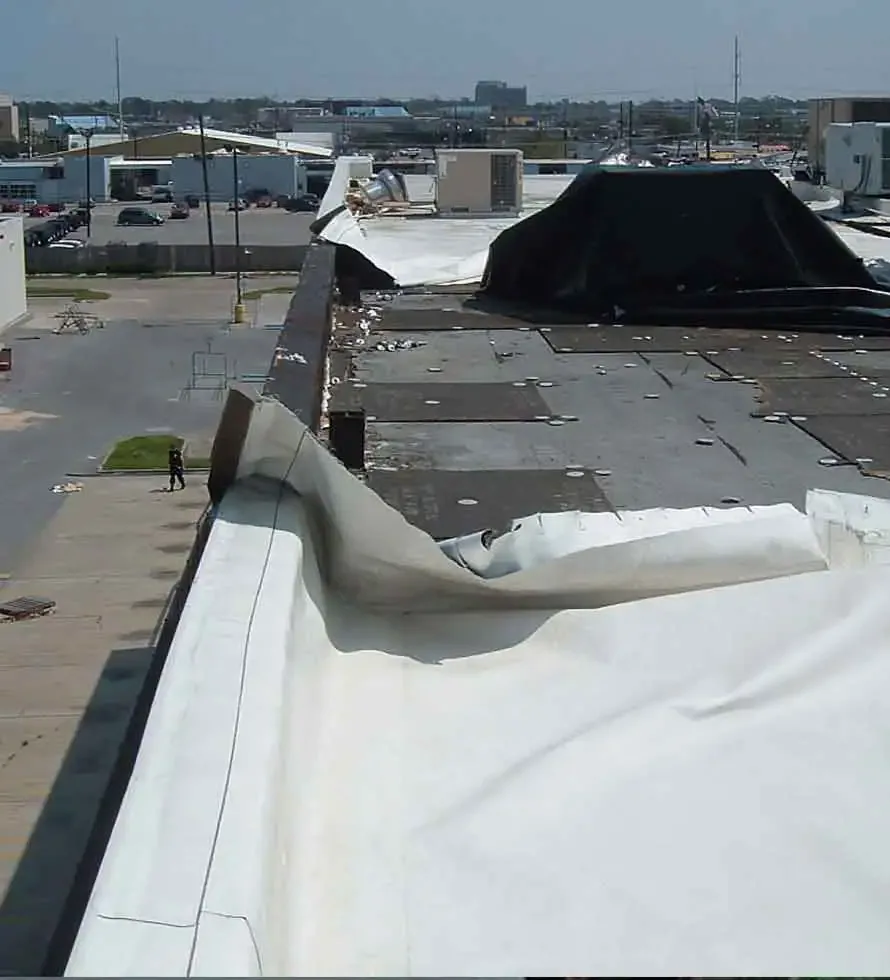
A curb or pipe turns the roof plane and places flashing under movement. We inspect vertical legs, corners, fasteners, sealant, and the sheet that joins the field. At the drain, we check the clamp and the membrane entry, not just the strainer. A roof inspection records those connections before removal. When a wall return or penetration has failed, flashing repair must restore the transition instead of leaving an open edge beneath new material. Photos show the scope before and after tie-in.
Repair or replacement: follow the remaining assembly
A repair works when the affected area is contained and the adjoining membrane can hold a new tie-in. We remove loose material, check insulation and deck at the opening, and mark where sound roofing begins. If moisture reaches another board or the attachment has failed across a wider area, the repair boundary changes. The written scope distinguishes that added work from the initial leak location, so ownership can review the reason before material is replaced.
Separate failures may call for planned maintenance rather than a succession of isolated patches. If the field is sound, preventive maintenance can track seams, drains, and curb flashing between projects. If repeated repairs cannot reach dependable material, replacement planning weighs removal, dry-in, and protection of the space below. The recommendation should follow the condition of the deck, membrane, insulation, and drainage. We state which finding makes the scope larger instead of treating a roof system decision as automatic.
Cost and timing: keep assumptions visible
Cost depends on system type, repair area, the number of transitions, removal, moisture below the sheet, and access for tools and materials. A parapet may need new metal and membrane work together. A drain opening can require a wider cut to reach dry insulation. Interior protection, debris handling, and temporary dry-in affect the labor and sequence. We list the known work and identify the concealed condition that could change the price once roofing is removed.
Weather, substrate dryness, material compatibility, and confirmed access shape timing. If removal exposes more damage than the first inspection could show, the roof stays protected while the added scope is reviewed. A photo condition report preserves the water route, visible opening, and boundary of work for future budgeting. Managers who also coordinate East Norwalk can retain distinct records for each roof. We scope each South Norwalk failure from the inspected membrane, flashing, and substrate.
Commercial Roofing Questions
Which roof details help trace a leak near the harbor?
We check the membrane return, curb flashing, wall transition, and nearest drain against the reported water path. Testing can confirm wet insulation or a concealed opening when those findings change the repair boundary.
How do you protect business access during a roof repair?
We confirm the work zone, material path, and areas below that need protection. The scope states where temporary cover is needed and whether the opening can be closed in one work window or needs a dry-in stage.
Which seams or drains can carry a south norwalk leak away from its roof entry?
A seam, insulation joint, curb, or wall transition can carry water before it reaches the interior. We compare the reported location with roof slope and nearby details, then document the path supported by inspection.
When should a business consider broader work?
Wet insulation beyond one opening, repeated leaks, or multiple attachment failures can leave no dependable tie-in for a small patch. We show the affected areas and compare repair, maintenance, and replacement against the assembly that remains.
What should be included in the repair scope?
It should name the roof system, detail to be opened, preparation, flashing or membrane material, tie-in, interior protection, and any access assumption. We also identify concealed conditions that could add removal after the work begins.