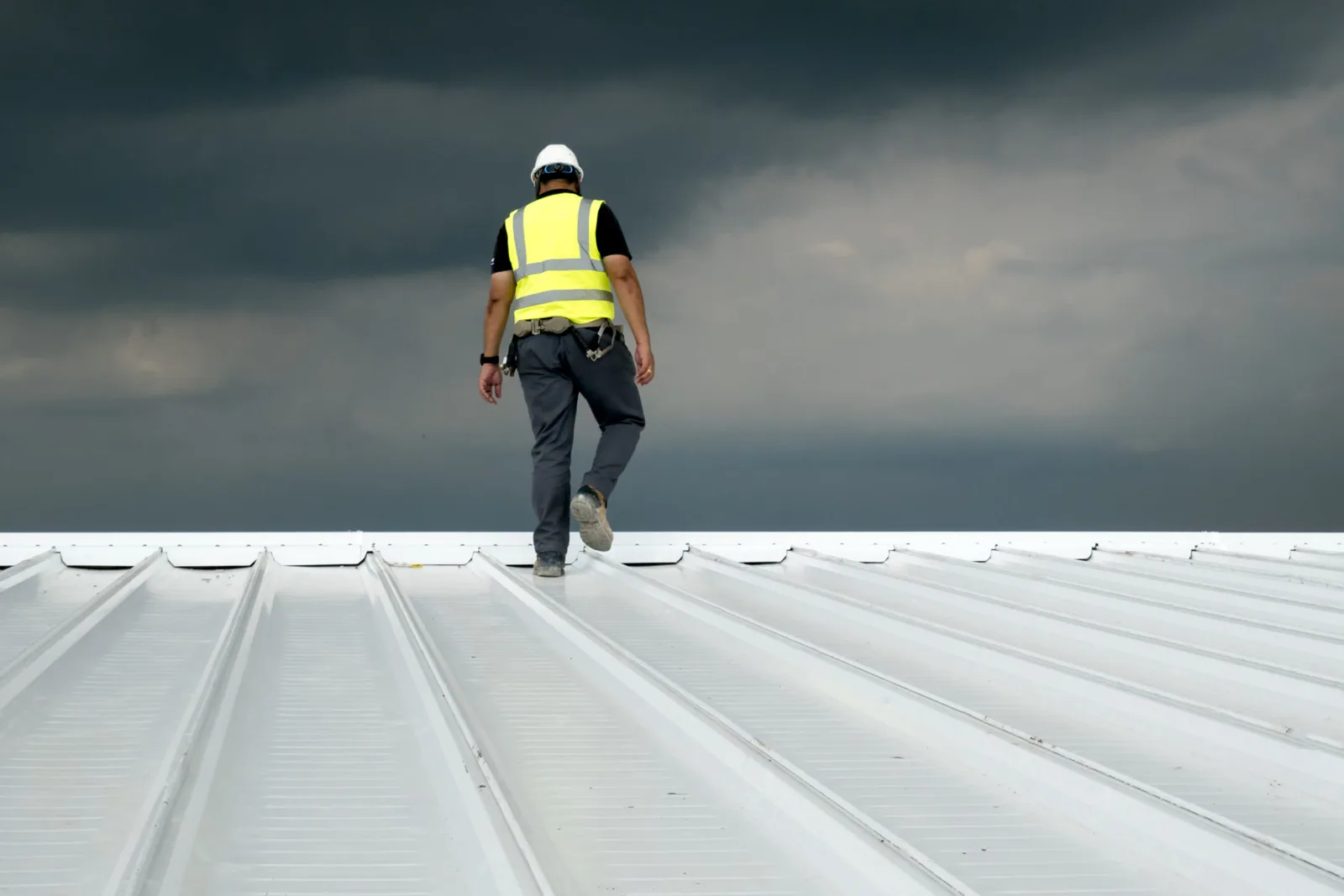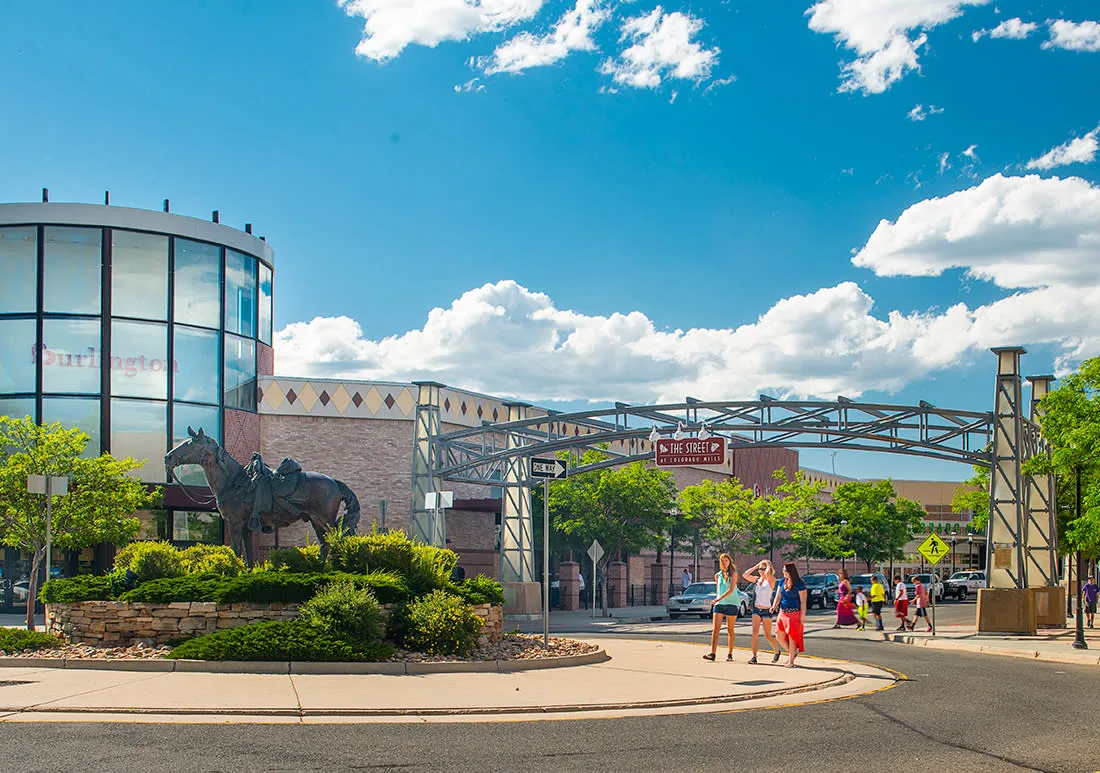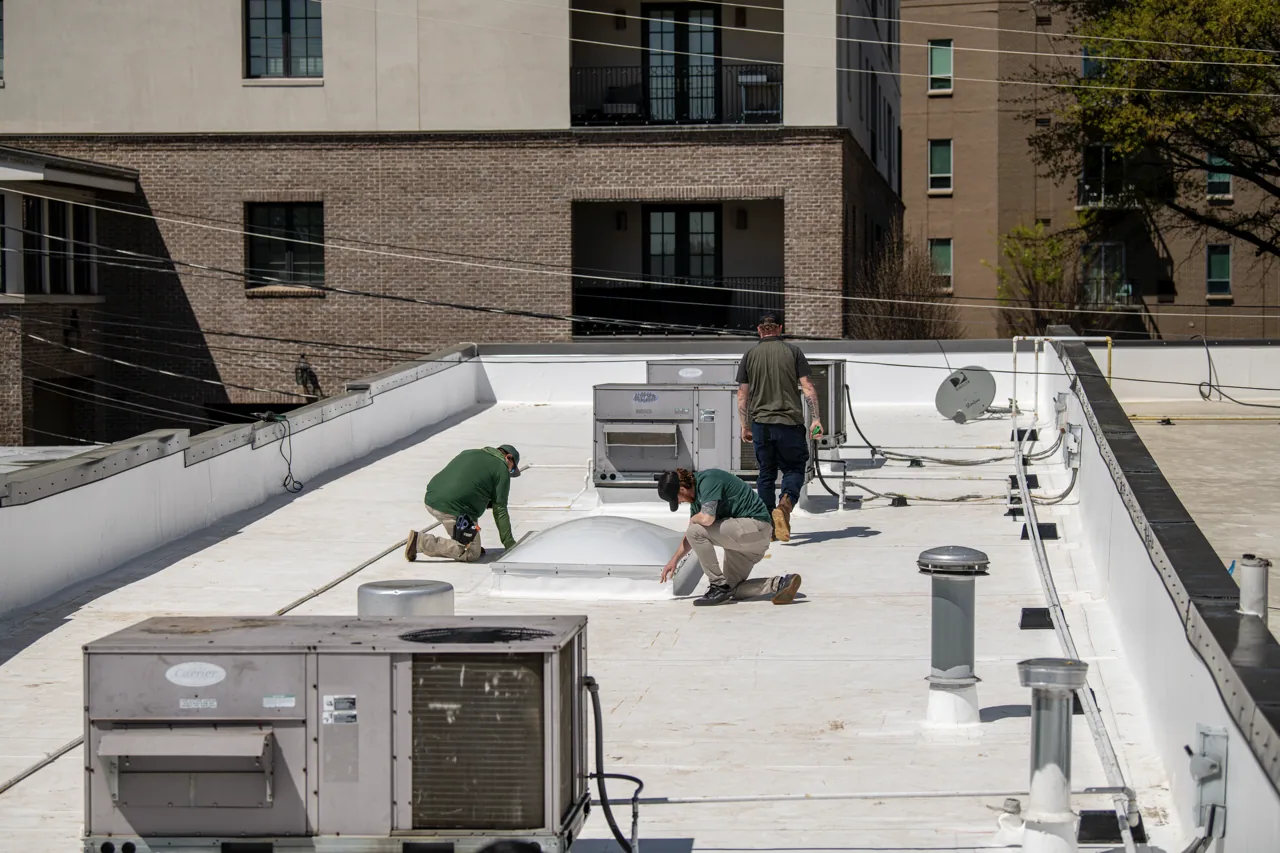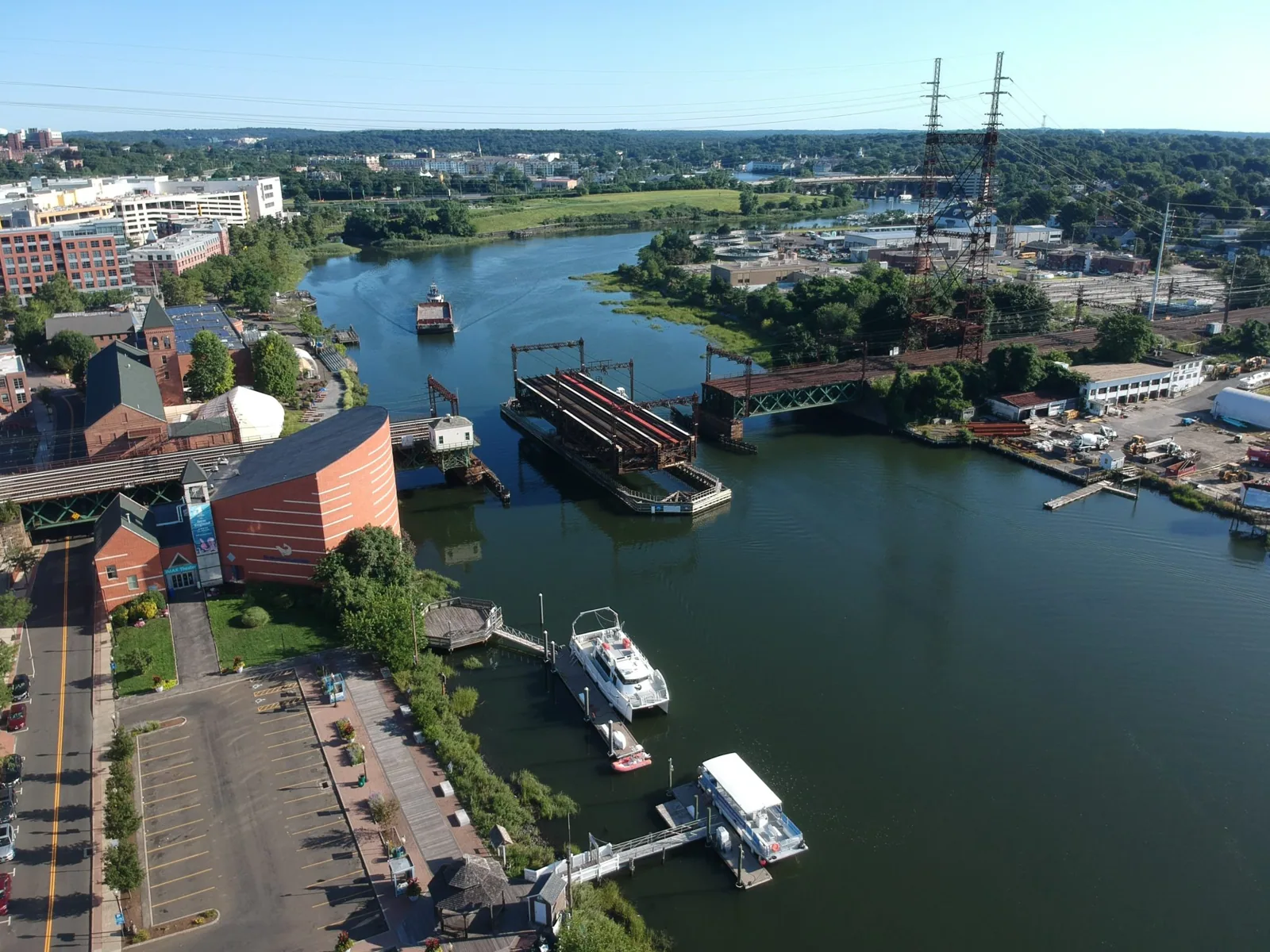
Beside a retail entrance, a wet ceiling tile may point to a roof seam several bays away. In Norwalk Center, Norwalk, CT, we follow the reported water path through the roof field, curb flashing, parapet, and nearest drain before selecting a repair. The Center is a pedestrian-scale retail and business concentration, with bus service linking rail and commercial corridors. Norwalk Center's bus hub links rail and commercial corridors. We confirm roof access, public frontage, and delivery staging with the property manager before work. We inspect the material in place and record where the defect ends. A commercial roof walk ties the interior report to the roof detail that can be tested and repaired.
Business frontage: keep the work zone controlled
A roof repair above a pedestrian-scaled block has two boundaries: the membrane opening above and the protected area below. We confirm where materials can be lifted, whether an entrance or walkway sits beneath the work, and how debris and tools will be managed. The roof itself still sets the repair method. Access planning only determines how the work reaches it and how the interior remains protected while a seam or flashing detail is open.
We mark the roof area that needs access and keep the protection plan specific. If water is entering above an occupied space, temporary cover may be needed before the permanent tie-in can be completed. The scope states whether this is expected to be one work window or an open-and-return sequence. Shopping-center roofing can involve different access patterns across a block, but each roof gets its own inspection and work boundary. We do not assume adjacent businesses share a deck or drainage system.
Commercial corridors: plan the roof visit around access
Route 1, Route 7, and Martin Luther King Jr. Drive are commercial and industrial corridors in Norwalk. The bus hub in Norwalk Center links the district with rail and those business areas. For a property manager, the useful question is how access to the roof and occupied space affects a repair sequence. We record loading limits, equipment clearances, and the location of protected areas after confirming them with the building contact. Along these corridors, we confirm the service entrance, lift set-down area, and pedestrian route at each property before staging.
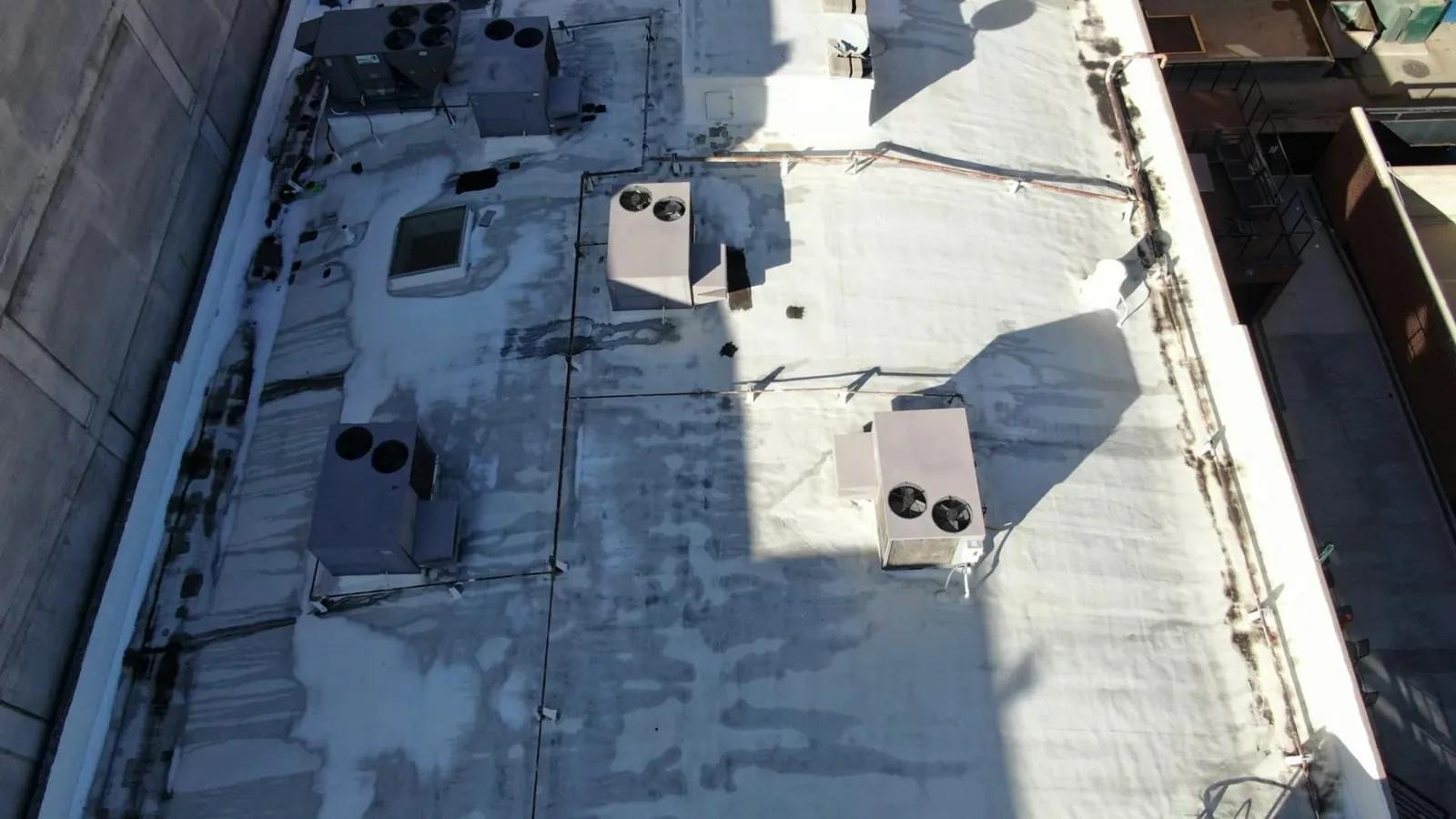
A curb repair may require a trade to isolate equipment, while a drain opening can affect a ceiling or stock area below. We identify those dependencies before deciding where to cut the membrane. Work along the Route 1 corridor may require different staging from a roof near Route 7. The inspection records the actual site limits rather than transferring conditions between commercial blocks. If the roof can be reached only in stages, the scope explains the dry-in point between visits.
Drain and scupper: check the route off the roof
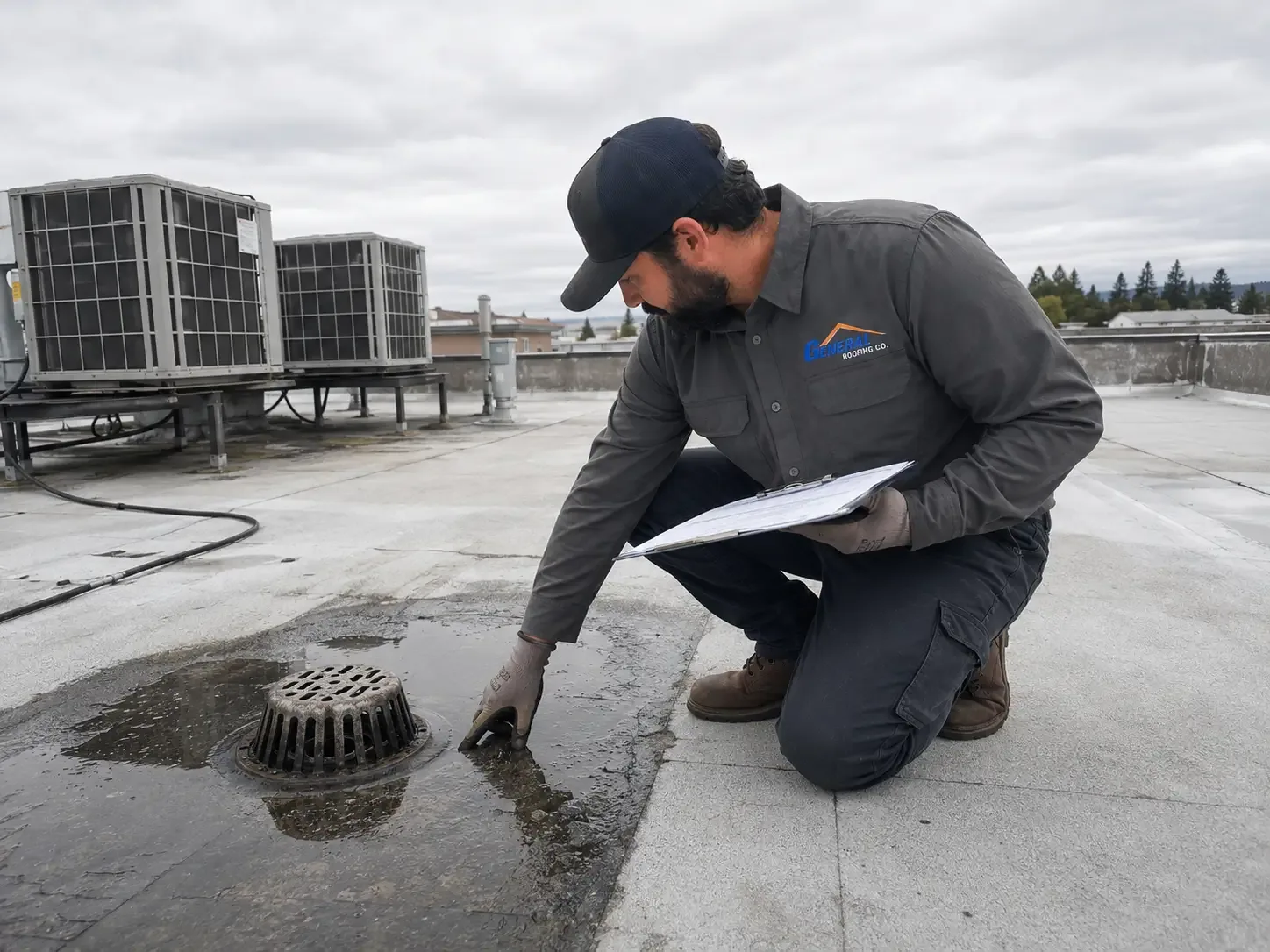
A drain bowl can be open while its membrane connection leaks. We check the strainer, clamping ring, flashing, sump, and overflow path, then look for low seams that hold water against a curb or wall. Water may cross a board joint before reaching an interior finish. We compare the visible mark with roof slope and the drainage layout, keeping each possible entry point separate until an opening or test shows the connection.
Scuppers need an unobstructed throat and a metal transition tied into sound roofing. Debris removal may restore flow, but it will not correct a loose flange, split flashing, or a roof plane that directs water away from the outlet. Drain and scupper service should identify which condition exists and whether adjacent membrane must be opened. A manager should receive a scope that names the component, the material to be removed, and the route water uses after the detail is restored.
Seam and flashing: match the method to the roof
Before applying new material, we identify the membrane and test whether its surface can accept a tie-in. A thermoplastic weld needs clean compatible sheet. EPDM requires its own primer and splice materials. Modified-bitumen, built-up, metal, and coated roofs call for different preparation. We check lap direction, fastener holding, curb corners, and the substrate at the edge of the opening. A patch that bridges a loose seam or covers wet insulation may hide the route without restoring the roof.
Flashing carries the membrane through a change in plane. At a parapet, curb, or pipe, we inspect the vertical leg, termination, and adjacent field. Sealant is a component, not a substitute for sound attachment. When the defect is a split transition rather than a failed field seam, flashing-failure repair should include the connection back to stable roofing. Photographs show the detail before removal and the restored tie-in. A written scope then distinguishes material replacement from routine sealant maintenance.
Repair decision: stop where sound material begins
A limited opening can be repaired when the nearby membrane is attached and dry material remains for the new tie-in. We remove failed roofing, prepare the surface, and extend the work only as far as the condition requires. If moisture reaches another insulation board or the deck, that finding changes the cut line. We protect the exposed area while the added work is priced, rather than closing over a layer that cannot support the repair.
Several leaks, loose edge metal, or recurring seam failure may point to a larger maintenance or replacement decision. Commercial roof repair should separate a local fix from conditions that continue across the field. Preventive service can track drains and transitions when the system remains serviceable. If repeated openings no longer tie to stable material, replacement planning compares removal, new insulation, and dry-in needs. The manager sees the evidence and the work limit before approving a wider project.
Cost and schedule: state the access assumptions
Price depends on roof type, opening size, connected details, wet insulation, removal, equipment coordination, and protection beneath the repair. A parapet and field seam may need separate materials. A blocked drain can be simple to clear, while a failed bowl connection requires membrane and flashing work. Temporary dry-in, interior protection, disposal, and after-hours building access can also change the sequence. We list the assumptions that affect the scope and the concealed condition that could add work.
Timing follows weather, dry substrate, material preparation, and the access window available for the roof and rooms below. If the opening exposes more moisture than expected, the repair pauses at a protected edge while ownership reviews the added work. A photo condition report records what was visible, what was opened, and where the repair stops. For a portfolio that includes South Norwalk, we tie photos, repair notes, and drain locations to each roof's address. The next decision stays attached to the inspected assembly.
Commercial Roofing Questions
Can the bus or rail connection tell us how a roof is built?
No. It helps frame access and scheduling, while the roof walk identifies membrane, drainage, attachment, and penetrations. We record building-specific conditions rather than infer a roof type from the district setting.
What should be checked when a storefront ceiling leaks?
We compare the room location with seams, curbs, wall transitions, and the nearest drain. Water may travel before it appears indoors, so the repair follows the roof-side opening and any wet layer found around it.
Does a clear drain mean its flashing is sound?
A clear throat does not establish that the membrane tie-in is sound. We inspect the bowl, clamping ring, membrane turn-in, overflow, and nearby low points. A clear throat can still have a loose connection or split material beneath the strainer.
How do you keep a repair from disrupting the business below?
We identify the area below the roof opening, set protection, and confirm access and material handling with the building contact. The work sequence includes a dry-in point if the permanent detail cannot be completed in one visit.
What makes a leak repair expand into a replacement discussion?
Wet insulation across separate areas, weak attachment, or repeated failures can leave no reliable field for another patch. We document those findings and compare the repair limit with the remaining assembly before recommending broader work.