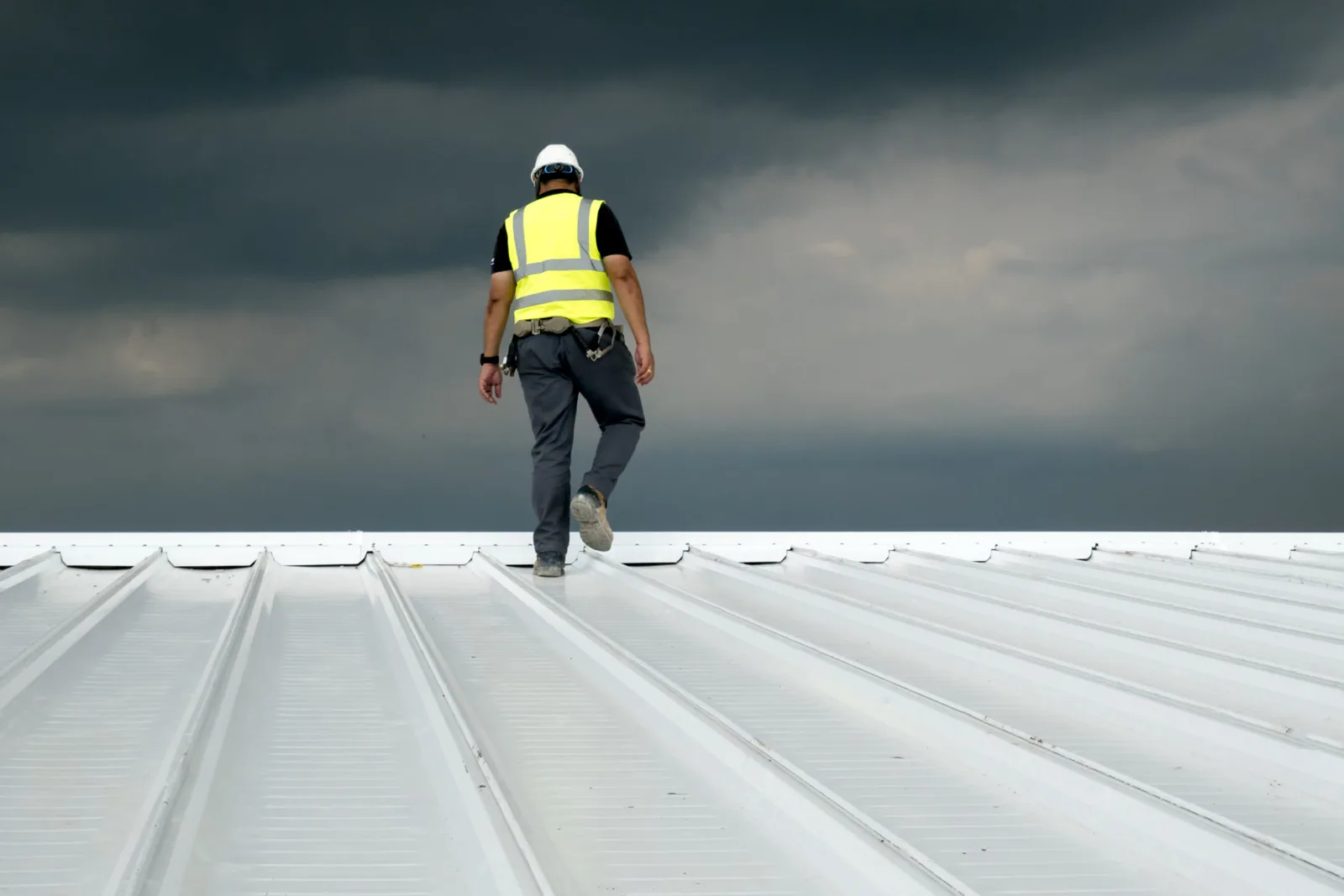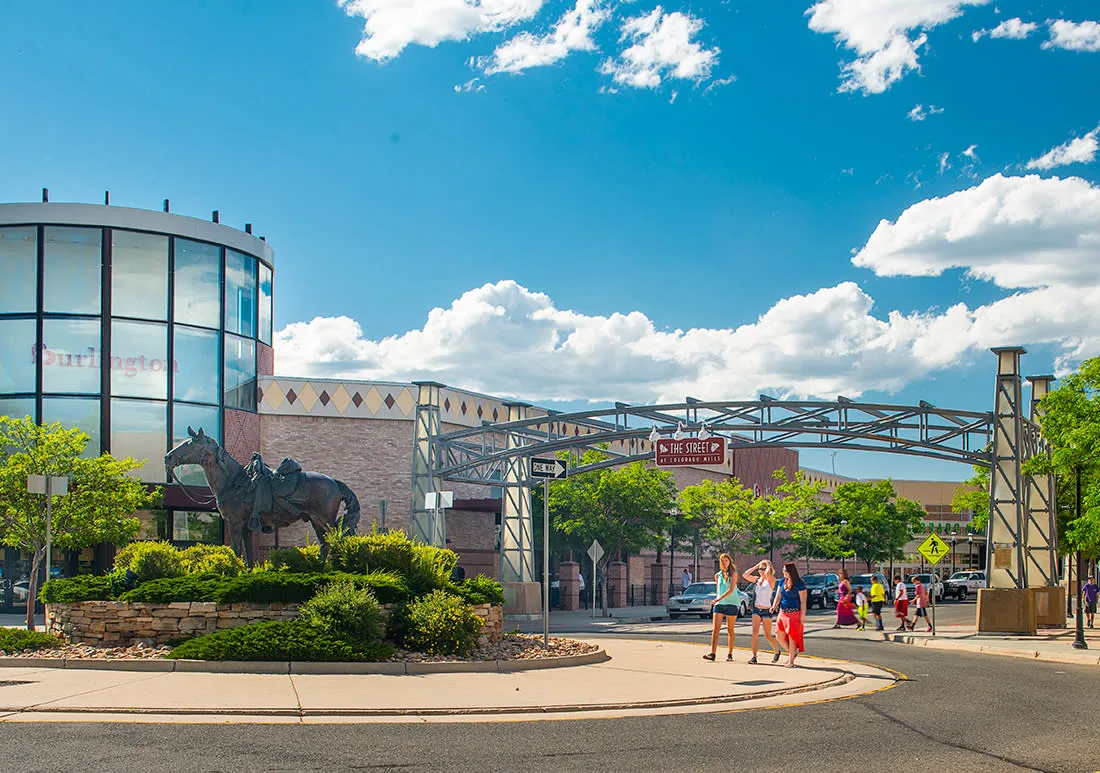
A drip above a common aisle can begin at a seam, curb, or roof drain beyond the ceiling mark. We map the ceiling mark back through the shared roof field and connected drainage details. Shopping centers connect storefronts, shared corridors, service areas, and rooftop equipment, so a roof opening can affect more than one tenant space. In Stamford, CT, we inspect the membrane, flashing, drains, and edge details, then map the work zone and protection needed below.
The scope should say what detail failed, how far the repair reaches, and what finding would widen it. A commercial roof inspection records roof zones and visible conditions rather than assuming one uniform assembly across the center. We review access, delivery paths, hours supplied by the property team, and any tenant areas requiring separation before work is sequenced.
Water path: connect the stain to the roof
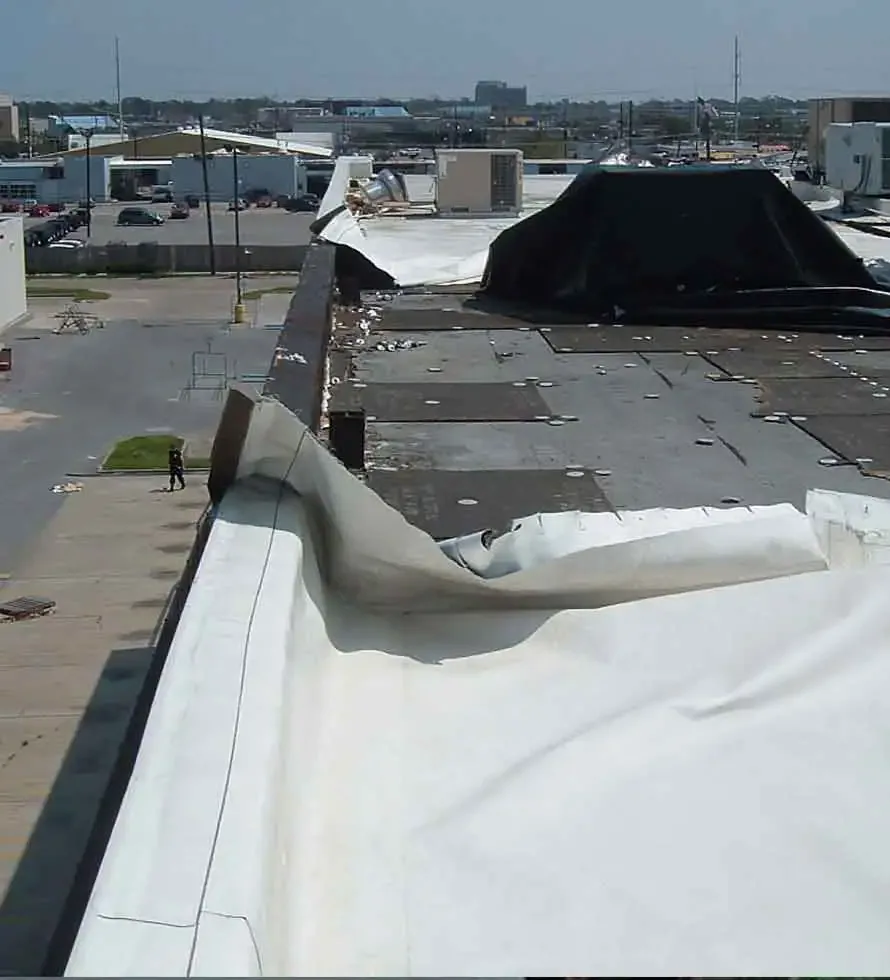
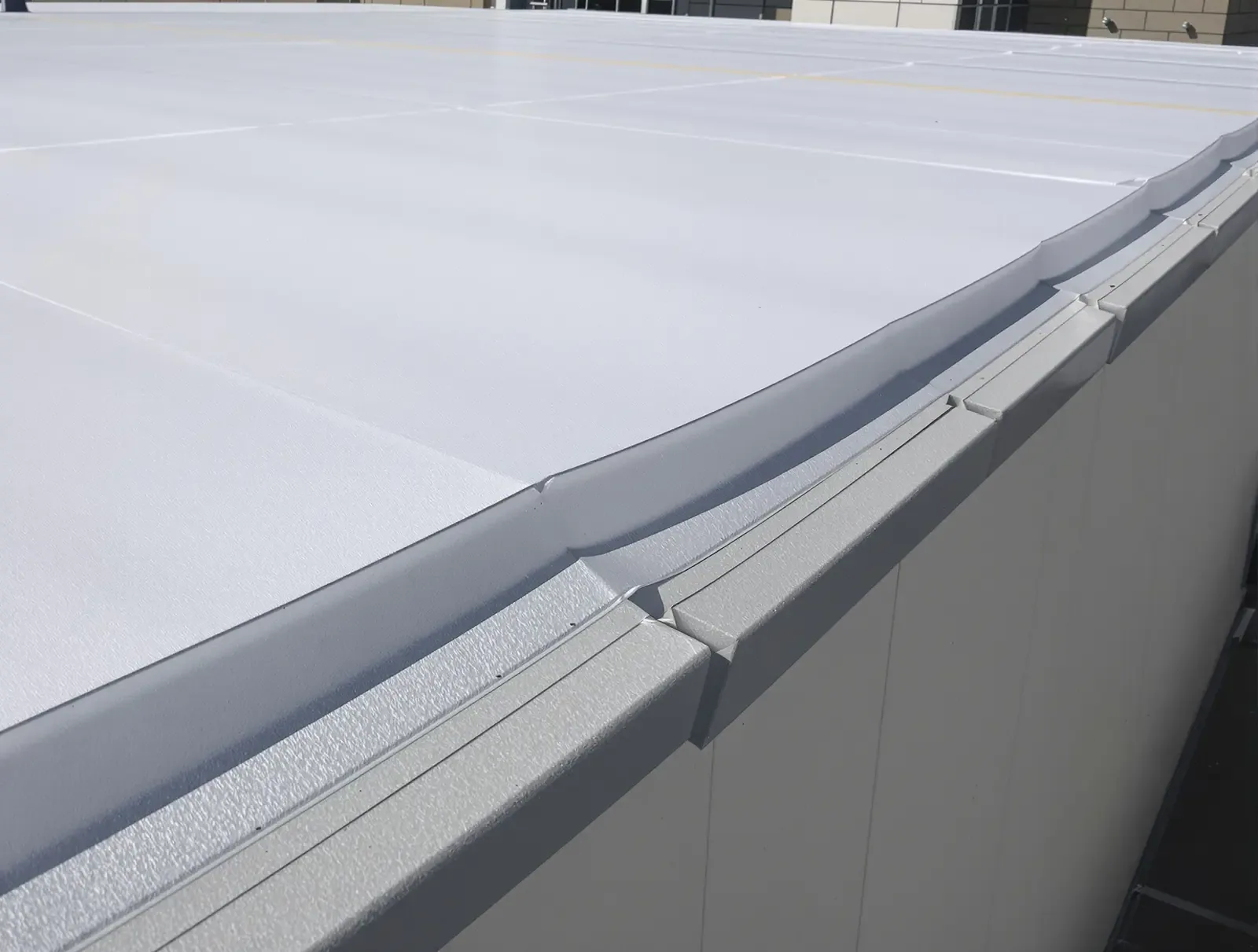
Water can run along a deck or insulation seam before it becomes visible inside a retail bay. We compare the reported location with roof drains, parapets, mechanical curbs, skylights, and membrane laps. A leak repair assessment checks the entry detail and nearby material, not just the ceiling below it. If insulation is wet, testing can define the removal area before the patch is installed.
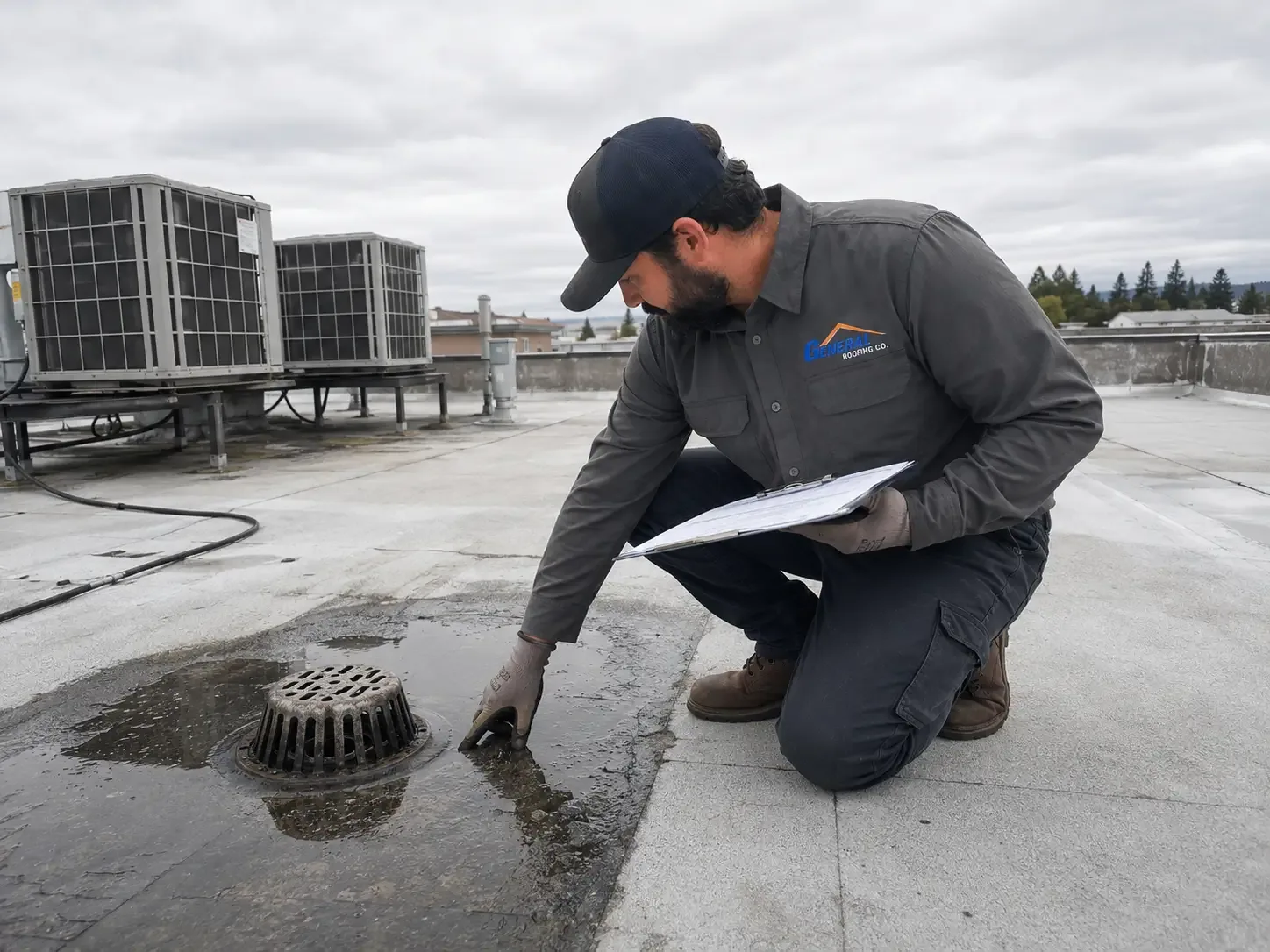
Stamford's winter brings recurring snow and subfreezing overnight temperatures. Meltwater can collect at low points, refreeze, or meet a detail that has shifted. We inspect drain bowls, overflow paths, seams, and metal returns for actual blockage or movement. A drain repair addresses an outlet defect; a separate lap failure remains a separate correction. That keeps the work line understandable when one interior report crosses multiple roof zones.
Tenant use: set a contained work area
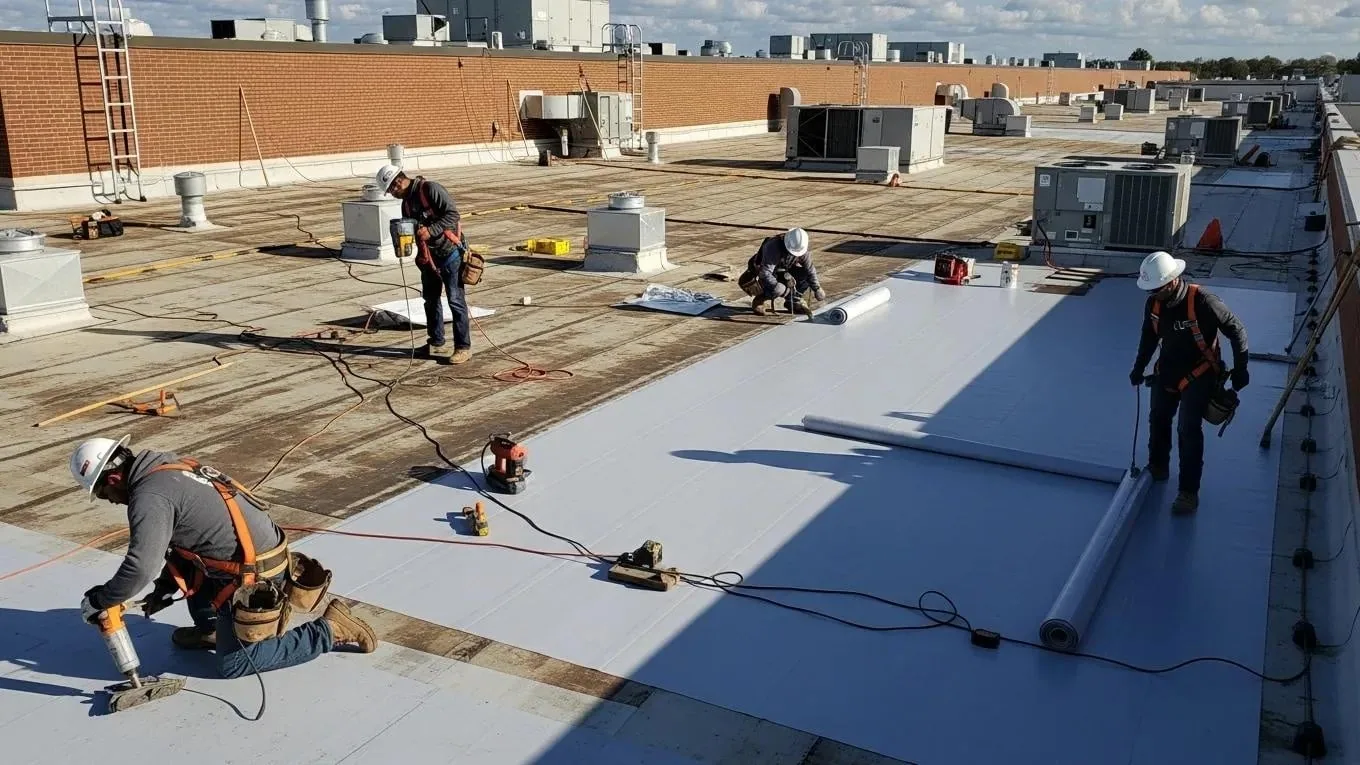
Retail hours, receiving windows, and shared entrances shape where material can be staged and how a crew reaches the roof. We confirm the lift position, route, barricade needs, and space that must remain open. Each work zone has an opening limit and a closeout condition. If removal uncovers wet insulation beyond the planned line, we document it and review the change with the property contact before widening the area.
Downtown and South End are Stamford's higher-intensity mixed-use areas, where office, housing, and retail uses occur together. That city pattern makes coordination relevant, but it does not establish any individual center's tenant mix or access rules. The property plan and field walk supply those details. A phased occupied-building reroof can separate roof areas, deliveries, and daily dry-in points so a completed zone is not left confused with the next one.
Drainage: protect shared low points
Long roof fields can send runoff toward a small number of bowls or scuppers. We check each strainer, flange, and membrane transition, then follow the route to the outlet. Debris, a narrow opening, or a failed lap can create different repair needs. If water remains across a field, the inspection considers slope and deck conditions instead of covering the low area with a surface patch. A commercial office roof review may raise the same slope or deck question, but the observed condition sets the correction.
Norwalk's plan identifies Route 1 and Route 7 commercial and industrial corridors along with pedestrian-scale business blocks in Norwalk Center and SoNo. Those patterns do not describe one shopping center, but they show why property access and roof-zone maps matter across nearby commercial districts. We note the inspected outlets, any obstruction, and the membrane tie-in. Photos let the property team compare future water reports with the point actually repaired.
System choice: fit the repair to the assembly
A single split lap with dry surrounding insulation may allow a limited repair. Repeated patches, wet layers, loose attachment, or deck deterioration can make a small correction unreliable. We inspect the existing system and use moisture testing or an opening when the result changes the recommendation. A PVC membrane or another assembly must suit the substrate, flashing, and project conditions. The membrane name alone does not answer whether a recover is appropriate.
Recovery may leave existing material in place only when moisture, attachment, deck, and permit requirements support the added layers. Otherwise, removal may be necessary to reach dry material. Cost drivers include tear-off, insulation, deck repair, drains, edge metal, protection, and the number of work phases. A recover evaluation describes what was inspected and what concealed condition could change the call. Tenant coordination affects sequence, but it does not replace the assembly review.
Local conditions: use the property's actual setting
NOAA's Stamford record places typical summer daytime maxima in the lower-to-middle 80s Fahrenheit and records cooling demand. Those conditions make inspection of exposed laps, sealants, metal returns, and curb details useful; separation, wear, or moisture testing establishes whether a correction is needed. At the center, the scope follows the roof zone and material found there.
Harbor Point is a broad mixed-use district in Stamford, while Downtown contains an urban mix of office, housing, and retail. A center in either area still needs its own loading route, roof access, and tenant-protection plan. A South End roof walk records the actual property conditions rather than assigning a district-wide assumption. The local context guides coordination; it does not replace inspection of the membrane and deck.
Closeout: show the repair limit
Before work begins, we agree on the zone opened, the detail to be repaired, protection below, and the point where the section will close each shift. Closeout photographs show the seam, curb, drain, or edge corrected. The record also lists any area that was not reached or any condition assigned to another trade. A grocery-store roof can have different interior operating needs, but its roof report should carry the same clear location and repair boundary.
Share the roof plan, tenant schedule limits, leak locations, service notes, and access rules before the walk. We compare those items with Diligence Notes and return a record that identifies the repaired detail, its limits, and any test or later work still open. If connected roofs share an access route, each area receives its own reference and closure point. This keeps follow-up tied to the section inspected.
Commercial Roofing Questions
Can a roof section be repaired while stores remain open?
That depends on the access route, work zone, protection below, and approved hours for the property. We define the area opened and the daily closeout, then coordinate entrances and receiving paths with the property contact. A concealed condition that widens the repair is reviewed before the work line changes.
Why does a leak appear far from the roof defect?
Water may travel along insulation, deck joints, or framing before reaching a ceiling. We inspect the roof area above and around the report, then trace seams, curbs, drains, and edges that could carry it. The repair scope names the entry detail rather than stopping at the interior mark.
How do you keep tenants informed about roof work?
The property team sets communication channels and access limits. We provide a defined work zone, route, and daily closure point for that coordination. If testing or removal expands the area, the change is documented before the sequence moves into another tenant space.
When is a recover possible for a shopping-center roof?
Existing layers need suitable moisture, attachment, and deck conditions, and permit requirements must allow the added assembly. Testing or a core opening may change the call. Wet insulation or weak attachment can require removal instead of covering the condition.
Which repair and handoff details should the property team retain at turnover?
It should identify the roof zone, corrected detail, photos, material removed, and any condition not reached. We note limits or work assigned to another trade so the next service visit begins with a usable record. The closeout does not imply that uninspected areas were cleared.