Water beside a refrigerated case can come from a roof opening, a condensate line, or moisture forming on a cold surface. We start with the ceiling report and inspect above it before choosing a roof repair. Grocery buildings combine sales areas, refrigeration equipment, exhaust, receiving space, and roof drains. In Stamford, CT, our Diligence Notes separate the roof detail from work assigned to mechanical service, then define how the repair area will stay protected.
We inspect seams, curb flashing, drains, insulation, and the visible deck where access allows. A commercial leak repair states where water enters and how far the membrane correction reaches. Moist insulation is tested before removal is extended. The scope identifies equipment routes, receiving access, and any interior area that needs protection during the work window.
Refrigeration curbs: separate roof and equipment work
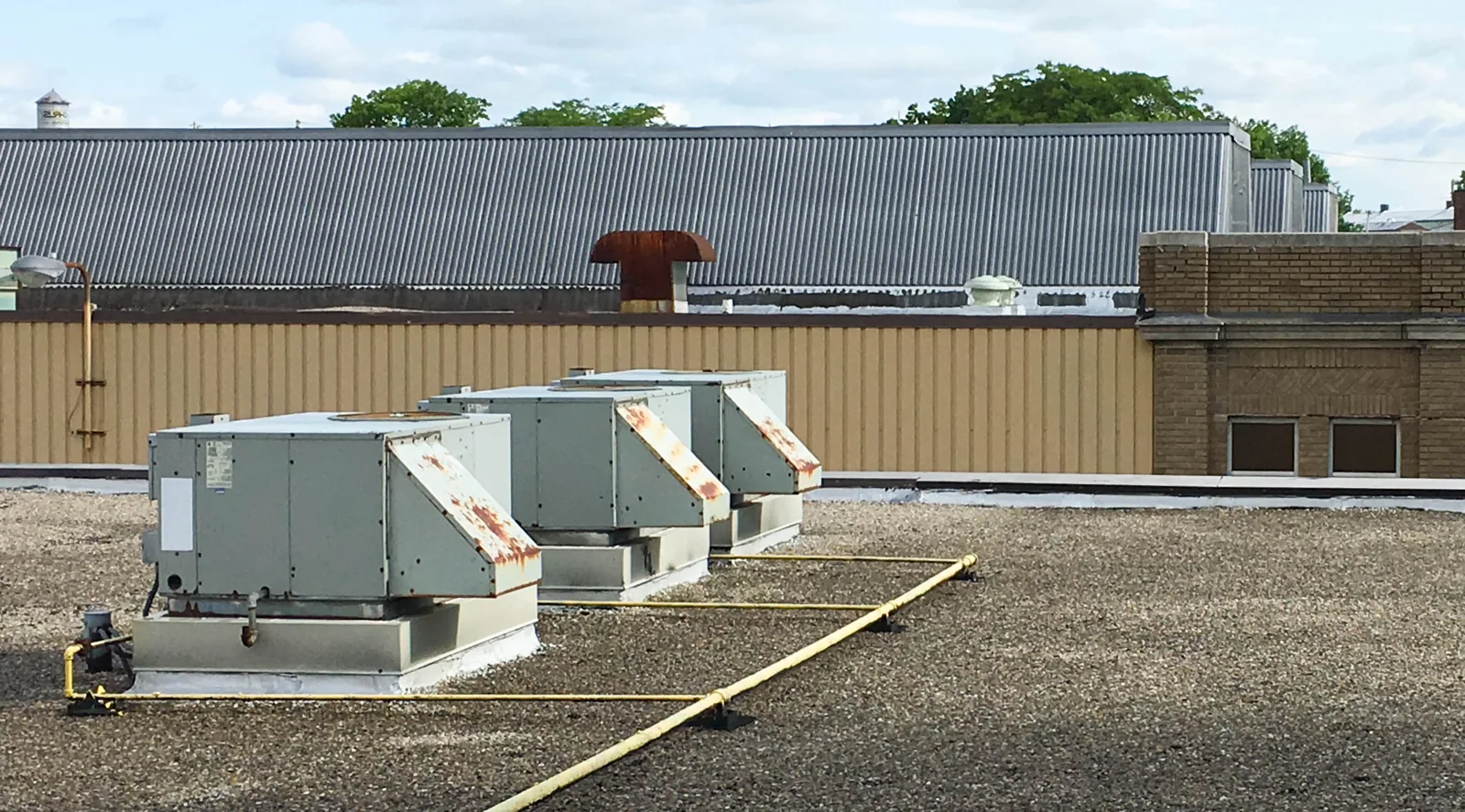
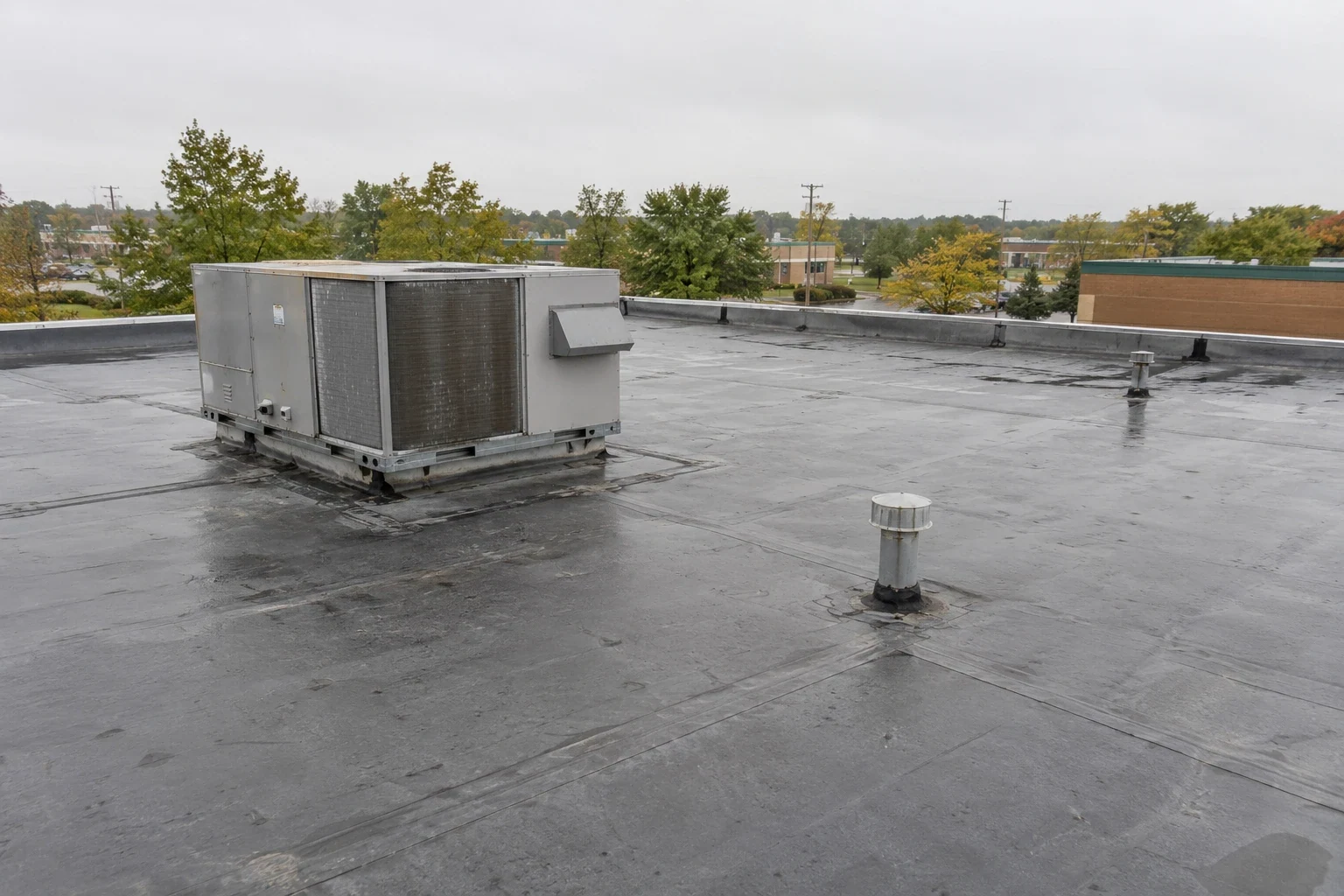
Refrigeration lines and rooftop units interrupt the membrane at curbs and supports. We inspect corners, counterflashing, sealant, metal returns, and the membrane tie-in for movement or openings. Equipment connections remain with the mechanical trade. If the curb itself is sound but flashing has separated, the roofing repair can stay focused on that transition. A curb flashing repair records where roofing work stops and another service responsibility begins.
Summer daily highs in Stamford's climate normals reach the low-to-mid 80s, with cooling demand through the season. At refrigeration curbs and unit-side transitions, we inspect membrane returns and fasteners where heat and service traffic affect the detail. We note the actual roof condition and compare it with the leak location. If water has crossed insulation or deck joints, the visible stain alone does not set the full repair limit.
Water path: test the roof above the report
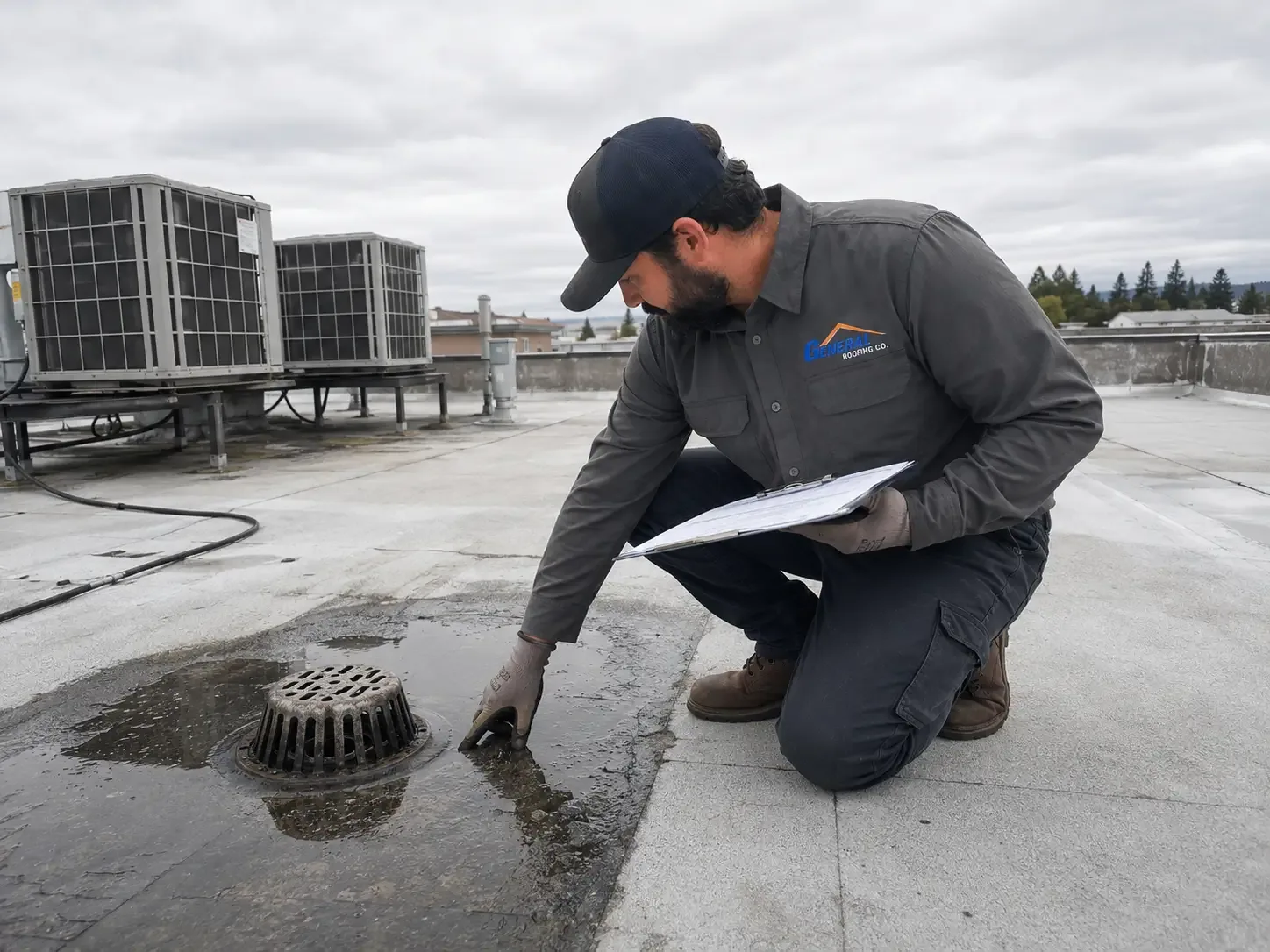
A drip near a cooler may be several feet from the roof entry. We follow seams, laps, curb edges, and low areas toward the reported interior location. If the suspected path reaches a drain, we inspect the bowl, flange, overflow, and surrounding membrane. A drain and scupper correction addresses the outlet detail; it does not replace repair to a separate seam or curb. The work record distinguishes those conditions by roof zone.
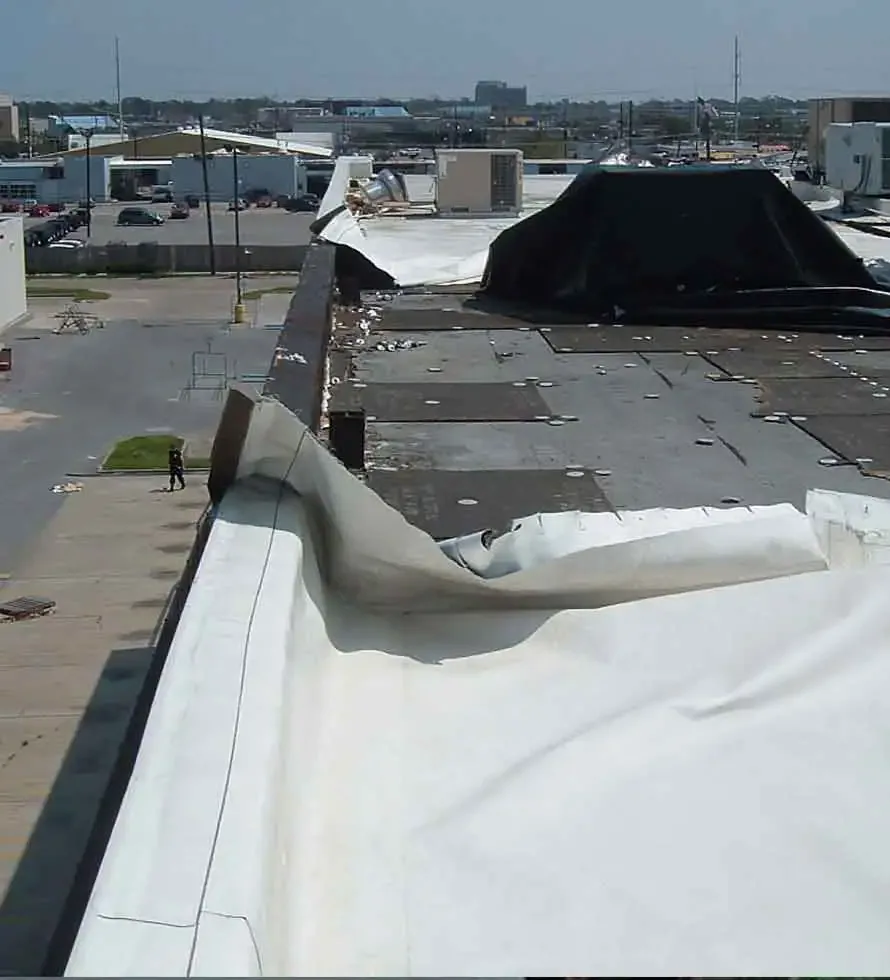
Stamford's winter pattern includes recurring snow and subfreezing overnight temperatures. Meltwater can remain where a drain is obstructed or an edge transition has shifted. Winter inspections start at the outlet and membrane return, where snowmelt can expose a blocked path or shifted detail. We document the affected zone and test material before setting the permanent repair boundary.
Receiving: protect the delivery route
Roof work can bring a lift, membrane rolls, insulation, and removed material through the same ground areas used for receiving. We confirm a staging location, delivery route, and area that must remain clear before work begins. On the roof, each opening has a defined limit and a dry-in point. The daily plan records which section is open and when it is closed. If a test shows wet material beyond the marked limit, the manager reviews that finding before removal reaches another zone.
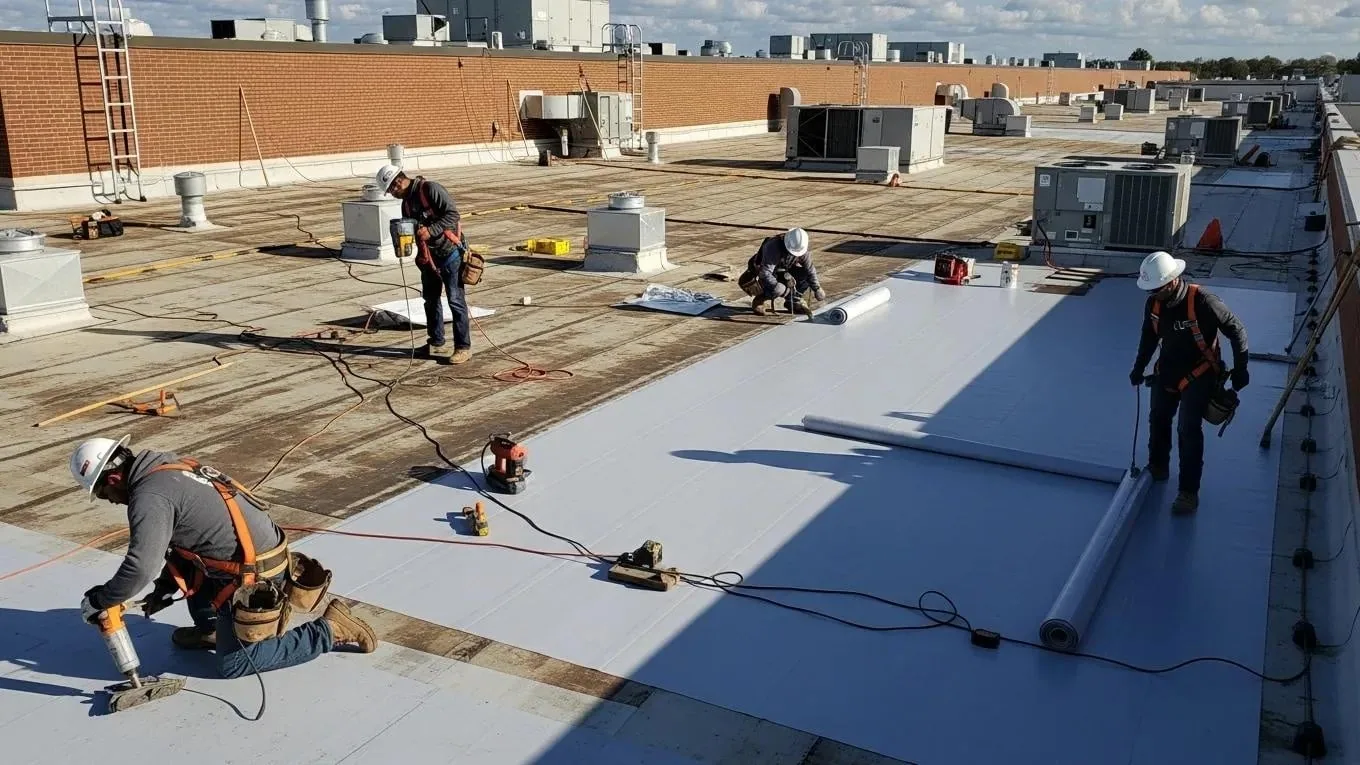
A phased occupied-building reroof can break a larger field into manageable sections and coordinate protection below. We also mark equipment access and routes that another trade needs. That is particularly useful when refrigeration service and roof work could overlap. The roofing scope identifies the sequence and closeout conditions without assigning mechanical tasks to the roofing crew.
Drainage: keep runoff moving
Grocery roofs can carry several drains, overflows, and equipment curbs across one membrane field. We check each outlet for debris, a loose flange, or a failed transition, then trace runoff toward it. A low area can reflect slope, deck, or water-flow conditions; the scope names which finding is confirmed. A roof inspection should record outlets and adjacent seams rather than marking the whole roof as sound after one drain is cleared.
Wind, heavy rain, surge, and erosion all affect the Connecticut coast along Long Island Sound. After a coastal storm, we check the store roof's edges, drains, and curb transitions for displaced material, debris, and water entry that matches the interior report.
System choice: follow the test results
A narrow seam defect with dry material beside it may be repaired locally. Repeated leaks, widespread moisture, loose attachment, or a deteriorated deck can push the work toward removal. We check the current membrane and use testing when it changes the scope. For a PVC roof, we confirm the deck, attachment, drain transitions, and curb details can receive that material before recommending it.
A recover requires suitable existing layers, stable attachment, a sound deck, and permit conditions that allow the added system. If those checks fail, tear-off may be necessary. The scope itemizes insulation, deck repair, curb work, drain correction, edge metal, staging, and interior protection by roof zone. That lets the property team review the actual drivers rather than a generic allowance.
Local conditions: inspect the property in context
Downtown and the South End are Stamford's higher-intensity mixed-use areas, while most city land remains low-density single-family. At a grocery roof in either setting, we verify the hatch, refrigeration route, drains, and receiving access before setting staging.
Stamford summer normals reach daytime highs in the low-to-mid 80s, with measurable cooling demand. We check refrigeration curbs, exhaust transitions, and membrane laps for separation, open sealant, or wet material, then scope the repair from those findings.
Norwalk Center and SoNo have pedestrian-scale retail and business blocks. A Norwalk Center roof walk can involve a different delivery approach than a Stamford store, so the route and staging area are verified property by property.
Closeout: document the work boundary
The closeout identifies which roof zone was opened, the membrane detail repaired, and the final tie-in. Photos document the drain, curb, or seam and any material removed. We note where a refrigeration or other trade must return, as well as any area not reached. That separates the roofing work from equipment service.
Send the store's roof map, leak notes, refrigeration access needs, and delivery constraints. We will inspect the relevant field and report the entry detail, tests performed, and the repair boundary. Any broader system option is listed apart from confirmed corrections. The record can then be matched to the next service call without assuming the whole roof shares one condition.
A shopping-center roof can share tenant access paths, while a big-box retail roof may have another loading layout. Each still needs a service record tied to the inspected roof zone.
Commercial Roofing Questions
Could a wet area near refrigeration be condensation?
It could be, so we inspect the roof assembly and note whether a mechanical or interior condition needs separate review. We check seams, curbs, insulation, and the path above the report. The written scope identifies the evidence supporting a roof repair and any work that belongs to another trade.
How do you protect refrigeration service access?
We confirm clearances, equipment routes, and the timing of any work near a unit. Roofing covers membrane and curb details; the mechanical trade retains its equipment connections. The daily sequence shows which roof zone is open and how access will be preserved.
What happens when wet insulation is found?
We map the test results and set a removal line at dry, stable material. If moisture continues beyond the planned area, the property contact reviews the finding before the scope expands. Deck condition is checked before the assembly is closed.
Can grocery-store roofing be done in phases?
Yes, when access, weather, and work boundaries support a controlled sequence. We divide the roof into sections, define each dry-in point, and coordinate staging with receiving needs. The scope identifies where operations or another trade affect the order.
Which details should appear in the repair record?
Record the roof zone, defect, material removed, tie-in, and closeout photographs. Note drains or curbs inspected, access limits, and any condition left for another trade. The record should distinguish completed work from areas that were not opened.