A wet patch near a sales-floor column may sit below a roof seam several spans away. We start at the visible report, then trace the water path across the membrane field, curb details, and drains. Big-box retail roofs often combine broad low-slope areas with loading zones, rooftop equipment, and perimeter transitions. In Stamford, CT, the repair plan has to keep those parts distinct so a limited leak does not become an unexplained roof-wide allowance.
We record the inspected zone, visible condition, and any point where wet insulation or deck damage could widen the work. A commercial roof inspection gives the property team photos and a condition-based recommendation. We confirm roof access, material staging, loading routes, and the parts of the building that need protection before opening the membrane.
Roof field: find the detail carrying water
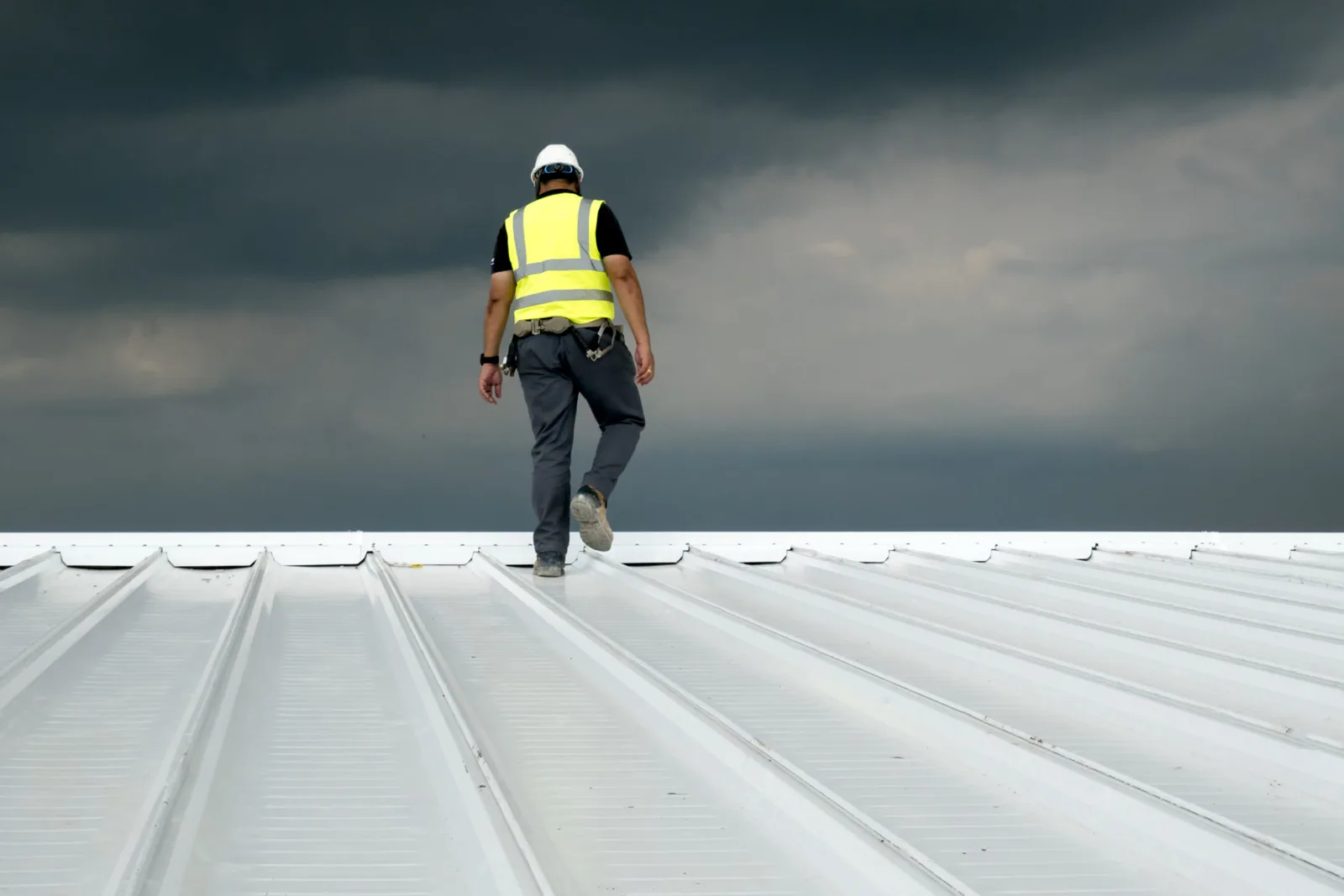
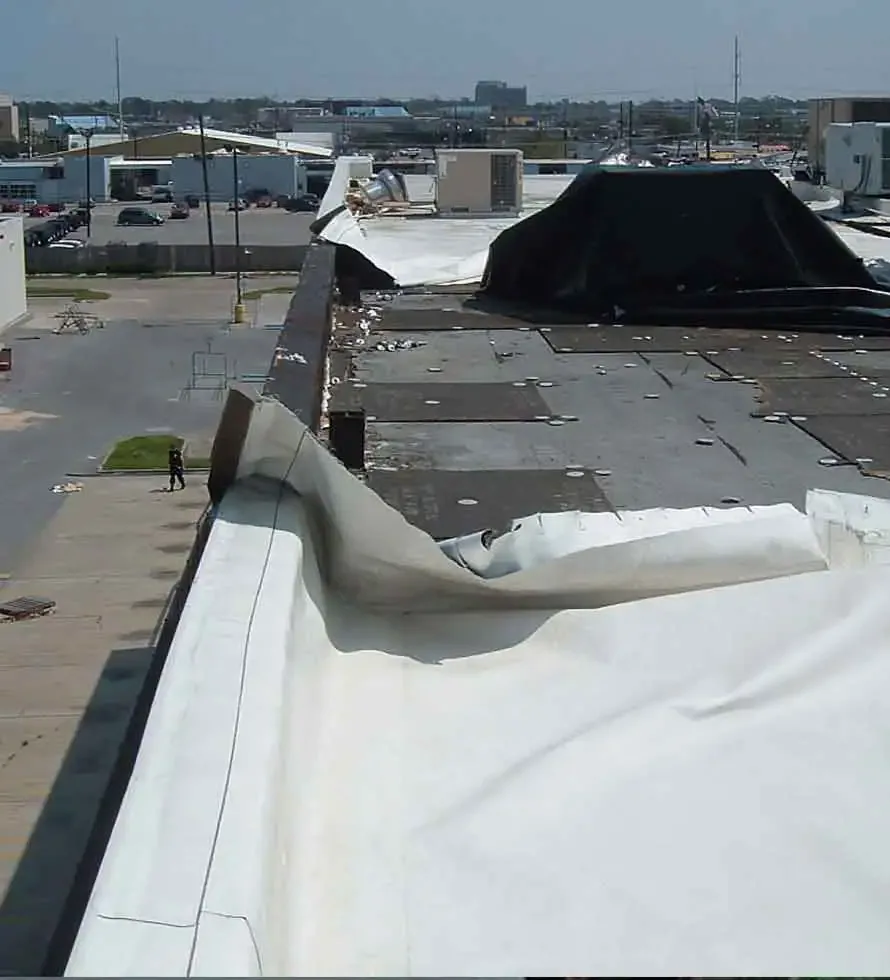
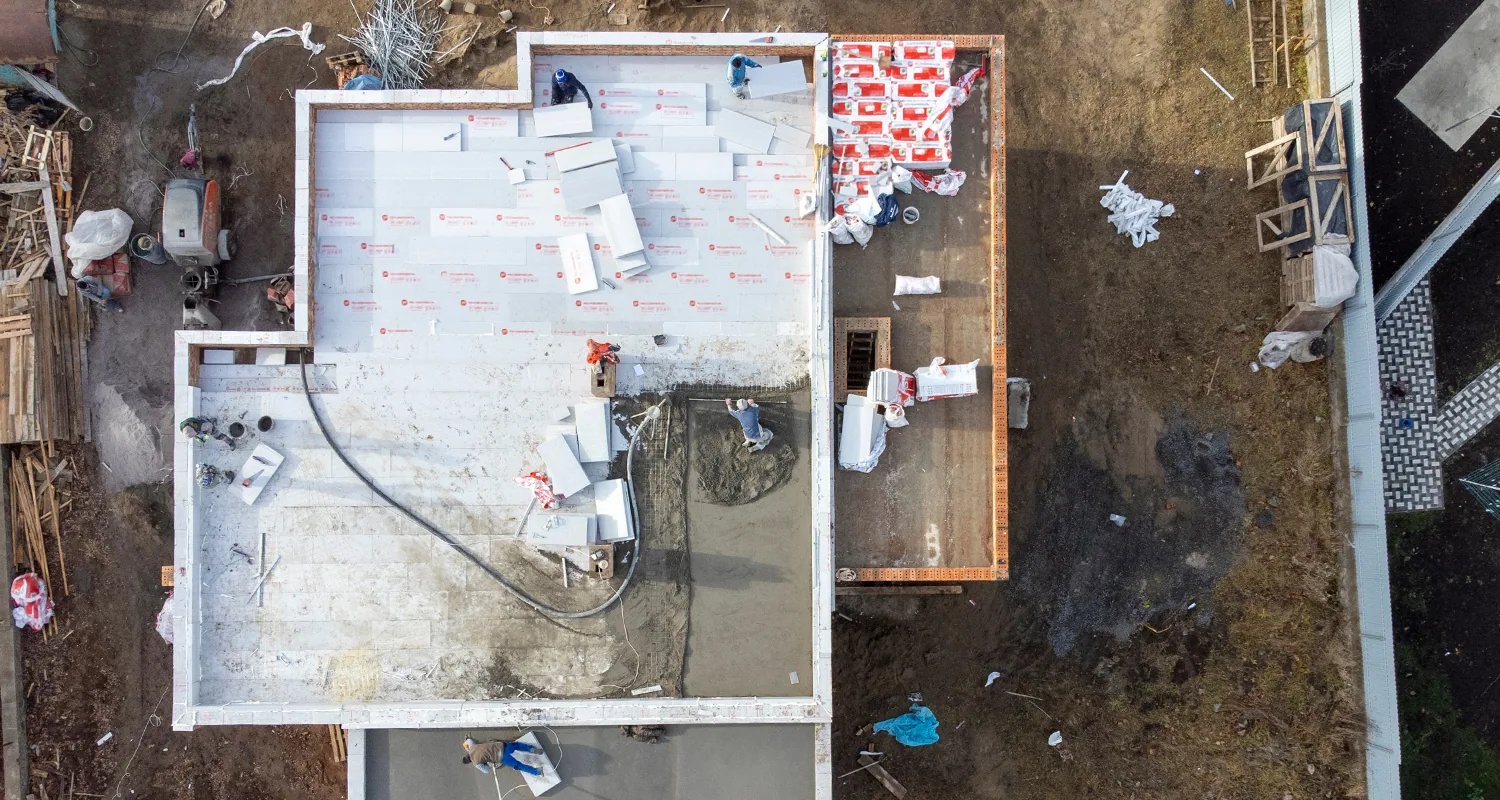
Water can cross a wide roof field before it reaches a ceiling or wall. We follow lap direction, inspect seams above and beside the report, and check transitions where membrane meets a curb, parapet, or metal edge. A commercial leak repair should locate the entry detail and show how the new material ties into stable membrane. If a test opening is needed to measure wet insulation, its location and effect on the repair boundary belong in the scope.
Stamford winters bring recurring snowfall and subfreezing nights. We check drain bowls, overflow paths, edge returns, and seams where meltwater can remain, then set the repair line from the condition on that roof. A drain and scupper correction is listed separately from a membrane repair when each has its own defect and tie-in.
Loading access: stage around daily movement
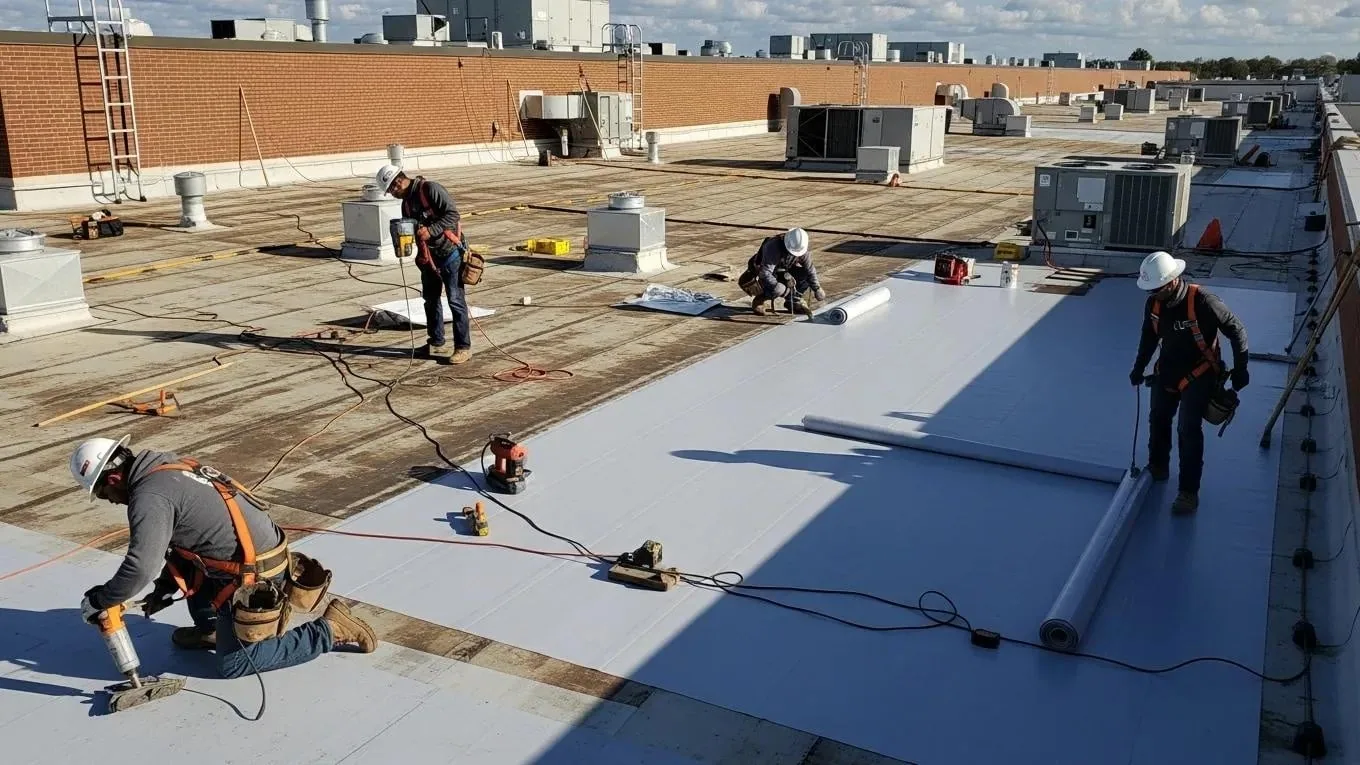
Receiving activity, delivery timing, and material storage affect the route to the roof. We identify the lift position, loading areas that must stay clear, and any ground protection needed before tear-off or membrane rolls arrive. On the roof, the crew works within an agreed zone and closes each exposed section to the specified dry-in condition. If removal uncovers damaged deck or additional wet material, we document the finding and review the change before extending the opening.
A phased retail reroof can separate field sections from loading and service areas, with a daily closeout point for each. The property contact sets operating constraints; the roofing scope identifies the access and protection steps that those constraints require. We also keep a daily note of which roof zone is open, closed, or held for review. The sequence also marks where mechanical, electrical, or refrigeration trades retain responsibility for their equipment connections.
Drainage: check where the roof field empties
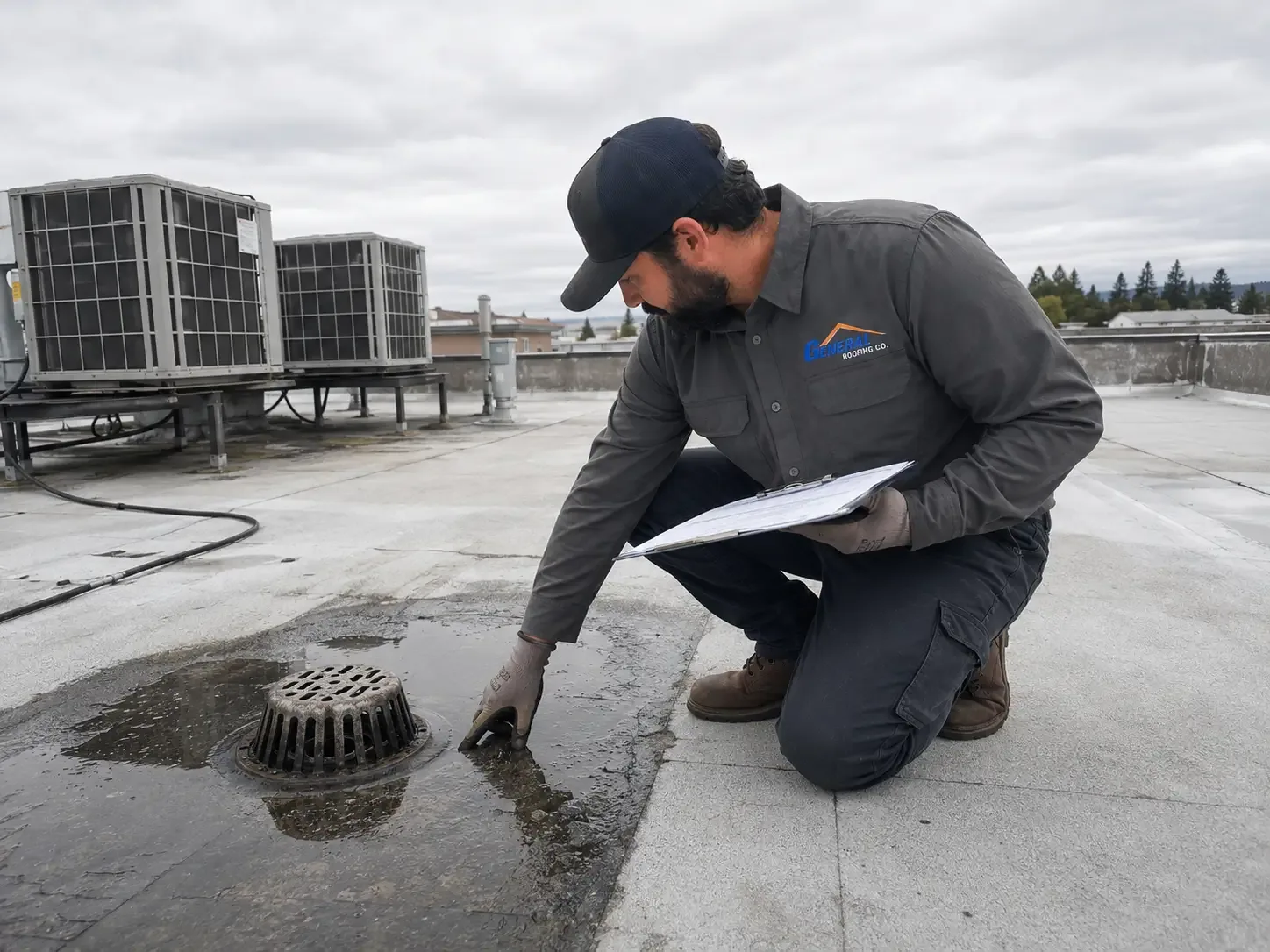
A large roof may funnel runoff to a small number of outlets. We trace the low areas toward each bowl or scupper and inspect its strainer, flange, and surrounding membrane. Debris or a failed joint can restrict flow, while a separate depression may point to slope or deck conditions. A shopping-center roof can also combine several connected fields, but every outlet is checked on its own route. We record what was cleared, repaired, and left for broader evaluation.
Norwalk's Route 1 and Route 7 corridors carry commercial and industrial activity; Norwalk Center and SoNo retain pedestrian-scale business blocks. A delivery route to a roof still depends on the property's service entrance, loading rules, and drain layout. We confirm those before the first pallet or lift arrives. We match each finding to the inspected roof zone and the detail that may be carrying water.
Assembly: test before choosing replacement
A single open lap with dry adjoining material can be repaired without extending the opening across the field. Several wet areas, loose attachment, or deck deterioration call for more investigation. We map the test results and check how they affect the removal line. For TPO roofing, the detail must fit the deck, fastening approach, perimeter, and curb transitions found on this building, not a system label alone.
Recovery can avoid some tear-off when the existing assembly is dry, secure, and supported, and when permit conditions allow another layer. If those conditions are absent, removal may be needed. Cost follows the quantity of damaged insulation or deck, drain and edge work, equipment protection, material movement, and phasing. The recommendation names each confirmed need and the condition that remains to be tested.
Stamford context: connect climate to inspection
NOAA's Stamford normals record summer daytime highs generally in the 80s and measurable cooling demand. We use that seasonal signal to prioritize curb and lap inspections around rooftop equipment. A repair still requires a visible defect at the property; climate alone cannot set the replacement line.
Downtown and the South End are Stamford's mixed-use growth areas. At a retail property, we map lift access and ground protection from the layout on site. Route 1 connects Stamford with Greenwich and Darien, giving the property team a clear corridor reference for service planning. We verify the actual delivery route before staging. At a retail property in the South End, we verify the lift position, receiving path, and ground-protection area before staging.
Repair record: show what changed
The closeout should mark the field area, repair detail, and tie-in, with photos showing the finish. We identify any portion not reached and note whether another trade owns a remaining condition. That record allows the next manager to compare a later report with the exact zone rather than infer that a broad field was cleared.
Provide the roof plan, leak location, service history, and receiving limits. We use them to locate the affected field and record the details tested. Where concealed conditions remain, the recommendation names the next inspection step before broader work is priced. The written scope separates confirmed work from an option that depends on further opening. A grocery-store roof has different equipment and interior needs, but its repair record also follows the tested field. We photograph each opened zone before closing it.
Retail work also needs a clear division between roof access and store operations. Identify delivery windows, protected entrances, temporary barriers, and the contact who can approve a change in the work zone. A repair crew should leave each opened area watertight at the agreed stopping point and record any condition that remains for a later visit. Those notes help managers coordinate maintenance without treating an isolated leak as a building-wide failure.
Commercial Roofing Questions
How do you trace a leak across a broad retail roof?
We map the interior report to a roof zone and inspect seams, curbs, drains, and edge transitions along the likely water path. Trace the roof path above the affected sales-floor zone before opening the membrane. The written scope identifies the entry detail and any test area needed to define wet material.
Can reroofing stay clear of a loading area?
The access route and delivery schedule set the staging plan. We confirm where lifts and materials can be placed, protect the ground route, and divide work into sections with stated closeout points. A change caused by concealed damage is documented before the area expands.
When do conditions across adjoining retail roof zones support replacement over spot repair?
Repeated seam failures, broad wet insulation, weak attachment, or deck deterioration can make a patch too narrow. We inspect and test where the result could change the scope. A localized defect with stable surrounding material may still support a smaller correction.
Will a recover avoid all tear-off?
Only when the current assembly is dry enough, securely attached, and supported by a suitable deck, with permit requirements allowing another layer. If those conditions fail, removal may be needed. The recommendation identifies which observations or tests support the choice.
What belongs in the retail roof closeout?
We list the roof zone, work completed, tie-in, photographs, and any area not reached. The record also identifies trade handoffs and unresolved conditions. That helps the property team connect later service to a specific part of the roof.