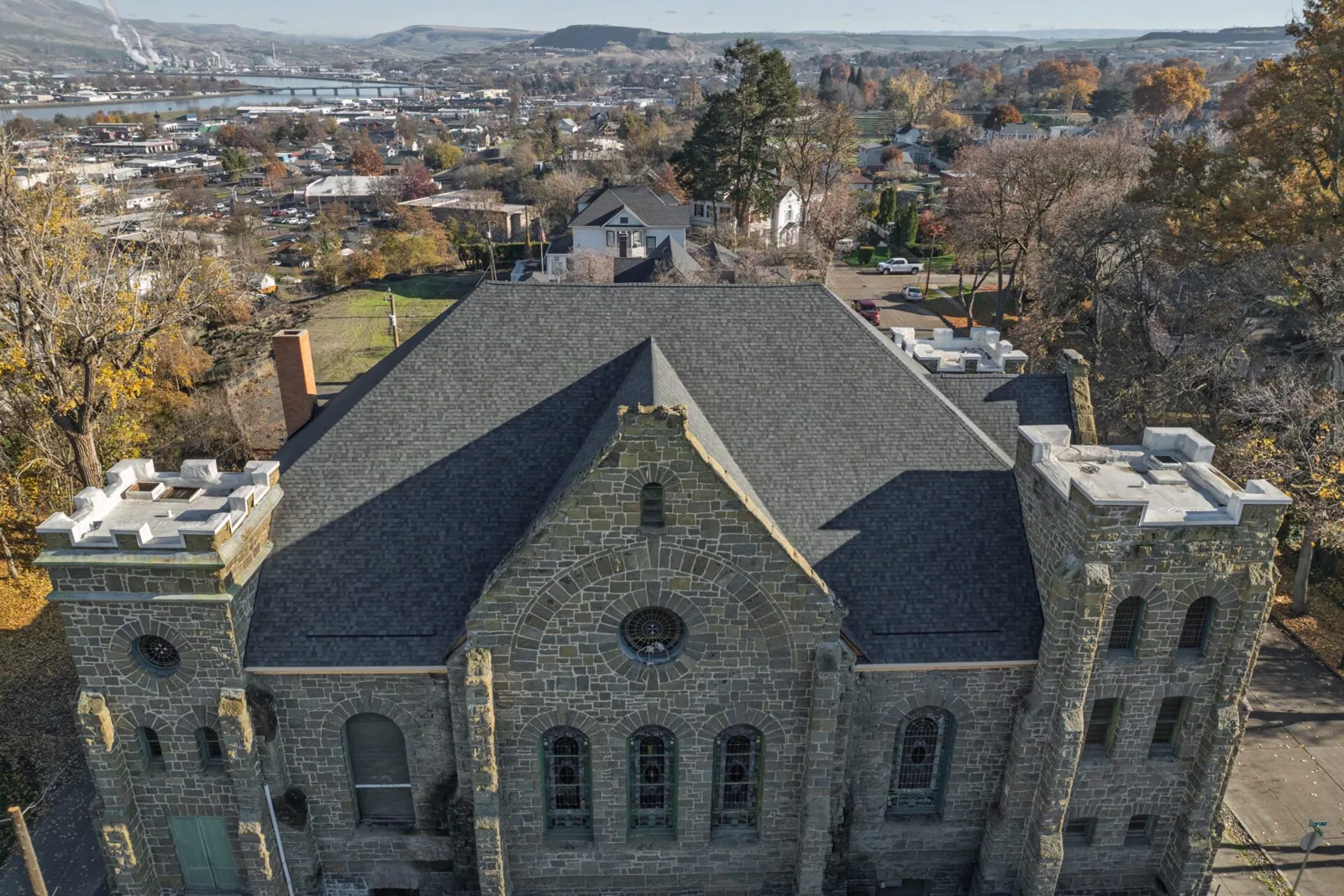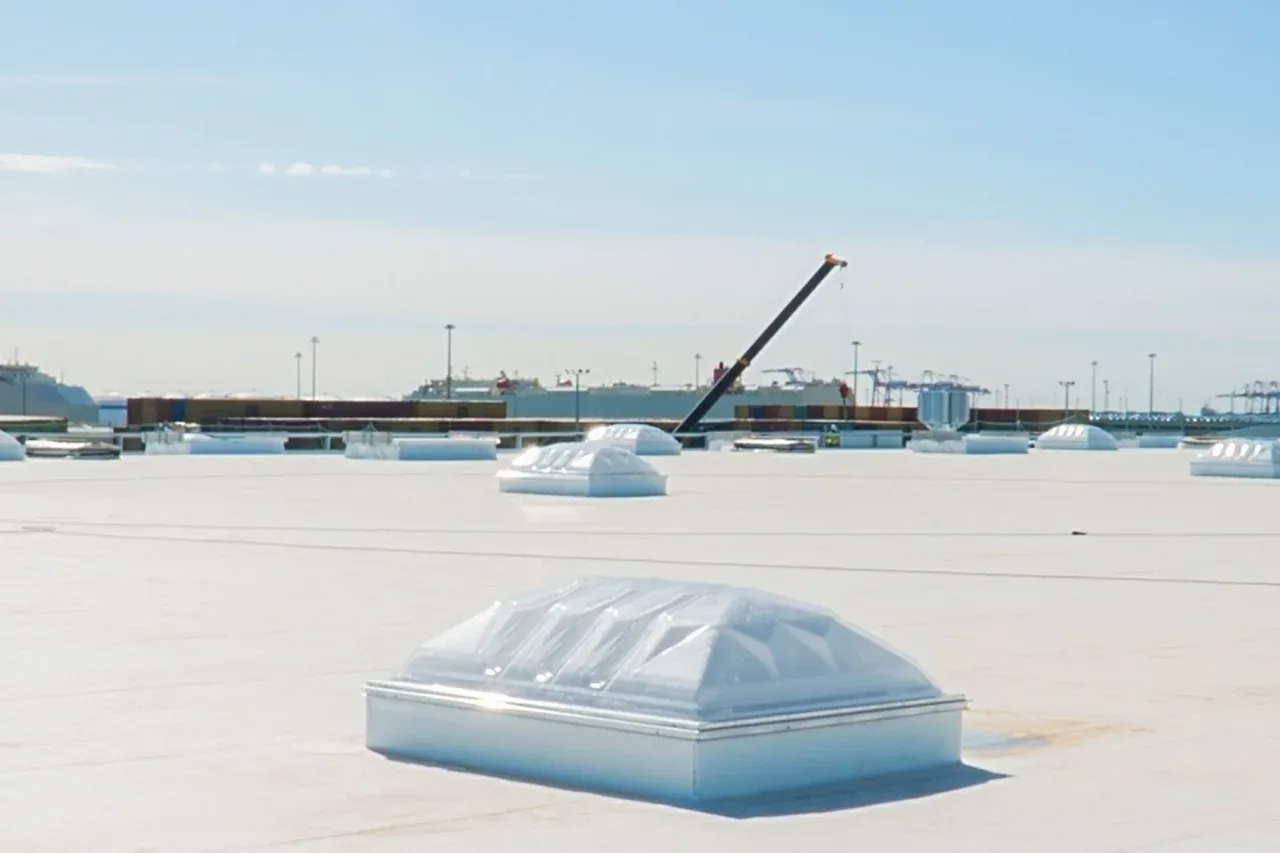
A stain beside a skylight curb can start at the uphill flashing, a corner seam, or the membrane tie-in. In Stamford, CT, we inspect the curb, cap, fasteners, and roof surface before treating the opening as the only defect. Winter snow and freezing nights put attention on laps that hold water or shift at a transition. A roof condition inspection traces the wet area back to the curb and nearby field seams. The repair must keep the opening watertight while preserving the roof assembly around it.
Curb corners: trace the leak before opening the roof
Water at the lower corner does not identify the entry point. We check each curb face, corner fold, counterflashing, and the membrane return on all sides. A lifted corner can admit water that travels along the roof before it reaches a ceiling. We compare stains with the curb slope, nearby seams, and insulation condition, then mark the likely path. If the wet area extends past the opening, the repair boundary should include the affected field detail instead of hiding it with a bead of sealant.
We also look at how the curb meets the roof system. A single-ply membrane may turn up and terminate beneath a metal counterflashing. A metal roof may use a curb cap and formed panels that move differently as temperatures change. The flashing detail must let the roof move without pulling a corner open. We record loose metal, split sealant, open laps, and any soft substrate that changes the scope. A repair can stay local when the surrounding material is dry and secure.
Skylight frame: separate glazing from roof flashing
Condensation or a failed glazing gasket can resemble a roof leak. We inspect the skylight frame, curb top, perimeter seal, and the underside where visible before assigning the water to the roof. The frame and flashing are separate interfaces. Repairing one does not correct a defect in the other. We note whether water appears at a glazing joint, a curb seam, or the roof-side membrane, and identify any access limit that prevents a close look.
At the roof surface, we check that the flashing rises high enough to shed water, corners are closed, and laps face away from runoff. On a TPO assembly, the weld around the curb must remain continuous; on EPDM, the flashing and seam geometry must accommodate membrane movement. We inspect the material and tie-in in place before recommending a patch or replacement. TPO curb flashing and EPDM flashing details need different tie-ins, so we match the repair to the installed system.
Pipe and equipment openings: protect each transition
Vents, conduit, and equipment supports create smaller openings with their own collars, boots, and seal lines. A split boot or loose clamp can leak even when the skylight curb is sound. We map nearby penetrations before work begins, then keep each repair tied to the opening that shows a defect. If several transitions share a wet area, we check whether water is following a seam or insulation layer between them rather than assuming every penetration failed.
Curbs that support equipment need clearance for service as well as a sound roof tie-in. We look for unsupported edges, trapped debris, ponding at the uphill side, and sealant that has lost contact. Any change to equipment supports or wiring remains a separate coordination item unless it is included in the roofing scope. The work plan states how the opening will be protected while the flashing is removed and what must be dry before the new tie-in is closed.
Stamford roofs: coordinate access with the work below
Downtown and South End Stamford include higher-intensity mixed-use areas, so a curb repair may sit over offices, homes, or retail space in the same building. We identify the room or operation below when the owner can provide it, protect the work area, and keep debris out of occupied space. West Side is a Village Commercial district; there too, the actual roof construction decides the flashing detail. Mixed-use properties put interior protection into the work plan when occupied rooms sit below the curb.
Before the roof opening is disturbed, we review hatch or ladder access, nearby mechanical equipment, and the route for moving old metal and membrane. Skylight work may require a controlled area below the opening. We agree on how that area will be protected and who can release it after the repair. Roof access in Downtown Stamford starts with the building's route and conditions below; West Side commercial work follows the flashing detail on site.
Repair scope: state what changes the recommendation
A focused repair is reasonable when the curb is stable, the adjacent roof is dry, and the flashing can be tied into sound material. Wet insulation, a deteriorated curb, or damage extending across multiple seams can move the work beyond a small patch. We separate those conditions in the written scope. A photo condition record can show the curb faces, corners, and nearby roof field before and after work, with limits noted where visibility or access is restricted. A frame that remains in place still needs a stable top and corners that hold their shape. We check for corrosion, loose fasteners, separated joints, and movement where the curb meets the deck. The repair notes distinguish the curb itself from the flashing that sheds water onto the roof. That distinction affects removal and material selection. When the frame is distorted or its support is deteriorated, new perimeter flashing cannot correct the underlying movement. We describe that condition before work proceeds, rather than covering it with a larger metal cap. Weather protection during the work is part of the sequence. We remove only the area needed to expose the transition, keep the opening protected while the tie-in is rebuilt, and close the roof surface before moving to another detail. The owner receives a clear note about any interior protection needed and the area below that should remain clear while material is handled overhead. These steps are especially useful when the skylight serves a room that remains in use.
Removal should expose enough of the transition to verify the substrate and membrane connection. We replace failed flashing, close corners, and make the roof tie-in with materials suited to the assembly. The closeout identifies what was opened, what was repaired, and any condition outside the authorized area. It also records whether glazing, curb carpentry, electrical work, or equipment service needs a separate trade. That boundary prevents a roof flashing repair from being mistaken for a full skylight or equipment replacement.
Commercial Roofing Questions
Why does a skylight leak only during wind-driven rain?
Wind can push water under a lifted corner or across an exposed lap. We inspect the uphill curb face, corner seams, and nearby field before selecting the repair.
Can you seal the skylight without replacing the curb?
A sound curb can often remain when its frame is stable and the roof tie-in can be rebuilt. We check the substrate and flashing first, then state which parts need removal.
How do you tell a roof leak from skylight condensation?
Water at the glazing frame may come from a gasket or indoor condensation, while a roof-side defect appears at the curb or membrane transition. We inspect both interfaces where accessible.
What happens if insulation is wet around the opening?
Wet insulation must be mapped before the curb is closed. We identify the affected area and include removal or drying only when it belongs in the approved scope.
Will the repair include vents beside the skylight?
Nearby vents are checked as separate openings. We include them only when the observed condition and written scope call for that work.