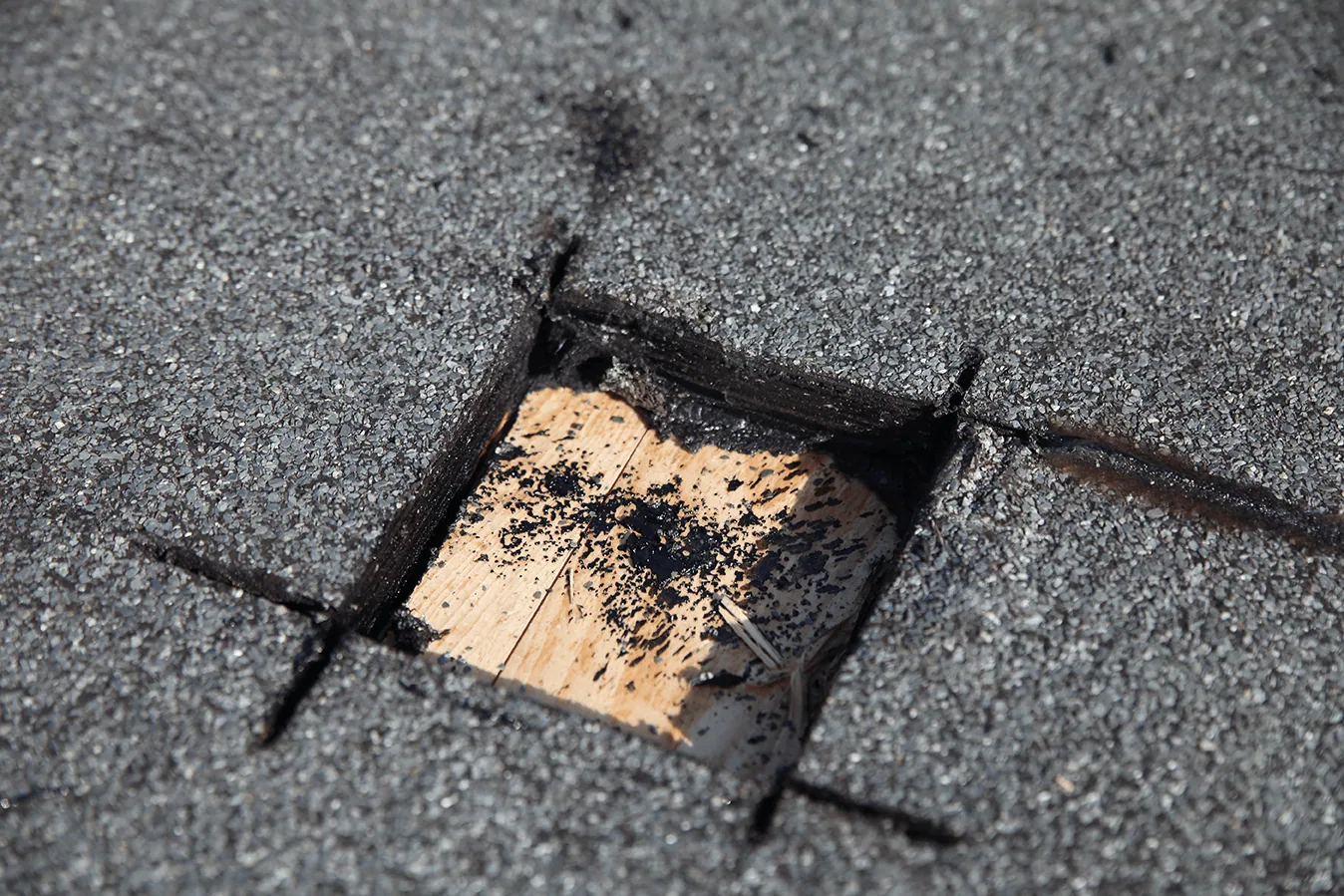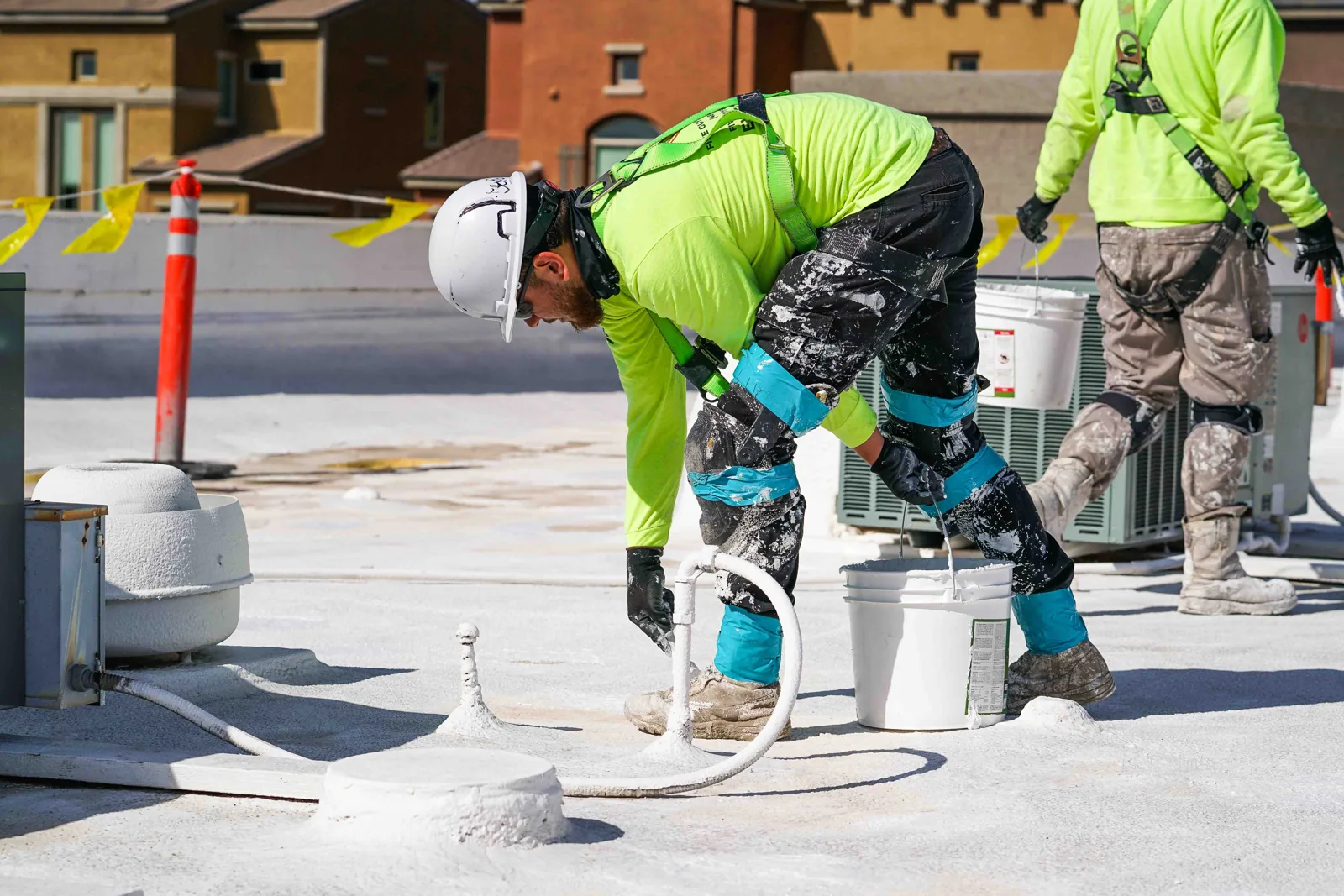
A small puncture can leave a larger question below the roof surface. Water may enter through a cut, dropped tool, fastener, or repeated foot traffic, then spread through insulation before appearing indoors. In Stamford, CT, commercial membrane puncture repair starts with locating the opening, identifying the roof system, and checking nearby layers. A patch should close the damage without trapping moisture or bridging over an unstable section.
We examine the puncture's shape and edges, then look for scuffs, cuts, displaced ballast, loose repair material, or marks along service paths. The roof system determines how the surface is cleaned and joined. An inspection of the affected roof area can capture nearby conditions and help set the repair boundary. If the damage sits at a curb or pipe, the surrounding flashing may also need review.
Follow foot traffic and service routes
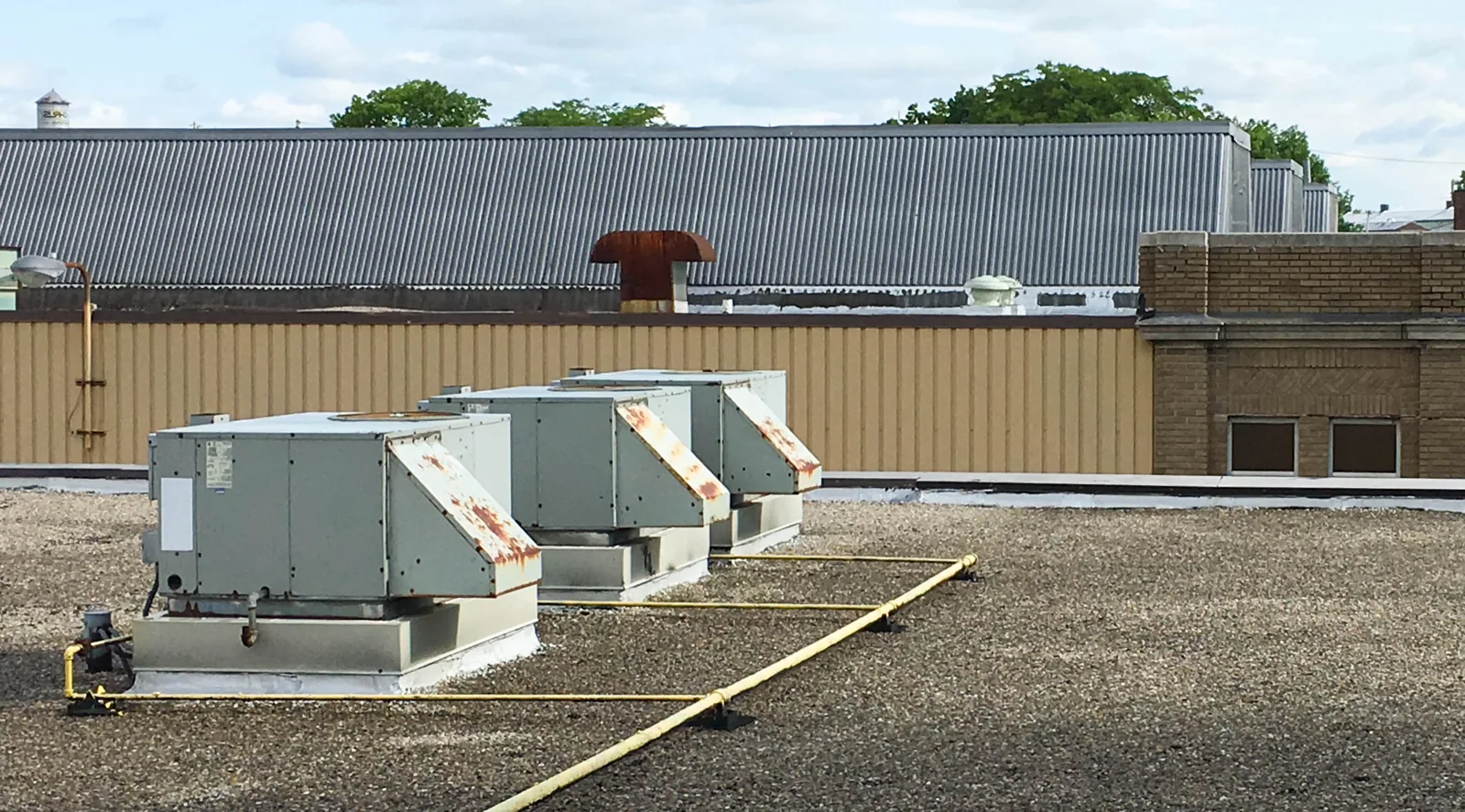
Repeated maintenance access can wear a path into a membrane, especially near rooftop equipment, ladders, hatches, and service clearances. We note where technicians travel and whether protective walk pads are present, loose, or ending before the equipment. A puncture may sit beside a scuffed area rather than at the center of a walkway. Understanding the route can prevent the repair from ending at an isolated hole while leaving adjacent abrasion unaddressed.
Stamford's planning documents group Downtown and South End as urban mixed-use centers; most land beyond those nodes remains low-density residential. The city's mixed-use centers and lower-density neighborhoods place commercial properties in different operating settings. We confirm the authorized path, equipment routes, and clear work zone with the site contact. For a building in Downtown Stamford, equipment paths and roof access help set a safe puncture-repair sequence.
Determine whether the damage reaches lower layers
Before patching, we inspect the membrane around the opening for separation, brittle edges, trapped water, and prior repairs. A probe or limited opening may be appropriate when the assembly and authorization allow it. If insulation is wet or the deck is damaged, a surface patch alone would not correct that condition. We explain what was observed and separate confirmed findings from areas that could not be seen without opening the roof.
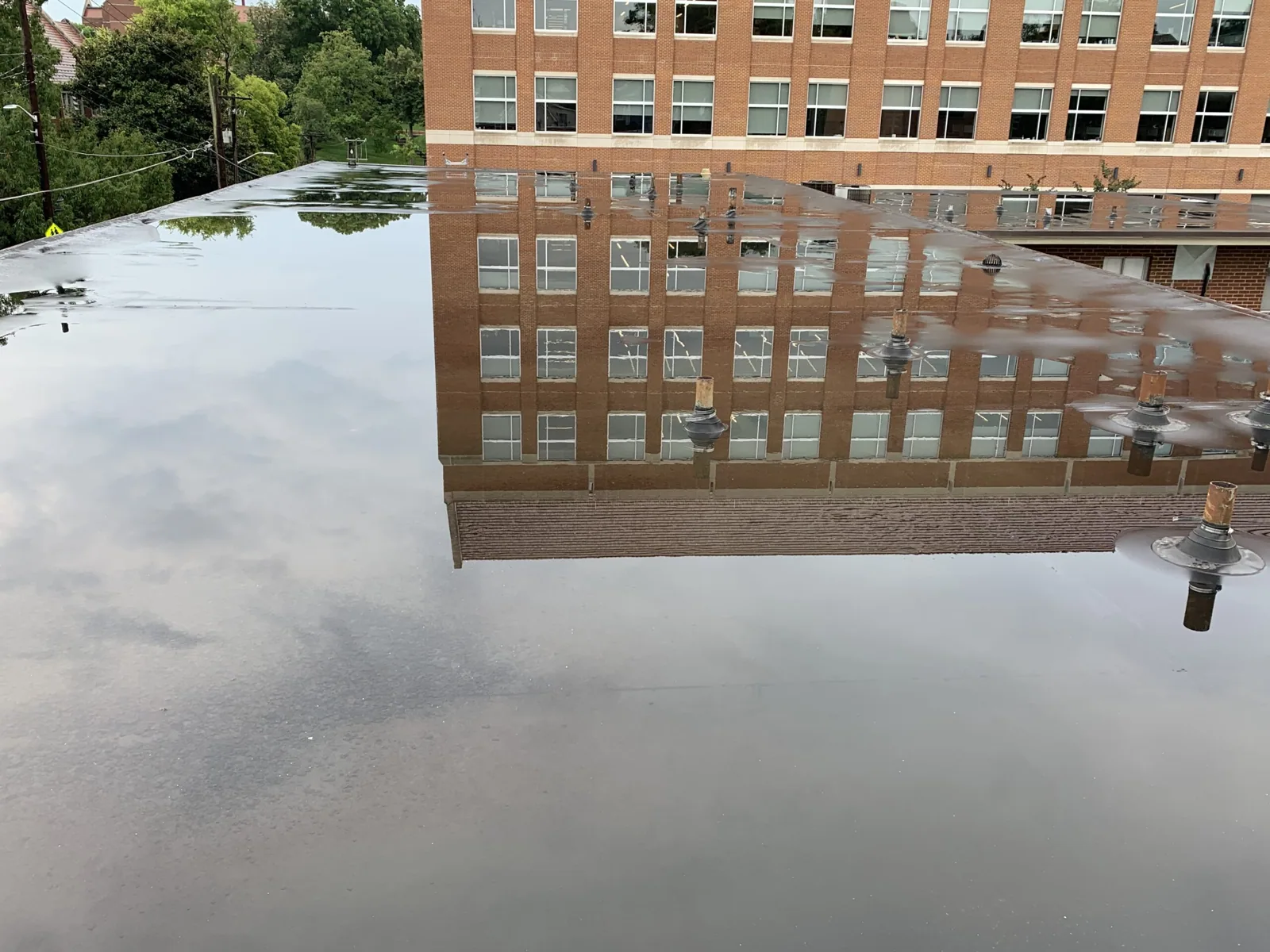
The reported interior leak location can guide the search, but water may travel laterally before reaching a ceiling or wall. We compare stains, deck slopes, penetrations, and drainage paths with the roof-side evidence. An infrared moisture survey can help identify suspected wet insulation when conditions support that method; it should be interpreted with visual checks and knowledge of the assembly. If water gathers near an outlet, a ponding-water repair review may be relevant.
Use a patch suited to the installed membrane
Thermoplastic membranes such as TPO or PVC may accept a compatible welded patch when the existing surface can be prepared and a sound bond can be established. EPDM typically requires its own cleaning, primer, and patch materials. Modified bitumen and built-up roofs use different repair details again. We identify the system before selecting products, and we follow its preparation and attachment requirements rather than choosing a patch solely by color or convenience.
A repair patch should extend beyond the damaged area onto clean, sound material. Corners and edges need careful finishing so they do not create a new point for lifting or water entry. If the membrane is brittle, heavily coated, or contaminated, the planned bond may require another approach. On a TPO roof system, material and weld compatibility must be checked against the membrane present. Actual product compatibility is verified before work.
Check nearby penetrations and curb details
A puncture near a pipe, conduit, curb, or rooftop support may connect to a flashing failure. We inspect the connection and the field membrane together. A loose boot, open counterflashing, or failed seal at the penetration can direct water to the cut, making a patch over the field alone incomplete. The defined work should identify whether the detail is included and what component needs repair.
Equipment owners may need to coordinate shutdown or access before roof work. We do not move operating equipment without permission. Tools and materials should be kept away from drains, and cutoffs should be collected so they do not enter the drainage system. If the puncture followed mechanical work, review the service path and communicate the roof condition to the party responsible for equipment access. A curb and support inspection can address related connection details.
Plan preparation around Stamford weather
A surface puncture repair still depends on dry preparation. Stamford's long-range winter record includes both snowfall and nights below freezing, so a roof can carry moisture or frost even after the air warms. Check the membrane itself and follow the selected product requirements before preparing a patch.
CTDOT's Route 1 study follows a 22.77-mile coastal corridor through Greenwich, Stamford, Darien, Norwalk, and Westport. Before puncture work near that network, we confirm the delivery and roof-access route with the property contact, then set the repair boundary from the membrane and nearby details. Where a storm may have caused additional damage, a wind damage roof review can cover the broader affected zone.
Reduce repeat punctures after repair
Once the repair is complete, review how roof access and service work can avoid the same area. A designated walking route, protected work zone, and clear instructions for contractors can reduce incidental contact. Walk pads may be appropriate near recurring equipment access, but they should not cover drainage openings or interfere with inspection. Their placement should follow the roof design and allow water to move as intended.
Keep the repair location on a roof plan or maintenance record and share it with people authorized to work above the ceiling. If a vendor needs to cross a repaired section, the property contact can identify an alternate path or protection. During scheduled reviews, check the repair perimeter and nearby traffic areas for lifting, abrasion, or new impacts. A preventive maintenance visit can include these observations without assuming the entire roof has the same exposure.
Document the patch and any remaining concern
The repair record should note the roof zone, membrane identified, puncture location, materials used, and approximate repair limits. Photographs can show the original damage, preparation, and finished patch. If lower layers were opened, include what was found. If an area could not be inspected, make that limitation clear so a future reviewer knows what remains unverified.
When water entry persists after surface work, compare the interior report with the roof layout and other transitions rather than repeatedly applying material to the same visible spot. A roof condition report can preserve observations and repair history in one place. If a larger section is compromised, the next step may be a separately defined replacement or recover evaluation, based on assembly condition and project requirements.
Commercial Roofing Questions
Which rooftop activities and details deserve review after a puncture appears?
Dropped tools, sharp debris, fasteners, unauthorized foot traffic, and equipment service can damage a membrane. Repeated abrasion may also thin the surface before a hole becomes obvious. Inspection looks at the opening and nearby access route to understand the extent.
How do membrane condition and puncture location shape an in-place repair?
A localized patch can be suitable when the surrounding membrane is sound, dry, and compatible with the selected material. If moisture or damaged insulation extends beyond the opening, those layers may need separate investigation and repair.
What should the installer match before choosing a patch for an exposed membrane?
We identify the installed membrane and follow its compatibility and preparation requirements. TPO, PVC, EPDM, and bituminous systems use different repair materials and joining methods. When the system is unclear, examine exposed markings, repair records, or a test area before committing to a method.
Will you repair damage around pipes or rooftop equipment?
The scope can include nearby penetrations or curb flashing when they are part of the water path and authorized work area. We describe each included detail. Equipment shutdown, relocation, or other trades may require coordination outside the roofing scope.
What should we do after a contractor punctures the roof?
Report the location, approximate time, and work performed to the property contact. Limit unnecessary traffic near the damage and arrange an inspection. A record of the service route can help identify related scuffs or cuts and prevent another puncture during follow-up work.