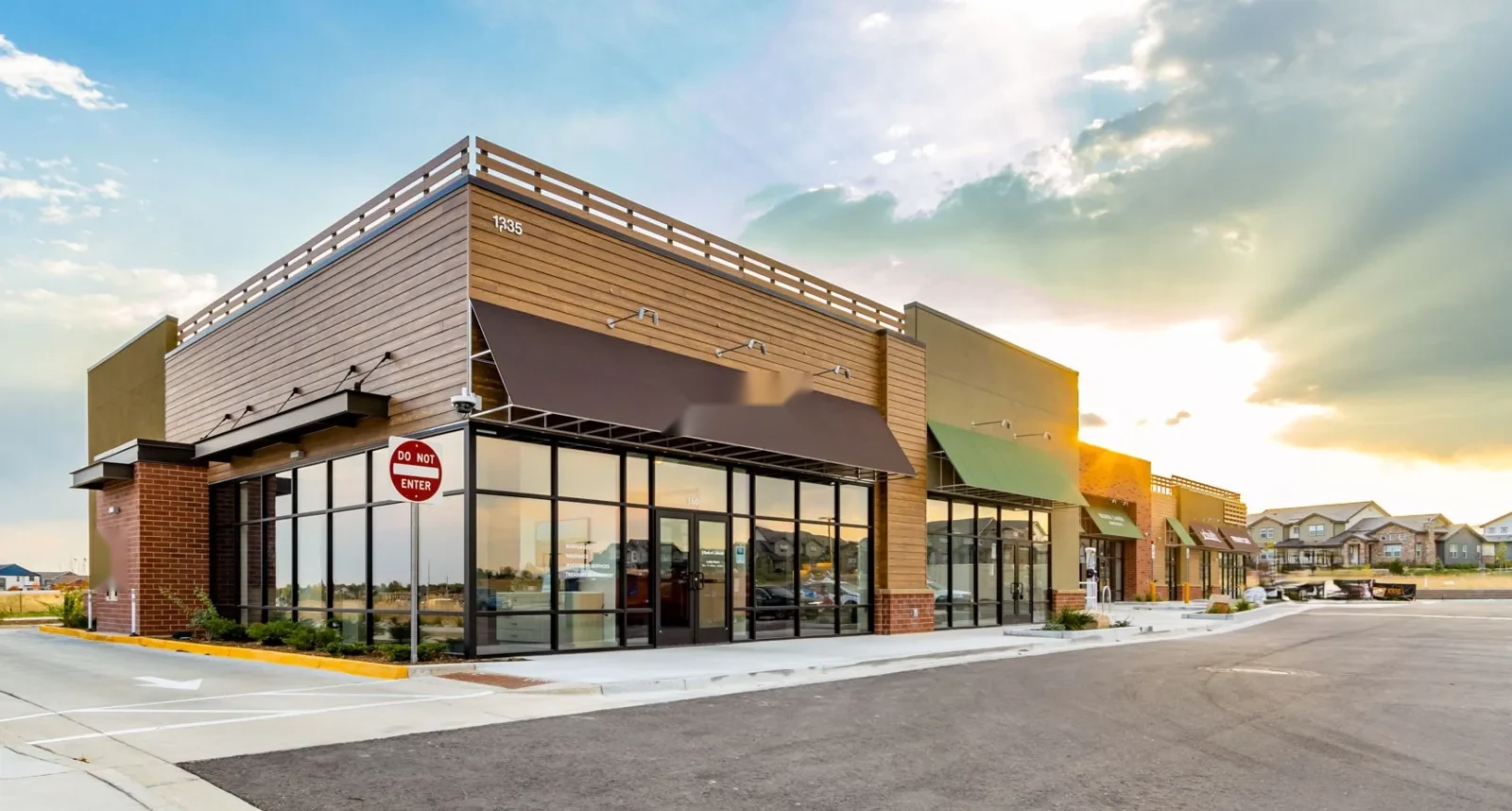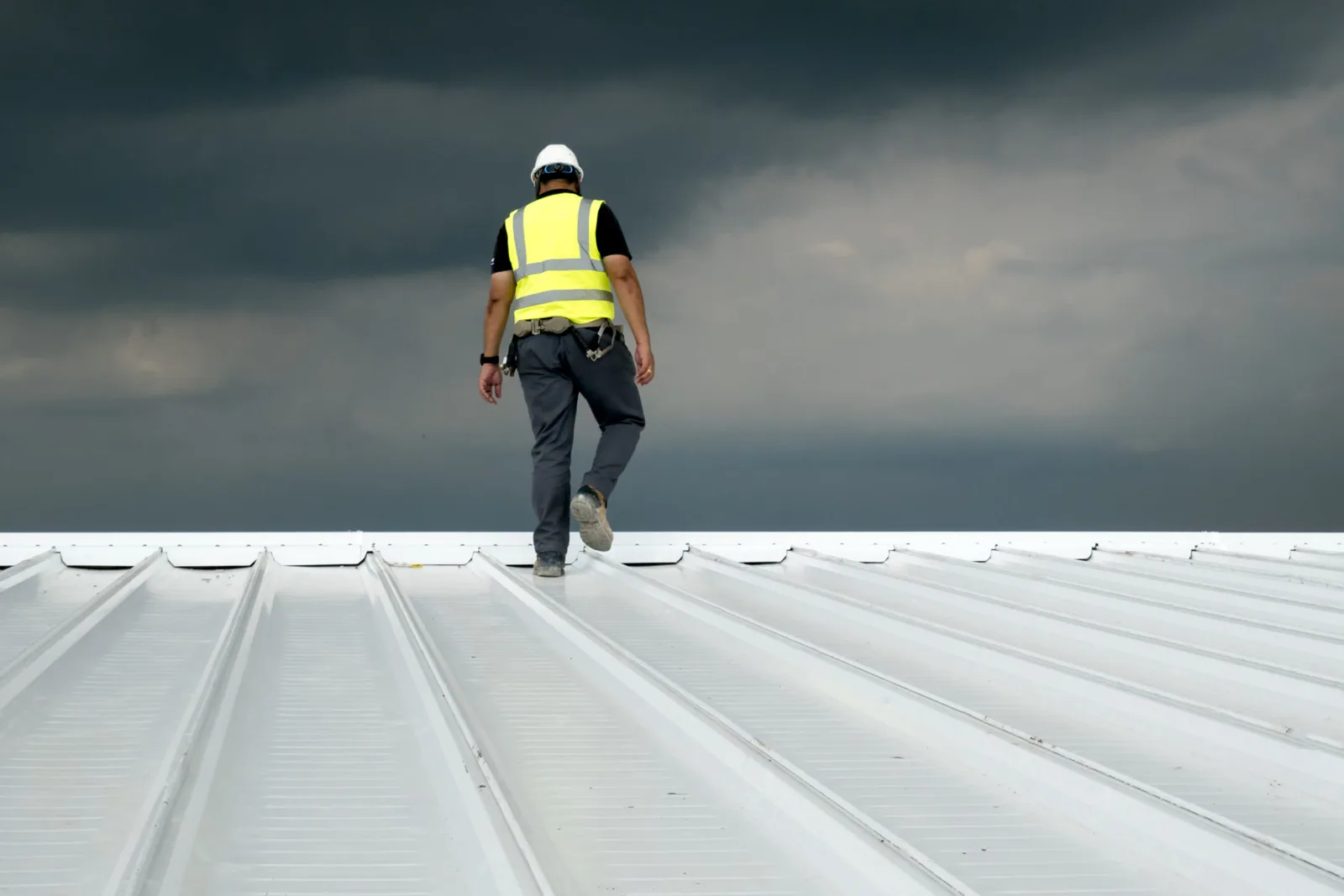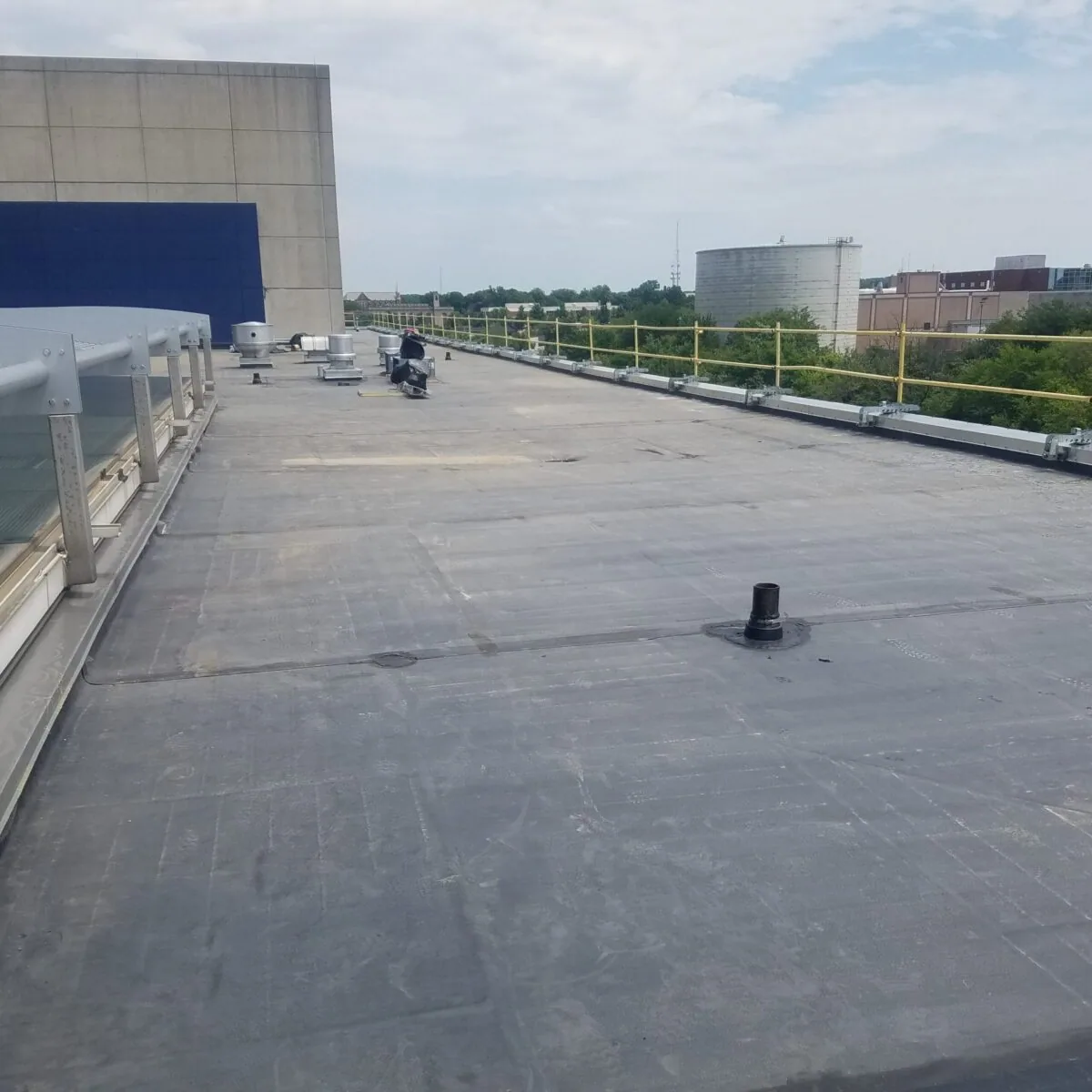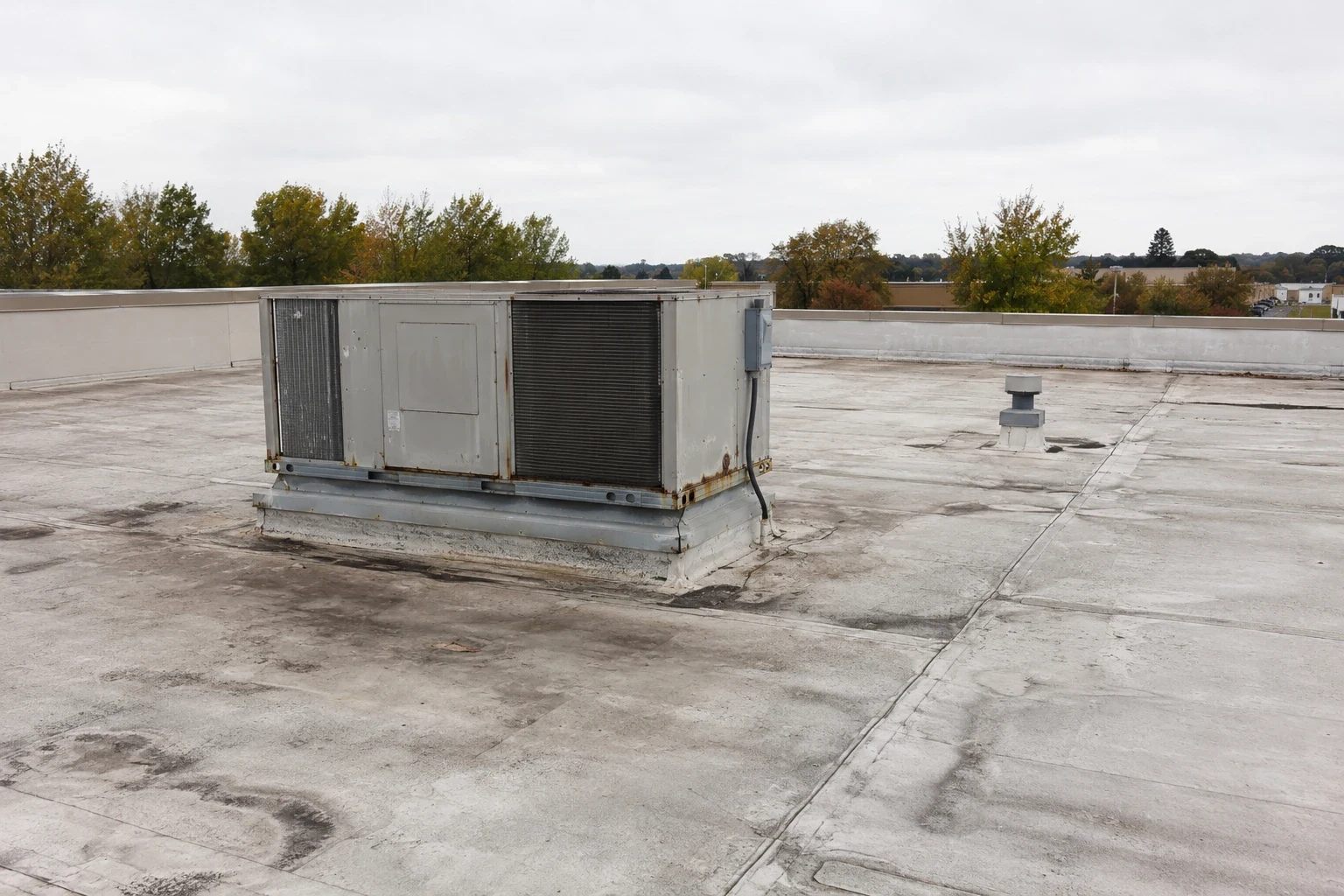
A drip beside a prep line or sales floor may come from a seam several roof bays away. We compare the interior report with seams, curbs, drains, and the room use below. Multi-location operators need each roof recorded separately, even when the storefronts share a brand and operating schedule. Stamford's Downtown mixes offices, homes, and storefronts at a scale that can affect delivery and customer access; a store's own use and roof assembly still need separate review. We inspect the membrane, drains, curbs, and edge details at the property. A commercial leak investigation can connect an interior report to the roof zone that needs correction.
Store portfolio: keep each roof distinct
A chain may have different building owners, roof ages, additions, and service histories from one location to the next. One site may use a membrane roof with rooftop units, while another has a different assembly or drainage pattern. We identify the system before recommending a repair. A location record should connect the leak report to the roof plan, photographs, date, and work boundary. property management teams can use that detail to coordinate access with landlords and keep completed work separate from future maintenance.
Norwalk's business pattern ranges from compact blocks in Norwalk Center and SoNo to the more intensive commercial-industrial stretches along Route 1 and Route 7. That area context can shape lift staging and delivery routes, but the individual operator's hours and building rules govern the repair window. We ask which entrances, loading paths, and customer areas must stay open, then show the work zone on a plan. The crew needs an agreed route for material, debris, and roof access, not a general instruction to avoid business disruption.
Store managers can report a ceiling mark, but a portfolio contact should preserve the exact address, roof plan, and prior service ticket with that entry. The records help distinguish a repeated failure from a new issue at a different property. We can group inspection visits by schedule while returning separate photographs, findings, and scopes. If two locations have similar equipment or branding, we still confirm their roof layers and drain details independently before selecting repair materials.
Kitchen and rooftop equipment: inspect the transitions
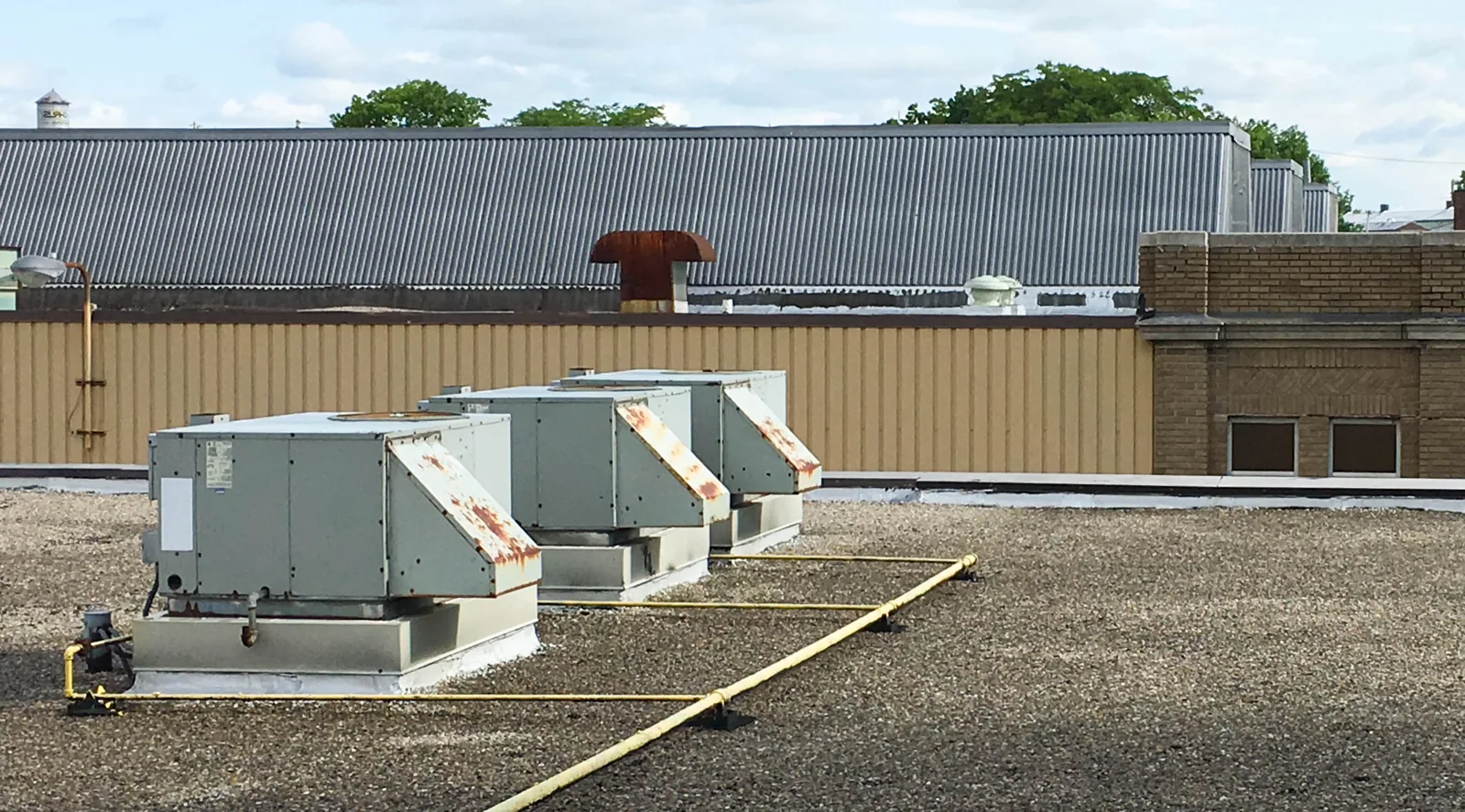
Exhaust hoods, makeup air units, refrigeration lines, and service curbs create roof penetrations. Grease, heat, vibration, and repeated maintenance access can stress flashing and nearby membrane. We inspect curb corners, metal returns, fasteners, conduit supports, and the surrounding laps. The restaurant's mechanical contractor handles the unit itself; roofing scope covers the weather connection at its base. A curb and support review can define that boundary and identify where another trade needs to coordinate.
NOAA normals at Stamford 5 N show summer daily highs in the low-to-mid 80s and cooling demand. We inspect the flashing, membrane, rooftop equipment, and service routes present at each store. If a kitchen report follows equipment replacement, we check whether the curb was disturbed and whether sealant, counterflashing, and sheet laps still tie together. The closeout should identify the exact transition repaired, not simply state that the roof around the unit was serviced. Drainage near a rooftop condenser or exhaust base also deserves a clear runoff path, since a sound curb detail cannot compensate for a blocked outlet nearby.
Operating windows: keep the work sequence visible
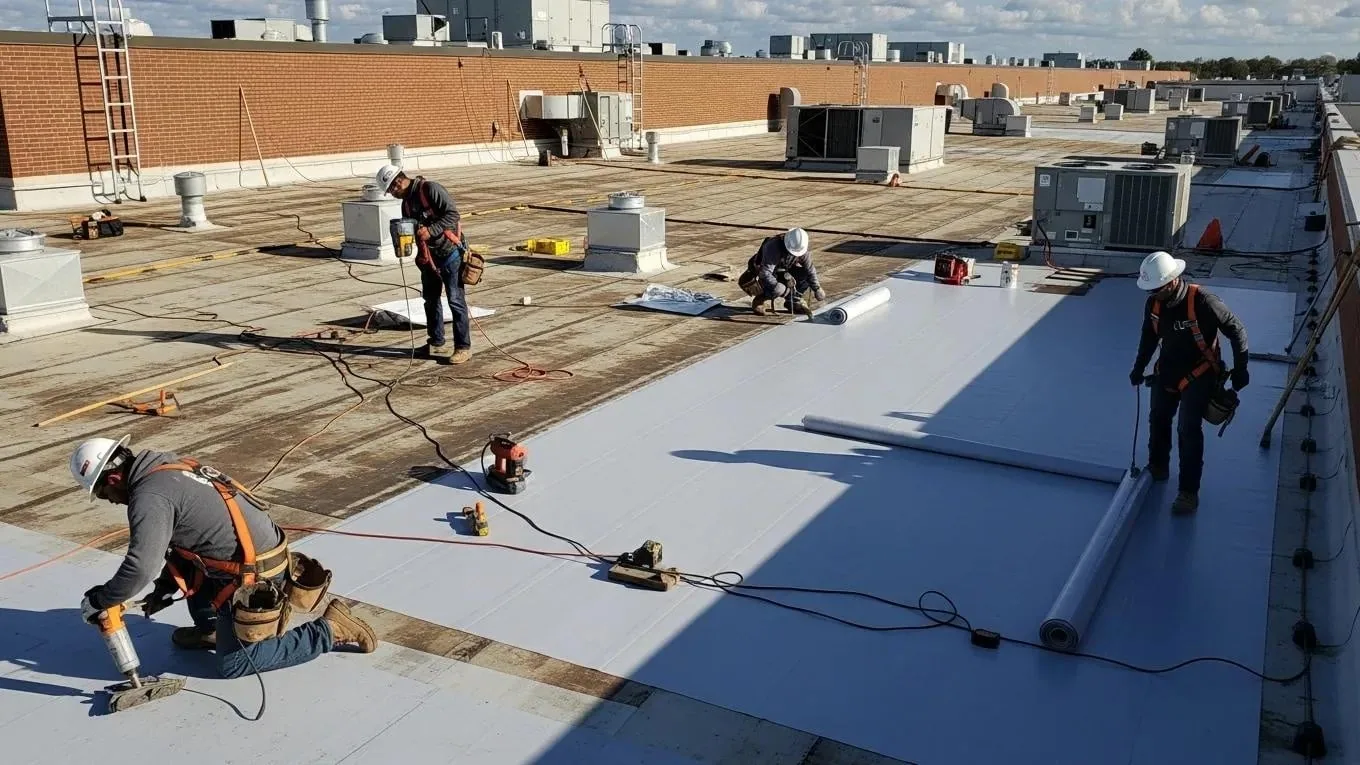
A roof opening above an active store needs interior protection and a dependable daily closure. We identify where material will be staged, the surface area that will be opened, and what condition will be left before the team stops work. The operator can tell us when receiving, food preparation, cleaning, and customer access constrain a route. We use those details to plan the roofing sequence. If equipment needs shutdown or a ceiling area must be protected, the scope identifies the responsible contact before the work begins.
Route 1 runs through Greenwich, Stamford, Darien, Norwalk, and Westport. For a storefront along that corridor, we confirm delivery timing, staging, and pedestrian protection with the property contact. We can phase work by roof section when each boundary can be dried in and protected. We mark the material drop, ground protection, roof entry, and the area that must be closed at the end of each shift. That sequence appears in the scope so store operations know where the crew will work. We coordinate occupied-building roofing with use below and the operator's safety and food-handling controls before the membrane is cut.
Repair choices: use the roof, not the brand, to decide
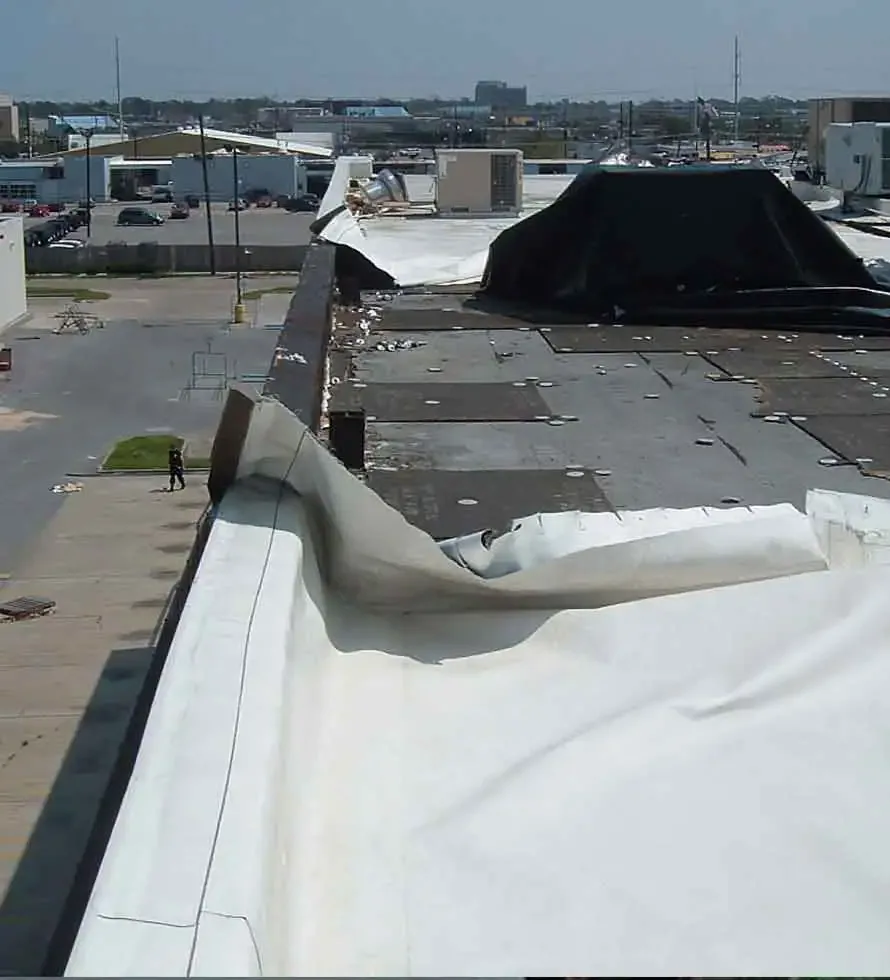
A localized split or puncture can be repaired if the surrounding membrane is attached and the substrate is sound. Multiple failures, broad moisture, or weak deck can make a patch plan unreliable. We map each defect and separate repairs from locations that need testing. If insulation may be wet, an infrared survey or core opening can establish the affected boundary. roof inspection findings should distinguish active entry points from old staining and areas the walk could not reach.
Drainage deserves attention where parapets, roof slopes, and equipment routes direct water toward a bowl or scupper. A blocked strainer differs from a failed flange or separated seam at the drain. We inspect both the outlet and adjacent membrane. If a larger scope is needed, a recover or replacement decision depends on moisture, attachment, deck condition, and applicable code. replacement work should state tie-ins, protection, and how store operations are coordinated at each location.
Closeout: give operations a usable record
After work, we identify the roof zone, system, materials, detail corrected, and any adjoining issue excluded from the scope. Photos should correspond to the roof plan and work order. A location may need another test or a future repair even after the active leak is corrected. We keep that distinction visible. roof condition reports help a chain compare assets while keeping each store's findings attached to its address.
Share the location list, roof plans, leak reports, equipment work, and store access windows before the inspection. We trace the reported condition and prepare a written repair scope or broader-system recommendation. hospitality operators may have similar occupied-building constraints, though each roof and operating plan is different. In Stamford, a Downtown Stamford location may require a distinct staging route from a property elsewhere in the area. The record should let the next manager see what was inspected and what remains open.
Commercial Roofing Questions
Can roof repairs be scheduled between store shifts?
We can plan a work window around deliveries and operating periods after inspecting the roof boundary. The sequence must include material access, interior protection, and a completed dry-in before the area is left.
How should a chain report leaks across multiple stores?
List each location, room, date, weather, and prior repair separately. We use those records to select roof zones and keep one site's findings from being applied to another building.
Do kitchen exhaust units need to be handled by the roofer?
The mechanical trade services the unit and duct. We inspect and repair the curb flashing and membrane transition, with shutdown or access coordinated when that roof detail requires it.
Can a roof leak be fixed without closing a dining area?
That depends on the repair location, interior protection, and access route. We identify the area that needs isolation and coordinate the work sequence with the operator before opening the membrane.
When does a recurring leak call for more than a patch?
Repeated seam failure, wet insulation, or a deteriorated deck can extend beyond a single repair point. We map the affected zone and explain whether further testing or a broader system scope is needed.