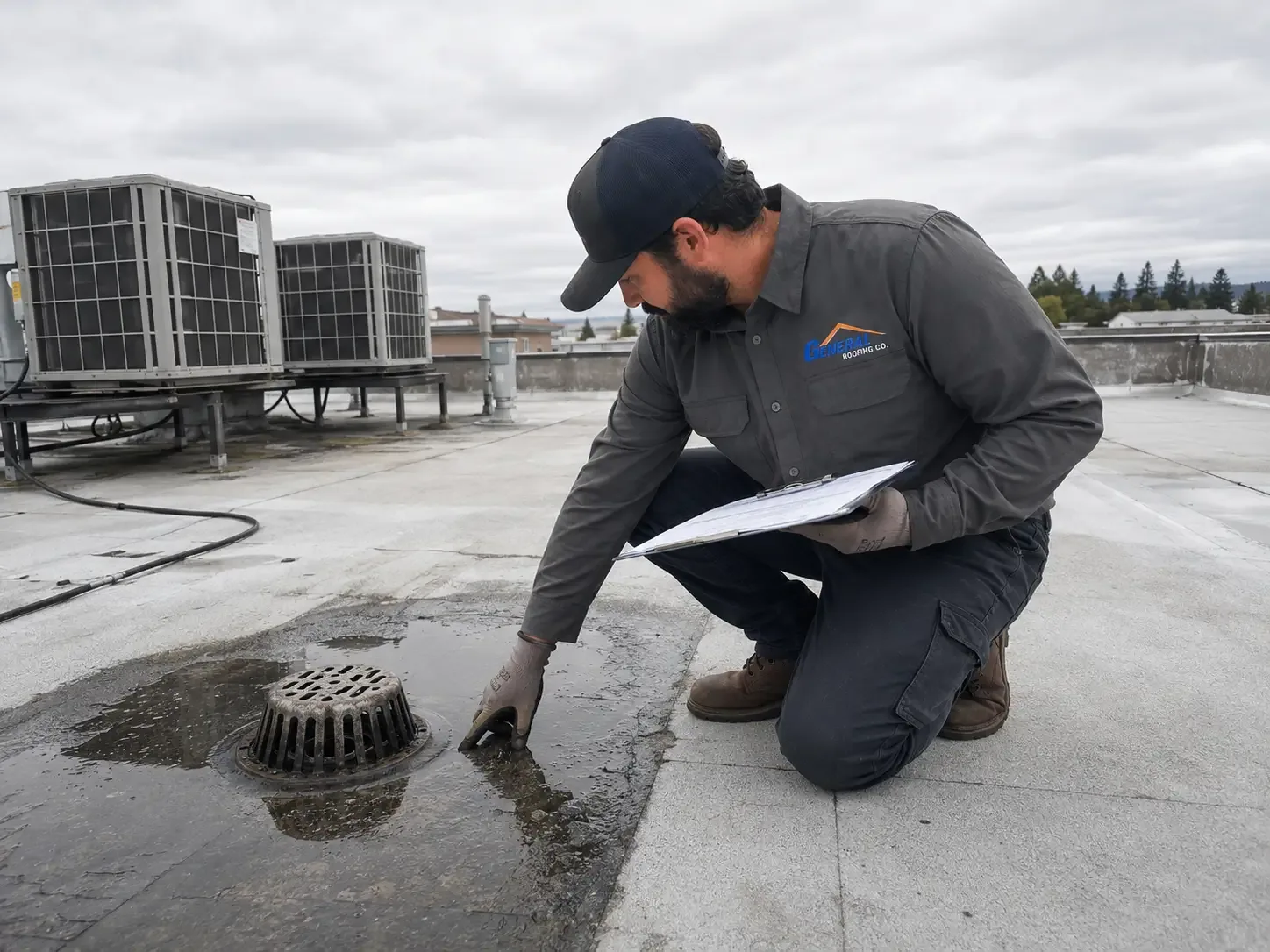
A coating cannot hold a wet or poorly bonded surface together. On a commercial roof in Stamford, CT, the first question is whether the existing membrane and details can support another layer. We inspect seams, curbs, drains, edge metal, and previous repairs, then test the surface where adhesion is uncertain. Summer heat and cooling demand add stress around rooftop units and exposed transitions. A condition inspection gives the owner a clear basis for a coating decision. If the roof is sound, a compatible restoration system may extend its service life. If the substrate is wet or the field has failed, coating can hide the condition without correcting it.
Bond check: start with the existing surface
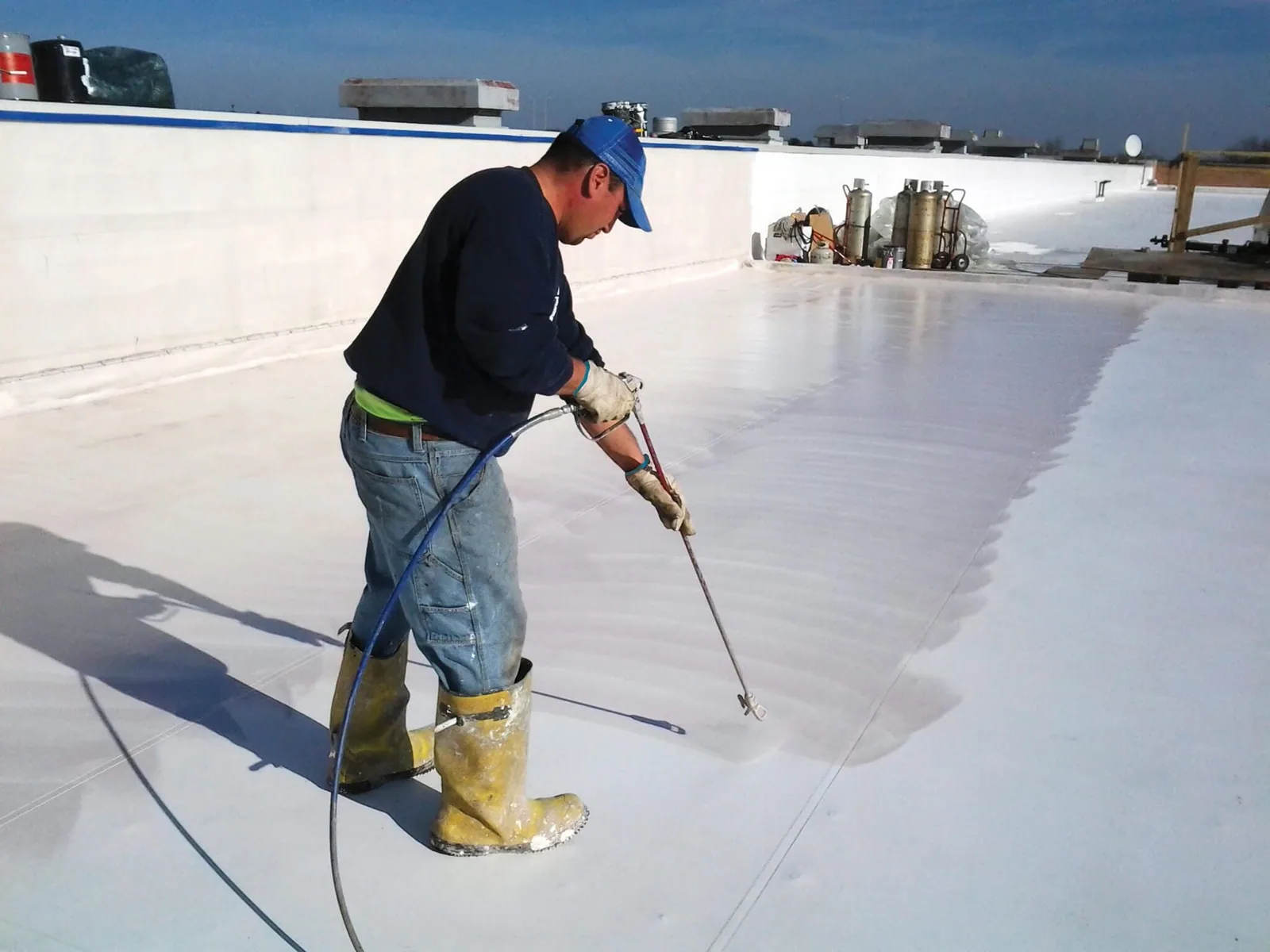
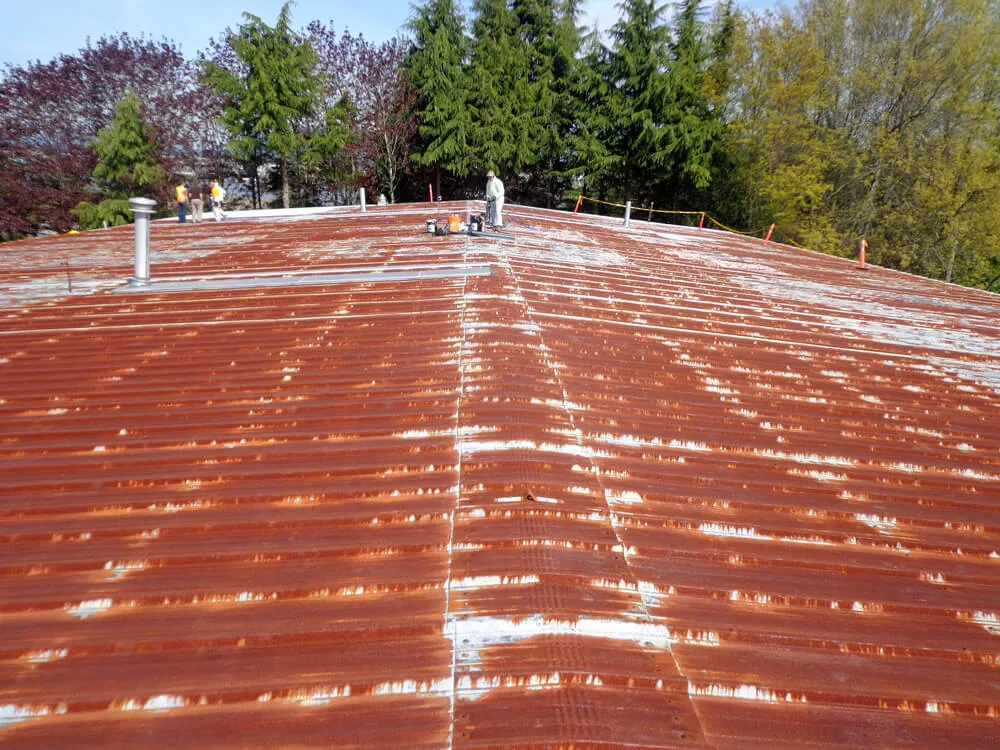
Dust, chalking, oils, loose granules, and old repair materials can keep a new coating from bonding. We identify the membrane type and review the repair history before selecting preparation. A small test area can show whether the proposed system adheres to the surface after cleaning and priming. That result matters more than color or product label. On a silicone coating system, compatibility and surface condition set the prep. Acrylic systems have their own limits around standing water and weather exposure, so a water-based coating review considers drainage before application.
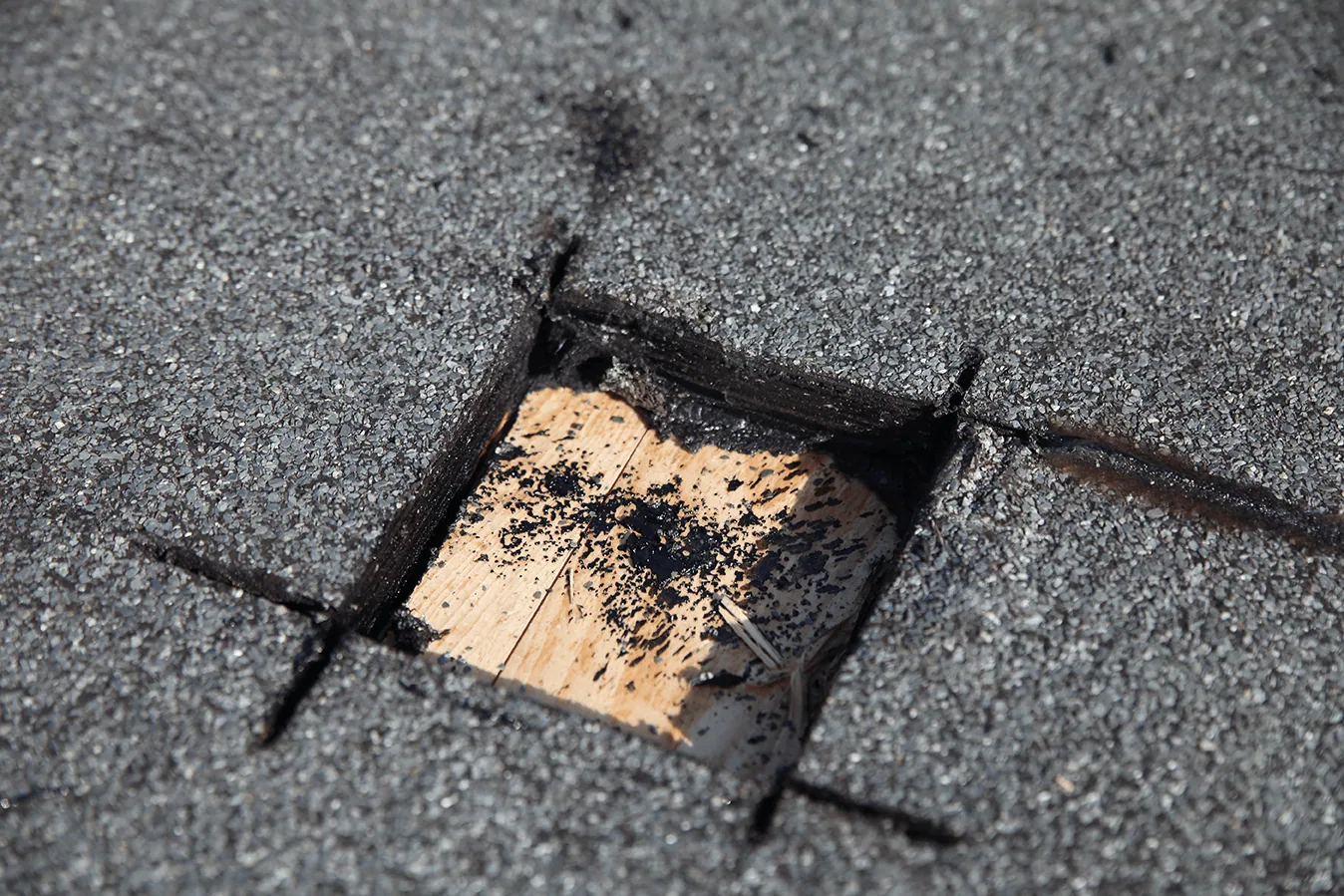
We also inspect the roof for wet insulation, movement, open laps, and unstable flashing. Those conditions need a repair or testing plan before a coating is considered. A coating follows the shape of the roof beneath it; it does not flatten a bad detail or stabilize a weak deck. If moisture is suspected, a moisture survey can help define where to open and verify the assembly. The repair boundary should be known before material is ordered, otherwise sound areas and failed areas can be treated as if they were the same.
Surface preparation: make each transition ready
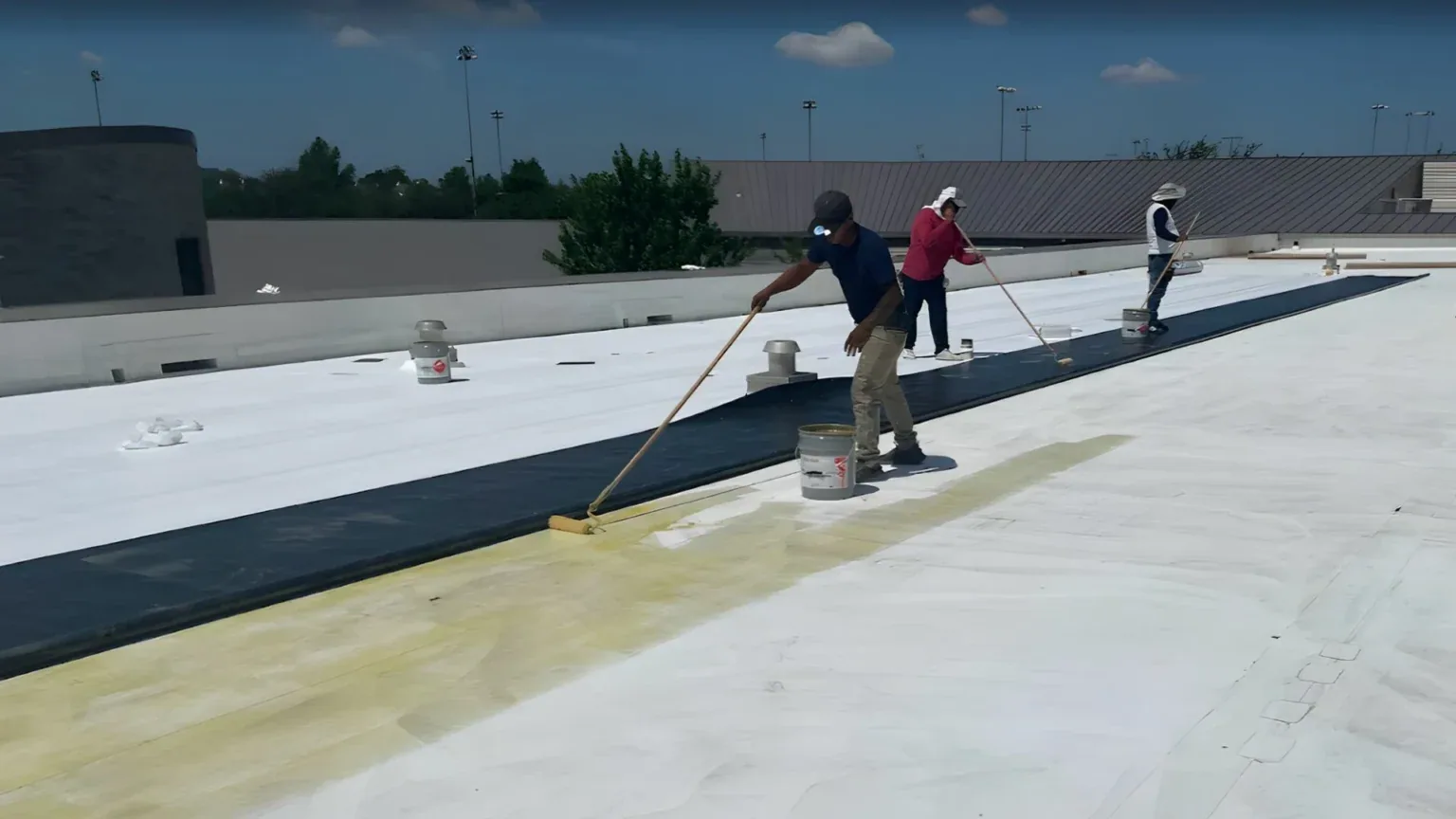
Preparation begins with the parts that a broad spray can miss. We clean the field, remove loose material, secure repairable edges, and rebuild flashing where the existing detail no longer sheds water. Drain bowls, scupper throats, metal returns, and equipment curbs need deliberate masking and coating transitions. A drain review checks that the opening remains clear and that a coating will not narrow its path. At a seam, the selected system may call for reinforcement fabric or a separate detail coat. The specification must address those transitions instead of counting only the open field.
Stamford's summer temperatures can make roof work uncomfortable and can affect material handling, while changing weather can interrupt application. We plan around the product's instructions, surface temperature, moisture, and cure conditions. The assembly should be dry and clean before application. If a roof cannot meet those conditions, the schedule needs to move. Applying over contamination or trapped moisture may weaken adhesion and make later inspection harder. We record preparation steps and the limits of each work area so the owner can compare the finished surface with the agreed scope.
System fit: match material to roof behavior
Silicone, acrylic, and other restoration materials do not solve the same roof problem. We compare the existing membrane, drainage, foot traffic, service paths, and expected maintenance before recommending a system. A TPO roof surface may accept certain restoration methods only after compatibility and attachment are checked. A coating is not a substitute for replacing wet insulation or repairing a loose termination bar. If repeated movement or widespread failure remains, a recover evaluation can compare another roof assembly with coating.
Owners should also separate restoration from claims about energy savings or a new roof warranty. A reflective finish changes the surface, but building performance depends on insulation, HVAC operation, weather, and other conditions. We describe the product system, preparation, detail work, and expected maintenance without promising a measured utility result. The work plan identifies which areas receive coating, which details are repaired first, and how drains and access paths remain usable. That scope gives the owner a basis for comparing coating with repair or removal.
Building use: stage work without losing access
In Downtown Stamford and South End, office, retail, and residential uses can share a mixed-use block. Coating work above occupied space needs a roof route, material staging area, and communication plan that fit the building. We identify entrances, rooftop equipment that needs service access, and areas where odor or noise could affect operations. Nearby Norwalk has commercial activity along Route 1 and Route 7, where deliveries and work-zone access may shape the sequence. These broad places help explain the regional building mix; they are not references to a particular customer or facility.
We keep pedestrian and service paths clear where the roof layout permits. HVAC equipment may need protection from overspray, while roof drains must remain open as each area is completed. The owner receives a sequence showing what is covered, what remains available, and which conditions could pause application. A warehouse roof plan may prioritize loading and ventilation, while an office schedule can place more weight on occupant access. The roof detail still governs system fit; the use of the building governs how the work is staged. On mixed-use blocks, crews may need to protect storefront entries and keep maintenance access distinct from customer routes. The schedule identifies who can release each area and how rooftop equipment remains reachable.
Scope boundary: price the work the roof needs
Coating costs reflect preparation, repair quantity, reinforcement, access, protection, and the number of distinct roof details. A roof with clean, sound field membrane is a different scope from one with loose edges, wet insulation, or several curb failures. We document the measured work areas and separate necessary repairs from optional restoration. A photo record ties each condition to the recommendation. If removal is more appropriate, a replacement plan can define where the old assembly comes out and how the roof is rebuilt.
After application, the owner should retain product and maintenance records and keep drains, seams, and penetrations on the inspection route. A roof coating does not make later checks unnecessary. We identify what the next review should compare, including adhesion at transitions and changes in the field surface. That follow-up can show whether the restoration remains suitable or whether a broader system decision is needed. The recommendation stays tied to the roof condition, not a fixed number of years or a blanket claim that coating is the lower-cost choice.
Commercial Roofing Questions
Which roofs can be restored with a coating?
A coating may fit a sound, dry assembly with compatible materials and details that can be prepared. We check adhesion, drainage, seams, insulation, and edge conditions before recommending it. Wet or unstable areas need a different scope.
Can a coating change roof slope or reopen a blocked outlet?
No, a coating cannot change the roof slope or reopen a blocked outlet. It follows the existing profile and does not correct a low area. We assess the drainage path first, then separate clearing, tapered correction, and coating work where each belongs.
What happens if a bond test fails?
A failed test means the proposed preparation or system needs review before broad application. We identify whether cleaning, primer, removal of incompatible material, or a different roof scope is appropriate.
Can coating cover old patches?
Only after each patch and its surrounding membrane are checked for adhesion and movement. Loose or incompatible repairs can interrupt the new system, so we mark those areas for correction before coating.
How should a Stamford roof be prepared for coating?
The surface needs to be clean and dry, with repairable seams, curbs, drains, and edges addressed first. We also coordinate staging, rooftop equipment protection, and access around the building's use.