A peeling coating edge can let water reach the roof beneath it. In Stamford, CT, we inspect adhesion, surface condition, drainage, and the membrane below before recommending silicone coating work. Summer heat and rooftop equipment expose details to regular movement. A coating and membrane inspection checks whether the existing surface can accept another layer or needs repair first.
Substrate: confirm the surface can hold a coating
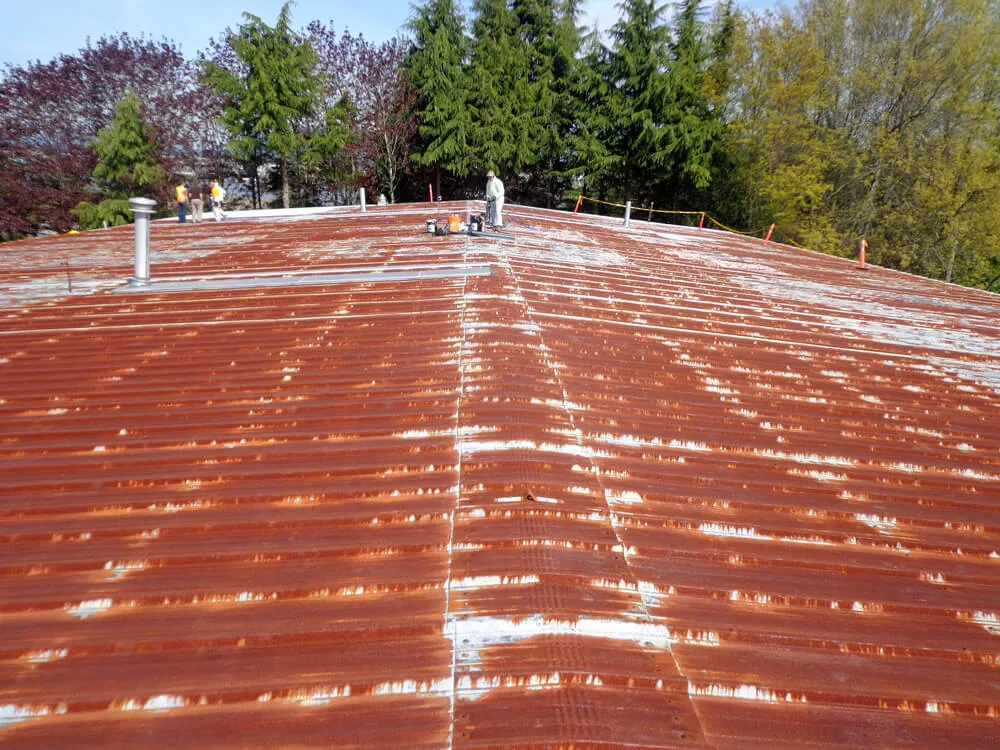
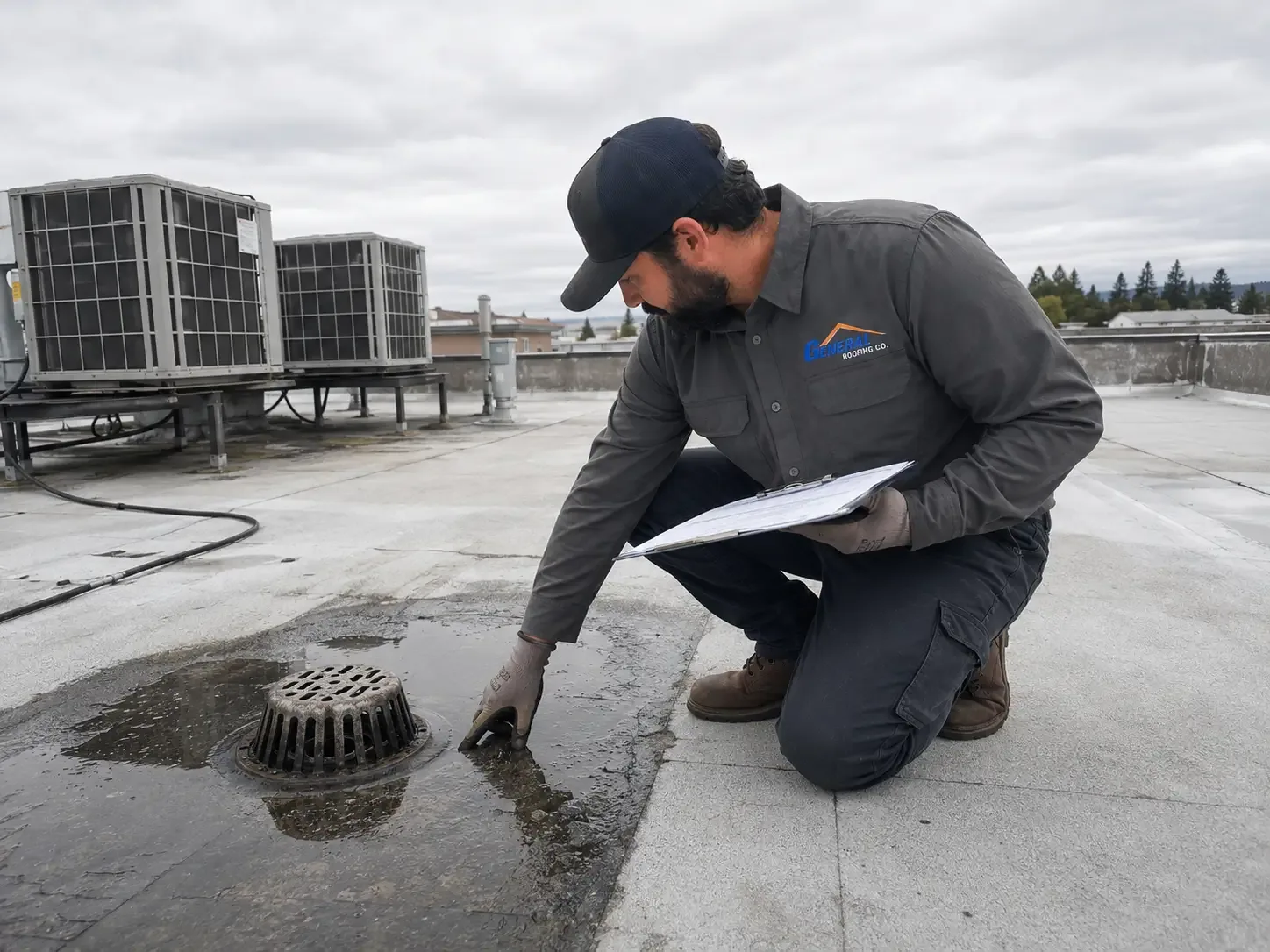
Silicone coating needs a sound, prepared surface. We check for chalking, dirt, loose coating, trapped moisture, and areas where the existing layer has separated. A small adhesion test can help assess the bond, but the result applies only to the tested location. If the roof includes several coating generations, we identify their edges and look for incompatible or weak layers before planning the field application.We inspect where previous coating stops at walls and equipment curbs because those edges can peel before the open field. Loose material is removed to a sound boundary. If the roof includes a repair patch, its perimeter is checked for a raised edge or trapped dirt that would interrupt the new bond. Cleaning water and residue must be removed from drains before coating is staged, and the surface is allowed to dry under conditions suited to the selected product.
Preparation can include cleaning, removal of loose material, and correction of punctures or open seams. The surface must dry before application, and repairs should be compatible with the existing roof. We inspect around drains, curbs, and wall terminations because coating can bridge a defect without restoring the underlying flashing. A coating repair scope lists which defects are corrected before the new film is applied.
Ponding: resolve the roof condition under the film
Silicone coatings can tolerate standing water better than some coating types, but ponding still deserves inspection. Water may reflect a blocked outlet, a low roof plane, or compressed insulation. We map where it remains and check the drain or scupper path before coating. A new surface layer does not change roof slope. If the water source is an outlet or detail, that correction needs to be included with the coating work. We also confirm that overflow openings remain visible and unobstructed after the coating detail is repaired.
We inspect for blisters, soft spots, and wet insulation at the ponding area. When testing or a selective opening is needed, findings are recorded before the roof is closed. Any wet material must be addressed according to the assembly and approved scope. We avoid coating over a condition that needs removal or drying. drainage correction can be coordinated with the coating project when an outlet or low point is part of the problem.
Application: close details before covering the field
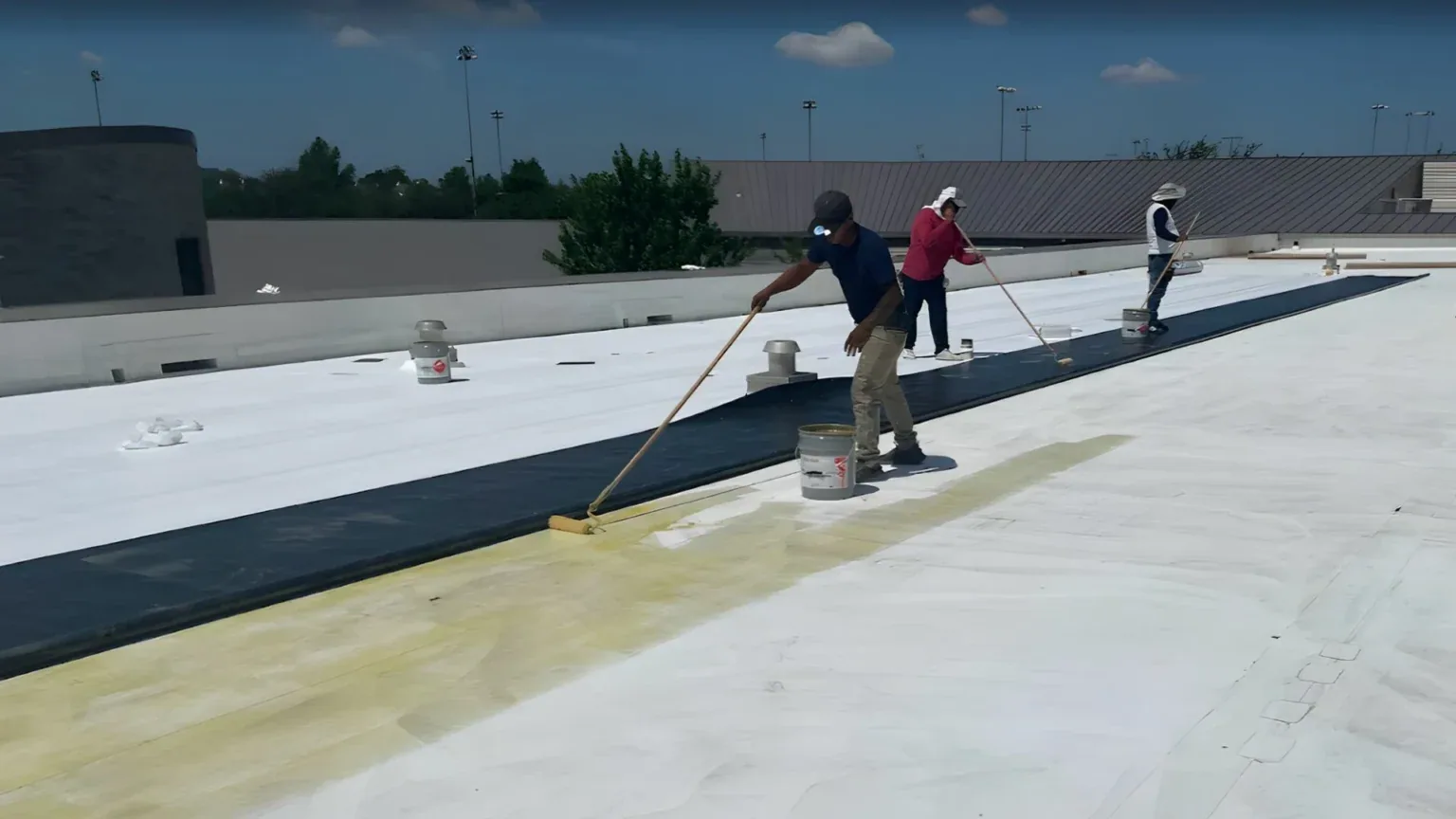
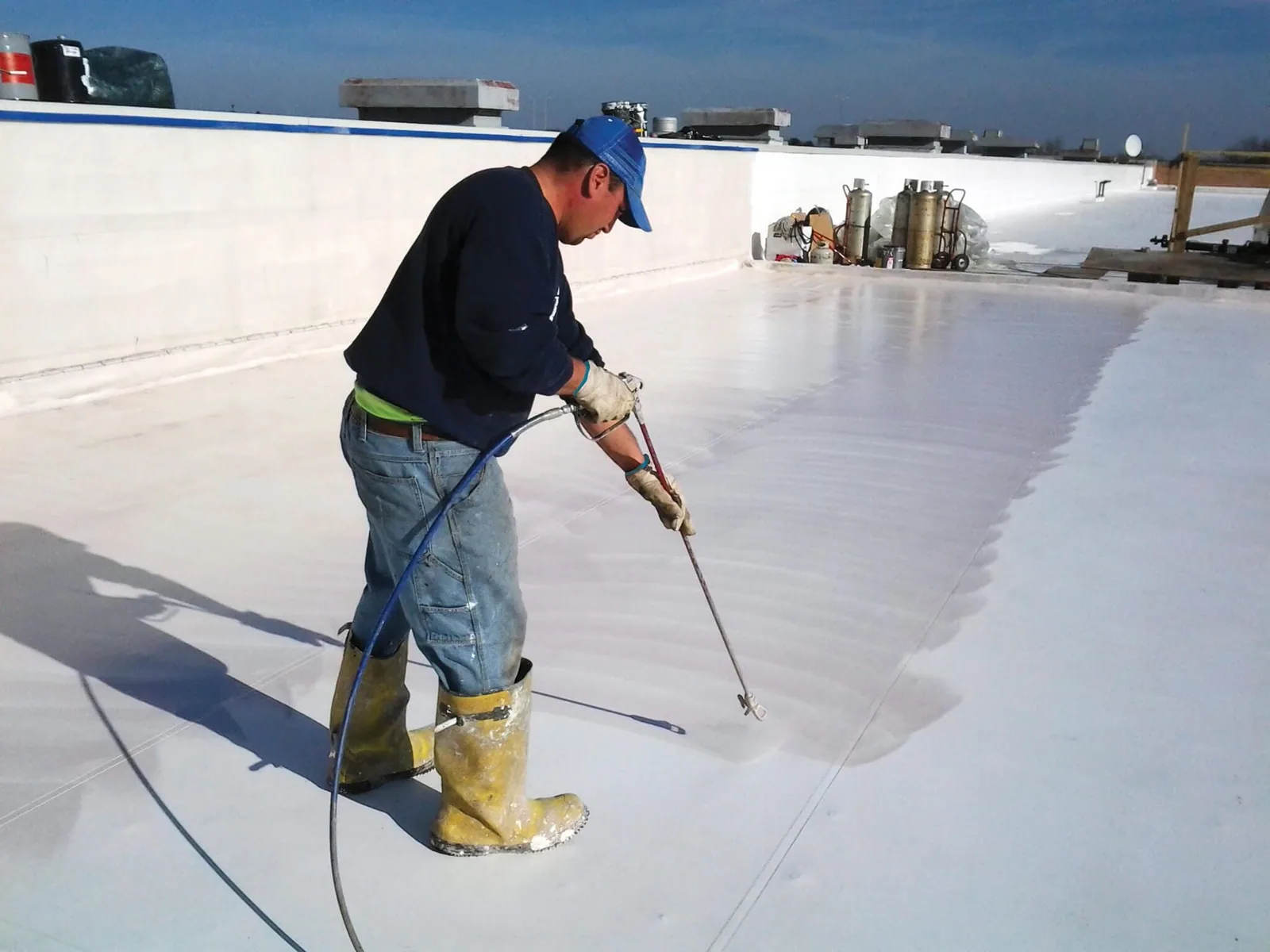
Coating thickness and coverage need to follow the selected product requirements. We calculate the roof area, check the substrate, and identify how many passes are planned. Curbs, pipes, drains, and edge metal receive detail work before broad field application. Reinforcement may be needed at a seam or transition, depending on the condition and the system design. The work plan names those areas so they are not hidden under a uniform finish. The application log can note the product, test locations, and measured coverage requested by its specification. These records help the manager plan later roof walks and distinguish repaired details from untouched areas.
We also plan around weather conditions and rooftop operations. Equipment discharge can leave residue that interferes with adhesion, while service traffic can damage a new coating. We coordinate cleaning, access limits, and temporary protection with the building manager. A coating should cure before the area is opened to normal traffic. The sequence identifies which roof zones remain closed while work proceeds and how the crew will keep drains clear.
Existing membrane: verify every material interface
Silicone does not bond equally to every membrane, coating, or flashing. We identify the existing roof surface and use a test area where compatibility is uncertain. PVC, TPO, EPDM, asphaltic sheets, and metal each require a planned interface. At a TPO membrane compatibility detail, the coating boundary may need a primer or a different flashing method. We do not assume a single coating can bridge every material change. At a change in roof elevation, the coating must terminate beneath or against flashing that remains secure. We check metal laps, fastener heads, and sealant joints before application, then specify how the film returns to the field. Where old coating is removed, the transition is feathered into the retained surface so a ridge does not become a new point for water to collect. These details determine whether a broad coating layer has a continuous, supported edge.
Existing repairs, pitch pans, sealants, and metal terminations can affect the bond. We inspect their edges and determine whether they should be removed, replaced, or retained. If the underlying roof is broadly deteriorated, coating may not be the right system choice. roof coating restoration begins with the existing assembly and what it can support, not a color or a desired finish alone. A coating plan preserves a clear edge and connection at each transition.
Stamford projects: account for summer heat and occupied space
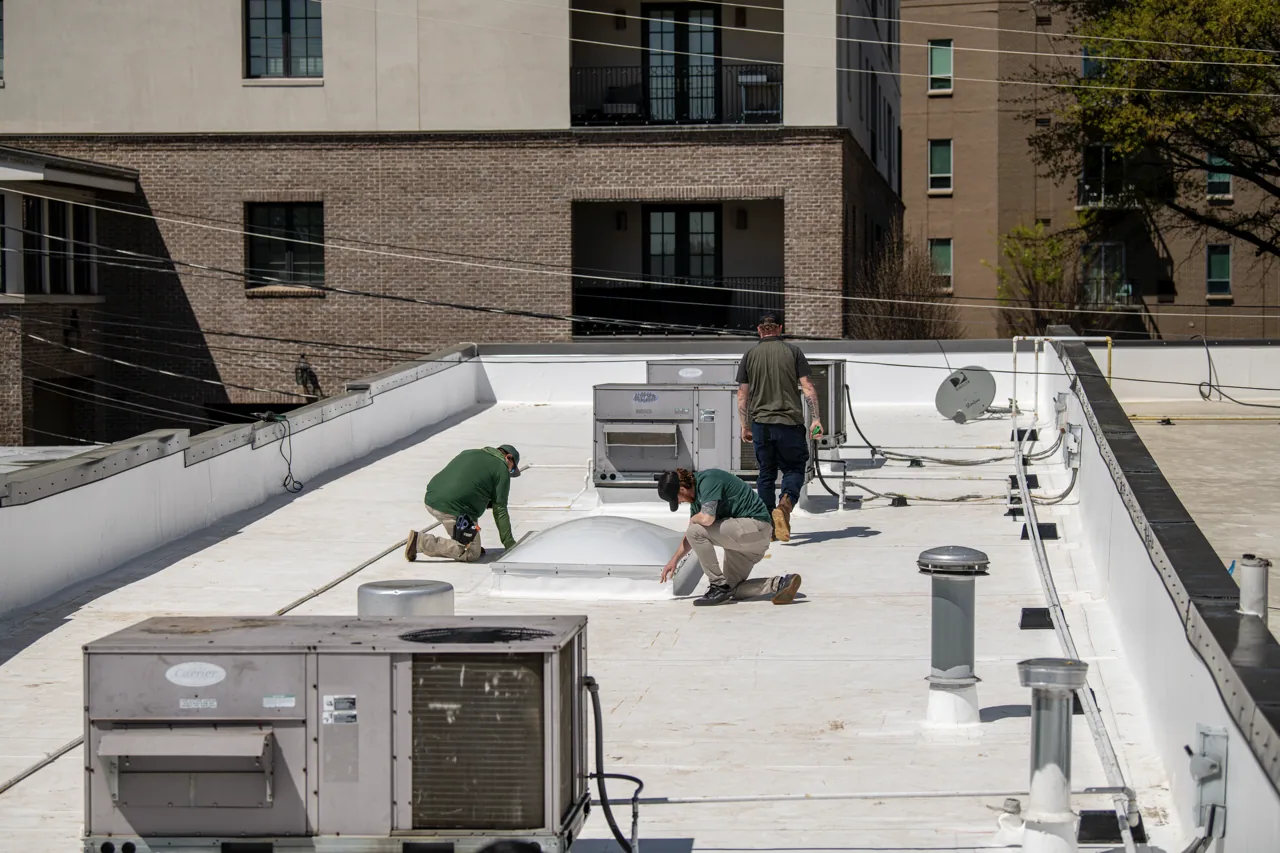
Stamford's summer highs in the low-to-mid 80s and cooling demand make rooftop equipment a regular inspection point. We check the coating around condensate lines, service paths, and curb bases, then coordinate access with the manager. Heat from equipment and foot traffic can wear the film locally, even when the surrounding field remains bonded. Material staging and ventilation considerations are confirmed before the application area is opened.
Norwalk's Route 1 and Route 7 corridors include active commercial and industrial uses. When coating work is scheduled near those business areas, delivery timing and lift access need to fit ongoing operations. For Downtown Stamford roof access, the hatch route and roof activity determine how the crew reaches each zone. We leave drains clear and state which surfaces must remain closed during cure. The surface condition sets the coating scope.
Renewal decision: compare coating with replacement
A coating may be appropriate when the roof is dry, stable, and suitable for restoration. Wet insulation, loose membrane, or extensive deck damage can make coating a poor fit. We map tested areas, identify any untested zones, and document repairs required before application. The work scope states surface preparation, detail reinforcement, field coating, and closeout checks separately.
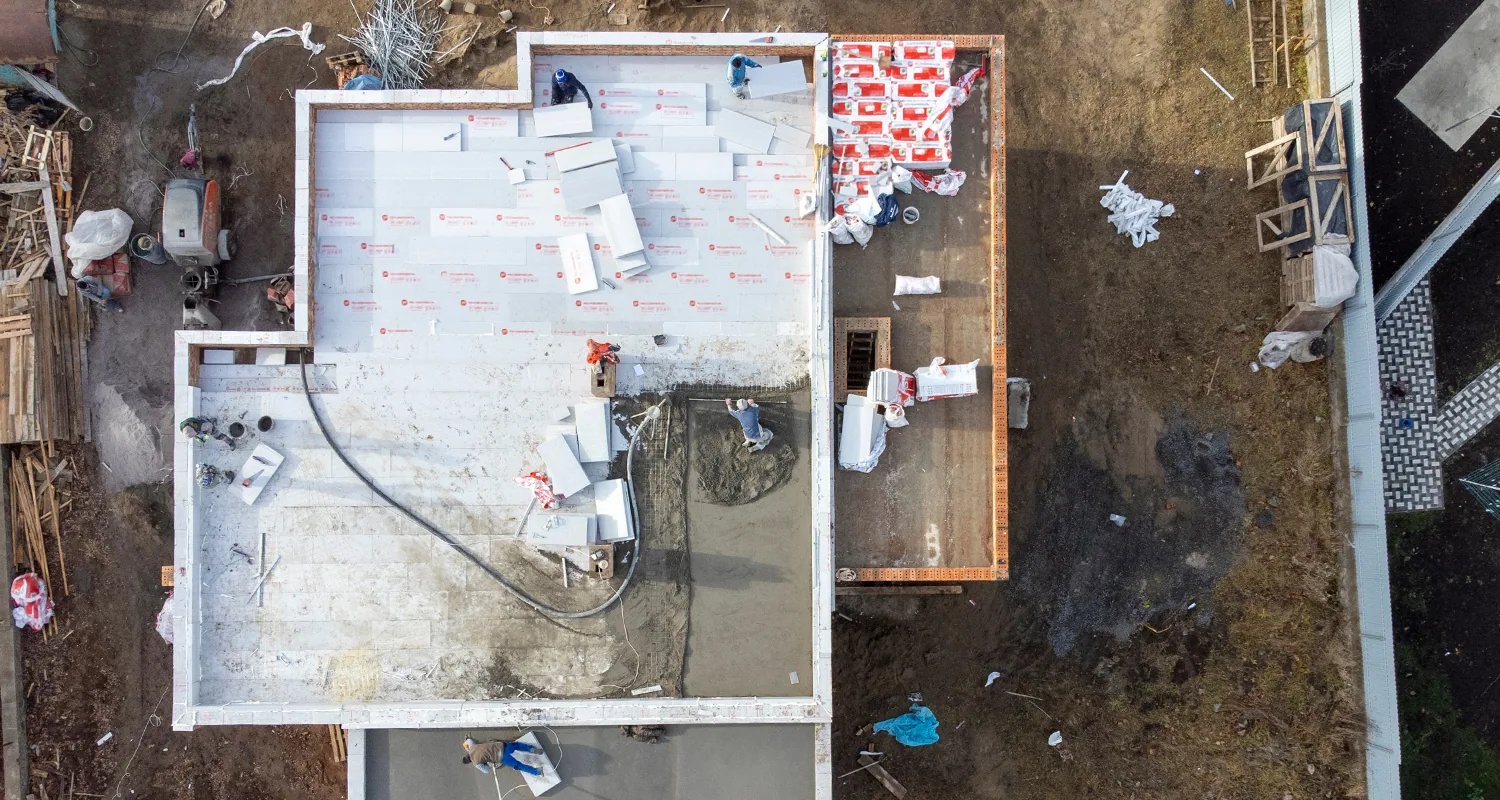
If the assembly cannot support another layer, replacement may be considered. We compare removal, insulation, drainage, and flashing needs with a restoration plan using observed roof conditions. Acrylic systems have different moisture and application characteristics; acrylic roof coatings are evaluated as a separate option. A condition record shows which roof areas are included and what remains outside the approved work.
Commercial Roofing Questions
Can silicone coating correct standing water?
It can tolerate ponding in some systems, but it does not change the roof slope. We inspect drainage and low areas before including coating.
How do you know if the old roof can be coated?
We inspect the membrane, existing coating, insulation, and adhesion at representative points. Wet or loose areas need correction before a new layer is considered.
Can silicone be applied over TPO?
The membrane and coating product must be compatible. We test preparation and adhesion, then specify a transition at the TPO surface.
How are seams reinforced?
We prepare each seam and use reinforcement where the selected system and observed condition require it. The scope identifies those details before field coating.
Does coating include drain and curb repairs?
Those details are listed separately. We inspect their condition and include repair only when it is part of the approved scope.