A chalking acrylic coating can lose adhesion at a seam or curb before the open field shows damage. In Stamford, CT, we inspect the coating, membrane, and drainage before recommending a renewal. Summer heat and rooftop equipment can stress transitions and service paths. A roof coating inspection checks the existing film and the roof beneath it, then separates surface wear from a defect that needs repair.
Surface preparation: remove what cannot hold a new film
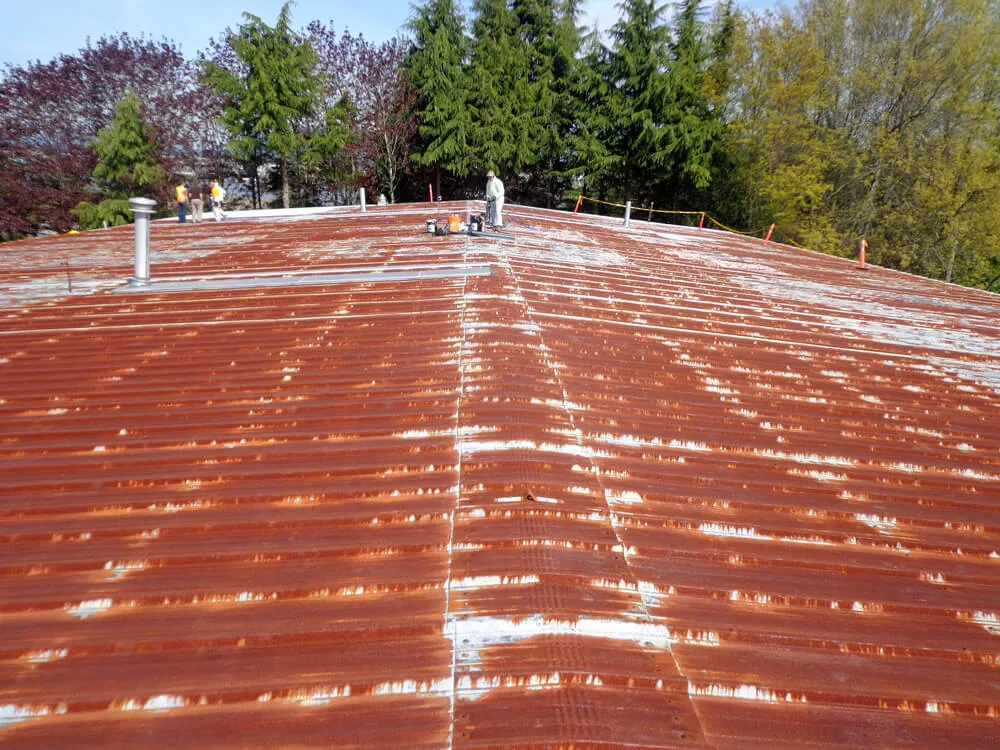
Acrylic coating bonds only to a suitable, prepared surface. We check for chalking, dirt, loose paint, ponding residue, and material that has peeled from the roof. Preparation may require washing, scraping, or removal of a weak layer. The surface must dry before the new coating is applied. If an old coating has multiple products or repairs, we inspect their edges and test compatibility before carrying the new film across them.
Open seams, punctures, and wet insulation are repaired before field application. Coating can bridge a small surface irregularity, but it will not reconnect a separated membrane or dry a saturated assembly. We mark the defect and state what material will be removed. A repair before coating is scoped separately so the application begins on a stable base.
Application window: account for cure and coverage
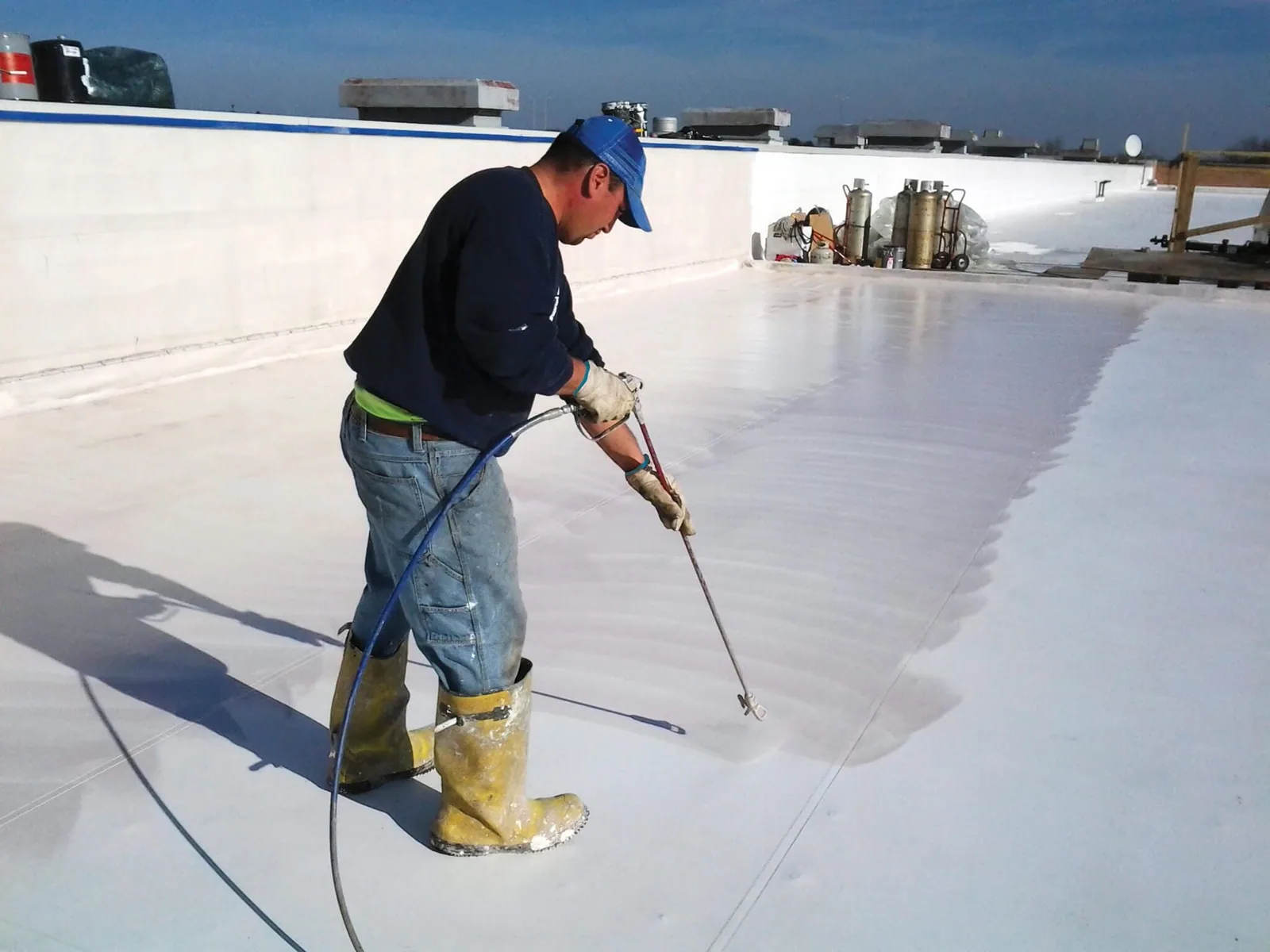
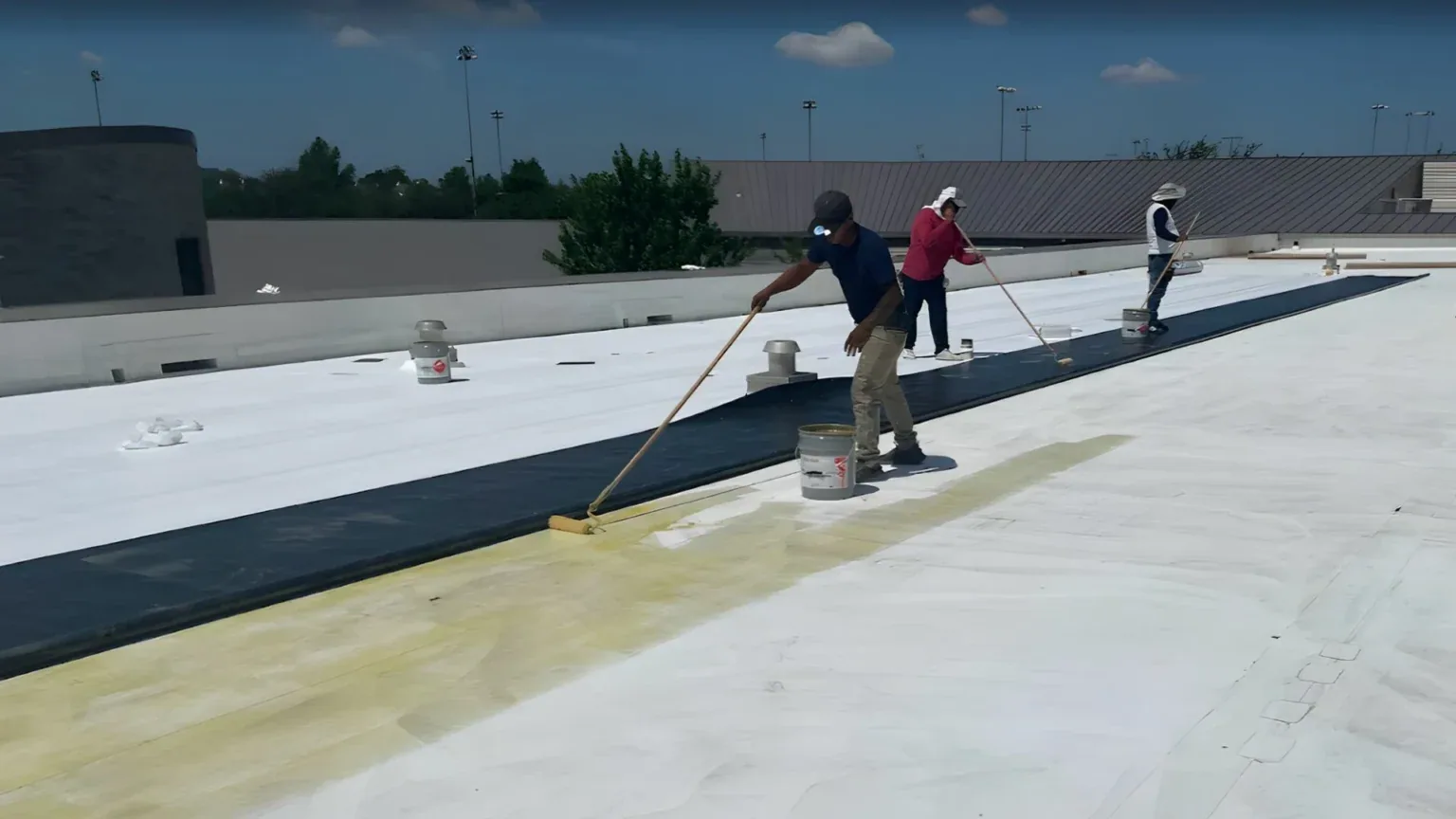
Acrylic coatings are water-based and need suitable conditions for application and curing. Temperature, humidity, dew, and rain exposure affect the work window. We check the forecast against the product requirements and sequence the roof zones so a new layer is not exposed before it can set. The specification sets the coverage rate and thickness; the job plan identifies the areas, passes, and detail reinforcement. Acrylic coatings can be applied in more than one pass when the specification calls for it. We allow the earlier layer to set before adding the next, checking that surface conditions remain within the product requirements. Around raised seams, a reinforcement strip may be used to control movement at the detail. At the perimeter, the coating must return to secure metal or flashing and end at a defined termination rather than tapering to a fragile edge. The application log records the zones coated and the product-specific coverage checks performed during the work. We verify that no coating closes an overflow opening.
Coating thickness should be even across the field and at transitions. We inspect for thin spots, pinholes, skips, and lap edges that were missed. Curbs, drains, and roof edges receive detail treatment before broad application. If reinforcement fabric is called for at a seam, it is embedded in the specified coating and returned to a sound surface. We record the areas treated and keep drains and overflow paths clear as work progresses.
Drainage: check ponding before choosing acrylic
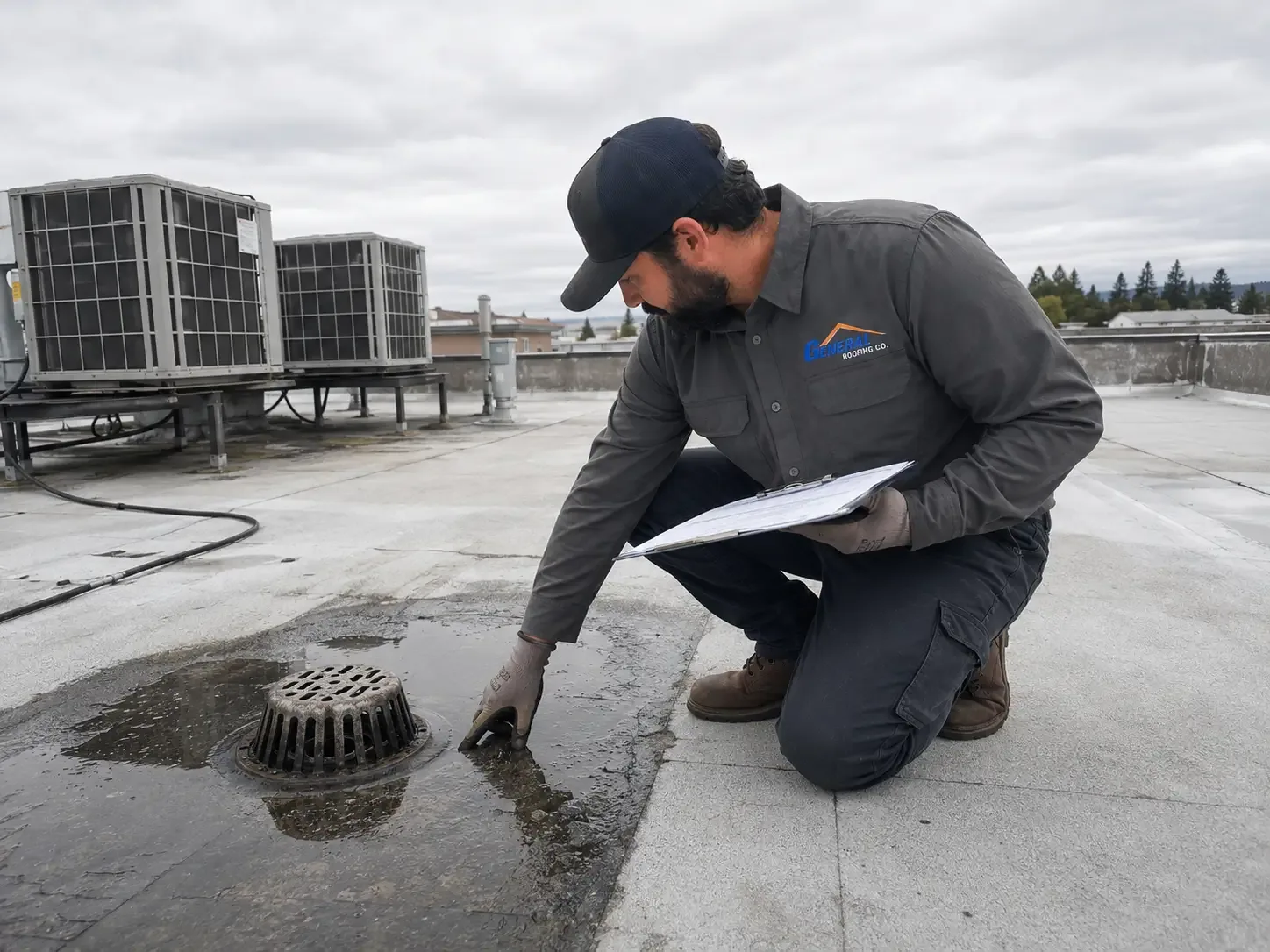
A new coating will not correct standing water caused by slope or drainage conditions. We trace water to the drain, scupper, or low plane and identify whether an outlet is blocked or the roof surface has settled. Standing water can keep the coating wet and shorten its useful performance. A drainage correction may be needed before coating, and the slope must direct water toward an outlet that can accept it.The outlets remain accessible for later cleaning and inspection.
We inspect for blistering or soft material in low areas and open the roof selectively when the assembly needs confirmation. Wet insulation has to be addressed before it is sealed beneath a new film. A cricket or tapered section can guide runoff if elevations and curb heights allow it. drainage and slope correction is listed with the coating scope when it is part of the observed condition, not left as an assumed benefit of applying another layer.
System compatibility: identify the membrane and old coating
Acrylic coatings can be used over some roof assemblies when the substrate and preparation are suitable. We identify the membrane or surfacing, then verify adhesion and compatibility. A TPO membrane preparation detail can need different primers or flashing than an asphaltic surface. The existing product matters as much as the new one; a coating that peels from a prior layer will not solve the underlying bond problem.
Silicone has different moisture behavior and may suit conditions where acrylic does not. silicone coating properties are assessed separately rather than treating all liquid-applied systems as interchangeable. We compare drainage, roof slope, expected exposure, and the condition of existing seams. If the system cannot be coated reliably, replacement or a different restoration method can be considered.
Stamford roofs: coordinate work around occupied areas
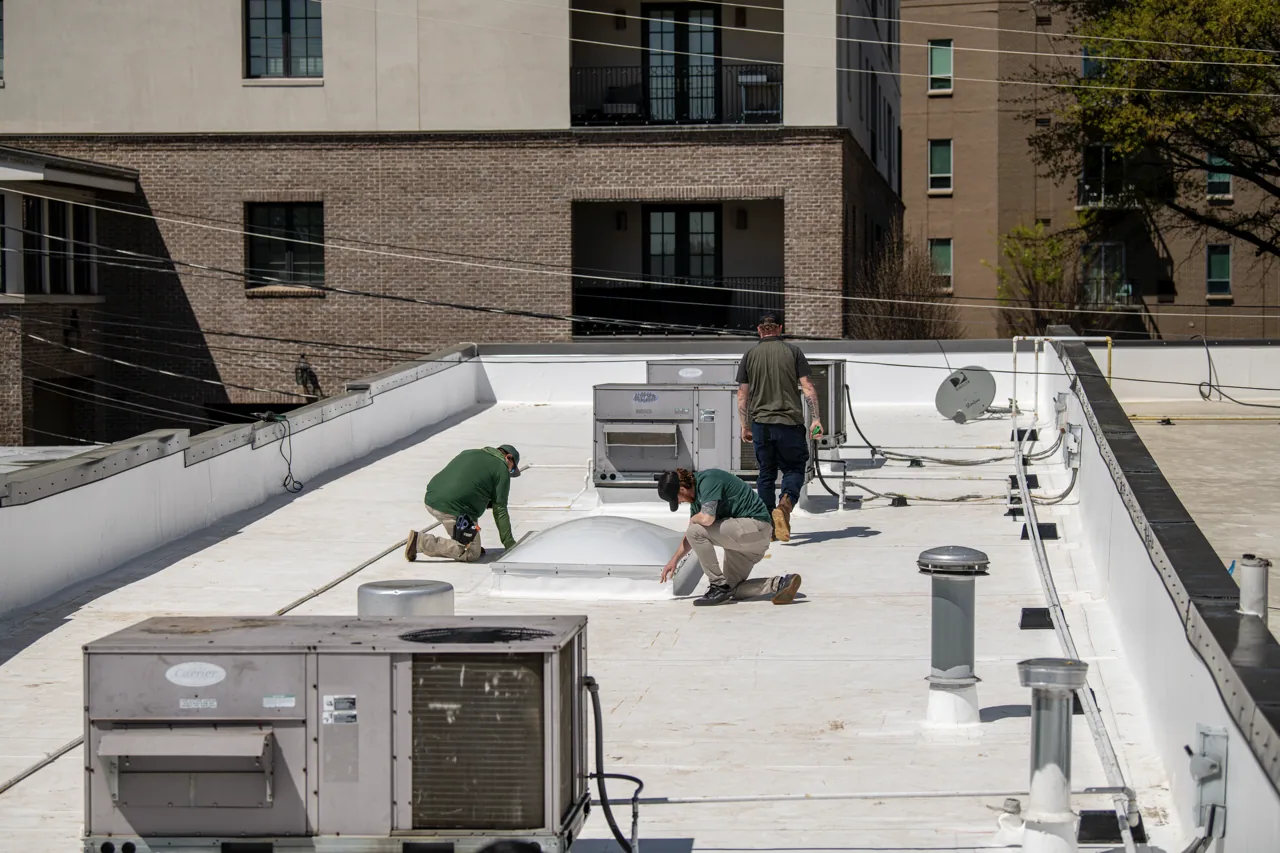
Downtown and South End are higher-intensity mixed-use areas in Stamford. Harbor Point is a phased, multi-use district with residential, office, retail, hotel, and public spaces. For work above occupied areas, we coordinate access and protect the space below. Summer heat and cooling demand keep rooftop equipment in service, so we coordinate access with the manager and protect areas below the work. The coating sequence establishes where the crew will operate, which equipment paths remain clear, and when each roof zone is ready for access.We keep the daily work boundary visible so building staff know which roof areas remain closed during cure.
A Downtown Stamford roof coordination plan starts with the hatch or lift route and the place materials can be staged. We also review odor or ventilation concerns for the selected product, if applicable. If a mechanical contractor needs roof access during application, the schedule identifies that handoff so foot traffic does not mark a fresh coating. Local building use informs coordination; inspection findings determine whether coating is the right system.
Restoration or replacement: state the conditions that change the plan
Restoration can be suitable when the roof is dry, attached, and able to accept a new coating layer. Widespread wet insulation, loose membrane, or failing deck changes the recommendation. We map the tested areas and identify the boundaries of any repair. roof coating restoration includes preparation, detail work, field application, and closeout checks as separate tasks. The manager can also use the closeout record to plan the next roof walk. It identifies repaired seams, coating limits, drainage work, and any area where the substrate was not opened. When a future application is considered, the record helps establish which products were used and what preparation remains necessary. It is a maintenance reference for the treated zones, not a statement about sections outside the project.
Replacement is considered when the existing assembly cannot support another layer or when moisture is widespread. The owner receives a scope that lists removal, insulation, flashing, drainage, and temporary protection. Closeout records show treated zones and any condition outside the approved work. It does not imply that untouched areas were renewed. That makes future maintenance and a later system decision easier to base on the work actually completed.
Commercial Roofing Questions
What compatibility checks are needed before recoating an aged acrylic surface?
The existing product must be identified and bonded well enough to remain. We test adhesion and prepare the surface before specifying the next layer.
Will acrylic coating stop ponding water?
It does not change the roof slope. We inspect drains and low areas and include drainage correction when the roof plane or outlet is part of the problem.
How do temperature and application conditions affect acrylic cure time?
Cure depends on the product and weather conditions. We schedule work within the specified application window and protect the coated area while it sets.
Can you coat a roof with wet insulation?
Wet insulation must be mapped and addressed before coating. We identify the affected area and state what will be removed or dried.
How is an acrylic coating different from silicone?
The systems differ in moisture behavior, application, and substrate compatibility. We compare those conditions with the roof before selecting a coating.