
A curb flashing can open at one corner and send water along the roof before it reaches an occupied room. In Saugatuck Center, Westport, CT, we start with the reported leak and trace the seam, curb, edge and drain details around it. Saugatuck is one of Westport's commercial centers; Riverside Avenue connects the area to the station. Near the Saugatuck River, mixed-use growth accompanies pedestrian improvements and runoff management. Near the river, rooftop outlets and overflow paths deserve a close look, while the building's assembly sets the repair. A commercial roof inspection records the failed detail and the boundary that can hold.
Water route: trace from the room to the roof
A ceiling mark can sit beyond the defect that admitted water. We compare the room, roof slope, nearby seams and penetrations, then follow the likely path toward a curb, wall or drain. Water may travel under the membrane or across a board joint before it appears indoors. We note what is visible, test what can be reached and keep a suspected route separate from a confirmed opening. That distinction keeps a repair from ending at the stain.
Pedestrian improvements and runoff management near the river shape the broader setting; property access and roof conditions still need to be checked at the building. We confirm property rules before moving materials and note any occupied area below the work. A roof condition report can show the leak location, connected details and limits of the inspection.
Seam and curb: match preparation to the system
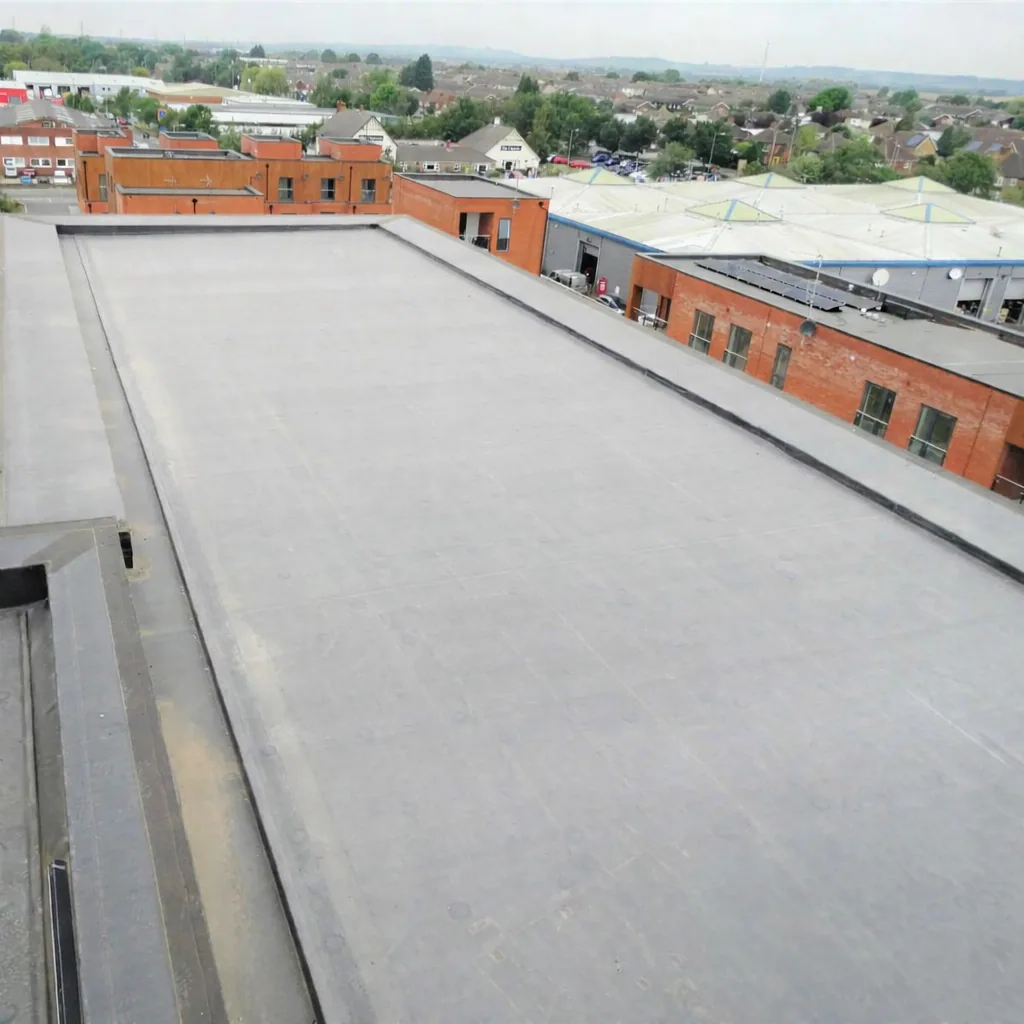
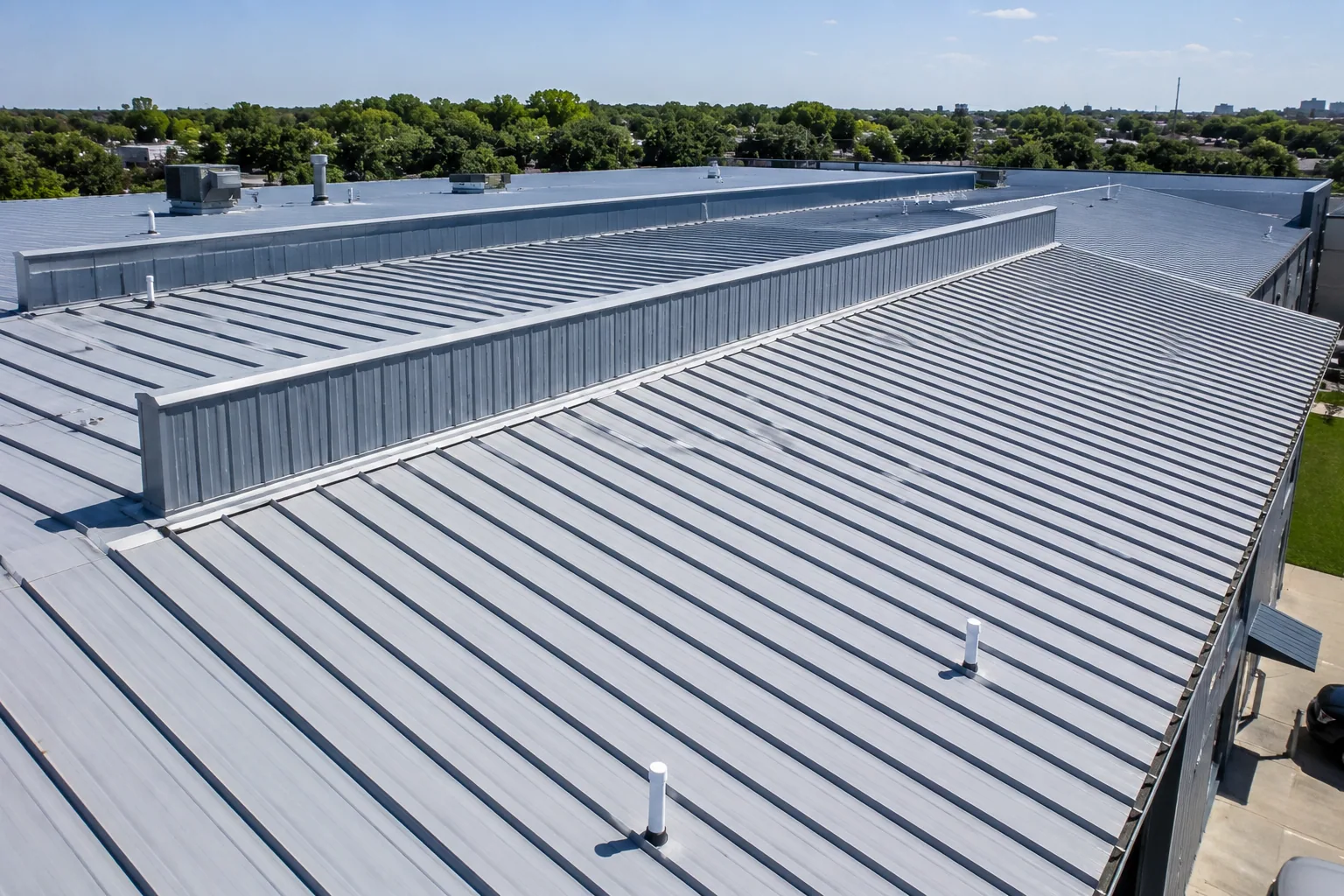
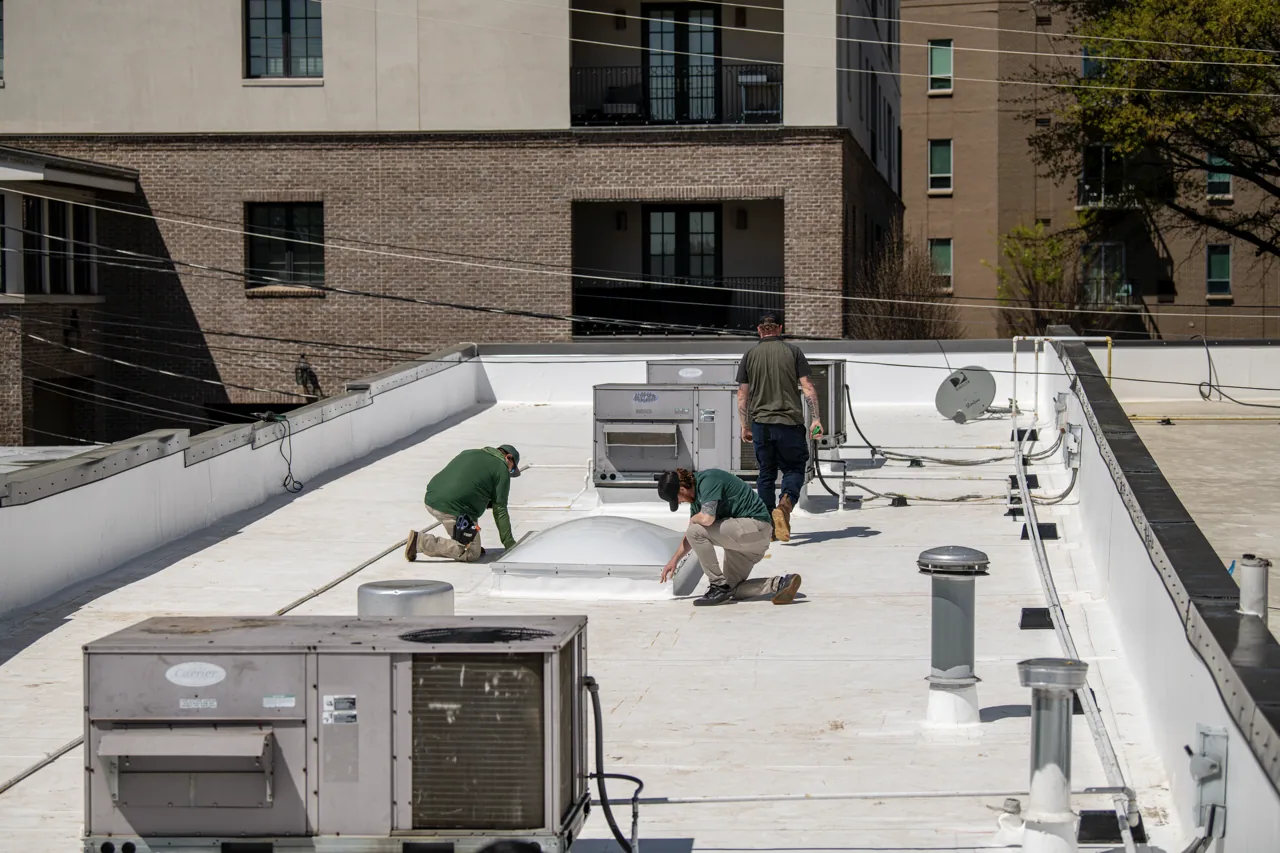
The existing roof material determines how a repair can be joined. A thermoplastic seam may require a clean test weld. EPDM needs compatible primer and splice tape. Modified bitumen, built-up roofing and metal each have different lap details. At a rooftop curb, the membrane must meet corners, vertical flashing and counterflashing without an open path. We inspect attachment and substrate at the transition before selecting a patch. A bead of sealant cannot restore loose membrane or wet insulation.
Westport's commercial pattern includes Saugatuck, Westport Center, Post Road and office parks. We identify the material on each roof before selecting a repair method. We identify the material at the building and note previous repairs. EPDM repair and standing-seam metal work need different preparation. The scope names the detail, the compatible method and any adjacent condition that could make the repair wider.
Drainage: inspect the outlet and overflow
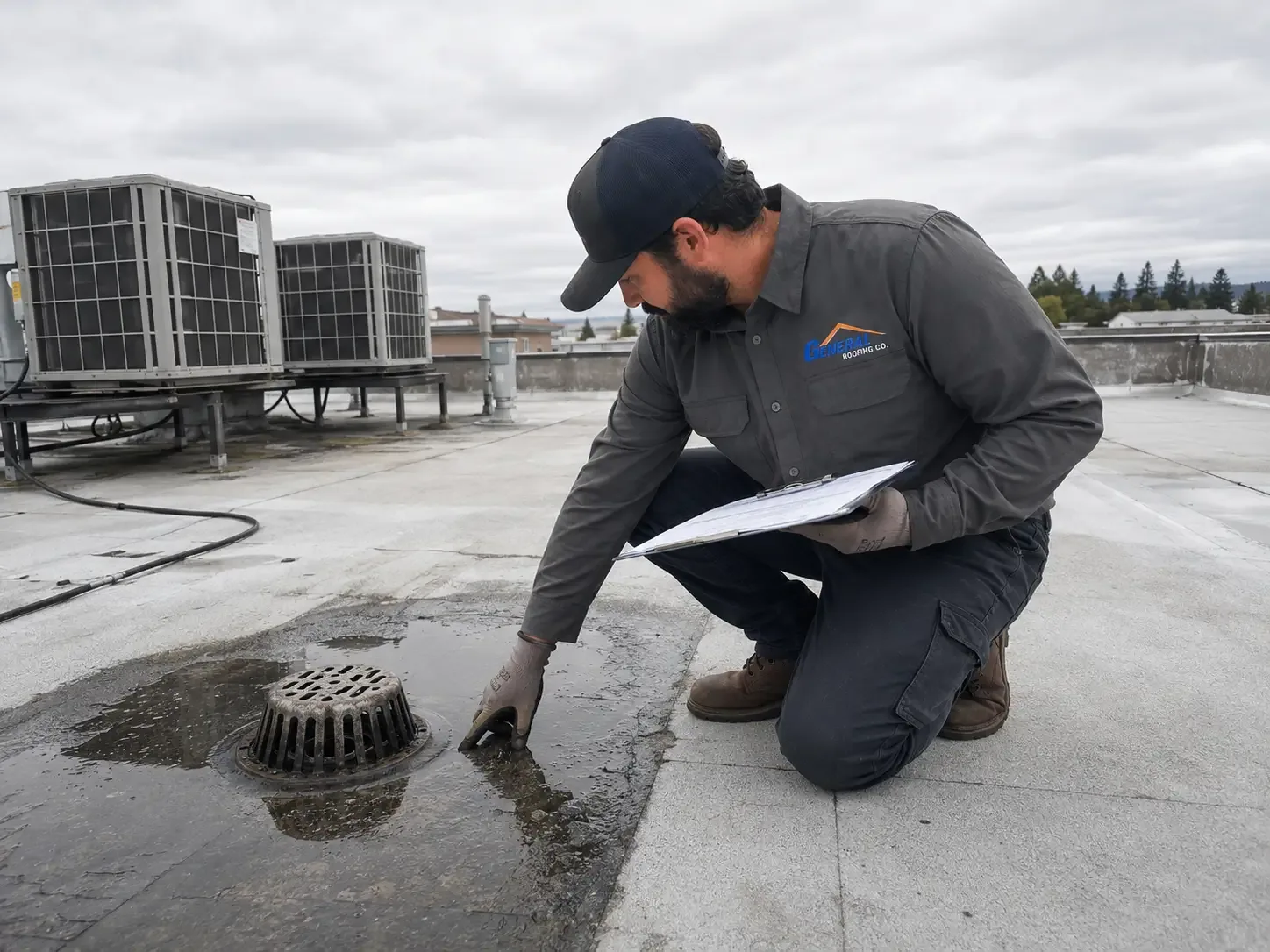
Water near a low point can come from a blocked strainer, failed flange or roof plane that holds water. We check the drain bowl, clamping ring, sump, membrane tie-in and overflow. At a scupper, we inspect the throat, metal return and surrounding field. A clear outlet does not prove its connection is sound. Ponding does not identify a leak by itself. We compare the water line and reported interior location with the actual roof detail.
Near the Saugatuck River, runoff management is paired with pedestrian improvements and mixed-use growth. On the roof, the practical task is to preserve a working discharge route and a sealed membrane connection. Drain and scupper repair can address a failed outlet detail. If the roof plane does not direct water toward the drain, correcting the slope may need a broader design review. We identify the condition found instead of promising that clearing one opening will resolve every water problem.
Repair boundary: reach dry, attached material
A contained patch requires sound membrane around the defect and dry material for the tie-in. We remove failed roofing, prepare the surface and reconnect the repair to the field. If opening the roof exposes wet insulation or a damaged deck, the work boundary has to include that layer. We protect the opening while ownership reviews the added work. At each opening, we secure temporary cover and verify that water still reaches an open outlet. Closing over moisture can leave a hidden weakness below new material.
One leak does not automatically require replacement. Several separate openings, recurring failures or loose attachment may show the existing assembly cannot support repeated patches. Commercial roof repair addresses a local defect. Maintenance can track drains and seams while the system remains serviceable. Recover or replacement enters when moisture or failure extends farther than a practical repair. The written scope shows the finding behind the recommendation and the point where the repair stops.
Access and sequence: fit work to the property
Station access and pedestrian activity make the delivery route worth confirming with the property's manager. We ask the property contact about roof entry, loading, equipment clearances, occupied areas and where protection is needed. Those answers shape the sequence. Material handling and interior protection belong in the estimate because they affect how an opening is reached and closed.
Timing follows weather, surface dryness, removal depth and the need for a temporary dry-in. A seam patch may close within one work window; an opening over wet insulation may require additional removal and approval before permanent close-in. Occupied-building roof work can be phased around active space. Managers with properties in Westport Center can keep each address's access notes and inspection images separate. Those records help set staging around each building's entrances, drains, and occupied areas.
We set the stopping point before removal and describe how the opening will be protected if work pauses. A dry-in plan matters when a hidden layer needs owner review or a material must be ordered. The manager sees the temporary condition, the permanent repair method and the access needed for close-in. That sequence helps protect the building without promising that an unseen layer can be priced before it is exposed.
Cost and timing: compare the repair paths
Price depends on membrane, removal, connected flashing, wet insulation, equipment access and interior protection. A drain flange has a different material path from a curb corner or metal edge. Disposal and temporary dry-in add work where the roof cannot close in one sequence. We state the assumptions and identify what could change after removal.
The next step can be a focused repair, more testing or a larger-system recommendation. A coating needs a suitable dry assembly. Recover depends on existing layers and attachment. Replacement becomes relevant when multiple defects or moisture make a durable patch boundary unavailable. The repair scope remains tied to the inspected building and states the material, work limit, access needs and any follow-up check. Conditions at Greenwich Post Road are recorded separately from Saugatuck, even when one manager oversees both.
Commercial Roofing Questions
Does the Saugatuck River establish flood damage at a building?
No. The river and runoff policy are regional context, not a property-level roof finding. We inspect actual membrane, drainage and interior conditions before linking water to a roof detail.
Why inspect a curb when the leak is near a drain?
Water may travel under the membrane or along insulation before reaching the room. We compare the leak location with nearby transitions, low points and the drain connection before setting a repair boundary.
What can leak while a drain remains clear?
Yes. The flange, clamping ring or membrane tie-in can fail while water passes through the throat. We inspect the outlet and overflow as connected details.
What changes a small patch into a larger scope?
Wet insulation, damaged deck, loose attachment or multiple separated openings can extend removal. We document what the opening exposes and confirm added work before permanent close-in.
What information helps plan a roof walk?
Share leak locations, recent service notes and limits on access or deliveries. We use those details to plan the inspection and keep the work area connected to the property conditions confirmed at the building.