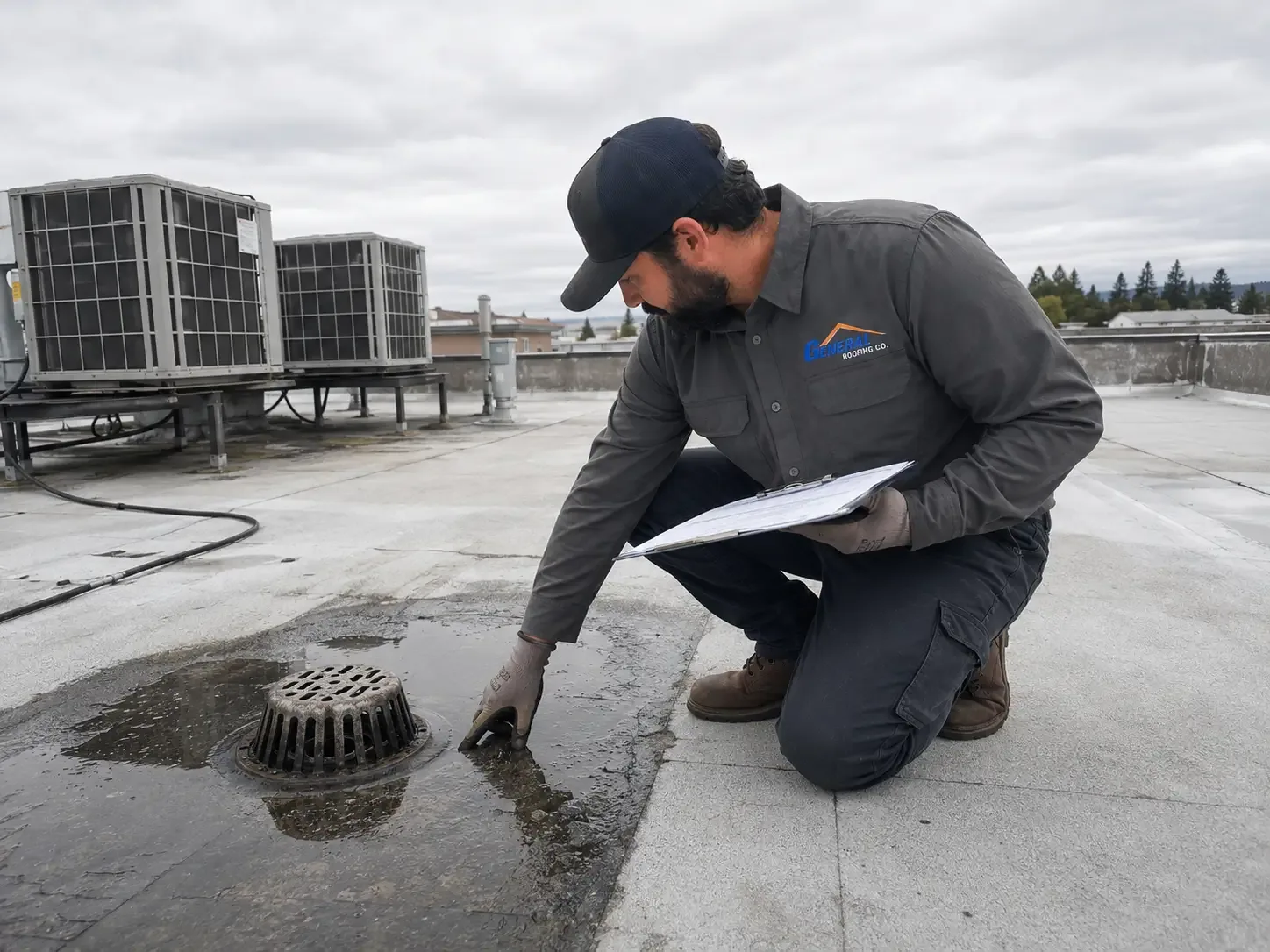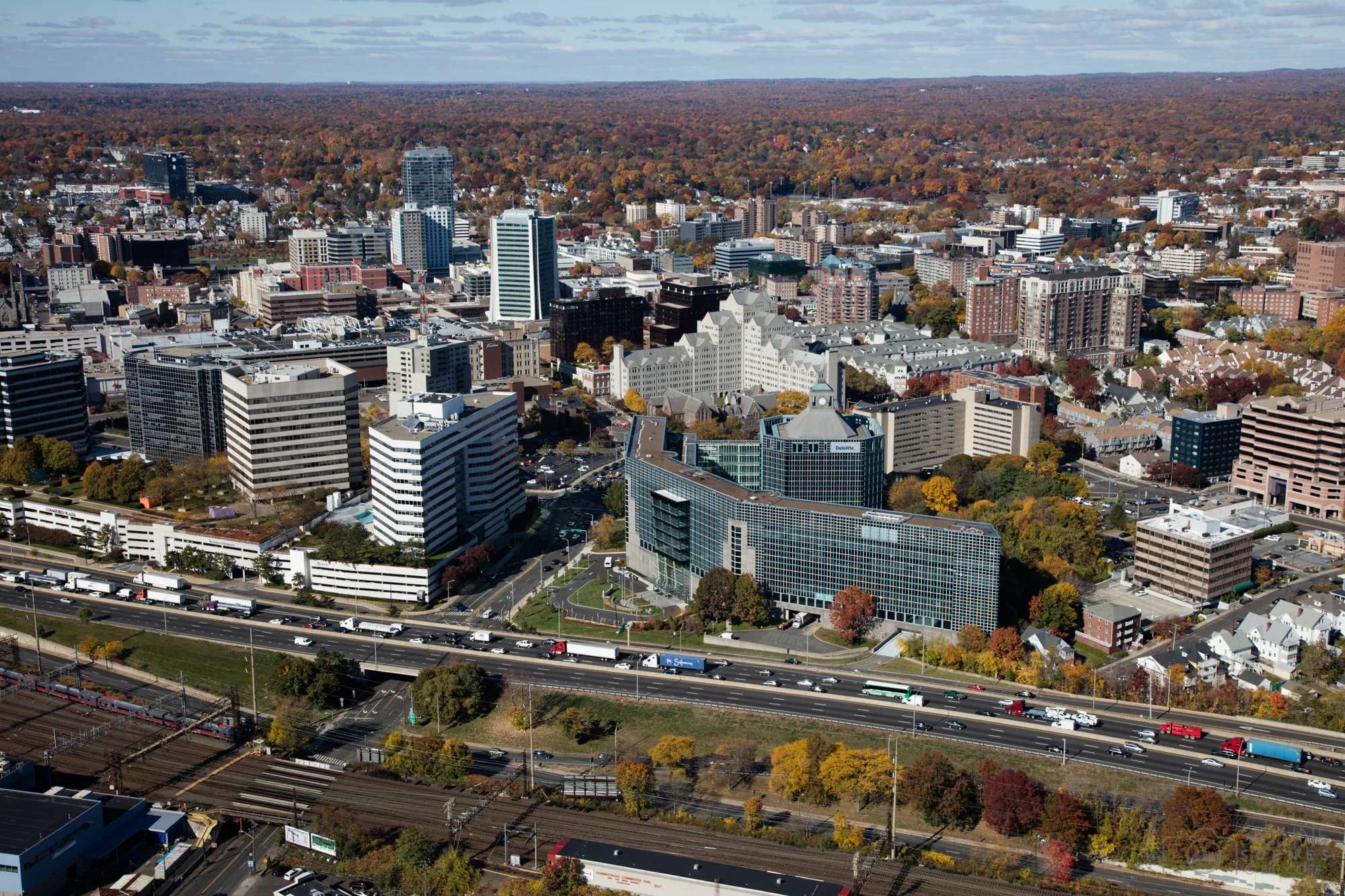
A drain overflow can send water across a roof before it reaches a ceiling. Along Greenwich Post Road in Greenwich, CT, we trace that route through the field seam, curb and perimeter details before choosing a repair. The Route 1 corridor runs between the New York state line and Stamford, and Greenwich coordinates streetscape and climate-adaptation work along the roadway. Those access and runoff conditions shape how we plan the roof walk; the membrane and flashing details are identified at the property. We inspect the material in place, mark what failed and write the limit of work. A commercial roof inspection begins with the reported water path.
Corridor access: confirm the property limits
Route 1 carries 12,600 to 29,400 vehicles a day on the segment between the state line and Stamford. Along this busy corridor, we confirm each property's delivery rules, hatch or ladder access, equipment clearances and areas that need protection. If material must be carried through an occupied space, that route belongs in the work plan before removal begins.
Greenwich's roadway work includes planted buffers and climate adaptation along the corridor. For the roof visit, we inspect the membrane, seams, edge metal, penetrations and drain route at the building. A photo condition report can record those details and the access limitations that shaped the visit. The scope follows the actual defect and how it can be reached.
Water path: connect the mark to a roof detail
Water can enter at a curb and move under the field before appearing in a room. A ceiling stain helps locate the search area, but it does not set the repair boundary. We compare the report with seams, wall transitions, penetrations and low points. At each likely opening, we inspect lap direction, adhesion, fasteners and nearby patches. A drain may be involved even when the visible mark sits away from it. The report separates what is seen from a route that needs another test.
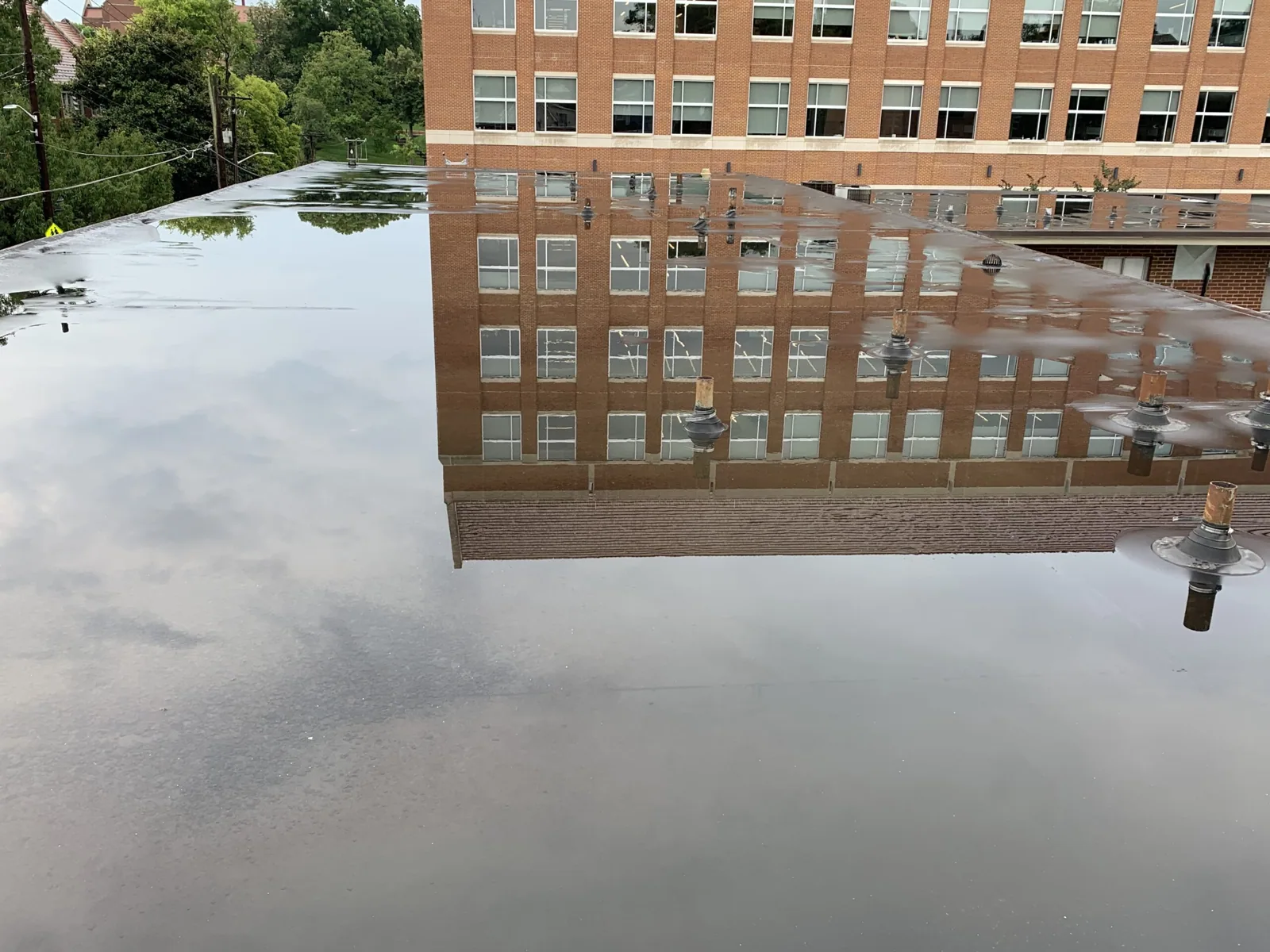
Stamford's winter normals include snowfall and subfreezing overnight temperatures. On a Greenwich roof, we inspect the outlet, lap, and metal return directly before setting the repair scope. Ponding-water roof work starts by checking whether water is trapped by a blocked outlet, a low plane or a failed membrane connection. A blocked outlet may need clearing, while a low plane or failed tie-in calls for a different scope.
Membrane and metal: repair the connected detail
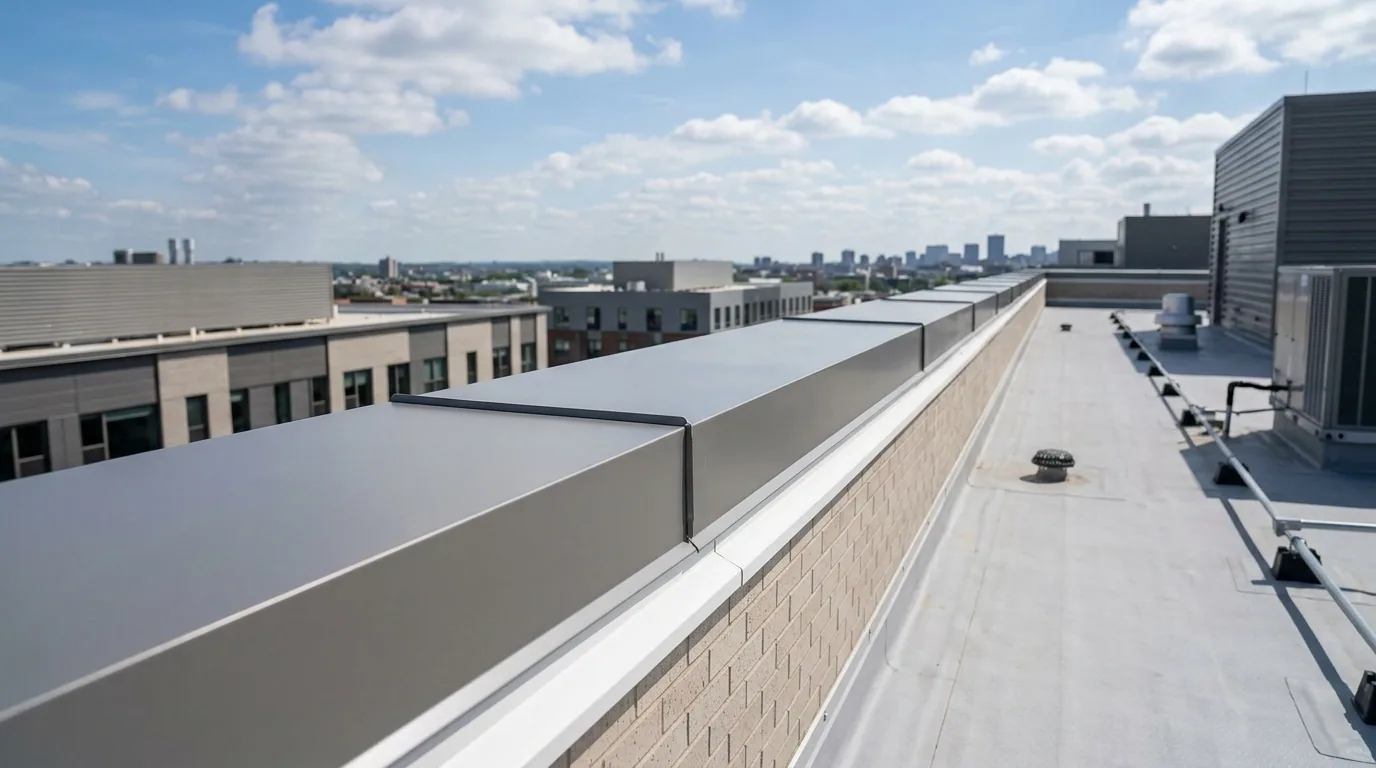
The material controls how a seam can be reopened and tied back together. A thermoplastic roof needs a clean test weld; EPDM uses compatible primer and splice materials. Modified-bitumen and built-up surfaces need their own lap preparation. At a parapet, coping splice or curb, the membrane has to remain connected through a change in plane. We inspect the vertical leg, termination, corner and adjacent field before selecting the patch. Where metal support or membrane fasteners have released, restore that connection before sealing the joint.
At a building along Greenwich Post Road, we map the affected roof zone, then price the correction from the assembly and access conditions. TPO tie-in work and edge-metal repair address different parts of the assembly. If the existing sheet has stretched or the substrate is wet, a new surface layer may not hold. The scope records which material meets the failed detail and how the tie-in reaches stable roofing.
Drain and overflow: keep the discharge path open
We inspect the bowl, strainer, clamping ring, sump and membrane turn-in. A clear throat can still have a failed flange. An overflow opening needs a free path and a sound edge detail. Scuppers also need a membrane connection that does not pull away from the metal. Debris can slow discharge, while a low roof area can leave water against a curb or wall even after an outlet is cleared. The correction follows the actual obstruction or failure.
From the field membrane, we follow runoff to each bowl, scupper, or overflow, checking water marks and whether the membrane-to-metal connection stays attached. Drain and scupper service can address an outlet connection; a slope issue may need a broader design review. When inspection finds more than one related opening, photographs show their position so ownership can see why the repair extends beyond the obvious stain.
Repair boundary: stop where the assembly is sound
A repair is contained when the failed detail is isolated and its surrounding material is attached and dry. We remove the damaged section, prepare the substrate and tie new material into sound roofing. Wet insulation or a softened deck changes the boundary. We open far enough to determine the affected layer and protect the roof while ownership reviews any added work. Closing over a wet layer can leave the same water path under a fresh surface.
Separated leaks may still share one failed seam or drain. We compare their locations before recommending several patches. Commercial roof repair is appropriate when the assembly can support a durable local tie-in. Widespread moisture, loose attachment or repeated detail failures can lead to maintenance, recover or replacement review. A coating is considered only when the roof is dry and otherwise suitable. We state the finding that changes the recommendation rather than letting a repair become open-ended.
Work sequence: protect the opening and areas below
Weather, dry substrate and material preparation set the work window. We plan where removal stops, how temporary dry-in will protect an exposed layer and what must be approved before permanent close-in. On an occupied building, interior protection and access coordination can add steps. We confirm work-zone, delivery, and roof-access limits with the property contact before materials arrive.
Where the inspection finds several roof areas, we organize them by condition and repair need, not by their position along the corridor. A property in Greenwich Center or Downtown Darien receives its own photos and scope. At each building, we assess moisture, attachment, and roof material before defining the work. The estimate notes the access assumptions and which discovery could change the duration or amount of work.
Cost and timing: compare the repair options
Cost depends on membrane type, removal depth, flashing details, wet insulation, equipment access and protection below. A drain flange requires different materials from a metal coping splice. Disposal and temporary dry-in can also change the sequence. We list those cost drivers in the scope and separate confirmed work from concealed conditions that could require approval.
The decision may be a local repair, follow-up testing or a larger system recommendation. Recover requires a suitable existing assembly. Replacement may be better when attachment or moisture problems extend beyond isolated openings. Ownership can compare the condition with future budgets. The immediate scope remains specific: the observed defect, the repair method, its boundary, the access assumptions and the next check if a hidden layer changes the work.
Commercial Roofing Questions
Which access details help set a roof walk?
We confirm the service entrance, lift route, staging area, and any pedestrian protection with the property contact before scheduling materials.
How can a blocked outlet affect a leak reported beside the wall?
Water can move across a low area or below the membrane before appearing inside. We inspect the outlet, overflow, nearby seams and wall details, then test the route that best matches the report.
How can streetscape work affect a roof project?
Greenwich's corridor includes streetscape and climate-adaptation proposals. For a roof walk, we coordinate delivery and access with the property contact, then inspect the membrane and drainage details before setting scope.
What finding makes a patch expand?
Wet insulation, loose attachment or a failed adjacent transition can move the repair boundary. We document what the opening exposes and confirm additional work before permanent close-in.
When should replacement enter the discussion?
Repeated failures, widespread moisture or a field that cannot accept dependable tie-ins can support a larger-system review. We compare those findings with the repair option and explain the condition driving the recommendation.