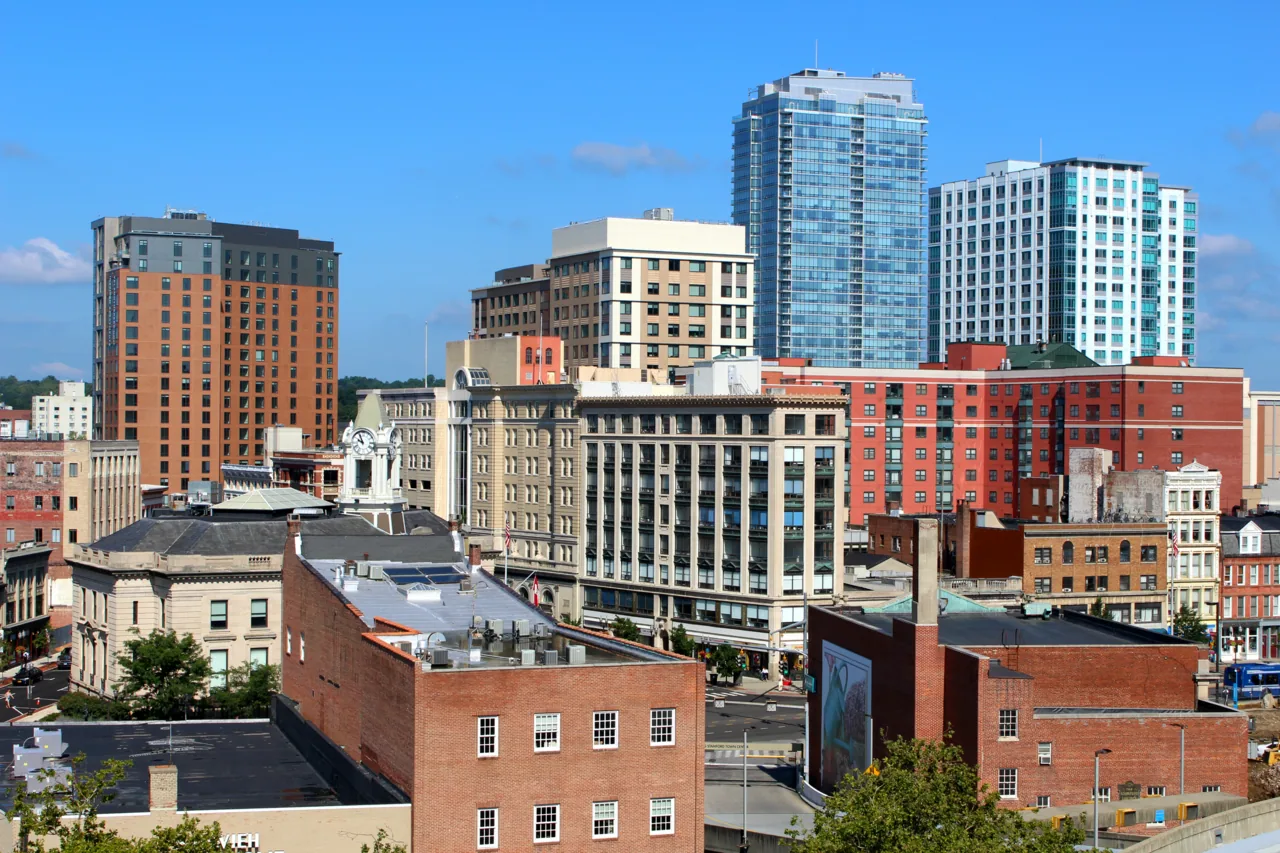
A seam beside a parapet can open while the ceiling below stays dry. Later, water may follow insulation and appear several rooms away. In Greenwich Center, Greenwich, CT, we connect that interior mark to the membrane, curb and drainage details above it. About 130 businesses opened after the town adopted its 2019 plan, while peak-hour parking along Greenwich Avenue is constrained. The downtown core also remains a focus for infrastructure and storm resilience. Those local conditions make access coordination useful, but the roof itself sets the repair. We inspect the field and write the boundary around material that can hold a compatible tie-in. A commercial roof inspection begins with the reported leak and the access window.
Water path: work back from the visible mark
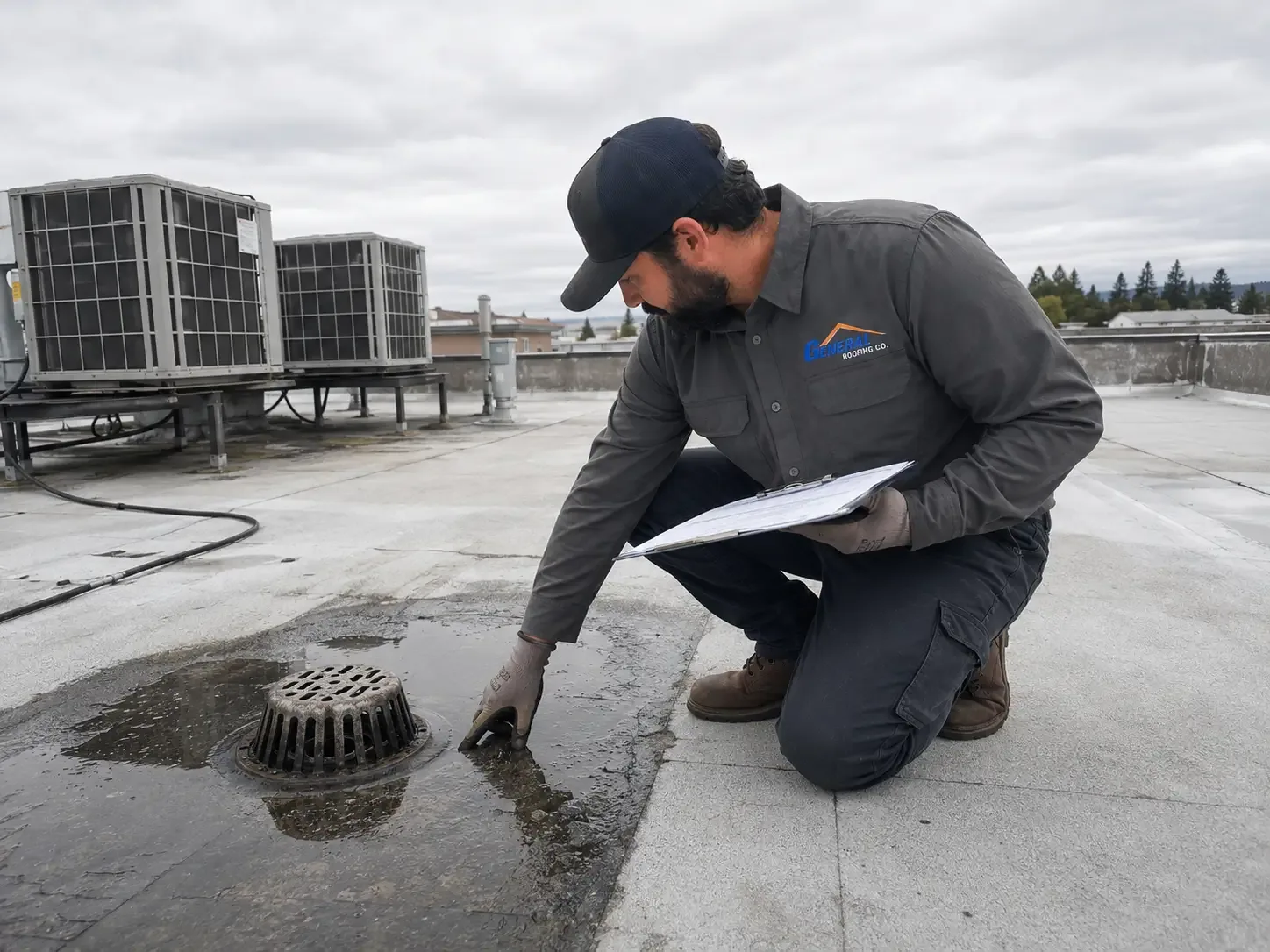
The room where water appears gives us a starting point, not a complete diagnosis. We look above it for open laps, punctures, failed curb flashing, loose counterflashing and a drain connection that can leak under flow. A low area may retain water beside a seam; a deck joint can carry moisture away from the opening. We compare the roof's slope and assembly with the reported timing, then test where safe access allows. The notes distinguish direct observations from a route that still needs confirmation.
Greenwich Avenue's constrained peak-hour parking changes how a property contact may want deliveries and material movement handled. Before setting delivery timing, we confirm roof access and building schedules with the property contact and keep the work zone specific. A condition report with photos can show the reported area, roof detail, and inspection limit in one record. The repair scope then follows what the roof supports.
Assembly check: identify the surface before repair
Before patching, we identify the system and the condition of the material around the opening. TPO and PVC seams may need a test weld; EPDM splices require compatible primer and tape. Modified-bitumen and built-up assemblies use different lap details. Coated roofs need clean, dry substrate and compatible preparation. We check for previous patches, fastener movement, wet insulation and membrane tension. A repair that ignores the system can detach at the first transition.
A mixed-use building may have separate roof areas, additions or equipment zones, each with different details. We map the visible assembly and note how a curb or wall changes planes. PVC roof work differs from EPDM repair in seam preparation and tie-in. We explain the method that fits the material found, rather than apply one repair approach across every section.
Drainage details: inspect bowl, overflow and edge
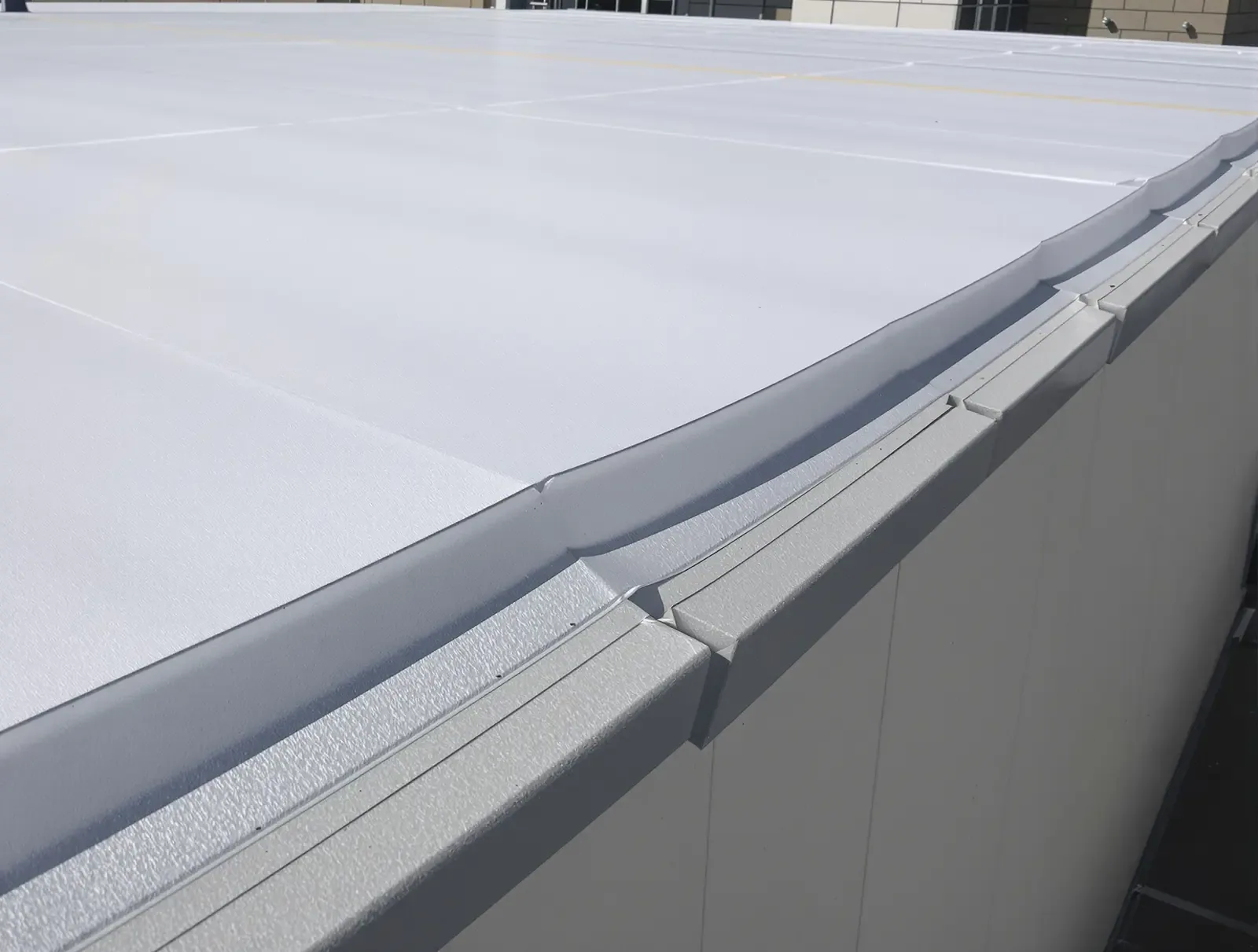
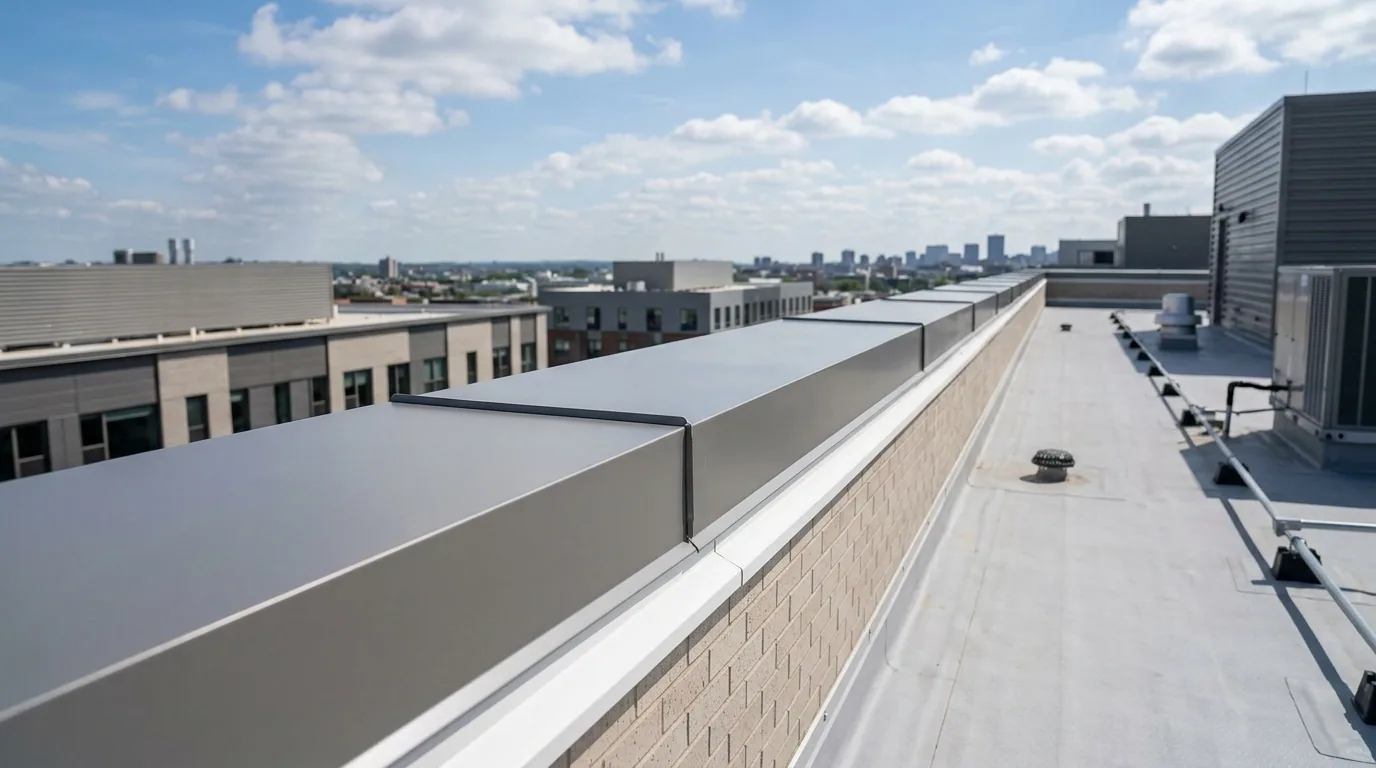
A drain bowl can look clear and still leak beneath the clamping ring. We inspect the strainer, sump, flange, membrane connection and overflow route. At a scupper, the throat and metal transition need a sound connection to the field sheet. We also look at parapet coping and its joints, because water can move behind a loose return and reach the interior wall. The visible symptom may involve more than one connected detail.
Greenwich's storm-resiliency priorities put runoff management in the municipal conversation. On the roof, we inspect the drainage path, ponding, debris and failed connections before recommending a repair. Drain and scupper repair may involve clearing an obstruction or rebuilding the membrane tie-in; those are different scopes. Coping and edge work addresses the perimeter connection. We show which detail failed and where water can leave the roof after repair.
Repair limit: follow the condition below the surface
A repair holds only when the surrounding membrane stays bonded and the exposed base can accept new material. We cut back the failed area, prepare a clean transition and join the patch to stable roofing. Damp or crushed insulation means the opening has to follow the affected layer. We keep the roof protected while ownership reviews any extra removal, then close the assembly after the tie-in surface is ready.
More than one defect does not automatically mean full replacement. We compare each repair point with attachment, moisture, remaining membrane and the way water moves across the roof. A focused roof repair fits a contained failure; recurring splits or widespread wet layers may support a broader recommendation. Maintenance can track drains and transitions where the assembly remains serviceable. We define the repair boundary and identify the roof condition that could shift the work toward recover, coating or replacement.
Access and timing: set a workable roof window
A roof scope needs a safe route to the work and protection for occupied space below. We confirm hatch or ladder access, equipment clearances, staging, delivery limits and areas that need interior protection. The peak-hour parking constraint on Greenwich Avenue makes a delivery conversation relevant when the property sits near that corridor. It does not imply a particular loading zone. The manager confirms the property rules, and we record them as job assumptions.
Timing follows weather, surface dryness, system compatibility and the amount of removal. If the repair exposes wet insulation, the crew needs a protected stopping point while ownership reviews added scope. Occupied-building roof work needs a secured edge and a firm dry-in point at each phase. Where managers oversee properties in both Greenwich Post Road and Greenwich Center, each roof gets its own inspection notes and access plan. Nearby service does not transfer roof conditions between buildings.
We ask which entrances remain in use, what hours limit deliveries, and whether equipment or work below needs a temporary shutdown. These are property-specific constraints. A staging decision should leave a safe path for building users and a clear route for materials. If access changes between sections, the estimate separates those conditions so the owner can see why the sequence or labor differs.
Cost and scope: compare repair with wider work
Cost depends on the membrane, removal depth, connected flashing, wet insulation, access and protection below. A field seam has a different labor and material path from a curb with deteriorated corners. Testing, dry-in and disposal can add work. We identify assumptions before work starts and separate a confirmed repair from a concealed condition that may change the amount of removal.
The recommendation can remain a focused patch, add a planned follow-up opening, or move to broader system work. A coating requires a suitable dry assembly and prepared surface. Recover depends on the existing layers and their attachment; replacement follows when the roof cannot provide dependable repair boundaries. A written scope gives the manager the defect, method, limit, access assumptions and next decision in plain terms. Properties toward Greenwich Post Road may have different access conditions, so we record the property access limits rather than assume the same sequence.
Commercial Roofing Questions
Does constrained parking change the roof repair itself?
It can affect delivery and material staging near Greenwich Avenue, but the assembly determines the repair. We confirm property access with the manager, then inspect the membrane, flashing and drainage details.
Can a roof leak show up far from a seam?
Water can travel through insulation or along a deck joint before reaching a room. We trace from the interior report to likely roof details and record what the inspection confirms.
How do Greenwich's storm-resiliency priorities affect roof work?
They place runoff management among municipal priorities. For a roof decision, we inspect drainage, edges, penetrations and membrane condition at the property before recommending work.
When does a repair need to include insulation?
When an opening exposes wet or damaged material, the scope must reach a suitable dry boundary. We document the removal and any added work before closing the assembly.
How should a greenwich center roof scope protect active rooms as sections are opened?
Yes. We plan access, protection and dry-in points around the areas the building contact identifies. The sequence depends on weather, roof condition and whether removal reveals additional work.