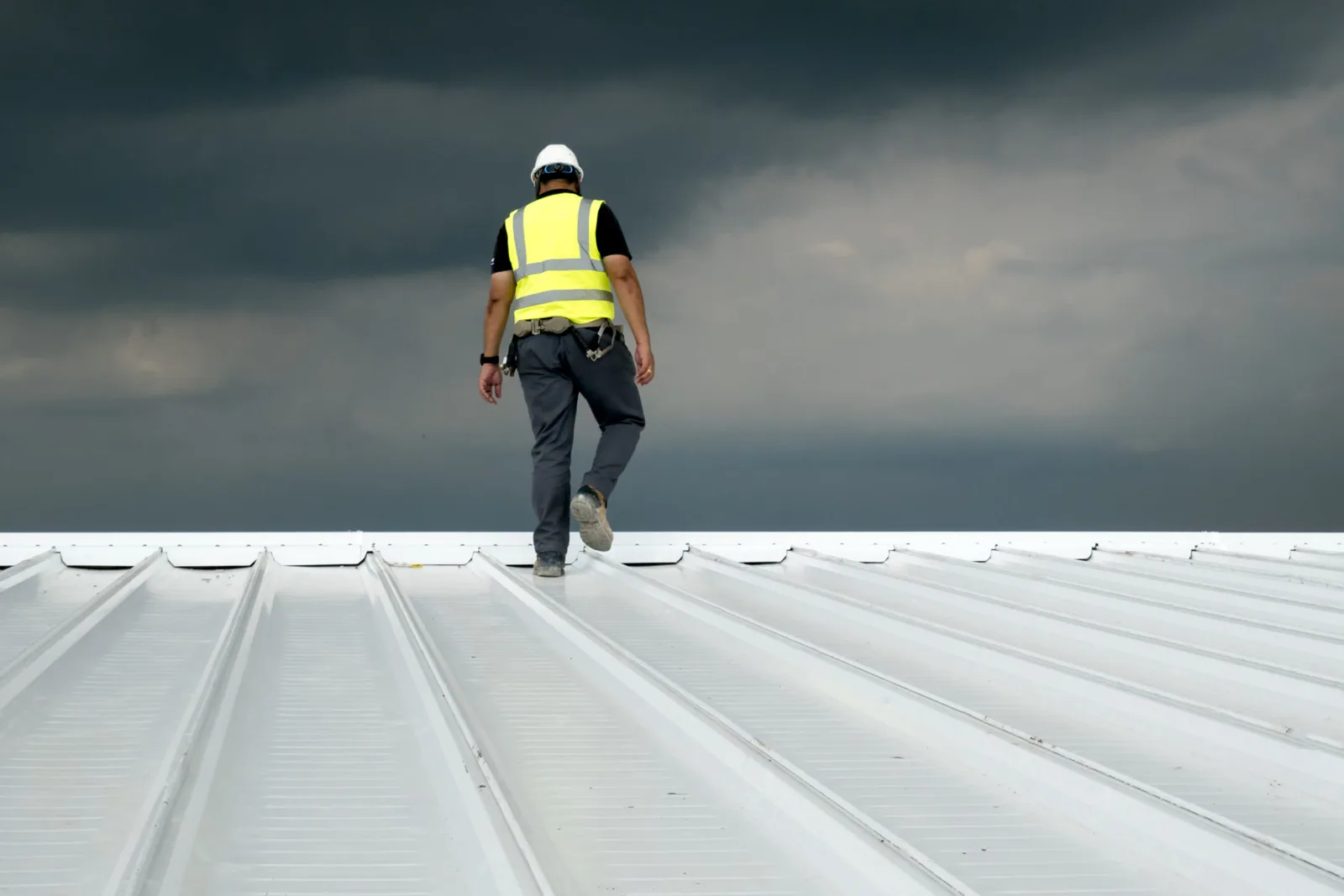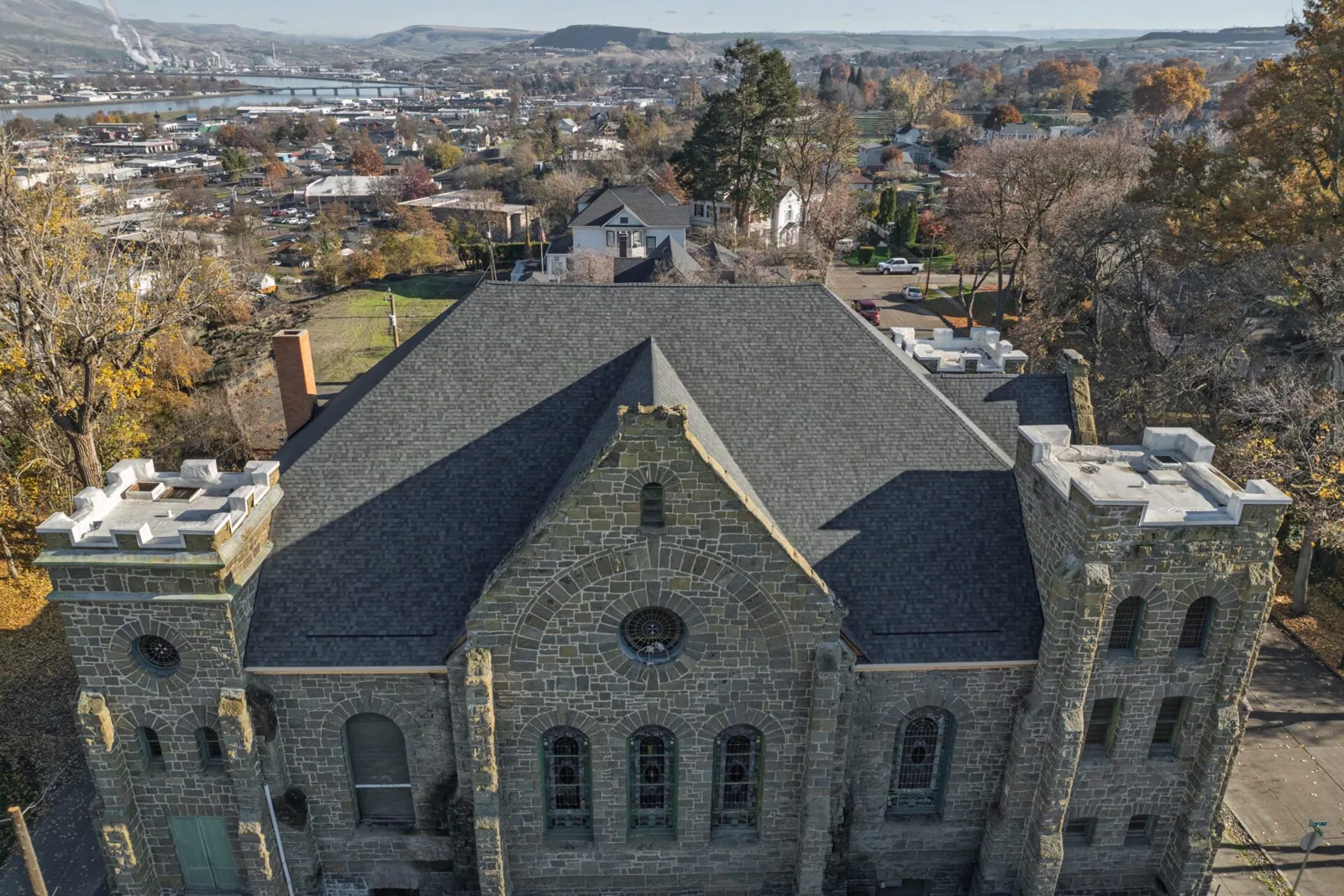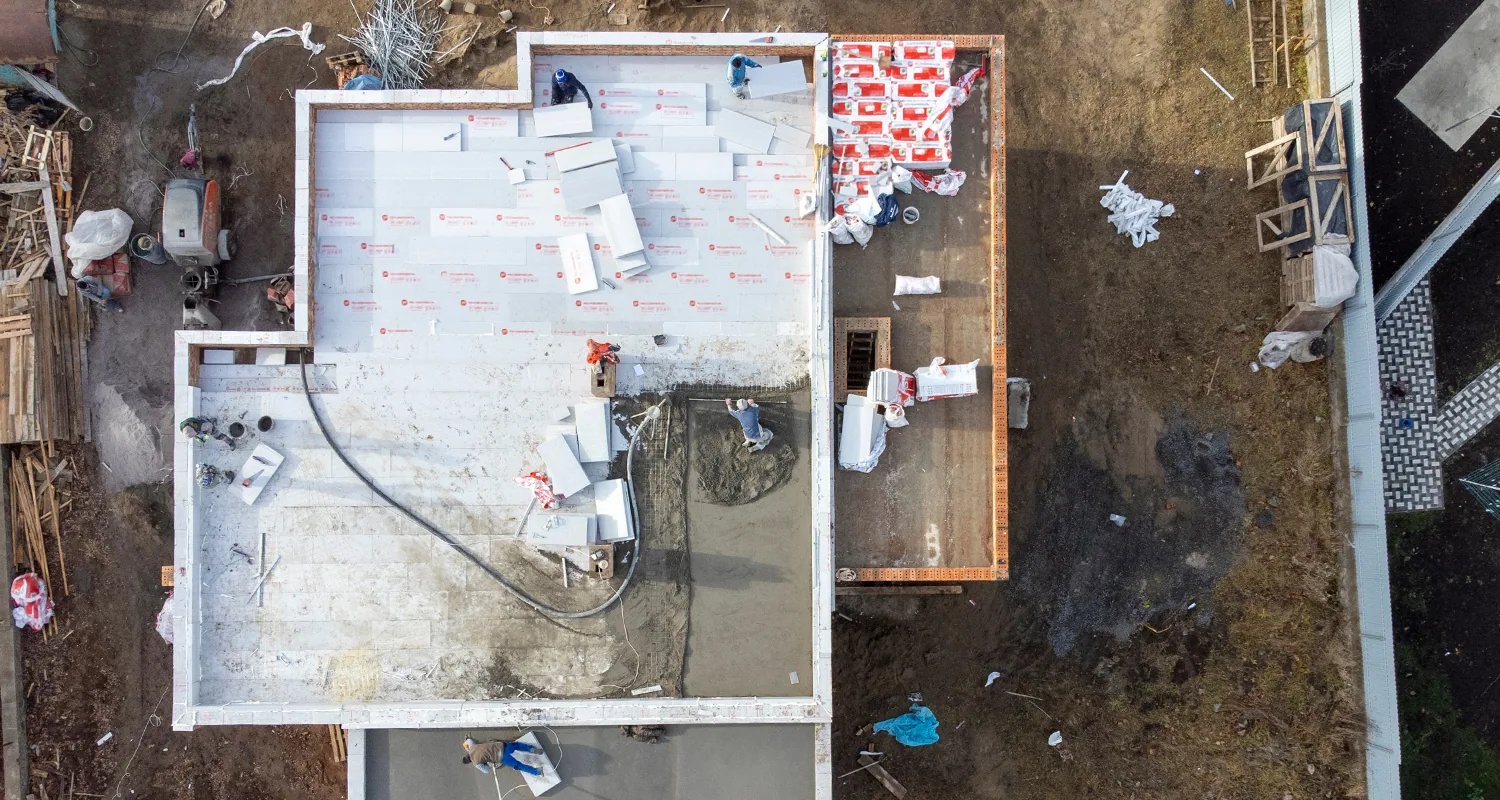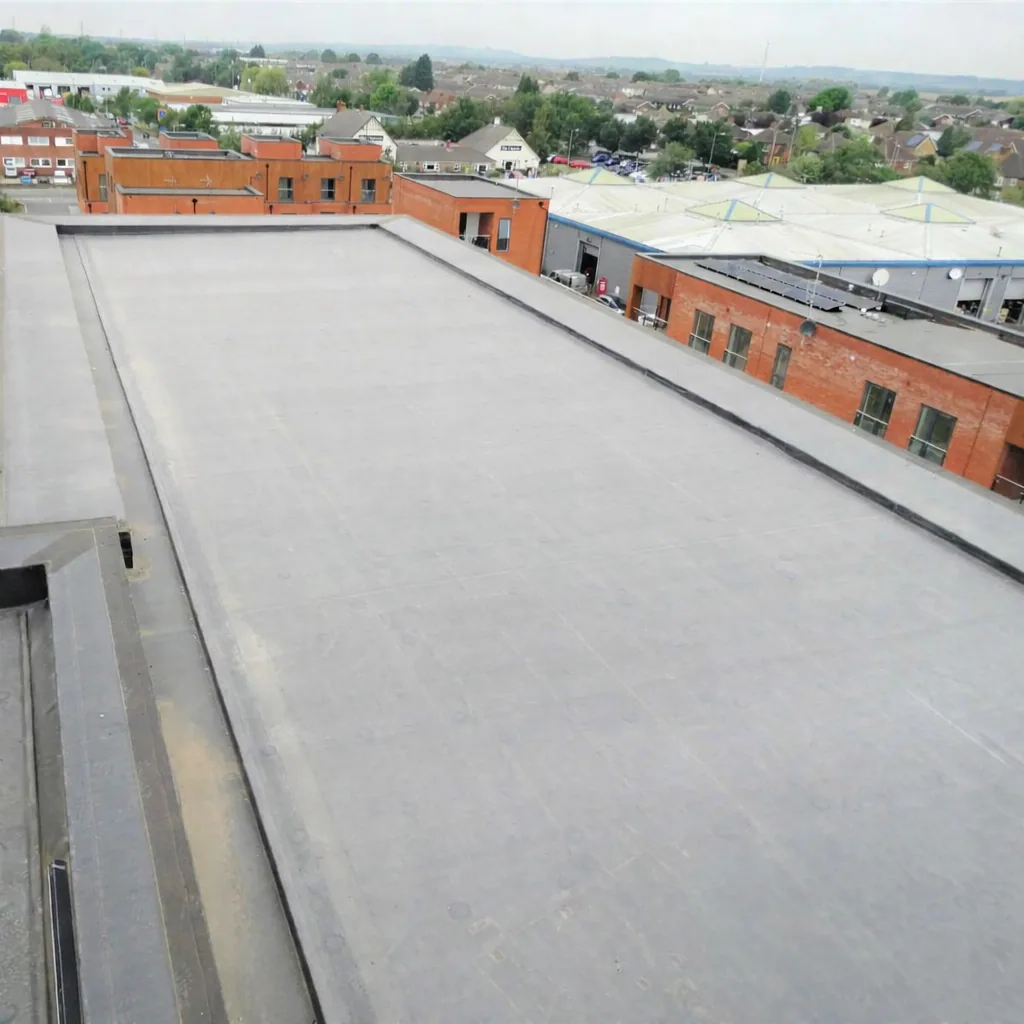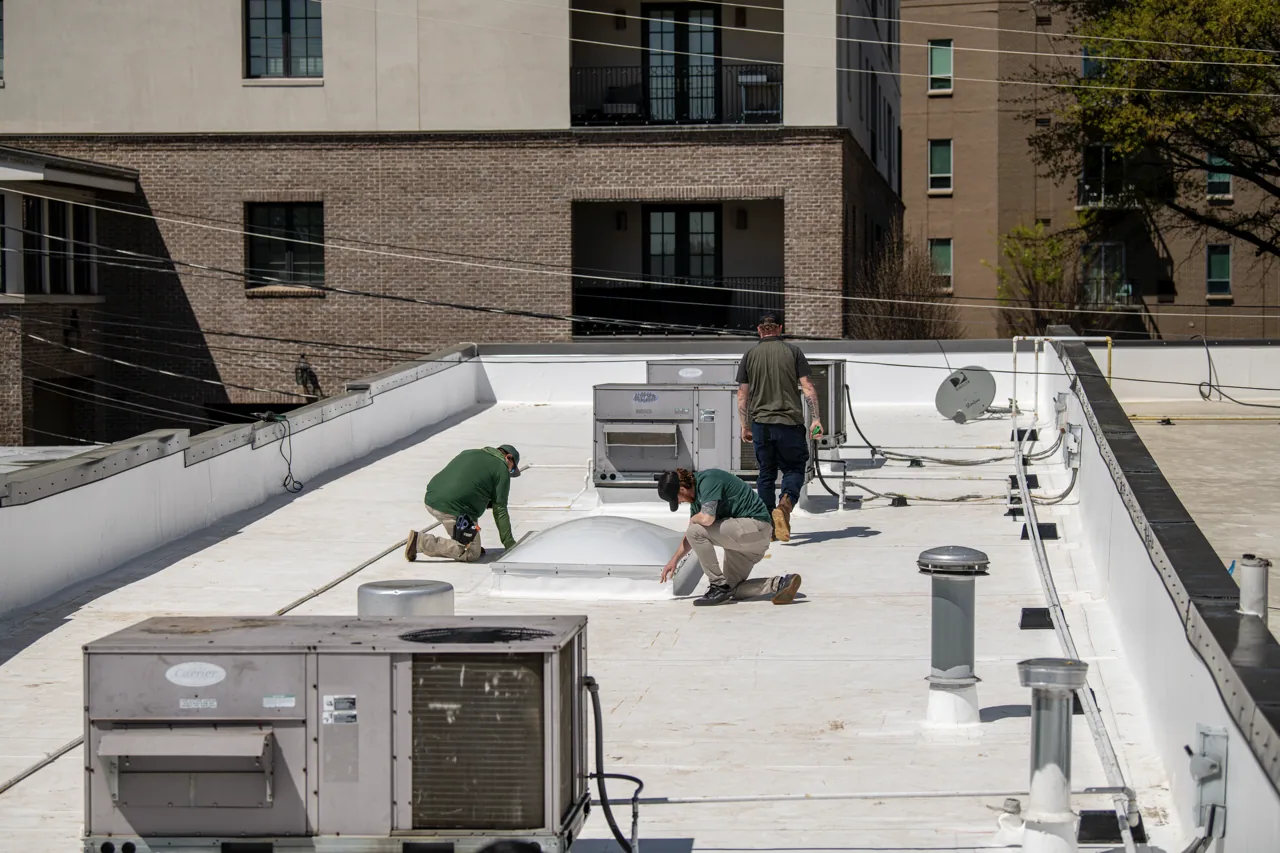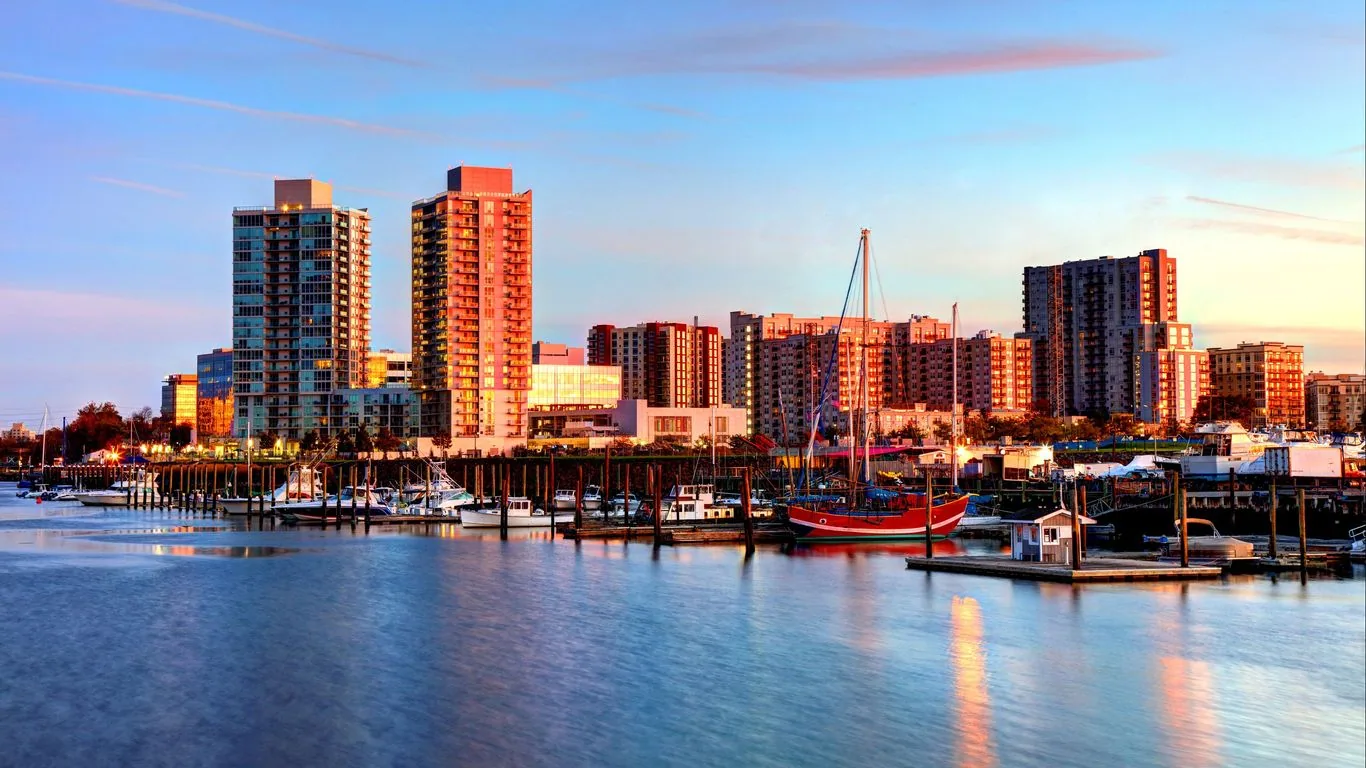
A wet ceiling near a storefront may sit below a roof opening several feet away. In Downtown Darien, CT, we start at the reported room, then inspect the membrane, wall transition and drainage path above it. Route 1 runs for about 2.3 miles through Downtown Darien, crossing the town center and linking local roads and business areas. Route 1 can shape delivery and staging choices, while roof access and the assembly itself are confirmed at each property. We inspect the actual laps, curb flashing, metal returns and drain details before choosing a repair. A commercial roof walk ties the room report to the roof details we inspect.
Water path: trace the opening above the room
Water can move along insulation, a deck joint or the underside of a membrane before it marks a ceiling. We compare the reported location with roof slope, seams, penetrations and nearby low points. A split lap may be the entry. A curb corner or parapet can also feed the same route. We record each observation separately, then test the most likely connection where access permits. The repair boundary follows the confirmed condition, not the easiest spot to reach.
The Darien segment of US 1 carries between 9,100 and 22,800 vehicles daily. For a roof project, the building contact confirms where equipment and material can move without interfering with work below. We identify the route, staging limits, and roof zones that cannot be reached. A photo condition report can keep the leak location, roof detail and limits of inspection together for the next decision.
Lap and transition: identify the roof system
A seam repair begins with the material in place. Thermoplastic sheet may need a clean test weld; EPDM requires compatible splice preparation; modified bitumen and built-up roofs have different lap details. We check attachment, lap direction, nearby patches and the substrate before applying new material. If a curb interrupts the field, the vertical flashing and its corners belong in the same inspection. A surface patch over loose roofing can move the leak to the edge of the repair.
Route 1 links the town center with local roads and business areas. For a roof there, we map the actual assembly, note drains and penetrations, and separate a limited seam split from broader movement or moisture. TPO roof work and EPDM repairs use different preparation and tie-in methods. The written scope names the material and the detail that needs correction.
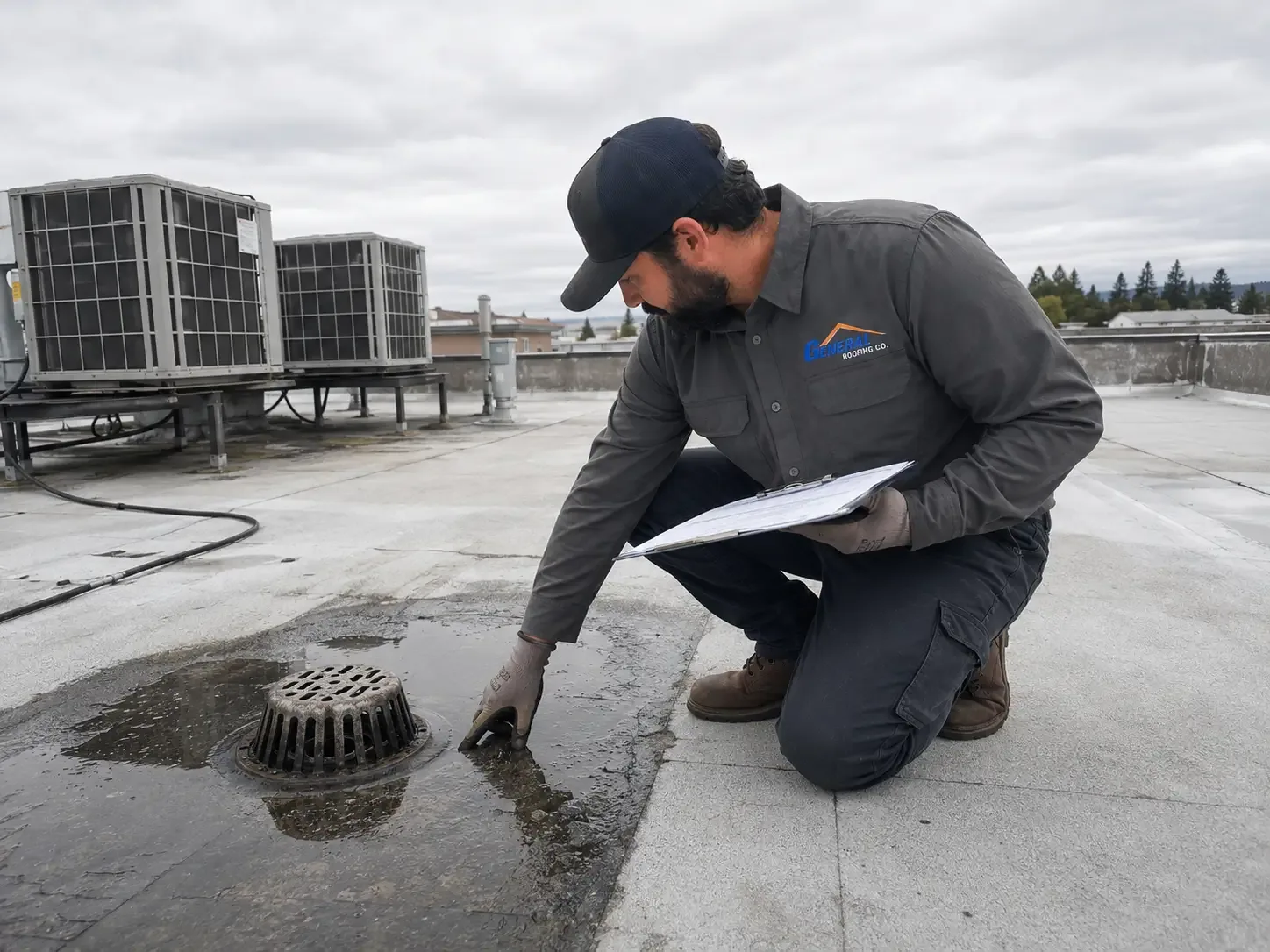
Drainage: follow water to the outlet
A clear strainer does not prove the drain connection is sound. We inspect the bowl, clamping ring, sump, overflow and membrane tie-in, then look for a low seam that can hold water beside the outlet. A blocked throat may slow discharge. A loose flange or split flashing can leak even when the bowl looks open. Scuppers need the same attention at their edge metal and membrane return. Each condition changes the repair method.
Stamford winter normals include recurring snowfall and subfreezing nights. On a Darien roof, we use that regional seasonal pattern to prompt a drainage check before freeze-thaw cycling works on a weak seam or termination. The roof walk records ponding, debris, standing water and visible separation on the actual assembly. Drain and scupper service can address a failed connection or an obstructed route; a depressed roof plane may need a broader drainage correction. We state which condition is present and where the scope stops.
Repair limit: keep sound material in service
A focused repair fits when the defect is contained, surrounding membrane remains attached, and the tie-in reaches dry material. We remove failed roofing, prepare the substrate, and reconnect the patch to a stable field. If wet insulation extends beyond the opening, the cut line follows that condition. Closing over a soft layer can preserve the visible surface while leaving the cause in place. We identify what needs removal and what must be checked before close-in.
Several failed seams or repeated leaks can change the decision. Commercial roof repair addresses a local defect; maintenance can track developing issues while the assembly remains serviceable. A coating or recover is considered only after checking moisture, attachment, drainage and compatible details. Replacement becomes a stronger option when the field no longer accepts durable tie-ins. A property manager comparing nearby work in Noroton Heights should still receive a separate condition record and repair boundary for each roof.
Access and sequence: plan around occupied space
Access affects how a repair reaches the roof and protects the area below. We confirm ladder or hatch access, equipment clearances, material staging, and whether an entrance or work area needs temporary protection. The Route 1 corridor links local roads and business areas. We confirm the building’s loading route, roof access and work schedule with its contact before staging materials.
Timing follows weather, dry substrate, material preparation and the sequence needed to keep the opening protected. A small seam repair may fit one work window. Removing wet insulation or rebuilding a curb can require added dry-in steps and approval before the roof closes. Retail roof planning may involve active entrances, while roof records help ownership compare conditions across properties without merging their histories. The scope lists access assumptions and the point where concealed damage could change the work.
Cost and timing: price the condition, not the stain
Cost depends on system type, removal, the number of connected details, wet insulation, equipment access and interior protection. A field seam costs differently from a curb that must be opened and rebuilt. Testing, temporary dry-in and disposal can add steps. We state the assumptions behind the repair and identify the finding that would expand it. Timing depends on surface dryness and a sound tie-in, not simply on when a crew can reach the roof.
Darien Center's location along Route 1 gives a clear local frame, while the roof inspection sets the actual scope. Managers should keep separate photos and service notes for each property in their portfolio. A roof walk can end with a focused repair, a follow-up opening to check hidden layers, or a larger-system recommendation. We put that choice in writing with the repair limit, material assumptions and next step. Property managers working in Greenwich Center can use the same inspection discipline while keeping each property's findings separate.
Commercial Roofing Questions
Why can the leak appear away from its roof entry?
Water can travel along a deck joint, insulation layer, seam or curb before reaching a ceiling. We compare the room location with the roof's slope and details, then test the likely route where access allows.
What does Route 1 tell us about a roof?
It runs through the town center and connects nearby business areas. For a roof repair, we confirm access and assembly at the property before setting the scope.
When is a patch a reasonable repair?
A patch can hold when the surrounding membrane is attached and dry material remains for a compatible tie-in. Wet insulation, loose edges or separate failures may move the boundary and change the recommendation.
Can a drain be leaking even when water flows through it?
Yes. The bowl, clamping ring, flashing and membrane connection can fail while the throat remains open. We inspect the assembly and overflow path, then identify whether the issue is a blockage, failed detail or roof-slope condition.
Which leak notes and roof-access details should a darien center contact have ready?
Share the affected rooms, dates of visible water, recent service notes and access limits. We use those details to guide the inspection, then record what the roof confirms and what remains concealed.