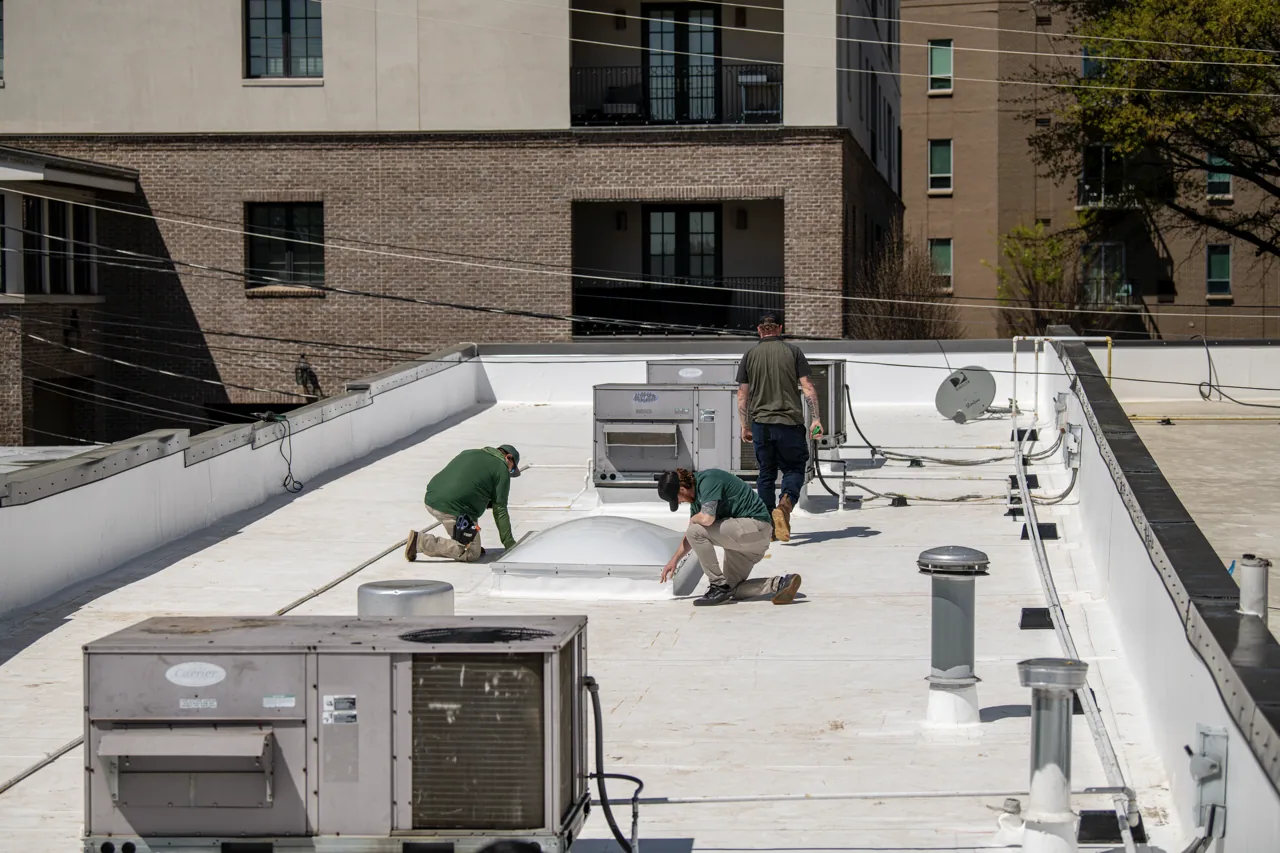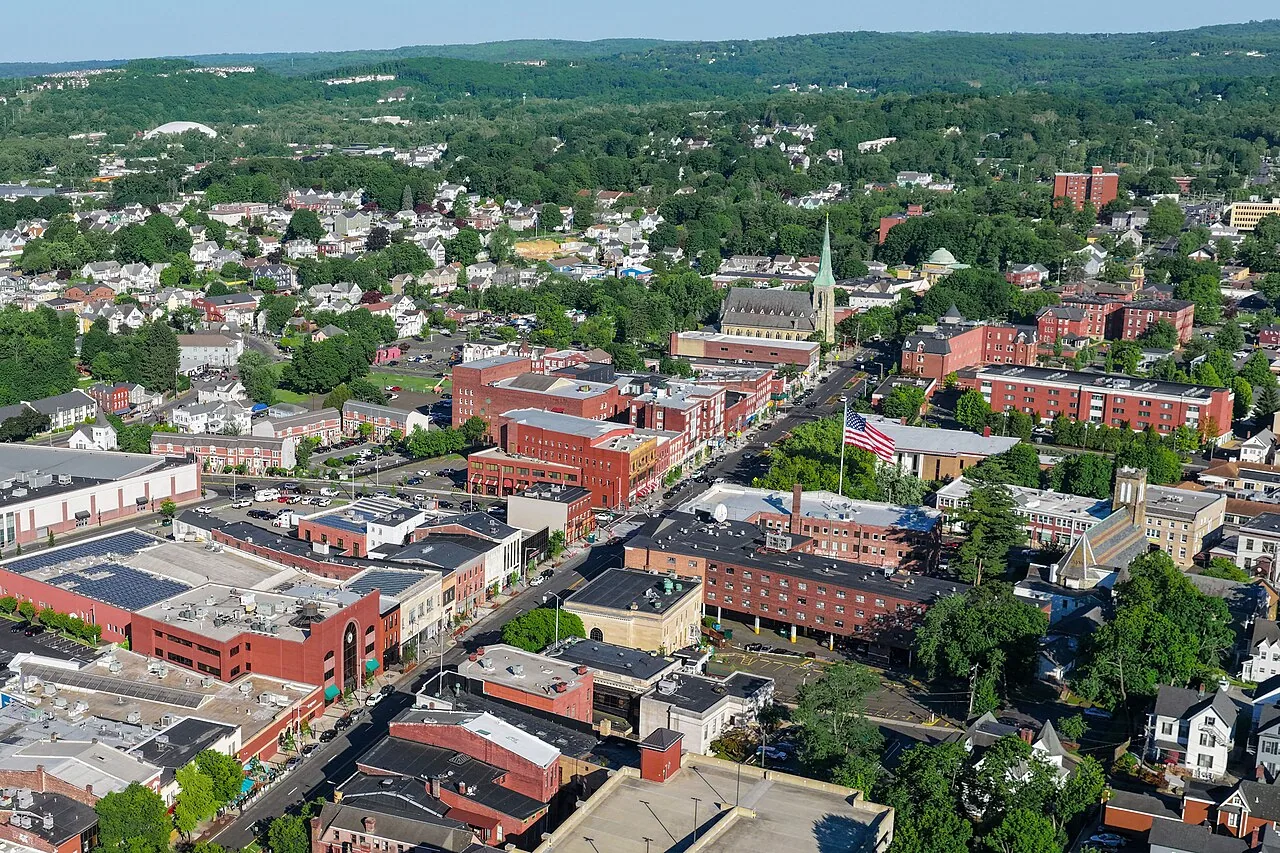
A low seam beside a parapet may hold water after the open roof area clears. In Westport Center, Westport, CT, we inspect that lap, its edge detail and the nearest drain before deciding whether the leak is contained. Westport's commercial mix includes Post Road retail and dispersed office parks, with separate building patterns across town. The Route 1 segment carries 13,200 to 24,500 vehicles daily. We confirm delivery and access details with each property contact, then inspect the assembly and set the repair limit around sound material. A roof inspection ties the interior report to what is visible above.
Drainage: locate the slow point
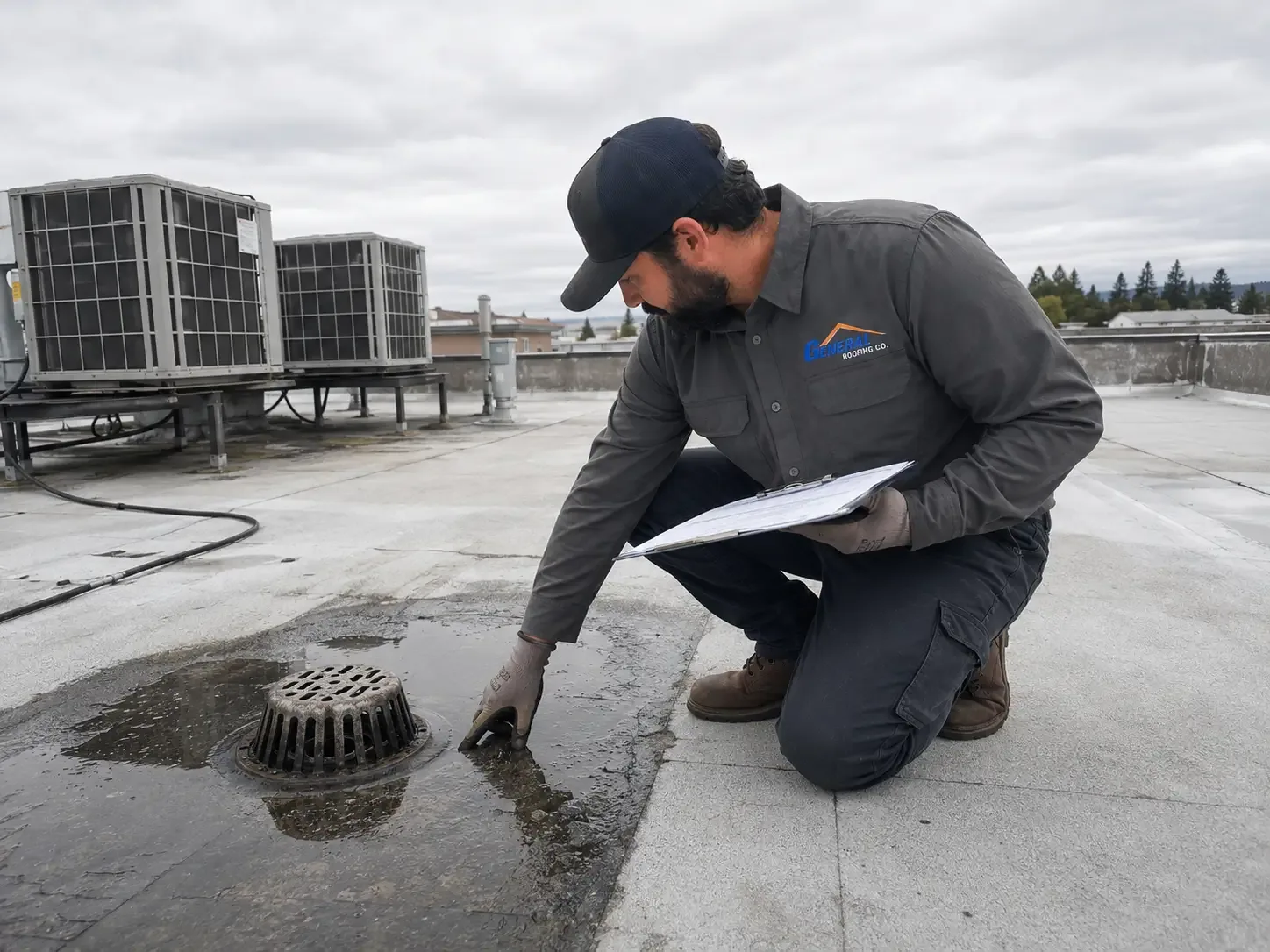
We check the strainer, bowl, clamping ring, sump and membrane connection. A clear throat may still leak at the flange. A clogged strainer can slow discharge but does not explain a split lap or loose flashing beside it. We inspect the overflow path and nearby low areas, then compare water marks with the roof's slope. If water remains after the surrounding field dries, we note its extent and the detail that could be holding it.
Post Road retail and dispersed office parks can have different access conditions, but the district facts do not describe an individual roof or loading route. At a Westport Center property, we confirm who approves roof entry and where materials can be staged. Drain and scupper work can restore a failed outlet connection; a roof plane that sends water away from the bowl may call for a broader drainage review. The scope explains which condition exists and whether membrane must be opened.
Membrane and seam: prepare a sound tie-in
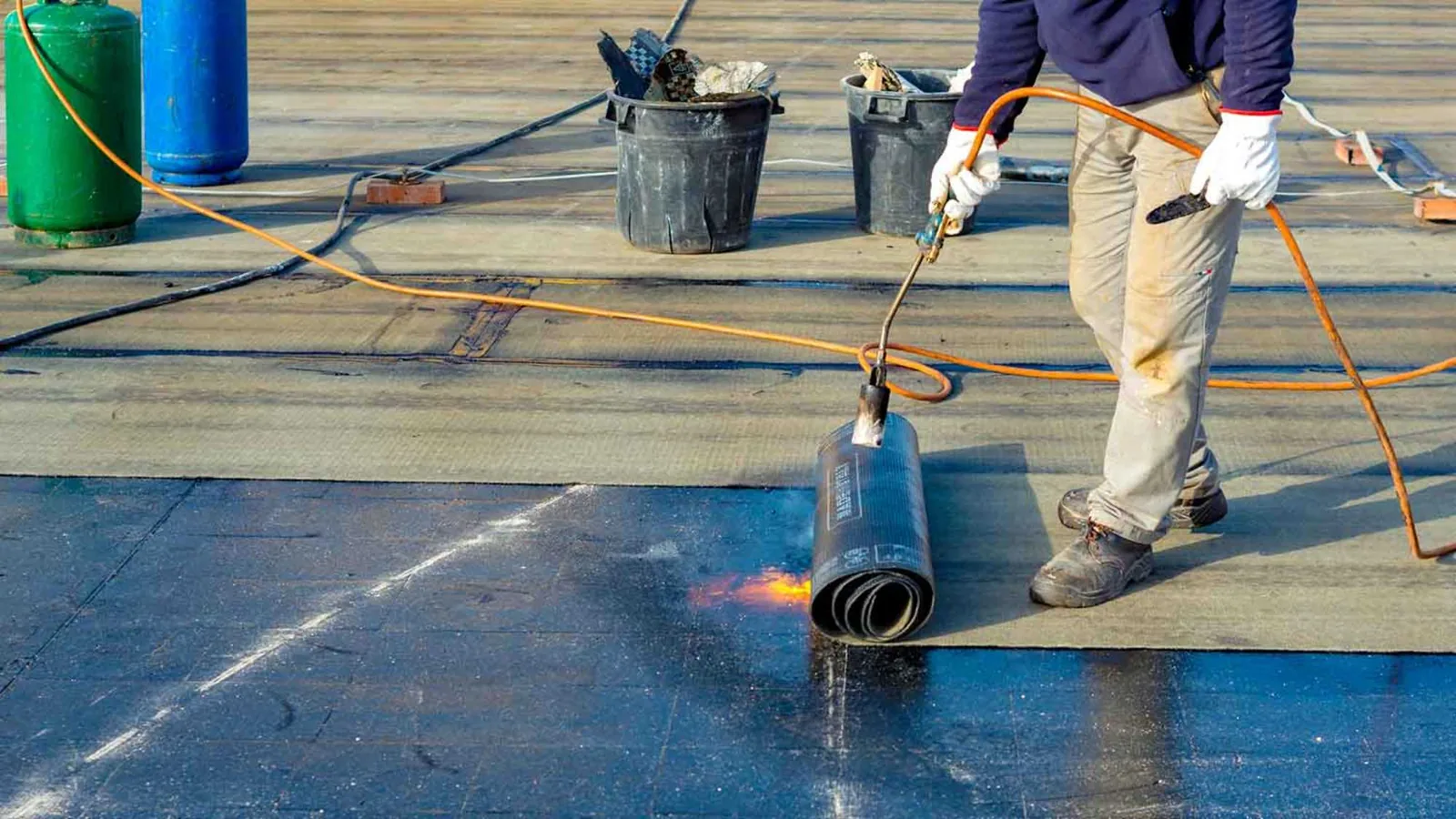
The roof material sets the repair method. Thermoplastic sheet can require a clean test weld and compatible patch. EPDM uses suitable primer and splice materials. Modified bitumen, built-up roofing and coatings need different preparation. We check lap direction, surface contamination, prior patches and fastener movement before adding material. At a parapet, curb or pipe, the vertical detail and adjacent field have to work together. A patch over loose or wet material can separate again at its edge.
Westport Center is one of the town's distinct commercial areas, alongside Saugatuck, Post Road and office parks. That variety is a reason to inspect each assembly, not assume one roof type. TPO seam repair differs from modified-bitumen work in how the surface is prepared and joined. We identify the system first, then write a repair that follows its existing layers and transitions.
Edge and curb: inspect the transition
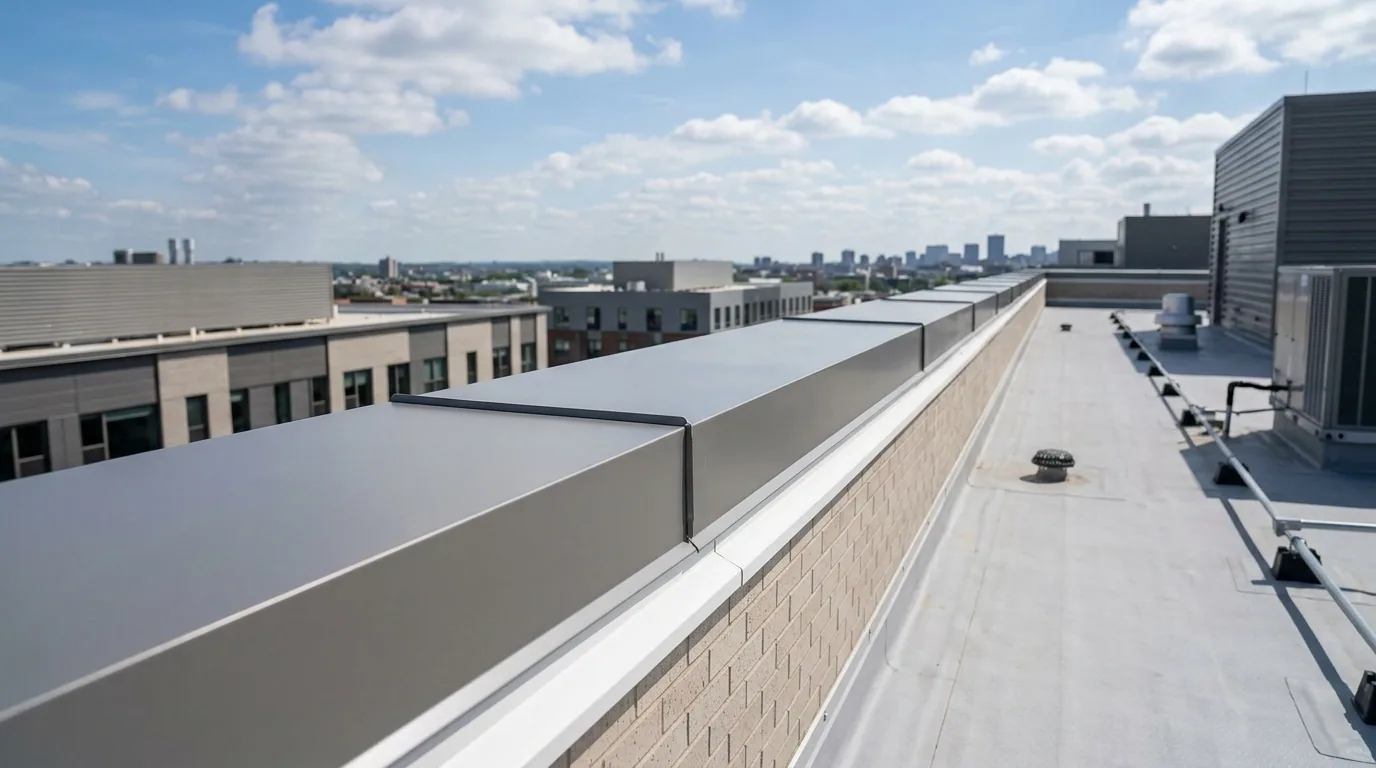
Water can pass behind a loose coping return or enter where a curb flashing has pulled away. We check metal joints, splice plates, fasteners, sealant, termination bars and membrane turn-ups. A corner may need rebuilt metal; a failed membrane leg may require new flashing below the cap. We do not treat sealant as a repair for a loose connection. The adjacent substrate needs to be stable and dry before a lasting tie-in can be made.
Westport's commercial areas include different building forms and access arrangements. The roof walk stays focused on actual transitions, penetrations and attachment. Coping and edge-metal repair can address a separated joint; a penetration detail covers a different opening. We list each component and the tie-in needed so the owner can distinguish the visible split from any nearby detail that also needs work.
Repair boundary: follow the failed layer
A local patch works when the surrounding membrane is attached and a dry surface remains for the tie-in. We remove failed material, prepare the base and connect new roofing to sound assembly. Wet insulation or a soft deck extends the opening to the affected layer. We protect that opening and confirm added removal before closing it. A repair boundary should follow the actual moisture, not stop where the first cut looks convenient.
Several ceiling marks may trace to separate roof defects. We map each location and inspect the connecting roof area before combining them into one scope. Commercial roof repair addresses a contained defect. Repeated seam failures or moisture across separate sections may make maintenance, recover or replacement worth comparing. A coating requires a suitable dry substrate and preparation; it does not correct wet insulation. We identify the roof condition that makes a patch less dependable and the next scope to compare.
Access and sequencing: plan for the building in use
Access affects staging, protection below and how the roof is closed between work steps. We confirm hatch or ladder conditions, equipment clearances, material delivery limits and occupied areas with the manager. Post Road retail can involve active customer entries, while office parks may have different circulation and work zones. These work zones can differ from one property to another. We confirm the requirements with the building contact before estimating labor or setting the sequence.
Weather, dry substrate and the amount of removal control timing. If a curb or seam opening exposes wet insulation, the crew needs a protected stop while the owner reviews the added scope. Occupied-building roofing can be phased around active areas. Managers also covering Saugatuck Center should keep separate access notes and roof photos for each address. The roofs may share a town, not a condition.
We also confirm how equipment will be isolated if a repair crosses a curb or line set, and whether interior staff need notice before a ceiling area is opened. These details shape the work window and any temporary dry-in. When more than one roof area is involved, we label each repair separately so one opening does not obscure another condition. The sequence belongs to the building contact and the crew working on that roof.
Cost and scope: separate known work from discovery
Estimate the removal area, then account for membrane type, detail count, wet board, staging and protection below. A seam tie-in differs from rebuilding a curb or opening a drain flange. Temporary dry-in and disposal can add work when the assembly cannot close in one pass. We spell out those assumptions and state what concealed condition could change the estimate.
A focused repair may be enough when the roof still accepts reliable tie-ins. Broader moisture or attachment problems may support recover or replacement review. The choice depends on the inspected layers, not on road traffic or a neighboring property's scope. A written recommendation gives ownership a clear next step without blending future system work into a small repair price. Managers with properties on Greenwich Post Road can keep similar work records separate by address.
Commercial Roofing Questions
Does Route 1 traffic affect the roof repair?
It describes roadway activity, not a roof condition. We confirm delivery and access rules for the building, then inspect the membrane, edges and drains that determine the work.
Can an open drain still be leaking?
Yes. The clamping ring, flange or membrane turn-in can fail while water flows through the throat. We inspect the connection and overflow as part of the drainage detail.
What must be checked before tying in a patch?
First we identify the membrane and whether the surface is clean, attached and dry enough to accept new material. The scope names the compatible method and any layer that needs removal before close-in.
What makes an edge repair larger?
Loose attachment, a failed membrane leg or wet material under the metal can extend the work beyond one splice. We inspect the adjacent layers and state the added repair boundary before closing the roof.
When is replacement a better discussion than repeated repair?
Widespread moisture, recurring failures or weak attachment may leave no dependable tie-in area. We document those conditions and compare a broader system scope with another local repair.