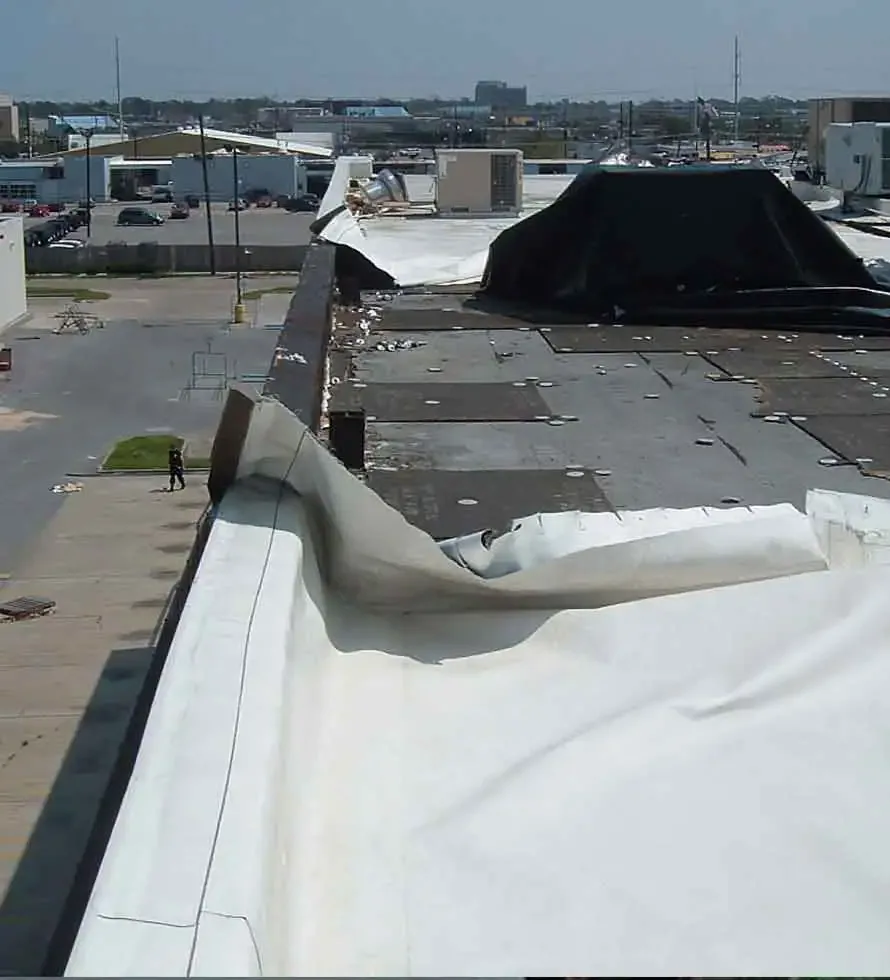
A loose edge can admit wind-driven rain before water reaches the interior. In Stratford Center, Stratford, CT, we inspect the metal return, membrane termination and nearby drainage before setting a repair scope. Stratford's priorities include land use, economic development, waterfront redevelopment, and resilience. That is broad municipal context, not a reading of any property's roof. We examine the roof assembly, follow the water path and define what should be repaired now versus what needs a wider system review. Owners coordinating nearby work in Fairfield Town Center and Bridgeport's West Side should keep condition records separate.
Edge detail: find the open transition
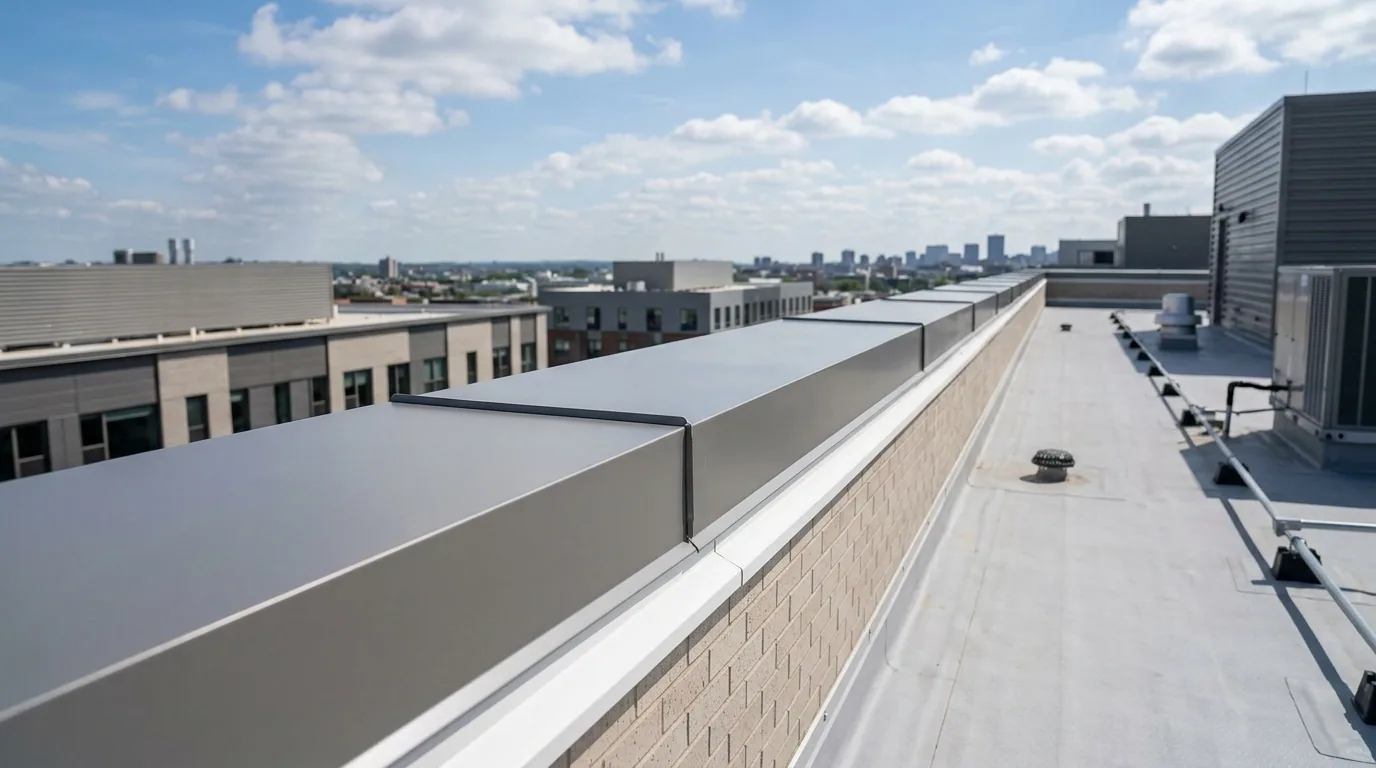
Water can slip behind a coping return, travel along a parapet and appear inside well away from the entry. We check splice plates, fasteners, sealant joints, termination bars and membrane turn-ups. A small opening in metal may connect with a larger separation below. The roof walk records how the layers meet and whether the substrate remains secure. We do not use a bead of sealant to cover a connection that has pulled loose from its base.
Stratford supports industrial and commercial growth and rehabilitation of underused properties. For an owner evaluating a property, the roof condition is one part of the project decision. We document membrane type, drainage, previous repairs and penetrations so that patch, recover or replacement options can be compared against the assembly found. Coping and edge-metal repair addresses a loose perimeter connection; A due-diligence roof survey can help record the broader condition.
Water path: check drainage at the same time
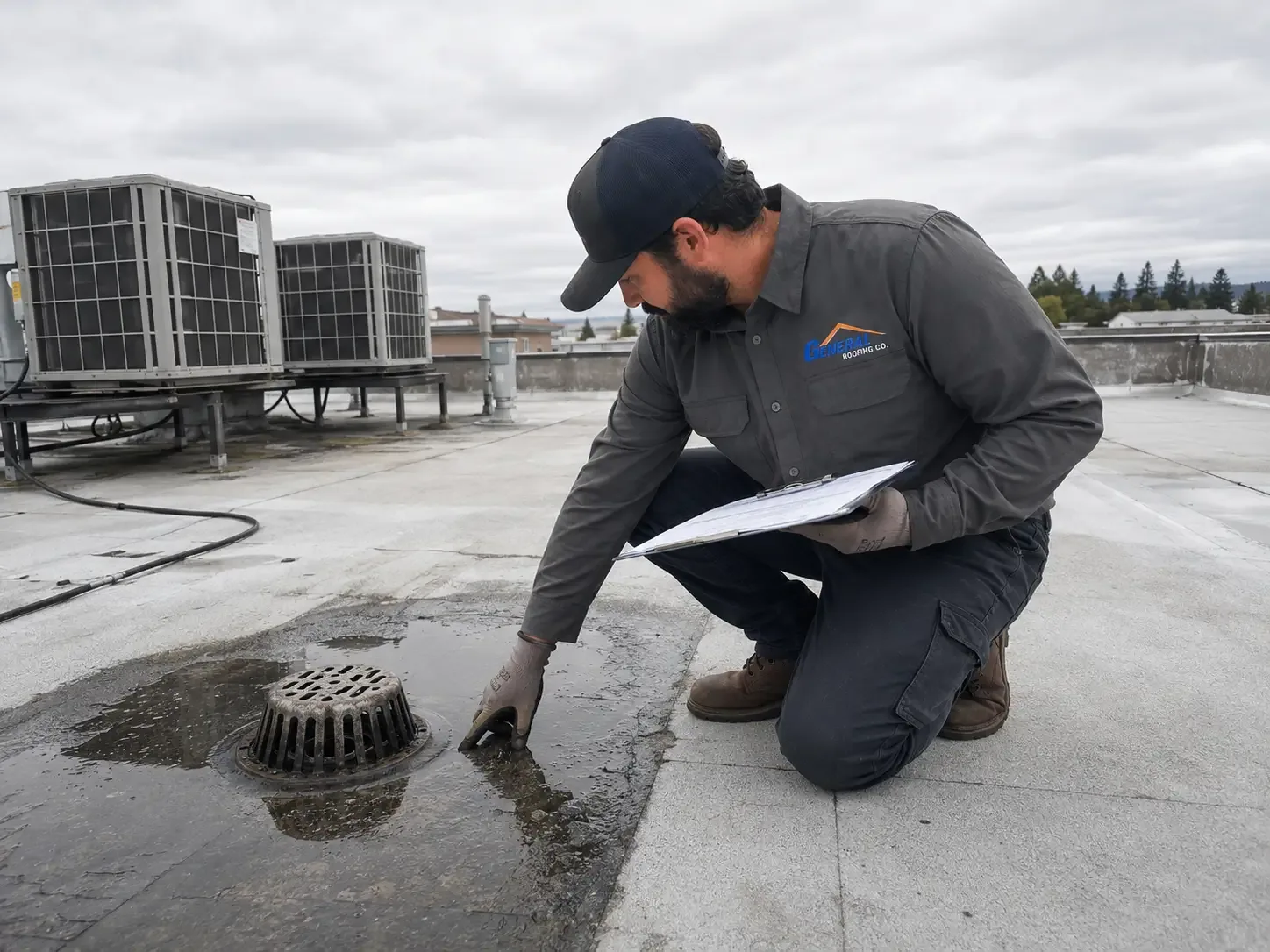
A drain can appear open and still leak below the strainer. We inspect the throat, bowl, sump, clamping ring, membrane flange and overflow route. At a scupper, the metal and sheet need a continuous connection. Ponding near an outlet can also hold water against a seam or curb. We trace the reported leak through connected details, then distinguish a blockage from a membrane or flashing failure that needs repair.
Stratford's US 1 corridor connects with I-95 interchange improvements intended to support commerce. We confirm ladder placement, staging, and occupied areas below with the property manager before material arrives. Drain and scupper work may restore an outlet tie-in, while Commercial leak repair follows the water path to its entry. The inspection determines whether one or both details belong in the scope. An opening at the parapet needs a clean return across both vertical and horizontal surfaces. At a drain, the membrane must tie into the flange beneath the clamping ring. We mark those boundaries separately because perimeter closure and outlet rebuilding need different preparation. The written scope shows which detail is included, where the tie-in stops and which adjacent part remains outside the repair.
System identification: prepare the right repair
Thermoplastic sheets, EPDM, modified bitumen, built-up roofing and metal do not share one patch method. We identify the material, lap direction and attachment before preparing a tie-in. TPO or PVC seams may need a test weld. EPDM uses compatible primer and splice tape. A metal panel joint needs a different closure. Coated surfaces require cleaning and compatible preparation on dry material. The method has to suit the system and the condition at the opening.
Commercial and industrial properties in Stratford can have different assemblies, so we identify the material and attachment at each inspection. We note previous repairs, loose fasteners, membrane movement and any wet insulation near the defect. Metal roof retrofit and modified-bitumen repair use different details at seams and edges. If a curb interrupts the field, its corners, vertical flashing and adjoining membrane must be checked together.
Repair boundary: stop at a sound tie-in
A localized repair fits when surrounding roofing remains attached and a dry substrate can accept new material. We remove failed roofing, prepare the base and extend the patch to stable assembly. If the opening reveals wet insulation, crushed cover board or deck damage, the work must reach that layer. Closing over it may hide the surface symptom without correcting the affected roof. We explain any additional removal before the permanent tie-in is made.
A property under redevelopment may need a record that separates urgent leakage from deferred system work. Commercial roof repair can address a contained split or penetration. Repeated leaks, weak attachment or damage across separate roof areas may make replacement or recover worth comparing. Coating is an option only when the material and substrate are suitable. We identify the condition, repair limit and alternate scope in terms the owner can carry into the next project review.
Weather and resilience: inspect what the roof sheds
Stamford has recurring winter snowfall and subfreezing nights, making winter drainage and snow-load checks relevant to roof maintenance in the market. We inspect drains, scuppers and terminations at the property, looking for blocked flow, loose metal and openings where water can move beneath the membrane. Where the roof has a history of recurring leaks, dated photos and repair notes help compare the current condition with prior work.
Waterfront redevelopment and resilience are part of Stratford's municipal priorities. On the roof, we check slope, outlet capacity, seam attachment, and water paths around curbs or parapets. The field walk remains practical: check slope, outlet capacity, seam attachment and the path around curbs or parapets. Preventive roof maintenance can keep accessible drains clear and flag changes while the assembly remains serviceable. After a storm, we can document visible damage and identify details that need a closer opening before proposing permanent work.
Access and cost: separate work from assumptions
Labor and material depend on the membrane, removal depth, number of connected details, wet insulation and protection below. Access for lifts or deliveries can change staging and setup. We confirm the route with the building contact and state limits in the estimate. The scope identifies the area included, temporary protection, close-in point and any condition that would require approval for additional removal. That keeps a defined repair from becoming an open-ended allowance.
Connecticut's 2022 State Building Code adopts the 2021 IBC and IECC, with state amendments; permit requirements depend on the application date and work proposed. We can record the existing assembly, drainage and roof penetrations so the owner and reviewer can address project-specific code questions. Arrange a roof walk with the leak location, service history and access limits ready. We will inspect the detail and provide a written repair scope or a larger-system recommendation.
Commercial Roofing Questions
Can an edge-metal gap explain an interior leak?
It can. Water may enter at a coping joint and move behind the parapet before showing indoors. We inspect the return, termination and adjoining membrane to define the repair.
What does the town's resilience planning tell us about roof damage?
It does not determine the condition of a roof. We inspect the drainage path, seams and edges at the property, then document any visible opening or moisture-related concern.
Which test results show whether stratford center insulation should be replaced?
The opening must reach material that is dry and stable for the tie-in. We document the layer exposed and define any added removal before closing the roof.
Does a clear drain bowl mean the outlet is sound?
No. The flange, membrane connection or overflow can fail even when the throat is open. We inspect those details with nearby seams and ponding before setting scope.
Can a repair be planned during a property redevelopment?
We can record the current assembly, leak locations and repair boundary so the owner can compare immediate work with longer-term options. The recommendation follows the roof condition found.