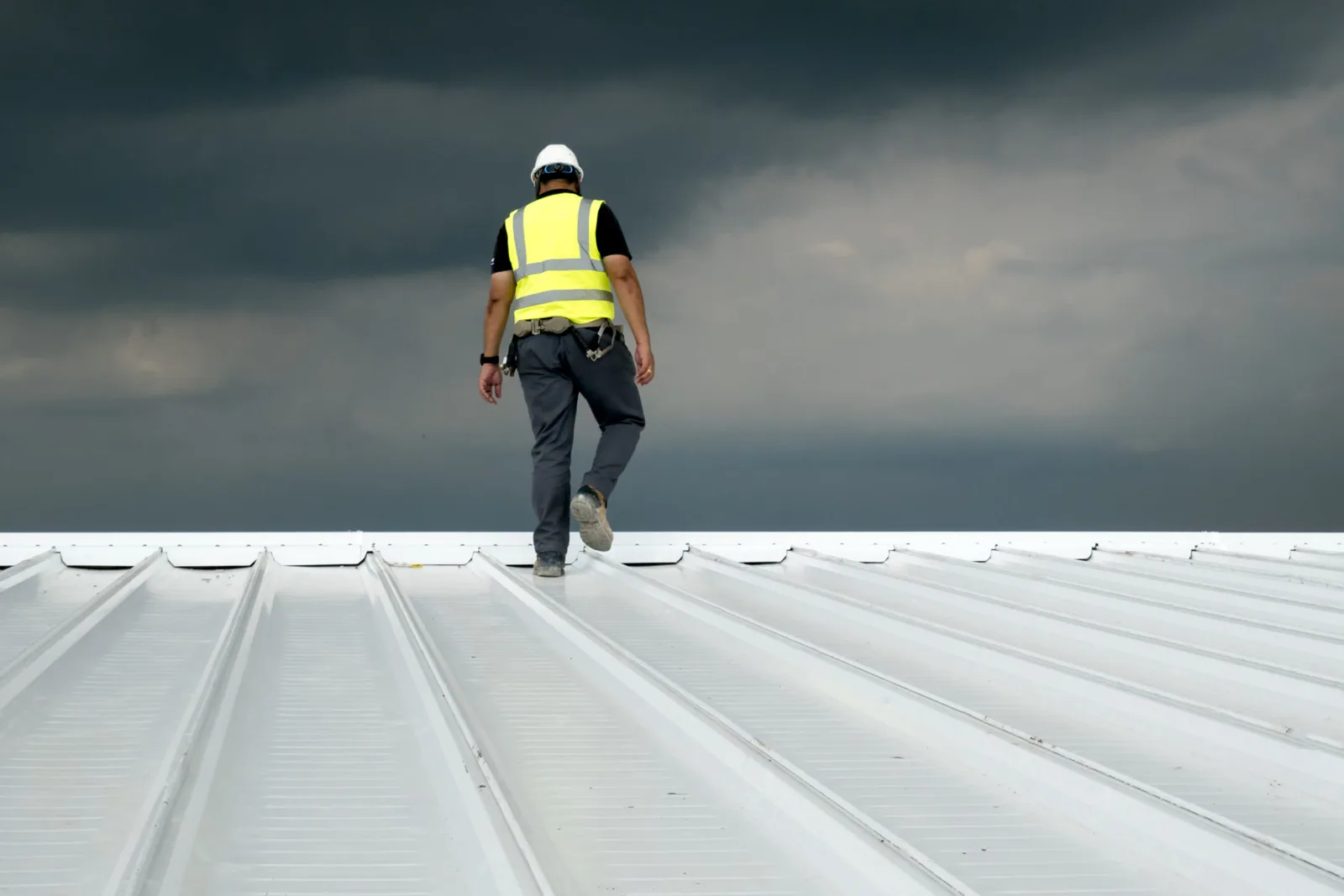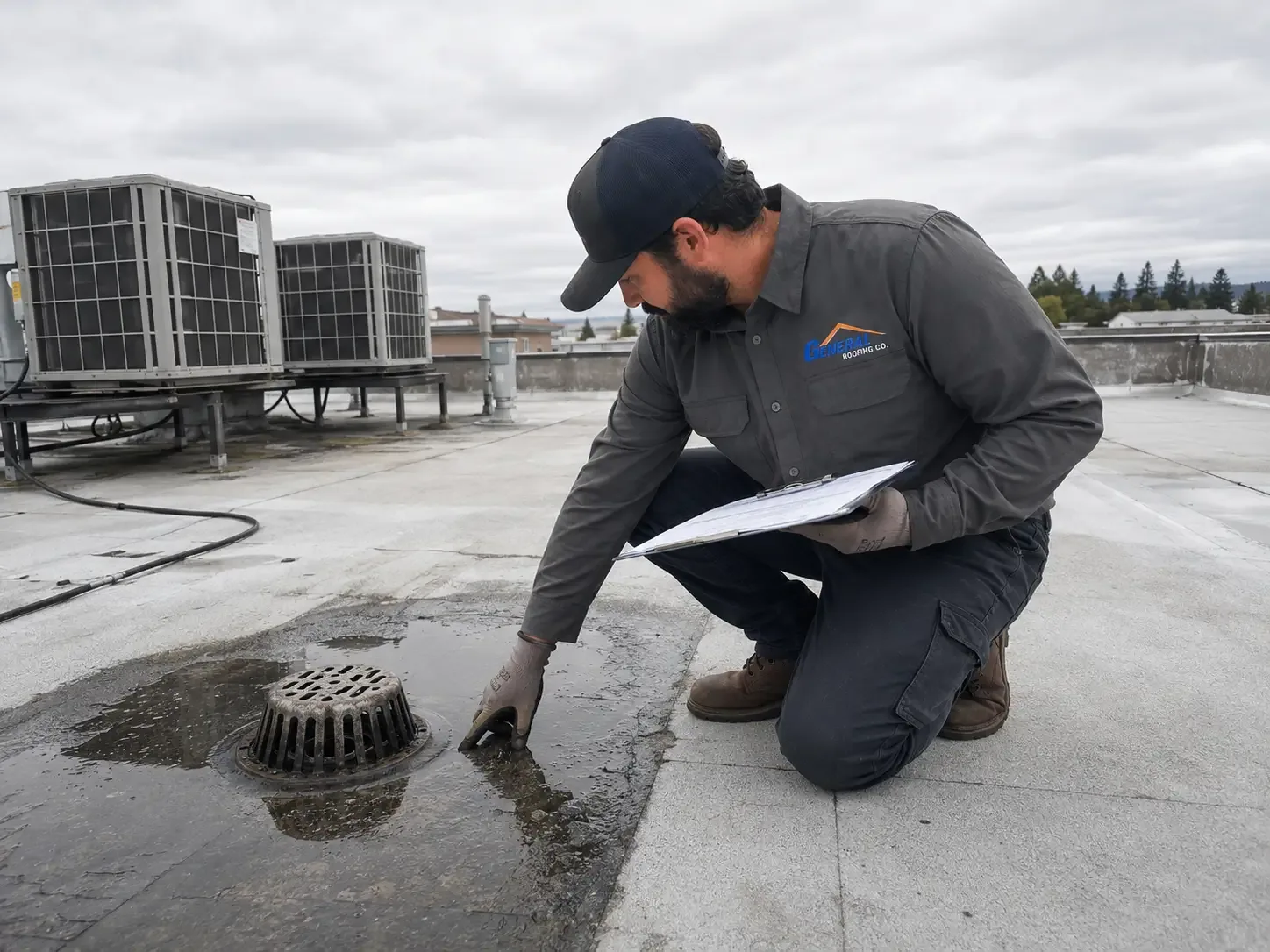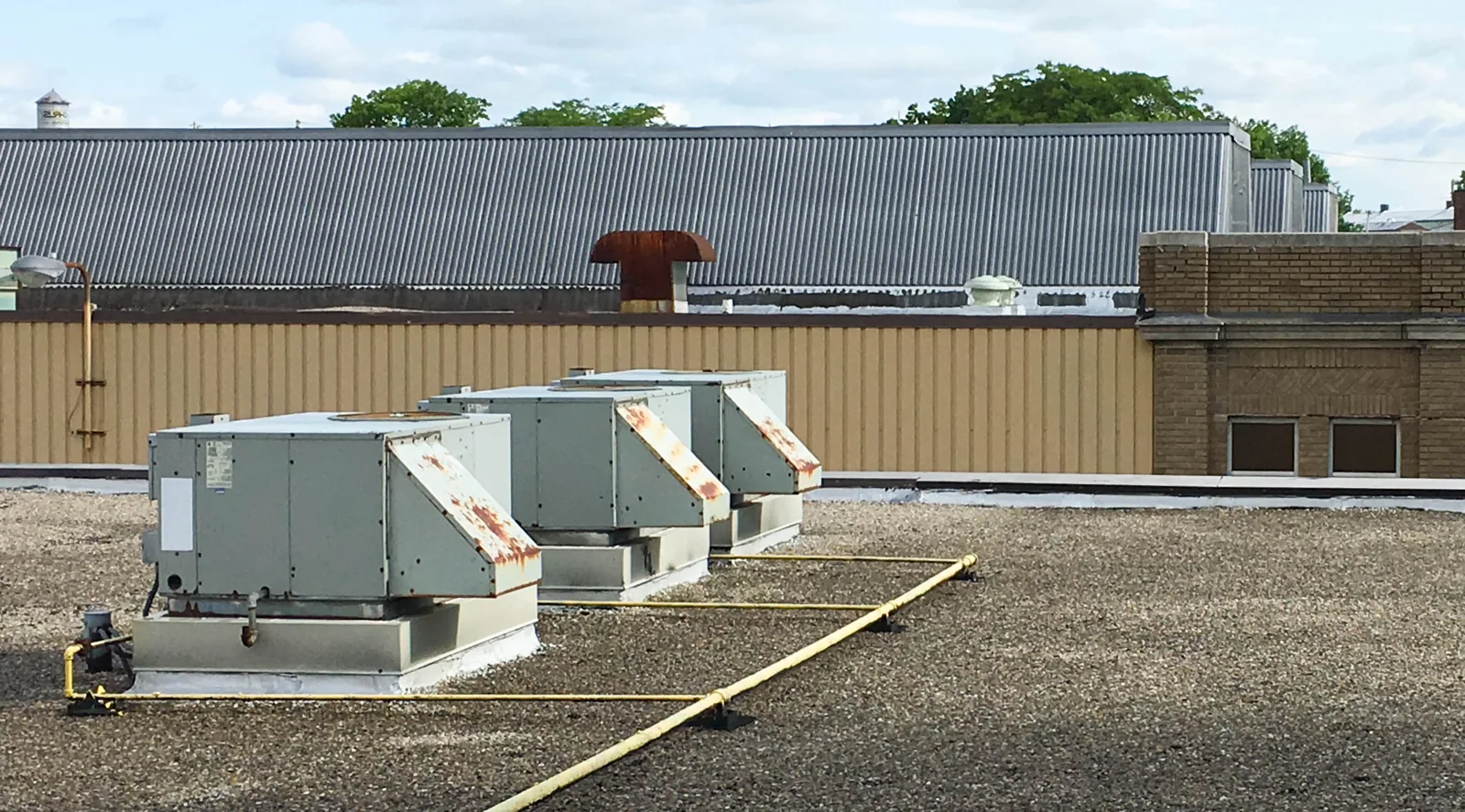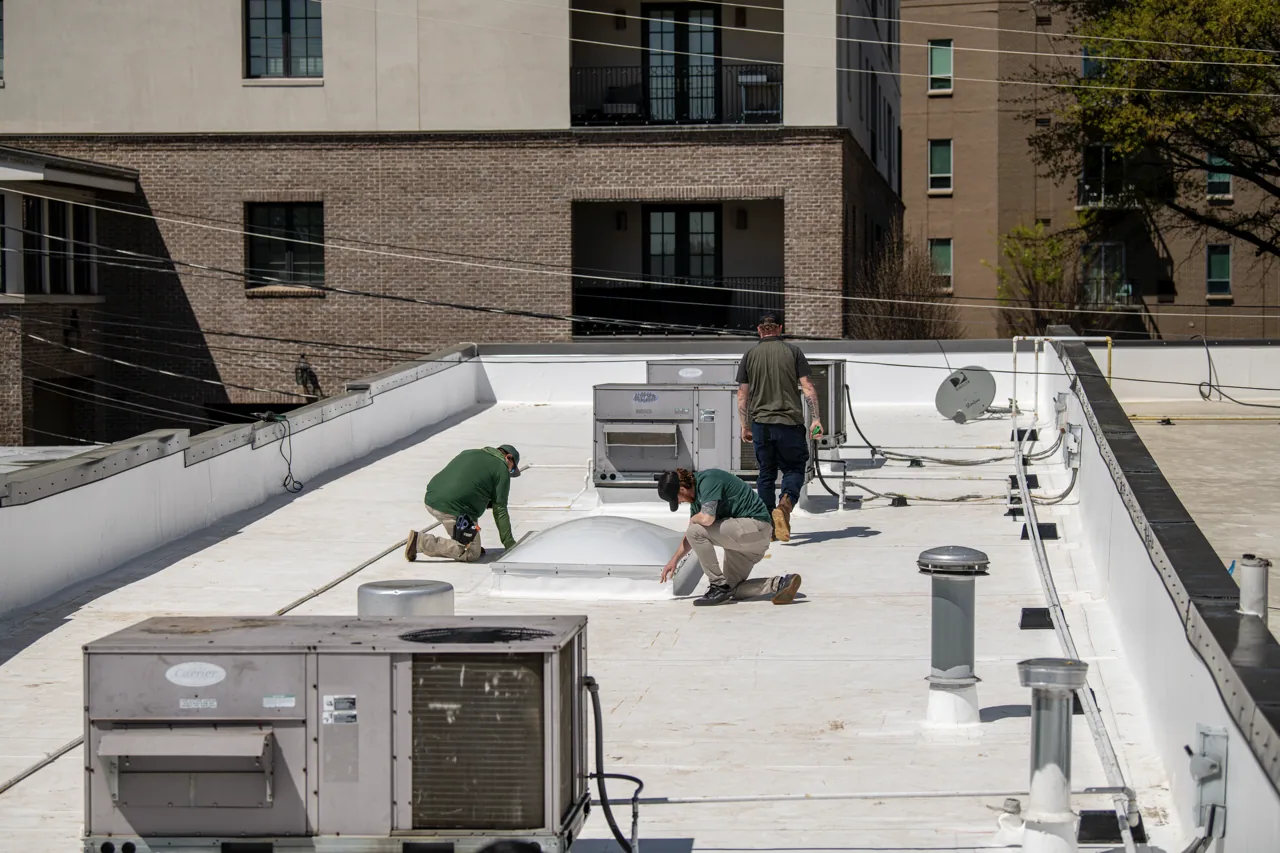
A leak along a wide showroom roof can travel from a curb or seam before it reaches the work area below. In Bridgeport's West Side and West End, Bridgeport, CT, we trace that path through the actual assembly and define the repair around the failed layer. Larger industrial and showroom parcels sit near State Street; smaller retail parcels occupy other parts of the West Side and West End. Those different building forms call for roof-by-roof inspection, not one assumed system. We check membrane, flashing, drainage and access, then write a repair boundary the property manager can review.
Building form: match the inspection to the roof
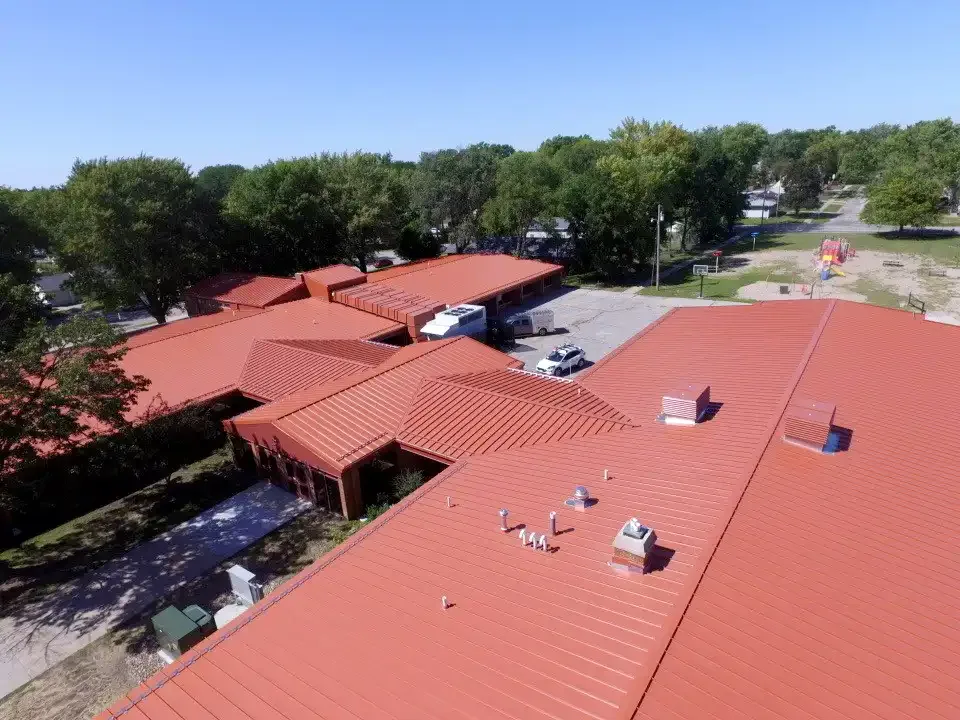
A wide roof field may contain long seams, equipment curbs and drains separated from the interior mark. A smaller retail roof can concentrate penetrations and edge transitions around additions or shared walls. Long seam runs call for mapping each lap before repair; compact roof areas need closer checks at perimeter metal, curbs and shared walls. We identify the installed sheet, laps, fasteners, and prior repairs on each roof before selecting a method.
Along Fairfield Avenue, commercial activity may bring different access considerations than a property near Clinton Avenue's professional, medical and legal corridor. We confirm those limits with the building contact instead of assuming that similar uses share a work plan. A roof inspection ties the reported room to seams, curbs and drainage above it. A photo record keeps each roof's findings separate when a manager oversees more than one property.
Water route: trace the defect through connected details
Water may enter at a lifted lap, travel beneath insulation and show on a ceiling far from the opening. We compare the room location with roof slope, seam direction, wall transitions and low areas. A drain can pass water while leaking at its flange; a curb can admit moisture at a corner even if its upper cap looks intact. We inspect connected details and test the path where safe access allows before deciding where removal should begin.
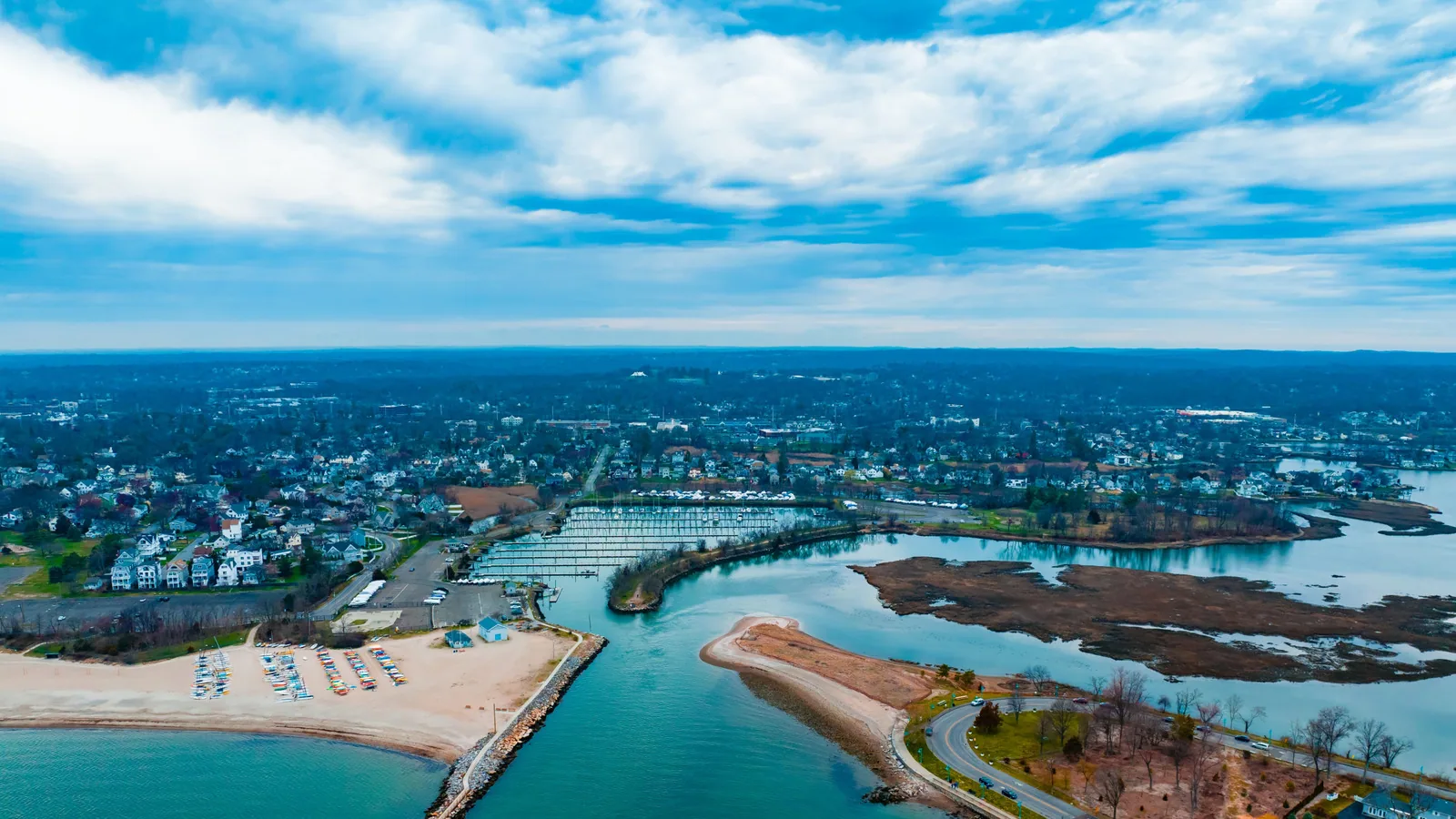
State Street, Route 130 and Fairfield Avenue are identified as traffic corridors parallel to I-95. For roof work, that corridor pattern can make access planning worth confirming before delivery. The property contact sets actual staging and entry rules. Drain and scupper repair addresses an outlet or membrane connection, while curb and equipment-support work addresses another transition. The inspection distinguishes them so a drain scope does not hide a curb failure.
Repair boundary: remove only to stable material
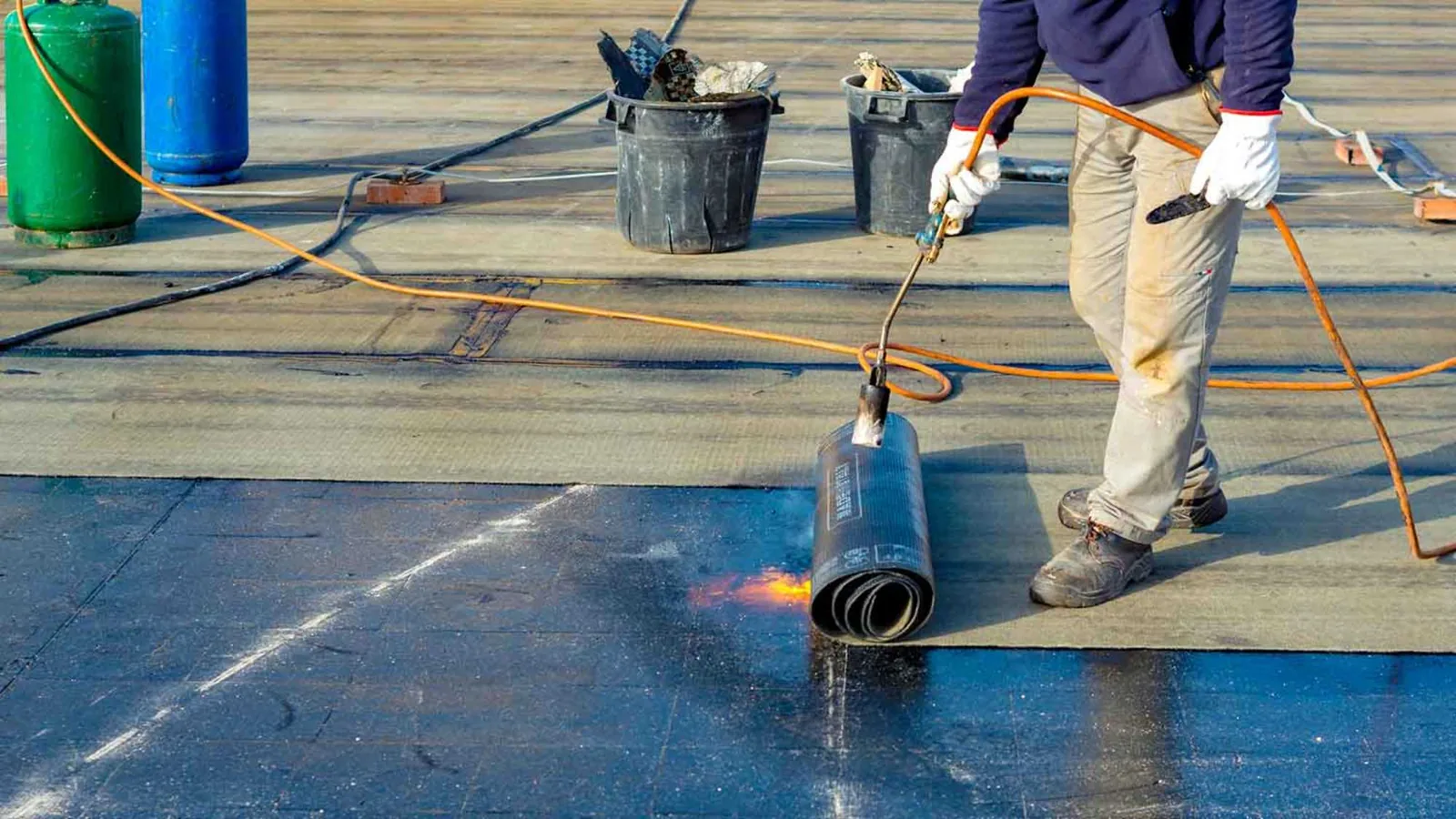
A patch needs attached roofing and a dry, prepared surface at its tie-in. We cut back the loose or split section, check the substrate and connect compatible material to sound assembly. If removal exposes wet insulation or a soft cover board, the repair has to extend to that layer. A surface cap cannot restore a saturated base. We document the opening and define the added work before closing the roof, so the owner can see why the boundary changed.
Different parcel sizes around State Street and the rest of the West Side do not mean different standards for repair. The visible roof sets the scope. Commercial roof repair can resolve a contained edge, seam or penetration defect. Repeated wet areas, loose attachment or multiple failed details may call for maintenance, recover or replacement review. Modified-bitumen repair and metal roof retrofit need different preparation and edge closure.
Business corridors: coordinate access and protection
Fairfield Avenue is a commercial corridor, while Clinton Avenue serves professional, medical and legal uses. The roof scope follows the actual entrance, work hours and interior protection needs at the property being inspected. We confirm which entrances remain open, what rooms need protection and how materials can reach the roof. If a project crosses an occupied area, the scope names the work zone and the dry-in point so staff can understand what changes during removal. Separate roof zones may need separate staging when access or interior protection changes.
Managers coordinating roofs in Fairfield Town Center and Stratford Center should maintain separate access notes and repair records. Each property has its own assembly, operations and safety requirements. A crew can compare repair options across a portfolio, but it should not transfer a moisture finding from one roof to another. The work sequence follows the building contact's approved route and the conditions found above. Near Fairfield Avenue or State Street, the manager can identify which access path must stay clear for staff and deliveries. We confirm ladder or hatch location, roof clearance, material staging and whether a passage below crosses the repair. If the layout allows, a work area can be separated while other routes remain open. That choice affects setup, protection and whether removal should proceed in one area or several.
Weather check: inspect the edge after winter movement
NOAA normals at Stamford 5 N record recurring snowfall and subfreezing nights, a regional seasonal reference for drainage and termination checks. At a Bridgeport roof, we inspect the membrane, attachment, coping, laps, and low points actually present, then record the condition and repair limit found.
Summer heat can also work on exposed membrane and metal transitions. At a seam or curb, we test whether the surrounding sheet remains secure and whether the substrate is dry enough to accept a new tie-in. That note gives follow-up crews a precise inspection starting point. Preventive roof maintenance can keep drains clear and identify a developing split while the roof remains serviceable. If a leak returns at the same detail, a closer opening may be needed to locate wet insulation or attachment loss.
Scope and permit: state the assumptions clearly
Cost changes with roof material, number of transitions, removal depth, wet insulation, disposal and interior protection. A long seam repair differs from rebuilding a curb or replacing damaged cover board. Access to a broad roof area may also affect staging and labor. We write the included work, the repair boundary and the condition that would require owner approval. That keeps the estimate tied to observed details rather than a general description of an industrial or retail roof.
Permit review follows the proposed work and application date. Connecticut's 2022 State Building Code uses the 2021 IBC and IECC as its base, with state amendments. Before submission, roof notes on existing layers, edge attachment, penetrations and drainage can help describe the change being planned. We record visible conditions and the transition details at the property; the code official determines which requirements apply to the proposed assembly work.
Commercial Roofing Questions
Does a large roof need a different leak search?
The same roof details still matter, but the search may cover more connected seams, drains and curbs. We map the reported room and check the water path before opening the assembly.
Can the corridor plan identify a building's roof material?
No. It describes broad parcel and land-use patterns. We inspect the membrane, metal, seams and flashing at the property before selecting a repair method.
What if water appears at a different spot after repair?
Water can travel through insulation or along a deck joint. We compare the new location with the prior repair boundary and inspect connected details before extending the scope.
When should damaged insulation be removed?
When an opening exposes wet or compressed insulation, the repair must reach a suitable dry boundary. We document the material removed and any added work before close-in.
How should occupied areas be handled during roofing?
We confirm access, protection below and delivery limits with the building contact. The crew sequences removal and dry-in around the agreed work zone and the roof condition.