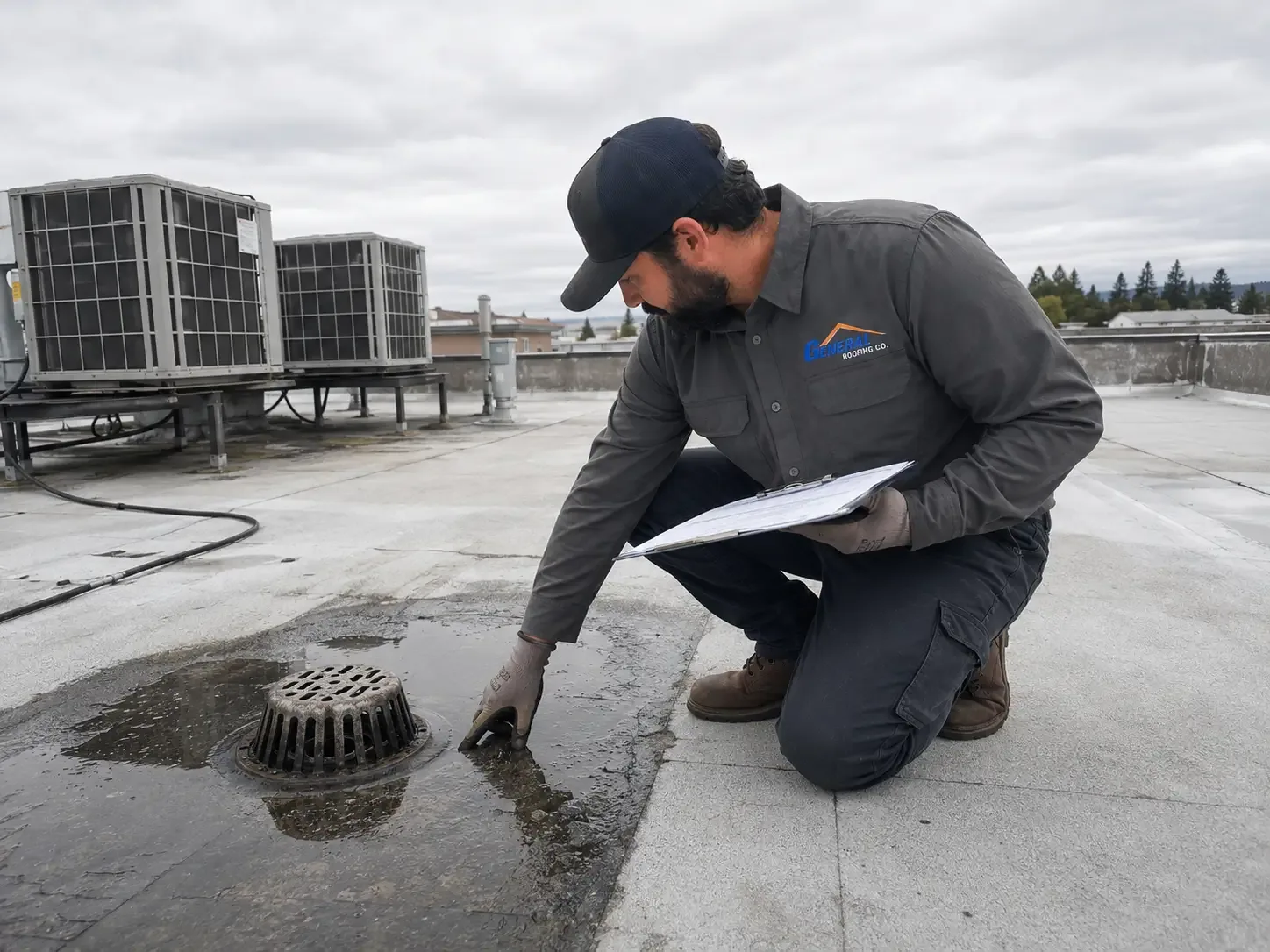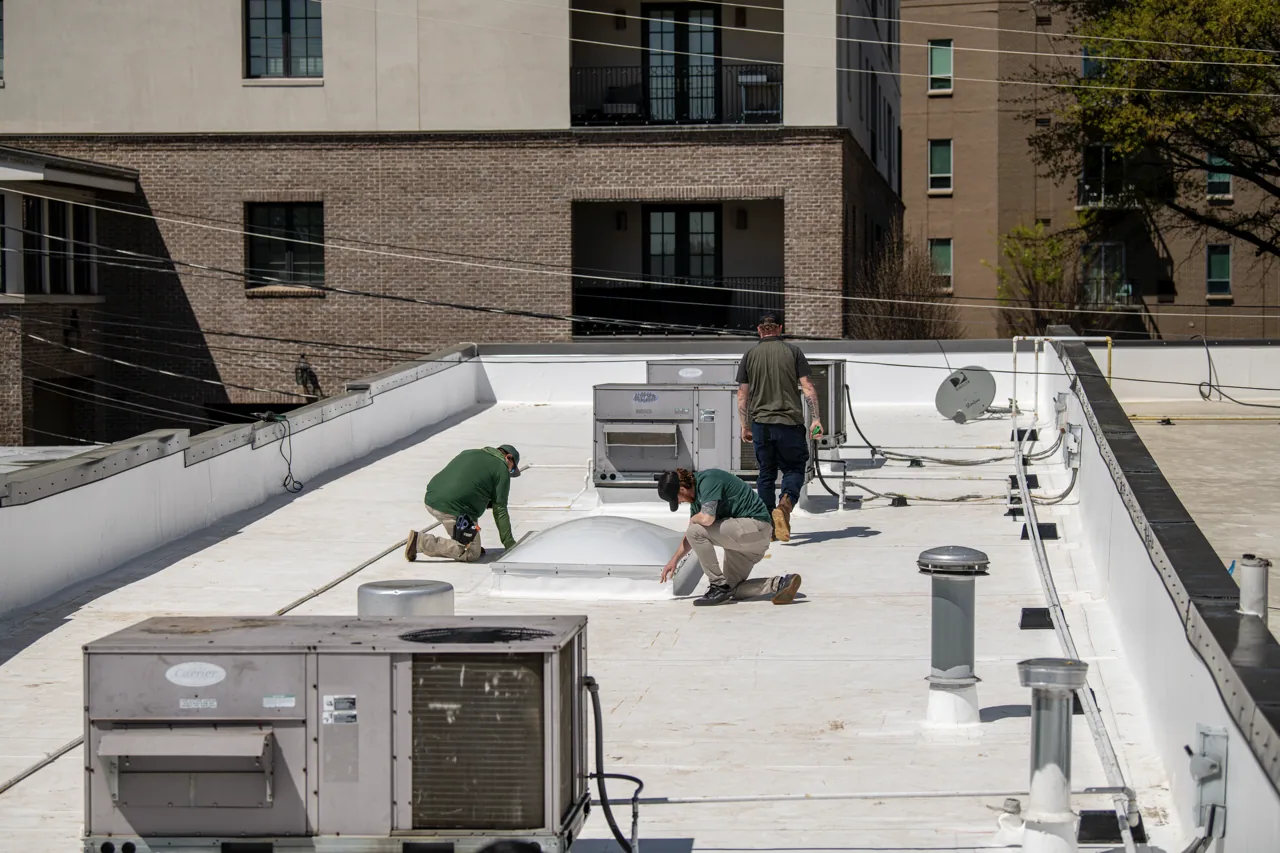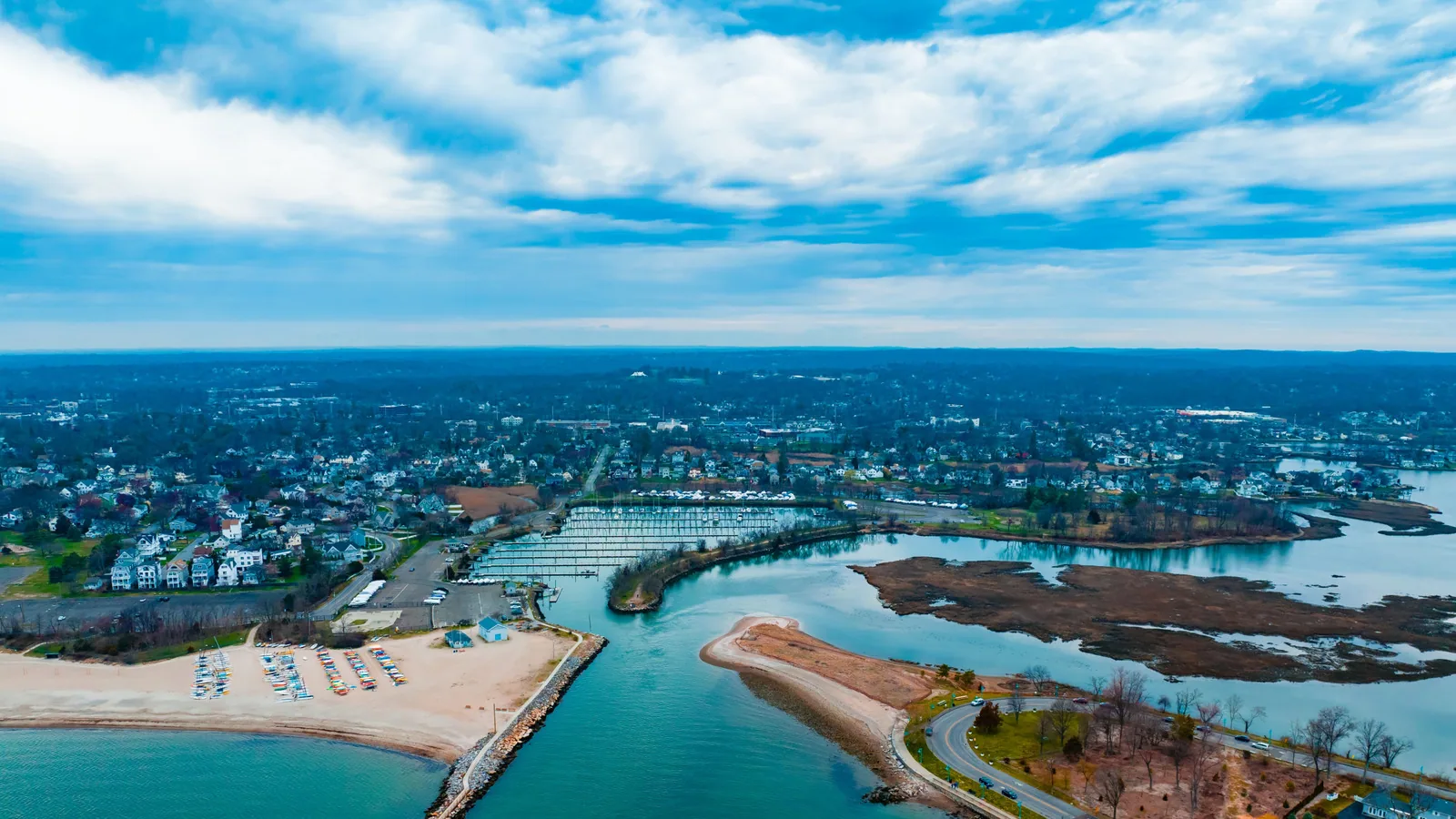
A drain bowl can pass water through its throat while a loose flange leaks below the roof. In Fairfield Town Center, Fairfield, CT, we inspect the outlet, membrane tie-in and nearby seams before choosing a repair. Post Road is a commercial corridor alongside I-95, and the rail, bus, bicycle and pedestrian movement meet the corridor alongside heavy highway traffic. Delivery and access planning therefore belong in the roof walk. We confirm the property route with the manager, then trace the defect through the assembly and set the repair boundary at material that can hold a sound tie-in.
Water path: start at the drain and work outward
A blocked strainer can slow runoff, but a clear basket does not prove the membrane connection is intact. We inspect the bowl, sump, clamping ring, overflow and sheet around the flange. Then we follow slope and seams toward the area where water appeared indoors. A low point may hold water beside a failed lap; a wall transition can carry it behind flashing before it reaches a room. Each detail is checked against the reported timing. At a scupper, we inspect the throat, flashing tie-in and nearby wall return before treating water marks as a drain-only issue.
Fairfield Town Center's Post Road/I-95 setting makes access notes useful before material is moved. We ask the building contact which doors, paths and loading areas can be used, then plan a safe route to the roof. Drain and scupper repair may involve an outlet connection; Managers covering Fairfield Town Center and Stratford Center should keep each roof's room marks, inspection details and repair limits in separate records. The scope follows the defect found, not the road pattern.
Assembly check: identify the roof before repair
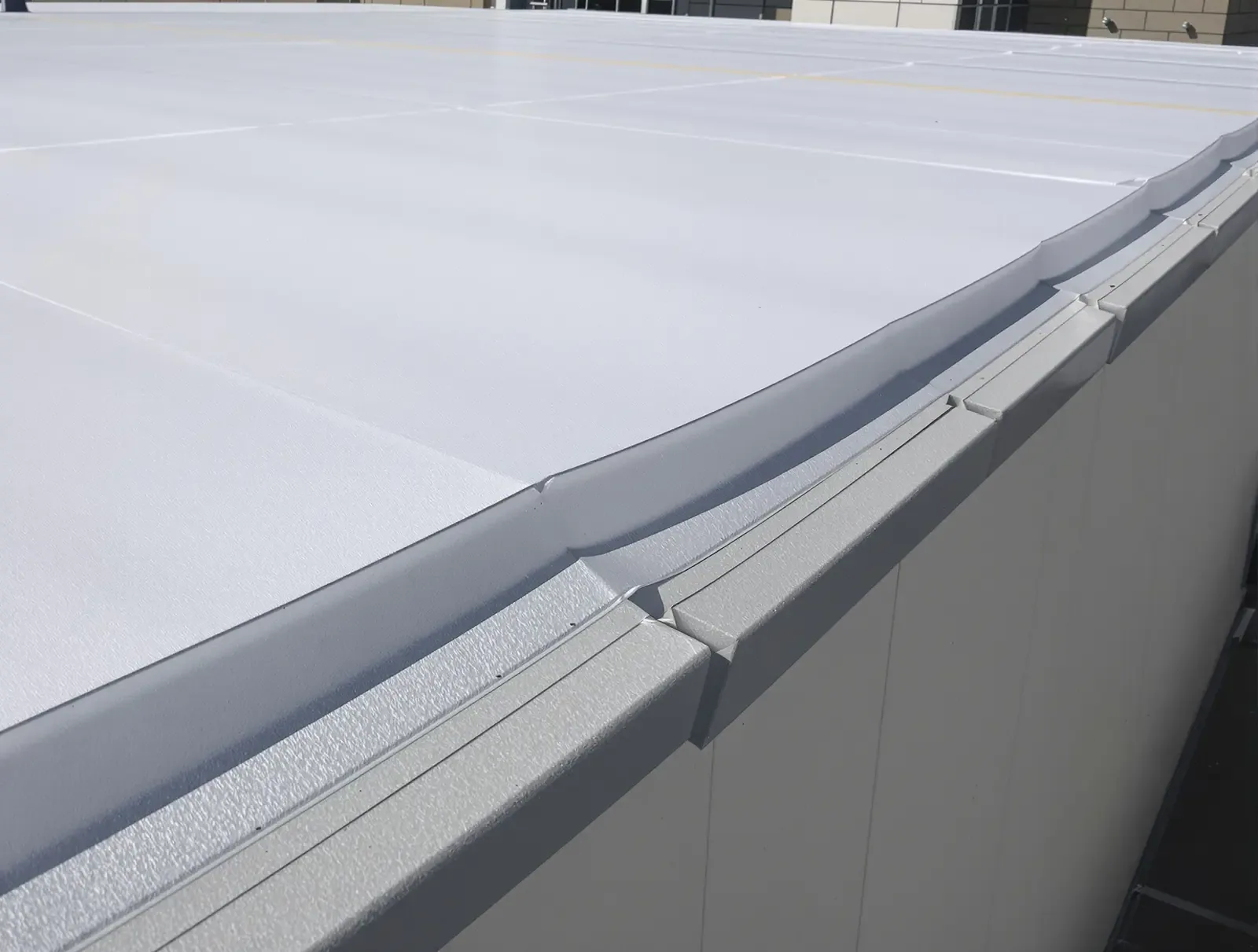
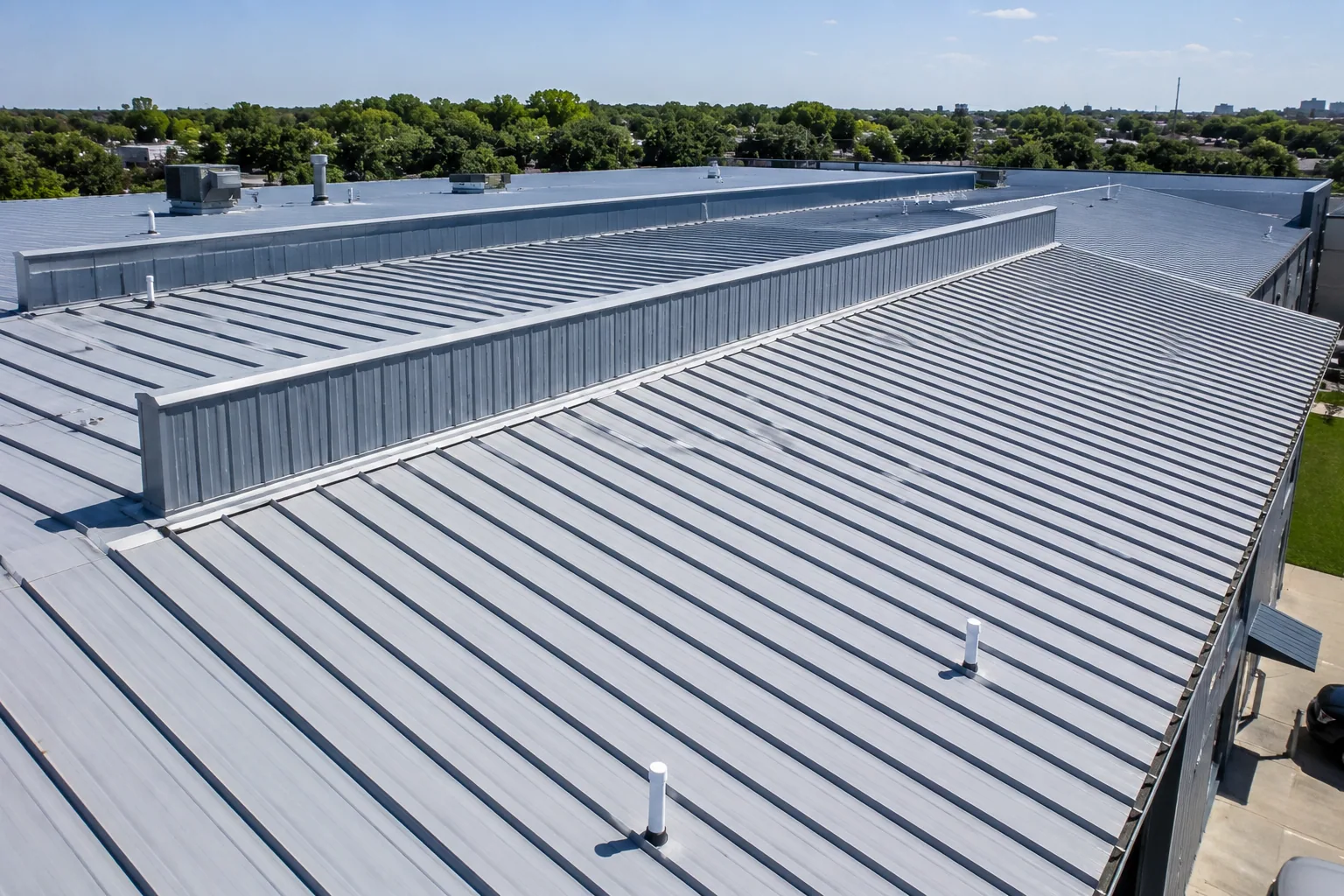
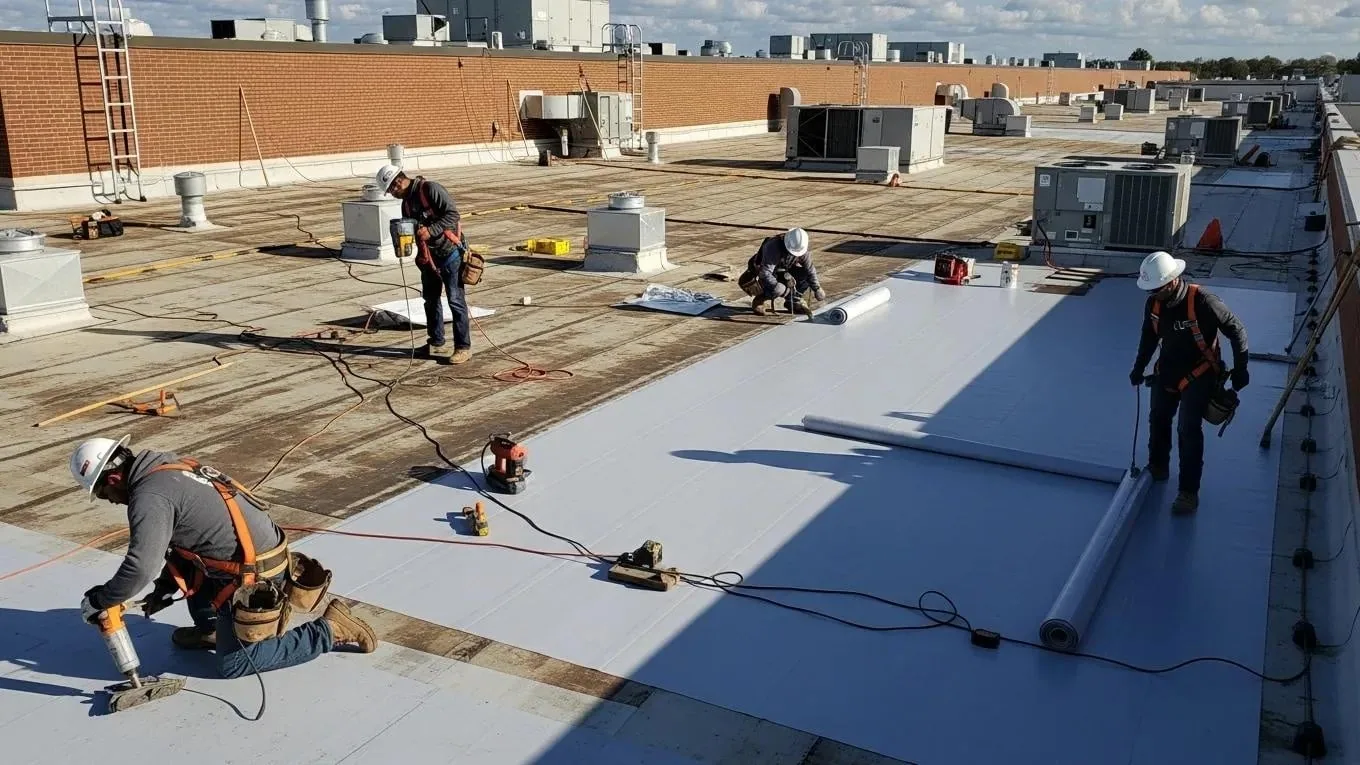
TPO, PVC, EPDM, modified bitumen, built-up roofing and metal need different repair preparation. We identify the existing material, seam direction, attachment and condition around the opening. A thermoplastic sheet may need a test weld; EPDM requires compatible primer and splice materials. Metal laps need a different closure. Previous patches, loose fasteners and wet insulation can change what will hold. We check those details before a new layer covers the failure.
Downtown Post Road includes retail properties, but the business use does not identify a roof system. We confirm the assembly on the building. PVC roof repair and standing-seam metal work use different materials and tie-ins. If a curb or parapet interrupts the field, we inspect its corners and vertical flashing with the adjoining membrane. The written scope identifies what is being joined and the preparation needed for that surface. We check the material at a test area, clean off residue and confirm that the surrounding sheet is firmly attached before a patch is welded or spliced. If the test fails, the repair method changes instead of forcing a tie-in that cannot hold.
Traffic and staging: make the access route workable
About 130,000 vehicles use the Fairfield I-95 corridor each day, alongside rail, bus, bicycle and pedestrian movement. That scale makes delivery coordination practical; it does not identify a particular loading area or entrance. We confirm site access, equipment clearances, staging area and occupied rooms with the contact responsible for the property. For shared entrances, we map the roof route apart from pedestrian movement and mark where tools or removed material can pass. Where materials must pass through active paths, protection and sequencing belong in the estimate.
A roof opening also needs a controlled stop point. If removal exposes wet insulation, we protect the area while ownership reviews added work. Occupied-building roof work can be phased around active areas. Managers coordinating roofs in Bridgeport's West Side and West End should keep inspection notes separate from Fairfield Town Center records. Shared regional access does not mean shared roof conditions or identical repair scope.
Repair boundary: follow the failed layer
A focused patch fits when the surrounding membrane remains attached and a clean, dry surface is available for the tie-in. We remove failed material, prepare the substrate and join the repair to sound roofing. If the cut exposes wet insulation, soft cover board or a damaged deck, the opening must reach the affected layer. Closing over moisture can leave a weak section beneath a neat-looking patch. We document what removal reveals before permanent close-in.
Repeated splits, separate wet areas or poor attachment can shift a local repair toward a larger recommendation. Commercial roof repair can address a contained seam, curb or edge failure. TPO seam repair depends on a clean test weld and stable sheet, while a coated surface needs compatible preparation. We compare the material, moisture extent and repair boundary before recommending maintenance, coating, recover or replacement.
Seasonal check: protect drains and terminations
NOAA normals at Stamford 5 N record recurring winter snowfall and subfreezing nights, regional context for checks at drains, terminations, and seams. At a Fairfield roof, we document the open lap, loose metal, ponding, or flashing condition actually visible, then set maintenance around that assembly's drainage and edges.
A maintenance visit can clear accessible debris, note fastener movement and flag details for closer testing. Preventive roof maintenance is useful while the roof remains serviceable and its drainage paths can be maintained. If a leak returns near the same drain, we inspect the flange and adjacent membrane before repeating a surface patch. We list the roof zone and transition in the maintenance record. That distinction helps separate a routine visit from corrective work that needs removal and a dry-in plan.
Cost and code: define the work and review
Cost follows the roof material, area of removal, connected flashing, wet insulation, disposal and interior protection. Multiple drains or curbs add separate details. Access restrictions and material movement may also affect labor. We inspect first, record the assumptions and identify what would trigger more removal. A price should not hide a condition that remains untested. The scope states the patch boundary, compatible method and approval point for concealed damage.
Permit requirements turn on the work and the filing date. Connecticut's 2022 State Building Code draws from the 2021 IBC and IECC, then applies state amendments. We can identify the existing roof covering, insulation layers, drains and penetrations for the permit review; the applicable provisions are determined for the proposed scope. Before a walk, send the affected rooms, any temporary measures already in place and the property's delivery rules. We will inspect the assembly and explain which repair boundary the roof supports.
Commercial Roofing Questions
Can a clear drain still leak?
Yes. Water may escape at the clamping ring or membrane tie-in while the bowl remains open. We inspect the outlet and overflow with nearby seams before deciding whether cleaning or repair is needed.
Does the I-95 traffic volume change the roof scope?
No. It helps explain why delivery coordination matters, but the building contact sets access and staging rules. The roof assembly and defect determine the repair.
What should a roof cut reveal before the patch closes?
The exposed edges should reach dry, stable material with a firm tie-in. We record wet insulation or damaged cover board and set out any added removal before close-in.
Which findings help a fairfield center owner compare repair with replacement?
We compare attachment, moisture extent, repeat failures and the number of connected details. A contained defect may suit repair; widespread damage can support a broader system review.
What should be ready for the roof walk?
Share the affected rooms, dates of water entry, recent service notes and access limits. We use those details to trace the likely path and record what the roof supports.