A lifted metal return can open a path at the edge before water shows inside. In Shippan, Stamford, CT, we inspect the coping, membrane turn-up, curb corners, and drain route connected to the reported condition. Shippan is a waterfront neighborhood on Long Island Sound. State coastal guidance identifies wind, surge, and erosion as regional hazards. That exposure makes perimeter attachment and water discharge useful places to start, while the roof itself determines the repair. We identify the system, trace the defect, and write a limit that reaches sound material. A commercial roof inspection begins with the detail that failed, not a broad assumption about every roof near the water.
Perimeter attachment: inspect the metal return
Wind can work on corners and roof edges where membrane, cleats, coping, and termination bars meet. We check fasteners, splice plates, metal joints, sealant, and the membrane leg below the coping. A loose splice may be limited to one joint. Corrosion, pulled fasteners, or a moving termination can extend beyond it. Each condition needs a different repair boundary. We photograph the connection and identify what must be lifted to reach an attached, dry surface.
Metal should shed water away from the wall without trapping it beneath a return. We inspect the lap direction, end dams, corner seams, and any field sheet tied into the perimeter. Wind-damage repair needs to restore attachment as well as close the visible opening. If the membrane has stretched or insulation has shifted, a bead of sealant will not rebuild the detail. The scope should name the metal section, membrane tie-in, and any substrate work that keeps the edge from reopening.
Water route: separate rain entry from standing water
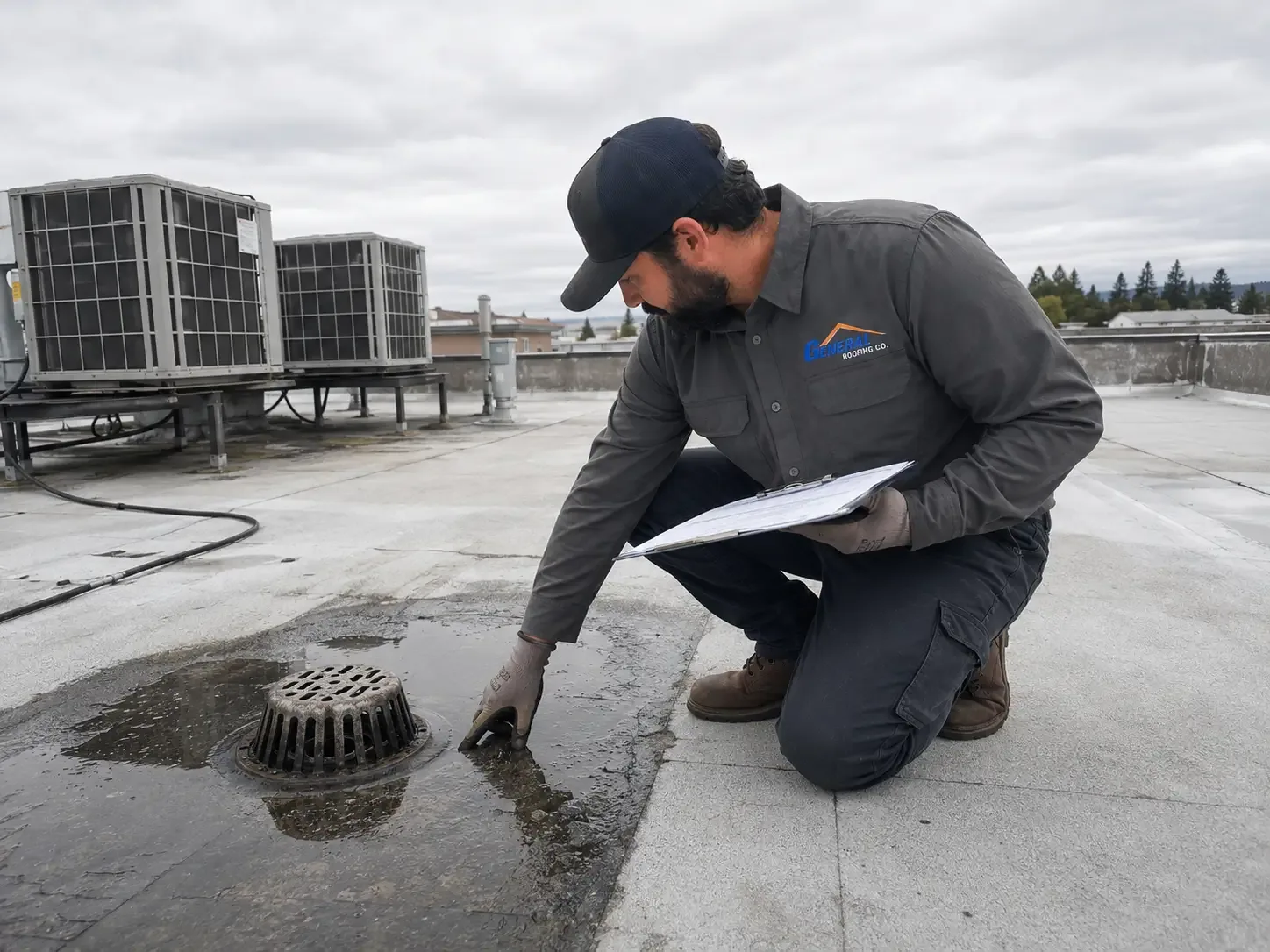
Heavy rain can test a drain, scupper, and low seam at the same time. We compare the reported leak with roof slope, the water line, and nearby penetrations. A clear bowl does not prove its flashing is sound. A ponded area does not by itself identify an opening. We inspect the clamping ring, membrane connection, overflow path, and surrounding field for split laps or softened insulation. The report keeps each observation separate from a suspected route until access or testing connects them.
Regional surge guidance for Long Island Sound makes a roof-side inspection useful after coastal weather. We check displaced metal, punctured membrane, open corners, and water that crossed an interior finish, then map each observed condition by roof section. Drain and scupper work should state whether the issue is a blocked opening, a failed flashing connection, or a drainage condition that needs a broader correction. That distinction controls both material and sequencing.
Neighborhood pattern: set access assumptions by property
Shippan sits within a city that preserves broad low-density residential areas while placing denser mixed-use growth toward the core. Before setting the work zone, we confirm who uses the building, which areas below need protection, and where material can be staged. The inspection checks the actual curb, seam, edge, and drain, with the route and protection recorded for that roof.
For a manager scheduling roofs in Harbor Point or Cove and East Side, separate photos and repair boundaries help sequence the work by property. We note any roof areas not reached, access limits that affect the inspection, and the next step needed to confirm a hidden condition. That record gives ownership a usable basis for repair approval without treating neighborhood context as a diagnosis.
Membrane and curb: identify the material first
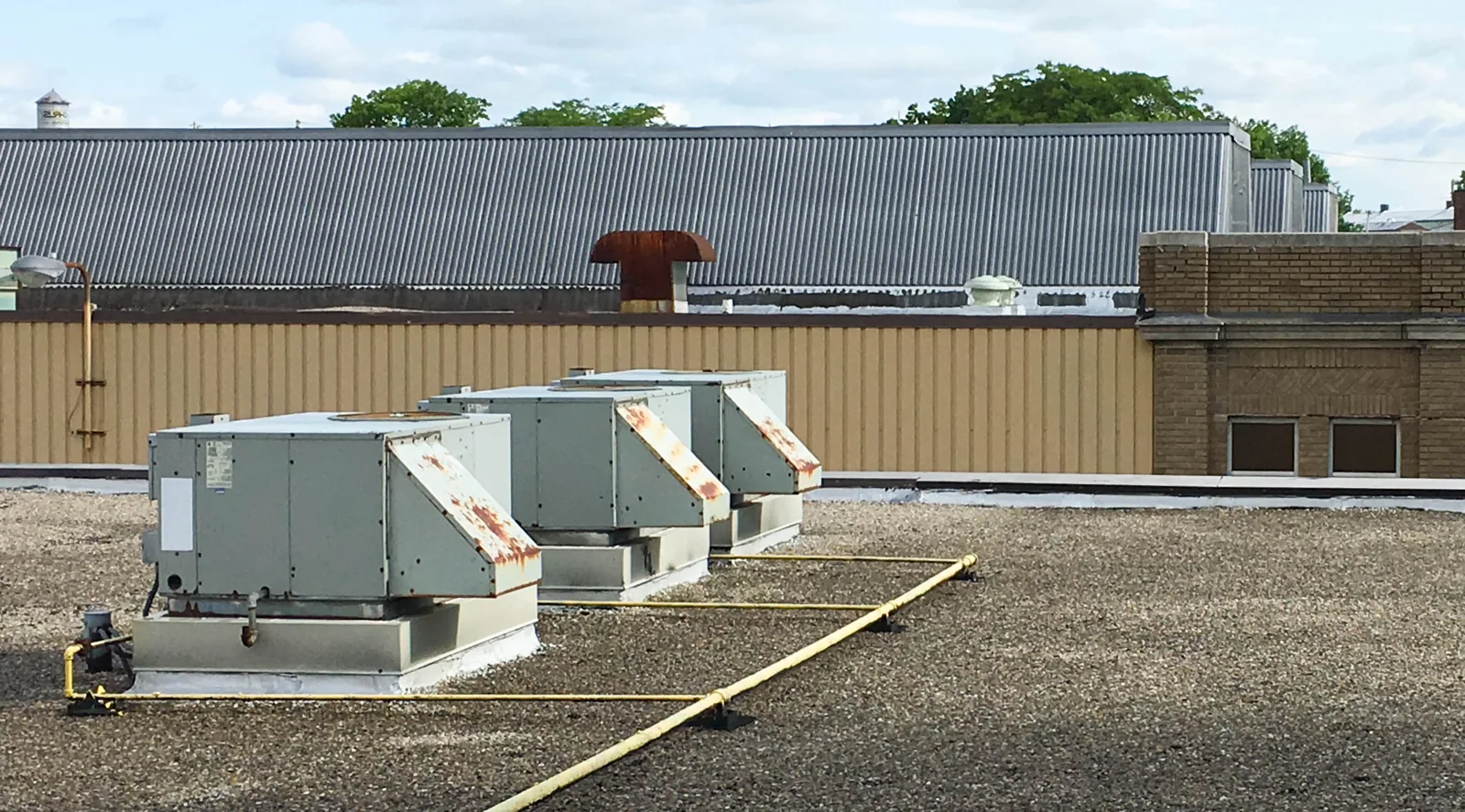
A curb interrupts the roof field and gives water another place to pass beneath flashing. We inspect its corners, vertical legs, counterflashing, fasteners, sealant, and the membrane lap surrounding it. The roof system controls how the detail can be prepared and rebuilt. A thermoplastic weld, EPDM splice, modified-bitumen lap, metal panel, or coating each needs a compatible repair method. We check for wet insulation and loose attachment before choosing materials. A patch placed over contamination or movement can fail at its edge.
Other trade work can disturb a repaired curb when service routes cross the membrane or a unit needs clearance. We mark the area that must remain undisturbed and note any coordination before work starts. The roof owner should see whether a service opening, flashing replacement, or field-sheet repair is included. Curb and support repairs are scoped around the penetration and surrounding assembly, not a generic collar. When a seam or penetration holds moisture below the surface, we describe the test or opening needed before close-in.
Repair limit: keep sound roofing in service
A contained defect can be repaired when the surrounding membrane stays attached and the substrate at the tie-in is dry. We remove failed material, prepare the surface, and connect new work to sound roofing. If moisture extends under another board or into a curb return, the scope follows that condition. A surface patch cannot dry wet insulation. We identify the removal area, temporary protection, and what must be checked after the opening is made.
Several loose edges or recurring leaks may change the recommendation from one repair to maintenance, recover, coating, or replacement. Preventive roof maintenance can track seams, outlets, and exposed metal while the system remains serviceable. A replacement scope becomes relevant when the field no longer accepts durable tie-ins or the assembly has reached its repair limit. We explain the condition that moves the decision, then price the work that matches it.
Cost and timing: account for weather and access
Cost changes with roof material, the number of connected transitions, removal, wet insulation, equipment clearance, and interior protection. An edge repair may include coping and membrane work together. A drain repair can require opening enough field sheet to reach a dry substrate. Disposal, testing, and temporary dry-in add steps when the assembly cannot close during the same work window. We list those assumptions and state which concealed condition could change the scope.
Timing follows weather, surface dryness, safe access, material compatibility, and a sequence that keeps the building protected. A clean tie-in surface matters more than a calendar target. If removal exposes moisture, we protect the opening and confirm the added material before closing it. A condition report with photos records the leak path, observed damage, repair boundary, and remaining questions for ownership. Bring the recent service notes and access limits to a roof walk; the written recommendation will separate what can be repaired from any larger system decision.
Commercial Roofing Questions
Does a coastal location establish that a roof has surge damage?
We inspect the membrane, perimeter, drains, and interior report, then document the damage and water path supported by the conditions reached.
What should be checked after wind loosens coping?
We look at splice joints, cleats, fasteners, corners, membrane turn-up, and any insulation exposed below the metal. The repair must reconnect the full edge detail, not just cover the gap visible from the roof surface.
Can one drain serve as the source of a ceiling leak?
It can, but the bowl, clamping ring, membrane connection, and nearby low seam need to be checked. We compare those details with the room location before linking the outlet to the reported water.
Which conditions in shippan point beyond a contained roof repair?
Moisture extending beyond the opening, failed attachment in separate areas, or repeated leaks can make a wider scope more reliable. We show which finding changes the recommendation and whether maintenance, recover, or replacement fits the remaining assembly.
What changes the schedule for an edge repair?
Weather, dry substrate, material preparation, equipment access, and the need for temporary protection all matter. If removal finds a larger wet area, we document it and confirm the added work before closing the roof.