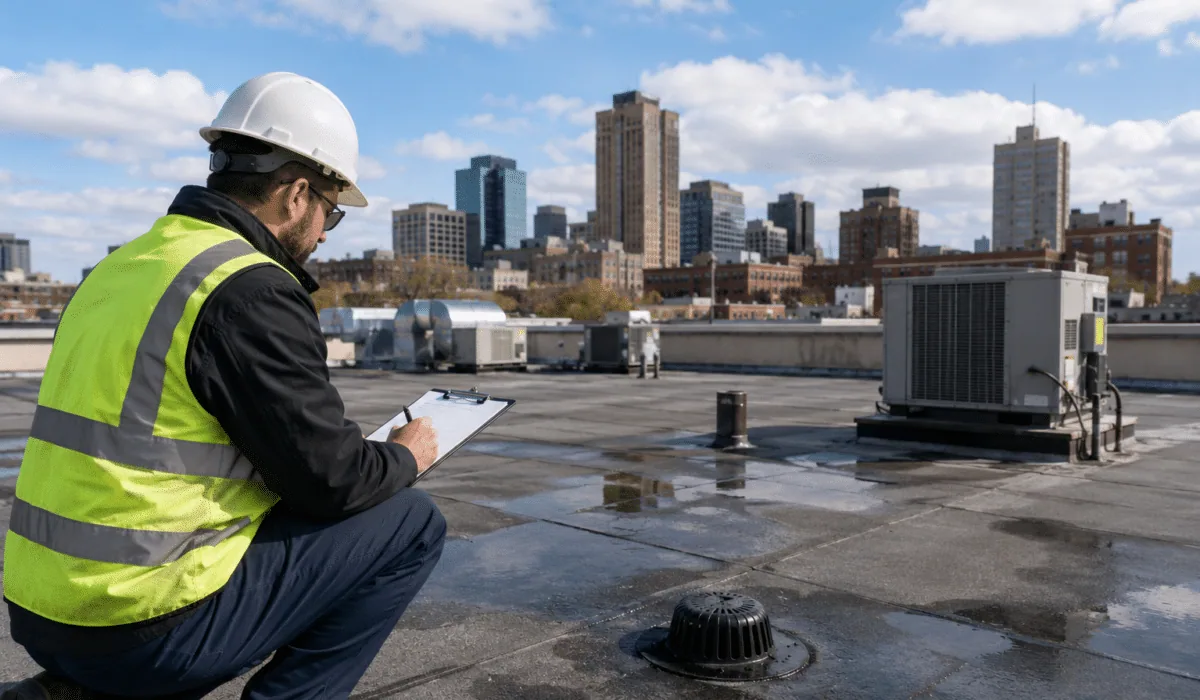
A ceiling mark near an exterior wall can start at the roof edge, then travel along a seam before it appears inside. In Cove and East Side, Stamford, CT, we begin with the reported water path and inspect the membrane, metal return, curb flashing, and drain connection above it. These are separately named neighborhoods grouped as an eastern service cluster. We check the assembly in front of us, then set a repair limit that reaches sound material. A commercial roof inspection records the detail carrying the leak, not just the room where it showed up.
Water path: follow the mark past the roof edge
Water can move from a penetration or open lap before it reaches a ceiling. We compare the interior mark with roof slope, seam direction, curb corners, wall transitions, and the nearest drain. An exterior wall can collect water from a defect several feet away. A stain beside equipment may begin at the curb instead of the equipment itself.
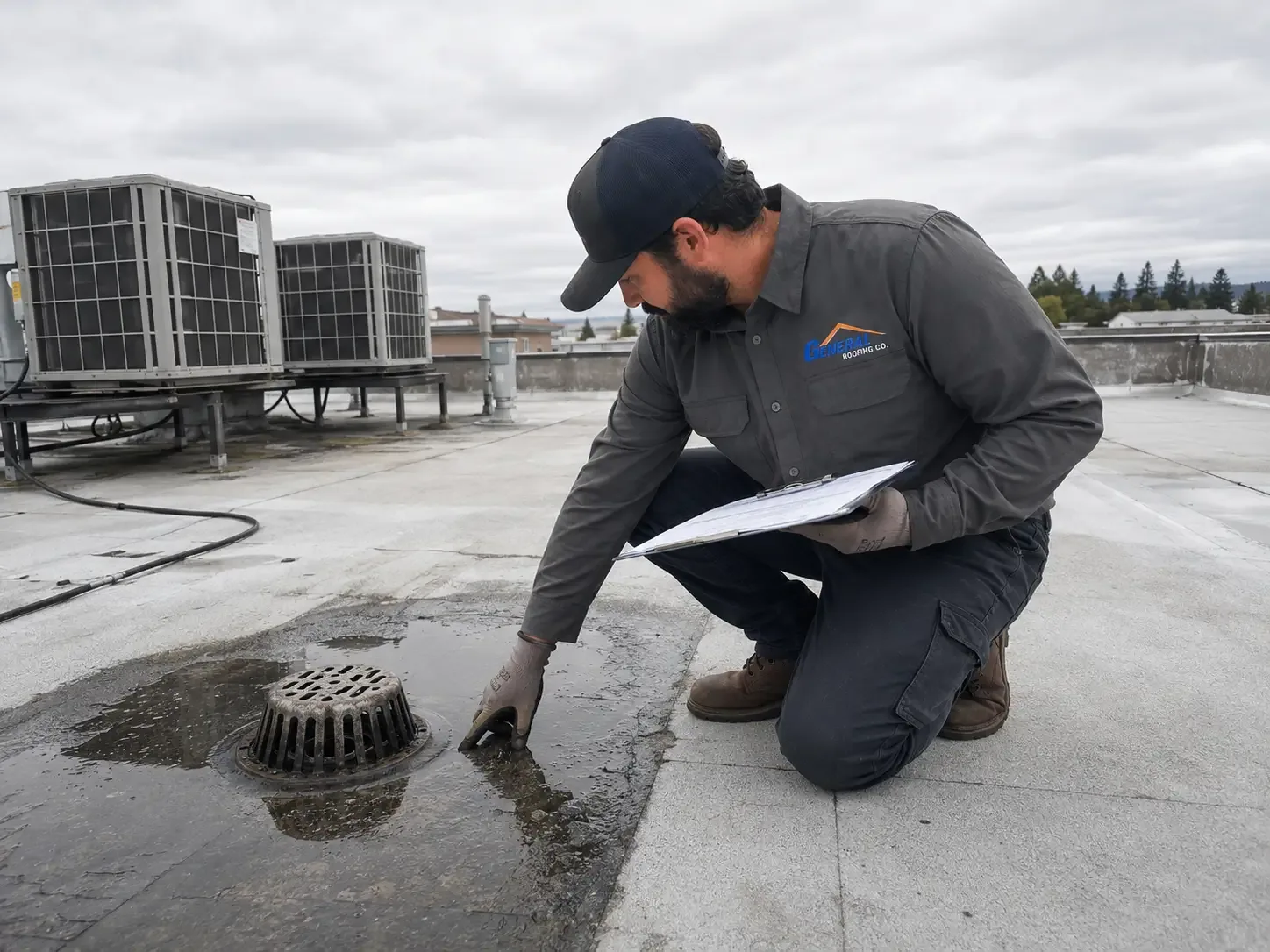
After rain, standing water can expose a low area or a restricted outlet, but its presence alone does not identify the failure. We look for membrane displacement, debris at the bowl, open laps, and signs that water has reached the insulation. A service note should distinguish what is visible from what remains concealed. If the entry point is limited, commercial leak repair can focus on that detail and the surrounding tie-in. If the material beneath it is wet, the opening may need to extend farther before the surface is closed.
Coastal exposure: inspect the perimeter and discharge
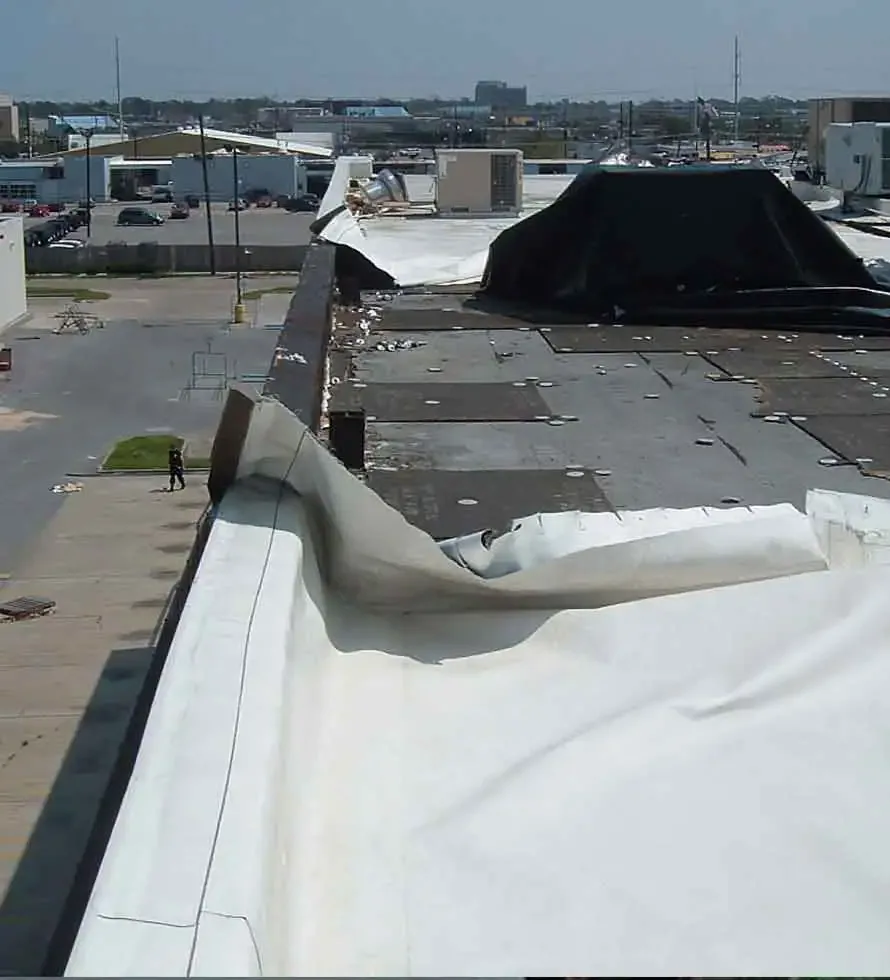
Connecticut's coastal hazards include hurricane wind, heavy precipitation, surge flooding, and erosion. That regional exposure is a reason to inspect roof edges, corners, penetrations, and drainage after a coastal storm. We check attachment at the perimeter, the termination where membrane meets wall or coping, and the outlets that move water off the roof. Loose edge metal and an open seam need different repairs, even when both follow the same weather event.
Wind can lift a weakly attached edge while driving rain finds a gap at the return. We document displaced metal, split sealant, and membrane condition separately. The roof's assembly and attachment govern the repair detail. A wind-damage roof repair scope should identify each affected transition and the material needed to restore it. We also check whether water reached insulation or the deck before recommending a surface patch.
Drainage detail: keep the exit path clear
Water needs an open route from the roof field to its outlet. We inspect drain bowls, strainers, sumps, overflow points, and the membrane that turns into each drain. A loose clamping ring or split flashing can leak even when the bowl itself is clear. A blocked outlet can hold water against a seam or curb and make a separate defect harder to trace. Photos and measurements help show which condition is present and where a repair should stop.
Citywide infrastructure planning coordinates roads, sidewalks, stormwater, and other public improvements as growth occurs. For the roof walk, we trace the property's slope, outlet layout, and discharge detail, then record how water reaches the drain. Drain and scupper work may involve a new flashing connection, a corrected low point, or maintenance to remove an obstruction.
Membrane and metal: match the repair to the assembly
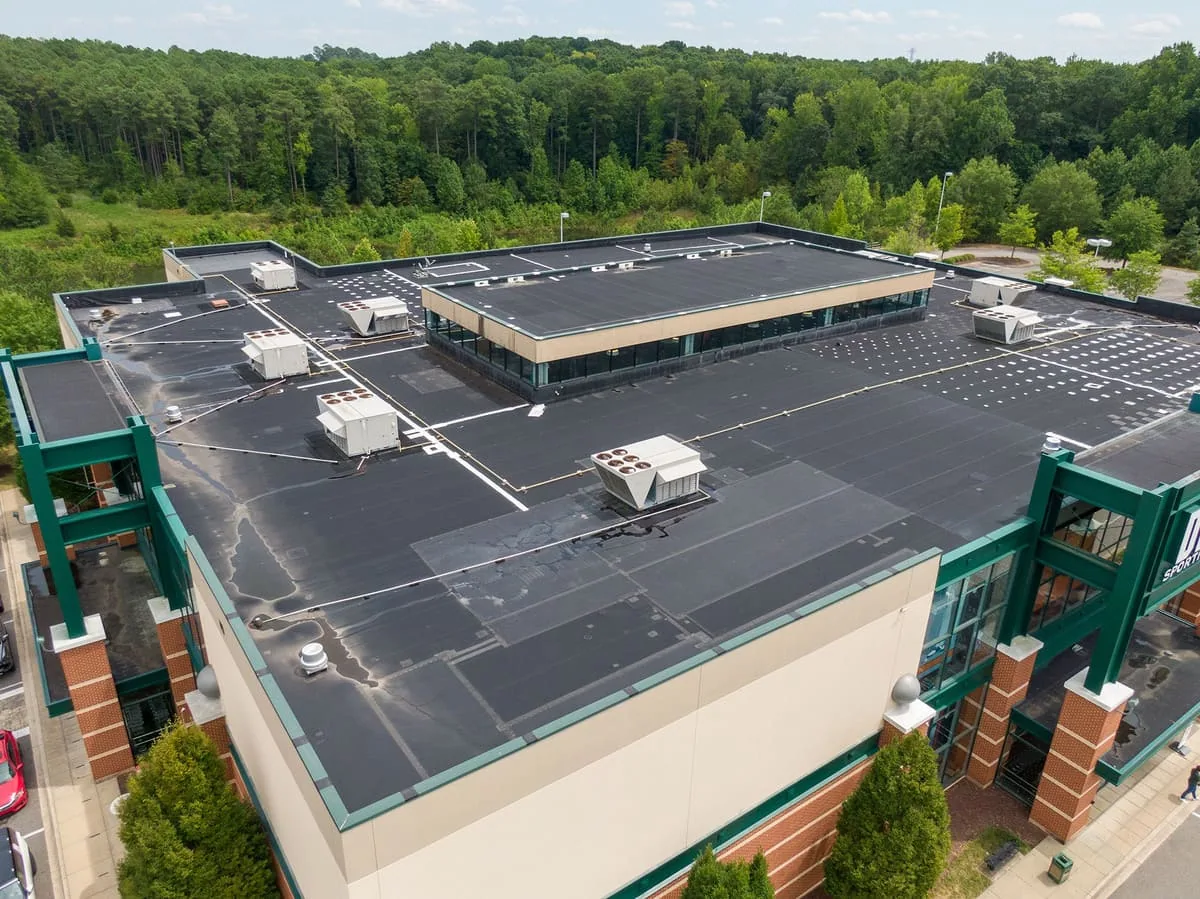
A repair has to bond to a clean, compatible surface. We identify whether the roof is thermoplastic, rubber, modified bitumen, built-up, metal, or coated before selecting preparation and flashing methods. A welded lap, adhered patch, metal return, and liquid-applied transition each require different conditions. We check for moisture, loose attachment, brittle material, and earlier repairs that may prevent a stable tie-in. New material over contamination or movement can open at the edge again.
Roof curbs, parapets, and perimeter metal create changes in plane. Each corner needs an intact flashing leg and a termination that stays attached through movement. If coating is considered, the substrate must be dry and suitable, and existing layers must accept the system. coating restoration is not a shortcut over wet insulation or a failed seam. We separate those conditions in the report so the owner can compare a detail repair with broader work. A Waterside roof walk can address the same basic water paths, while the actual assembly and exposure still decide the repair here.
Repair boundary: decide what remains sound
A focused repair makes sense when the defect is limited, adjacent material remains attached, and the tie-in can reach a dry, stable surface. We remove failed material, prepare the opening, and connect new flashing or membrane to sound roofing. If moisture continues past the visible split, the repair boundary follows it. Covering a wet substrate can hide a weak section without restoring the assembly. The written scope identifies what comes out, what stays, and what condition could expand the work after the roof is opened.
Several failing transitions, repeated leaks, or widespread wet insulation change the decision. Maintenance may address developing problems while most of the roof remains serviceable. A recover or replacement discussion becomes relevant when patches can no longer connect to a reliable field. We document why the recommendation changes rather than treating every leak as a replacement. Preventive maintenance can track seams, drains, and prior repairs between larger projects. When the system has reached its limit, replacement planning addresses removal, dry-in, insulation, and protection of occupied areas.
Access and cost: record the conditions that change the work
Cost depends on roof system, repair size, connected details, moisture below the membrane, removal, and access for tools and materials. A curb repair may require several flashing sides and insulation work. A drain repair may need more membrane opened to reach a sound surface. Interior protection, disposal, equipment clearance, and temporary dry-in also affect the scope. We state these drivers before approval and identify the concealed condition that could add work once the roof is open.
Timing follows weather, substrate dryness, material compatibility, and the sequence needed to keep the roof watertight. A coating or membrane tie-in cannot proceed until its surface is ready. If access has limits, the schedule should account for how tools reach the work zone and how the area below is protected. A condition report with photos gives the owner a record of the defect, water path, repair boundary, and next decision. Properties in Shippan can have different roof details; the same inspection discipline applies without assuming identical systems. A roof walk turns an interior complaint into a defined scope, with the repair or larger recommendation tied to what the assembly shows.
Commercial Roofing Questions
Does a coastal storm mean the whole roof needs replacement?
No. We inspect the edge, seams, curbs, and drainage, then map any wet insulation or loose attachment. A contained defect may support a repair. Broader work depends on how much of the assembly has failed and whether sound material remains for a reliable tie-in.
What do you need to trace a leak near a wall?
The room location and timing help us start, but the water path may run from a curb, roof edge, or seam. We compare that report with slope and nearby transitions, photograph the conditions, and test when needed before setting the repair boundary.
Can an open drain explain water at a seam?
A restricted outlet can leave water near a seam, but the drain and membrane connection still need inspection. We check the bowl, flashing, low point, and surrounding laps. The scope separates an obstruction from a failed drain detail or a second leak source.
When does a patch become a larger roof project?
Several failed details, moisture beyond the opening, or a field that will not accept a stable tie-in can change the recommendation. We show what is wet or loose, what remains serviceable, and which condition makes maintenance, recover, or replacement the stronger option.
What should the written roof scope include?
It should identify the system, observed defect, preparation, material, tie-in, and repair limit. We also list access assumptions, interior protection, dry-in needs, and any concealed condition that could change the work after removal.