A loose roof termination can send water past the room where a ceiling mark appears. In Shelton's business corridor, Shelton, CT, we inspect the membrane, edge metal and drainage before setting the repair boundary. Route 8, Route 110 and Bridgeport Avenue are part of the local road network. State-road intersections include Route 8 Exit 14, Route 108 and Coram Avenue, Route 110 and Howe Avenue, and Bridgeport Avenue. Those routes frame delivery planning but do not identify a roof's construction. We trace the leak and tie the repair into sound material. A commercial roof inspection begins at the reported area with safe roof access.
Road network: set the work route before staging
State-road intersections sit around Shelton businesses, including Route 8 Exit 14 and Route 110 at Howe Avenue. A delivery plan follows the property entrance, roof access and work zone, not simply the nearest highway. We confirm which doors remain open, where materials can be staged and what spaces below need protection. The route from unloading to the roof changes setup and dry-in timing, so those limits belong in the estimate before removal begins.
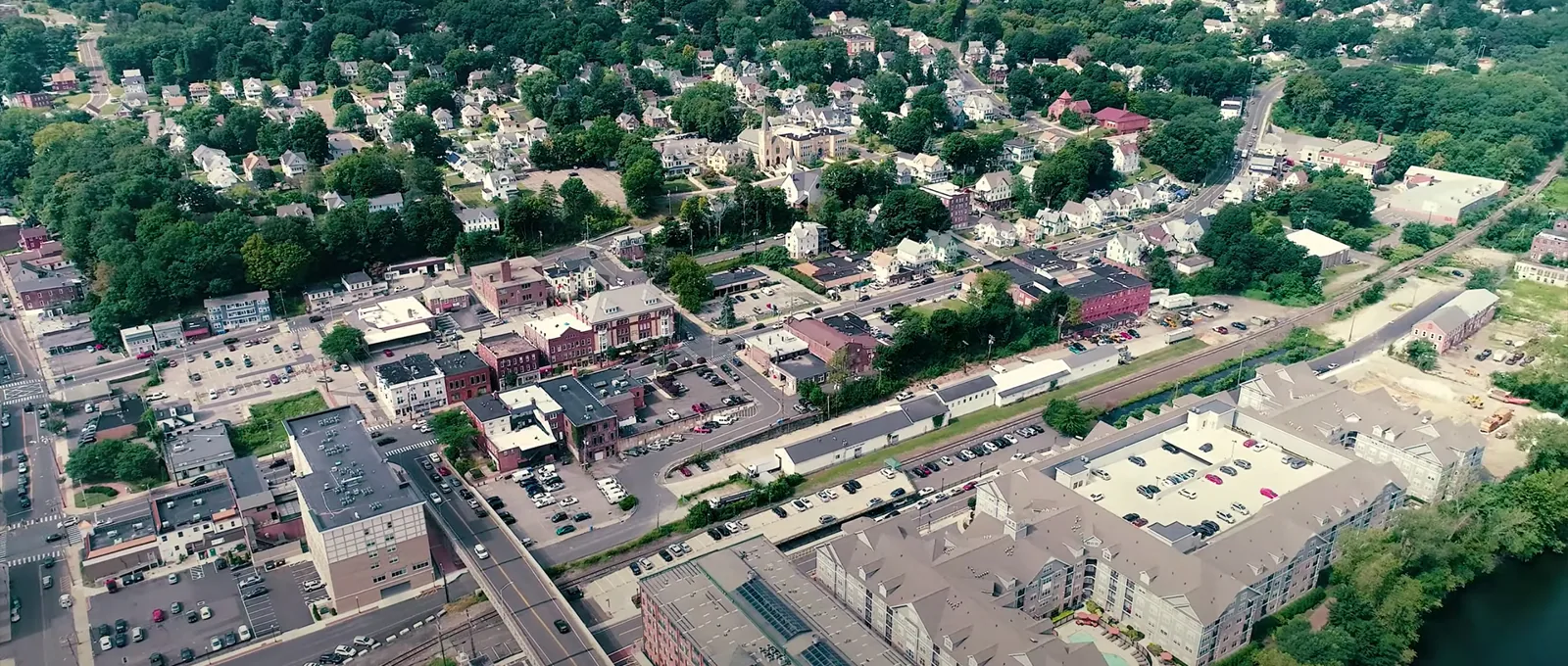
Regional transit connects Shelton with Monroe, Stratford and Bridgeport, as well as bus hubs. We confirm the loading point, pedestrian separation and timing restrictions with the roof contact. Properties across Shelton, Stratford Center and Bridgeport's West Side keep separate access rules and roof records. If an active entrance crosses the work route, the scope states how that area is protected and where the crew can stop at the end of a shift.
Entry point: follow water through the assembly
A ceiling mark shows where water became visible, not where it entered. We compare the room report with slope, seam direction, curbs, wall transitions and low points. Water can travel beneath a lap or along insulation before reaching an interior finish. A drain may clear while its flange leaks; a loose metal return can carry water behind a fascia. We check details that fit the timing, then test an opening only where access and roof conditions support it.
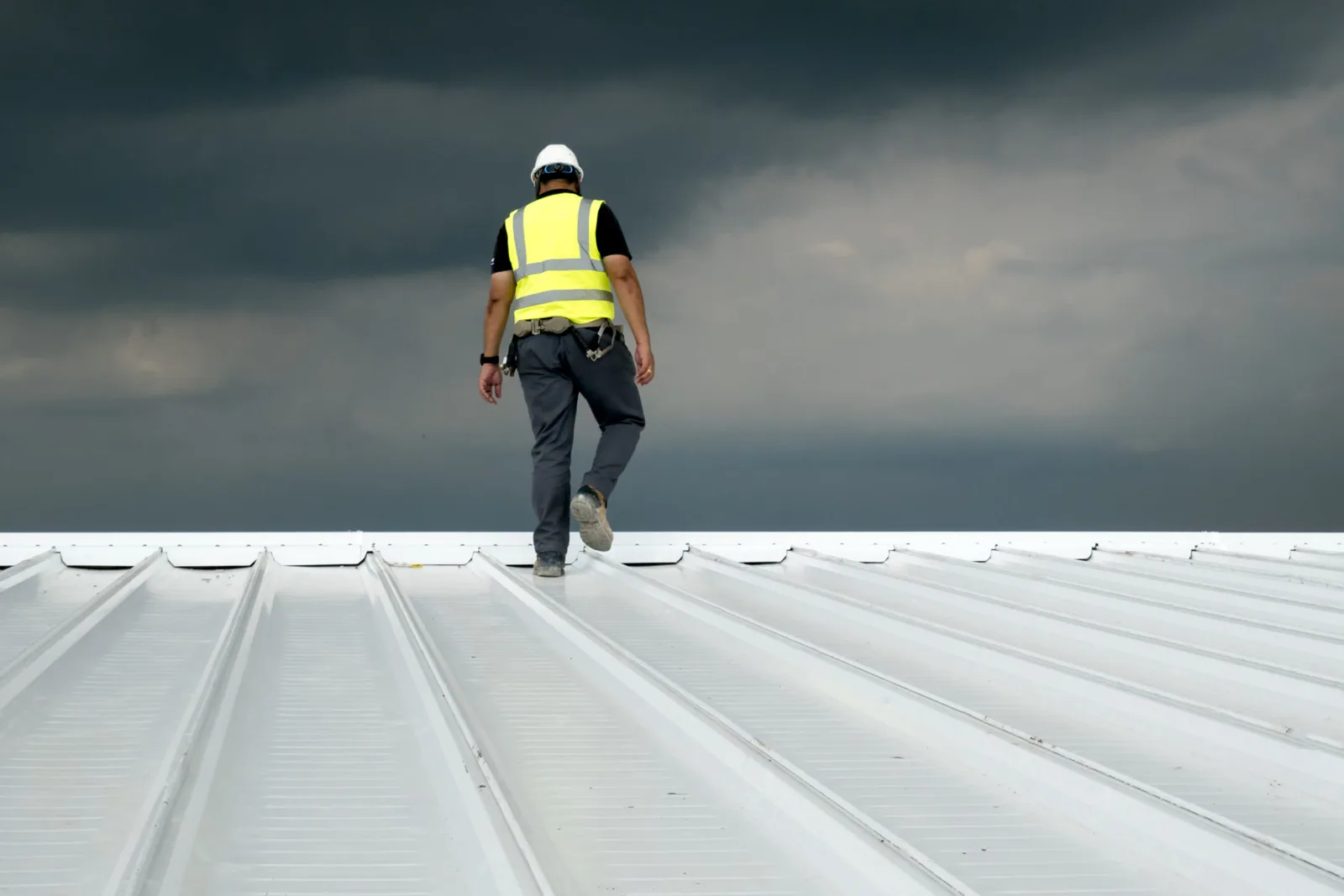
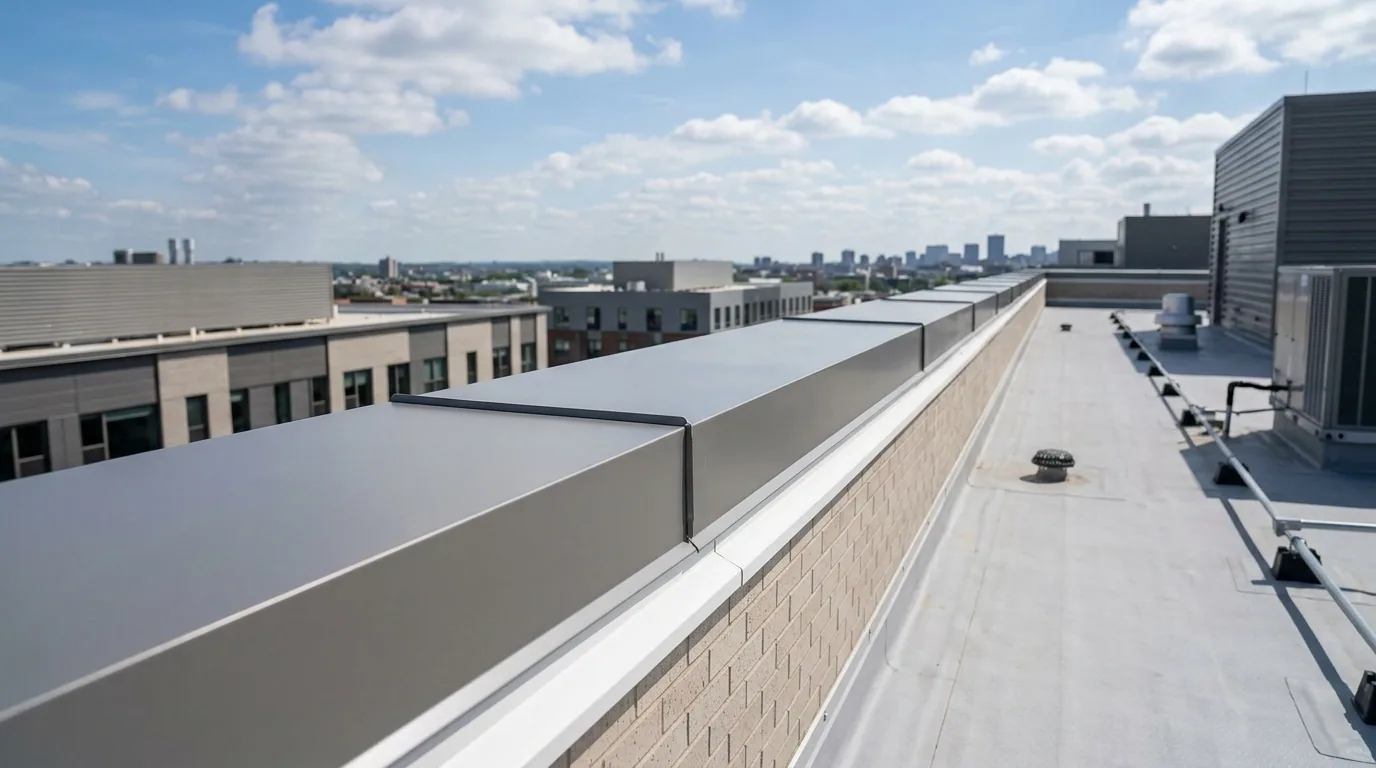
A roof walk should leave a useful record of the observed route. We photograph the opening, note adjacent seams and outlets, and mark the boundary between attached material and roofing that has lifted or split. Drain and scupper repair addresses the outlet connection; Edge-metal work addresses perimeter details. If the stain sits below a wall or curb, we inspect its corners and flashing rather than treating a surface patch as the whole answer. Each connection gets its own repair note when its materials or failure differ.
Roof surface: match the repair to the installed layer
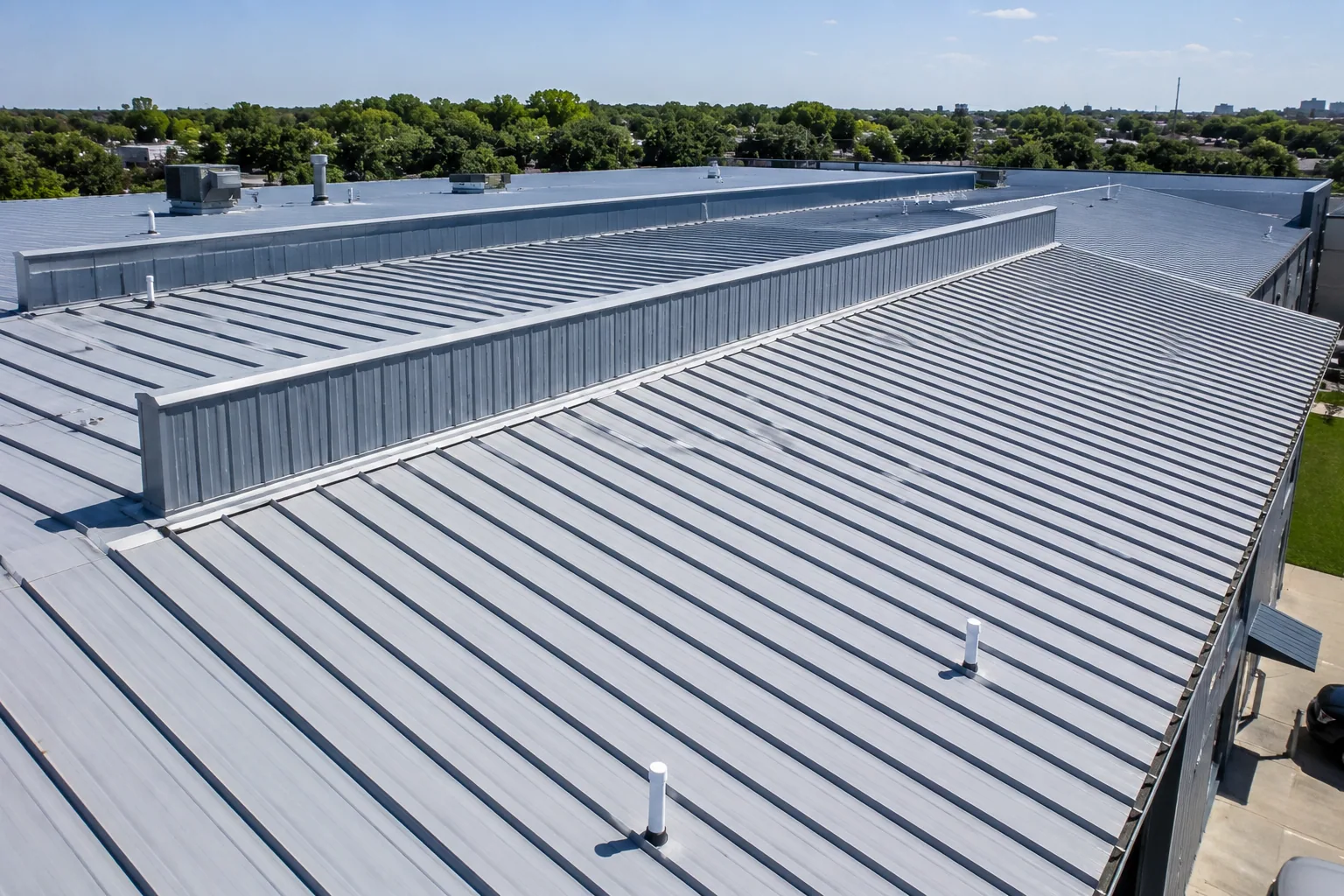
Each roof system needs preparation suited to its surface. We identify the membrane, sheet metal, bitumen or coating, then check attachment and whether the area around a defect can hold a tie-in. A thermoplastic seam may need a weld test; EPDM splice work needs compatible materials. Metal panels may call for fastener or seam repair. A coating requires a dry, compatible base. Old patches, edge movement or wet insulation can change the cut line and repair method.
A roof description from a drawing is a starting point, not a substitute for checking the exposed assembly. We compare records with visible layers, seam layout and transitions at curbs or walls. TPO seam repair and standing-seam metal repair call for different preparation. If the surface has several generations of repairs, we note which layers remain bonded and where removal reaches a stable base. The written scope names the material, test area and tie-in detail so the owner can see what is included before the roof closes.
Repair line: stop at material that can hold
A focused repair works when the surrounding roof remains attached and the opening can reach dry, stable material. We remove failed roofing, prepare the substrate and connect compatible material across the repair edge. If the cut reaches soaked insulation, fractured cover board or deck material that cannot hold the repair, removal may need to continue. Closing over a weak base can leave the symptom quiet while moisture remains in the assembly. We describe the additional work and approval point before widening the opening, then protect the exposed area until it is ready for permanent close-in.
Repeated splits, several wet locations or poor attachment across a larger section can make a single patch the wrong boundary. Commercial roof repair can remain limited to a seam, curb or edge when the surrounding field supports it. If deterioration crosses separate roof zones, we compare repair with coating, recover or replacement after reviewing layers and drainage. Photographs and a roof condition report can organize observed conditions, while the work scope states which areas are repaired and what concealed condition would change the scope.
Seasonal checks: keep outlets and terminations open
NOAA normals for Stamford 5 N record recurring winter snowfall, subfreezing nights, and summer heat. Those observations offer regional seasonal context; on a Shelton roof, we inspect the outlet, termination, flashing, and attachment actually present and base the maintenance scope on those findings. Clear accessible drain debris, note loose edge fasteners and photograph open laps. Preventive maintenance can track those details while the assembly remains serviceable.
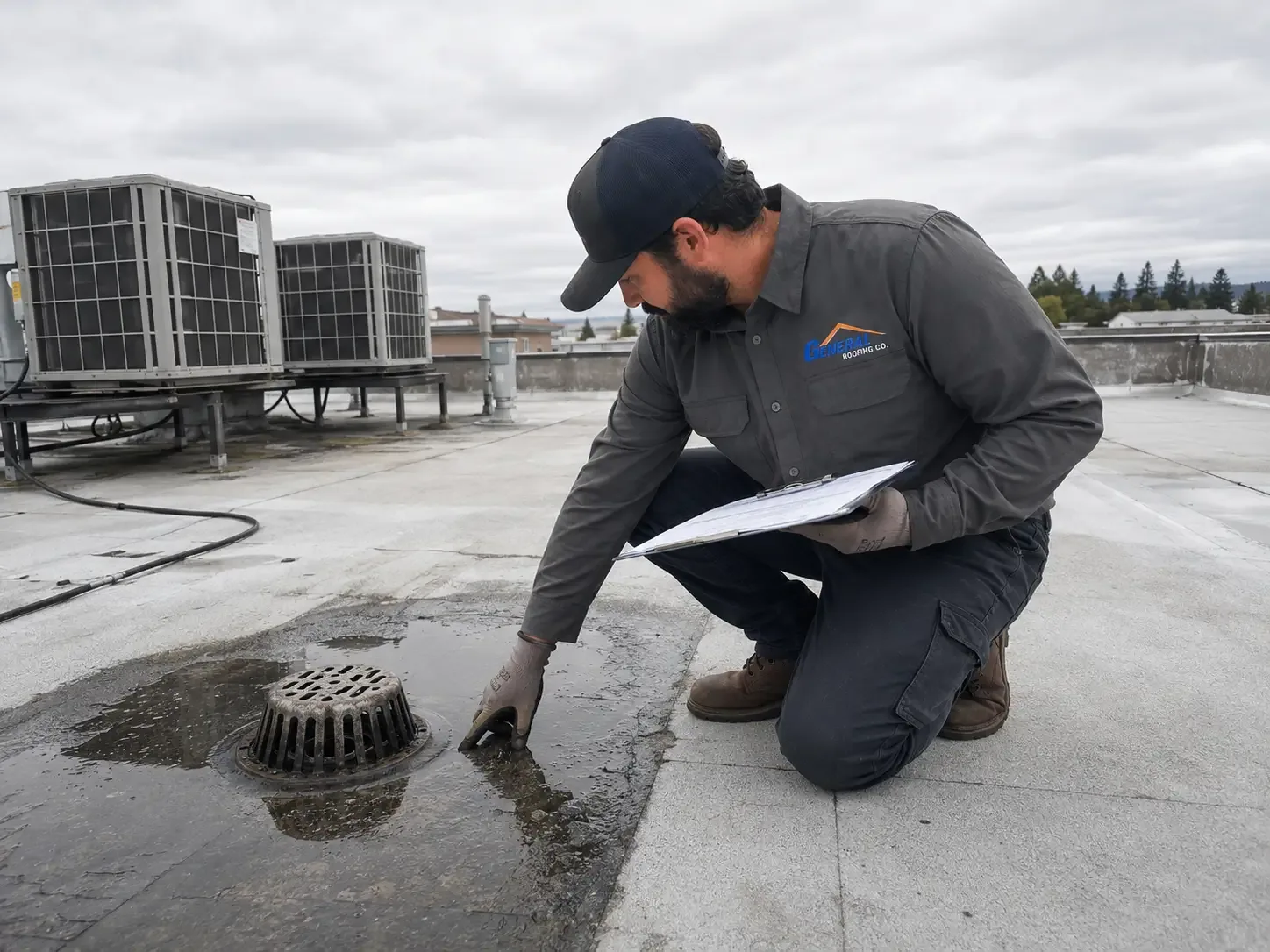
Maintenance notes are more useful when they distinguish a cleaned drain from a repaired connection. We record whether water leaves the bowl, whether the flange is tight and whether nearby sheet material remains attached. A recurring stain deserves another look at the path and timing before the same surface receives another sealant bead. If the condition is seasonal, the record should identify the detail exposed to movement and what changed since the prior visit. That lets the next work decision follow observed roof conditions rather than a calendar alone.
Scope and cost: name the assumptions before removal
Cost follows the roof material, repair area, number of connected details, removal depth, wet insulation, disposal and protection below. A short seam tie-in differs from rebuilding a curb or removing layers to reach the deck. Limited staging or a long carry from the delivery point may add setup time. We list included work, access assumptions and the point at which concealed damage needs review. That gives the owner a clear boundary for the approved repair instead of a vague allowance for whatever appears after cutting.
Connecticut's 2022 State Building Code incorporates the 2021 International Building Code, Existing Building Code and Energy Conservation Code, each with state amendments. For permit review, the application date determines which provisions govern the work. We can document roof layers, drains, penetrations and proposed tie-ins for the project review. Before a roof walk, share the reported rooms, recent service notes and any access restrictions near Route 8, Route 110 or Bridgeport Avenue. We inspect the assembly and write the repair boundary the roof supports, with immediate work separate from later recommendations.
Commercial Roofing Questions
Does a clear drain rule out a leak?
No. The membrane flange, clamping ring or nearby seam can admit water while the bowl stays open. We check the outlet and its connections before deciding whether cleaning or repair fits.
What do Route 8 and Route 110 change about roof work?
They help identify the broad Shelton business area. The property entrance, staging point and roof access determine the delivery route, so we confirm those details with the manager before scheduling material movement.
How far should a patch extend if insulation is wet?
We continue removal to a dry, stable edge when the opening exposes wet insulation or damaged cover board. The scope records the added area and approval point before permanent close-in.
Can the work plan account for nearby towns?
Regional transit connects Shelton with Monroe, Stratford and Bridgeport. Each roof still receives its own inspection notes, access plan and repair boundary, even when properties share a manager.
What belongs in the repair scope?
The material, observed failure, tie-in method, removal limits, protection and concealed-condition trigger should be clear. We also state access assumptions so the owner can compare the proposed work with the conditions found.