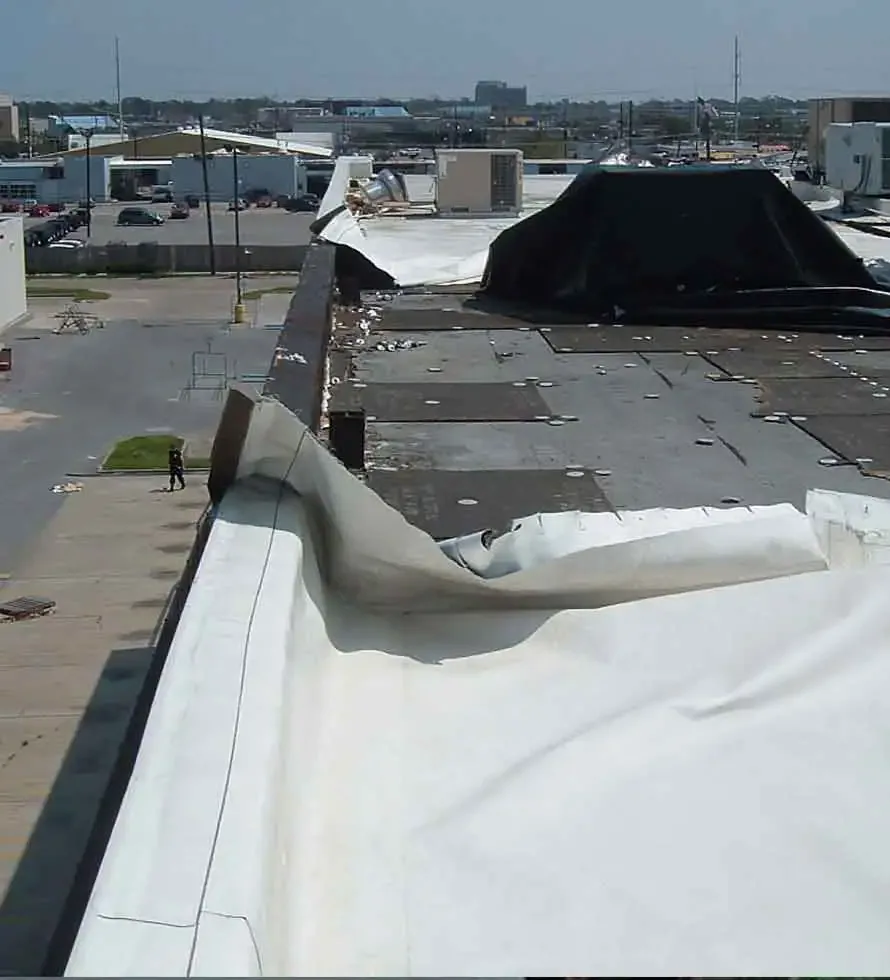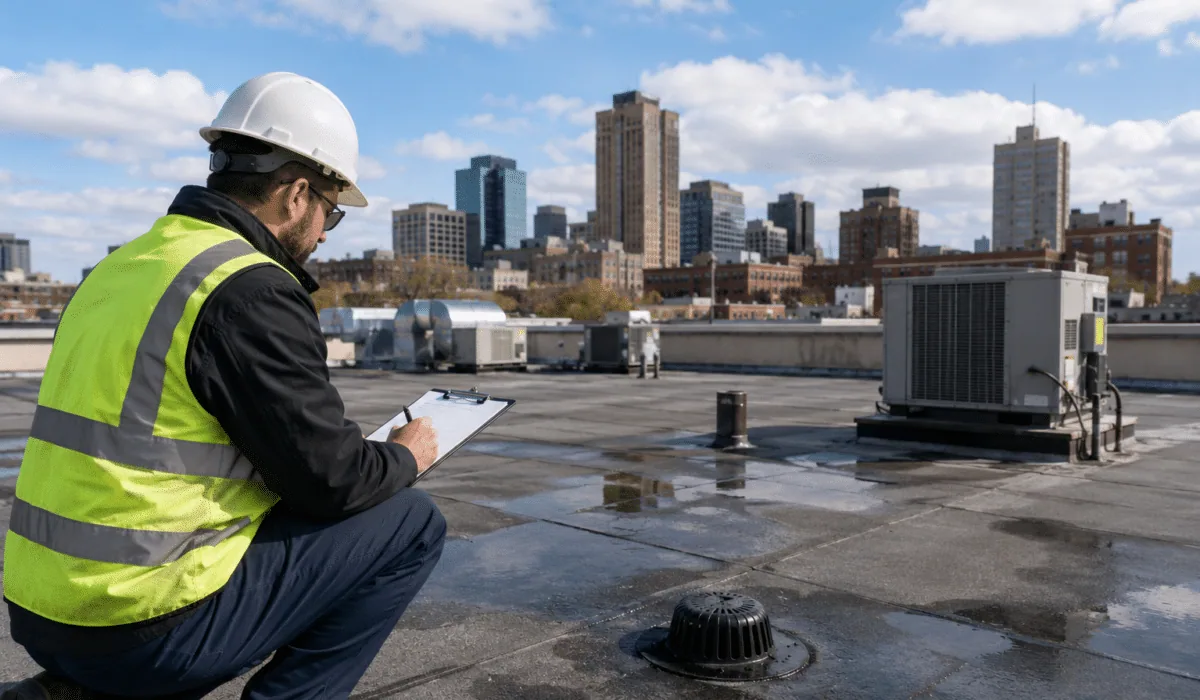
A flashing leg that has pulled from a wall can send water beneath the roof before a room shows a stain. In North Stamford, CT, we begin at that visible transition and inspect the membrane, edge metal, curb, and drainage connected to it. The city plan describes North Stamford as predominantly single-family with larger lots. That broad land-use profile does not identify every property or any roof assembly. We inspect the specific commercial roof, document its system and defects, and set limits based on the material and substrate we can reach. A commercial roof inspection does not assume a building type from a neighborhood label.
Roof profile: separate planning from condition
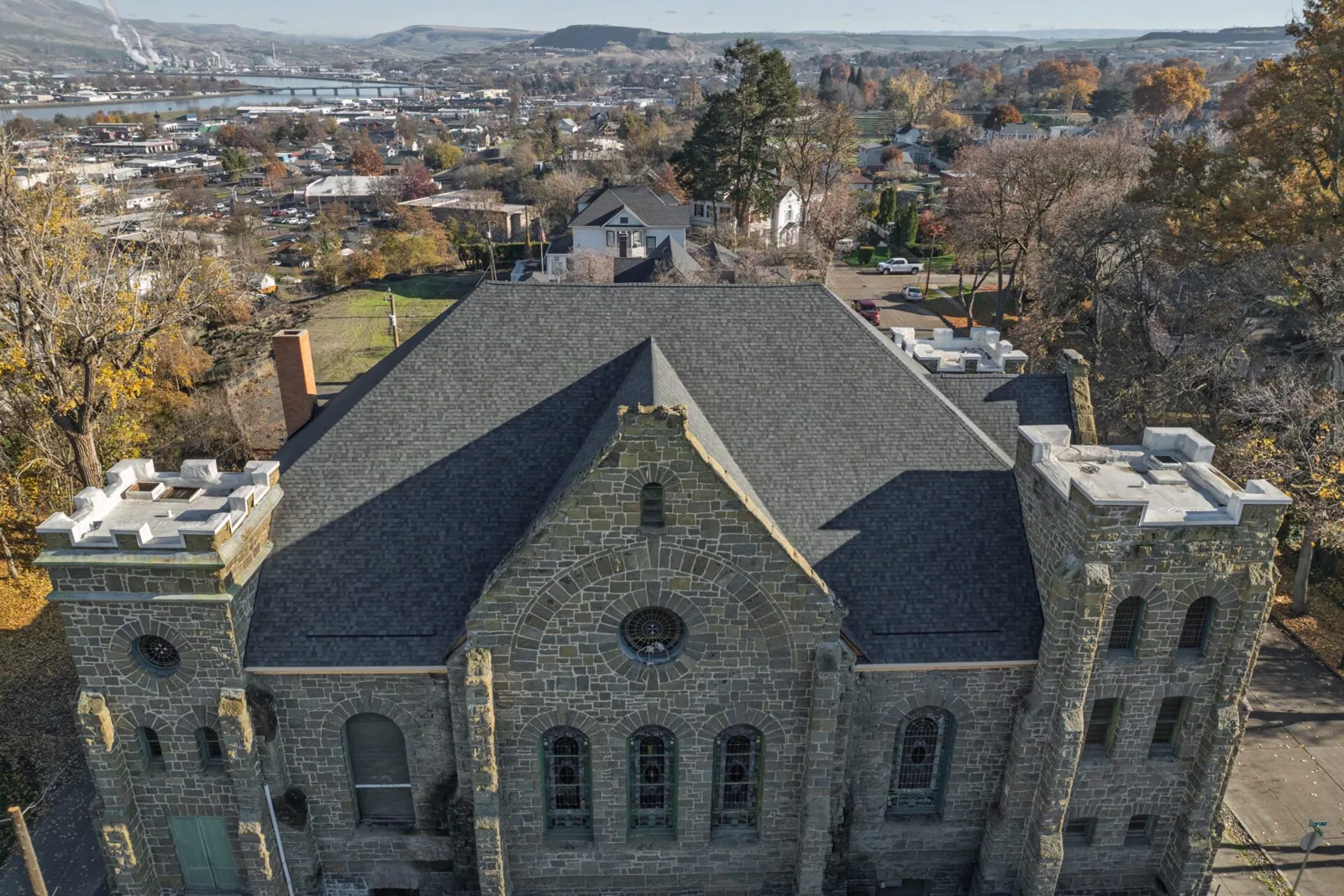
North Stamford's city profile and zoning maps help distinguish neighborhood context, but the roof still has to be read on site. We identify the low-slope or metal assembly, the deck where visible, insulation, seams, curbs, penetrations, and drain locations. A commercial property can require a roof scope even in an area the plan describes as mostly single-family; that does not make it part of a named campus or another nearby property. Every inspection is tied to the roof and access presented by its manager.
We record observed conditions separately from questions that need more access. A lifted lap, open termination, blocked drain, or wet insulation can affect the work in different ways. Photos and notes show where the condition sits and what was tested. If a membrane cannot be opened safely during the first walk, the report identifies the access or testing needed next. A photo condition report gives ownership a useful record without stretching one property's findings across North Stamford or another part of Stamford.
Water path: connect the room report to the roof
A ceiling mark points to where water arrived, not necessarily where it entered. The route can cross a roof lap, move along a board joint, and reach an interior finish by a different path. We compare the location and timing of the report with the slope above, seams, penetrations, wall transitions, and drains. The walk checks for punctures, open laps, blisters, displaced flashing, and moisture in the assembly where it can be tested. We identify what is confirmed and what remains a likely route.
More than one leak report deserves separate mapping. A shared ceiling area can hide different openings on the roof. We track each reported location and inspect the nearest details before grouping them under one repair. If moisture extends beyond the visible break, the repair boundary follows the affected area. Leak repair should state where the new material connects to a sound field and what condition could expand the work. That gives the owner a way to compare a contained patch with broader roof work.
Perimeter and curb: inspect movement points
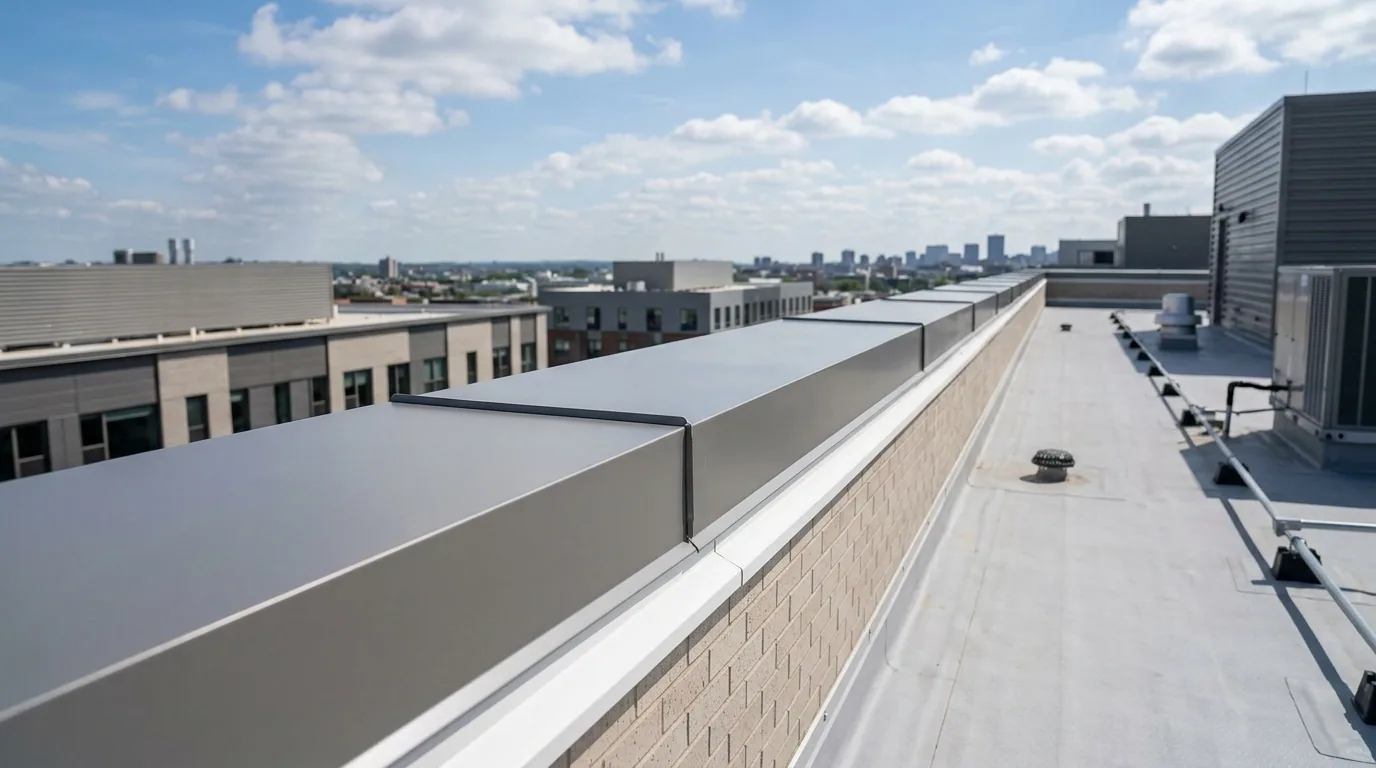
A roof edge has to turn water away from the wall without leaving a gap below the coping. We inspect metal joints, fasteners, cleats, membrane turn-up, and termination bars. A loose splice may be local, while corrosion or displacement can continue along the edge. The repair should identify what metal is reset or replaced and how the membrane ties into the perimeter. A curb creates another interruption. Its flashing needs secure corners, compatible lap material, and clearance for any equipment service.
We follow a curb detail around all sides and inspect the seam next to it. A single split at one corner can connect to a larger area of membrane movement or wet insulation. If another trade needs access, we note where work could be disturbed and what protection belongs in the scope. Edge-metal and coping work should restore the whole transition, not just cover an exposed fastener. We keep the repair boundary visible in the written scope.
Winter moisture: check drains and terminations
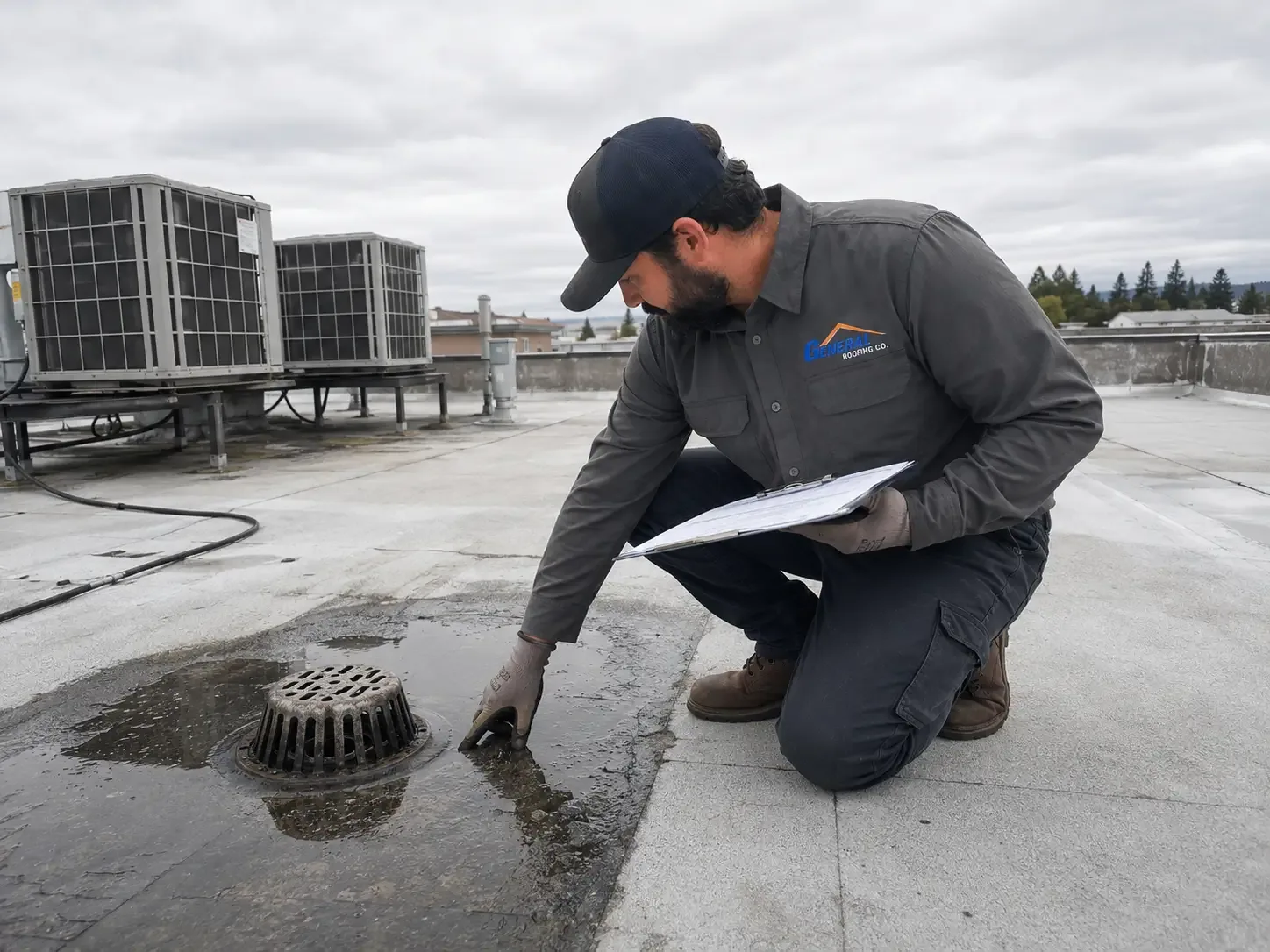
NOAA's Stamford normals record recurring winter snowfall and subfreezing overnight temperatures. We inspect the drain path, laps, and terminations where water could remain through freezing and thawing. The climate record does not establish a roof's load capacity or structural condition. We note blocked outlets, separated membrane, or movement that appears during the walk, then identify whether further evaluation is needed. A wet insulation area and a structural concern are different findings and should not be merged without evidence.
When water is reported after winter weather, we compare the service timeline with the roof surface and details. A clogged strainer can slow drainage, while a loose flange or depressed deck may keep water at the low point after cleaning. Drain and scupper service addresses the outlet and the adjacent membrane connection. If a seam or curb is also involved, the scope should show how those areas meet and whether the repair can remain localized.
Repair or larger work: use the assembly as the guide
A focused repair fits when the defect is contained, adjacent membrane remains attached, and the substrate is dry enough for a new tie-in. We remove loose material, prepare the surface, and connect the repair to sound roofing. If moisture extends beyond the opening, we expose enough of the assembly to address the affected layer. Closing over wet insulation can leave the next failure beneath the new surface. The written scope states what is included and what remains concealed.
Several separated defects or broad moisture can move the decision toward maintenance, coating, recover, or replacement. Preventive maintenance can help with debris and developing wear when the roof remains serviceable. An EPDM repair uses a system-compatible detail when that is the assembly found. Replacement may be the better boundary when repeated patches cannot reconnect to a dependable surrounding field. The recommendation follows condition, not the neighborhood's broad land-use profile.
Cost and schedule: document access and preparation
Cost depends on membrane type, defect size, connected details, removal, moisture below the surface, and access for people and equipment. A repair around a curb can involve more material and preparation than an open field seam. If the assembly needs to be opened to check insulation or deck condition, temporary dry-in and interior protection may add steps. We state the assumptions and the conditions that could change the scope before the work is approved.
Schedule depends on weather, surface dryness, safe roof access, and material compatibility. A repair cannot be installed over a wet or contaminated surface. A larger opening may require one visit to expose and dry the area, then another to complete the membrane tie-in. Replacement planning addresses tear-off and dry-in where local repair no longer fits. Westover Stamford has its own property records; a North Stamford roof assessment should remain distinct. Waterside Stamford also needs its own condition record; no finding transfers between roofs.
Commercial Roofing Questions
Does North Stamford's land-use profile describe every commercial roof?
No. It is a broad neighborhood description, not a property inventory or roof assessment. We inspect the actual building, system, and details before setting repair limits.
Can you inspect a roof when we have only an interior stain?
Yes. Share the room location and when it appeared. We compare that report with the roof above, inspect likely seams and transitions, and identify any area that needs additional access.
What if the roof is holding water near a drain?
We check the strainer, drain bowl, flange, membrane, and surrounding slope. Cleaning may restore flow, while a loose connection, wet insulation, or deck movement can require repair.
When should a patch become a replacement discussion?
Repeated failures, broad moisture, or poor attachment can make another local repair a weak fit. We explain the condition and compare practical repair and system options.