Water beside an equipment curb can follow a seam before it reaches an office ceiling. In Merritt 7, Norwalk, CT, we inspect the curb flashing, adjacent membrane, and drain route connected to the reported leak. Merritt 7 is an office-dominated, highly trafficked district. Route 7 parallels the Danbury Branch rail line, and mobility and congestion-crash improvements are under study in Norwalk and Wilton. We verify the building's access and roof assembly before setting the sequence. We check the detail on site and write the repair limit from what it shows. A commercial roof inspection starts at the failure point.
Equipment zone: trace water around the curb
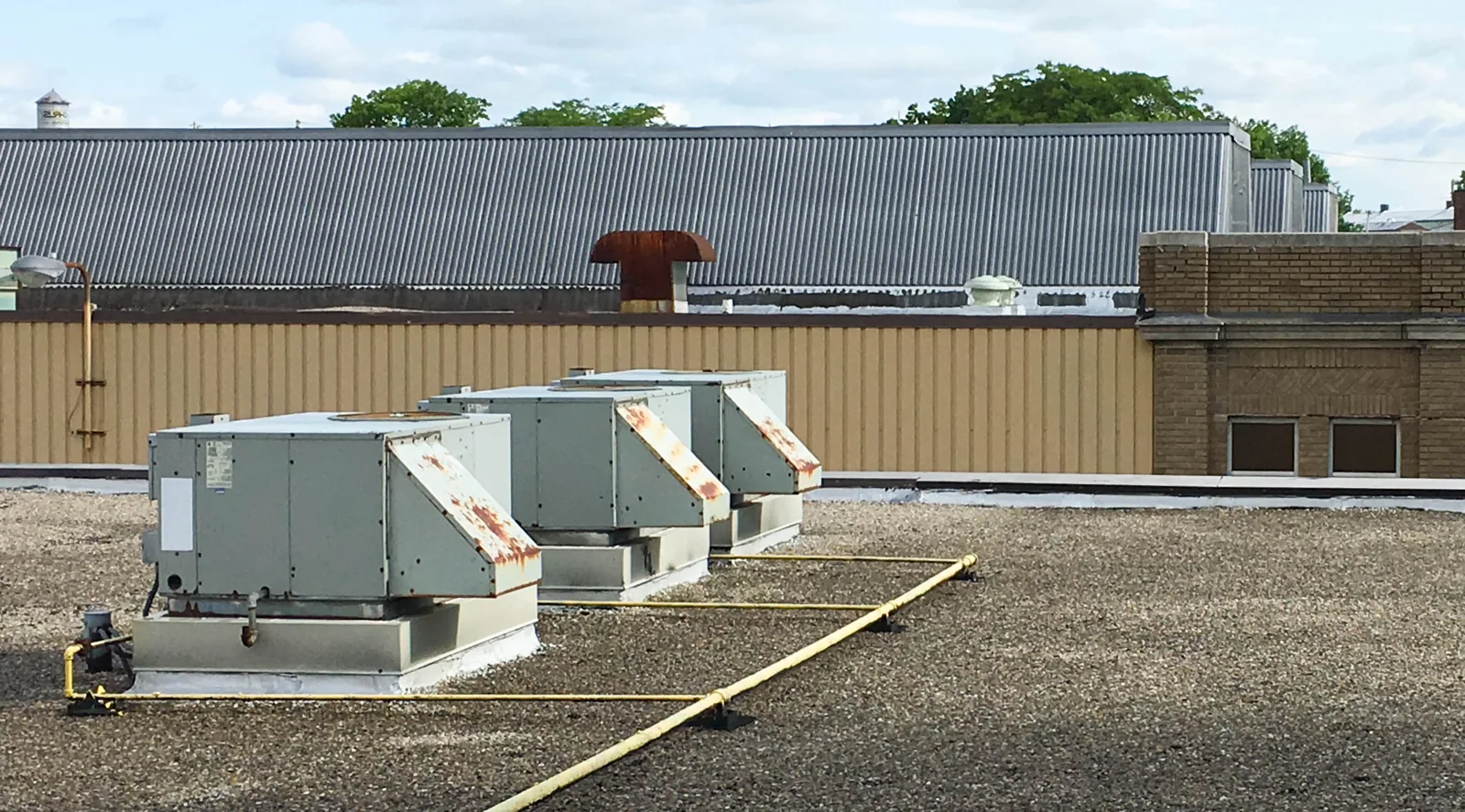
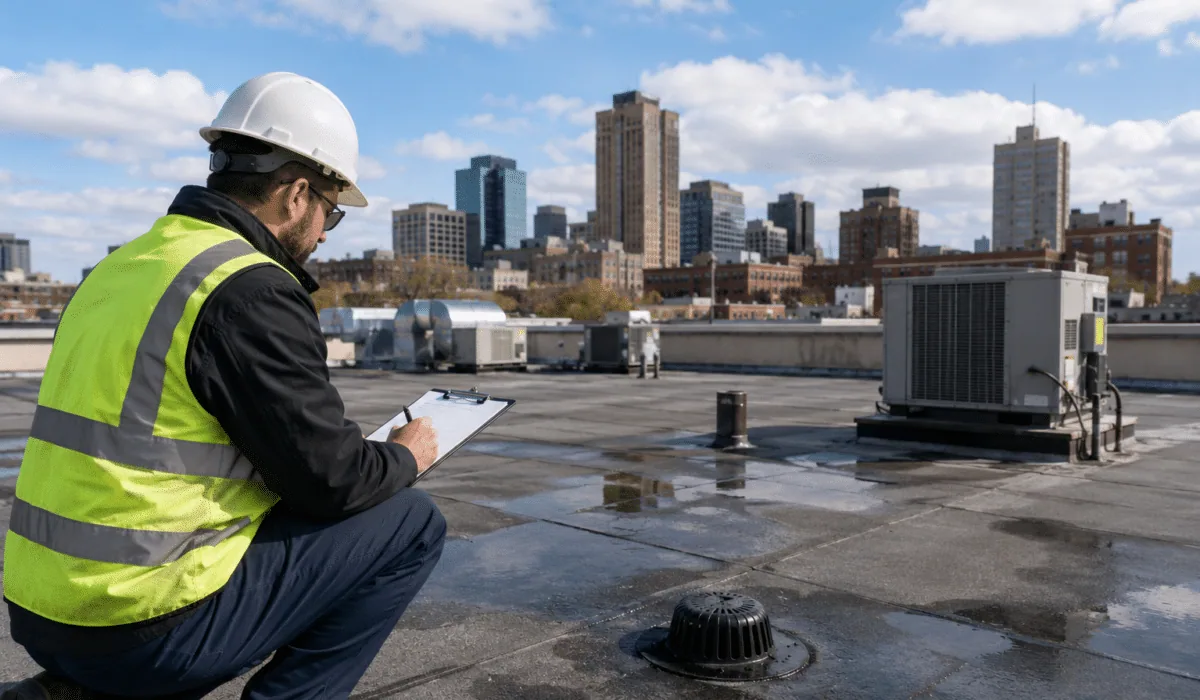
An HVAC curb interrupts the field membrane and creates corners where water can pass under flashing. We inspect all four sides, the membrane turn-up, fasteners, counterflashing, and sealant joint. A loose corner may be a small repair, but wet insulation below it changes the opening. We also check equipment clearance so the repair can reach the detail without blocking the service path. The scope records the surface to be restored and any trade coordination needed before the work area is closed.
When several units sit near a leak report, the nearest curb is one candidate. We compare roof slope, seams, penetrations, and interior timing before opening anything. We compare roof slope, seams, penetrations, and the interior timing before opening anything. Curb and equipment support work should identify the affected penetration and how new flashing connects to the existing sheet. If a later service visit could disturb the repair, the work notes the clear zone that needs to remain available. The roof walk follows the water route and checks each equipment curb that intersects it.
Commute corridor: confirm material handling
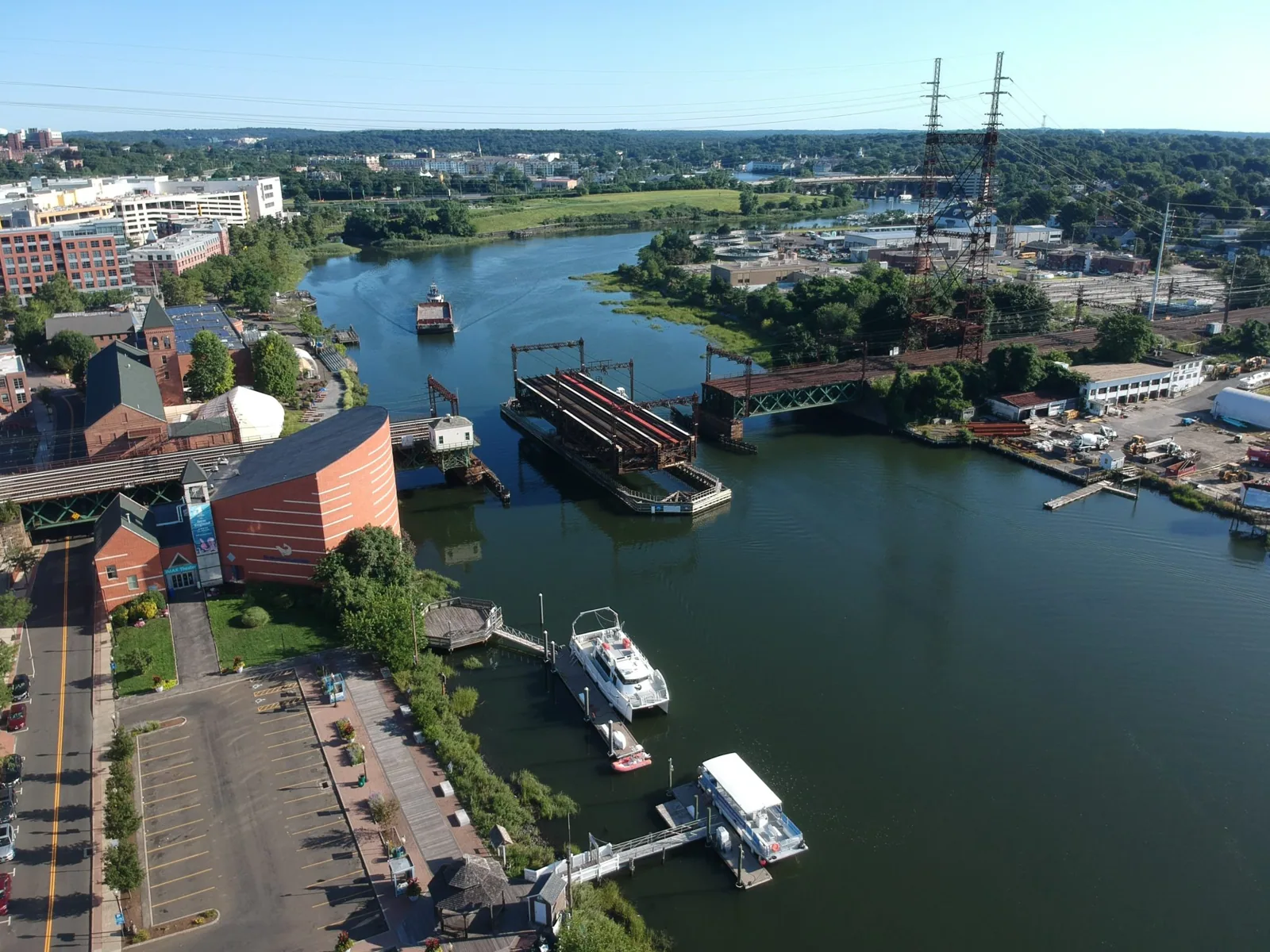
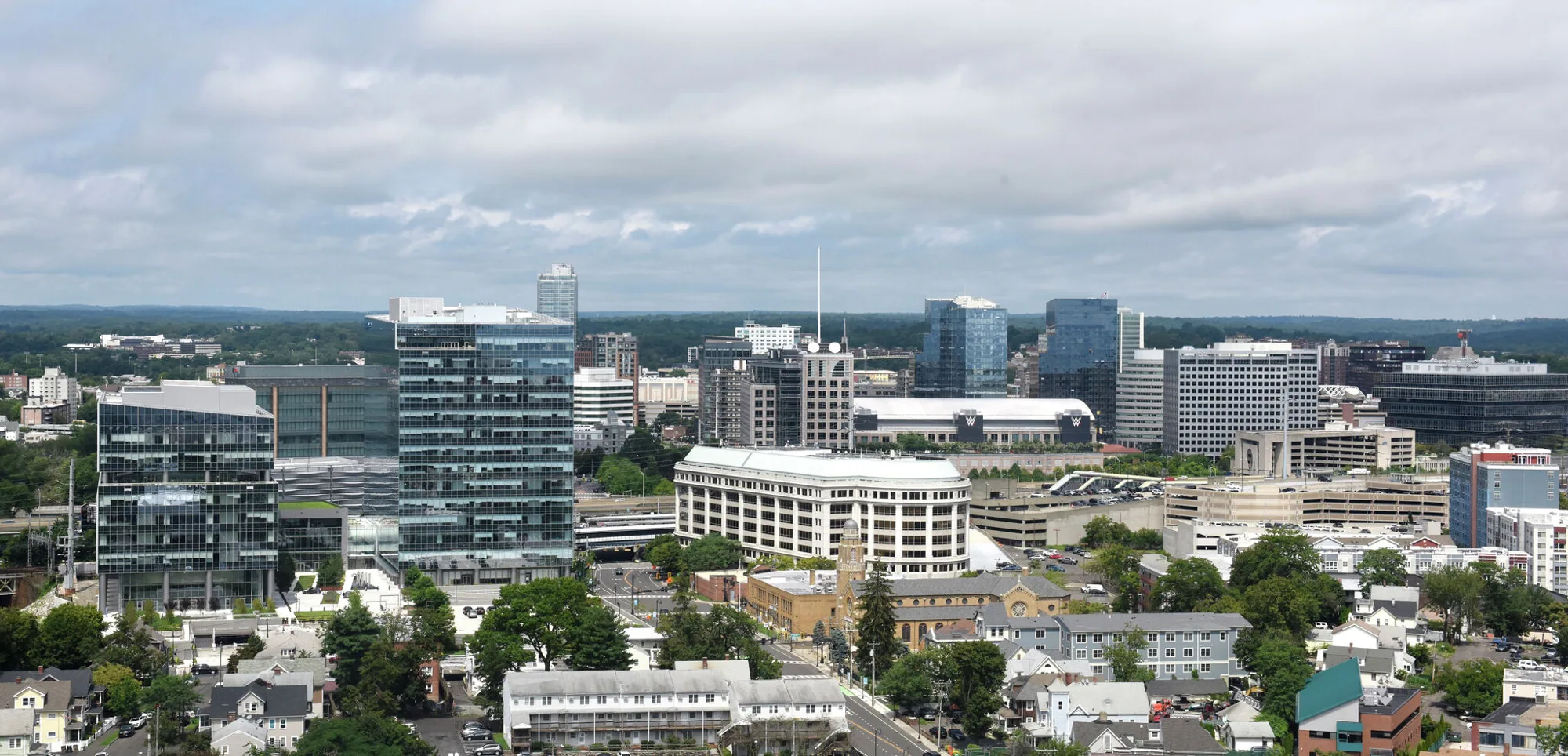
Route 7 parallels the Danbury Branch line and serves as a north-south commute corridor. With office uses and heavy traffic in Merritt 7, roof access, delivery timing, and protection below should be confirmed with the property contact. The property contact confirms where materials can be received and which occupied areas need notice before an opening is made. The site contact identifies where materials can be received and which occupied areas need notice before an opening is made.
A property near Norwalk Center may have a different route to the roof from a building along Norwalk's Route 1 corridor. The inspection notes actual access, equipment clearance, and the path for debris or replacement material. If the roof must be opened in stages, we identify a temporary dry-in point and the condition required before a permanent tie-in. A schedule that ignores access can leave a good repair detail exposed while work below continues.
Outlet and seam: find the water exit
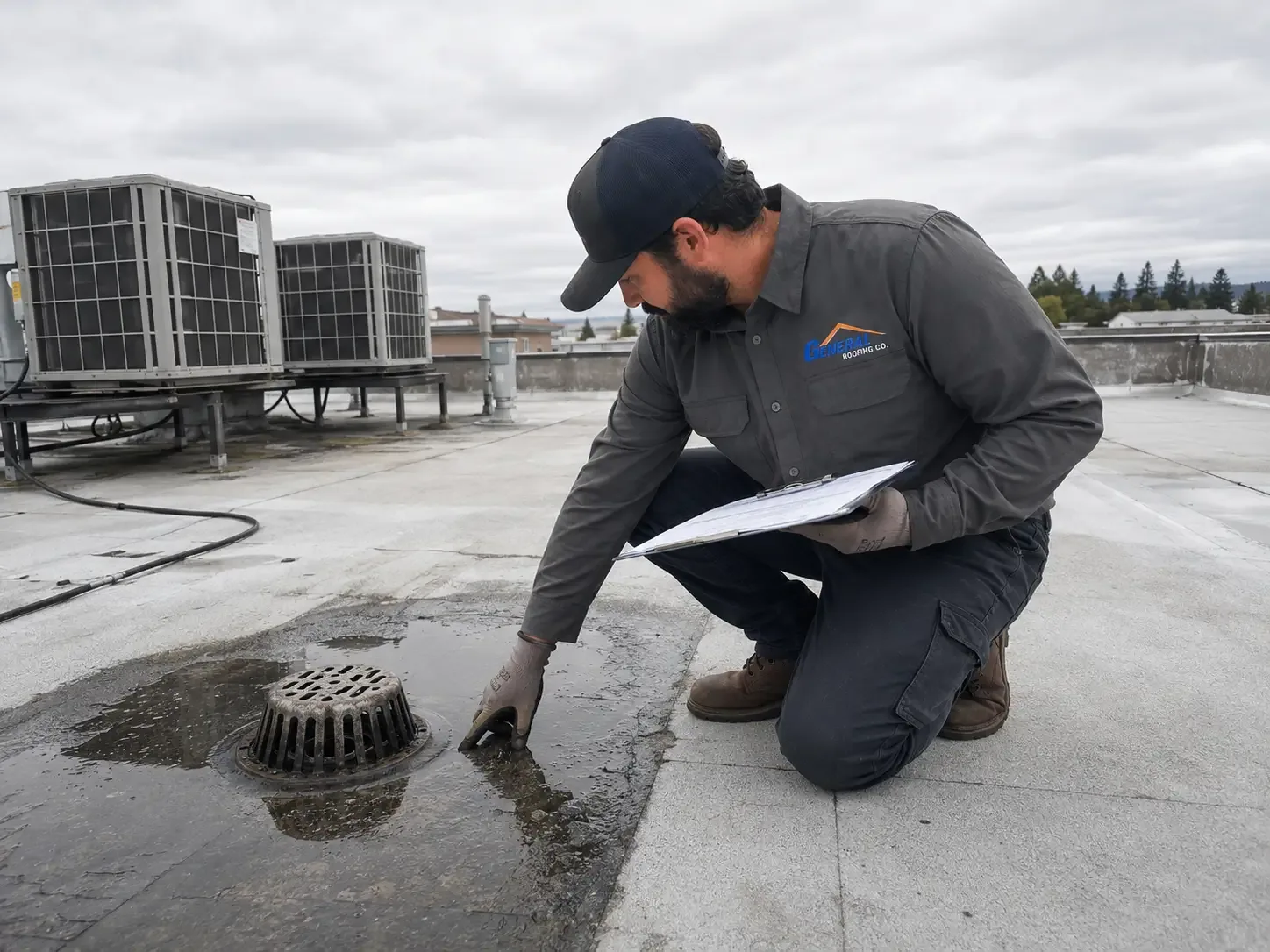
A drain can pass water through its bowl and still leak around the membrane connection. We inspect the strainer, clamp, flashing, sump, and overflow opening, then check the nearby seam for movement. Ponding near equipment can load a curb detail, while a low deck area may keep water at a lap. We record the actual condition during the walk and compare it with the reported interior mark. We keep the entry point open as a question until roof and interior findings connect.
Cleaning debris may restore flow, but it cannot reset a loose clamping ring or repair wet insulation. Drain and scupper work needs to address the bowl, flashing, and field sheet that connect to it. If a roof detail sits beneath service equipment, clearance may affect when the drain can be opened. We state those constraints and separate a maintenance item from a flashing repair. The manager should be able to see whether the price covers cleaning, membrane work, or a wider removal area.
Office use: keep repair records usable
Office operations can make interior access and rooftop service windows part of the work sequence. We confirm those limits rather than assume a standard business schedule. A leak above a conference room, file area, or occupied suite can require protection below while material is removed. If equipment needs isolation or a service path must stay open, the scope records that dependency before the roof is cut.
A roof manager needs a work sequence that reflects confirmed access and the property's operating window. Roof asset records can separate recurring curb defects from isolated field damage across more than one location. We log the inspected system, photos, repair date, access limits, and any follow-up condition. Preventive maintenance then gives the owner a way to track seams, drains, and metal transitions between repair visits.
Repair or larger work: compare the assembly
A contained curb or seam failure can be repaired when nearby membrane remains attached and the substrate supports a new tie-in. We remove damaged material, check insulation and deck at the opening, and extend the work only where moisture or failed attachment requires it. If the wet area reaches another board or continues under a second detail, the cut line changes. The written scope names what comes out and what roof area remains untested.
Separate failures, recurring leaks, and widespread moisture can make a sequence of patches a poor fit. Commercial roof repair handles localized defects where the surrounding field can hold. If the assembly has no reliable tie-in area, replacement planning compares removal, new insulation, drainage changes, and dry-in. We show the condition that moves the decision and distinguish necessary work from an optional future item. The recommendation is tied to the roof, not traffic volume or district status.
Cost and timing: price the confirmed work
Cost depends on system type, number of curbs and transitions, area to remove, wet insulation, equipment clearance, and the protection needed below. A small curb opening can grow when a membrane edge has pulled away from several sides. A drain repair may involve cleaning, flashing, or a larger field cut. We separate those items in the scope and identify the concealed condition that could add material once removal begins.
Timing follows weather, dry substrate, material compatibility, and the access window confirmed with the property. A temporary cover protects an opening while the repair surface is prepared. If a route or room cannot be reached, we identify the additional access needed before closing the job. A photo condition report records what was visible and which next check remains. The manager can compare that record with later findings without carrying one roof's conditions onto another property. Every recommendation stays attached to its own membrane, drainage, and repair boundary.
Commercial Roofing Questions
Can rooftop equipment be the leak source?
A curb or penetration can fail, but we connect it to the reported water only after checking the flashing, adjacent membrane, and water path. A nearby drain or seam may be involved instead.
What changes the plan for an office roof repair?
Confirmed access, equipment service needs, interior protection, and the area that must stay open all affect sequence. We include those limits with the repair detail so the work can be reviewed before material is removed.
Does Route 7 traffic determine when roofing can happen?
Traffic context can make delivery and access worth coordinating, but the property controls its own roof route and work window. We confirm those details with the site contact rather than infer them from the corridor.
When should a curb repair include insulation?
If insulation is wet or no longer stable at the opening, it must be removed or tested before the membrane is closed. The scope shows the affected layer and the boundary that remains outside the repair.
How can ownership track repeated roof issues?
Separate photos, locations, membrane type, and repair boundaries make recurring patterns easier to compare. We can record maintenance items and the condition that would trigger a larger roof review.