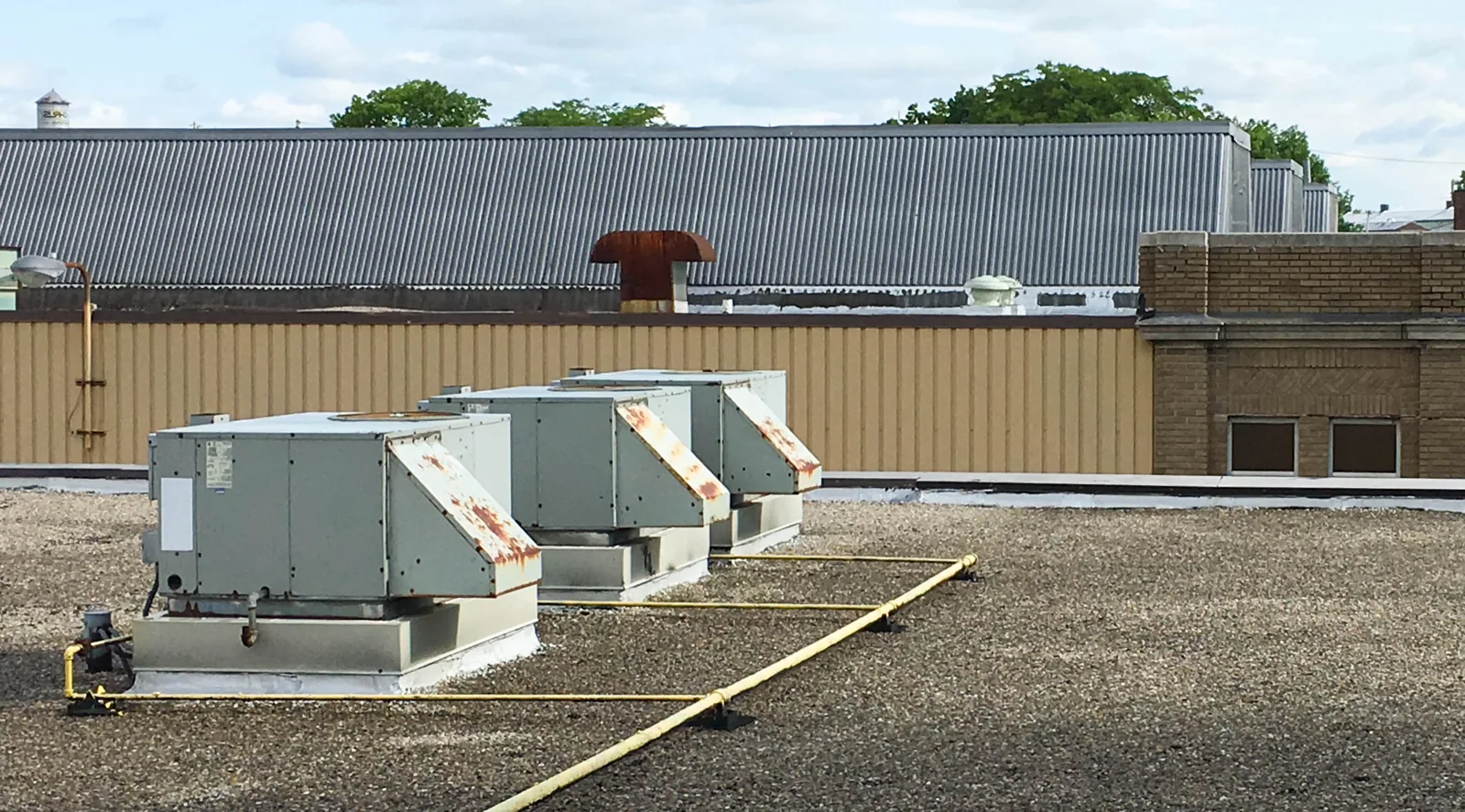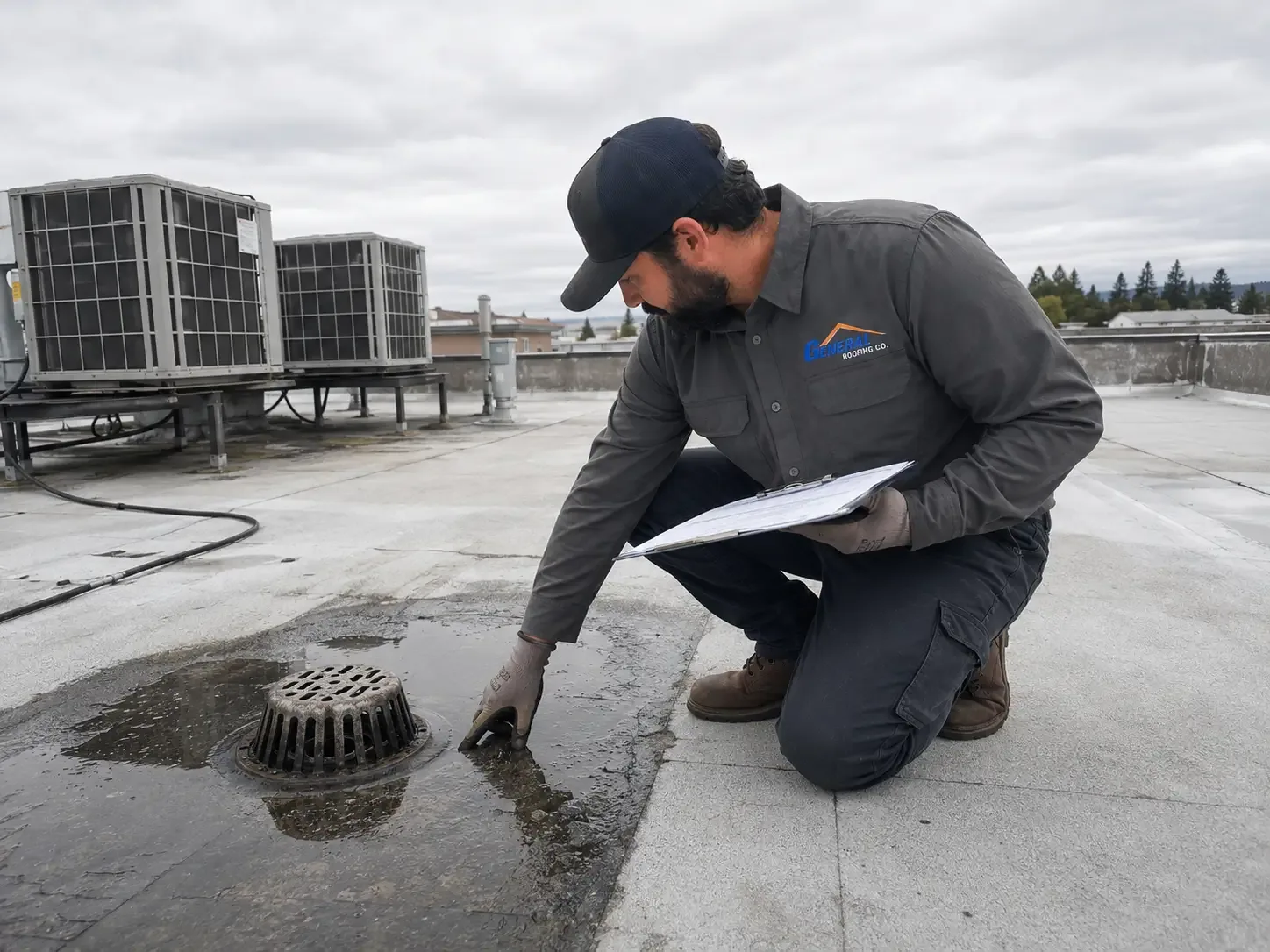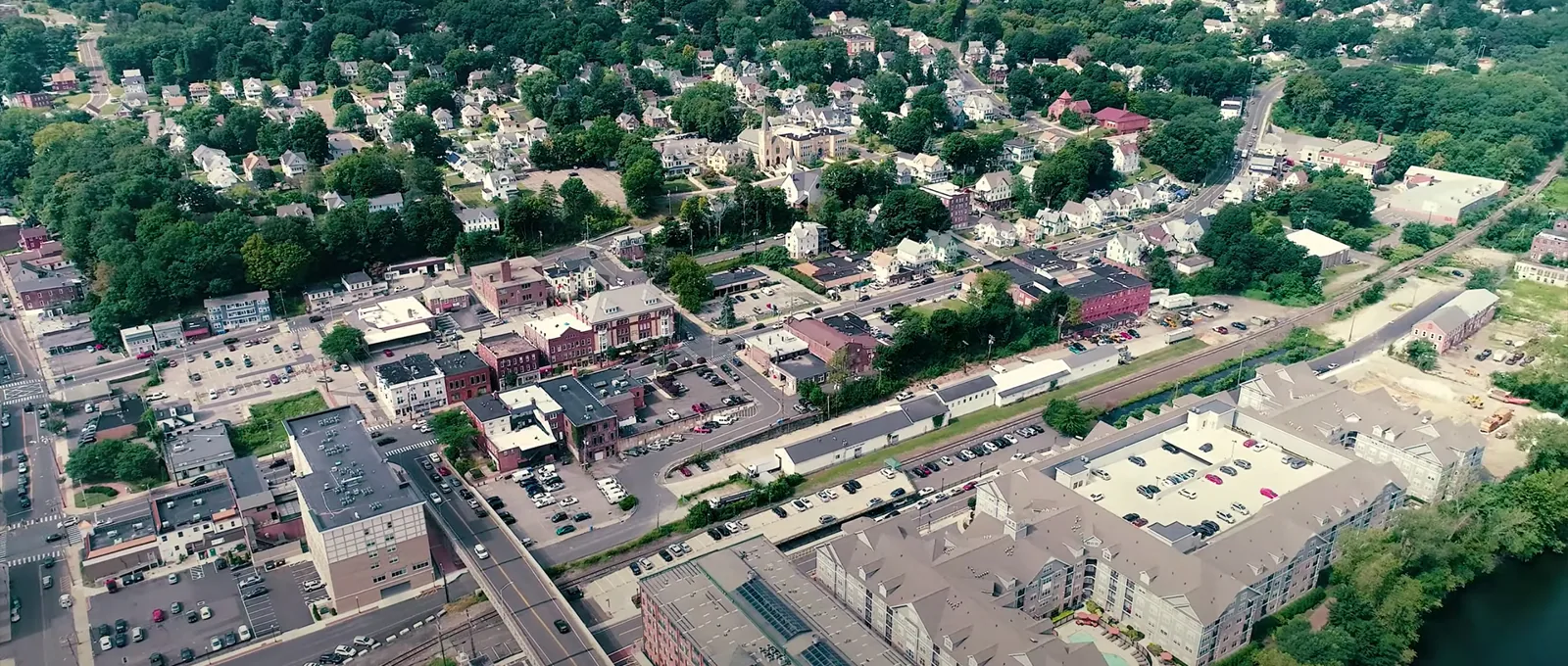
A split seam beside a rooftop unit can send water into insulation before a ceiling shows it. On Danbury Road, Wilton, CT, we start with the room report, then trace the membrane, curb and drain details that connect to it. Danbury Road is Wilton's central artery and regional employment hub. Traffic ranges from about 18,500 vehicles daily near Ridgefield to more than 30,000 in South Wilton, so material movement belongs in the access plan. The first decision still comes from the roof: identify the system, test the likely entry and set a repair boundary at sound material.
Corridor use: plan access around the property
Danbury Road carries different activity through Wilton, so a roof walk should begin with the access route and the work area below. We confirm ladder or hatch access, equipment clearances, delivery limits and any occupied rooms that need protection. Delivery timing then follows the property contact's rules and the route approved for the work. The manager sets property rules, and we include those constraints in the job sequence before material is moved.
Wilton Center and South Wilton are both part of the corridor's broader local context. We keep each roof inspection separate, with its own leak locations, photographs and access notes. Commercial roofing in Wilton Center may involve different circulation than a property along Danbury Road. One plan should not blur separate buildings. A photo condition report ties the reported interior mark to the assembly and detail actually inspected.
System check: test the roof before patching
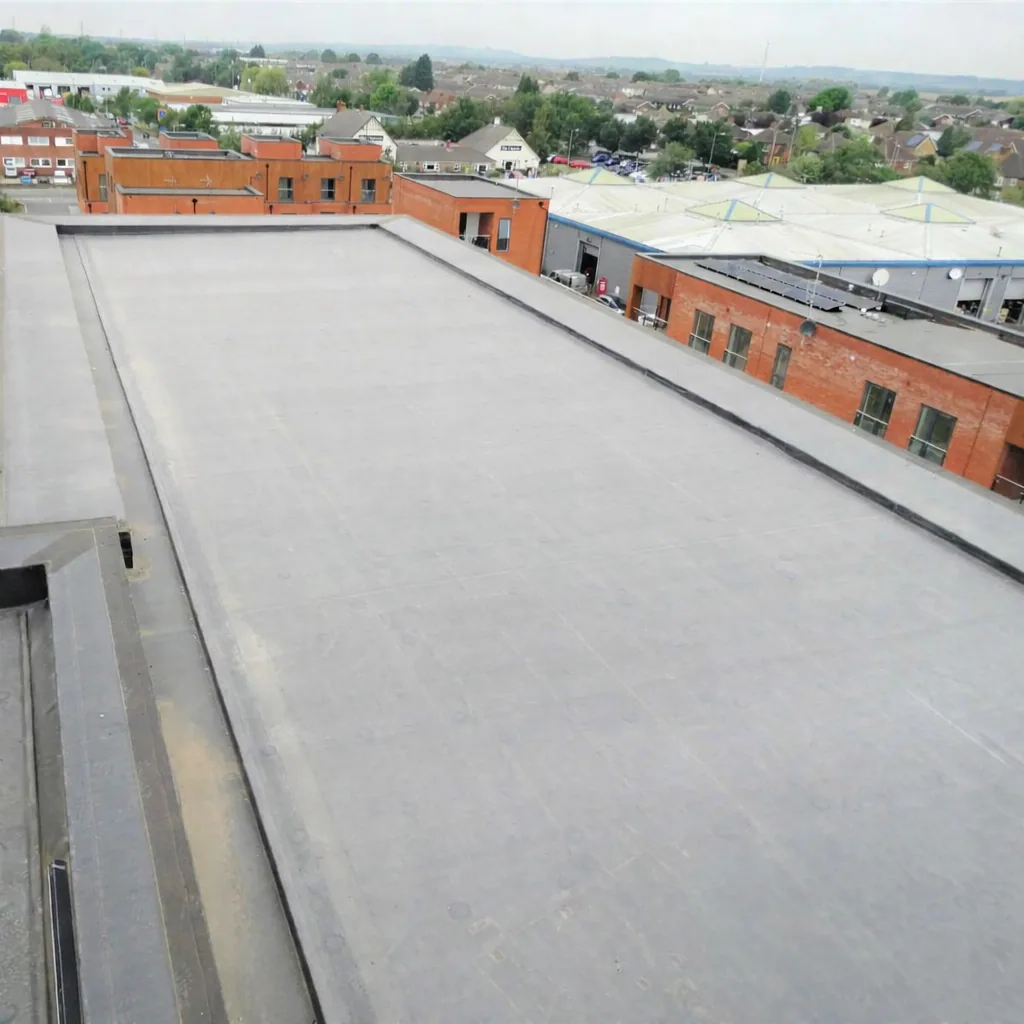
We first distinguish heat-welded sheet from rubber membrane, bituminous layers and standing-seam metal. A weld test shows whether the thermoplastic surface can accept a new strip. A rubber-roof splice needs compatible bonding materials; an asphalt-based lap depends on its own clean, firm edges. We also check attachment, past patch layers and moisture around the opening. A curb or pipe needs vertical flashing that closes tightly into its roof system.
Nearby roofs can use TPO, EPDM, bitumen, or metal. We identify the assembly on this roof and define the tie-in needed for a durable repair. TPO seam repair differs from EPDM splicing in preparation and weld or adhesive approach. A mismatch can fail at the edge of a patch. The scope names the surface, the opening and the condition required before the new material is joined. A manager overseeing another roof in Fairfield Town Center can compare separate records without treating similar symptoms as the same failure.
Water route: inspect curbs, seams and drains
Water near a unit may enter at the curb, travel beneath a membrane lap or collect at a low point before reaching an interior ceiling. We inspect curb corners, counterflashing, fasteners, sealant joints and the adjacent field. A drain that passes water through its throat may still leak at the flange. We inspect the grate, drain body, compression ring, sump pocket, flashing fold and overflow, then compare those details with the reported leak timing.
Repeated wetting can soften cover board or reduce the hold of an older patch. We note moisture extent and test what can be reached without widening the opening unnecessarily. Rooftop curb and support work addresses the equipment transition; drain and scupper repair addresses an outlet or membrane connection. Those scopes differ. A clear drain does not repair a failed curb corner, and new flashing does not correct a blocked bowl. A low sump can hold water at the membrane tie-in, while a displaced overflow may leave the primary drain carrying more flow than intended. Both details need a look before we conclude the bowl is the only issue.
Repair limit: extend to dry, attached material
A focused patch can hold when the surrounding sheet remains attached and a dry tie-in surface is available. We cut back separated sheet, expose a stable tie-in surface and attach compatible reinforcement to the prepared roof. If the opening exposes wet insulation, loose fasteners or a soft deck, the repair needs to reach that affected layer. Capping over moisture can preserve the surface while leaving a damaged area below it. We document added removal before the roof is closed.
Wilton has limited vacant land, with redevelopment attention directed toward parcels south of Cannon Road. For a property being repositioned, we record penetrations, drainage, and existing layers so ownership can compare a contained repair with broader work. Commercial roof repair fits a defined failure; repeated splits or widespread wet insulation may make recover or replacement worth evaluating.
Seasonal stress: check movement at the edges
Stamford's winter snowfall and below-freezing nights put attention on drains, terminations, and snow-load conditions. Freeze-thaw movement can work at a loose metal return or open lap, while summer heat moves membranes and transitions. Those conditions make edge and drainage checks useful; the roof's material and observed damage set the scope.
A maintenance visit can record fastener movement, clean accessible drains and flag a seam that needs a closer test. Preventive roof maintenance works when the assembly remains serviceable and the owner needs condition notes over time. If leaks return at the same curb, we check the connection and insulation before repeating a surface patch. Separating maintenance, repair and system work makes the next budget decision clearer.
Cost and sequence: write down the assumptions
Repair cost follows membrane type, removal depth, number of connected details, wet insulation, disposal and interior protection. Equipment clearances can add careful cutting and flashing work. Access and delivery conditions along a busy corridor affect staging and labor, but a traffic count is not a project estimate. We inspect the roof and confirm the property rules before writing quantities. The scope states the work included and the condition that would require approval for more removal.
For work requiring a permit, the filing date determines the applicable Connecticut code. The existing 2022 edition draws on the 2021 International Building and Energy Conservation Codes, with state amendments. We can inventory roof layers, drains and penetrations and describe proposed tie-ins so the owner has project details ready for the local review. Bring the reported rooms, previous repair history and delivery restrictions to the roof walk. We will outline the repair boundary and note what hidden condition could change it.
For a building along this route, the written scope should connect the reported leak to a roof location and explain the repair boundary. We note the membrane and adjoining detail, identify any test or opening that may change the quantity, and separate confirmed work from an allowance. Before scheduling, the property contact can confirm roof entry, staging, interior protection, and any limits on work near active equipment. The closeout then records what was repaired and what remains outside the approved scope.
Commercial Roofing Questions
Which access details should we confirm before a roof walk?
We confirm the service entrance, available loading area, roof access, and delivery limits with the property contact. The work plan records the lift route, staging area, and any interior protection needed before materials arrive.
Can a curb leak appear away from the rooftop unit?
Yes. Water may travel along a lap or insulation before reaching a room. We compare the interior mark with curb corners, membrane seams and low points, then test the likely path.
Which concealed roof conditions can widen the planned removal area?
Wet insulation, weak attachment or a damaged deck can extend removal beyond the visible opening. We describe what the roof exposes and define added work before permanent close-in.
How does a redevelopment project affect roof decisions?
The roof inspection remains property-specific. We record current membrane, drainage and penetrations so ownership can weigh immediate repairs against a longer system decision without assuming the existing assembly.
When does a seam need more than sealant?
A loose lap, poor weld or wet surface needs compatible preparation and a stable tie-in. We identify the material and test the repair area before choosing a patch method.